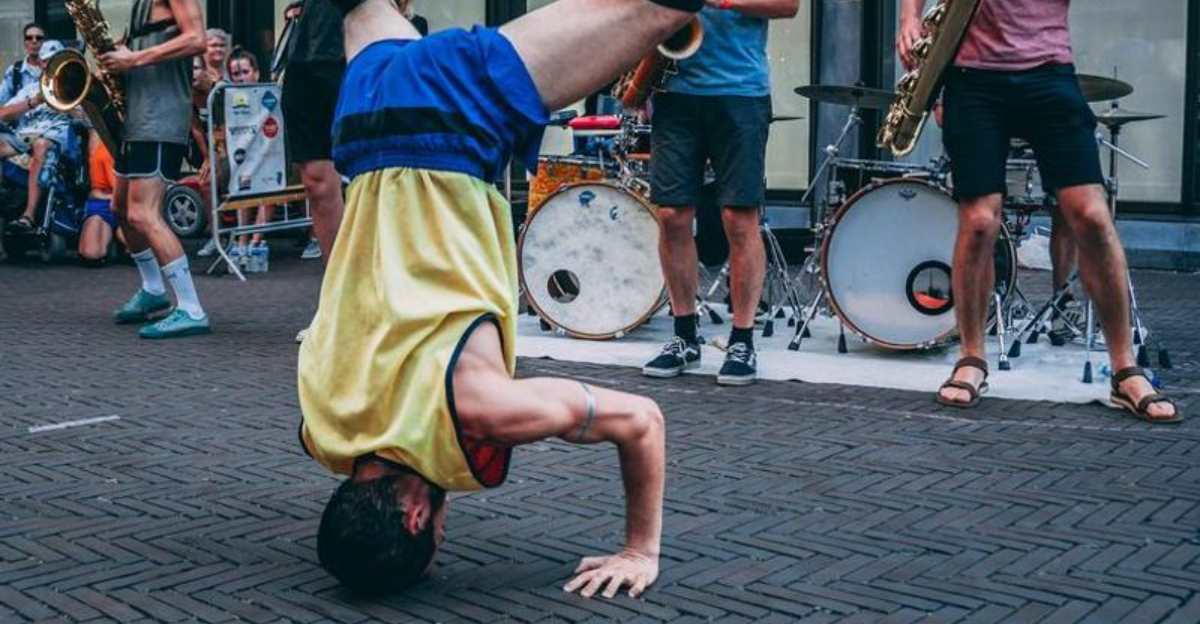
New York City’s vibrant streets are alive with performers, from musicians to living statues, creating an unforgettable urban soundtrack. However, many tourists who decide to join in the fun quickly find themselves facing hefty fines and confusing regulations.
Understanding why these penalties happen can help visitors avoid costly mistakes and enjoy the city’s creative energy without legal trouble.
1. Using Amplification Without a Permit
Most visitors assume that if street music is allowed, amplifiers are too. That’s a costly mistake. NYC protects unamplified performances as free speech, but the moment you plug in a speaker, microphone, or even a small amp, you need a Sound Device Permit.
This permit costs $45 per day and must be obtained from your local police precinct. Tourists rarely know this rule exists, let alone where to get the permit.
Police officers patrol popular spots like Times Square and Washington Square Park specifically looking for this violation, making it the number one reason performers get fined.
2. Blocking Pedestrian Traffic or Entrances
Visibility is everything for a street performer, so tourists naturally gravitate toward crowded, high-traffic areas. Unfortunately, those same spots are often illegal because they obstruct pedestrian flow. Subway entrances, building doorways, and narrow sidewalks are all off-limits.
City regulations require performers to leave clear pathways for people to pass safely. When crowds gather around a performance, it can create dangerous bottlenecks, especially during rush hour.
Police don’t hesitate to issue tickets when foot traffic slows to a crawl, even if the performer didn’t intend to cause a problem.
3. Being Too Loud and Violating Noise Ordinances
New York has a reputation for being loud, but the city actually enforces strict noise limits, especially near homes, hospitals, and schools. Drummers, bagpipers, and amplified musicians often cross the line without realizing it.
Noise complaints from residents or business owners trigger quick police responses. Officers carry decibel meters and can measure whether a performance exceeds legal sound levels.
Even if your act is technically permitted, excessive volume will earn you a summons. Late-night performances are particularly risky, as noise rules become even stricter after certain hours to protect residents trying to sleep.
4. Performing Too Close to Restricted Structures
City and park regulations mandate specific distance requirements from certain structures, and tourists rarely know these invisible boundaries exist. You must stay at least 25 to 50 feet away from subway token booths, ticket machines, monuments, statues, and war memorials.
Park benches, fountains, and railings also have buffer zones. Performing near residential buildings late at night is especially problematic.
These rules protect public infrastructure and respect sacred spaces, but they’re not marked with signs or barriers. Visitors who set up near the wrong landmark can expect a ticket within minutes of starting their act.
5. Performing Outside Designated Areas in Parks
Popular parks like Central Park, Battery Park, and Union Square have specific zones marked for street performances, often indicated by medallions or decals on the ground. These spots operate on a first-come, first-served basis, and local performers know exactly where they are.
Tourists typically don’t notice these markers and set up wherever looks good. Park rangers and police actively enforce these designated areas to prevent overcrowding and noise conflicts.
Performing just a few feet outside the approved zone can result in a fine, even if you’re following all other rules perfectly.
6. Selling Merchandise Without a Vendor’s License
Performing for tips is protected free speech, but selling CDs, t-shirts, or any physical goods crosses into commercial activity. That requires a separate, notoriously difficult-to-obtain vendor’s license that most tourists don’t have.
Many performers think selling their own music is part of the artistic expression, but NYC law treats it as retail commerce. Police look specifically for merchandise tables or displayed goods.
Even a small stack of homemade CDs with a donation jar can trigger a vending violation. The fine is steep, and arguing that you’re “just an artist” won’t change the outcome.
7. Setting Up Tables or Display Structures
Any physical structure beyond your instrument or body can be interpreted as vending equipment. Tables, easels, clothing racks, or even elaborate tip jars on stands may require permits that performers don’t have.
City officials view these setups as semi-permanent commercial installations rather than spontaneous artistic expression. The distinction matters legally, even if it seems arbitrary to tourists.
A simple guitar case open on the ground is usually fine, but adding a folding table transforms your performance into something that needs licensing. Police enforce this rule strictly in tourist-heavy areas where vending violations are common.
8. Failing to Comply with Move-Along Orders
Before issuing a ticket, police typically give performers a warning to relocate. This “move-along order” is your chance to avoid a fine, but tourists often don’t understand the seriousness of the request.
Some visitors argue about their rights or ask too many questions instead of immediately packing up. Others simply don’t understand the officer’s instructions due to language barriers or unfamiliarity with local enforcement customs.
Compliance is key. Once an officer tells you to move, refusing or delaying virtually guarantees a summons. Local performers know to apologize and relocate immediately, preserving their ability to perform elsewhere.
9. Accepting Money Without Understanding Solicitation Laws
Many visitors assume that accepting tips for performances falls under free speech, but New York has specific rules about solicitation. Performers can accept voluntary donations, but actively asking people for money or approaching them directly crosses into illegal solicitation territory.
Tourists often make the mistake of passing around hats or cups aggressively, which police view as panhandling rather than performing. The line between these activities seems blurry, especially when you’re focused on entertaining crowds.
Officers patrol popular areas like Times Square and Central Park, watching for anyone who pushes the boundaries. A simple performance can turn into a costly mistake if you don’t understand the difference between passive tip collection and active solicitation.
10. Wearing Costumes That Imitate Licensed Characters
Times Square sparkles with costumed characters, but tourists jumping into this scene without research face serious legal trouble. New York cracked down on costume performers after complaints about aggressive behavior and unlicensed use of copyrighted characters flooded in.
Wearing a Spider-Man or Elsa costume might seem like harmless fun, but these characters belong to major corporations that protect their intellectual property fiercely. Police can fine performers for trademark infringement, especially when they’re collecting money while dressed as recognizable characters.
The city created designated activity zones to manage these performers, but many tourists miss this detail entirely. What starts as a fun way to earn vacation money quickly becomes an expensive lesson in copyright law and city regulations.
Dear Reader: This page may contain affiliate links which may earn a commission if you click through and make a purchase. Our independent journalism is not influenced by any advertiser or commercial initiative unless it is clearly marked as sponsored content. As travel products change, please be sure to reconfirm all details and stay up to date with current events to ensure a safe and successful trip.
