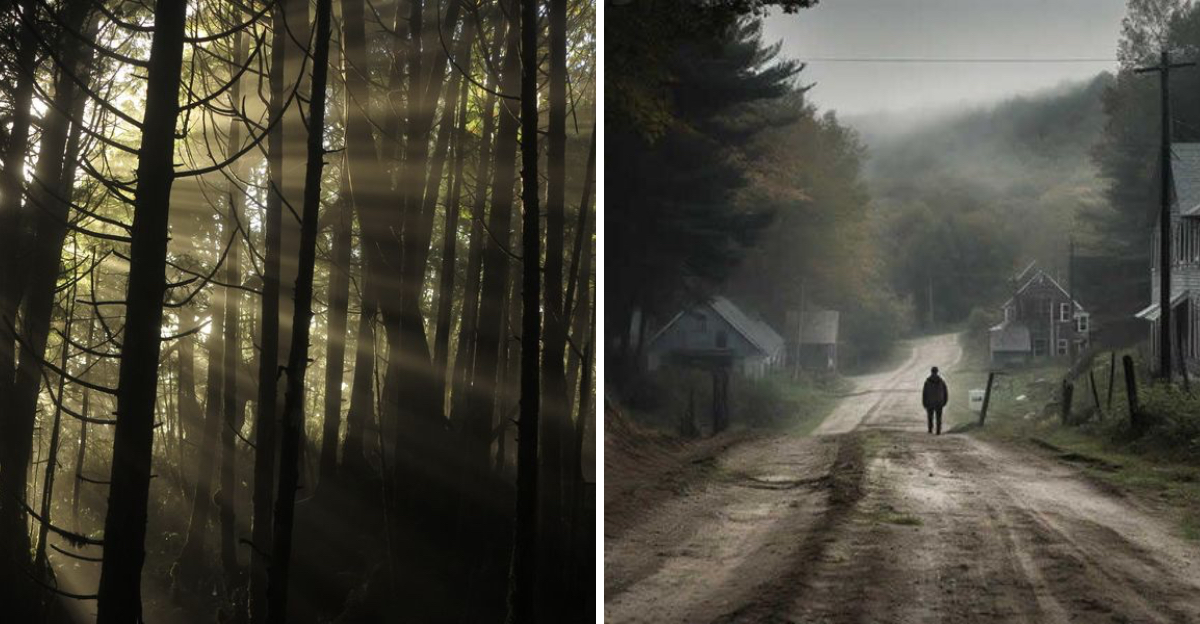
This quiet fold of Vermont forest looks ordinary until the silence presses in and your senses sharpen.
Trails narrow, light thins, and every twig crack sounds closer than it should.
Travelers arrive seeking calm, then notice a prickle at the back of the neck that refuses to fade.
If you want to understand why this corner lingers in memory long after the hike ends, read on.
A forest known more for silence than scenery
Glastenbury Mountain, on the edge of the Green Mountain National Forest, looks like any other rugged Vermont peak. Dense spruce, narrow trails, and long stretches of uninterrupted quiet define the landscape. Most visitors expect peaceful hiking. Many report something more unsettling.
What stands out here is not dramatic overlooks, it is the hush that blankets every contour. Sound seems absorbed by the moss and needles, leaving footsteps unusually crisp. The mind fills the gaps, scanning for motion in understory shadows. That constant checking creates the sensation of being watched.
Trail markers exist yet feel occasional, which heightens attention to small cues like scuffed rock or bent grass. Even experienced hikers slow down, measuring distance through the way air moves between trunks. Vermont has many scenic summits, but this one traffics in quiet. The effect is cumulative, a steady pressure of stillness.
By the final mile, visitors often report a low, alert calm. It is not fear, more like shared space with something unseen. Silence organizes the hike into short, careful steps. The feeling follows you back to the trailhead, where the first car door slam breaks the spell in a single metallic echo.
A history of isolation that never faded
The former towns of Glastenbury and Somerset once stood in the surrounding hills, but both dwindled into near abandonment by the early twentieth century. With few residents and limited development, the region kept its untouched, almost sealed off atmosphere. Travelers today step into a place that never fully modernized. The old grades and cellar holes hint at lives that moved on.
Maps still show town lines, yet the woods have reclaimed much of what people left. This transition amplifies the sense of pause, as if time slowed here while the rest of Vermont modernized. Trailheads feel modest, roads narrow to gravel, and services sit far away. That distance shapes the way hikers read the forest.
Signs of the past are subtle, like iron hardware in leaf litter or straight tree lines marking forgotten clearings. They nudge the imagination without confirming anything. The result is not myth, just context that deepens the mood. You sense continuity under the quiet.
Local conservation work keeps the area low impact, prioritizing habitat and erosion control. With fewer intrusions, small sounds carry. That preserved stillness rewards patient walkers. It also ensures the feeling of being noticed by a landscape that remembers patterns, footsteps, and seasonal return.
Trails where sound behaves strangely
Hikers often describe moments when the forest goes unnaturally still. Wind stops. Birds fall silent. Footsteps echo more sharply than expected. This environmental quiet, shaped by dense elevation band forests, creates the sense of being observed even when no one is near.
Spruce fir stands dampen high frequencies, while hard packed tread reflects lower ones. That mix exaggerates crunches and snaps right at boot level. You hear yourself more than the forest, which bends attention inward. The brain, tuned for balance, starts searching for other sources of noise.
Even the shape of valleys participates, cupping sound and bouncing it back as faint repeats. A stick breaking one ridge over might feel close. Such effects are common in northern New England woods and are particularly noticeable here. The acoustics rewrite distance in real time.
Guides suggest pausing to let the soundscape settle before moving on. When you stop, the forest often resumes its subtle rustle, which tells you nothing is actually closing in. That reset can ease the watched sensation. It also teaches patient listening, a skill that deepens every Vermont hike that follows.
The “Bennington Triangle” reputation
The area gained notoriety after several historic disappearances between the 1940s and 1950s. Though explanations vary and no definitive link exists, the lingering folklore affects how visitors interpret the landscape. The combination of dense terrain and old stories can heighten awareness. People walk differently when they know the lore.
Local historians note that many accounts blend documented incidents with retellings that grew over time. The terrain can be confusing, weather shifts quickly, and visibility drops without warning. Those facts alone explain part of the region’s reputation. Still, the story remains sticky, shaping expectations before boots meet dirt.
Park managers emphasize preparedness, maps, and staying on marked routes. When hikers follow that advice, they tend to report uneventful days and thoughtful silence. Expectation management matters in wild places. It helps replace dread with attention.
Folklore is a lens, not a compass. Treat it as context for a rich, complex corner of Vermont, not as a guide to risk. The watched feeling becomes a nudge to stay oriented and calm. In the end, the mountain offers more quiet than mystery, provided visitors bring respect and a good plan.
Mist that moves in without warning
Temperature shifts around the mountain create sudden pockets of fog. Travelers walking clear trails often find themselves enclosed in low hanging mist within minutes. This limited visibility changes spatial perception, making forests feel closer and shadows more pronounced. The world narrows to a few careful steps.
Moist air muffles distant sound, pushing attention to what is directly around you. Branch tips bead with water, boots sink quietly into duff, and the horizon fades to soft gray. These conditions appear most in shoulder seasons, but they can roll in anytime after a quick change. Vermont weather rewards flexible plans.
Fog also scatters light, so small movements seem larger at the edge of vision. A leaf flutter might read as an approach until the air clears. The trick is to slow down, check bearings, and give your eyes time to adjust. Patience restores scale.
When the mist lifts, views return and the forest feels familiar again. The watched sensation recedes with distance. Many hikers remember the silence even more than the blur. It becomes part of the story you tell about this corner of the Green Mountains.
Wildlife that stays hidden but present
Black bear, moose, and fox populations live throughout the region. While sightings are rare on well used paths, tracks and snapped understory branches remind visitors that large animals may be just out of view. The knowledge of unseen movement contributes to the watched sensation. Awareness rises with each sign you notice.
Wildlife agencies advise giving animals space and securing scented items. Most encounters end with animals choosing distance over curiosity. Knowing that pattern helps ease nerves without dulling alertness. Respect keeps both hikers and wildlife safe.
Look for scat on old logging grades and hoof prints in soft drainages. These markers tell a simple story about routine travel corridors. The forest feels shared, not empty. That understanding changes how footsteps feel.
In Vermont, wildlife management focuses on habitat connectivity and seasonal behavior. Educated hikers match their pace to that reality. Sounds in the brush are more likely deer than mystery. With practice, the mind reads signs clearly and replaces unease with steady, informed calm.
A landscape with few human markers
Signage is sparse, cell service drops quickly, and trail intersections can feel uniform. Without the usual cues of modern hiking routes, travelers rely more on instinct. That shift in awareness makes small sounds, twigs, footsteps, rustling, feel amplified. The forest becomes a classroom for attention.
Paper maps and downloaded offline layers matter here. They turn guesswork into steady navigation and lower stress at quiet junctions. When you know where you are, the quiet reads as calm instead of warning. Vermont’s backcountry rewards that preparation.
Blazes appear, but spacing varies with terrain and maintenance cycles. Watch for cut logs, brushed corridors, and subtle tread as secondary signs. These hints stitch the route together. Each small confirmation relaxes the shoulders.
The lack of clutter is part of the charm. You see more trees, more sky, fewer signs. That minimalism underlines the feeling of being on your own. It also explains why every crunch and whisper seems to matter in this corner of the Green Mountains.
Shadows that form faster than expected
The mountain ridge blocks late day light earlier than surrounding towns. Dusk arrives quickly, especially in autumn and winter. The rapid dimming of the forest triggers a natural vigilance, which some interpret as being observed from between the trees. Light dictates mood here.
As contrast rises, edges sharpen and dark spaces deepen. Your stride shortens while your senses stretch outward. A headlamp carried but not yet used becomes a quiet reassurance. Vermont evenings reward early turnarounds.
Even on clear days, the angle of sun in dense timber creates pockets of early night. A bright patch can sit a few steps from a deep shade zone. This patchwork makes distance tricky to judge. Planning helps keep surprises pleasant.
Check sunset times, note your turnaround point, and build a buffer. When the forest darkens predictably, the mind relaxes. The watched sensation fades with a pool of reliable light. The same trail feels welcoming again when you return earlier next time.
Locals who understand the mood
Residents familiar with the area often describe it as quiet in a different way. Not dangerous, not supernatural, just unusually still. They note that visitors unfamiliar with remote mountain woods notice sensations locals consider normal. That perspective helps reframe the experience.
Across Vermont, close knit communities value privacy and clear boundaries. Travelers sometimes feel watched near trailhead roads or scenic pull offs, especially where private land sits beside public routes. Respectful parking and staying on signed corridors ease tensions. Awareness builds trust quickly.
Popular photography spots elsewhere in the state, like the private Sleepy Hollow Farm area near Woodstock, highlight how sensitivity grows from repeated trespassing concerns. Learning what is public, what is private, and what is seasonal access keeps trips smooth. The same courtesy applies in this quiet corner. Everyone benefits when lines are clear.
Local advice is practical, from weather timing to mud season etiquette. Ask at ranger stations or town offices before you go. Small tips often make the biggest difference. The forest feels friendlier when community knowledge shapes your plan.
A corner of Vermont that stays in your thoughts
Whether the feeling comes from folklore, geography, or the unique acoustics of a densely wooded mountain, Glastenbury has a presence few hikers forget. Travelers leave with the same impression, something about this quiet corner seems aware of you, too. The stillness carries home in memory. It resurfaces when you hear wind move through spruce.
Return visitors describe greater ease on second trips. Familiar turns strip away nerves and reveal more texture, like lichen palettes and brook cadence. The forest becomes layered rather than looming. Attention shifts from the self to the landscape.
That is the gift of this Vermont place. It teaches careful movement and patient listening without saying a word. The watched sensation is simply awareness, sharpened by light, weather, and space. It can guide safer, richer travel wherever you roam.
Take the lesson forward. Plan with care, tread lightly, and ask local questions. The mountain will offer what it has always offered, quiet and time. You will notice more each step, and feel more at ease within it.
Dear Reader: This page may contain affiliate links which may earn a commission if you click through and make a purchase. Our independent journalism is not influenced by any advertiser or commercial initiative unless it is clearly marked as sponsored content. As travel products change, please be sure to reconfirm all details and stay up to date with current events to ensure a safe and successful trip.
