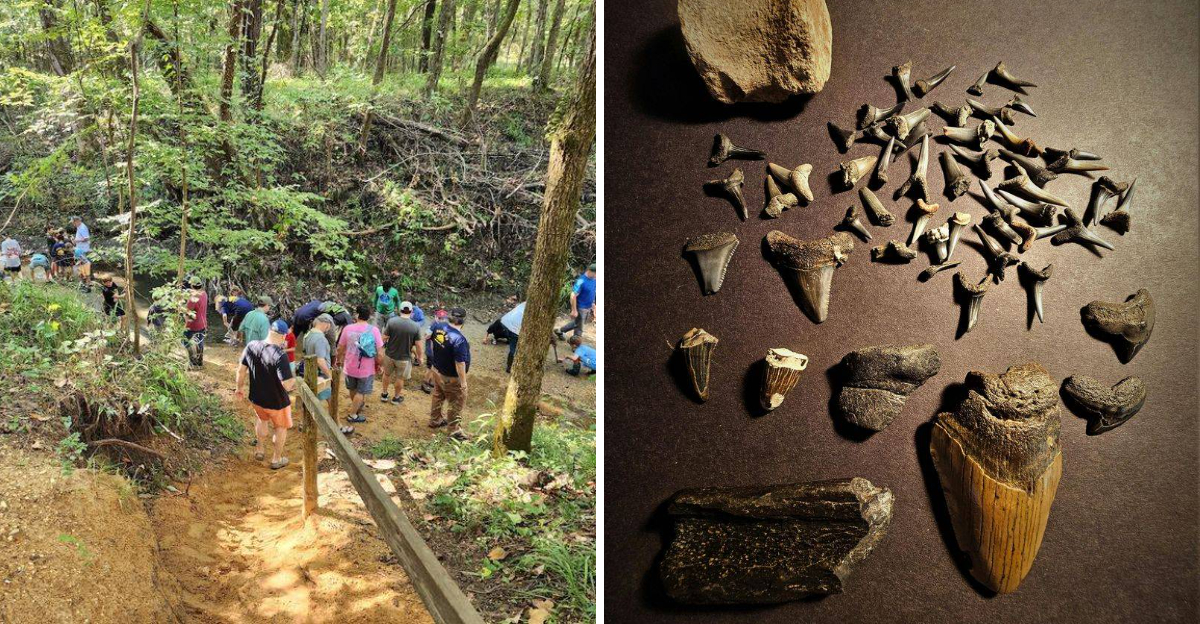
Most people would never guess that one of Alabama’s most fascinating natural wonders is hidden in a quiet creek in the western part of the state. In this Aliceville-area creek, visitors can wade into the water and search for fossilized shark teeth that are roughly 70 million years old.
The experience feels surreal, especially knowing that ancient ocean predators once roamed what is now rural Alabama. The fossils are often found right in the creek bed, making it an interactive kind of outing where discovery is part of the experience.
Whether you are a curious kid, a family looking for something memorable, or a nature lover hoping for a truly one-of-a-kind adventure, it offers a rare chance to literally hold prehistoric history in your hands.
The 70-Million-Year-Old Fossils Are Hiding Right in the Creek Bed
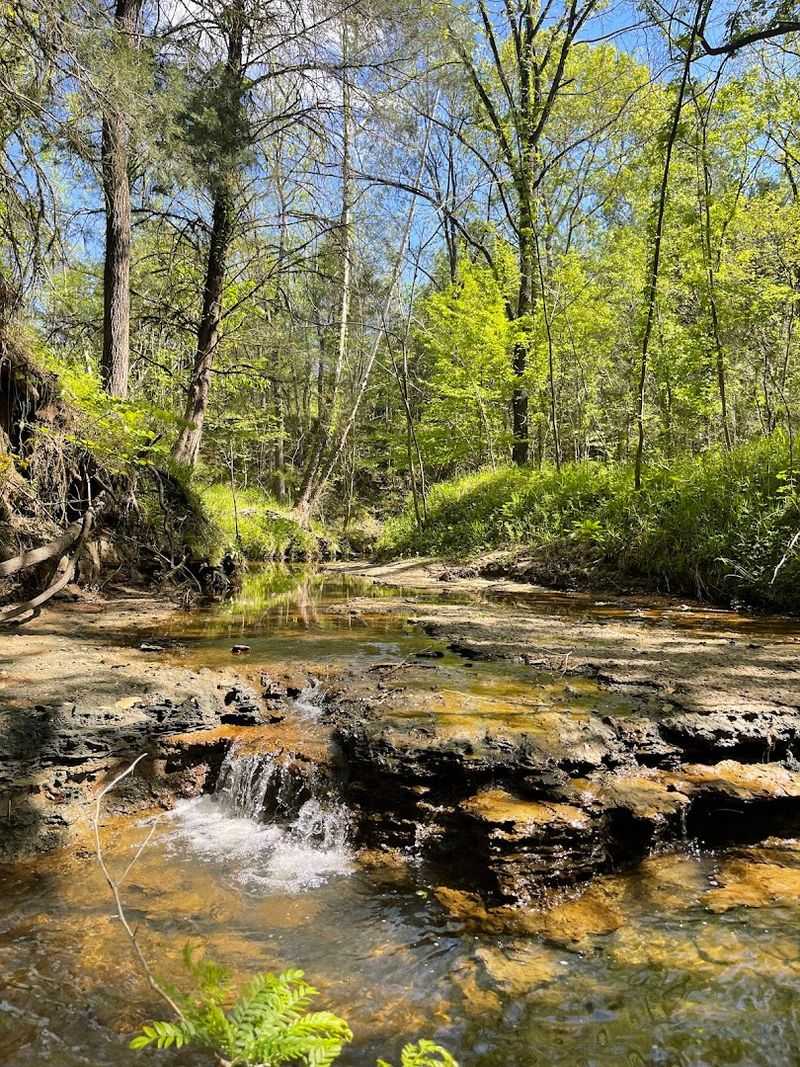
Seventy million years ago, a large portion of Alabama was submerged beneath a warm, shallow sea connected to the Gulf of Mexico. The area around Aliceville is believed to have once been a barrier island, where ancient sharks lived, died, and left their teeth behind.
Over millions of years, those teeth were buried under layers of sediment and rock.
What makes Shark Tooth Creek so special is that those teeth are now washing right back to the surface. Heavy rains loosen the sediment and push the fossils out of the rock, placing them directly on or near the creek bed where visitors can simply reach down and pick them up.
You do not need special tools or expert knowledge to find them.
Visitors typically walk away with an average of 20 to 30 teeth per person during a single visit. That is not luck.
That is just how abundant the fossil layer is in this stretch of creek. Teeth from 16 different shark species have been identified at the site, ranging from small, slender fragments to broader, more recognizable shapes.
Some teeth belong to species that no longer exist today. Holding one in your hand and knowing it predates the dinosaur extinction by millions of years is a genuinely humbling experience.
It turns an afternoon outing into something you remember for years.
Every Single Visitor Is Guaranteed to Find Something
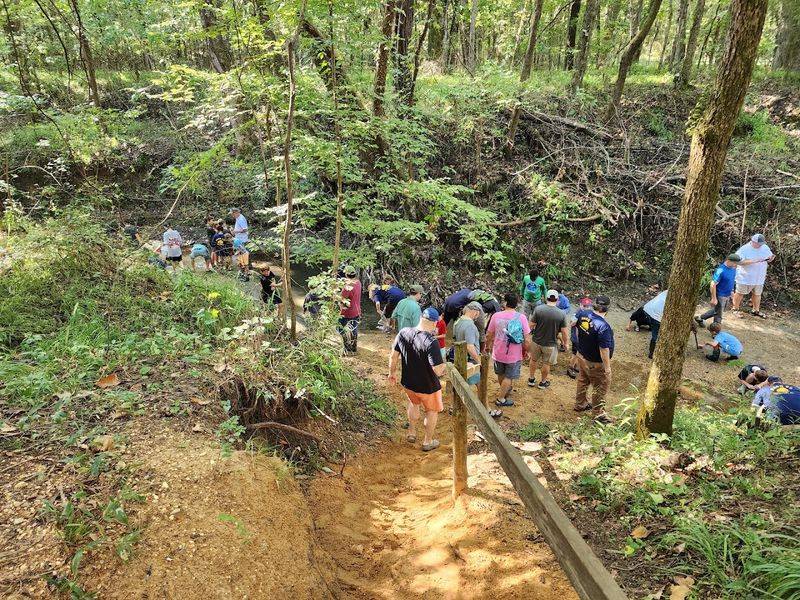
One of the most frustrating parts of fossil hunting is the possibility of going home empty-handed. That is simply not the case here.
Shark Tooth Creek has a reputation for guaranteeing that every visitor finds teeth, and that promise is backed up by decades of consistent visits from families, school groups, and scout troops across the Southeast.
The creek is so rich with fossils that even very young children manage to spot and collect multiple teeth within the first few minutes of wading in.
The shallow, slow-moving water makes it easy to scan the creek bottom without any equipment. Most visitors end up crouching down, turning over small rocks, or just watching where the current pushes lighter debris to gather.
The teeth are dark in color, which actually makes them easier to spot against the lighter creek sediment. At the end of the hunt, each visitor gets to choose their 15 favorite teeth to take home as souvenirs.
That selection process alone becomes a highlight for kids, who will spend time carefully comparing sizes, shapes, and conditions before making their final picks. Visitors who find the most teeth during the excursion may even take home a Shark Tooth Creek T-shirt as a bonus.
The whole experience lasts about an hour and a half in the creek, giving everyone plenty of time to explore and collect without feeling rushed.
The Hayride to the Creek Is Part of the Fun
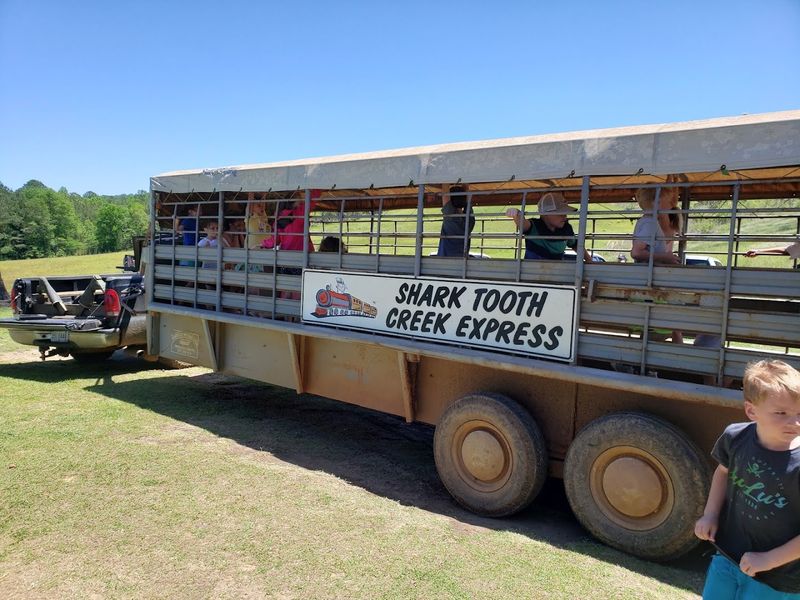
Getting to the creek is not just a walk down a path. Visitors are loaded onto a hayride called the Shark Tooth Creek Express, which transports the group from the main property area down to the creek itself.
For kids especially, that ride sets the tone for the whole adventure before anyone even gets their feet wet.
The hayride winds through the property, giving guests a chance to take in the surroundings and build anticipation. It feels less like a logistics solution and more like the opening act of a well-planned experience.
By the time the wagon stops and everyone climbs off near the water, the excitement in the air is real. Adults tend to enjoy the ride just as much as the children, partly because it slows everything down and reminds you that you are somewhere genuinely different from your everyday routine.
The property at 24114 AL-14, Aliceville, AL 35442 is open for visits from April 1st through the end of October, and all visits are by appointment only. Calling ahead is essential since the site is privately owned and operates on a scheduled basis.
The hayride is just one of the small touches that make Shark Tooth Creek feel more like a curated experience than a simple outdoor excursion. It is the kind of detail that turns a good outing into a story worth telling.
A Geology Lesson You Will Actually Remember
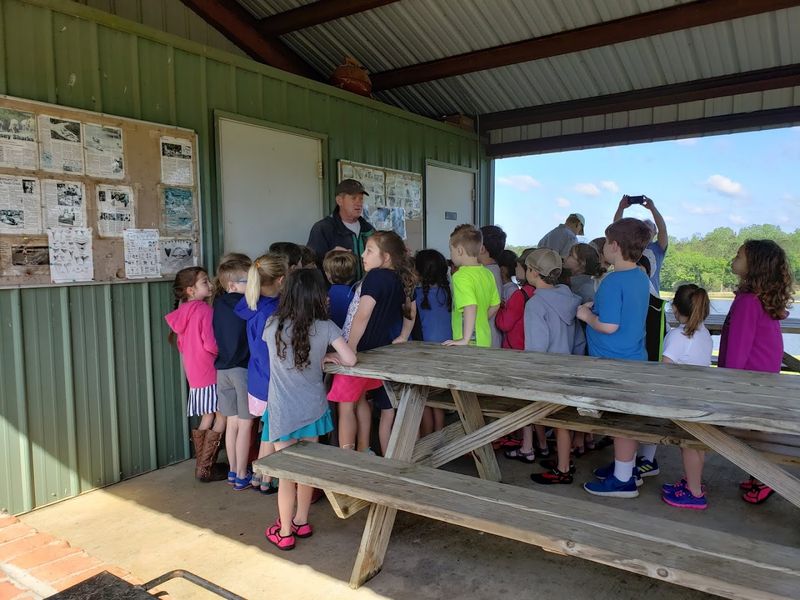
Before anyone heads down to the creek, the host provides a brief presentation explaining the geological history of the area. It covers how Alabama was once underwater, how the barrier island formed, and why shark teeth ended up buried in this specific stretch of land.
It sounds like it could be dry material, but the way it is delivered keeps both kids and adults genuinely engaged.
Learning that the teeth date back to the Late Cretaceous period, around 70 million years ago, puts a lot of things in perspective. That predates the mass extinction event that wiped out non-avian dinosaurs.
The sharks that left these teeth behind were swimming through warm, shallow seas long before modern humans existed. When that context is laid out clearly and enthusiastically, it transforms the hunt from a simple activity into something with real educational weight.
Visitors have noted that this part of the experience sticks with them just as much as the fossil hunting itself. Reviews mention that guests come away with a genuine understanding of why this place exists and what makes it scientifically significant.
That is rare for a family attraction. Most outdoor experiences aim for fun and leave the learning as an afterthought.
Here, the education and the fun are woven together so naturally that you barely notice where one ends and the other begins.
Camping, Fishing, and Swimming Make It a Full Weekend
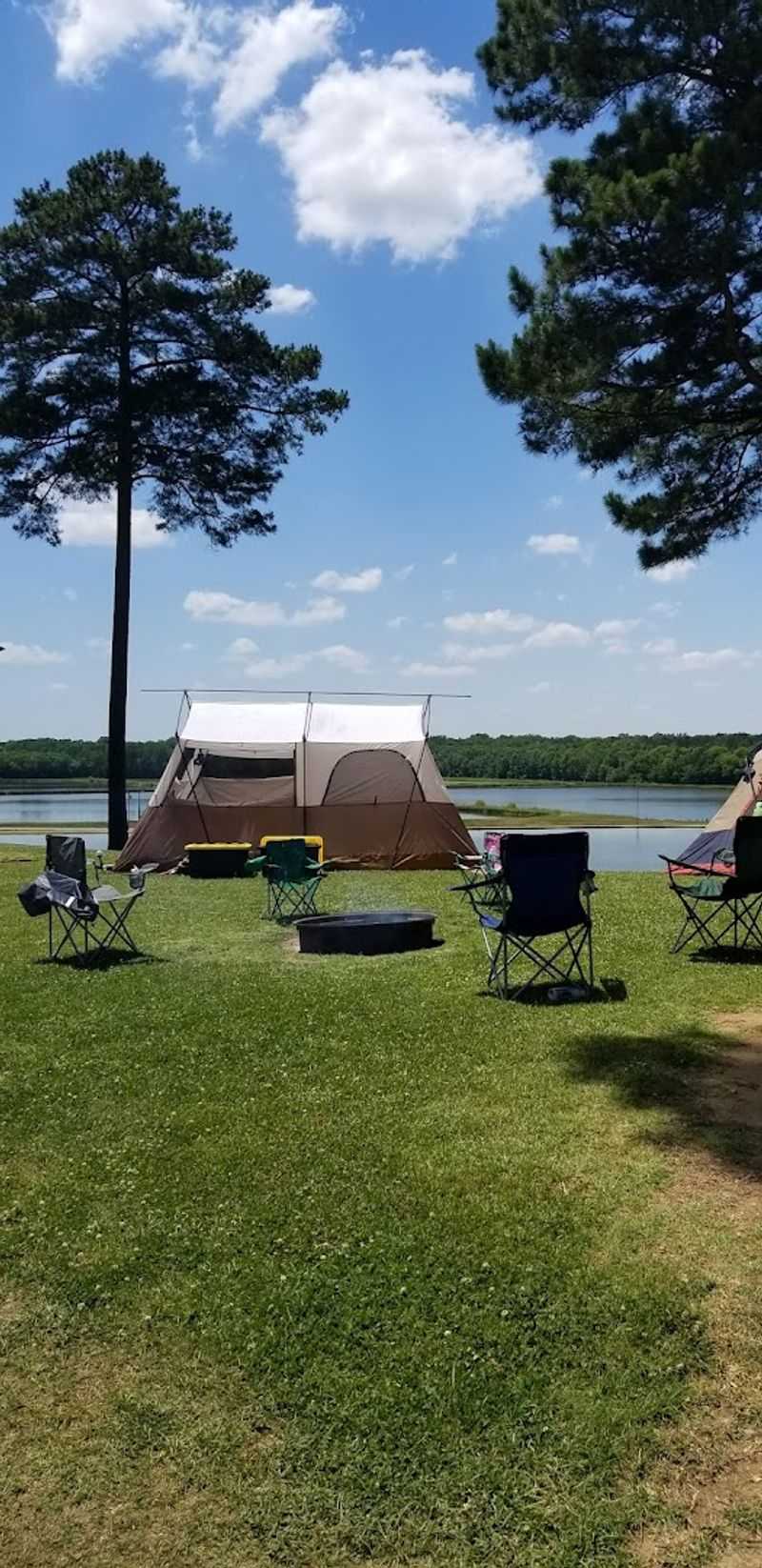
Shark Tooth Creek is not just a one-hour stop. The property is set up to welcome overnight guests, and many families turn their visit into a full weekend trip.
The camping area is described by visitors as clean and well-maintained, with access to restrooms, showers, a pavilion, picnic tables, and propane cooking grills. It covers the basics without feeling rough or underprepared.
Beyond the fossil hunt, there is a catfish pond on the property where guests can fish throughout the day. Visitors have reported catching fish in the two to four pound range without much effort.
There is also a lake available for kayaking, paddleboarding, and swimming, giving kids and adults plenty to do once the creek excursion wraps up. Some guests have even used the property for stargazing, noting that the location is far enough from city lights to offer a genuinely dark sky on clear nights.
There is also a zip line on the property that younger children tend to enjoy. It is not a high-speed thrill ride, but it fits the overall vibe of the place perfectly.
For families with kids of different ages, having multiple activities spread across the property means no one is bored or waiting around. Bringing your own food is recommended since there are no concessions on site, but the cooking facilities make that easy to manage for groups of any size.
It Is One of the Few Places in North America Where This Is Possible
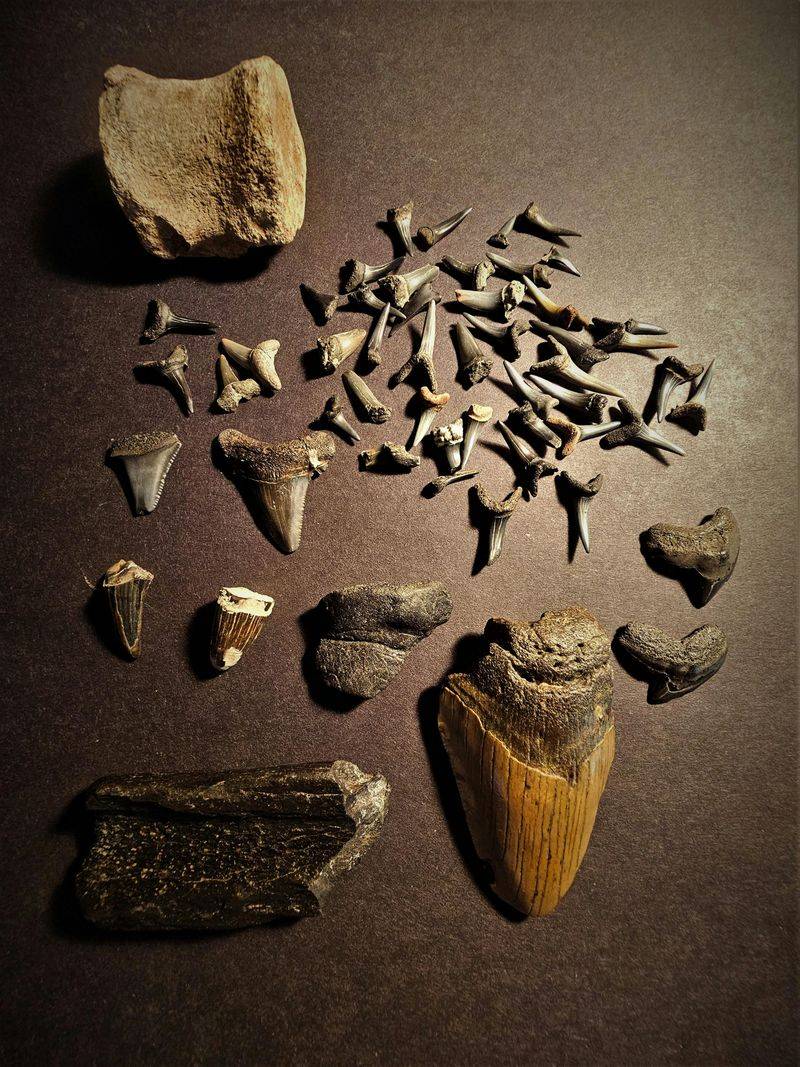
Finding 70-million-year-old shark teeth in a freshwater creek in the middle of Alabama is not something you can replicate easily anywhere else. Most fossil sites require permits, professional guidance, or specific digging equipment.
Here, the teeth are accessible at the surface level, visible to the naked eye, and available to anyone who shows up ready to wade in.
The fact that 16 different shark species are represented in the creek adds a layer of scientific variety that even serious fossil enthusiasts find impressive. You might pull out a slender, needle-like tooth from a smaller predatory species, then find something broader and more triangular from a larger shark entirely.
Each tooth tells a slightly different story about the ancient marine ecosystem that once covered this part of the continent.
What makes this location particularly unusual is the combination of accessibility and abundance. Fossil hunting sites that are this productive and this easy to access for general visitors are genuinely rare.
Most comparable sites are either on protected federal land, restricted to researchers, or located in coastal areas that require significant travel. The fact that a privately owned creek in rural Alabama has preserved this kind of fossil record and made it openly available to families is something worth appreciating.
It is the kind of place that reminds you how much history is still sitting just beneath the surface of the everyday world around us.
Native American History Adds Another Layer to the Discovery
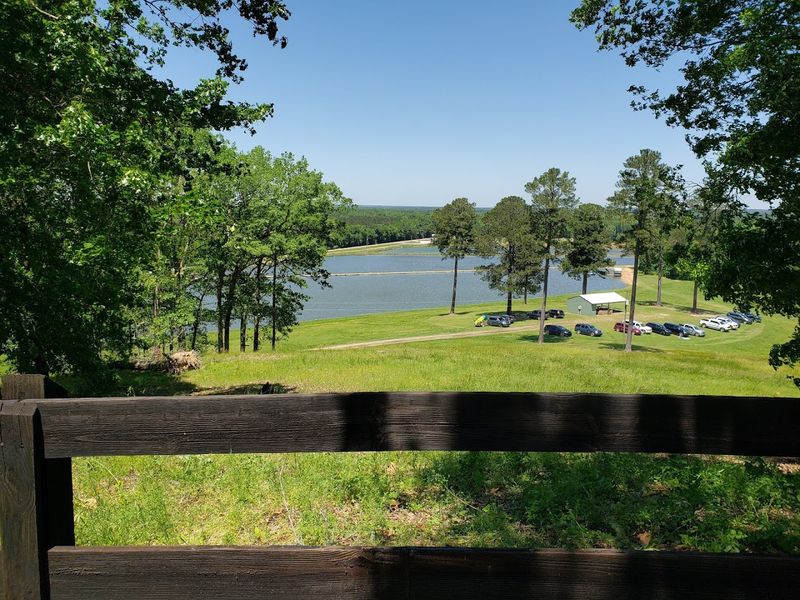
Most visitors come to Shark Tooth Creek focused entirely on the shark teeth, which is completely understandable. But the site has also yielded Native American points, adding a second layer of historical significance that is easy to overlook.
The same land that preserved ancient marine fossils also holds traces of the human communities that lived here long before European settlement.
Finding an arrowhead or stone point in the same creek where you are also picking up prehistoric shark teeth puts you in contact with two completely different chapters of history at once. One predates humans entirely.
The other represents generations of people who called this part of Alabama home. That combination is unusual even by the standards of historically rich Southern landscapes.
It also reinforces why the property deserves to be treated with care and respect. The Owens family has been hosting visits here for 50 years, and their commitment to maintaining the site and sharing its history speaks to how seriously they take their role as stewards of this land.
Visitors are encouraged to engage thoughtfully with what they find rather than treating the experience purely as a collecting exercise.
Knowing that Native American communities once walked the same ground where you are now standing, hunting and living along these same waterways, gives the whole outing a weight and depth that goes well beyond a typical outdoor activity.
It is a genuinely layered place.
