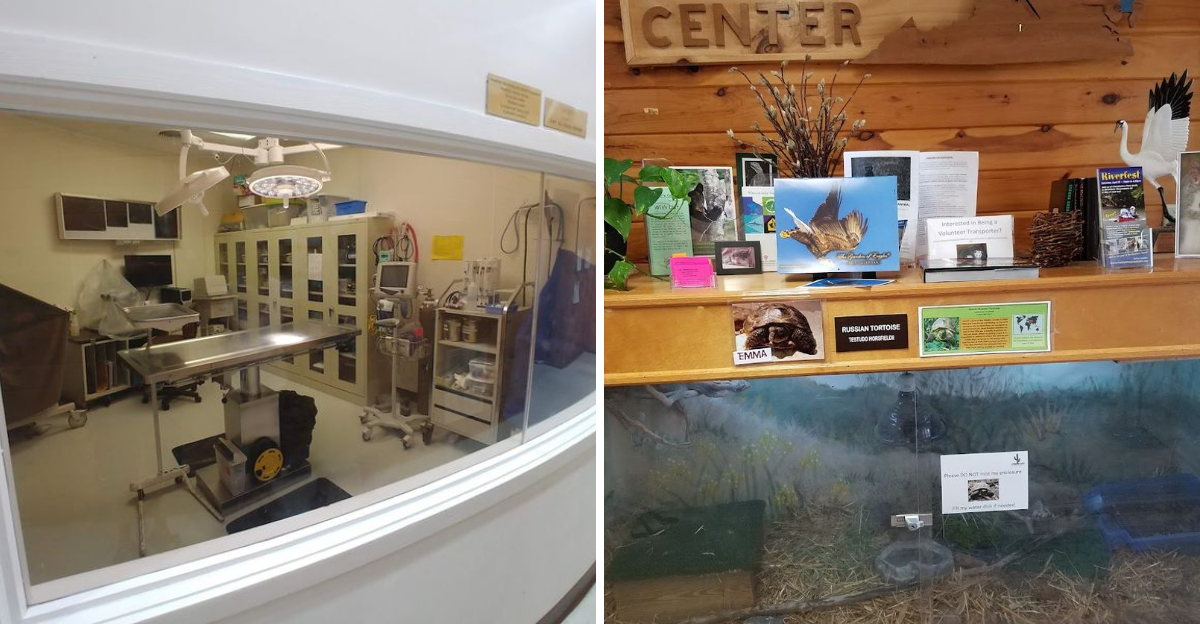
Most people only see wildlife from a distance. A bald eagle soaring overhead.
An owl perched on a branch at dusk. But this Virginia wildlife hospital lets you get closer.
Much closer. Behind the scenes, you can meet the patients, the eagles, owls, hawks, and other birds that are being treated and rehabilitated.
The staff is knowledgeable, the facility is impressive, and the stories are sometimes heartbreaking but often hopeful. I watched a vet tech feed a baby owl and felt like I was witnessing something rare.
The center is renowned for its work, and the public tours are a chance to see that work up close. Virginia has plenty of animal attractions.
This one actually saves lives.
What the Wildlife Center of Virginia Actually Is
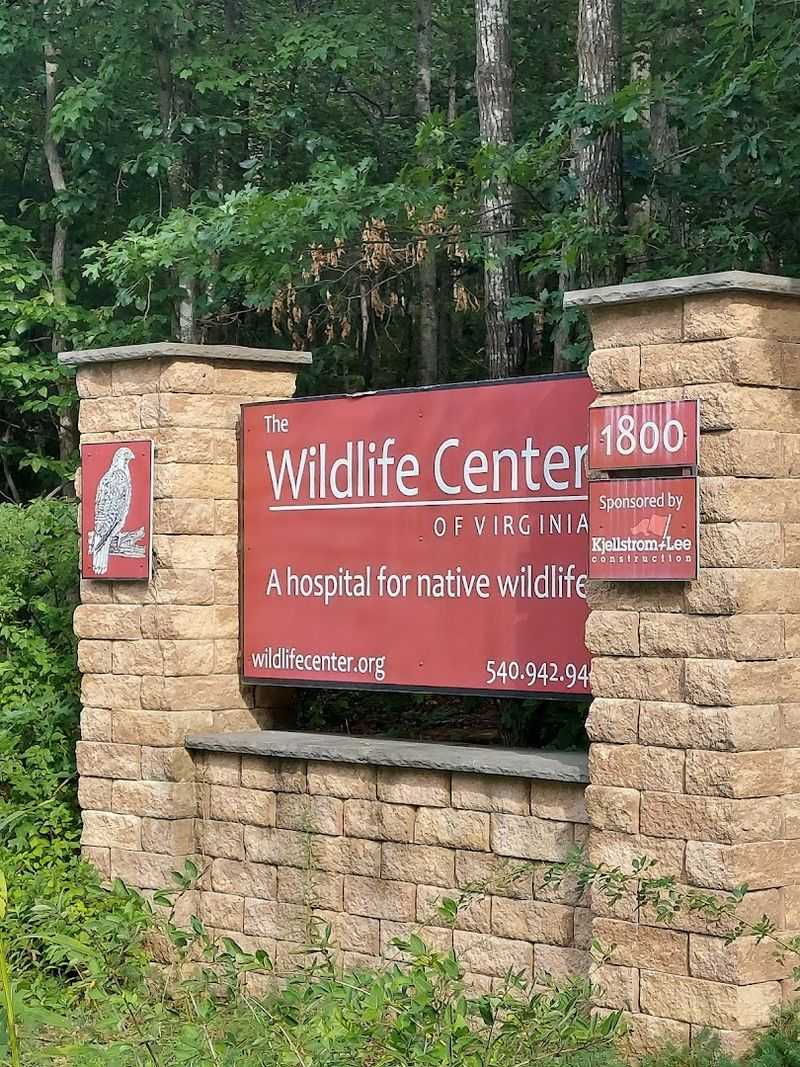
Not every hospital smells like antiseptic and bad news. The Wildlife Center of Virginia in Waynesboro is a teaching and research hospital dedicated entirely to native wild animals, and the whole operation radiates purpose from every corner.
This is not a zoo, a sanctuary, or a petting farm. It is a fully functioning veterinary facility where injured and orphaned wildlife from across Virginia receive professional medical care.
The Center trains future wildlife veterinarians, conducts research that shapes conservation policy, and treats an extraordinary range of species year-round. Toads, fawns, hawks, opossums, turtles, bluebirds, and bald eagles have all passed through these doors.
What makes this place genuinely special is the combination of rigorous science and deep compassion. Every animal that arrives gets a patient number, so the people who brought them in can actually track their recovery online.
Virginia is lucky to have this kind of resource, and the Center takes that responsibility seriously. The work happening here is not background noise; it is front-and-center conservation in action, one wild creature at a time.
The Open House Tours That Change Everything
Forget passive museum visits where you read a placard and move on. The Open House tours at the Wildlife Center of Virginia are a whole different level of interactive, and they are offered periodically throughout spring, summer, and fall.
Reservations are required because space fills up fast, and honestly, that exclusivity makes the whole experience feel even more special. You are not shuffling through with a crowd of hundreds.
The tour begins with an introduction to the Center, moves through the hospital facilities, and then takes you outside to the ambassador animal enclosures. That is where things get genuinely breathtaking.
Standing near the enclosures of permanent resident raptors, with a bald eagle regarding you with those fierce amber eyes, is the kind of moment that rewires your brain a little. You walk away thinking about wildlife differently.
Best of all, the Open House tours are completely free. Virginia has a way of delivering extraordinary experiences without demanding your wallet, and this is a prime example.
Just book early, because these spots disappear quickly once the schedule drops.
Meet Buddy the Bald Eagle Up Close
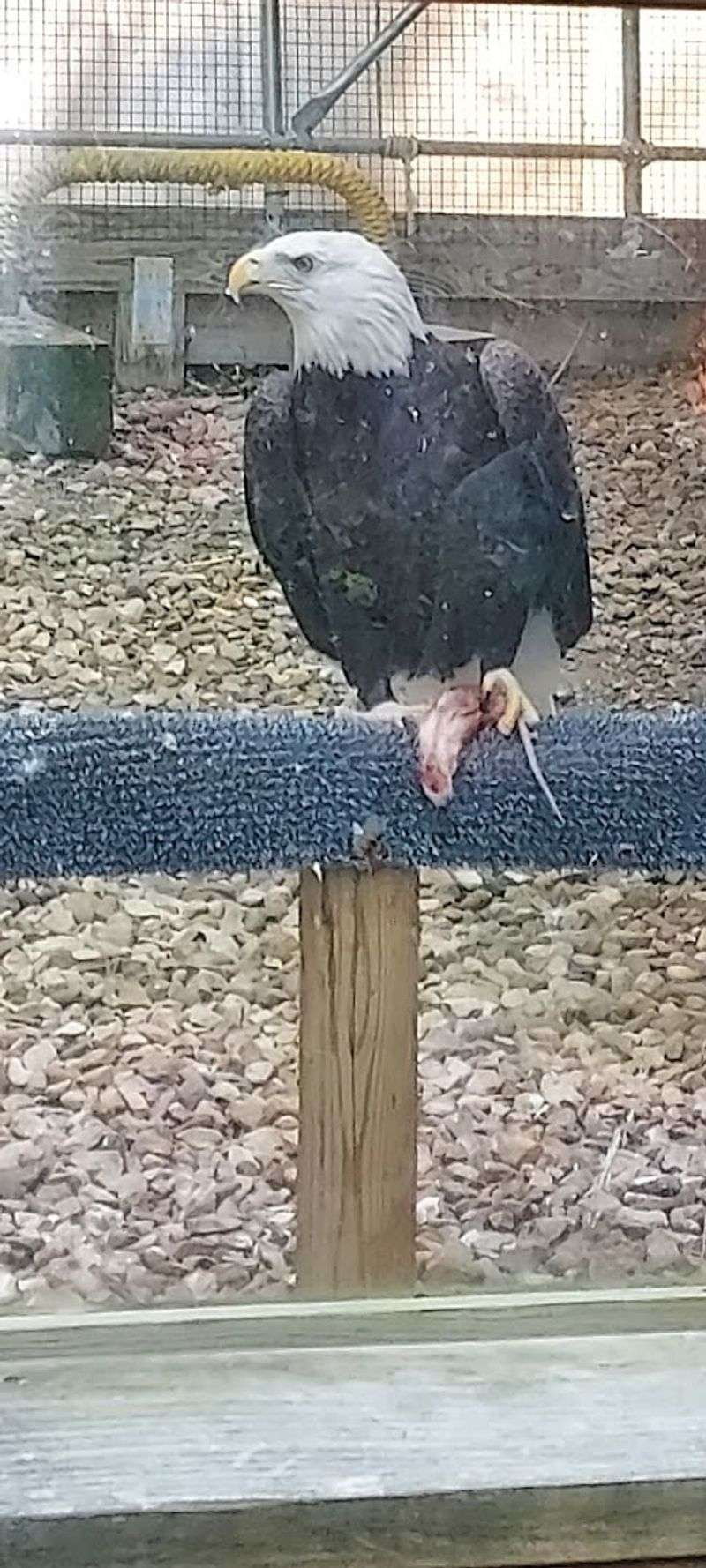
Buddy the Bald Eagle is not a metaphor or a mascot on a poster. He is a real, living, non-releasable bald eagle who calls the Wildlife Center of Virginia home, and meeting him in person is a full-body experience.
Non-releasable means Buddy cannot survive in the wild due to his injuries or condition, so he serves as an education ambassador instead. His job is to inspire awe, and he is extraordinarily good at it.
Bald eagles are larger than most people expect. Standing near one and realizing the sheer scale of those wings, that beak, those talons, shifts your perspective on American wildlife in a way no documentary quite manages.
Buddy represents thousands of bald eagles across Virginia that depend on healthy ecosystems to thrive. His presence on tour is a quiet, powerful argument for conservation that hits harder than any statistic.
Tour guides at the Center explain Buddy’s story, his care routine, and what his species needs to flourish. It is educational without feeling like a lecture, and the emotional connection you form with this bird in just a few minutes is surprisingly lasting.
Athena the Barred Owl and the Raptor Squad
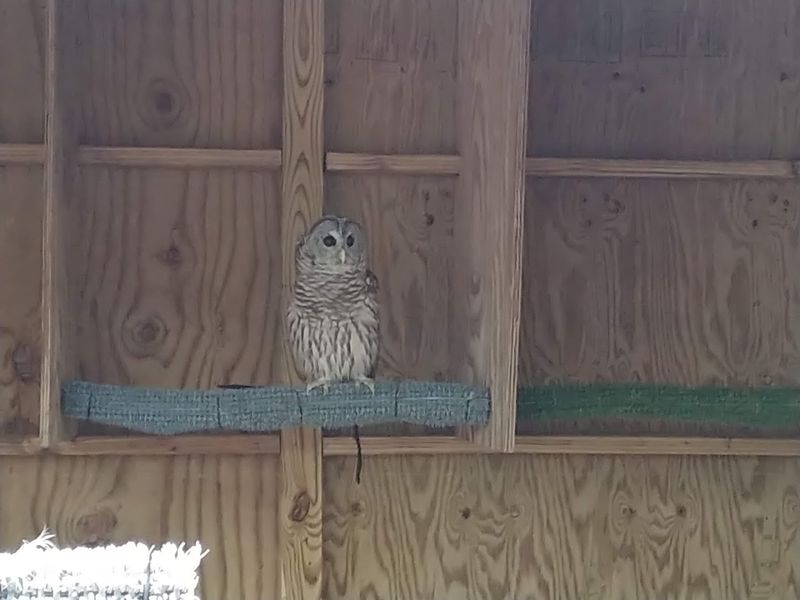
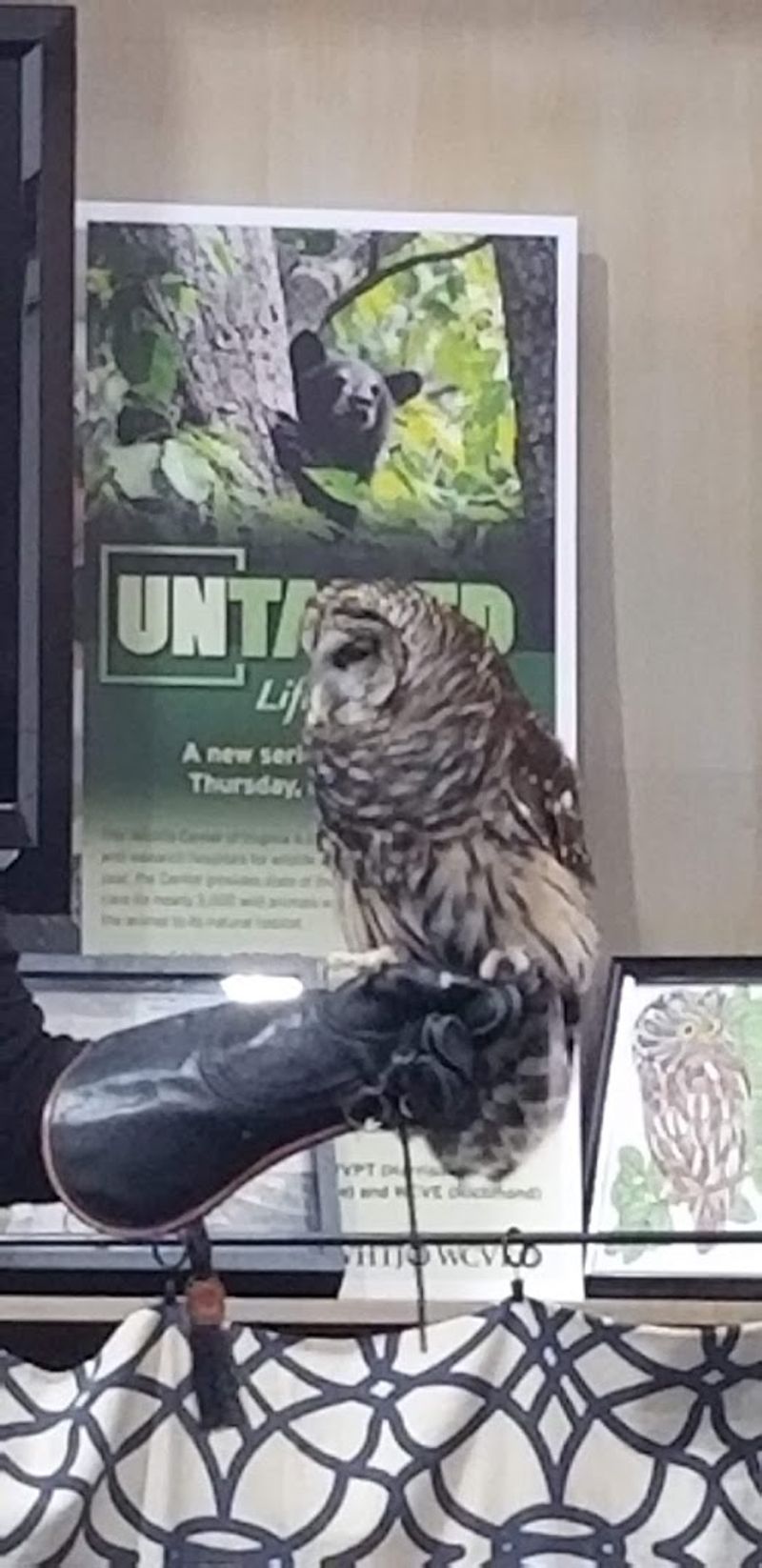
Athena the Barred Owl has a name that suits her perfectly. Wise, watchful, and quietly commanding, she is one of the most popular ambassador animals at the Wildlife Center of Virginia, and seeing her up close is a total treat.
Barred owls are native to Virginia and are known for their distinctive hooting call. Athena cannot be released into the wild, so she has taken on the important role of connecting humans to the natural world through education programs and tours.
She is joined by a full crew of raptor ambassadors, including hawks and falcons, each with their own backstory and personality. Raptors as a group tend to carry this electric, alert energy that keeps you completely focused on them.
The Center’s staff share fascinating details about each bird’s biology, hunting instincts, and ecological role. You leave with a genuine appreciation for how these predators keep Virginia’s ecosystems balanced.
Athena and her raptor companions are living proof that wildlife hospitals are not just about treating injuries. They are about rebuilding the relationship between humans and the wild, one awestruck face at a time.
That mission lands beautifully during every tour.
Group Tours for Schools, Clubs, and Organizations
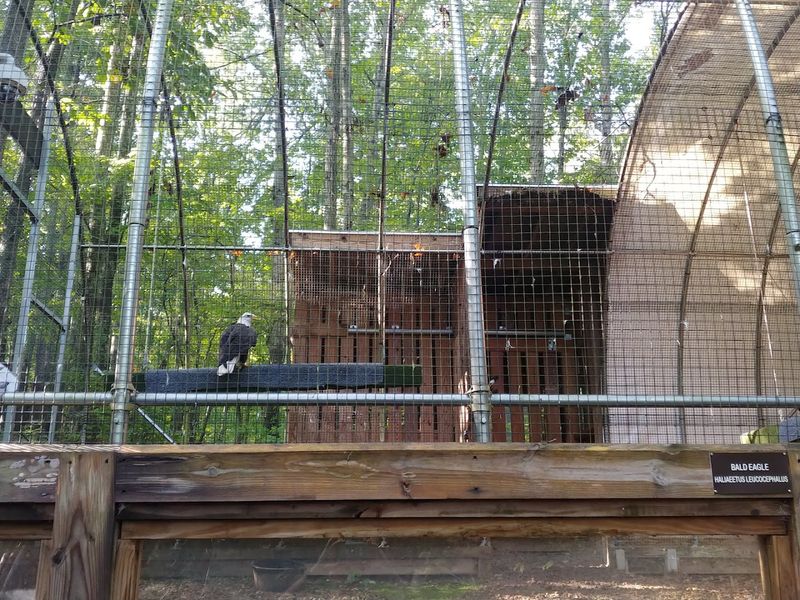
Got a class of curious kids, a nature-loving club, or an organization looking for a genuinely unforgettable outing? The Wildlife Center of Virginia offers dedicated group tours designed to deliver real educational impact.
Groups of up to thirty people can book a guided experience that walks them through the workings of a real wildlife hospital. This is not a watered-down version of the experience; it is the full behind-the-scenes treatment.
Participants get to meet education ambassadors including owls, hawks, falcons, and an eagle. For younger students especially, this kind of direct encounter with native wildlife sparks curiosity that no classroom activity can replicate.
The tour guides are knowledgeable, engaging, and clearly passionate about what they do. Questions are welcomed, tangents are encouraged, and nobody leaves without learning something genuinely surprising about Virginia’s native species.
Teachers often report that the group tour becomes one of the most-talked-about field trips of the school year. It is one thing to read about wildlife conservation; it is another thing entirely to stand in front of a living, breathing bald eagle and feel the weight of that responsibility personally.
Book well in advance, because demand is real.
The Critter Cams You Can Watch From Your Couch
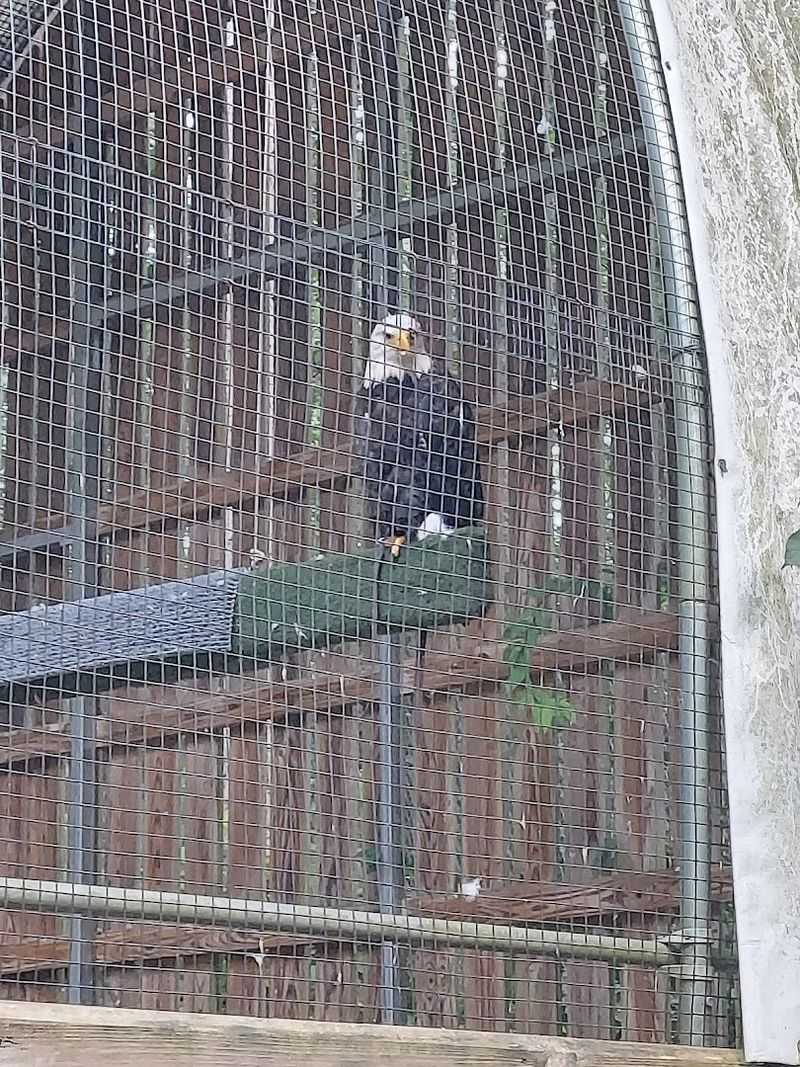
Not everyone can make the drive to Waynesboro, and the Wildlife Center of Virginia absolutely understands that. Their solution is brilliant: live Critter Cams that stream real-time footage of patients and ambassador animals directly to your screen.
These cameras are set up inside enclosures and recovery areas, giving you a genuine window into daily life at the hospital. You might catch a hawk resting on a perch, or a turtle slowly navigating its recovery habitat.
The Critter Cams are free to access online and have developed a loyal following of wildlife enthusiasts who check in regularly. It is oddly soothing to watch a recovering animal go about its day, knowing it is in expert hands.
For families with young children, the cams are a fantastic educational tool that requires zero prep and zero travel. Pop one open during breakfast and suddenly the whole morning conversation is about native Virginia wildlife.
The Center also offers virtual and online educational programs, extending its reach far beyond the Shenandoah Valley. Virginia’s wildlife hospital has found a way to connect with people across the country, proving that conservation education does not have to stop at a physical address.
The Gift Shop and Ways to Support the Mission
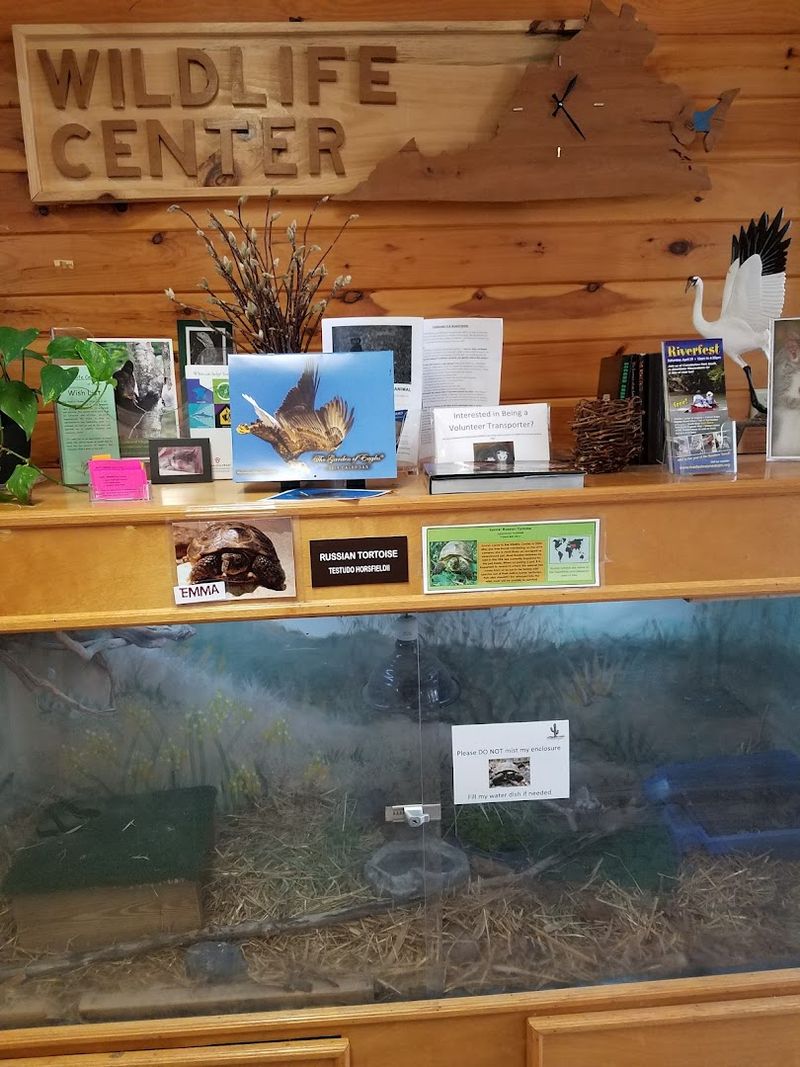
Good news for anyone who wants to bring a piece of the experience home: the Wildlife Center of Virginia has a gift shop, and it is exactly the kind of place where you accidentally spend more than you planned.
Wildlife-themed merchandise, educational materials, and items that support the Center’s ongoing work fill the shelves. Every purchase directly contributes to the care of animals being treated at the hospital.
Beyond shopping, there are several other meaningful ways to support the mission. Donating to fund an ambassador animal’s annual care is a popular option, especially as a holiday or birthday gift for the nature lover in your life.
The Center also relies on a network of dedicated volunteers and transporters who help move injured wildlife to the facility. If driving matters to you, becoming a transport volunteer is a hands-on way to make a real difference.
Financial donations keep the hospital running, fund research, and allow the staff to continue training the next generation of wildlife veterinarians. Virginia’s wild animals cannot advocate for themselves, so places like this do it for them.
Supporting the Wildlife Center of Virginia, even in a small way, puts you on the right side of that story.
What Happens When You Bring In an Injured Animal
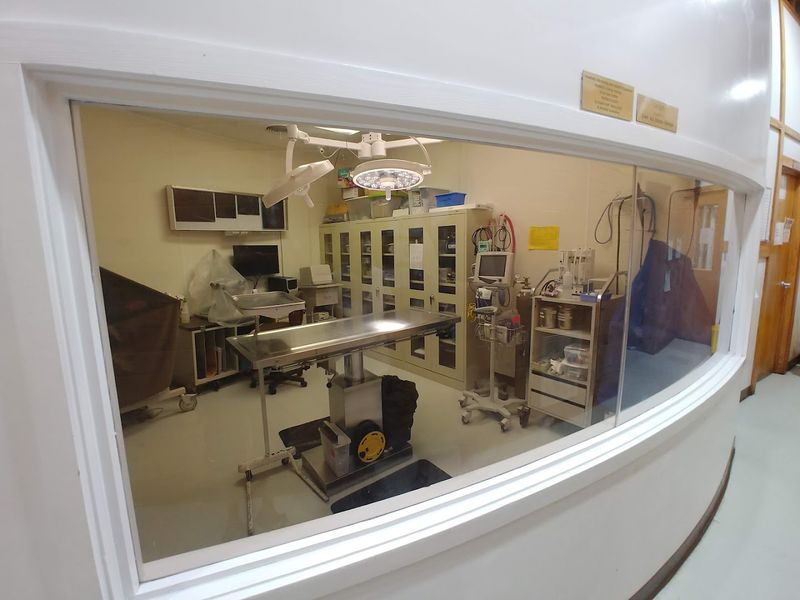
Stumbling across an injured animal on a Virginia roadside is one of those moments where most people freeze, unsure what to do. The Wildlife Center of Virginia takes the guesswork out of it completely.
The Center accepts injured and orphaned native wild animals brought in by members of the public. When you arrive, staff handle the intake process with efficiency and genuine care, and the animal immediately enters the hospital system.
You receive a patient number, which means you can actually follow the recovery of the animal you helped save. That small detail transforms a stressful roadside encounter into something meaningful and trackable.
The Center’s after-hours line ensures that emergencies do not get left until morning. Staff respond quickly, offering guidance on safe transport and immediate care so the animal has the best possible chance before arriving at the facility.
Everything from injured hummingbirds to box turtles with abscesses has been successfully treated here. The range of species the Center handles is a testament to both the biodiversity of Virginia and the extraordinary skill of the veterinary team.
Knowing this resource exists makes driving through rural Virginia feel a little less daunting when wildlife crosses your path.
Practical Tips Before You Plan Your Visit
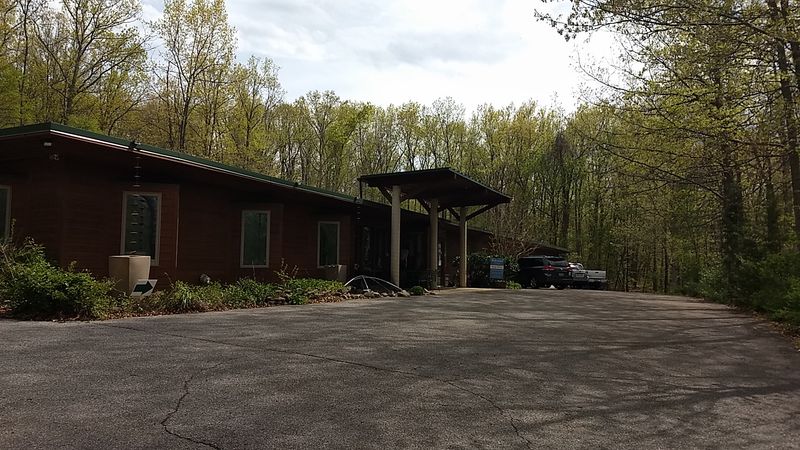
A little planning goes a long way when visiting the Wildlife Center of Virginia, and a few key details will make your experience smooth and genuinely enjoyable from start to finish.
Open House tours are free but require advance reservations, and they fill up fast. Check the Center’s official website at wildlifecenter.org regularly for updated tour dates across spring, summer, and fall.
Tours are not recommended for children under the age of five, so plan accordingly if you are bringing little ones. The program starts in an outdoor pavilion accessible by stairs, and parts of the route cover uneven, sloped terrain outdoors.
If mobility is a concern, contact the Center ahead of your visit. Accommodations can be arranged, and the staff are genuinely accommodating when given advance notice.
Nobody should miss out on this experience due to accessibility barriers.
The Center is open most days of the week, with regular hours that make planning a day trip from nearby cities in Virginia straightforward. Wear comfortable shoes, bring layers if visiting in cooler months, and arrive a few minutes early.
The experience moves at a relaxed pace, so there is no need to rush. Give yourself time to absorb every moment, especially when you are standing face to face with a bald eagle.
Finding the Wildlife Center of Virginia in Waynesboro
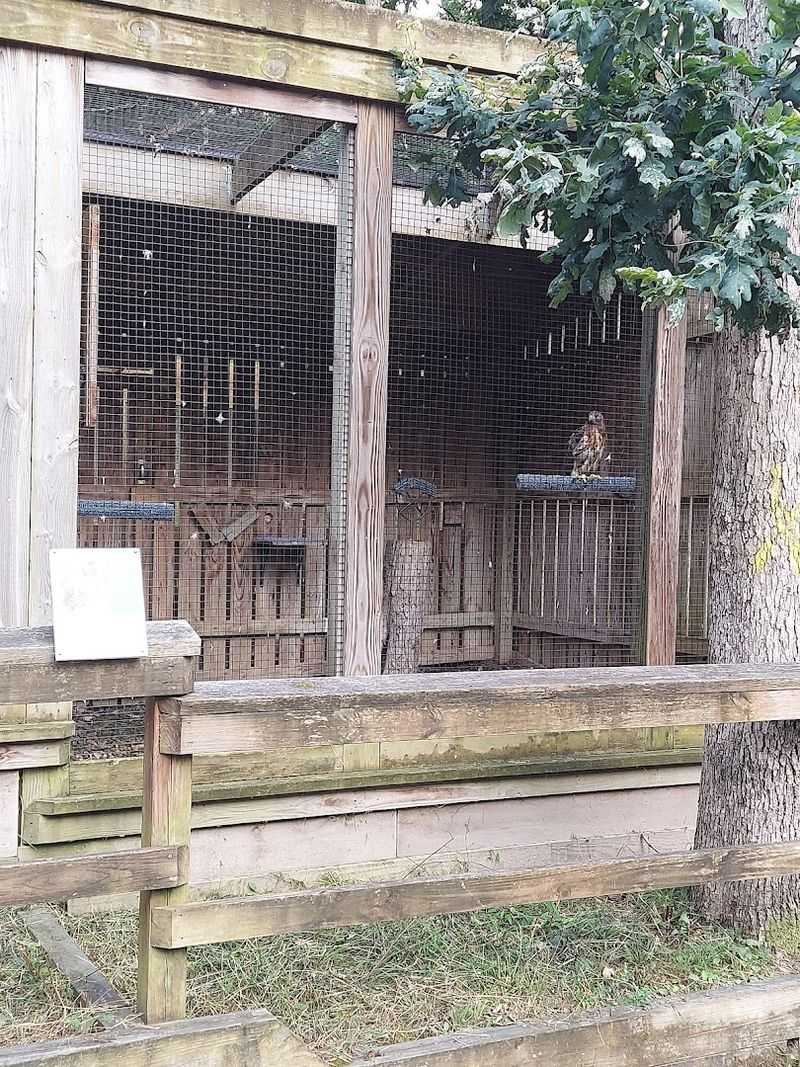
Waynesboro sits in the Shenandoah Valley at the foot of the Blue Ridge Mountains, making it one of the most scenic drives in all of Virginia. Getting to the Wildlife Center of Virginia is half the adventure.
The Center is located at 1800 S Delphine Ave, Waynesboro, VA 22980. It is easy to find, and the surrounding area rewards any extra time you spend exploring.
The Valley’s natural beauty makes this region one of Virginia’s most underrated corners.
From Charlottesville, the drive takes roughly forty minutes heading west on I-64. From Staunton, it is just a short hop south.
The location puts it within comfortable day-trip range for a huge swath of the mid-Atlantic region.
While you are in the area, Waynesboro itself has a charming downtown worth exploring before or after your tour. The Blue Ridge Parkway entrance is nearby, offering stunning views that pair perfectly with the wildlife-focused mindset you will have after your visit.
Reach the Center directly at 540-942-9453 with any questions about tours, animal intake, or programs. The staff are responsive, knowledgeable, and enthusiastic about helping you plan your visit.
Virginia has no shortage of remarkable destinations, but this one belongs at the very top of your list.
