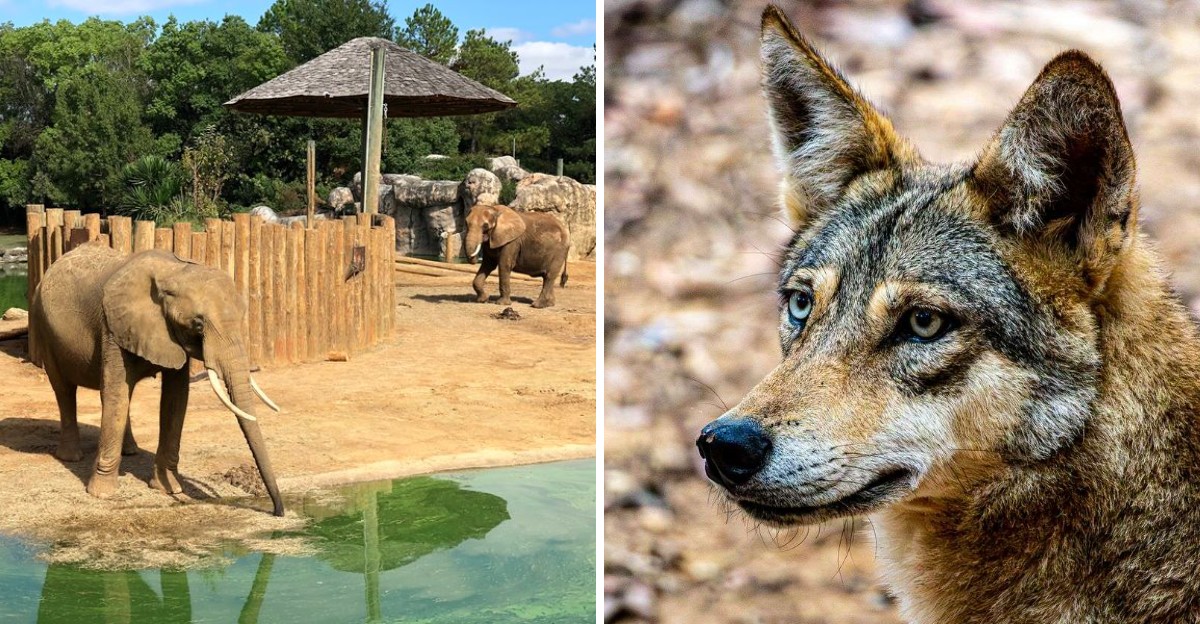
Someone asks where the wolves are. The answer is surprisingly easy.
Right there. The harder question is how many are left.
Fewer than 30 American red wolves remain in the wild, making the pair living here among the most unusual animals to encounter during an ordinary zoo visit.
Pearl and Sentinel share their Alabama habitat with a much bigger cast of animals, from giraffes and pygmy hippos to species spread across five continental realms.
There is even a skylift overhead and a train circling the park. But once you learn what the wolves represent, the rest of the zoo suddenly feels different.
The giraffes are impressive. The wolves are a conservation emergency with fur.
Pearl and Sentinel, The Rarest Wolves You Will Ever Stand Beside
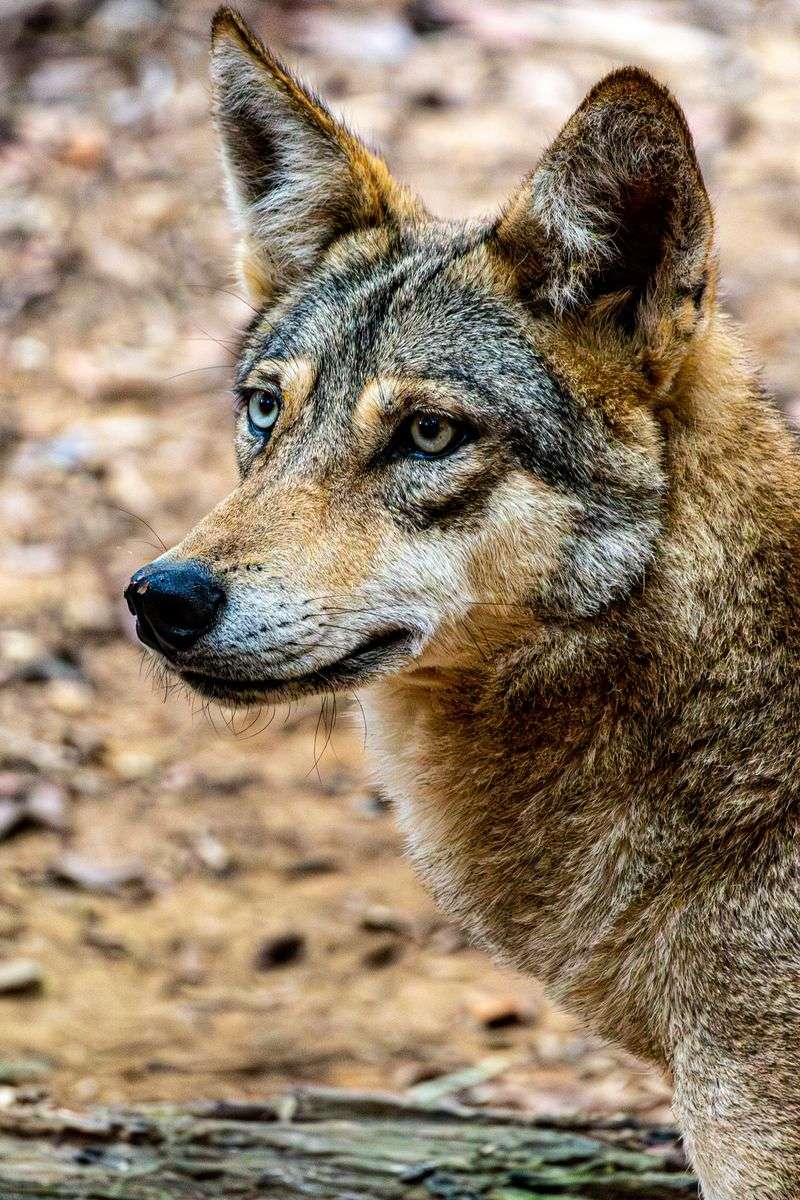
Fewer than 30 American red wolves roam free anywhere on Earth. That single fact changes how the habitat along the North American Interpretive Trail feels once visitors realize what they are looking at.
Pearl, a four-year-old female, came from the North Carolina Zoo. Sentinel, a three-year-old male, arrived from the Akron Zoo, and both settled into Montgomery in April before their refurbished space reopened to guests.
Their personalities differ in ways that become obvious after a few minutes of patient watching. Pearl is the bold one, often out in the open, sniffing around and covering ground.
Sentinel prefers his den during busy daytime hours, so spotting him takes luck and a quiet approach.
Red wolves once ranged across the southeastern United States, moving through swamps, coastal prairies, forests and grasslands. Slimmer than gray wolves, they carry long legs, oversized ears and a coat of reddish-brown streaked with black and gray.
They live in tight family packs and talk to each other through scent marks, posture, expressions and howls that carry a long way.
Habitat loss, human pressure and interbreeding with coyotes pushed the species to the edge by the 1970s. Montgomery Zoo works with the Red Wolf SAFE Program, and roughly 200 to 250 red wolves now live in managed care nationwide.
Pearl and Sentinel are not a breeding pair, but their job as ambassadors matters enormously.
Five Continents Packed Into 42 Alabama Acres
Africa, Asia, Australia, North America and South America all sit within a comfortable walk of each other here. Shaded paths connect them, which matters in an Alabama summer.
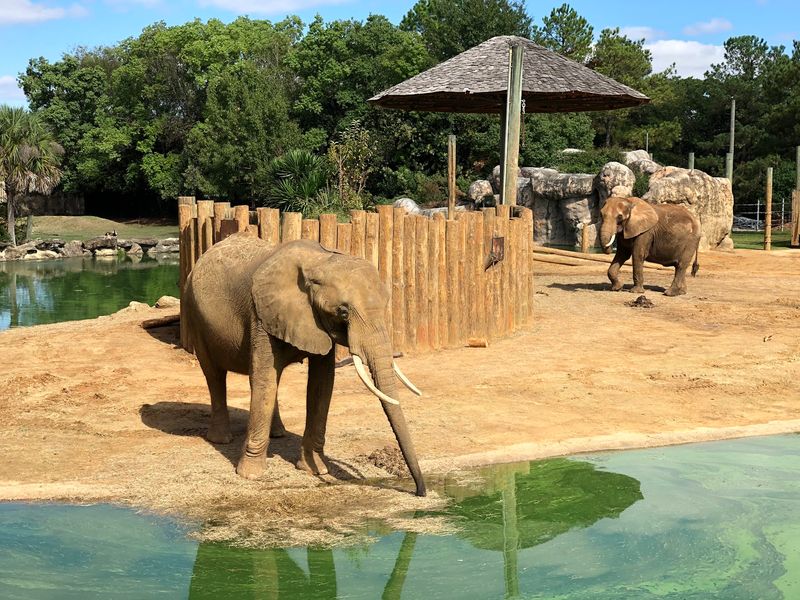
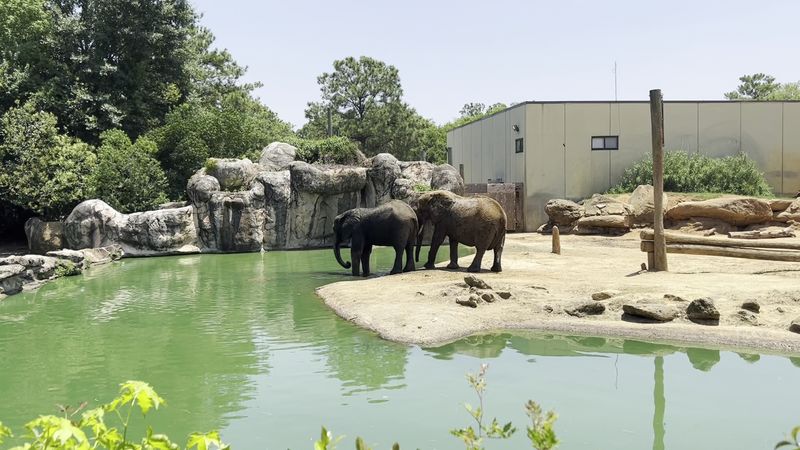
The African Realm claims the largest footprint. Its savanna elephant habitat, opened in 2005, includes waterfalls, a big pool and enrichment items scattered around for the herd.
From the Overlook Cafe, elephants and hoofed animals appear to share one endless plain.
Reticulated giraffes stand nearby, along with bontebok, ostriches, eastern bongos, Grant’s zebras, greater kudu, grey crowned cranes, marabou storks and pygmy hippos. A bachelor herd of four Nile lechwe recently joined the African Forest exhibit.
Four ostrich chicks named Navy, Chickpea, Lima and Green Bean brought fresh chaos to the area.
Asia delivers Bengal tigers in both white and orange, plus the Indian rhinoceros with its armored-looking grey-brown hide and single horn. Banteng, sika deer, blackbuck, nilgai and sarus cranes fill out the rest.
North America holds the red wolves alongside black bears, bald eagles, Canadian lynx, cougars, river otters, elk, bison and alligator snapping turtles.
South America is the oldest section, home to jaguars, ocelots, maned wolves, giant anteaters, capybaras, Andean condors and Chilean flamingos. The flight aviary there puts birds directly overhead.
Australia is being redeveloped, though Parakeet Cove and the binturong boardwalk remain open.
Nose To Nose With An 18-Foot Giraffe
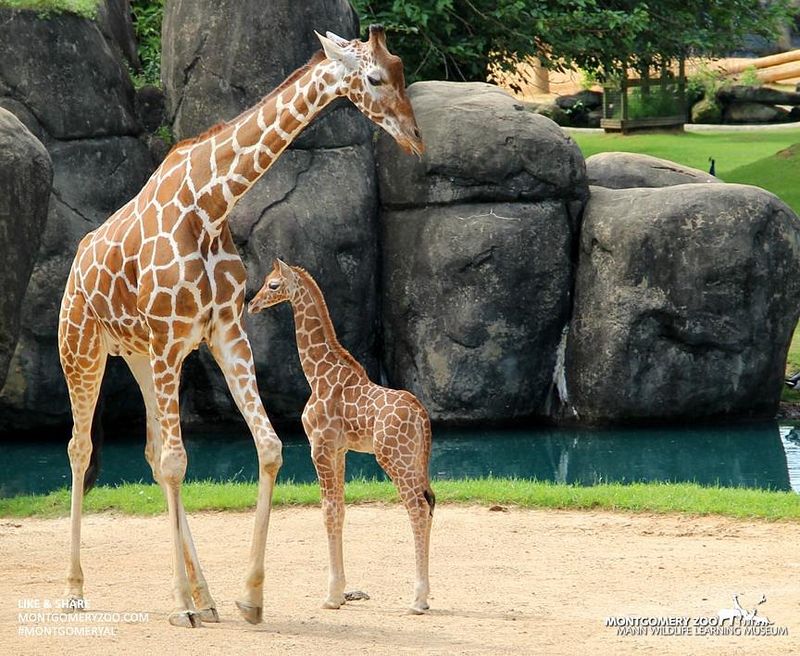
Few things rearrange a person’s sense of scale like a giraffe tongue reaching for lettuce held in an outstretched hand. The Giraffe Encounter puts guests on a wooden deck above a moat, right at head height with animals that stretch 18 feet tall.
Private guided access comes with the experience, along with a feeding session, a keeper chat and time to snap photos worth keeping.
Water lovers get their own destination. Waters of the World replaced the old Stingray Bay and now runs four tanks representing Asia, the Middle East, the Amazon and Orinoco basins, the Red Sea, the Pacific and the Americas.
Freshwater fish, turtles, stingrays and aquatic plants fill the space, and entry is included with regular admission.
Behind-the-scenes tours dig deeper. Options cover tigers, elephants, giraffes, African hoofstock, pygmy hippos, stingrays and alligators, each revealing how daily care actually works.
Capybara, pygmy hippo and anteater encounters round out the interactive lineup for anyone wanting closer contact with unusual animals.
Zookeeper talks happen daily and tend to be casual, with real answers to real questions.
Parakeet Cove stays a crowd favorite. Buy a seed stick, hold still, and a bright green bird will likely land on it.
A Tortoise Trek encounter is currently in development, so future visits should offer something new.
Fossils, Fur And A Dire Wolf Skull At The Mann Museum
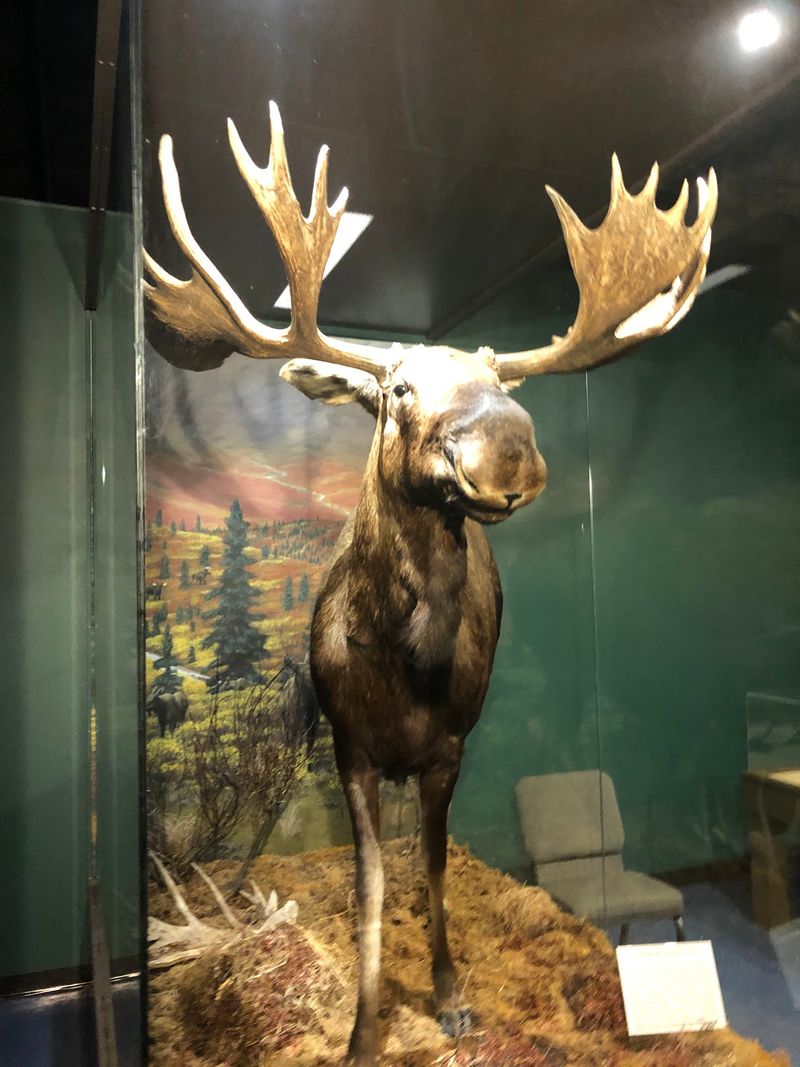
Right next to the zoo grounds sits 28,000 square feet of indoor wildlife exploration that many first-time guests do not expect. The Mann Wildlife Learning Museum holds more than 270 displays devoted to North American animals.
George Mann, an outdoorsman and respected authority on the continent’s wildlife, founded the collection and spent his life connecting conservation with education.
What sets the dioramas apart is the authenticity of the materials. Plants, rocks, trees, dirt and sand were gathered from the very locations where the displayed animals once lived.
Painted murals stretch behind each scene, filling in the horizon.
Entire families of deer, bears, skunks, quail, grouse, wild turkeys, pheasants, foxes and wild cats appear across the exhibits.
Hands-on stations invite guests to run fingers across different furs and antlers, which children tend to revisit two or three times.
Freshwater and saltwater fish, reptiles, birds and small mammals broaden the picture of North American biodiversity considerably.
Then comes the prehistoric section. Authentic fossils sit alongside displays about saber-tooth cats and woolly mammoths, plus a 40,000-year-old mold of a dire wolf head that pairs strangely well with the living red wolves outside.
During construction of the new admissions and gift shop complex, guests currently enter and exit the zoo through the Mann Museum, so nobody accidentally skips it.
Conservation Work That Reaches Far Past The Fence Line
Eight pygmy hippo calves in nine years is a genuinely impressive record for any zoo. The most recent, a calf named Anuket, arrived in February 2025, adding to a global population of only about 3,000 pygmy hippos.
Species Survival Plans guide much of this work. Montgomery participates in cooperative programs for the maned wolf, pygmy hippopotamus, Andean condor and giant anteater, coordinating with other institutions across the country.
The Red Wolf SAFE Program partnership ties directly to Pearl and Sentinel, connecting one Alabama habitat to a nationwide recovery effort.
Fundraising is underway for a new reptile facility, with the critically endangered Indian gharial planned as its signature resident. Money raised supports research, breeding and hatchling survival in the gharial’s native rivers, where roughly 650 adults remain.
Education carries equal weight. The zoo’s education department reaches thousands of school-aged children every year, planting curiosity early.
Smaller habits add up too. Blue recycling bins for bottles and cans sit throughout the grounds, and the gift shop dropped plastic bags back in 2020 in favor of complimentary cloth totes.
Plastic lids, straws and balloons are banned at the Overlook Cafe and across the park, a policy that protects animals from swallowing debris. Digital maps replaced most paper handouts, cutting litter along the paths considerably.
Skylifts, A Brand New Train And A Snow Leopard Named Sierra
Tired feet find relief about halfway through the day, and that is usually when the Zoofari Skylift Adventure Ride starts looking irresistible. Gliding above the park reveals how the 42 acres fit together, with habitats unfolding below like a living map.
The McMonty Express Train has hauled families around the perimeter for decades. Engine No. 2025, an eco-friendly electric model, recently debuted and runs noticeably quieter than its predecessors.
Reptile Junction sits near the train station as a rotating temporary exhibit. Snakes, brightly patterned lizards and other scaled residents hold court while funds accumulate for the permanent reptile facility.
Waters of the World doubles as a genuine attraction rather than a quick stop, with aquatic species pulled from river basins and oceans worldwide.
Lunch at the Overlook Cafe comes with African ungulates and elephants moving across the view, which beats a standard picnic table by a wide margin.
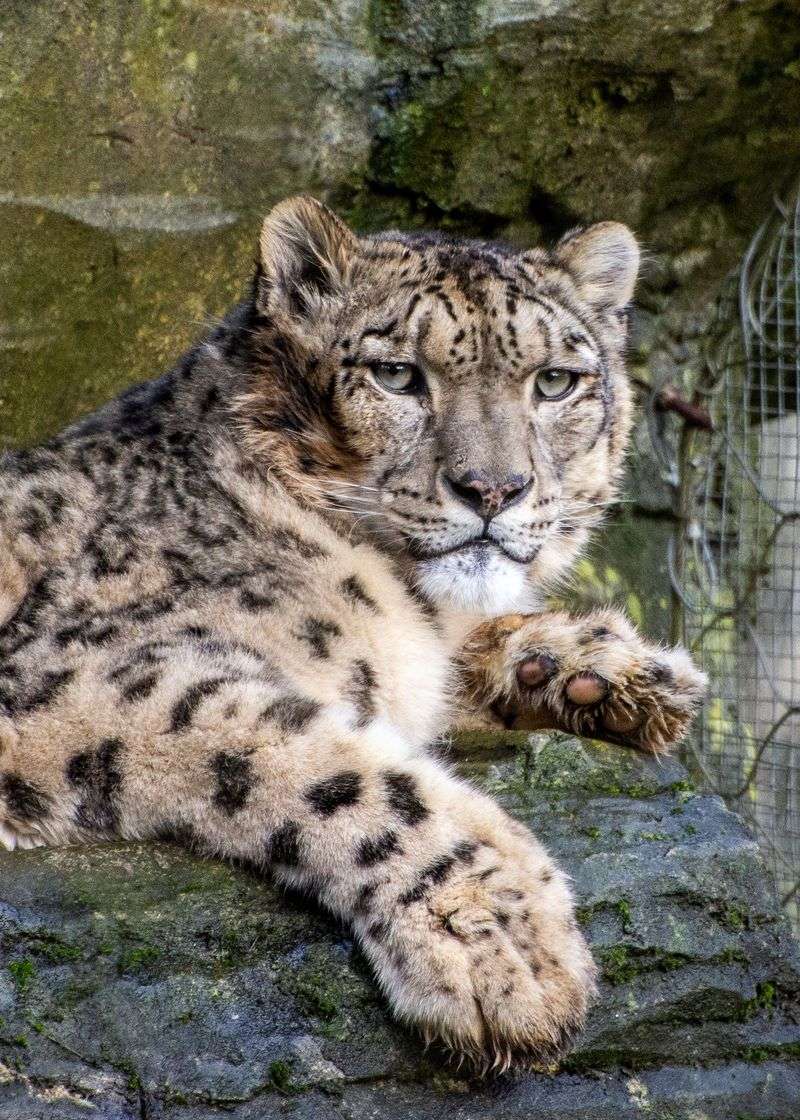
Sierra, a snow leopard, headlines a newly opened exhibit that strengthens an already strong big cat lineup.
Caribbean flamingo chicks hatched here for the first time in more than twenty years, a quiet win earned through careful nesting conditions.
Bigger changes are coming. A new admissions and gift shop complex is slated for 2026, and the City of Montgomery’s Planetarium will relocate to the zoo grounds.
A Park Built For Wandering At Kid Speed
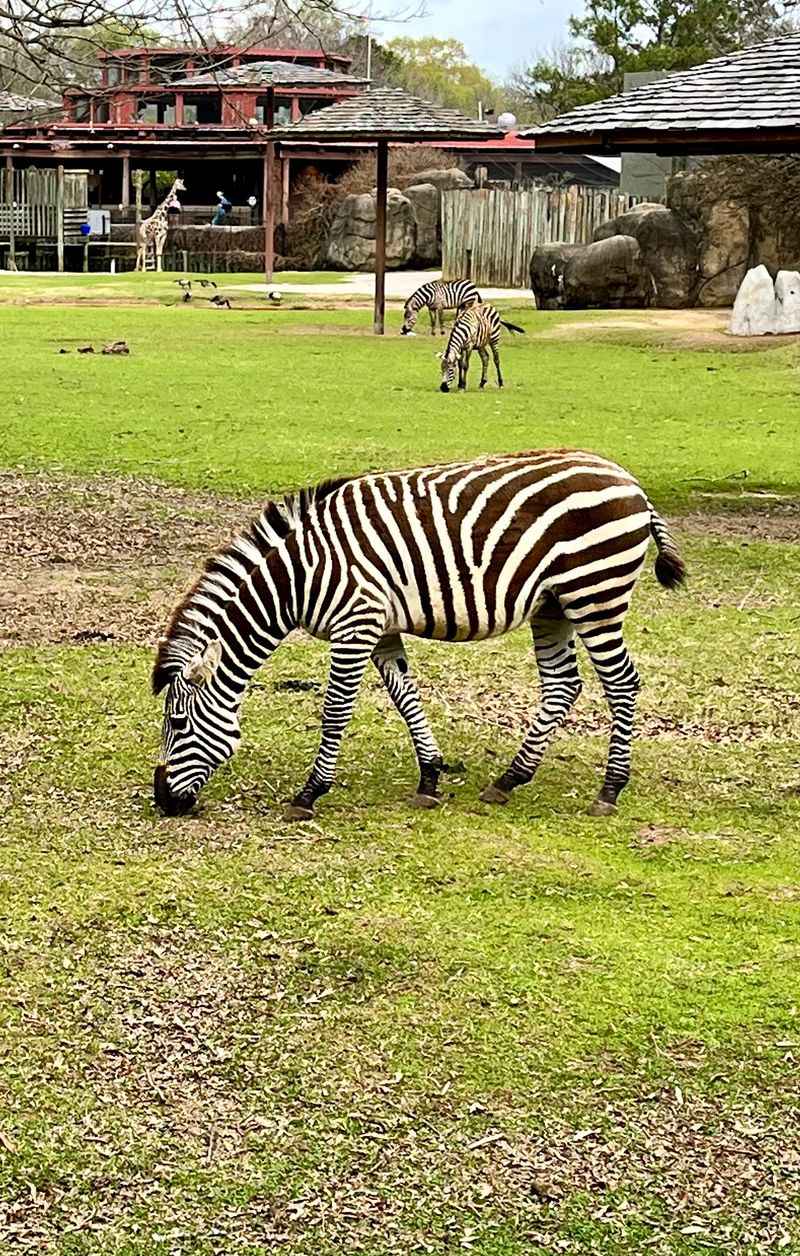
Back in 1920, this place started as a modest children’s zoo. That origin still shows in how the park treats young visitors, with plenty of room to wander and no pressure to rush.
Shaded walking paths wind through all 42 acres, giving strollers, wagons and short legs a manageable route.
Barrier-free habitats form the backbone of the design. Instead of thick bars, moats and clever landscaping open up clear sightlines, so animals appear closer than expected and behave more naturally in settings built to echo their wild homes.
Daily zookeeper talks stay conversational, often ending in question-and-answer sessions where nobody’s curiosity gets dismissed.
A downloadable Zoo Scavenger Hunt turns an ordinary walk into a mission. Kids scan habitats looking for specific details, and parents suddenly find themselves reading every exhibit sign.
The Mann Wildlife Learning Museum extends that learning indoors with touch-and-feel elements that appeal to toddlers and grandparents alike.
Everything sits at 2301 Coliseum Parkway in Montgomery, easy to reach and easy to spend an entire day exploring without feeling hurried.
Between the continental realms, the interactive encounters and the red wolves quietly representing a species hanging on by a thread, the takeaway is bigger than a fun afternoon. Visitors leave with a sharper sense of why places like this keep fighting for animals most people will never see in the wild.
