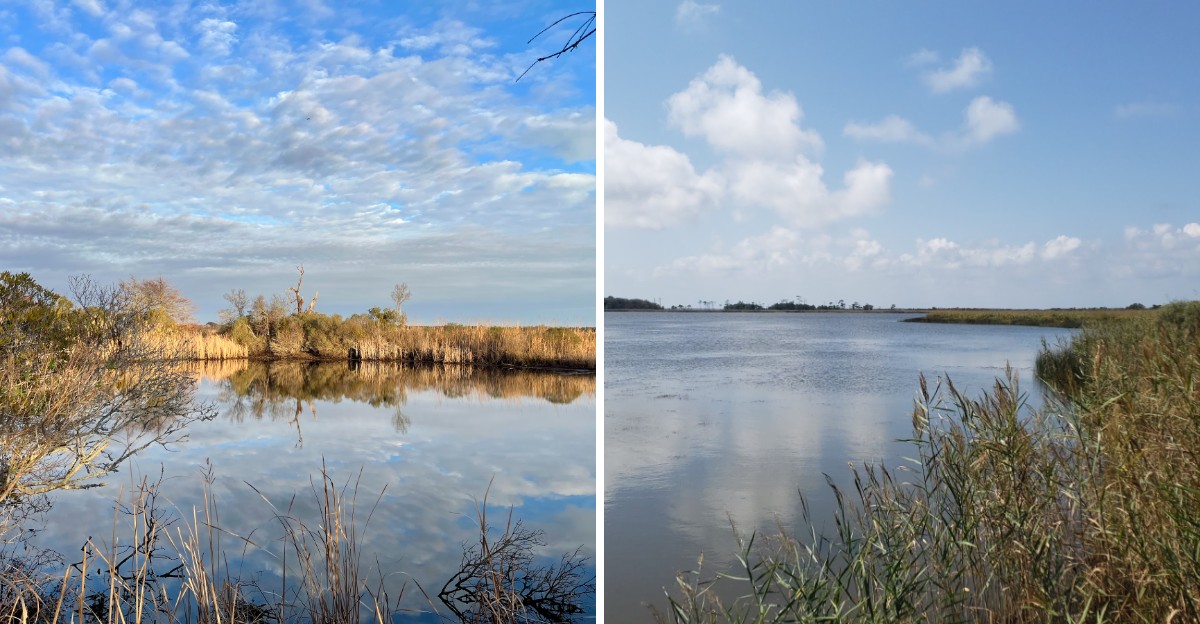
Migration season brings something spectacular to this quiet stretch of Virginia coast. Tens of thousands of waterfowl pass through every year, and the refuge gives you a front-row seat.
Ducks, geese, swans, and other birds stop here to rest and feed before continuing their journey. The best viewing is in the early morning or late afternoon, when the light is soft and the birds are most active.
There are trails and observation points throughout the refuge, making it easy to find a quiet spot and watch the show. Bring binoculars and a camera, and dress for the weather.
The refuge is a protected area, so visitors are asked to keep a respectful distance and stay on designated paths. Virginia has plenty of wildlife spots, but this one offers a migration spectacle that is hard to match.
Winter Turns The Marsh Into A Waterfowl Superhighway
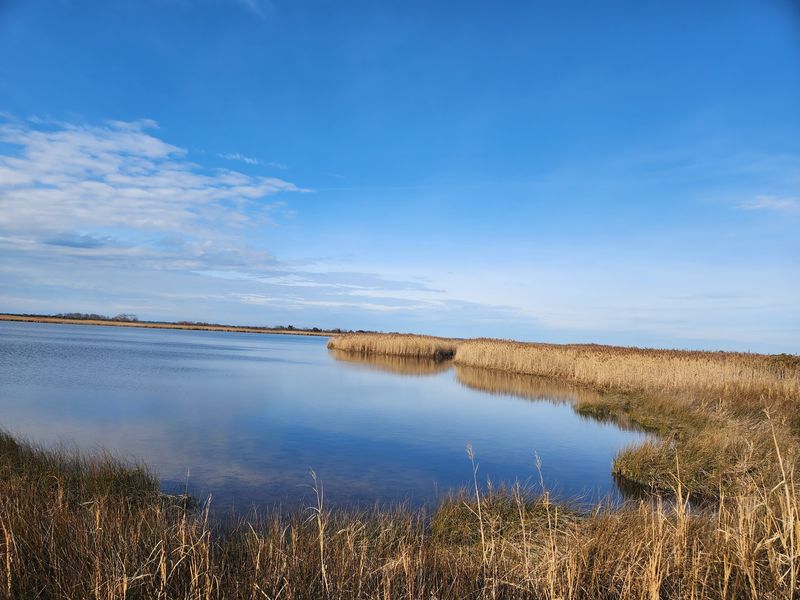
Cold weather flips a switch out here. When northern lakes freeze solid, birds that summered in the Arctic come barreling down the Atlantic Flyway looking for open water, and this stretch of coastal Virginia is exactly the pit stop they want.
Snow geese arrive in noisy white clouds. Tundra swans glide in like they own the place.
Ducks of every description crowd the freshwater impoundments behind the dunes.
Numbers can climb into the tens of thousands during peak season, which usually stretches through the coldest months. The sound alone is worth the trip, a constant chatter that rolls across the water.
Bring binoculars. Seriously, bring them.
Distances across the marsh are deceiving, and a good pair turns distant white specks into swans with black bills and long elegant necks.
Early morning delivers the best light and the most activity. Mid afternoon tends to go quiet as birds settle in to rest.
Dress warmer than you think you need to. Wind comes off the bay with nothing to slow it down, and standing still while scanning the water gets chilly fast.
Boardwalks That Float You Right Over The Wetlands
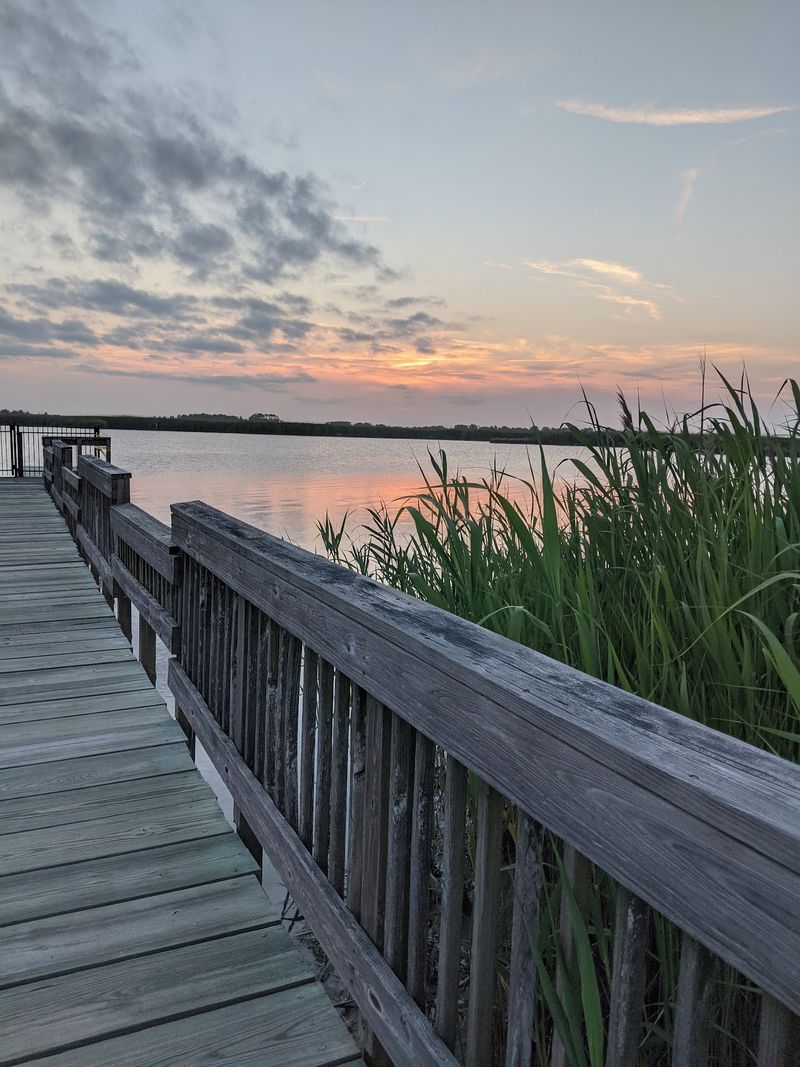
Nobody wants wet socks. Thankfully, a network of wooden boardwalks carries you above the soggy stuff, threading through marsh grass and low shrubs without you ever sinking into muck.
Planks stay well maintained and swept. Small signs along the way name the plants growing at your elbow, which turns a casual stroll into a low pressure botany lesson.
Short loops near the parking area make this section wonderfully doable for almost anyone. Strollers roll fine.
Wheelchairs manage many stretches.
Families with restless kids love the setup because the payoff comes quickly. You step out of the car, walk a few minutes, and suddenly there is water on both sides and birds overhead.
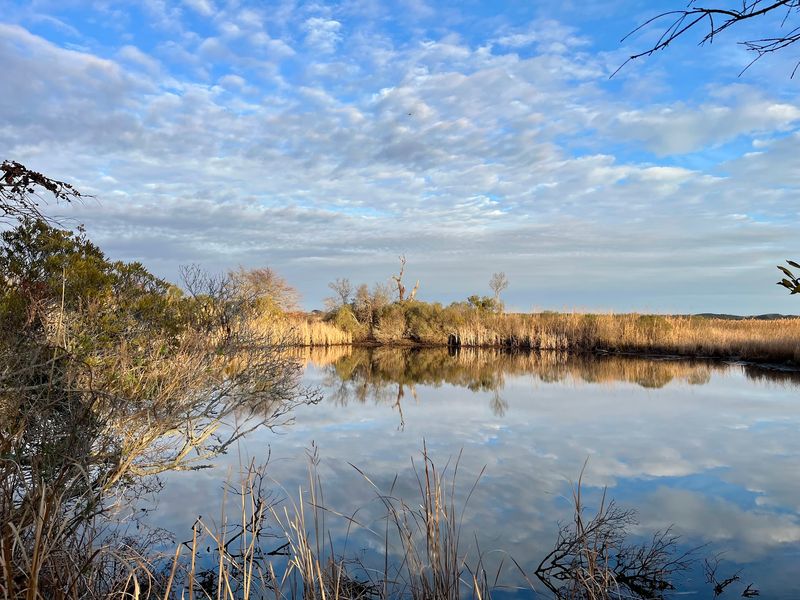
Photographers should linger here. Railings double as handy camera rests, and the reflections in still marsh water can be spectacular when the wind drops.
Watch your footing after rain since boards get slick. Move slowly and quietly, because herons and egrets tolerate calm walkers far better than thundering ones.
Back Bay National Wildlife Refuge packs a remarkable amount of habitat into these short elevated walks.
Bikes Unlock The Miles You Cannot Drive
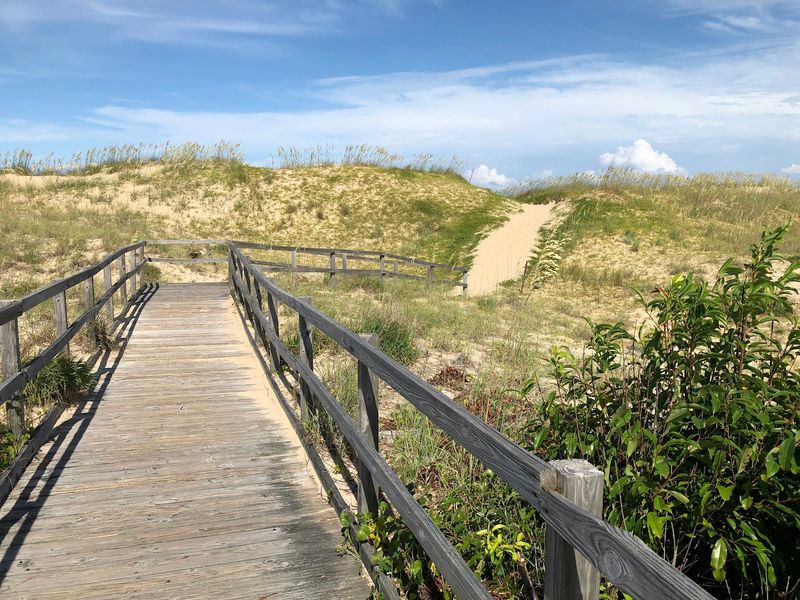
Cars stop at the parking lot. That rule is the best thing that ever happened to this place, and it is why two wheels beat four every single time.
Beyond the lot, gravel dike roads run south for miles between the bay and the ocean. Pedaling them feels like riding through a nature documentary with the volume turned up.
Bird activity increases the farther you get from the trailhead. Turtles sun themselves on the banks.
Ospreys patrol overhead.
Hybrid or mountain style tires handle the surface best, since skinny road tires struggle on loose gravel and sandy patches. Rentals are available in the surrounding area for anyone traveling light.
Pack water, because there is nowhere to buy anything once you pass the entrance. Same goes for snacks, sunscreen and repellent.
Shade is basically nonexistent along the dike roads, so a hat earns its keep. Heat builds quickly in summer months.
Cyclists and walkers enter without the vehicle fee, which is a sweet little bonus for anyone rolling in on a bike from the Sandbridge area of Virginia.
An Empty Atlantic Beach Without The Crowd Noise
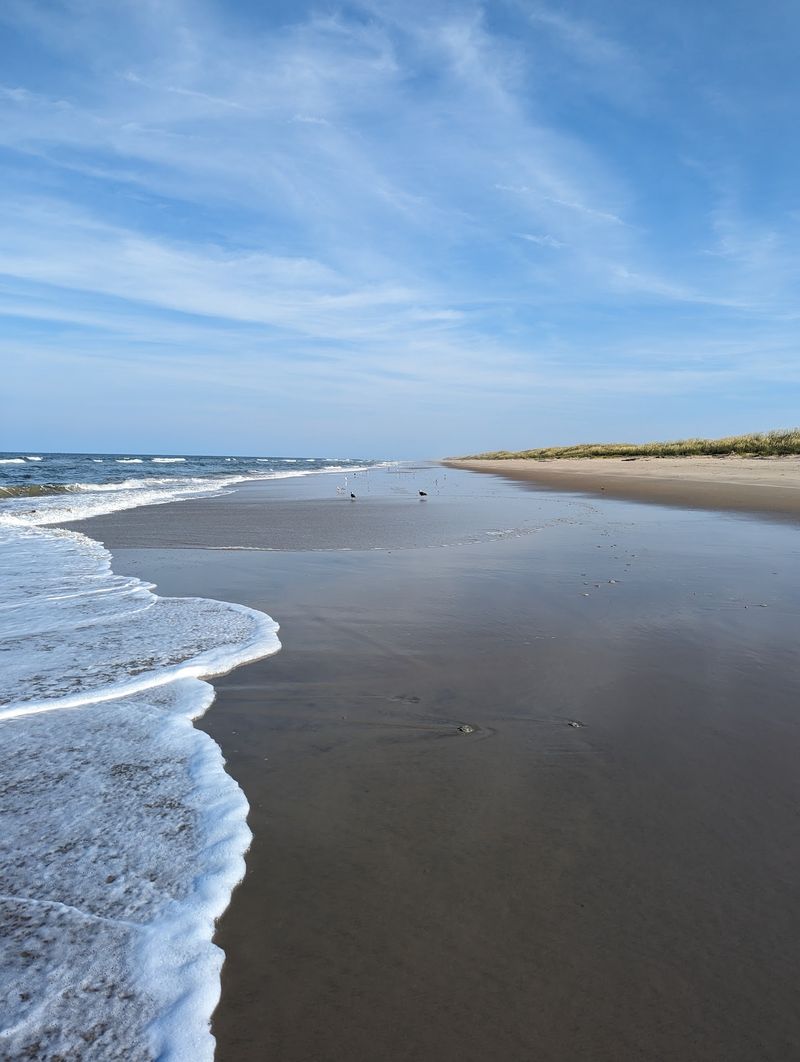
Cross the dune line and the entire mood changes. Marsh stillness gives way to surf, salt spray and a shoreline that often holds almost nobody.
Sand stretches in both directions, broken only by shells, driftwood and shorebird tracks. Sanderlings sprint along the wet edge like wind up toys.
Swimming is not the point here, and lifeguards are not on duty. Beachcombing, photography and simply standing still absolutely are.
Shell hunting rewards early risers, especially after a storm has churned things up offshore. Whelks and scallop shells show up regularly.
Access comes by short boardwalks from the main trail system, so you do not have to trudge far. Wooden steps drop you right onto open sand.
Compare it to the packed resort strip a few miles north and the contrast is almost comical. Same ocean, completely different energy.
Sunrise over the Atlantic from this beach ranks among the quietest, most unhurried mornings anywhere along the Virginia coast, and you will likely share it with more birds than people.
Rangers Who Actually Know Every Feather Out There
Knowledge makes a difference. Staff working these trails can identify a duck by silhouette at absurd distances and tell you exactly which impoundment is holding birds on any given week.
Ask questions. Rangers here are genuinely generous with tips about timing, tides and which loop is producing sightings.
They also keep an eye on conditions, which matters more than you might expect on a hot, exposed barrier island with limited shade.
Stories circulate about rangers going far out of their way to help people who overheat or run out of steam on the long southern trails. That kind of attentiveness shapes the whole experience.
Seasonal programs and guided walks pop up through the year, and checking the official schedule before you go is smart planning.
Trail closures happen too, usually to protect nesting birds or resting waterfowl, and staff will steer you toward what is open.
Treat their guidance as free expertise you would otherwise pay for. Few places in Virginia hand you that kind of help at the front gate.
The Visitor Center Sets You Up Before You Wander
Start indoors if the doors are open. Exhibits inside walk you through the habitats waiting outside, from freshwater marsh to maritime forest to windswept dune.
Displays cover the birds you are most likely to spot, plus the reptiles and mammals sharing the property. Knowing what to look for genuinely sharpens your eye.
Restrooms and the only parking on site sit right here, and every trail radiates out from this central hub.
Hours shift by season, and the building may be closed during the quietest winter stretch. Portable restrooms with handwashing stations usually cover the gap.
Maps available at the entrance are worth grabbing. Trail names like Bay, Dune, Seaside and Kuralt start blending together once you are out among the reeds.
Federal passes and the duck stamp are accepted at the gate, and you can purchase a pass on arrival if you do not have one.
Plan ahead for food and fuel, because once you pass the entrance to Back Bay National Wildlife Refuge, there is nothing to buy anywhere inside.
Kayaks And Paddleboards Get You Onto The Bay Itself
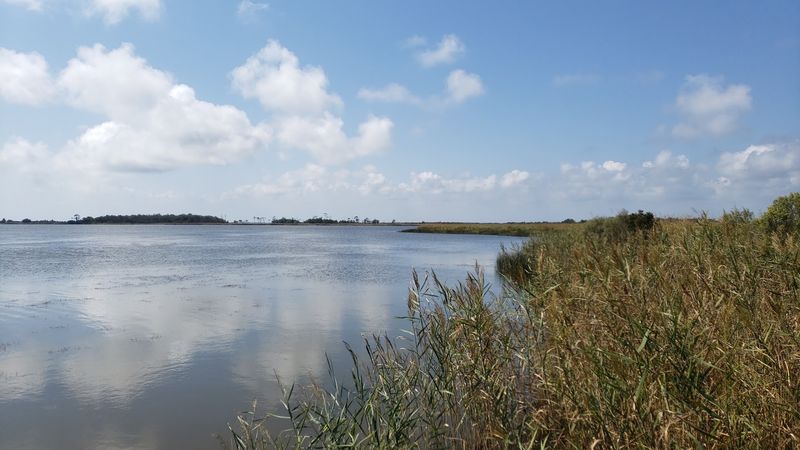
Water level changes everything. Sitting low in a kayak, eye to eye with the marsh, you see the back bay the way the herons do.
A launch area sits just off the parking lot near the accessible spaces, making the carry short and painless.
Bring your own boat, since rentals are not offered on site. Canoes, kayaks and paddleboards all work on these protected shallow waters.
Wind dictates the day. Calm mornings turn the bay into glass, while breezy afternoons can push you around more than you would like.
Paddle slowly along the edges where the grass meets open water. That seam is where the action happens, with wading birds stalking and fish flicking the surface.
Life jackets are non negotiable, and telling someone your route is simple common sense on open water.
Leave no trace on the water just as you would on land. The shallow bay habitat is fragile, and the whole reason this corner of Virginia hosts so much wildlife is that people have kept their impact light.
Sunsets That Make Photographers Lose Track Of Time
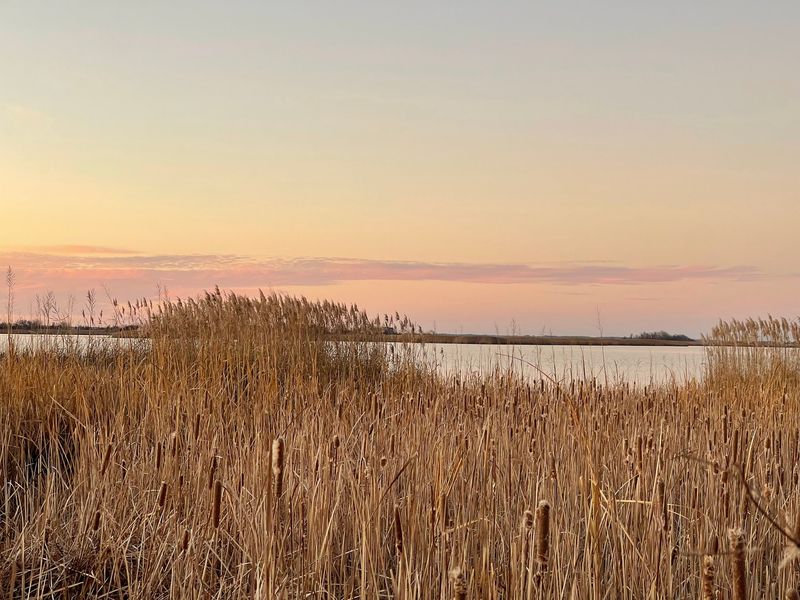
Golden hour here is almost unfair. Flat marsh, open bay and enormous sky combine into a natural amphitheater built for watching the light collapse into color.
Reflections double everything. Pinks and oranges spread across still water while the reeds go black in silhouette.
Observation points along the boardwalks give you clear western views over the bay, which is the direction you want as the sun drops.
Families book portrait sessions out here for good reason, and the backdrop rarely disappoints. The trails are easy enough that you can reach a great spot without hauling gear for miles.
Gates stay open until roughly a half hour past sunset, so know your exit timing and do not cut it razor thin.
A headlamp in your pocket removes all the stress from the walk back to the lot.
Mosquitoes wake up at dusk with tremendous enthusiasm, so long sleeves and strong repellent belong in your bag. Trust that advice from anyone who has lingered too long in a Virginia marsh at twilight.
Critters Beyond The Birds Keep Things Interesting
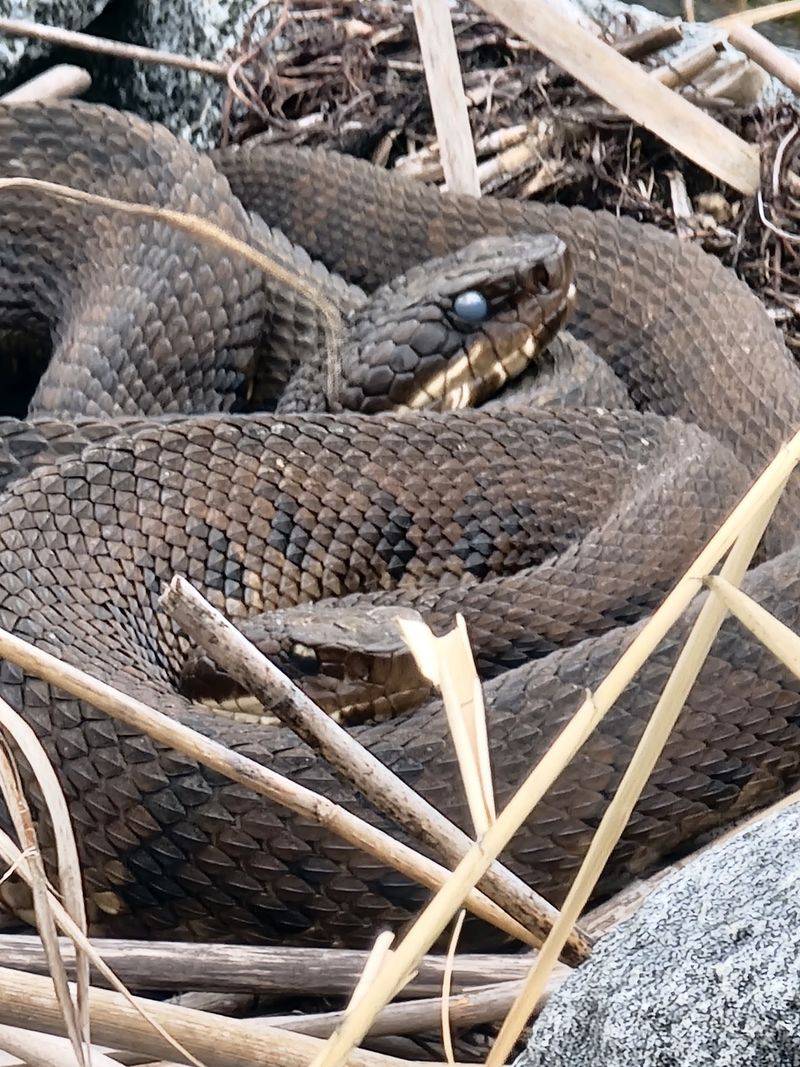
Feathers get the headlines, but the supporting cast is excellent. Turtles bask on the dike banks, rabbits bolt across gravel paths and dragonflies patrol the trail like tiny helicopters.
Deer show up in the maritime forest edges, often at dawn or dusk when foot traffic thins out.
Snakes live here too, including cottonmouths, and occasional sightings happen along the trails. Give them room, keep to the path, and there is no drama.
Wild ponies sometimes roam the southern reaches near the state park boundary, usually at a distance. Spotting them is luck, not a guarantee.
Fiddler crabs scuttle across mudflats in comic little sideways sprints, waving that oversized claw around like they are directing traffic.
Pets are not permitted anywhere on the property, which protects both wildlife and your four legged friend.
Remember that a refuge is not a zoo. Some days deliver a parade, others offer frogs calling and not much else, and both versions of a day at Back Bay National Wildlife Refuge are worth the drive.
Push South To False Cape For The Full Adventure
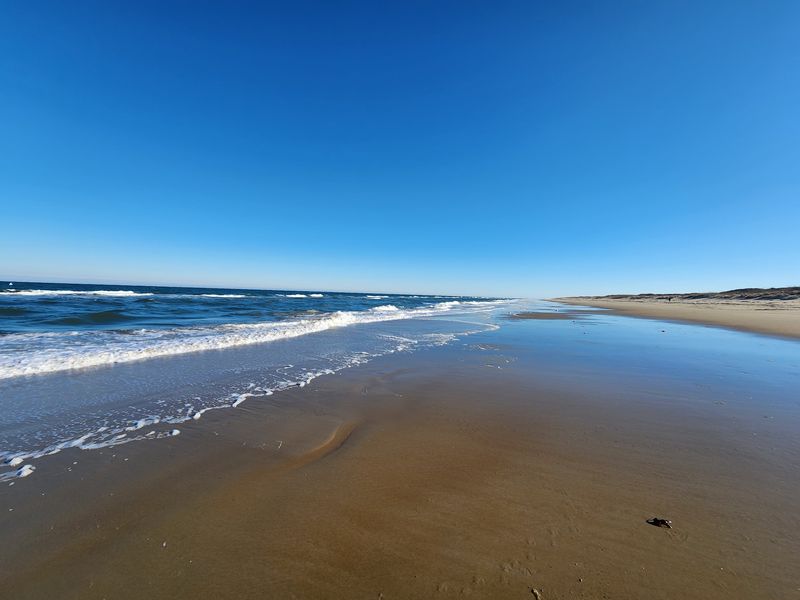
Ambitious types keep walking. Continue south past the refuge trails and you eventually reach False Cape State Park, one of the most remote stretches of shoreline on the East Coast.
No roads serve it. Reaching that boundary means hiking, biking or paddling, which filters out anyone looking for a casual outing.
Round trip distances run long, roughly eight miles or so each way depending on your route to the North Carolina line.
Bikes make the mission far more realistic. Walking it is entirely possible but turns into a serious day with sun exposure and zero services along the way.
Carry more water than feels reasonable. Heat exhaustion is the genuine risk out here, not wildlife.
Camping options exist within the state park for anyone wanting to stretch the trip overnight, with permits required in advance.
You will find the trailhead at 4005 Sandpiper Rd, Virginia Beach, VA 23456. Point your car south past Sandbridge, pay the modest vehicle fee, and let Virginia show you its quietest coastline.
Pack the binoculars and go before the swans head home.
