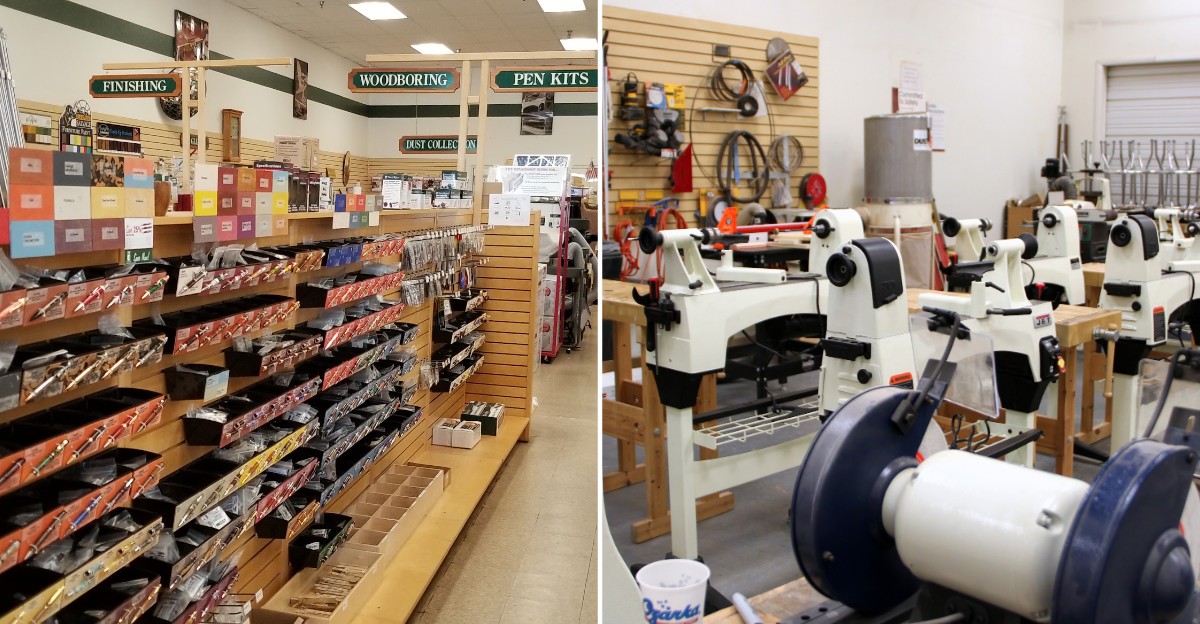
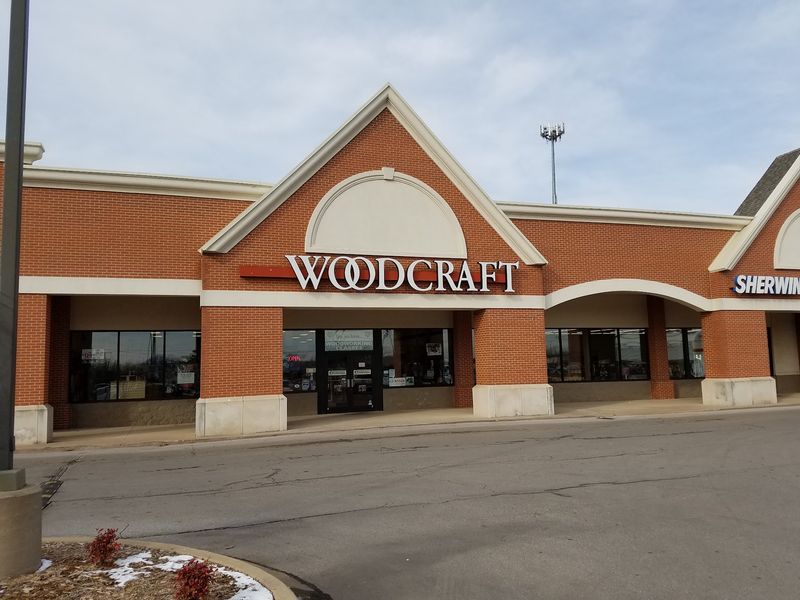
A tool store in Oklahoma will sell you a lathe and then teach you how to spin a bowl on one. That combo feels almost unfair to your weekend plans.
The shelves hold exotic woods like cocobolo, purpleheart, and zebrawood. A classroom offers lessons in turning, dovetails, and even epoxy bowls.
I like how the whole place treats skill like something you can pick up, not something you’re born with. Beginners and seasoned makers share the same aisles and the same curiosity.
I can’t imagine a better spot to go from just looking to actually making. What would you build first if someone handed you the chisel?
A Woodworking Brand With Roots Older Than Most Grandparents
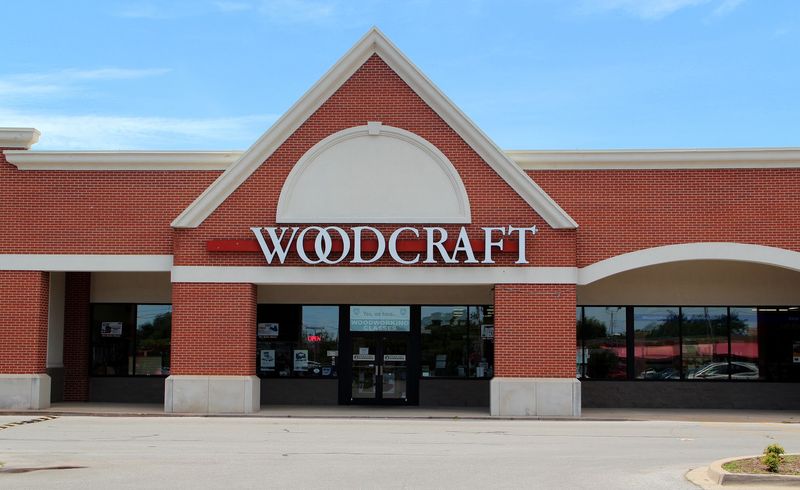
Woodcraft of Oklahoma City belongs to a family tree that started in Boston back in 1928. The parent company, Woodcraft Supply Corp., ranks among the oldest woodworking suppliers in the country.
That history matters more than you might expect. A brand that has lasted nearly a century has watched hand planes give way to power tools and back again.
The Oklahoma City store carries that long tradition into a modern shop setting. It works as a woodworking supply store, a classroom, and a gathering spot for makers all at once.
Every age seems to fit here, from teen pen turners to retirees building furniture. One customer even started turning pens in middle school and bought a first set of chisels at this very store.
Some writers compare the teaching side of Woodcraft to a modern-day guild system. With fewer school shop classes around, that comparison lands pretty well.
Skills used to pass from master to apprentice in a workshop. Now they pass across a classroom bench in a store that also sells the lumber.
It’s a neat setup for anyone curious about building things by hand. The old ways are still here, just with better dust collection and air conditioning.
Lathes Are Here, And So Is Everything That Spins Around Them
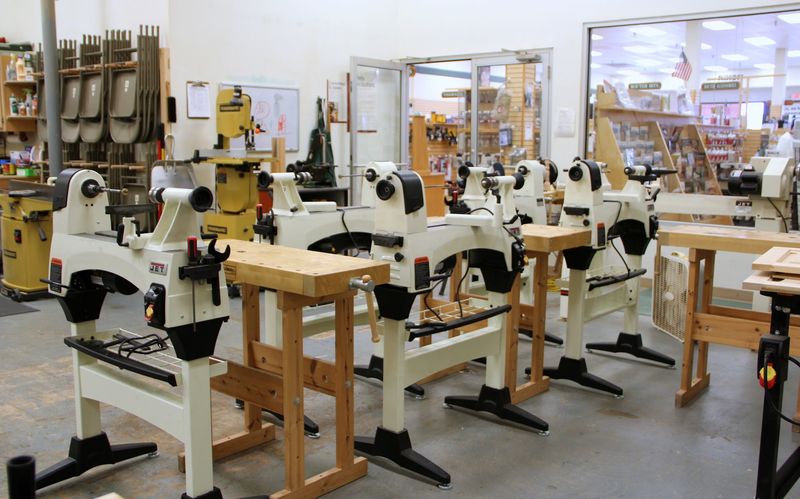
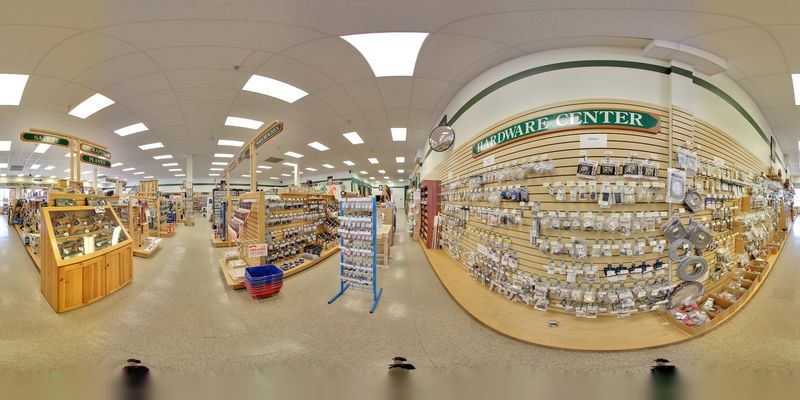
Shopping for a lathe can feel like picking a pet that weighs a few hundred pounds. Luckily, the floor here gives you real machines to study instead of just online photos.
The store stocks big-name brands like JET, RIKON, Powermatic, and Laguna. Those names show up in serious home shops all over the country.
Turning tools from Robert Sorby are also on the list. That British brand is famous among turners for its gouges and chisels.
The best part is that buying the machine is only step one. The same building offers lathe basics, sanding, and finishing classes, so your new tool won’t just collect sawdust.
Staff can also walk you through what you actually need. Many shoppers point to knowledgeable help as one of the strongest parts of the store.
Bring your questions about size, speed, and space. A small garage shop needs something different than a full workshop, and that conversation is worth having in person.
Honestly, it beats guessing from a product page at midnight. You get to see the cast iron, feel the handles, and picture where it will live at home.
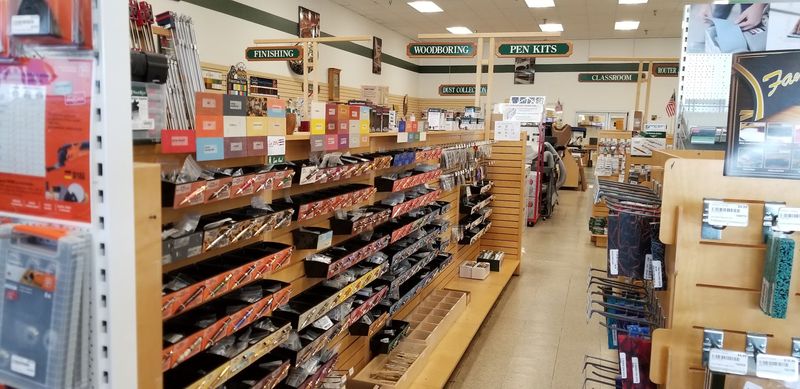
Your First Spin Starts In Wood Turning 101
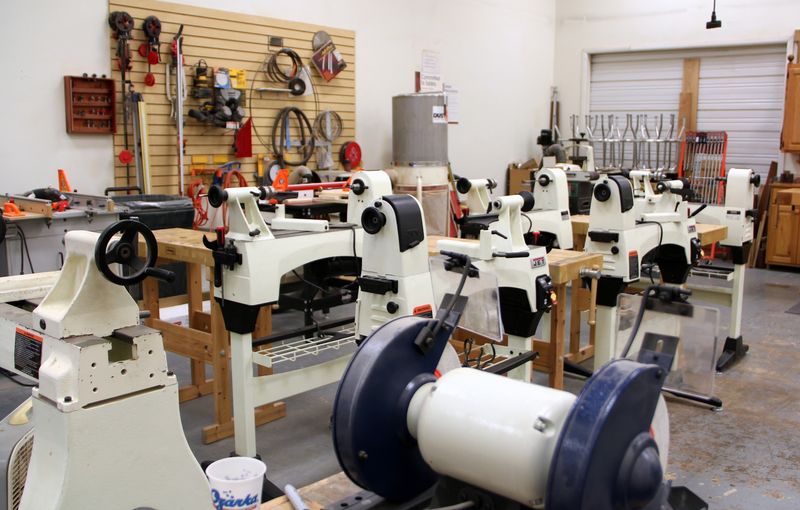
Wood Turning 101 is the class name, and it does exactly what it promises. It gives newcomers a hands-on start at the lathe in a real shop setting.
Lessons here run from beginner level up to advanced. So nobody expects you to know a gouge from a skew on day one.
Instructors focus heavily on safety and good shop habits. That’s a big deal when wood is spinning fast right in front of you.
Smaller projects make the learning feel less scary. Turn a Keychain Fob is a quick class that sends you home with something you made yourself.
Holiday Ornament Turning adds a seasonal twist. Imagine handing out ornaments that started as a plain block of wood a few hours earlier.
Private instruction is available too. That option suits anyone who learns better one-on-one or wants help on a specific project.
One past student wrote about learning a lot in a single weekend class and planning to return. That kind of momentum is exactly why classes inside a tool store make sense.
You learn, you get hooked, and the supplies are right outside the door. Convenient, and slightly dangerous for your wallet.
Epoxy Bowls Prove Turning Isn’t Just Plain Brown Wood
Colorful resin swirling through a wooden bowl looks like magic. At this store, it’s actually a class.
Epoxy Bowl Turning and Epoxy Platter Turning are both on the schedule. They mix traditional turning with a modern, eye-catching material.
The results can look like rivers or ocean waves frozen inside the wood. It’s the kind of piece people pick up and ask about at dinner parties.
Epoxy work also shows up in other classes here. That means you can learn the pouring and curing side before tackling the lathe part.
Mistakes happen in woodworking, and that’s sort of the point. The store’s teaching style leans into problem-solving, where a slip-up often leads to a creative fix.
With epoxy, a crack or knot can turn into the star feature. Fill it, turn it, polish it, and suddenly the flaw looks planned.
These classes work well for people who’ve done a little turning already. They add a fresh challenge without starting from scratch.
Plus, platters make excellent gifts. Few things say thoughtful like a serving tray you turned yourself, especially one glowing with color.
Exotic Lumber Names Sound Like A Treasure Map
Bloodwood, purpleheart, yellowheart, and zebrawood all sit in the lumber selection. Reading the labels feels a bit like browsing a fantasy novel.
The store carries both domestic and exotic woods. You’ll find hardwood lumber, veneers, plywoods, and turning blanks ready for the lathe.
Classic picks include black walnut, cherry, red oak, ash, and basswood. Those cover a huge range of everyday projects.
Then come the showstoppers. Cocobolo, Macassar ebony, koa, wenge, bubinga, and Honduras rosewood bring wild grain and rich color.
Maple fans get plenty of options too. Bird’s eye, curly, quilted, ambrosia, and big leaf burl each bring their own pattern.
Turners will love the pen blanks. Small pieces of fancy wood let you try pricier species without buying a giant board.
One customer once bought a huge padauk board plus a tiny knife blank. When the cashier joked about it, he laughed that he messes up a lot.
That’s honest woodworking. Grab a little extra, because the board you practice on teaches you plenty.
Date Night Comes With Safety Glasses
Dinner and a movie is fine. Building a pepper grinder together is a lot more memorable.
Woodcraft of Oklahoma City hosts Date Night classes for couples. Partners learn basic woodworking skills while making a project side by side.
Projects have included custom measuring cups, pens, bottle openers, and pepper grinders. Each one ends up useful in a kitchen or on a desk.
Neither person needs experience. The class is designed around basic skills, so it works for total beginners.
It also takes the pressure off conversation. When your hands are busy, talking flows a little easier.
Every time you crack pepper afterward, you’ll remember that evening. Not many date ideas leave behind something you use every week.
This could also be a fun gift for anniversaries or birthdays. A class shows effort without needing to guess someone’s sweater size.
Just a fair warning, though. Friendly competition over whose grinder looks better is pretty much guaranteed, and someone may demand a rematch.
Beyond The Lathe, Whole Shops Fill These Aisles
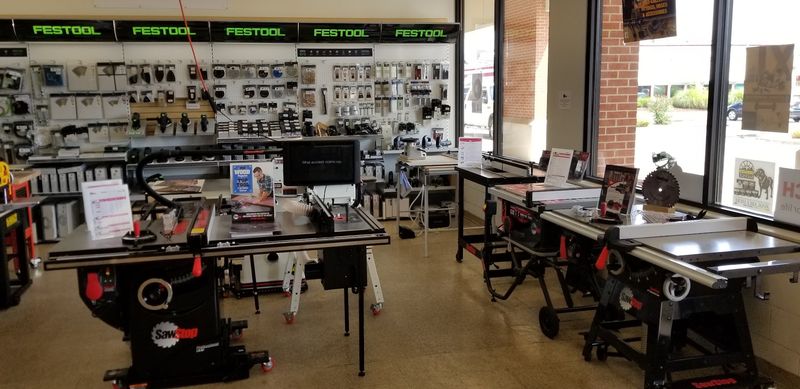
Turning might hook you, but the rest of the store will tempt you. Table saws, bandsaws, jointers, routers, and clamps fill the space.
Woodcraft is known as the largest Festool retailer in the U.S. That’s a big claim for a brand many woodworkers dream about.
SawStop, Kreg, and JessEm also show up here. So does a long list of hand tools and finishing products.
Classes cover the bigger machines too. Check Woodcraft’s current class calendar for instruction on specific machines.
Rockler’s Oklahoma City store lists an Intro to Shaper Origin class. That handheld tool works with digital guidance, which feels very futuristic.
Hand Cut Dovetails keeps the old-school crowd happy. Cabinet making, veneering, carving, and furniture upcycling round things out.
Project kits help too, including cheese slicers, knives, guitars, and furniture. Yes, you could build a guitar.
Products come in a range of budgets as well. You don’t need to buy the fanciest tool to start, and staff can help you decide what fits your shop and your plans.
Free Demos Let You Test Before You Commit
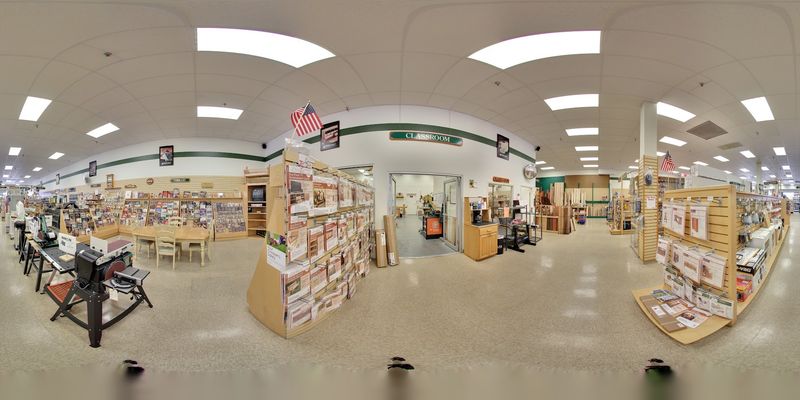
Watching a tool in action beats reading about it ten times over. That’s why the free demonstrations here are such a smart perk.
The store has hosted multi-day JessEm demos. Those focused on router lifts, stock guides, joinery systems, and marking and measuring tools.
Hands-on events like these let you ask questions in real time. You can see how a setup actually feels before spending money.
Another event, Machinery for the Small Shop, tackles a common headache. Many of us work in garages where space is always tight.
Learning which machines fit a cramped area can save serious frustration. It also helps you plan purchases in a sensible order.
Demos are also a low-pressure way to visit. You don’t have to sign up for a full class to learn something new.
Keep an eye on the store’s event schedule. Topics change, and the next one might cover the exact tool you’ve been eyeing.
Free learning in Oklahoma City, plus the chance to touch the gear yourself? That’s a pretty easy sell for curious makers.
Plan A Thursday Evening Trip To North May Avenue
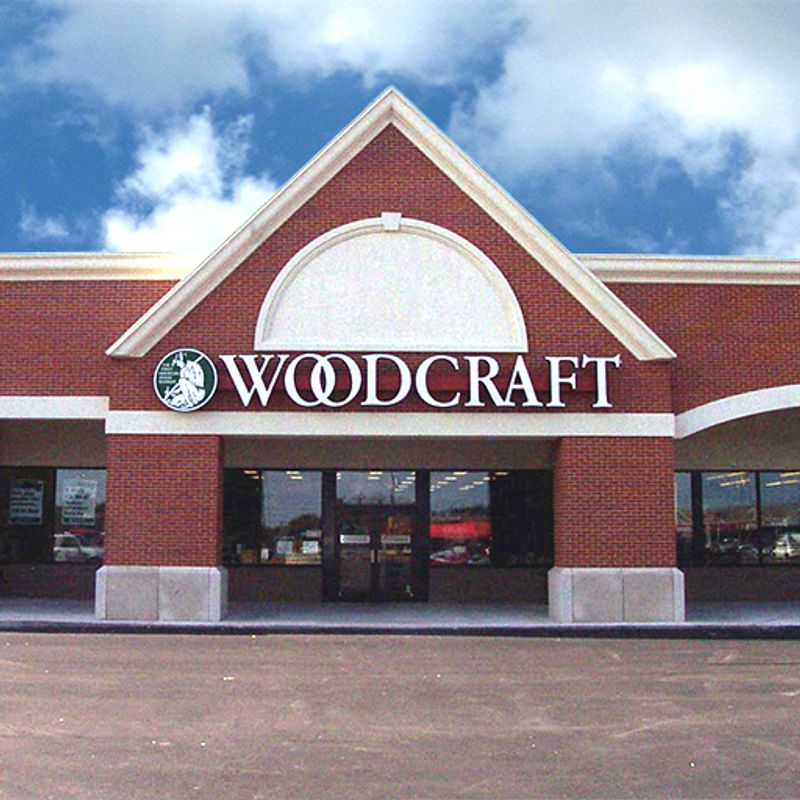
Thursday evenings can be a sweet spot for a visit. Hours have been listed as running later that day, though it’s smart to check before heading out.
You’ll find the store at 9301 North May Avenue, Oklahoma City, OK 73120. It sits on the north side of the city with parking for customers.
The shop is open seven days a week. Sundays run from noon to 5 PM, and Saturdays close at 6 PM.
Weekdays generally open at 9 AM. That gives early birds time to grab supplies before a weekend project.
The building is wheelchair accessible, and the space is air-conditioned. Anyone who’s survived an Oklahoma summer knows how valuable that is.
Credit cards are accepted too. Handy, since lumber, kits, and blades tend to add up fast.
Give yourself extra time when you go. Between the wood racks, tool aisles, and class schedule, a quick stop rarely stays quick.
Oklahoma makers have plenty of reasons to return. You might come for sandpaper and leave signed up for Wood Turning 101, which honestly sounds like a great trade.
