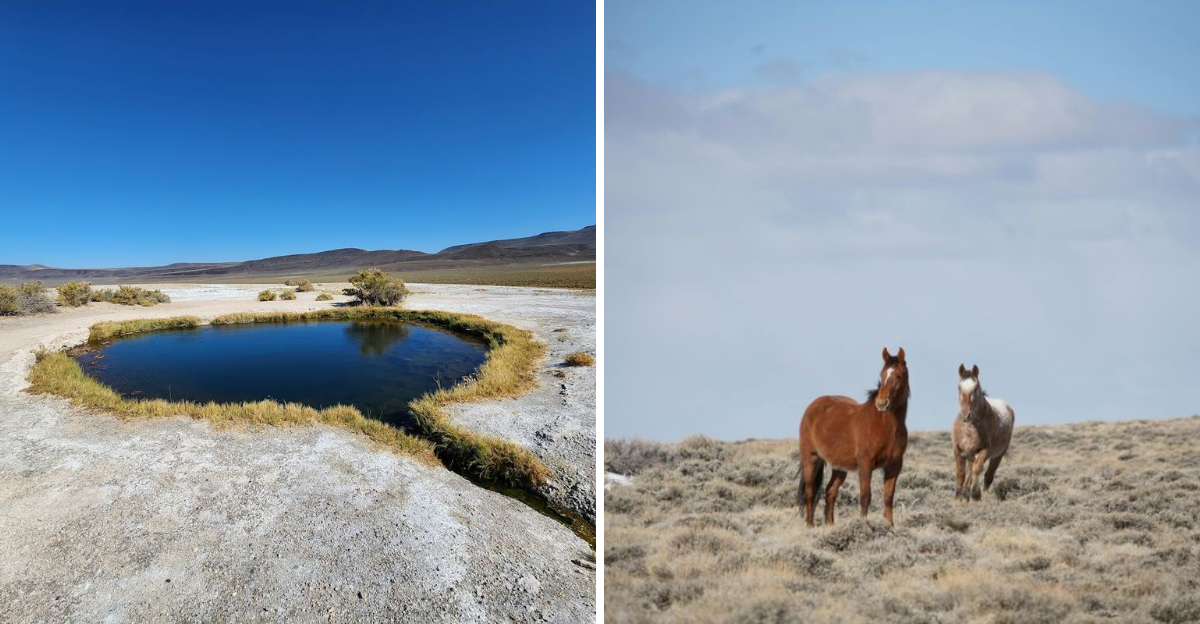
I sat in 102 degree water while wild horses just strolled by casually. A stallion looked at me like I was the weird one for soaking naked probably.
The pool is natural and muddy and smells faintly like a hard boiled egg. My toes sank into the soft bottom while steam rose all around my shoulders slowly.
The horses stopped about twenty feet away to drink from a tiny puddle nearby. I held completely still because splashing felt rude during their important hydration break honestly.
A foal kicked its legs and ran in circles like a fuzzy little maniac nearby. There are no fences or signs or anyone telling you what to do here.
I stayed until my fingers looked like raisins and the sun started going down low. This place is pure magic and also slightly terrifying when the horses stare too long.
The 102-Degree Soaking Pool You Never Saw Coming
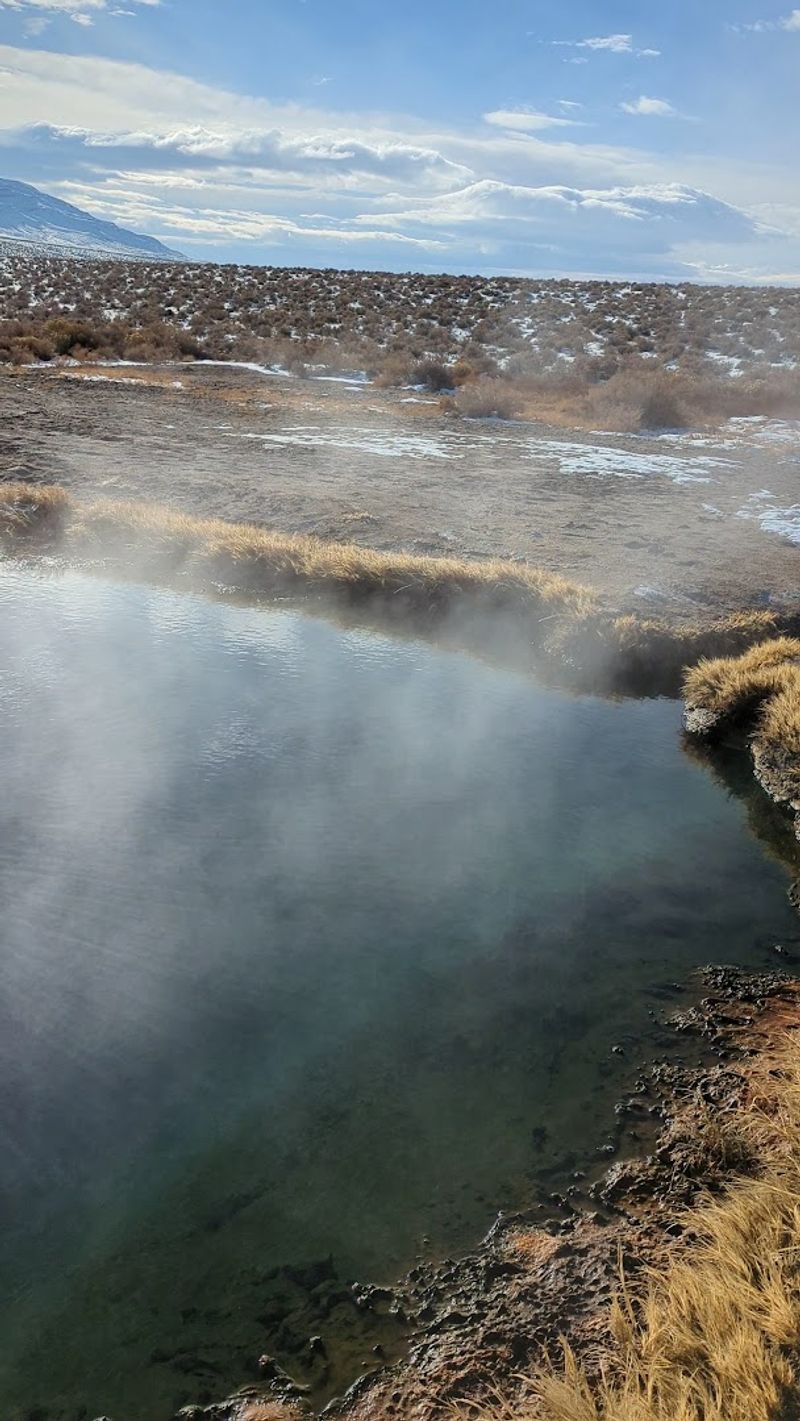
Nobody expects to find a warm soak in the middle of a boiling geothermal field. Yet here it is, a small hand-dug pool carved below the main springs at Mickey Hot Springs.
The water cools as it flows downhill, settling into a tolerable range.
The pool fits maybe two people comfortably. It is shallow and fed by overflow from hotter springs above.
Sitting in it feels surreal, surrounded by steam vents and bubbling mud pots just a short walk away.
The temperature can shift depending on the season and water levels. Some visits the pool runs hotter, others a bit cooler.
Always test the water before getting in.
This is not a managed resort pool with temperature control. It is raw, natural, and completely unfiltered.
The experience of soaking in geothermal water in open Oregon desert is unlike anything you will find at a spa.
Go early in the morning. The steam catches the light beautifully.
The silence around you is almost total.
Wild Horses Passing Within Twenty Feet
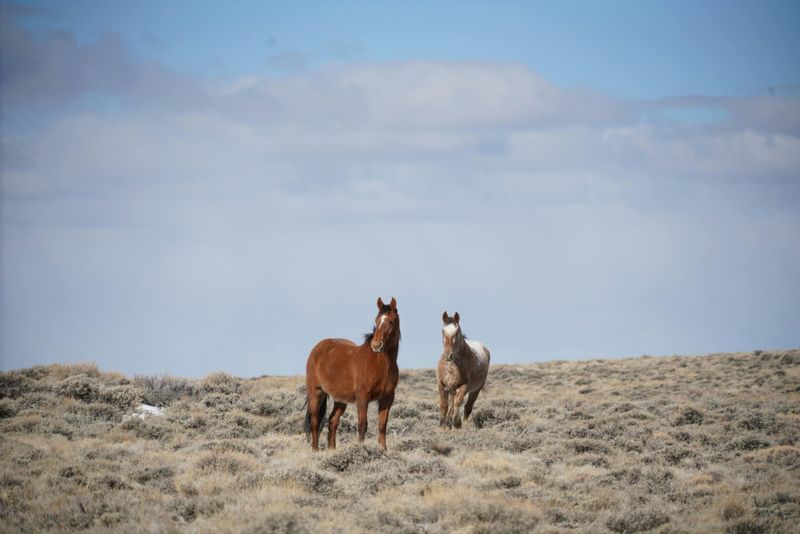
The first time a group of wild horses walked past the springs, I genuinely forgot to breathe. They moved with calm authority, hooves crunching on dry earth.
They paid the steaming pools almost no attention.
Wild mustangs roam the Steens Mountain area freely. Seeing them up close near an active geothermal site is one of those experiences that feels almost unreal.
No fence separates you from them.
They are not tame. Do not approach or try to feed them.
Watching quietly from a respectful distance is the right move.
The horses seem to know this land far better than any visitor does. They pick their path around the pools with practiced ease.
Their presence adds something deeply wild to an already striking place.
Bring a camera with a decent zoom lens. The contrast of the horses against steam rising from the earth makes for unforgettable photos.
Patience pays off here more than anything else.
The Geothermal Activity That Rivals Yellowstone
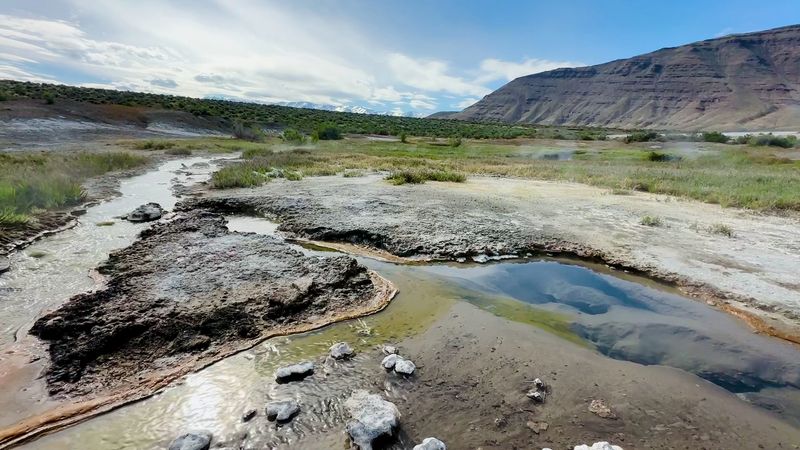
People call Mickey Hot Springs Oregon’s mini Yellowstone, and standing in the middle of it, that comparison makes complete sense. Mud pots bubble and hiss.
Steam shoots from narrow ground vents. Small geysers push water a few inches into the air.
The color palette alone is remarkable. Algae growth rings the pools in shades of orange, yellow, and deep green.
The water in some pools is a vivid blue that looks almost artificial.
All of this geothermal activity is packed into roughly half an acre of open desert. It is compact but incredibly dense with geological interest.
Every few steps reveals something new and different.
The ground itself tells a story. Some surfaces sound hollow underfoot, a reminder that thin crusts sit above scalding water below.
Staying on marked paths is not just a suggestion here.
This is a protected BLM site. The natural systems here have been developing for thousands of years.
Treating it with care keeps it intact for future visitors.
Getting There: The Remote Dirt Road Adventure
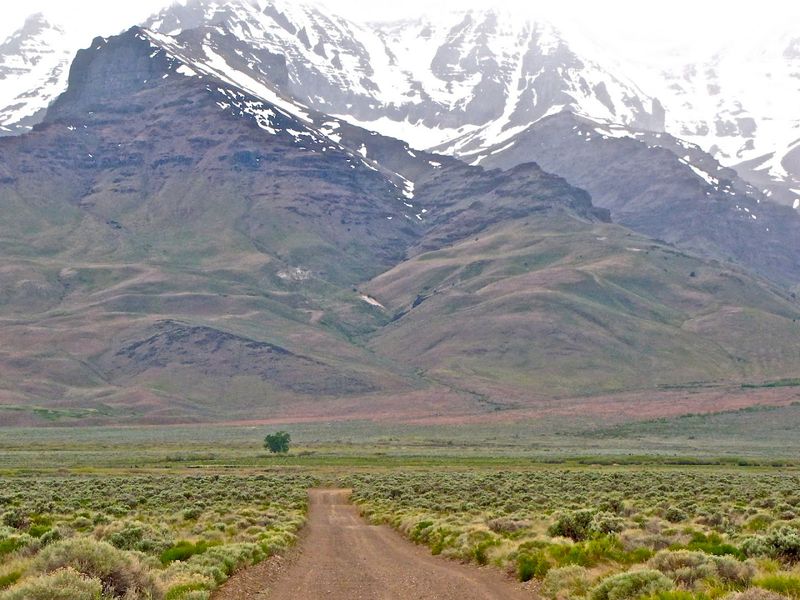
Reaching Mickey Hot Springs is half the adventure. The drive out from Fields-Denio Road involves several unmarked turns onto dirt and gravel roads.
A GPS coordinate works better than any street address here.
Most passenger cars handle the gravel road fine in dry conditions. After rain, the roads can get muddy and tricky.
Higher clearance helps but is not always required.
The Google Maps route has been reported as incorrect by recent visitors. Using the BLM coordinates directly gives you a more reliable path.
Double-check your route before leaving the main road.
The drive itself is stunning. Vast open desert, distant mountain ridges, and almost zero traffic create a mood that starts before you even arrive.
The isolation is part of what makes the destination feel special.
Fill your gas tank before heading out from Fields. Cell service is essentially nonexistent in this area.
Bring water, snacks, and a paper map as backup just in case things go sideways.
The Warning Signs You Should Actually Read
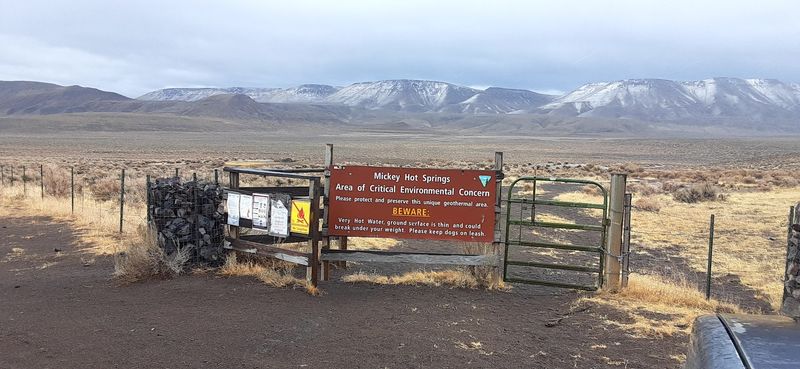
A large BLM sign greets you at the parking area. It is the first clear signal that this place demands respect.
The warnings are not decorative.
Ground surfaces near the springs can be dangerously thin. Stepping off the safe path risks breaking through into boiling water below.
The hollow sound underfoot in some spots is a real and unsettling reminder of that risk.
Water temperatures in the main pools can reach boiling point. Some vents reportedly hit 212 degrees Fahrenheit.
Even the cooler pools carry risk if you are not careful and attentive.
Keep children close at all times. Keep dogs on a leash without exception.
The open, unfenced nature of the site means accidents can happen fast.
The warnings are there because past incidents have been serious. This is not a managed tourist attraction with safety rails and lifeguards.
Personal responsibility matters more here than at almost any other hot spring in the state.
Camping Under the Stars Near the Springs
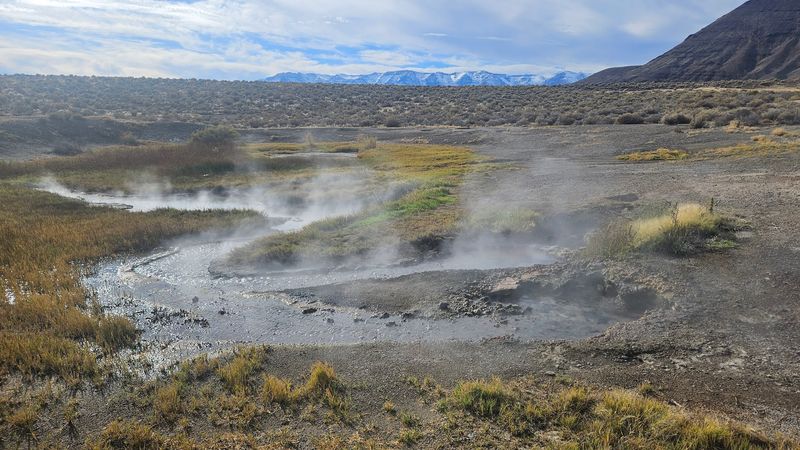
There is open space near the parking area where you can camp for the night. No facilities, no fire pits, and no picnic tables.
Just flat desert ground and one of the most remarkable night skies you will ever see.
Light pollution out here is nearly zero. The Milky Way appears with startling clarity on clear nights.
Waking up at dawn with steam rising from the springs nearby is a genuinely memorable experience.
Wind can be a real factor in this part of Oregon. Some visitors report gusts strong enough to make sleep difficult.
A sturdy tent with good stakes is worth the extra weight.
Pack everything you need before arriving. There are no shops, no water sources, and no services nearby.
The nearest town with supplies is Fields, a tiny community a few miles away.
Camping here means embracing true remoteness. The silence broken only by wind and bubbling water has its own rhythm.
It is the kind of night that resets something in you.
The Alvord Desert Connection
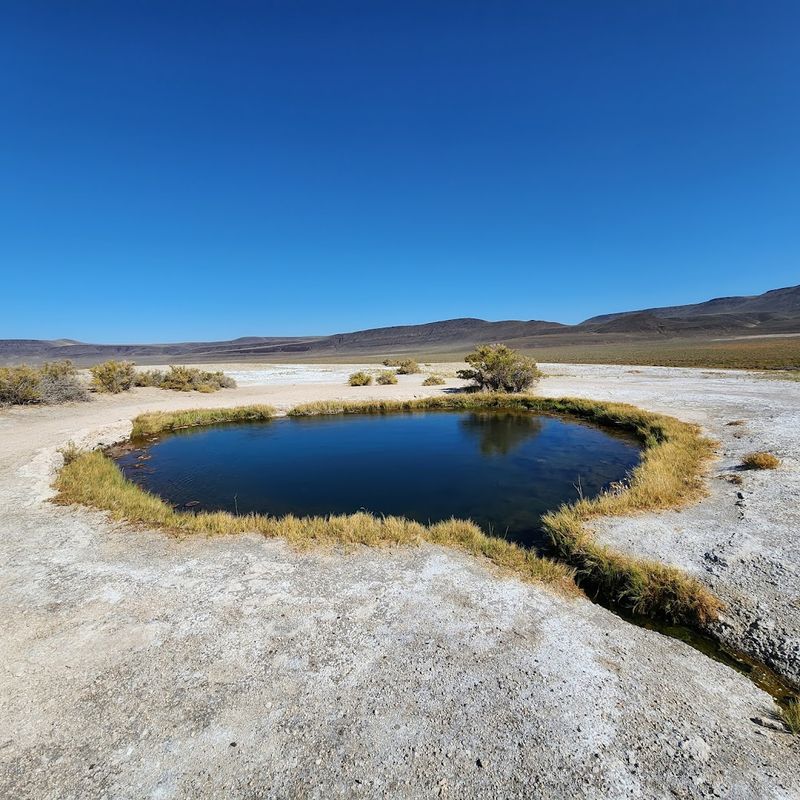
Mickey Hot Springs sits in the broader Alvord Desert region, one of the most striking and undervisited landscapes in Oregon. The flat playa stretches for miles, bone dry and blinding white in the midday sun.
It is the kind of scenery that makes you feel like you have driven onto another planet.
Steens Mountain rises dramatically to the west, its rocky face visible from the springs on clear days. The contrast between the frozen-looking mountain and the boiling earth below is genuinely hard to process at first.
The Alvord Desert itself is worth exploring as a separate stop. Land speed records have been set on the playa.
Visitors walk out onto the flat surface and feel the scale of the sky in a way that is hard to describe.
Combining Mickey Hot Springs with an Alvord Desert visit makes for a full day of high desert exploration. Both locations share the same remote, wild character.
They belong to the same story of southeastern Oregon.
The Colorful Algae and What It Tells You
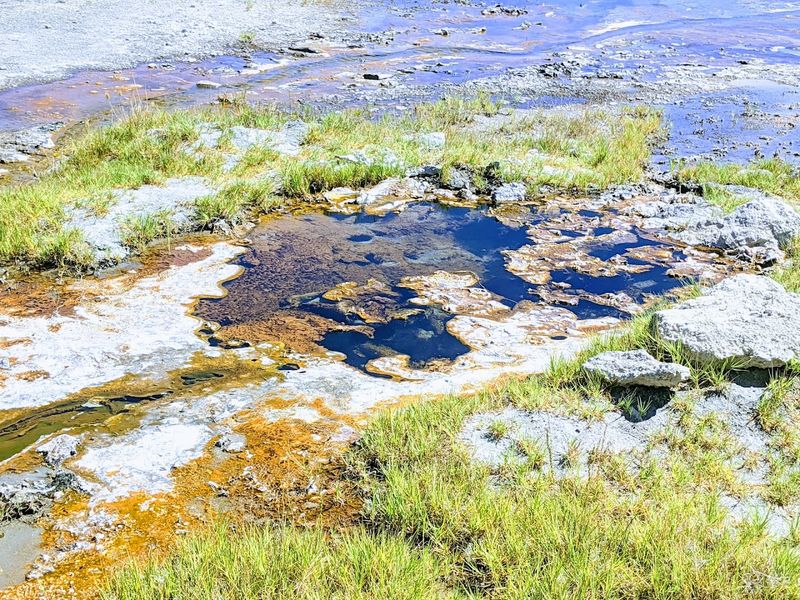
The algae at Mickey Hot Springs are not just pretty. They are a biological indicator of just how hot the water really is.
Different colors signal different temperature zones around each pool.
Orange and yellow mats form closest to the boiling center. Greens and browns appear in slightly cooler runoff channels.
The visual gradient is actually a temperature map you can read with your eyes.
These organisms are called thermophiles, life forms adapted to extreme heat. Similar species are found at Yellowstone and other geothermal sites worldwide.
Seeing them thrive in Oregon desert feels quietly extraordinary.
Some visitors are tempted to touch the algae mats or wade through the runoff channels. That is a bad idea on multiple levels.
The water feeding those channels is still far too hot for skin contact.
The algae also make the pools look deceptively beautiful. Clear blue water ringed in vivid color is visually stunning.
Remembering that the beauty is also a hazard keeps the experience honest and safe.
The Best Time to Visit Mickey Hot Springs
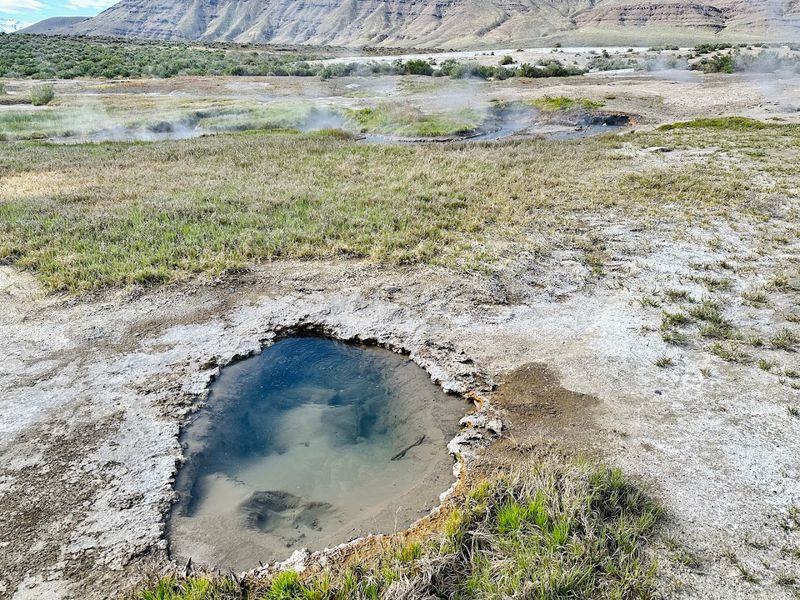
Timing a visit to Mickey Hot Springs changes the experience significantly. Spring and fall offer the most comfortable temperatures for exploring the site on foot.
Summer heat in the high desert can be brutal, especially with no shade anywhere nearby.
Morning visits are magical. Steam rises more visibly in cool air, catching early light in ways that make the whole site glow.
The stillness of early morning amplifies every sound the earth makes.
Winter visits are possible but come with extra challenges. Snow and mud can make the dirt roads impassable for lower-clearance vehicles.
Check road conditions carefully before making the drive in cold months.
Wildflower season in spring brings unexpected bursts of color to the surrounding desert. The contrast of blooming plants against a steaming geothermal field is a genuinely unusual sight.
It adds a softness to an otherwise stark landscape.
No matter the season, the springs operate around the clock. The site is open 24 hours a day, every day of the year.
What to Bring and How to Respect the Site
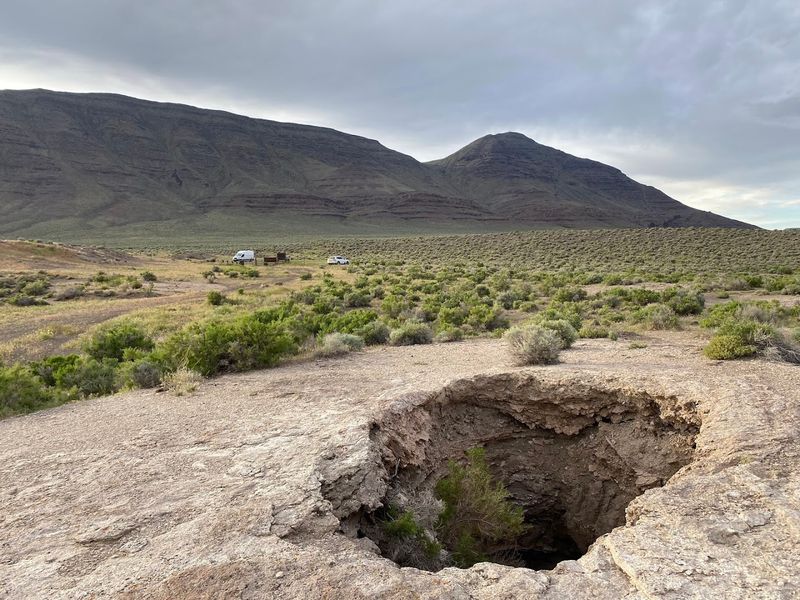
Preparation makes the difference between a great visit and a frustrating one at Mickey Hot Springs. The site is remote, undeveloped, and completely unforgiving of poor planning.
A few simple choices before you leave home matter a lot.
Sturdy footwear is essential. The ground near the springs is uneven, sometimes soft, and occasionally unstable.
Boots offer far better protection than sandals or sneakers if you step near a soft patch.
Carry more water than you think you need. The dry desert air and open sun dehydrate you faster than expected.
A minimum of two liters per person for even a short visit is a solid baseline.
Leave no trace principles apply fully here. Pack out everything you bring in.
The site stays clean and beautiful because visitors choose to treat it that way.
The BLM manages this site under a conservation mandate. Respecting the rules protects both the geothermal ecosystem and future visitors.
A little care from each person keeps this remarkable place intact for years ahead.
Address: Mickey Hot Springs, MMH2+CP, Princeton, OR 97721
