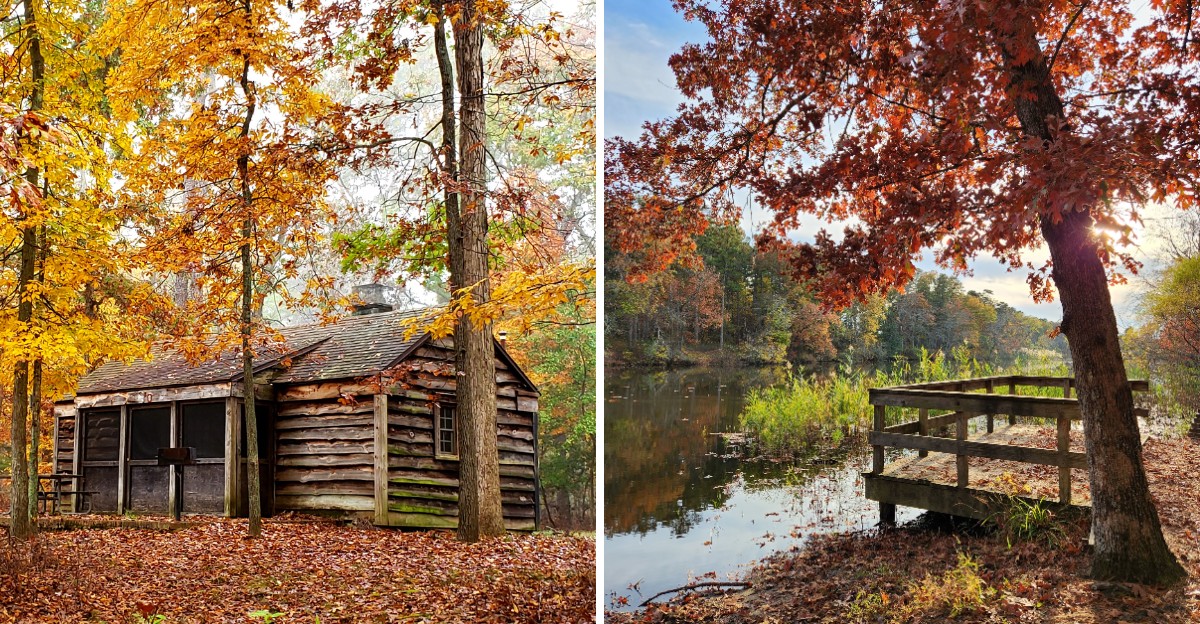
Camping sounds lovely right up until someone mentions sleeping on the ground.
Good news: you can keep the woods and lose the tent.
This New Jersey state park has 18 furnished cabins beside Thundergust Lake, offering a considerably cozier way to spend a few nights surrounded by nature.
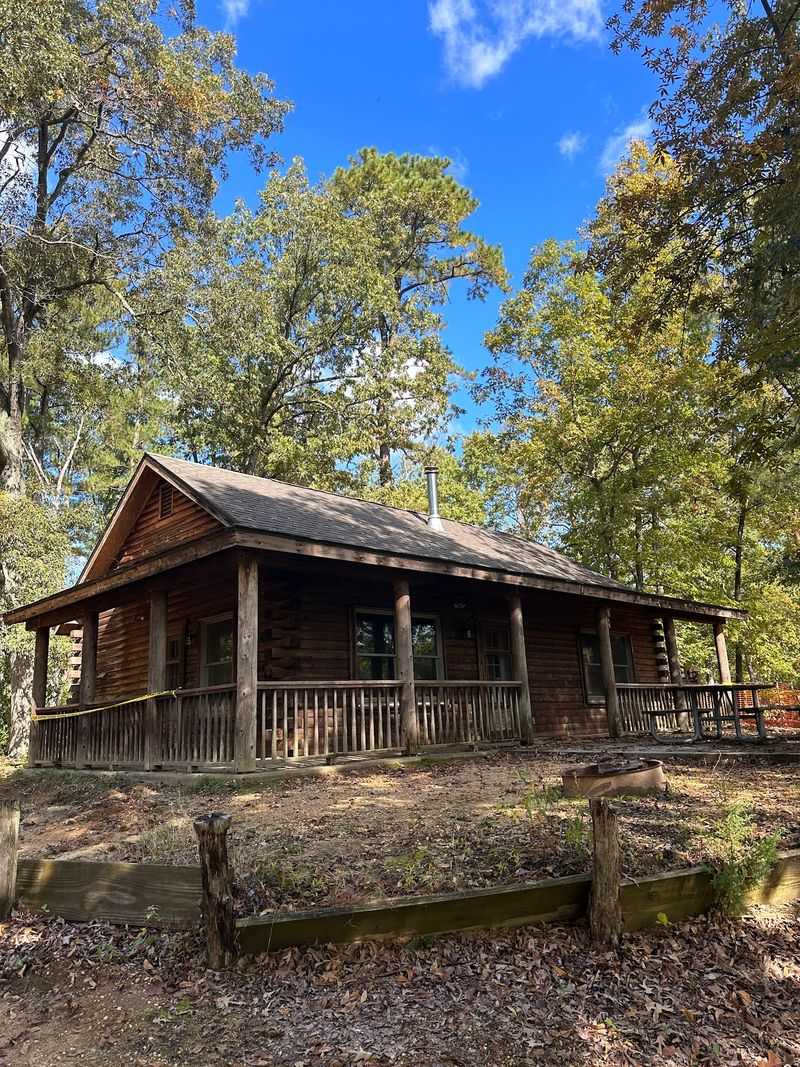
Inside are two bedrooms, a living room with a fireplace or wood-burning stove, a kitchen with running water, electricity, and a private bathroom.
Outside, each cabin has a campfire ring and brick patio with a table and grill.
Ah, now this is camping for people who appreciate walls.
With lake views waiting outside and a real bed waiting inside, the hardest part may be convincing yourself to pack up and return to normal life.
Cabins Tucked Along Thundergust Lake
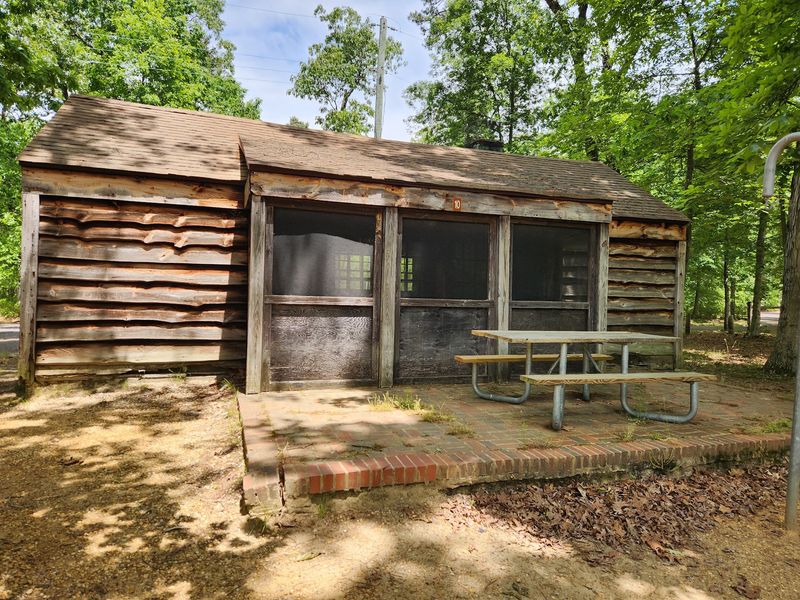
Eighteen furnished cabins line the north shore of Thundergust Lake, and they are the reason many people first hear about this park. Each one sits back among the trees, close enough to the water that you can see it glinting through the branches.
Inside, you get a living room with a fireplace or a wood-burning stove, which makes chilly spring nights feel a lot friendlier. Two bedrooms sleep up to four people comfortably.
Two of the cabins are built to be accessible for visitors with disabilities, and those can hold up to six guests. That extra room helps when a family wants to stay together rather than splitting across sites.
Outside, there is a fire ring and a brick patio with a table and grill, so dinner often happens under the open sky. Evenings tend to stretch long here, with nothing pulling you back indoors.
Cabin season runs from April 1 through October 31, and reservations open up to eleven months ahead online. Popular weekends fill quickly, so planning early pays off.
What To Pack Before You Book
A small detail trips up first-time guests more than anything else. The cabins come with a kitchen that has running water, an electric stove, and a refrigerator, plus a private bathroom with a sink, toilet, and shower.
What they do not come with is linens, dishes, or cooking utensils.
So the packing list matters. Sheets, pillows, towels, pots, plates, forks, a can opener, a sponge.
Write it down, because forgetting the coffee mugs stings on morning one.
Electricity is included, which means phone charging and lamp light are not a problem. Still, a flashlight helps when you walk the short path to the water after dark.
Bring firewood or plan to buy some nearby for the outdoor fire ring, along with matches and long lighters. Bug spray belongs in the bag too, since wetlands and mosquitoes go hand in hand.
One more thing worth knowing ahead of time. Pets are not allowed inside the cabins, so arrangements need to be made for four-legged family members.
Two Lakes, One Very Slow Afternoon
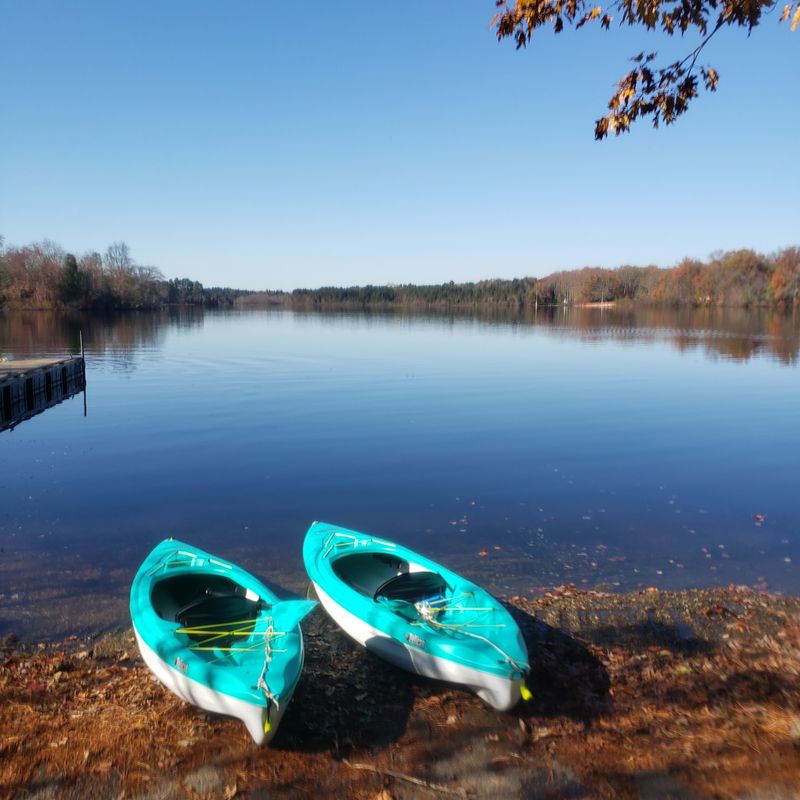
Parvin Lake and Thundergust Lake sit within the same park, and each has its own personality. Parvin is the bigger draw, the one with the beach and the crowds on summer weekends.
Thundergust feels quieter, more tucked away.
Paddlers do well here. Canoeing and kayaking are popular on both lakes, and canoe rentals have been available seasonally, though checking ahead about availability saves disappointment.
Motorboats are limited to electric motors, which keeps the water calm and the noise down. That restriction is a big part of why the lakes feel so peaceful.
Anglers cast for largemouth bass and catfish in the lakes, while pickerel and sunfish turn up in the smaller ponds. Muddy Run, the stream winding through the park, adds another spot to drop a line.
Swimming is allowed only in Parvin Lake, where a lifeguard-staffed beach at Parvin Grove operates roughly from Memorial Day through Labor Day. Parking, a bathhouse, and a first-aid station sit right there.
Fifteen Miles Of Trails Worth Wandering
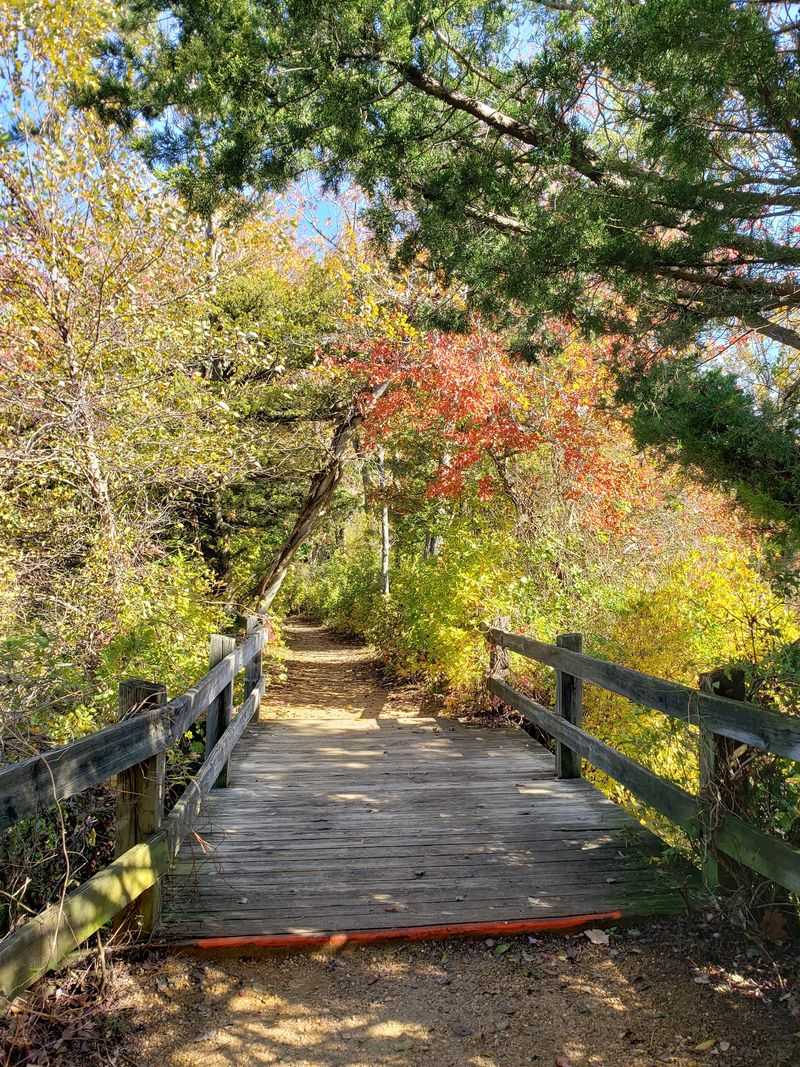
Roughly fifteen miles of multi-use trails thread through the park, and they are friendlier than most hiking networks. Flat, sandy, and well shaded for long stretches.
Walkers, joggers, and cyclists all share them.
The standout is the loop that circles Parvin Lake, running about 3.1 miles. It hugs the shoreline for much of the way, so the water keeps flashing between the trees.
Terrain shifts more than you would expect for such a small park. Pine lowlands give way to hardwood swamps, then rise into upland pine and oak forest.
Boardwalk sections cross the wetter areas, and those tend to be the best places to pause and listen. Frogs, birds, wind in the canopy.
Sturdy shoes help after rain, since the low spots hold water. Morning walks reward early risers with mist over the lake and far fewer people on the path.
Nothing here is strenuous, which makes the trails a solid choice for families with younger kids or anyone easing back into hiking.
Spring Blooms That Take Over The Woods
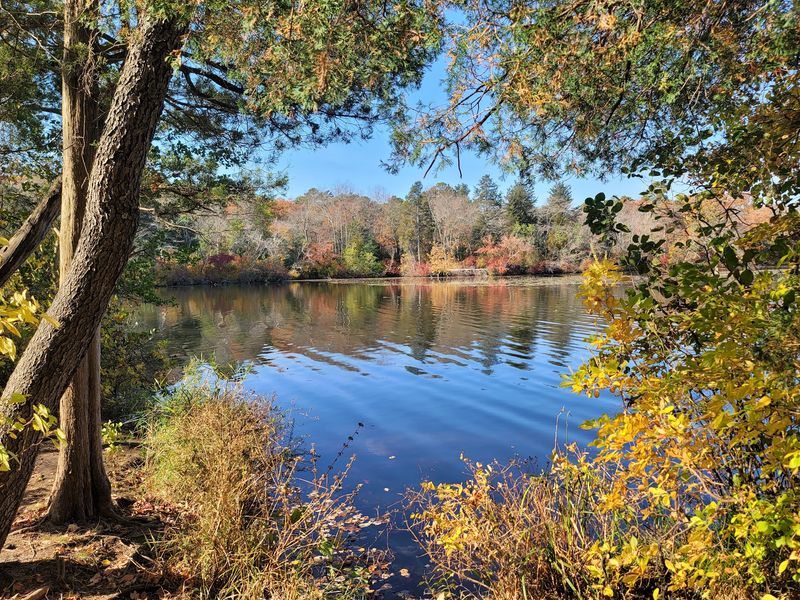
Come April and May, the understory here puts on a genuine show. Dogwood, mountain laurel, holly, magnolia, and wild azalea all bloom, and the park counts more than 200 species of flowering plants across its acreage.
Mountain laurel is the one people remember. Clusters of pale pink and white blossoms crowd the trail edges and seem to glow in shade.
The air smells different in spring too, sweeter and damper than the dry pine scent of late summer. It is a small thing, but it sticks with you.
Photographers do well arriving early, when light filters low through the trees and the flowers still hold dew. Bring a lens that handles close-ups.
Timing varies year to year depending on weather, so late April through early June covers the widest window. Cabin season opens April 1, which lines up nicely with the first waves of color.
Walking the same trail twice in one season shows how quickly everything changes.
Birdwatching Where The Pines Meet The Swamp
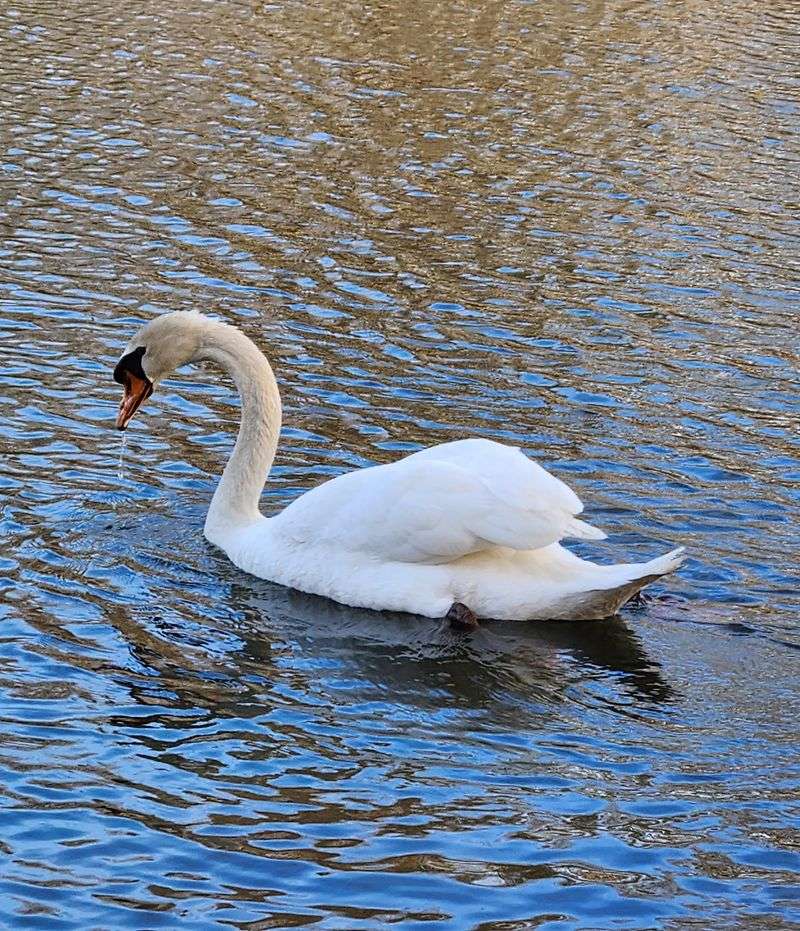
Serious birders talk about this park for a reason. The mix of pine forest, swamp hardwood, and wetland packed into one area creates habitat variety that is genuinely uncommon in this part of the state.
The state-threatened barred owl lives here, and its call carries far at dusk. Migratory songbirds pass through in spring, including the Black-throated Blue Warbler.
Eastern box turtles turn up on trail edges, moving at their own unhurried pace. Give them space and let them cross on their own.
Swamp pink, an endangered plant, grows in the wetter ground, another sign of how ecologically important the area is. Stay on the marked paths to protect it.
Binoculars are worth carrying even on a casual walk. The boardwalk sections over the swampy stretches make some of the easiest viewing spots in the park.
Early morning is prime time. Sound travels better, activity peaks, and the trails belong mostly to whoever showed up first.
Picnic Spots And Pavilions For The Whole Crew
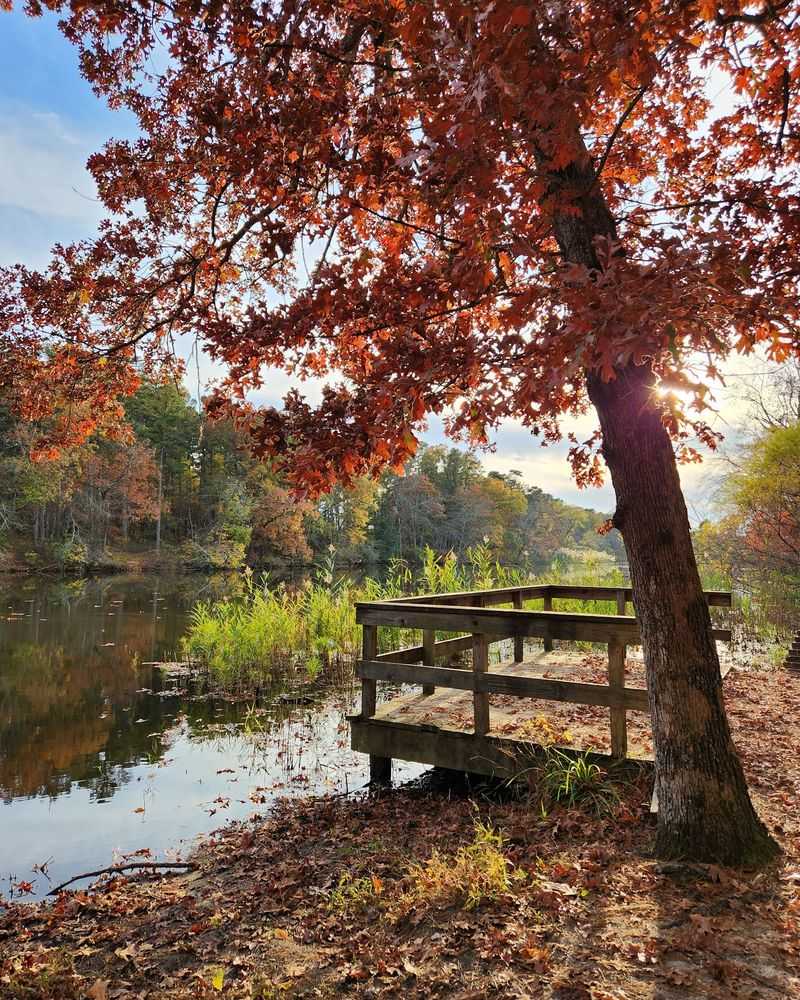
Day visitors get plenty of room to spread out. Picnic tables and grills are scattered throughout the park, many of them within sight of the water.
Two reservable pavilions sit at Thundergust Lake, and those work well for birthday parties, family reunions, or any group too big for a single table. Booking ahead is the move for summer weekends.
A playground and a ball field round out the main day-use area, which keeps restless kids busy between meals. Parents get a breather.
Between Memorial Day and Labor Day, a small entrance fee applies to the Parvin Grove Day Use Area. Outside that window, the park is generally quieter and the vibe shifts noticeably.
Shade is easy to find, which matters in July when the humidity settles in. Grab a table under the trees rather than one out in the open.
Pack a cooler, bring a frisbee, and let the afternoon do whatever it wants to do.
Traces Of The Civilian Conservation Corps
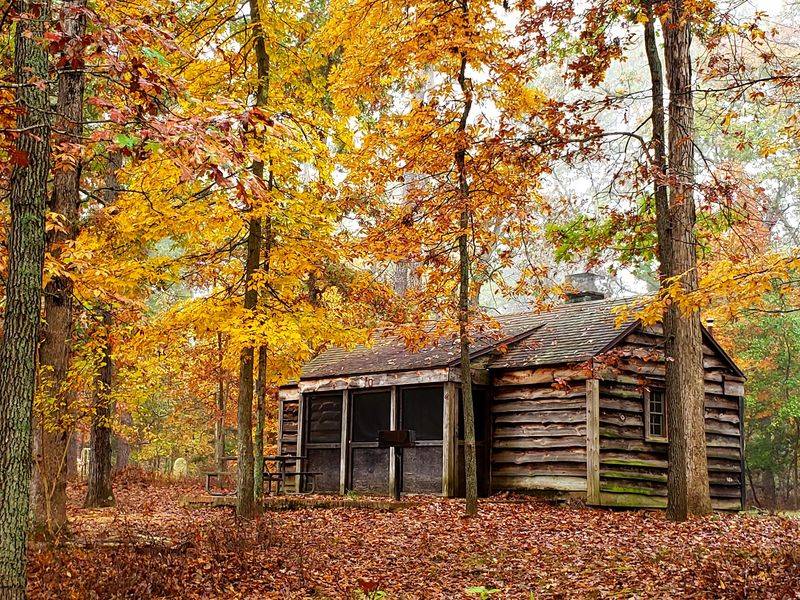
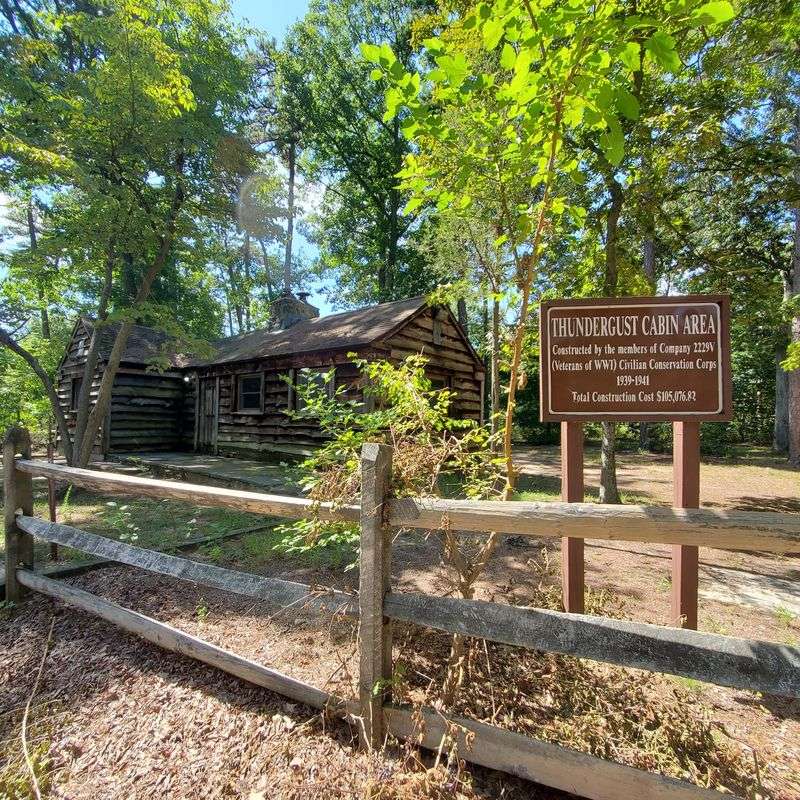
The layout of this park did not happen by accident. During the 1930s, a Civilian Conservation Corps camp operated here, and the crews cleared trails, built recreational facilities, and constructed cabins that are still standing.
That history is baked into the place. Walk a trail and you may be following a route cut nearly a century ago by young men working through the Depression years.
The craftsmanship shows in the solid, simple structures. Nothing flashy, just built to last.
Knowing the backstory changes how the park reads. A cabin stops being just a rental and becomes part of a much longer chain of use and care.
Parvin State Park holds that legacy quietly, without much fanfare or signage shouting about it. You have to look a little.
For anyone interested in how American public lands came together, this is a tangible example sitting right in southern New Jersey, still doing exactly what it was built to do.
Autumn Color Along The Water
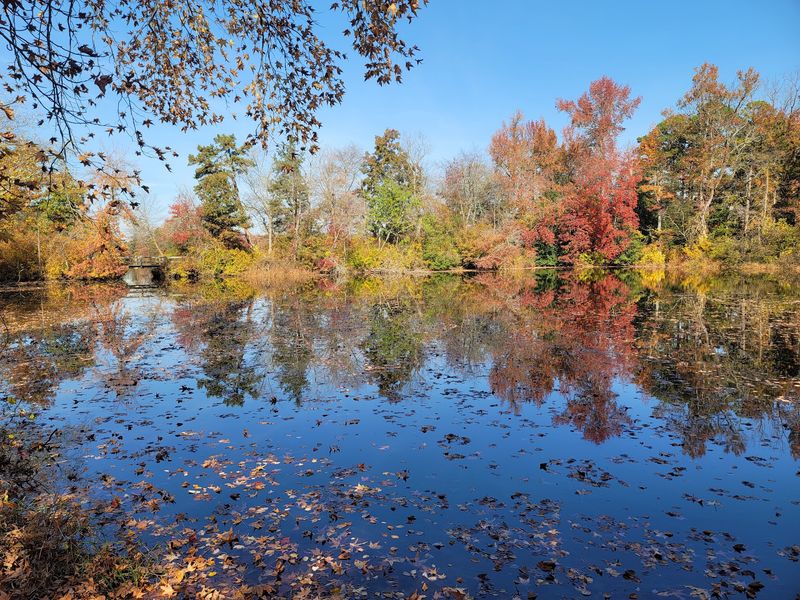
October might be the smartest month to book a cabin. Cabin season runs through October 31, and the hardwood swamps turn gold and rust while the pines stay stubbornly green.
That contrast is what makes fall here different from typical leaf-peeping spots. You get color and evergreen in the same frame.
Reflections on the lakes double everything, especially on still mornings before any wind picks up. Photographers chase that window.
Cooler air also means the fireplace or wood stove inside the cabin finally earns its keep. Coming back from a long walk to a warm room is a specific kind of good.
Bugs thin out, crowds shrink, and the trails feel wide open compared to July. Layers are the way to dress, since mornings bite and afternoons warm up fast.
The 2,092 acres feel bigger in fall somehow, maybe because sound carries further through thinning leaves. It is a quieter, slower version of the same park.
Planning Your Trip And Getting There
Logistics are refreshingly simple. The park opens sunrise to sunset, and the park office runs daily from 8:30 AM to 4:00 PM if you need maps or information.
Located roughly 40 miles south of Philadelphia and sitting just outside the edge of the Pine Barrens, it is an easy drive from a lot of places. Weekend traffic rarely gets ugly.
Cabin bookings go through the state reservation system online, opening up to eleven months out. Summer Saturdays disappear fastest.
Campers who prefer tents or trailers have options too, though the cabins are what draw most first-timers. Either way, arrive with everything you need since services out here are limited.
Fill the gas tank and grab groceries before turning onto the park road. There is no store waiting inside.
You will find Parvin State Park at 701 Almond Rd, Pittsgrove, NJ 08318, a 2,092-acre pocket of lakes, trails, and lakeside cabins that rewards anyone willing to slow down for a weekend.
