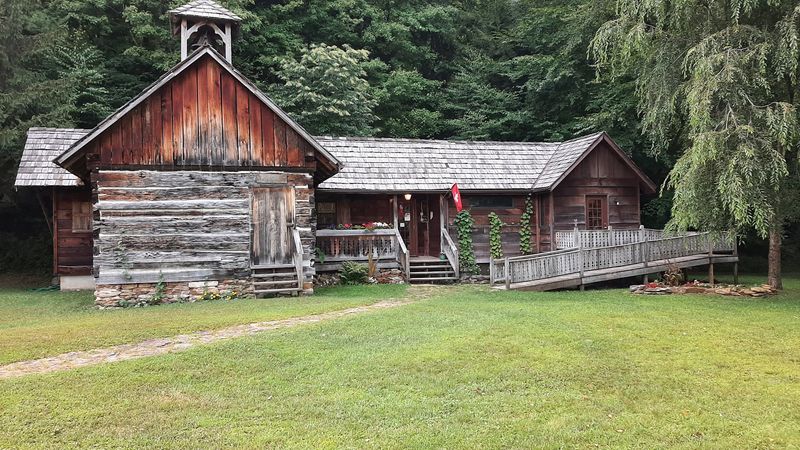
Tucked away in a quiet mountain valley in West Virginia, there is a tiny place where the old Alpine world still whispers through the trees. Winding roads lead you past forests until you stumble onto brightly painted buildings, hand-lettered signs, and the sound of a fiddle.
It feels less like a town and more like a page from a storybook that time forgot. For anyone curious about history, culture, and the good old days, this hidden gem holds surprises far bigger than its small size.
A Swiss Settlement Hidden in the Appalachian Hills
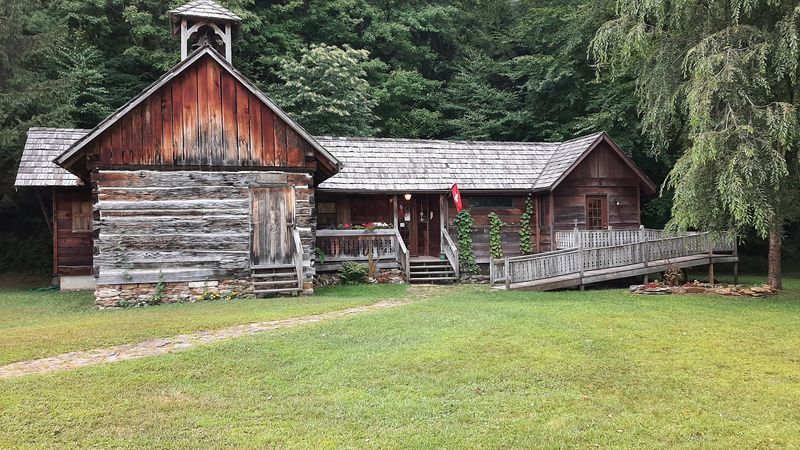
Rolling green mountains hide plenty of secrets in West Virginia, but few are as charming as this little Swiss village folded into a high valley in Randolph County. Sitting along the Buckhannon River, it holds a population of just 38 people according to the 2020 census.
Settled by Swiss and German immigrants beginning in 1869, the community became known for holding onto its Old World traditions long after most immigrant towns blended into the American landscape. The name itself comes from Helvetia, the Latin word for Switzerland.
What makes this spot special is how completely it feels apart from the modern rush. There are no glowing signs of a chain store, no busy highways nearby, just winding roads through Appalachian forest that eventually spill you into a cluster of Alpine buildings.
Locals often describe the arrival as stepping into another century. The blend of Swiss folkways with mountain resilience created something you truly cannot find anywhere else in the state, and that rare quality is exactly why curious travelers keep making the trip up the mountain.
How Immigrants Traded Brooklyn for a Mountain Wilderness
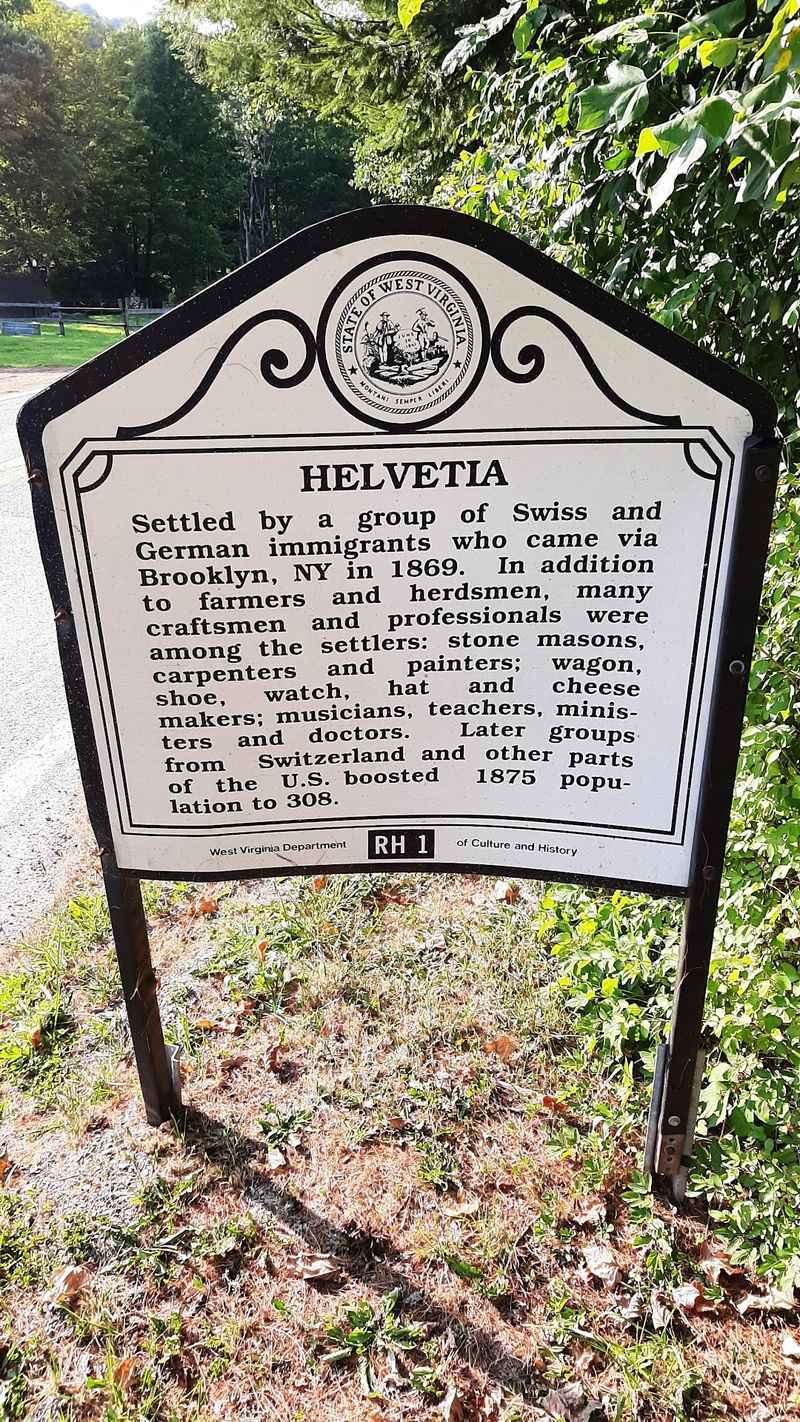
Long before this valley echoed with yodeling, a group of Swiss and German immigrants gathered in Brooklyn, New York, forming a mutual aid society called the Grütliverein after the Civil War. They dreamed of a place where they could live freely and keep their crafts and customs alive.
Their search led them south. A committee of six men rode the rails to Clarksburg, West Virginia, then made a hard journey on foot over the mountains to reach the land they had chosen in the wilderness.
The people who came were not just farmers. The founding group included stonemasons, carpenters, painters, wagon makers, shoemakers, watchmakers, hat makers, and cheese makers, along with herdsmen, musicians, teachers, ministers, and doctors.
That mix of skills helped the settlement stand on its own from the very start. Every trade had a purpose, and every family added something to the community.
Picture the grit it took to build homes from scratch in unfamiliar hills. That determination laid the foundation for a village that would guard its identity for more than 150 years.
The Remote Roads That Preserved a Culture
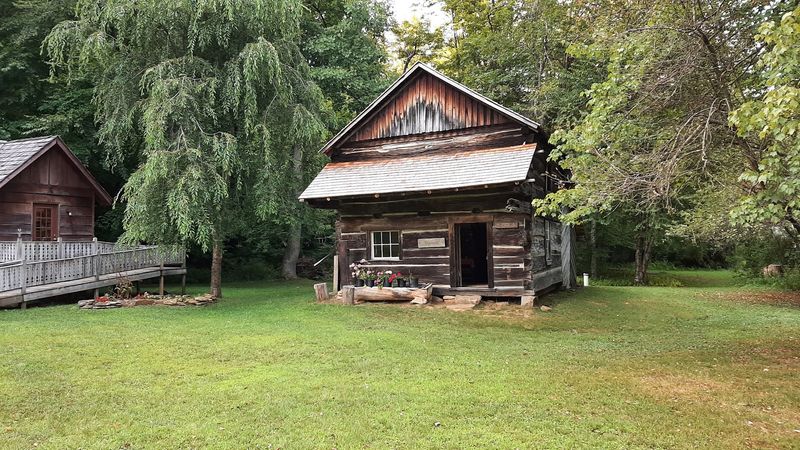
Getting lost is almost part of the experience here. The village sits in the rugged southwestern corner of Randolph County, reachable only by narrow, twisting mountain roads that thread through thick Appalachian forest.
That very isolation turned out to be a gift. Cut off from the outside world for decades, the settlers had little choice but to keep their own dance, music, food, and holidays alive, and those traditions never faded the way they might have in a busier place.
Modern travelers should know that cell phone service is generally unavailable, and GPS navigation can be unreliable once you get close. It is wise to print directions or study a map before you head up.
Rather than a frustration, many visitors find the disconnection refreshing. Without notifications buzzing every minute, you notice the birdsong, the creak of old wood, and the slow rhythm of a place that runs on its own clock.
The remoteness that once made life hard for the founders now works like a time capsule, protecting a way of living that the rest of the country largely left behind.
Alpine Gingerbread Architecture and Painted Signs
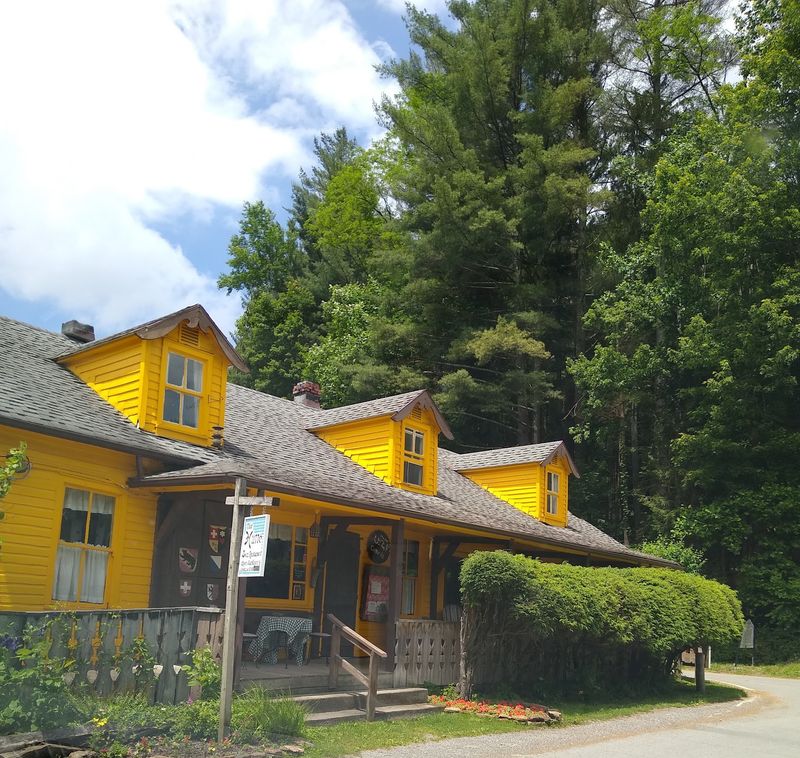
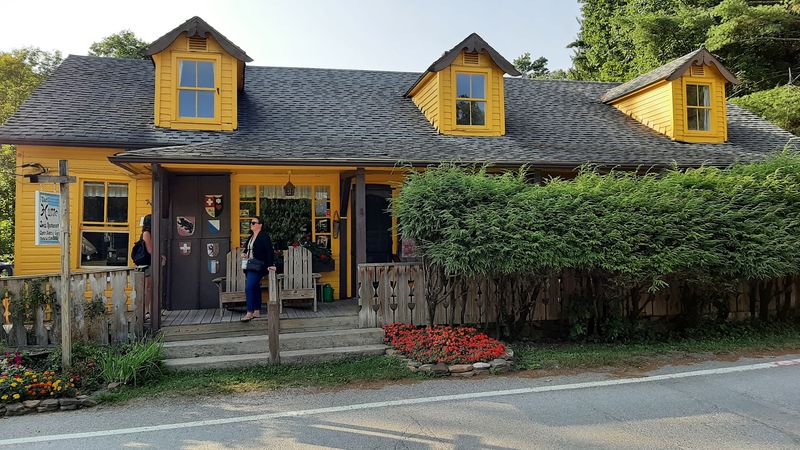
Color greets you the moment you arrive. Many buildings wear traditional Alpine gingerbread architecture, decorated with bright floral patterns that pop against the green hills and gray winter skies alike.
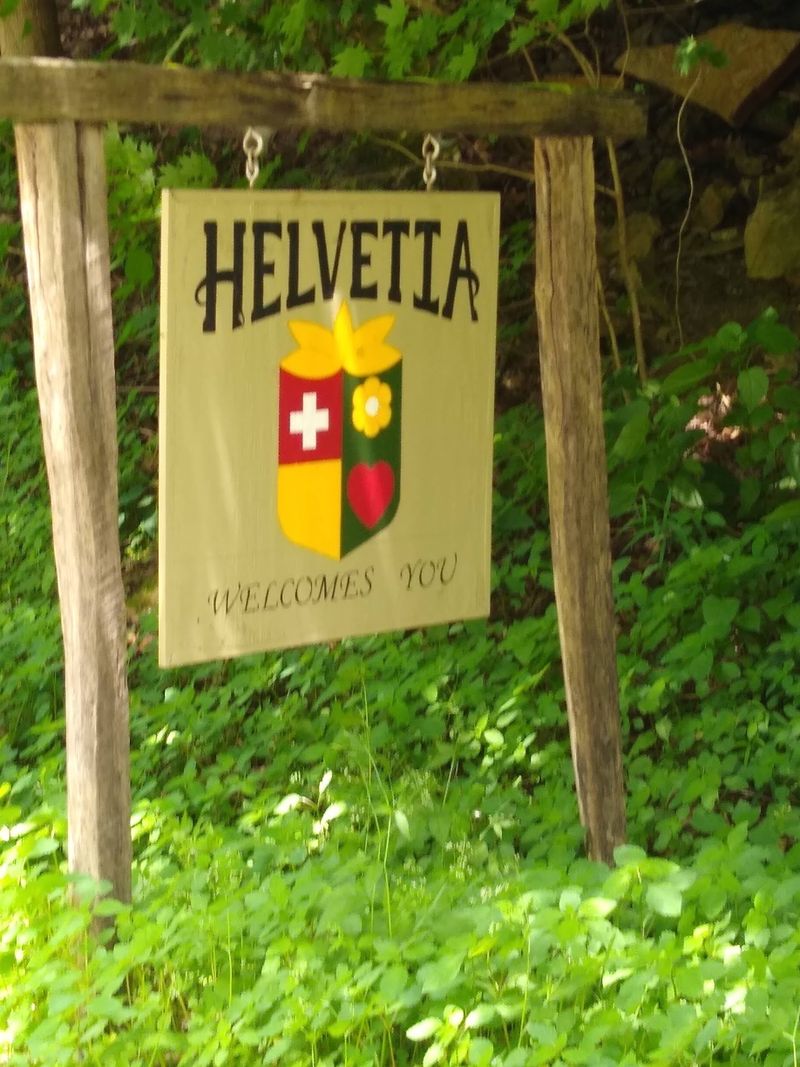
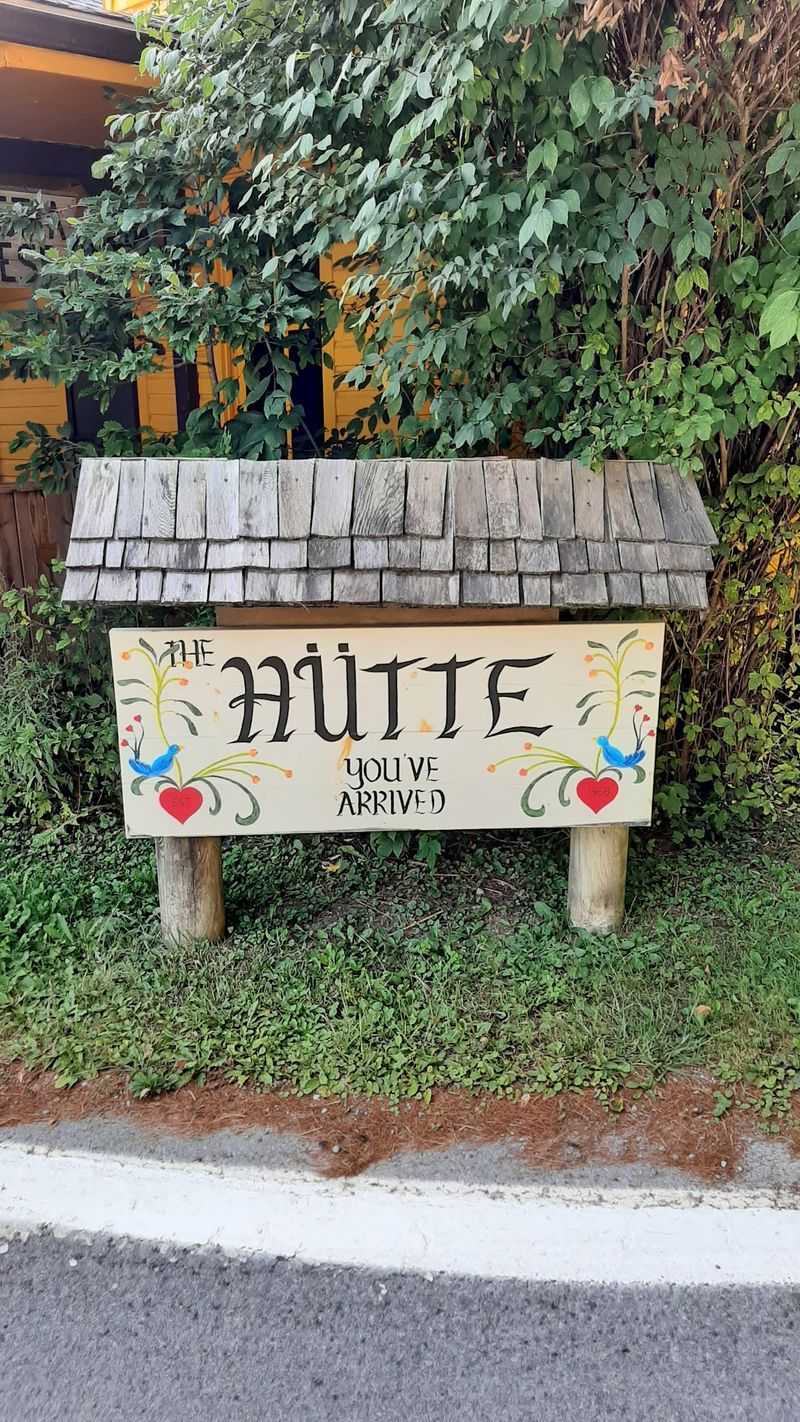
Hand-painted signs add another layer of charm. Throughout the village you will spot coats of arms and Swiss phrases carefully lettered by hand, small touches that reveal how deeply the community cares about honoring where its people came from.
Each detail tells a story. The scrollwork trim, the shutters, and the folk designs are not just decoration but living reminders of the Old World craftsmanship the settlers carried across the ocean.
Because the village center is compact and easily walkable, you can take in these buildings at a slow, comfortable pace. There is no need to rush from one to the next.
Photographers especially love the way morning light hits the painted wood. It is the kind of scenery that makes you feel like you wandered onto a movie set, except everything here is genuine, weathered, and lovingly maintained by folks who live among it every day.
Fasnacht, the Mountain Mardi Gras
Winter does not slow this village down. Every year on the Saturday before Fat Tuesday, the community throws Fasnacht, a pre-Lenten masquerade ball that some fondly call a mountain Mardi Gras.
The night bursts with festive music and dancing, and folks arrive in handmade masks and costumes that range from playful to wonderfully strange. It is a celebration that has drawn curious visitors from far beyond the county line.
The highlight comes with the symbolic burning of Old Man Winter, a fiery farewell to the cold season and a hopeful welcome to spring. Watching the flames rise against the dark mountain sky is the kind of memory that sticks with you.
Traditions like this trace straight back to Switzerland, kept alive through generations who refused to let them fade. The revival of Fasnacht in the late 1960s helped spark a wider renewal of Swiss customs here.
If you enjoy events with real heart and homemade spirit rather than polished commercial glitz, this is your kind of party. Bundle up, bring your curiosity, and let the mountain community show you how they chase winter away.
The Community Fair Every September
Come the second full weekend in September, the whole valley seems to come alive for the Helvetia Community Fair. This annual agricultural gathering is one of the most beloved dates on the local calendar.
There is plenty packed into the weekend. A parade rolls through, Swiss folk dancers take their turns, and you can watch Fahnenschwingen, the eye-catching art of Swiss flag swinging that sends bright banners spinning through the air.
Music fills the grounds too. Visitors may catch Alphorn playing, yodeling, field games, and a lively square dance that keeps folks on their feet well into the evening.
Fairs like this once anchored small-town life all across West Virginia, and many longtime residents will tell you these gatherings brought neighbors together in a way that feels rarer now. Here, that old-fashioned spirit is still going strong.
For families, retirees, and anyone who cherishes hometown pride, the fair offers an affordable and heartwarming day out. It blends Swiss showmanship with mountain friendliness, and it reminds everyone who attends why community celebrations mattered so much in the good old days.
Rösti, Cheese, and Old World Cooking
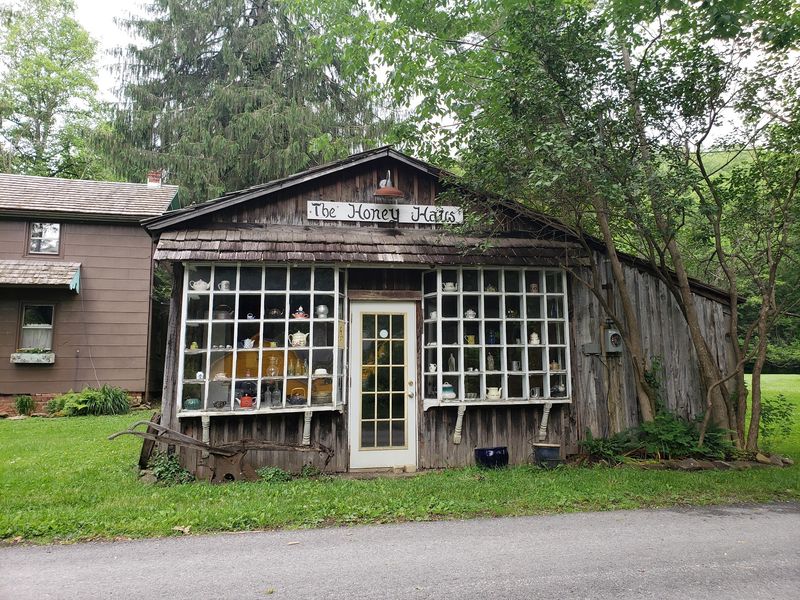
Hungry travelers find real comfort waiting at the top of the mountain. The village is known for traditional Swiss food carried down through the generations, and the flavors here feel both foreign and warmly familiar.
One specialty worth seeking out is rösti, a golden Swiss potato fritter that pairs crispiness on the outside with soft, savory goodness inside. It is the kind of humble dish that tastes like it was made with patience and love.
Cheese lovers are in for a treat as well. The community produces its own, sometimes called Appalachian Alpine Cheese or Helvetia Swiss Cheese, a nod to the cheesemaking skills the original settlers brought with them.
Baking rounds out the food heritage. Traditional breads and treats remain an important part of community life, often tied to festivals and family gatherings.
Food here is more than fuel. It carries memory, connecting today’s residents to grandparents and great-grandparents who cooked these very same recipes.
If you appreciate honest, homemade country cooking with a Swiss accent, a meal in this valley may end up being the highlight of your whole trip.
Fiddles, Banjos, and Yodeling in One Place
Few places let you hear a yodel and a banjo in the same afternoon, but that unusual harmony is part of what makes this village sing. Music sits at the very heart of Helvetian culture.
The sound here is a true blend. Swiss folk traditions mix with Appalachian influences, and you can find acoustic fiddle and banjo jams alongside traditional yodeling, all coexisting like old friends.
Monthly square dances keep the tradition rolling. Held at the Helvetia Community Hall and often backed by live bands, these dances welcome newcomers and longtime residents alike onto the floor.
Imagine the scene: worn wooden boards underfoot, a caller guiding the steps, and music echoing off the walls late into the night. It is joyful, unfussy, and deeply communal.
For music lovers, the Follow Your Bliss Music Festival adds another reason to visit, celebrating the sounds that give this community its voice.
What shines through is how the two musical worlds never compete. Instead, they enrich each other, creating a soundtrack that could only exist in a Swiss settlement tucked deep in the West Virginia hills.
A Self-Sustaining Economy Through Hard Times
Survival in the early days meant doing a little of everything. The Swiss settlers combined farming and cheesemaking with timber and mill work, building a self-sustaining economy that carried them through the world wars and the Great Depression.
Skilled hands made all the difference. With craftsmen, farmers, and professionals all pitching in, the community rarely needed to look far beyond its own valley for what it required.
Change eventually crept in. Around 1915, local timbering brought a narrow-gauge railroad, and that connection quietly opened the door to social and economic shifts that would reshape mountain life.
After World War II, more residents moved away, and timber and coal gained ground over agriculture. The old farming rhythm slowly gave way to new industries, a story familiar across much of West Virginia.
By the 1970s, tourism began adding fresh life to the local economy. Visitors came seeking exactly what the settlers had preserved.
Understanding this boom-and-bust history helps you appreciate the resilience baked into the place. Every quiet building here represents families who adapted, endured, and refused to let their little valley slip quietly away.
The Women Who Revived the Traditions
Sometimes a single spark keeps a whole culture glowing. In the late 1960s, native resident Eleanor Mailloux and her friend Delores Baggerly launched an effort to revive the village’s Swiss traditions before they slipped away.
Their work went well beyond talk. They helped establish a local restaurant, published a community cookbook titled Oppis Guet’s vo Helvetia, and organized public celebrations like Fasnacht that still draw crowds today.
Timing mattered. During the world wars, residents had consciously downplayed their Swiss-German background to emphasize their American patriotism, so many customs had quietly faded from public view.
The revival brought them back into the light. What these two women started rippled outward, encouraging neighbors to celebrate rather than hide their heritage.
Their legacy lives on in the aromas from the kitchen and the laughter at festivals. Every visitor who tastes a traditional dish is enjoying the fruit of that determined effort.
It is a heartening reminder that culture does not preserve itself. It takes people who care deeply, roll up their sleeves, and decide that the old ways are worth saving for the generations still to come.
A Historic District Worth Protecting
Recognition finally came in writing. In 1978, the Helvetia Village Historic District was added to the National Register of Historic Places, an honor that acknowledged just how rare and intact this settlement truly is.
Preservation here is an ongoing labor. The Helvetia Restoration and Development Organization, often shortened to HRDO, plays a leading role in caring for the historic buildings and keeping the village’s story alive.
The community itself does much of the heavy lifting. Many current residents are descendants of the original settlers, and they maintain family stories through oral history and genealogy research passed carefully from one generation to the next.
Because neighbors know and support one another, an unusual intimacy runs through daily life. That closeness has been handed down for over 150 years.
For history buffs, walking these protected streets feels like reading a living document. Each preserved structure carries decades of memory.
Efforts like these are why the village remains one of the most culturally intact Swiss settlements in the entire United States. It did not happen by luck, but by the steady devotion of people who understood that some places are simply too special to lose.
Walking Trails and a Quiet Escape
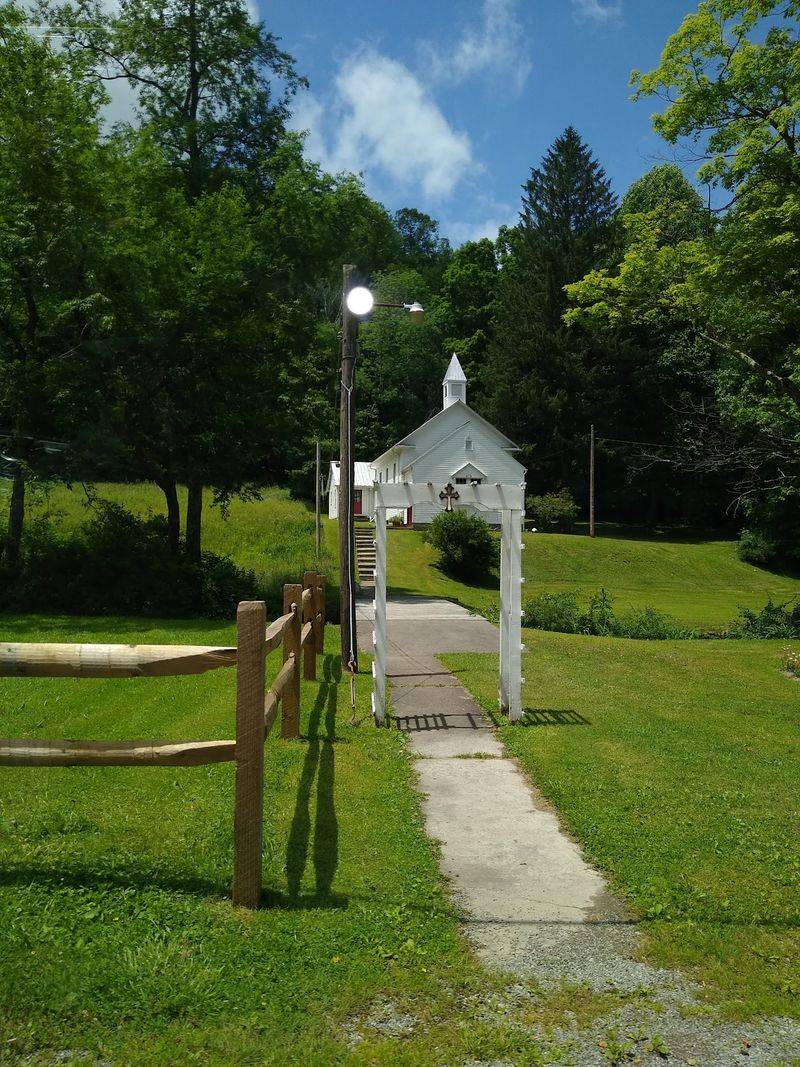
Stretch your legs and the mountain rewards you. For visitors who want to explore on foot, the village offers guided walking tours as well as a self-guided route known as the Helvetia Historic Trail.
The trail runs about two and a half miles. Along the way it weaves history and nature together, letting you take in both the built heritage and the surrounding Appalachian beauty at an easy pace.
The compact center makes wandering simple. Historic exhibition spaces and community halls sit close together, so you never feel like you are trekking long distances between points of interest.
Part of the charm comes from what is missing. With no consistent cell service, no ATMs, and no gas stations within the village, the modern world fades away and an almost unreal stillness takes over.
That quiet suits certain travelers perfectly. Retirees seeking a peaceful outing, history lovers, and anyone craving a genuine break from screens will feel right at home.
Come prepared with a full tank and a little cash, and you can spend a slow, restorative day soaking in scenery and heritage that feel worlds away from everyday life.
Planning Your Visit to the Valley
By now you can probably feel the pull of this little valley, so here is what you need to make the trip smooth. The community sits at 100 Old Helvetia Rd, Helvetia, WV 26234, tucked into the mountains of Randolph County.
Prepare before you go. Since cell service and GPS can be unreliable, download or print your directions ahead of time, fill up your gas tank, and carry some cash since there are no ATMs in the village.
Timing your visit around a festival adds extra magic. Fasnacht in late winter, the Swiss National Holiday around August 1st, and the September Community Fair each offer a lively taste of local culture.
Even on a quiet day, the walkable center, historic exhibits, and traditional food make the drive worthwhile. Weekends often bring the most activity for those who enjoy a bit of gentle bustle.
What lingers most is the feeling. A tiny population of 38 residents keeps something remarkable alive, welcoming far more visitors than their numbers each year.
If you long for the good old days and a genuine step back in time, this Swiss corner of West Virginia may be the most memorable detour you ever take.
