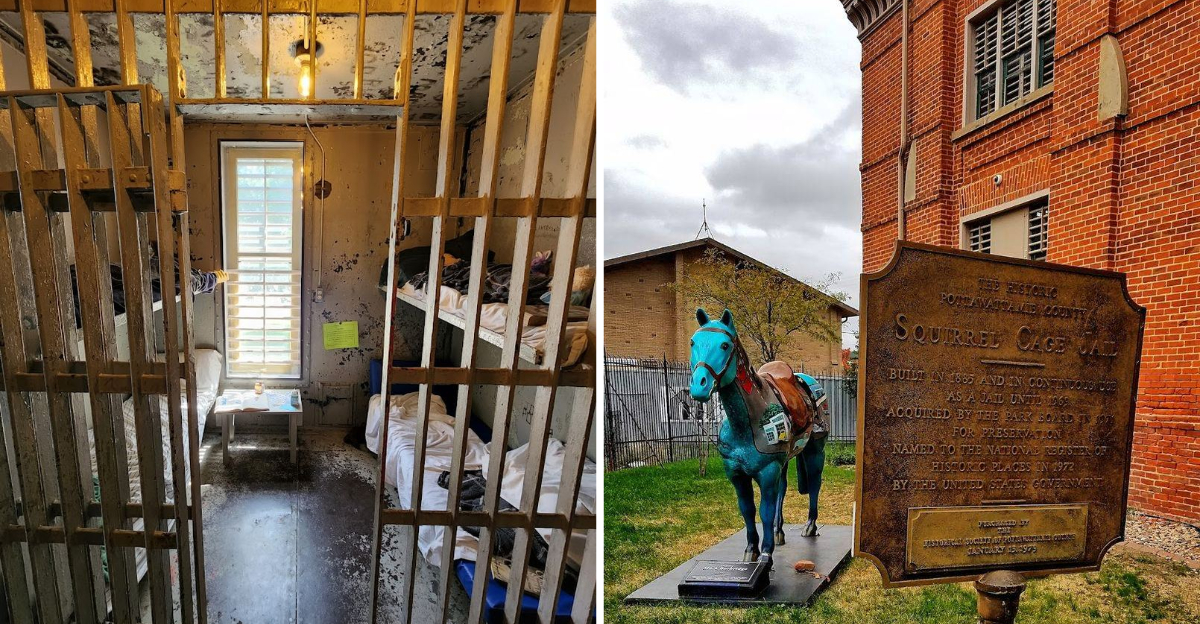
A building in Iowa looks ordinary enough from the outside, easy to drive right past. But once you step through the door, the air changes.
A three story rotary jail that once spun prisoners into place like a giant, grim lazy Susan. Built in eighteen eighty five and operational until nineteen sixty nine. The empty cell block alone weighed ninety thousand pounds.
The jail was condemned an astonishing twenty two times during its operational years. Even on a warm summer afternoon, the cold clings to the walls. The silence between footsteps feels a little too heavy.
This place earns every bit of the curiosity it inspires.
The Rotary Design That Changed Everything
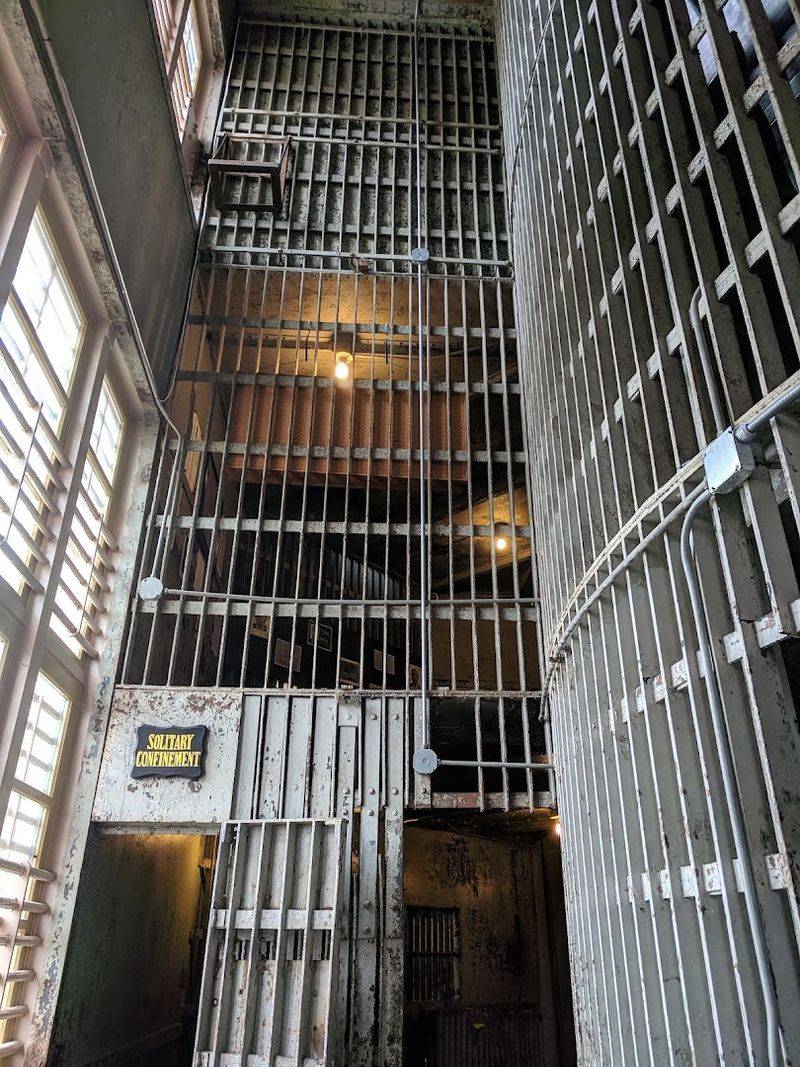
Most people have never heard of a rotary jail, and that is exactly what makes the Squirrel Cage Jail so remarkable. The concept was patented in 1881 by William H.
Brown and Benjamin F. Haugh of Indianapolis, Indiana.
Their idea was bold: arrange pie-shaped cells in a cylinder that rotates, so only one cell lines up with the single door at any given time.
The logic was pure efficiency. One jailer could theoretically manage an entire floor of inmates without ever unlocking multiple doors.
Maximum security, minimum effort, or so the theory went. The empty cell block alone weighed 90,000 pounds, which gives you a sense of the sheer mechanical ambition behind this structure.
Council Bluffs built theirs with three stories, making it the only three-story rotary jail still standing in the United States. The cells are narrow, wedge-shaped, and deeply uncomfortable to look at.
Seeing them in person hits differently than reading about them. You get a gut-level understanding of what it meant to be locked inside something that moved, that groaned, that could trap you just as easily as it could free you.
A History Built on Controversy and Condemnation
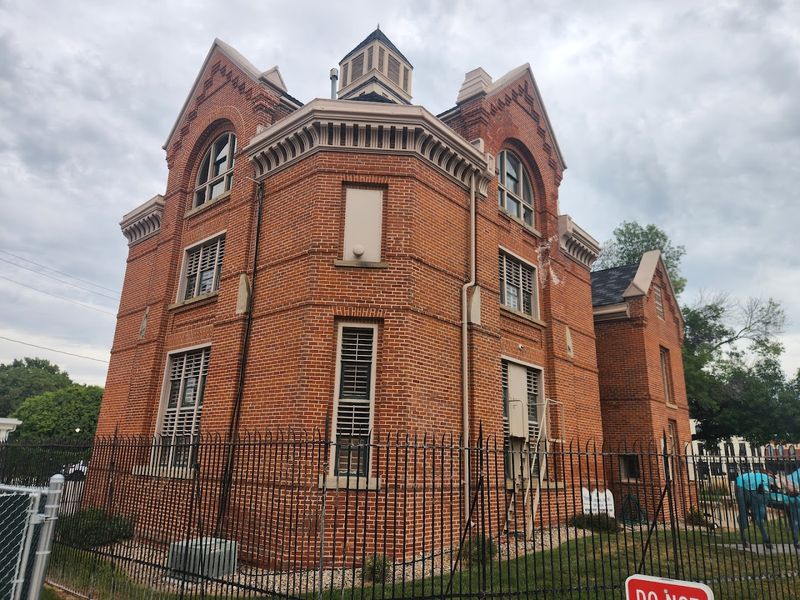
From the moment it opened, the Squirrel Cage Jail was never far from controversy. The rotary mechanism was loud, prone to jamming, and genuinely dangerous.
Prisoners who reached through the bars while the cylinder turned risked losing fingers or worse. The design that was meant to simplify incarceration ended up creating a long list of problems that no amount of maintenance could fully solve.
The jail was condemned an astonishing 22 times during its operational years. That number alone tells a story.
Inspectors flagged it repeatedly, yet it kept running because Council Bluffs needed it and alternatives were not always available.
The final straw came around 1960 or 1961, when a prisoner passed away in his cell and the broken mechanism prevented staff from reaching his body for nearly two days. That incident led to the rotary function being permanently disabled.
The jail limped along in a non-rotating capacity until December 1969, when it was officially declared unfit for human habitation and closed for good. What had once been celebrated as an engineering marvel ended its run as a cautionary tale about innovation without enough thought for human safety.
The Signatures Left Behind on the Walls
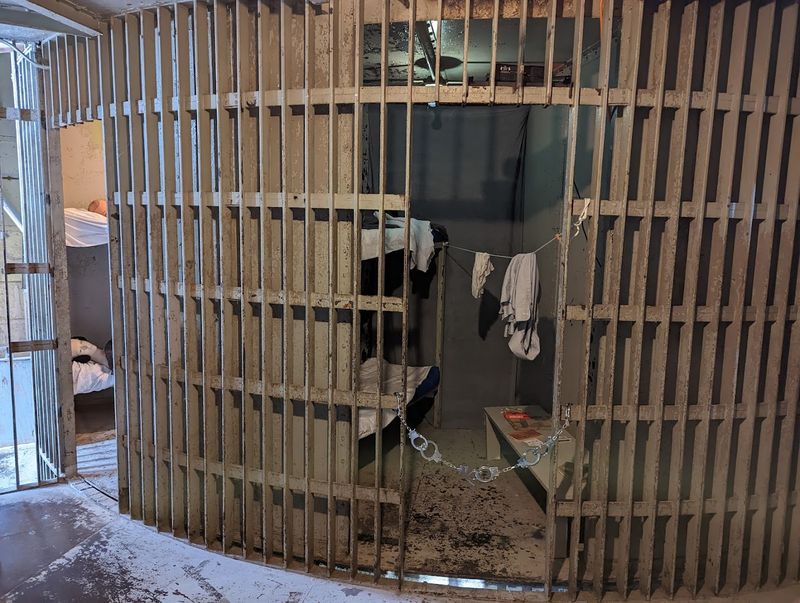
One of the quietest but most powerful things inside the Squirrel Cage Jail is also one of the easiest to overlook if you are moving too fast. The original cell walls are covered in signatures and dates scratched by former inmates, some going back well over a hundred years.
These are not displays or reproductions. They are the real thing, left exactly where they were carved.
Running your eyes across those names gives the whole place a weight that no exhibit panel can fully replicate. These were real people, bored or scared or defiant, who wanted to leave some proof that they had existed inside these walls.
A few names appear more than once, suggesting repeat stays. Some dates are faded almost to nothing, while others remain surprisingly sharp.
The Historical Society of Pottawattamie County, which now operates the museum, has done a careful job of preserving these markings without sanitizing them. The self-guided tour booklet points out some of the more notable inscriptions.
It is the kind of detail that turns a history lesson into something personal, a reminder that every number in an old record was once a living, breathing human being with a story worth remembering.
Notorious Inmates and Dark Stories
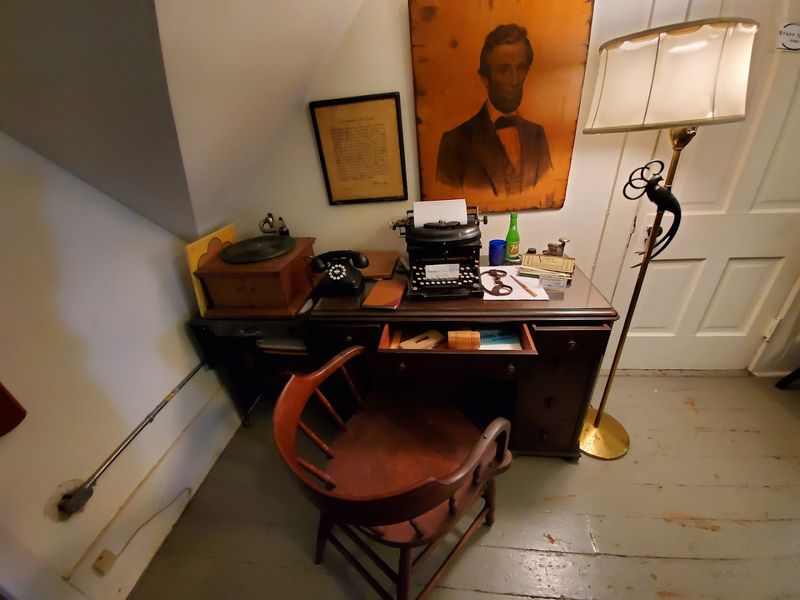
Not every prisoner who passed through the Squirrel Cage Jail was a minor offender. Among the most chilling names associated with the facility is Jake Bird, a man who ended many lives, who was held here.
His presence alone adds a layer of darkness to the building that is hard to shake once you know about it.
The jail also housed women and juveniles at various points in its history, which surprises most visitors. The idea of young people or women being held in those cramped, rotating cells is genuinely unsettling.
There were documented passing within these walls too, including a heart attack, a fall during an escape attempt, a suicide by hanging, and an accidental shooting of an officer. Four passing in one building over the course of its operation is not a small number.
The staff at the museum are knowledgeable and will share these stories if you ask. They do not dramatize unnecessarily, but they do not shy away from the harder truths either.
History is more useful when it is honest, and the Squirrel Cage Jail does not pretend its past was anything other than complicated, difficult, and at times, deeply tragic. That honesty is part of what makes a visit here feel genuinely meaningful.
The Cold That Stays With You All Year Long
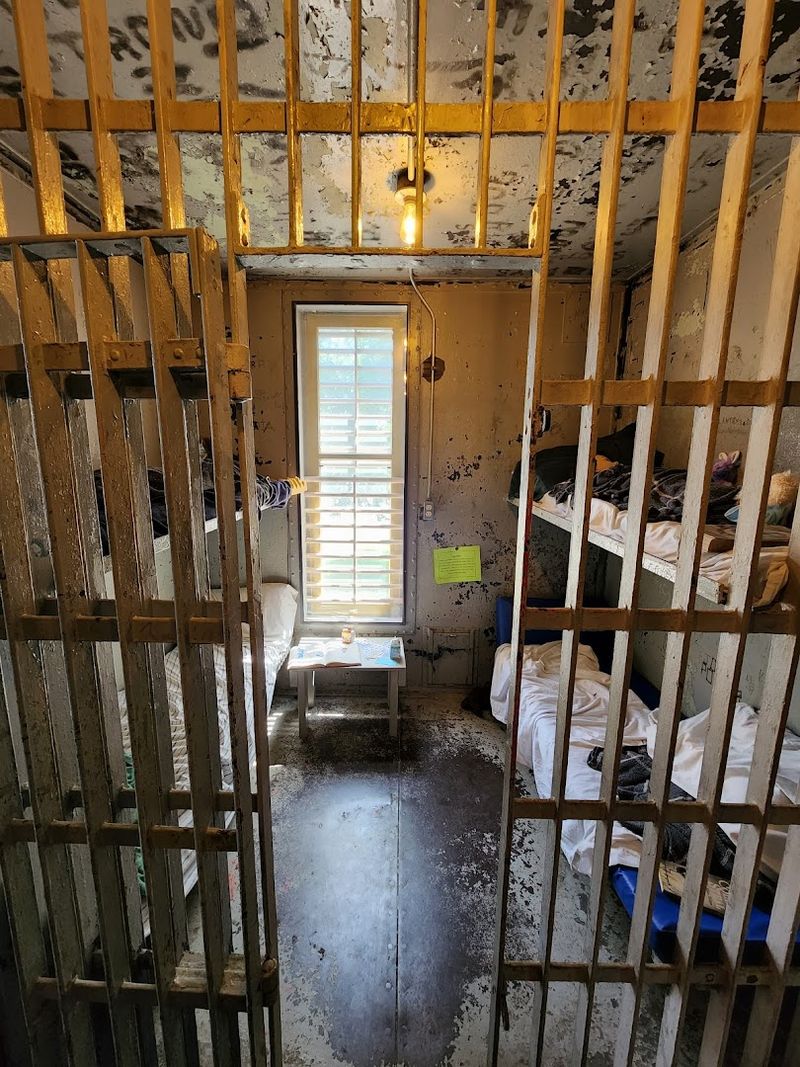
Even in July, there is a chill inside the Squirrel Cage Jail that has nothing to do with air conditioning. The original construction offered inmates almost no protection from the cold.
Heat came from coal buckets, which were inadequate in the brutal Iowa winters. The building was never designed for comfort, and that lack of warmth seems to have soaked into the walls permanently.
Visitors frequently comment on it. You walk in from a warm afternoon and feel a noticeable drop in temperature, not dramatic, but real enough to make you aware of it.
Some people attribute this to the building’s age and materials. Others, particularly those interested in the paranormal side of the jail, have a different interpretation entirely.
Whether you believe in hauntings or prefer a purely practical explanation, the sensation is consistent and hard to dismiss. The narrow corridors, the iron bars, and the layers of history all seem to pull the warmth right out of the air.
It is the kind of cold that makes you think, just for a moment, about what it would have meant to sleep here in February without enough heat. That thought alone is enough to make most people pull their jacket a little tighter, even on the sunniest summer day.
Paranormal Activity and Ghost Investigations
The Squirrel Cage Jail has built a genuine reputation as one of the more actively haunted locations in the Midwest. Staff members, tour guides, and visitors have reported footsteps on empty floors, disembodied voices, whispers with no source, doors moving on their own, and shadows that shift without anyone nearby.
These reports have been consistent over many years and across many different visitors who had no prior knowledge of the jail’s history.
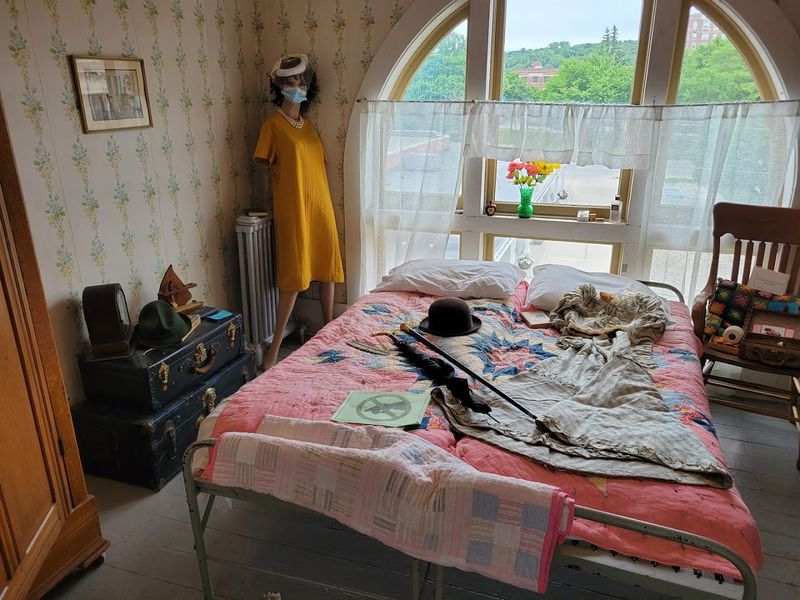
Jailers back in the 1950s reportedly refused to sleep in the fourth-floor apartment because the unexplained noises made it impossible to rest. Some visitors have described the feeling of being watched intensely, or having their clothing tugged on, especially on the upper floors where the energy feels noticeably different.
The jail has been featured on paranormal investigation programs including the Travel Channel’s Most Terrifying Places.
For Halloween, the museum offers special flashlight tours that lean into the building’s spookier reputation. Even if you are not a believer in the paranormal, the tours are genuinely atmospheric and fun.
The combination of real history, dramatic architecture, and unexplained stories makes this one of those rare places that gets under your skin no matter what you believe.
Planning Your Visit to This Hidden Iowa Gem
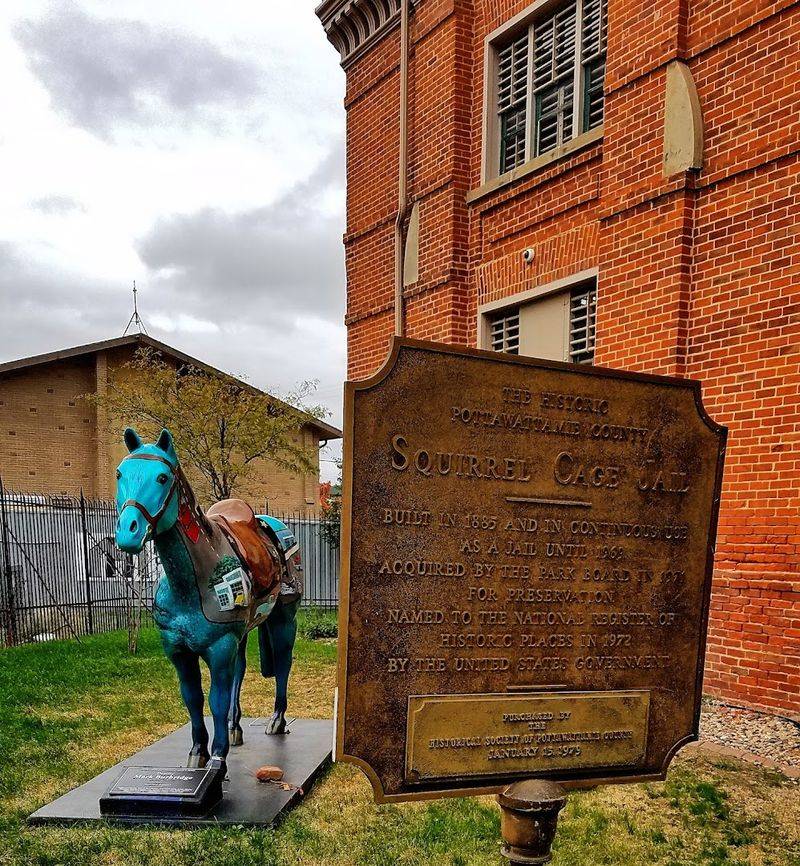
Getting to the Squirrel Cage Jail is easy enough once you know where to look. It sits at 226 Pearl Street in Council Bluffs, Iowa, conveniently close to both I-80 and I-29, which makes it a natural stop for road trippers passing through the area.
The tricky part is spotting it from the road, since the main sign sits closer to the building than to the street, so keep your eyes open and go slow.
The museum is open Thursday through Saturday from 10 AM to 4 PM. The self-guided tour takes roughly an hour to an hour and a half, though curious visitors who stop to read everything might stretch it longer.
A small booklet guides you through each level, and the staff on site are genuinely enthusiastic and full of information if you want to chat.
The building is small but surprisingly layered. Each floor feels distinct, from the cells and rotating mechanism to the jail master’s family quarters on the upper level.
It is the kind of place that rewards slow, attentive visitors. Reviews consistently praise both the staff and the preservation quality.
For anyone who loves offbeat history, unexpected landmarks, or just a genuinely good story, the Squirrel Cage Jail delivers in ways that are hard to forget.
Address: 226 Pearl Street, Council Bluffs, Iowa
