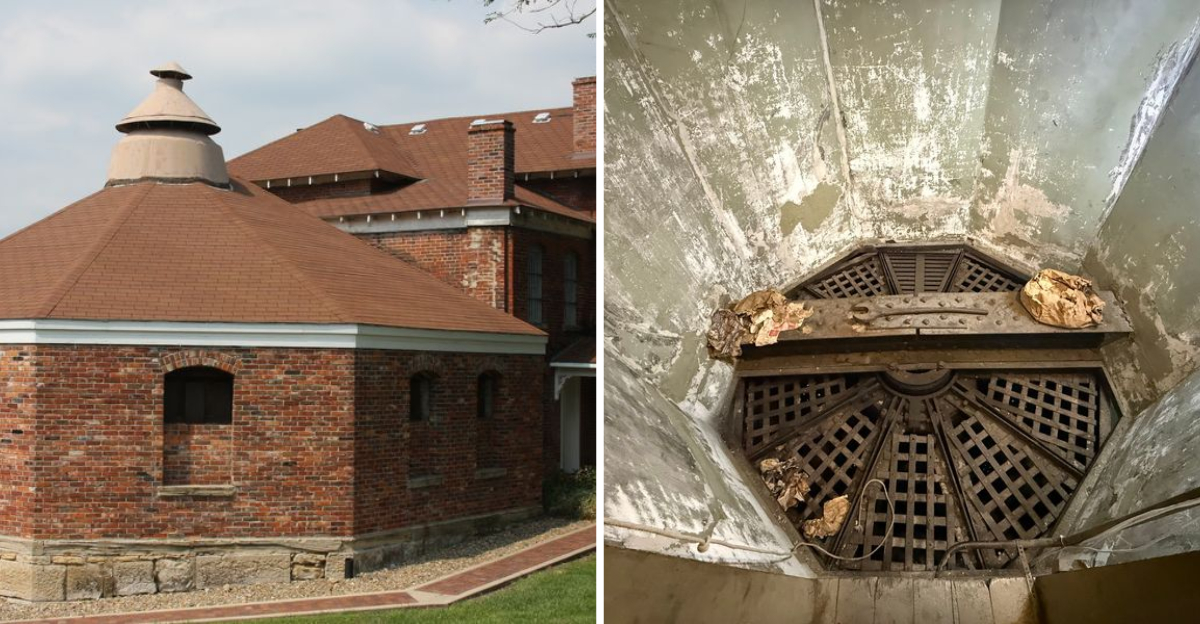
A jail that spun its cells like a lazy Susan sounded like a joke the first time I heard about it. Then I found myself parked on a quiet Missouri street, looking up at a squat brick building with eight sides and a whole lot of secrets.
Inside sits a hand crank that once turned an entire block of pie-shaped cells, one prisoner at a time. The tour costs nothing, runs by appointment, and lasts about as long as a coffee break, yet I walked out thinking about it for days.
What got me most were the small things: a kitchen where the sheriff’s wife cooked, a little hole where meals were passed through, names scratched into metal by people long gone. The building has been standing for over a century, and the mechanism still works, which is more than you can say for most things of its age.
The crank turns with a low groan, and you can feel the weight of all those rotations through your hands. History you can actually reach out and touch is rare.
This odd little landmark offers exactly that.
The Octagon That Spun, How the Rotary Design Worked
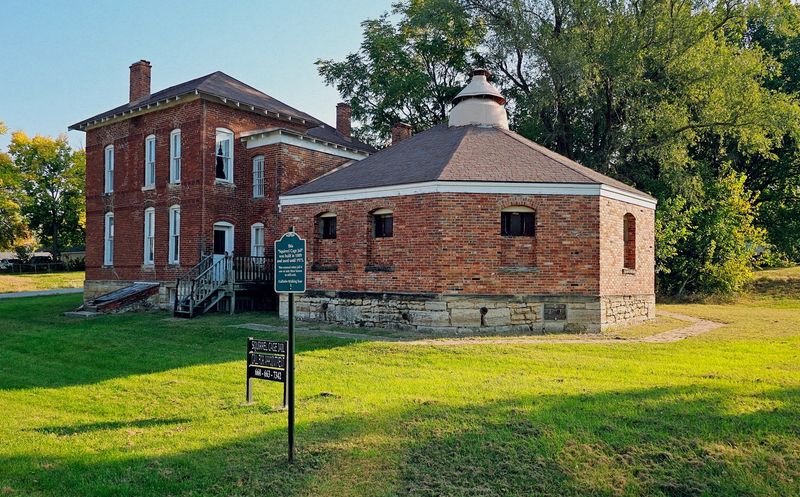
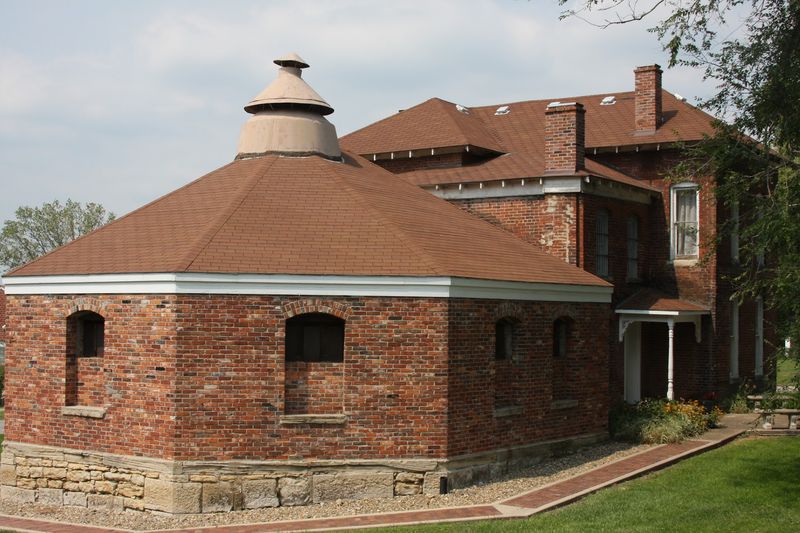
My first surprise came before I even reached the door. The building has eight sides, which is not something you expect from a county lockup, and that odd shape exists for one reason: the cells inside were built to turn.
Patented back in 1881 by William Brown and Benjamin Haugh, the rotary jail promised maximum security with minimum jailer attention. Pie-shaped cells sat on a big cylindrical turntable, ringed by stationary outer bars with a single opening.
To reach a prisoner, the jailer cranked a handle by hand until that one cell lined up with the door. Everyone else stayed sealed behind solid metal, no matter how much they hollered.
The Daviess County version was built by the Pauly Jail Building and Manufacturing Company out of St. Louis, with county court approval ordered on March 1, 1887. Construction wrapped up around 1888 or 1889.
Nobody officially named it a squirrel cage jail, but the nickname stuck because that is exactly what it resembles. Cells rotating inside a fixed cage, one opening, endless creaking.
I kept picturing the sound of that crank grinding on a cold morning. It must have been unmistakable to anyone locked inside, a mechanical clock marking every meal and every visitor.
What makes this particular building extra special is that the sheriff’s living quarters were attached right to the jail. Of all the rotary jails ever built in America, it is the only one designed that way, which alone makes the stop worth your time.
A Family Kitchen Steps From the Cell Block
Nothing prepared me for the kitchen. That is usually the first room visitors step into, and it feels almost cozy until you remember what sits on the other side of the wall.
The sheriff’s wife cooked here, and she cooked for two very different groups. Her own family ate meals from this stove, and so did every person locked up in the cells nearby.
I stood there trying to imagine that routine. Breakfast for the kids, then breakfast for the inmates, all from the same pans and the same fire.
Back then the line between a lawman’s home life and his job barely existed. His family lived on site, heard everything, and shared the same roof with people awaiting trial.
There is something oddly human about a jail with a family kitchen attached. It softens the building in a way that surprised me, though it also raises a hundred questions about privacy and nerves.
Kids growing up in that house would have known the sound of the crank as background noise. Chores, homework, supper, and a cell block through the doorway.
Tucked into the jail area you can also spot the grub hole, a small opening where food was handed through to prisoners. It is such a plain little detail, yet it explains more about daily life here than any long paragraph could.
Bring a bit of patience for the layout, because the building was designed for function rather than comfort. Old floors, tight doorways, and stairs that ask a little effort.
Names Scratched Into Iron and Brick
Graffiti is what quietly wrecked me on this tour. Not the architecture, not the crank, but the layers of names and dates carved into the cell walls by people who sat here waiting.
Some marks are shallow scratches. Others were carved deep enough that you can trace them with a fingertip, which feels strangely personal.
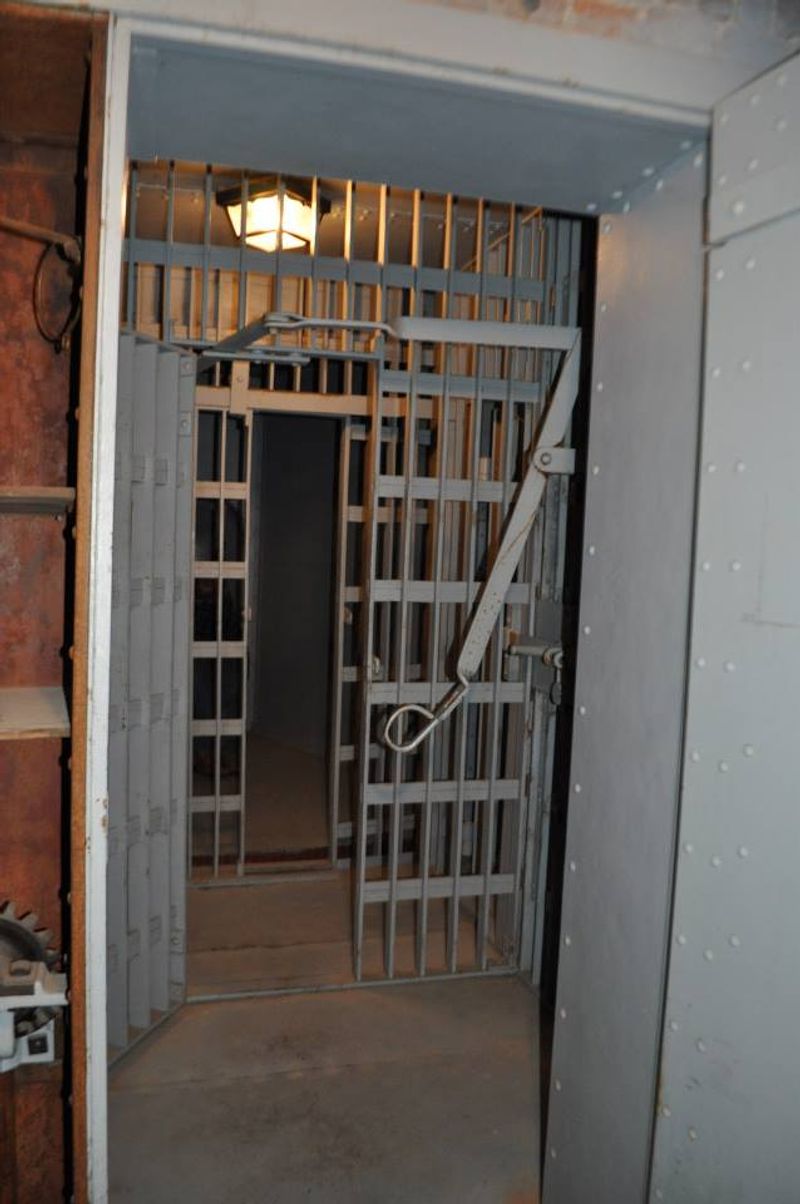
You can walk into part of the cell block because one side was opened up years ago. The other side still has its bars in place, so you get both the view from outside and the feeling from within.
Standing inside one of those wedge-shaped cells, I realized how narrow they really are. Wide at the outer wall, pinched to almost nothing at the center point.
The turntable no longer moves, yet the original hand crank remains right where it always sat. Seeing that piece of iron in place made the whole concept click for me in a way photos never did.
What the etchings do not tell you is who those people were or what happened to them. That absence is part of the experience, an open question hanging in the air.
My advice is to slow down here rather than snapping a quick photo and moving on. Let your eyes adjust, read a few of the markings, and think about how many hands touched that same wall.
It is the closest thing to a message from the past that I have found in a small-town museum.
Why the Spinning Cells Eventually Stopped Turning
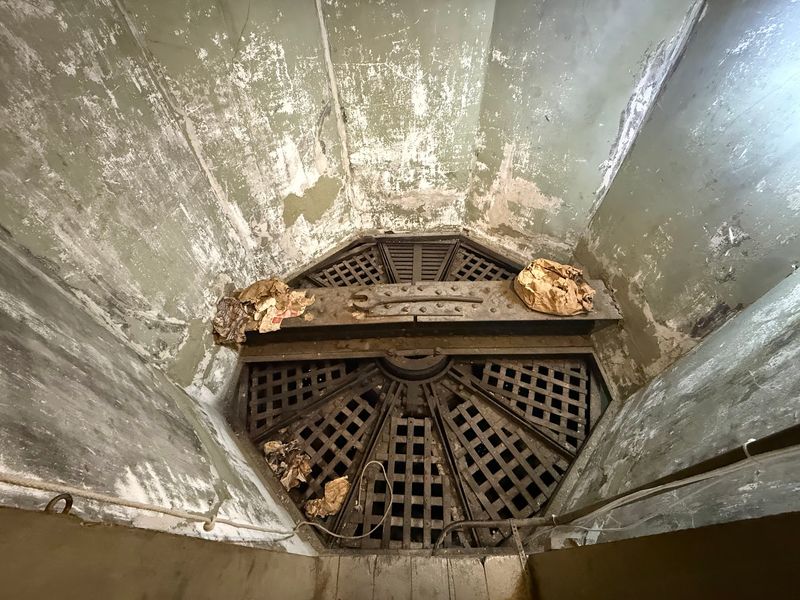
Clever ideas do not always age well, and the rotary jail is proof. Sales pitches in the late 1800s described these buildings as cheaper to run and nearly impossible to escape, which sounded great on paper.
Reality had other plans. Sanitation was a constant headache, and heating the place through a Missouri winter never worked the way anyone hoped.
The crank itself gave trouble too. Turning a heavy turntable full of people by hand wore on the mechanism, and jams were common.
Then there is the part that still makes me wince. If a prisoner had a hand or arm through the bars while the block started moving, injuries could be severe.
Fire risk was the bigger problem. A jammed turntable during an emergency meant there was no realistic way to get everyone out, and officials eventually recognized that.
By the middle of the twentieth century, reformers pushed hard against these designs. Security had been prioritized over basic safety and dignity, and the math no longer added up.
The rotating ironworks here were scrapped in 1964 after state officials called the setup a fire hazard. The building was then modified to work as a stationary jail.
Even so, it kept serving as the Daviess County lockup all the way until 1975. That is a long second act for a place whose original heart had already stopped turning.
Hearing that timeline helped me appreciate how quickly a bold invention can become a cautionary tale.
One of Only Three Left Standing in the Country
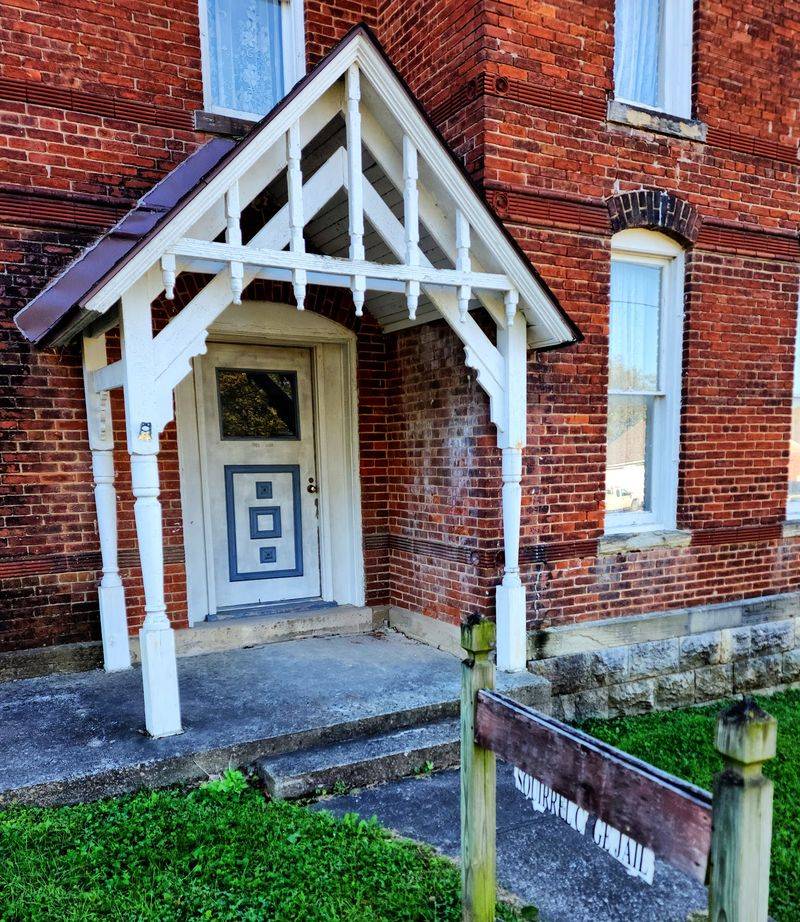
Rarity is the word that kept coming up during my visit. Roughly eighteen rotary jails were ever built across the United States, and today only three still stand as museums.
Gallatin has one of them. The other two are in Council Bluffs, Iowa, and Crawfordsville, Indiana.
Of that trio, only the Crawfordsville jail still rotates and offers demonstrations. Which means the Daviess County building is part of an extremely short list of survivors from a strange experiment in American design.
I found myself doing quick mental math on how easily this place could have vanished. Fifteen of these buildings are simply gone, torn down or converted beyond recognition.
Small-town preservation is rarely glamorous work. Roofs leak, funding is thin, and a weird old jail is not always the first thing a community rallies around.
Yet here it is, still holding its shape, still teaching people about an era when inventors tried to solve social problems with gears and levers.
Being able to walk inside a structure like that feels like a genuine privilege rather than a novelty. You are not looking at a replica or a photo panel.
The bricks, the bars, the crank, and the etched walls are all original to the story. For history travelers who like collecting the truly unusual, checking one of three off the list is a real win.
It turned a quick detour into one of my favorite Missouri stops.
Planning a Visit, Free, By Appointment, and Wonderfully Personal
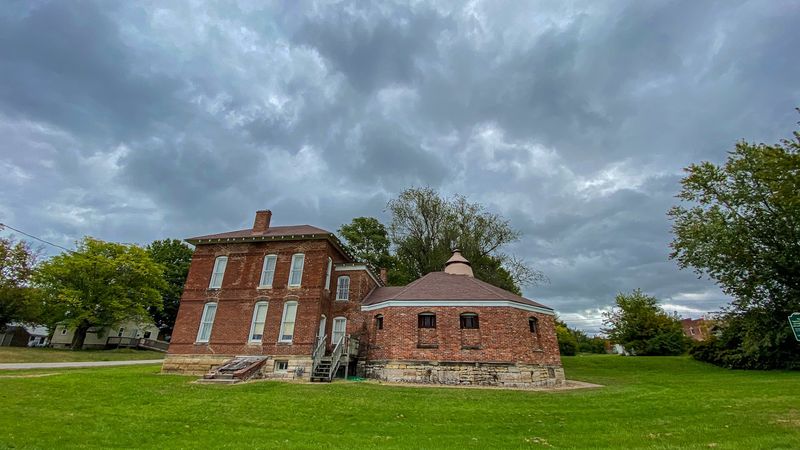
Here is the practical part, and it is genuinely good news. Touring the jail costs nothing, though donations are welcomed and go straight toward keeping the doors open.
Visits run by appointment only, which is the single most important thing to know. A few travelers have shown up unannounced and ended up admiring the outside from the sidewalk instead.
Call ahead at 660-663-7342, ideally a day before you plan to arrive. That small step is the difference between a drive-by and a real look inside.
My tour ran somewhere in the 30 to 45 minute range, which felt just right. Long enough to absorb the details, short enough to fit easily into a road trip day.
The caretaker handles the tours personally, and the knowledge shared goes well beyond what a sign could ever explain. Construction history, daily routines, and even displays touching on the Frank James trial connected to Gallatin.
Because it is one visitor group at a time, there is room for questions. I asked several and never felt rushed.
Worth knowing: stairs are part of the experience, so anyone with mobility concerns should ask about that when booking. The building was built in the 1880s and it shows.
Pair it with a walk around Gallatin’s courthouse square and you have an easy half-day of small-town history. I left with a donation lighter wallet and zero regrets.
Address: 310 West Jackson Street, Gallatin, Missouri.
