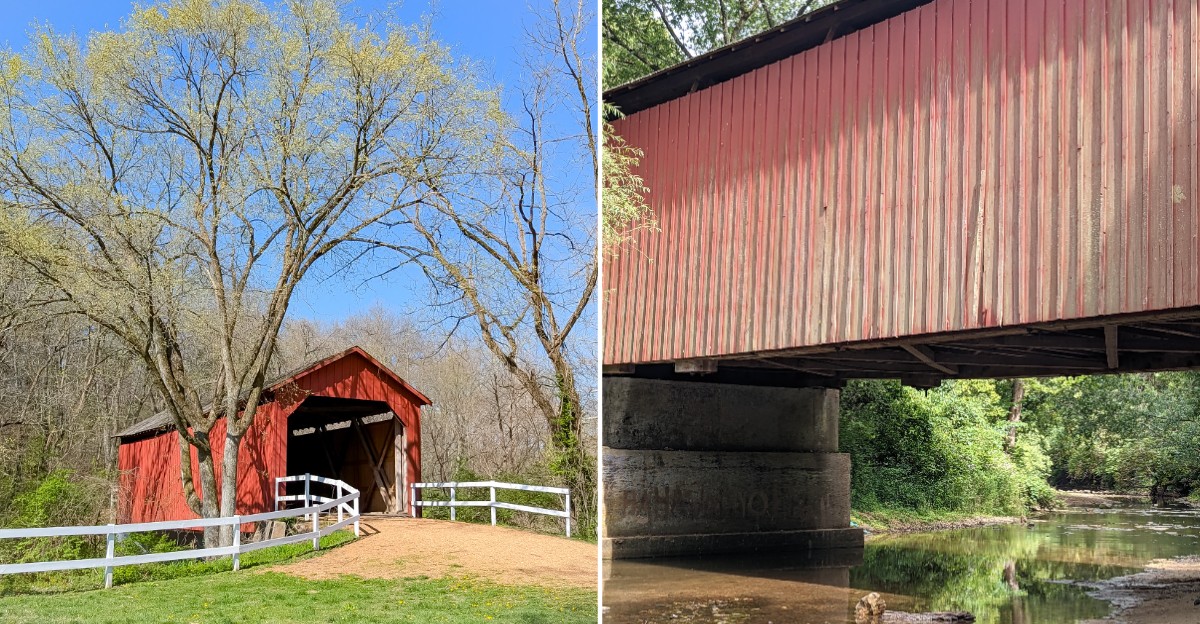
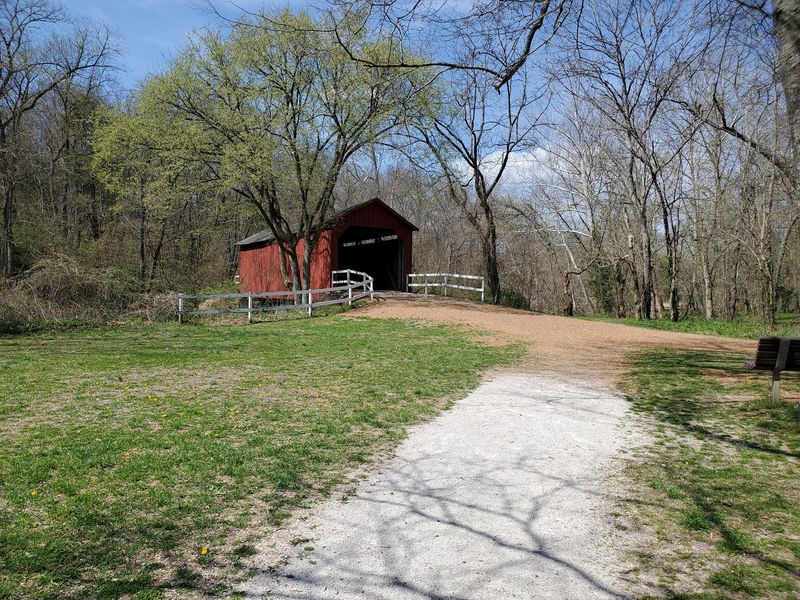
A flood swept this bright red bridge away in 1886, and builders put it back up that same year. Some of the original timbers went right back into the new one.
That comeback story still stands today. Missouri once had around 30 covered bridges, and only four historic ones remain.
This one is the youngest and the shortest of the group.
I like that you can walk straight through it on foot. Cars stopped crossing long ago, so the wooden beams overhead belong to anyone strolling by.
A clear, shallow creek slips along underneath.
Entry costs nothing, and the grounds stretch well past the bridge itself. Picnic tables wait in the shade, and the water invites a cool toe or two.
So how long would you linger before heading home?
Walk Right Through A Bridge That Refused To Stay Gone
Some landmarks sit behind ropes, but this one welcomes your footsteps. Sandy Creek Covered Bridge State Historic Site lets you stroll the full length of its red, barn-like bridge.
The bridge measures 74 feet, 6 inches long. It’s 18 feet, 10 inches wide, with a 13-foot entrance height that once fit horse-drawn wagons.
Vehicle traffic no longer rolls across these boards. That leaves plenty of room to slow down, look up, and enjoy the quiet.
Its story has real grit. A spring flood destroyed the original structure in 1886, only 14 years after it was built.
Henry Steffin rebuilt it later that same year. He reused some of the original timbers and abutments, which feels wonderfully thrifty.
So when you walk inside, you’re stepping across pieces of the 1870s. Not many places in Missouri can offer that kind of time travel for free.
Take your time on the crossing. The bridge is short, so rushing would end the fun in about thirty seconds.
Pause in the middle and listen to the creek below. It’s a simple moment, but it sticks with you.
Look Up And You Will Spot A Clever 1840 Invention
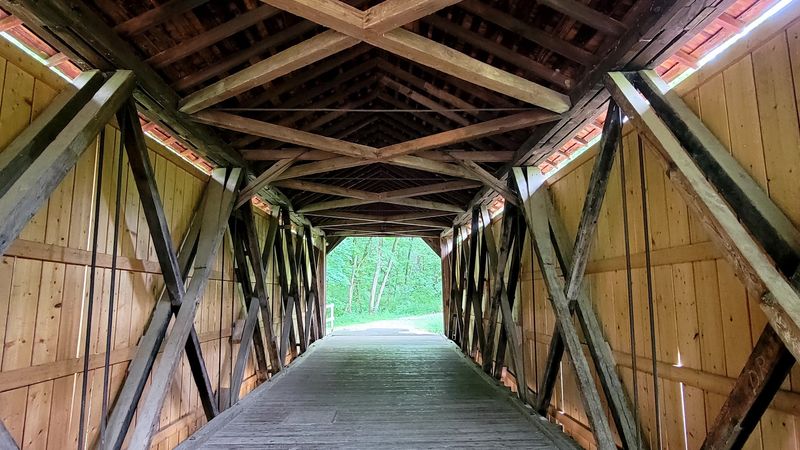
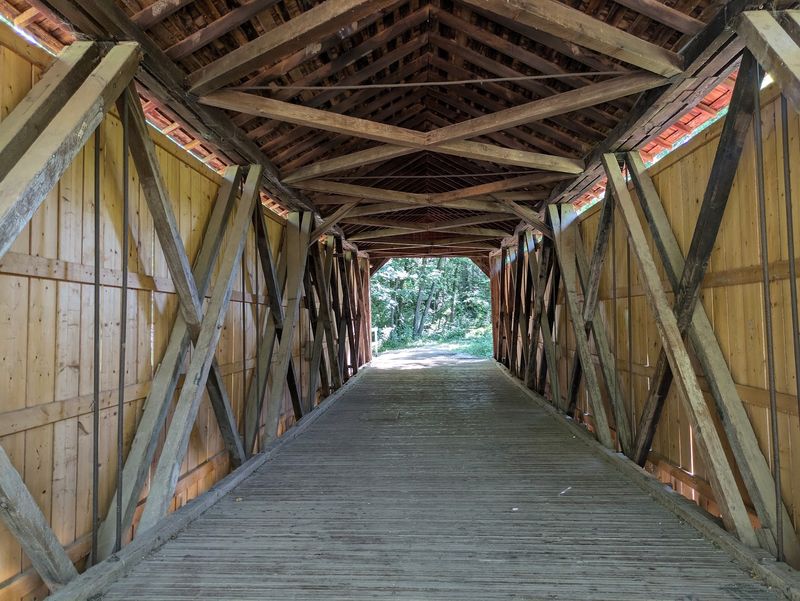
Engineering nerds, this is your moment. The ceiling of this bridge shows off the Howe-truss design, patented by William Howe in 1840.
Here’s how it works in plain terms. Vertical rods tighten the wooden members, keeping the whole frame strong and snug.
That design made bridges sturdier and easier to adjust. Builders loved it because they could tighten things up as wood shifted over time.
Sandy Creek is one of three remaining Missouri covered bridges using the Howe truss. That makes the view overhead a rare little lesson.
You don’t need a degree to appreciate it either. The crisscrossing beams look great even if you can’t name a single part.
Kids might enjoy counting the rods or spotting patterns. Adults might just enjoy how solid and handsome everything looks.
Bring a phone with a decent camera for this spot. The lines of the truss make striking photos, especially looking down the length of the bridge.
Just watch your step while you stare at the rafters. The boards below deserve some attention too, especially for anyone a little unsteady on their feet.
Kick Off Your Shoes Because The Creek Is Calling
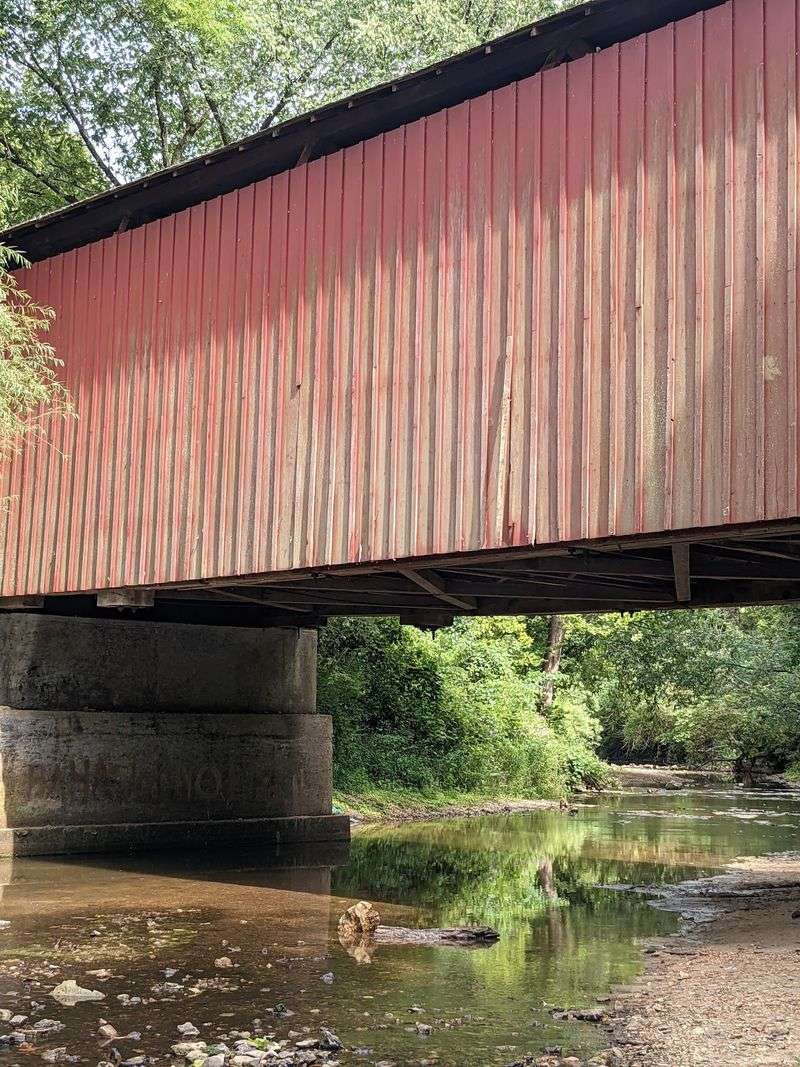
Clear water, shallow riffles, and a red bridge in the background. Sandy Creek runs right under the bridge and through the site, and it’s hard to resist.
The creek is shallow, which makes it a friendly spot for wading. Cooling your feet on a warm afternoon might become the highlight of the trip.
Not into getting wet? The gentle sound of moving water is reason enough to sit nearby and relax.
A few practical tips will help. Water shoes are smart, since creek bottoms can be slippery and uneven.
Water levels change with the weather too. After heavy rain, it’s wise to stay on the bank and enjoy the view instead.
Keep a close eye on little ones near the water. Shallow doesn’t mean slip-proof, and rocks can surprise anyone.
Wildlife shares this creek as well, so stay aware of your surroundings. Snakes live in Missouri streams, and giving them space keeps everyone happy.
Pack a towel and a dry change of socks. Your car seats will thank you on the ride home.
Your Next Picnic Deserves A View This Good
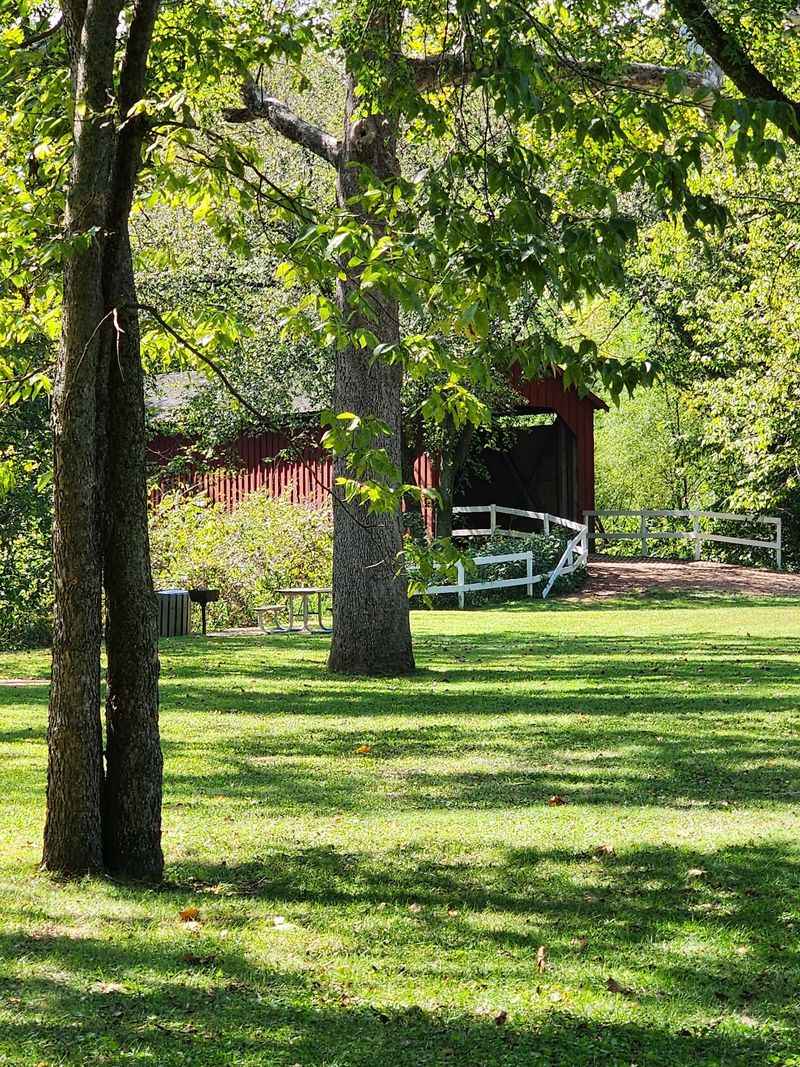
Sandwiches simply taste better near a 150-year-old bridge. That’s not science, but it feels true.
Sandy Creek Covered Bridge State Historic Site offers shaded picnic areas with tables. They give you a comfortable place to eat while the creek keeps you company.
The shade matters more than you might think. Missouri summers can get steamy, and a leafy roof makes lunch far more pleasant.
Plan ahead, because this is a day-use site without food service. Pack your meal, snacks, and plenty of water before you leave home.
A cooler is your best friend here. So is a small bag for trash, just in case bins fill up.
Vault restrooms are available on site, which helps with longer stays. They’re basic, so tossing some hand sanitizer in your bag is a good idea.
Picnicking turns a quick stop into a relaxed afternoon. Eat, wander to the creek, walk the bridge again, then repeat as needed.
Honestly, the hardest part might be packing up to leave. That’s a pretty nice problem to have.
Six Bridges Once Lined This Road To St. Louis
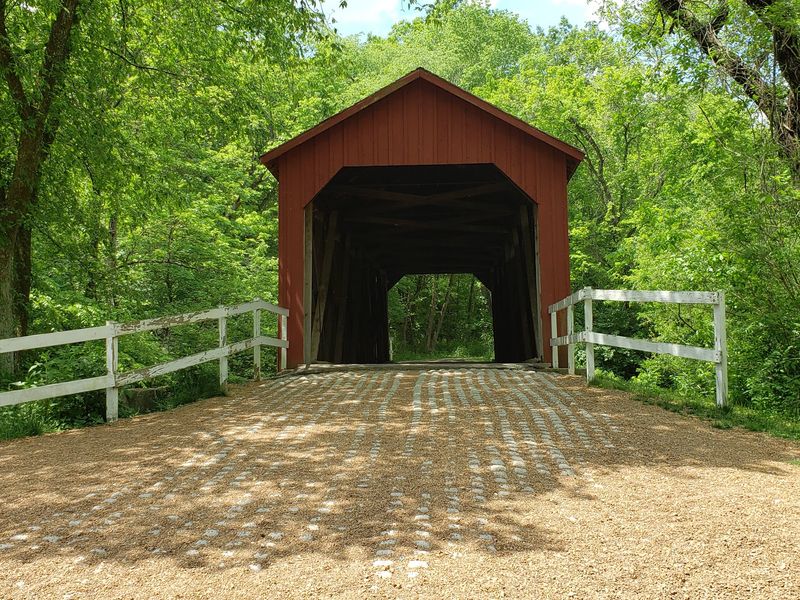
Back in 1872, getting from Hillsboro to St. Louis took more than a quick drive. John H.
Morse built the original bridge that year to help with the trip.
It was part of a post-Civil War building program in Jefferson County. The county put up six covered bridges along the Hillsboro and Lemay Ferry gravel road.
Those bridges connected rural families with the big city. Farmers, travelers, and wagons all depended on them.
Why cover a bridge at all? Roofs protected the wooden structure from rain and sun, helping it last much longer.
Of those six bridges, this is the one you can still visit. That alone makes the stop feel special.
Statewide, Missouri once had an estimated 30 covered bridges. Today only four historic ones remain, and Sandy Creek is the youngest and shortest.
Short doesn’t mean less important, though. Small packages, big stories, as the saying almost goes.
Standing here, it’s easy to picture creaking wagon wheels on those boards. History feels close when you can touch the timber.
Rescued, Protected, And Restored For Good
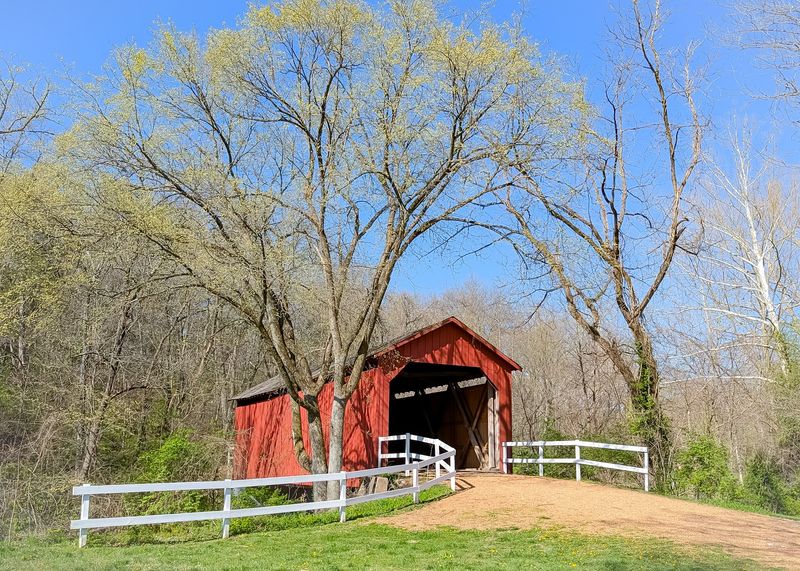
In 1967, the Missouri Legislature made a smart move. It authorized the State Park Board to preserve the state’s remaining covered bridges as historic sites.
Jefferson County transferred ownership of this bridge to the state in 1968. Two years later, in 1970, it joined the National Register of Historic Places.
Floods kept testing it, though. Extensive flood damage led to a thorough restoration in 1984.
That work returned the bridge to its historic appearance. The bright red look you see today reflects that careful effort.
An outdoor interpretive display shares more about Missouri’s covered bridges. It explains their history and design in a quick, easy read.
Spend a few minutes there before crossing. You’ll notice more details once you know the backstory.
The site is managed by Mastodon State Historic Site and isn’t staffed. That means the signs do the teaching, so give them a look.
It’s comforting to know people fought to save this place. Without them, the bridge might be just an old photo in a book.
Fall Colors Turn This Spot Into A Painting
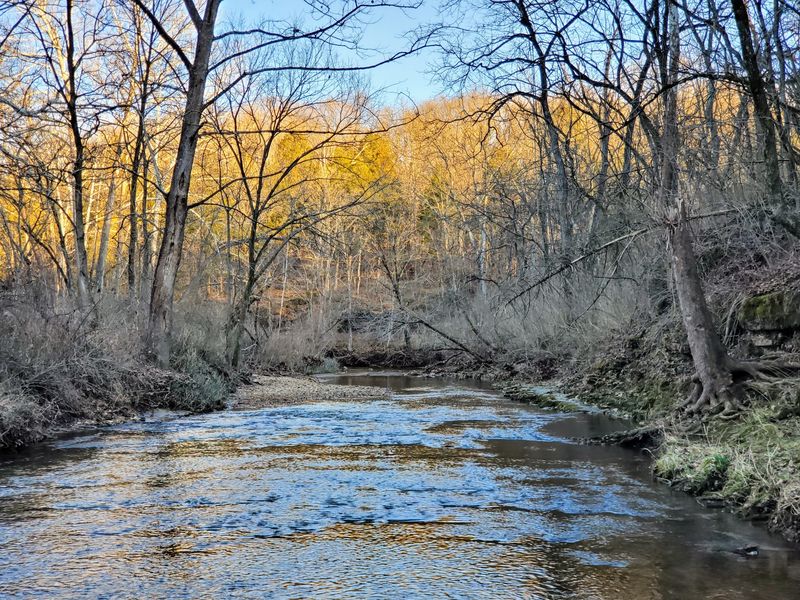
Red bridge, golden leaves, sparkling water. Autumn here practically paints itself.
The bridge and its natural surroundings are known as an ideal setting for photography and painting. Fall foliage adds a gorgeous color contrast against that barn-red siding.
Photographers have plenty of angles to try. Shoot from the creek bank, frame the entrance, or capture the long view inside.
Artists can bring a sketchbook or small easel. The scene stays still, which makes it a very patient model.
Morning and late afternoon light tend to flatter outdoor scenes. Soft light helps the red and the leaves glow without harsh shadows.
Family photos fit right in too. A covered bridge backdrop beats a plain wall any day.
Be considerate if others are taking pictures. Everyone wants that clear shot of the bridge, so a little patience goes a long way.
Don’t skip the other seasons, either. Summer green, winter quiet, and spring blooms each give this place a different personality.
Plan Smart With These Handy Visiting Basics
Good news first: there’s no entry fee. Sandy Creek Covered Bridge State Historic Site is a free day-use facility.
It opens daily at 8 a.m. Gates close one half-hour past sunset, so evening visits can work in summer.
Set your GPS for 9090 Old Lemay Ferry Road, Hillsboro, MO 63050. The site sits in Jefferson County, an easy day trip from the St. Louis area.
The grounds cover 205 acres of natural land around the bridge. That’s far more space than most people expect from a single bridge stop.
Some trails have been closed for restoration work. Check with Missouri State Parks before you go if hiking is your main goal.
Remember that no staff work on site. Bring what you need, including water, snacks, sunscreen, and bug spray.
Sturdy shoes help on grassy paths and creek banks. Uneven ground can catch anyone off guard.
Leave the area as clean as you found it. Places like this stay lovely when every visitor pitches in.
Stretch The Day With Nearby Glades And Gardens
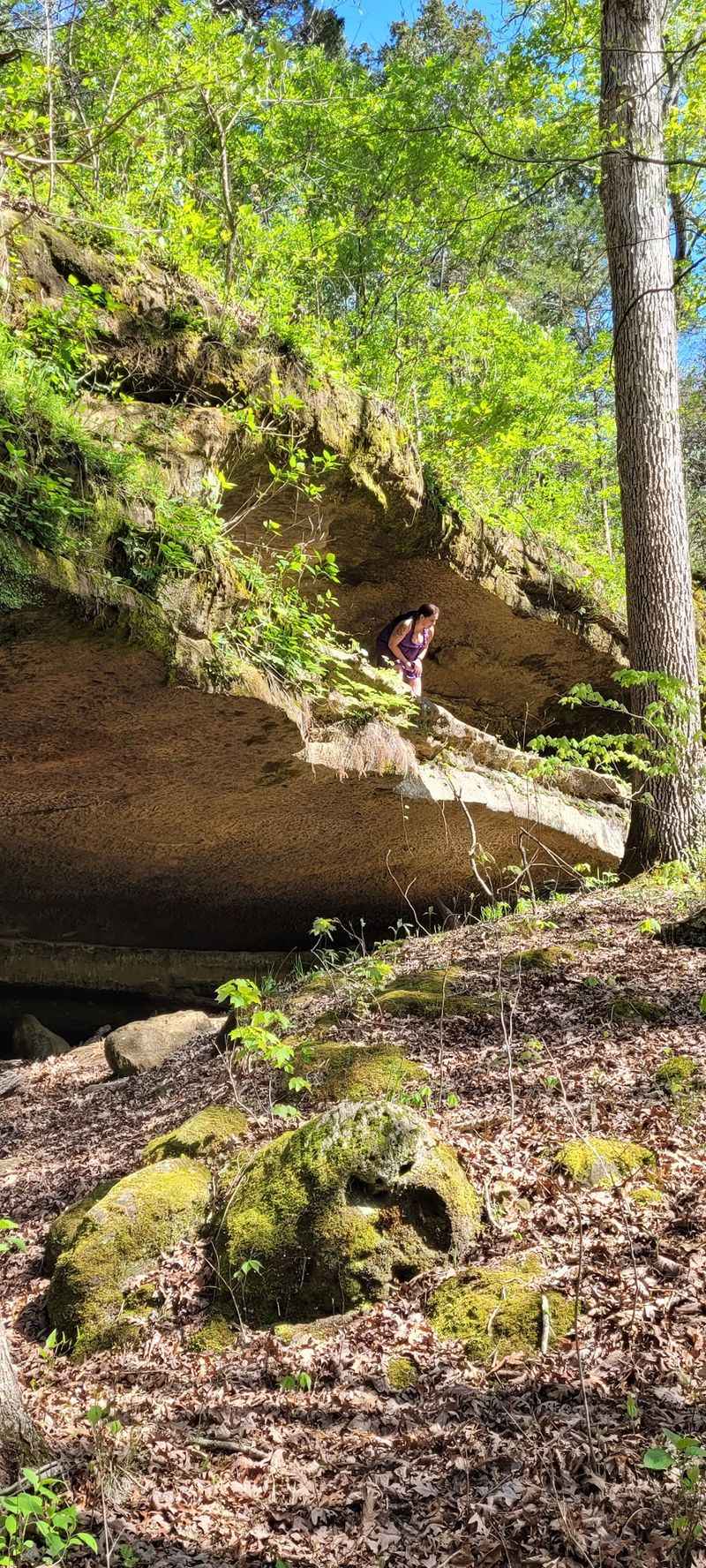
One bridge, one creek, and still daylight left? Jefferson County has a few more natural treats close by.
Missouri State Parks has pointed visitors toward several nearby spots. Kress Farm Garden Preserve offers hikes and caves for curious explorers.
Valley View Glades is another option worth a look. Glades are open, rocky areas with a wild, sunny feel very different from creekside woods.
Victoria Glades Conservation Area rounds out the list. Pairing it with the bridge makes for a full day of fresh air.
Planning a mini loop is simple. Start at the bridge in the morning, picnic by the creek, then head out for an afternoon hike.
Check trail conditions before visiting each place. Weather and maintenance can change what’s open.
Pack extra water if you’re stacking stops. Rocky glades can get warm on bright days.
By sunset, you’ll have crossed a piece of 1880s history and wandered real Missouri wildlands. Not bad for a day that started with one little red bridge.
