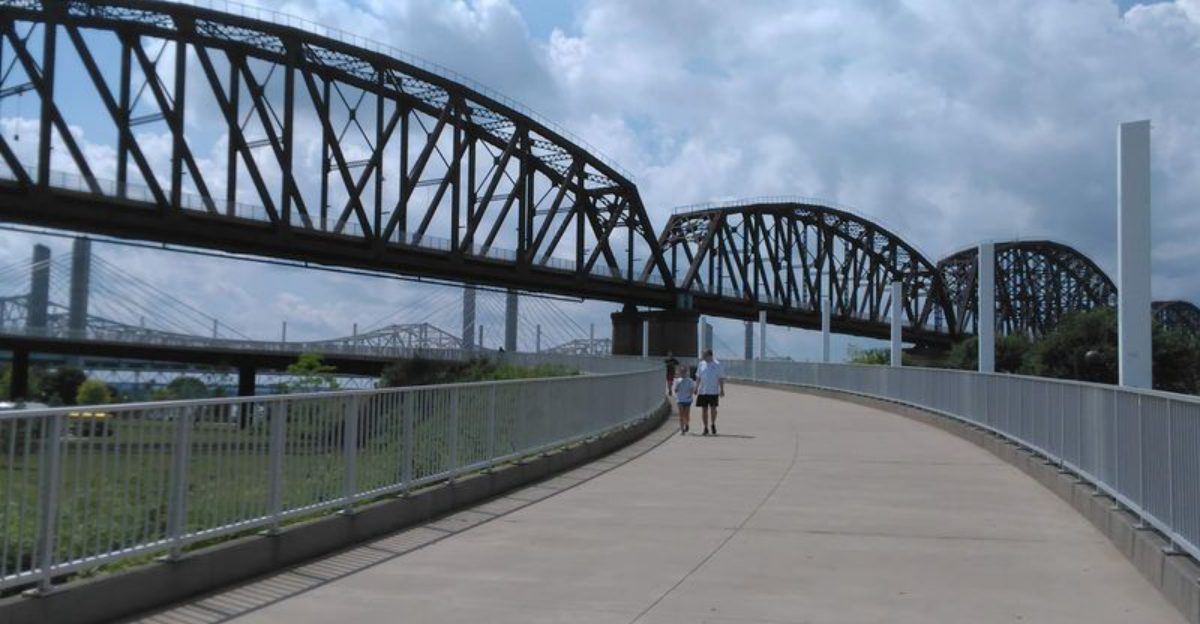
There is something genuinely thrilling about standing on a bridge and looking out over the Ohio River, knowing you are crossing between two states on foot. This converted railroad bridge in Jeffersonville stretches across the water and turns a simple walk into something that feels a little more memorable than expected.
Before I visited, I had heard locals mention it for years, but experiencing it firsthand is different. The wide pedestrian path, open river views, and steady flow of people make it feel both peaceful and full of life at the same time.
Whether you are interested in history, enjoy outdoor walks, or just want a unique way to spend an afternoon, it offers a perspective on the river and surrounding cities that you do not really get anywhere else nearby.
Walk or Bike Between Two States on a Half-Mile Span
Not many places in the world let you walk from one state into another without ever getting in a car. The Big Four Bridge does exactly that, and the experience is as satisfying as it sounds.
Stretching 2,525 feet across the Ohio River, the bridge connects Jeffersonville, Indiana to Louisville, Kentucky in a way that feels both historic and completely modern.
The full round trip, including the ramps on both ends, covers roughly two miles. That makes it a manageable walk for most people, including families with kids and older visitors who want a gentle but rewarding outing.
Cyclists love it too, since the wide path gives plenty of room for both foot traffic and bikes moving comfortably side by side.
What makes the crossing feel special is how open and unobstructed it is. There are no cars, no exhaust fumes, and no traffic noise to drown out the sound of the river below.
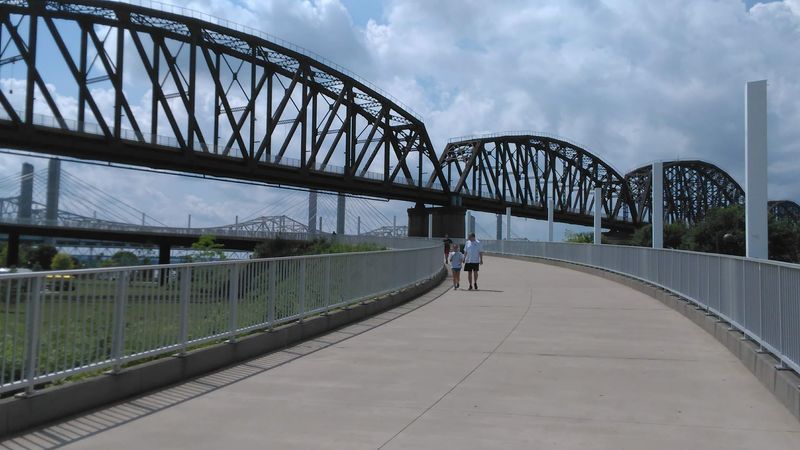
You get the rare experience of being genuinely in the middle of a major waterway with nothing but fresh air around you. On the Indiana side, the ramp curves up gracefully from Big Four Station Park in Historic Downtown Jeffersonville, giving you a smooth and scenic approach before you even set foot on the main span.
It is one of those simple pleasures that locals have quietly loved since the bridge reopened for pedestrians in 2013 and 2014.
Breathtaking Panoramic Views of the Ohio River and Louisville Skyline
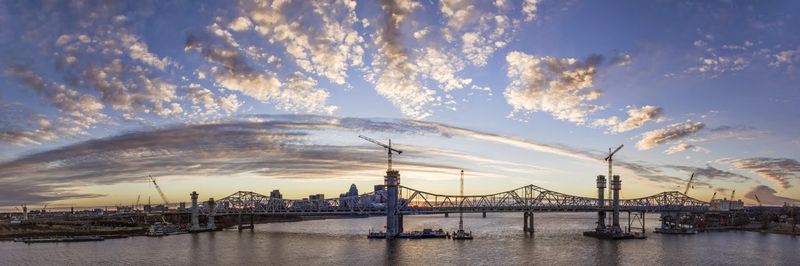
Halfway across the bridge, something happens that is hard to put into words. The river stretches wide in both directions, the Louisville skyline rises on the south horizon, and you realize you are standing in the middle of one of the most scenic spots in the entire region.
The view is genuinely stunning, and it does not cost a single dollar to enjoy it.
Sunsets from the Big Four Bridge have become something of a local tradition. The way the light hits the water and silhouettes the city skyline creates a scene that photographers and casual walkers alike chase regularly.
I have seen people set up tripods, couples stop mid-walk just to take it in, and kids press their faces against the railing in pure amazement.
The Ohio River itself is a character worth appreciating. Wide, constantly moving, and full of history, it has been a working waterway for centuries.
Watching a barge drift slowly underneath while you stand high above it gives you a real sense of the river’s scale and power. On clear days, the visibility stretches far enough that you can see bridges downstream and green hills rolling beyond the city.
Morning visits offer a quieter, mist-covered version of the view that feels almost meditative. No matter what time of day you show up, the scenery from this bridge rewards the effort of the walk every single time.
A Unique Historical Landmark With a Fascinating Second Life
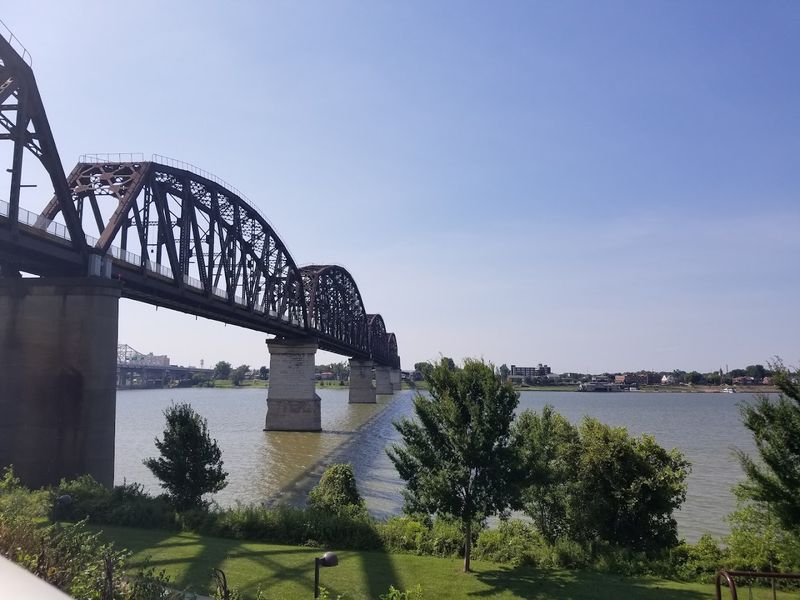
For decades, this bridge was known around Jeffersonville as the Bridge That Goes Nowhere. After being decommissioned in the 1960s and stripped of its approaches, the old railroad structure sat stranded above the Ohio River with no way to reach it from either bank.
It became a kind of urban mystery, visible from the riverfront but completely inaccessible.
The original structure dates back to 1895, when it was built to carry freight and passenger trains across the river for the Cleveland, Cincinnati, Chicago and St. Louis Railway, which locals nicknamed the Big Four Railroad. That name stuck, and it is the reason the bridge carries it today.
A major reconstruction in 1929 updated the bridge, and it served rail traffic for decades before falling quiet.
The transformation into a pedestrian and bicycle bridge was a long time coming, but it was worth the wait. New ramps were designed and built on both sides, opening in 2013 on the Kentucky end and 2014 on the Indiana side.
The result was a beautifully preserved piece of industrial history given a vibrant new purpose. The iron fretwork and riveted steel of the original structure remain visible as you walk, giving the whole experience a layered feeling of past and present existing together.
For anyone who appreciates the way old things can find new meaning, the Big Four Bridge is a genuinely moving example of thoughtful preservation done right.
Dynamic LED Lighting Turns the Bridge Into a Nighttime Spectacle
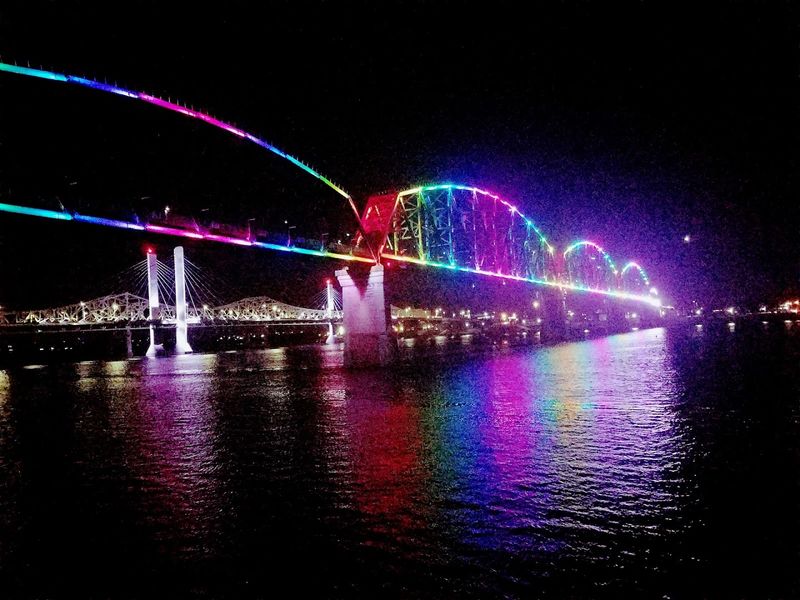
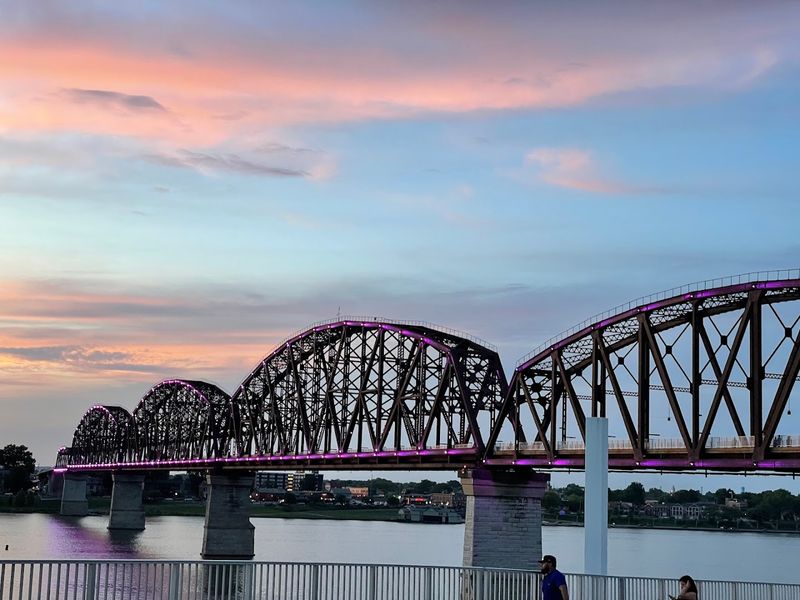
After dark, the Big Four Bridge transforms into something that feels almost theatrical. The bridge is equipped with a programmable LED lighting system that washes its iron fretwork in vivid, shifting colors every night.
From the Jeffersonville riverfront, the effect is genuinely eye-catching, and it has become one of the most photographed sights along the entire stretch of the Ohio River.
The lights run daily from twilight until 1 a.m., which means there is a generous window for evening visits. Walking the bridge at night under the colored lights is a completely different experience from a daytime crossing.
The river reflects the glow below, the city lights frame the horizon, and the whole atmosphere feels both festive and surprisingly peaceful at the same time.
Special lighting programs are available for events, awareness campaigns, and charitable causes, which means the colors you see on any given night might carry a specific meaning tied to something happening in the community. That personal touch makes the bridge feel like more than just infrastructure.
It feels like a living part of the cities it connects. Big Four Station Park on the Indiana side is a great spot to sit and watch the lights from ground level, especially on warm evenings when families gather near the fountains and the whole waterfront feels alive with energy.
Bringing a camera is absolutely worth it because the nighttime shots from this location are consistently spectacular.
Big Four Station Park Gives the Indiana Side a Welcoming Home Base
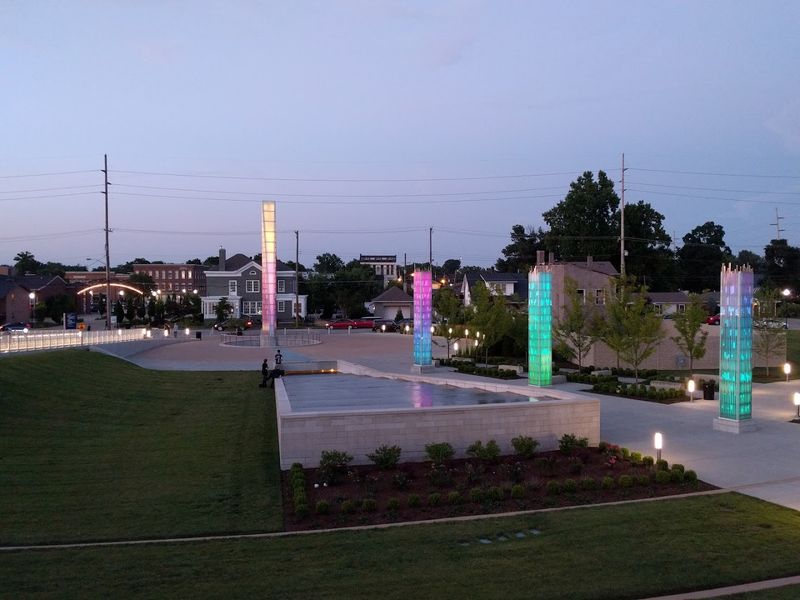
The Indiana side of the bridge does not just drop you off at a parking lot and call it a day. Big Four Station Park in Historic Downtown Jeffersonville serves as a genuine destination on its own, with green space, decorative fountains, a playground, and regular community events that draw locals throughout the year.
It is the kind of park that makes a neighborhood feel proud of itself.
A farmers market sets up here regularly, which means a weekend morning visit can turn into a full outing involving fresh produce, local vendors, and a bridge walk all rolled into one. The park sits right along the riverfront, so even when there is no scheduled event, the atmosphere is relaxed and inviting.
Families spread out on the grass, runners stretch before heading up the ramp, and visitors linger at the water’s edge taking in the view.
The location in Historic Downtown Jeffersonville also puts you within easy walking distance of local restaurants, cafes, and shops. Schimpff’s Confectionery at 347 Spring Street is one of the oldest candy stores in the country and well worth a stop before or after your walk.
The area has been thoughtfully revitalized over the years, and the energy around the park reflects that investment. Big Four Station Park essentially acts as the welcoming front porch of Jeffersonville, and it sets the tone for everything the Indiana side of this bridge experience has to offer.
Outdoor Physical Activity That Feels More Like an Adventure Than Exercise
Some workout routes feel like a chore. The Big Four Bridge is not one of them.
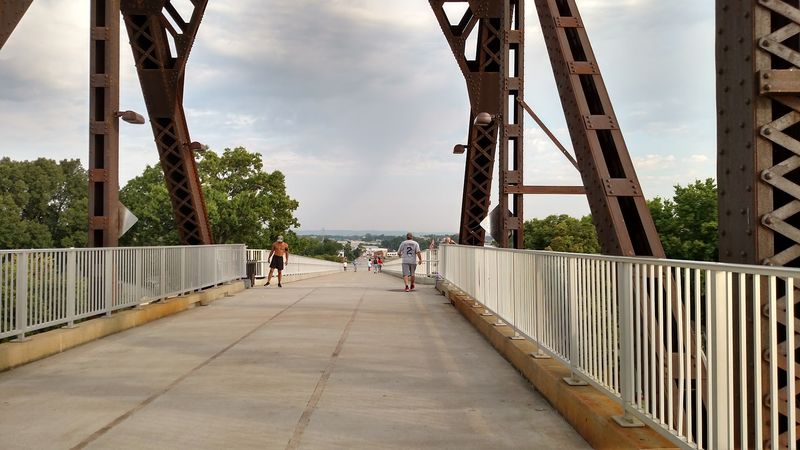
The full round trip across the bridge and back, including both ramps, covers about two miles, which is enough to get your heart rate up without feeling punishing. The fact that the scenery changes constantly as you move makes the distance feel shorter than it actually is.
Runners use the bridge regularly for training, and the wide, smooth path accommodates a comfortable pace without the hazards of road running. Cyclists appreciate having a dedicated route that is completely car-free and well-maintained.
For families, the ramp on the Indiana side has a gentle enough incline that even younger kids can manage it without much fuss, which makes the whole outing genuinely accessible.
The bridge reportedly draws around 1.5 million visitors annually, which speaks to how deeply it has embedded itself into the active lifestyle culture of the region. Early morning visits are especially popular among locals who treat the crossing as part of a daily fitness routine.
There is something motivating about a destination that rewards you with a view instead of just a finish line. The combination of river air, open sky, and a clear sense of progress as you move across the span makes physical activity here feel almost effortless.
If you have been looking for a reason to get outside and move, this bridge is one of the most convincing ones the Jeffersonville area has to offer.
Nearby Attractions Make the Visit a Full Day Worth Planning
The Big Four Bridge is a fantastic anchor for a full day of exploring the Jeffersonville and Southern Indiana area. Once you have done the walk, there is genuinely no shortage of places nearby that are worth your time.
The region has quietly built up a collection of attractions that rewards visitors who stick around after the crossing.
The Falls of the Ohio Interpretive Center at 201 West Riverside Drive in Clarksville sits just a short drive from the bridge and offers a fascinating look at one of the largest exposed Devonian fossil beds in the world. It is the kind of place that surprises people who have never heard of it, and the outdoor fossil beds along the river are unlike anything else in the state.
The Vintage Fire Museum at 400 Spring Street in Jeffersonville is another local gem, housing a remarkable collection of antique fire apparatus that tells a vivid story of firefighting history.
For food, the Historic Downtown Jeffersonville area has developed a solid lineup of local spots. Fork and Pie at 218 Spring Street offers a casual and satisfying menu that locals return to regularly.
Parlour at 400 Pearl Street brings a creative approach to dining in a space that feels connected to the neighborhood’s revitalized energy. Spending a full day moving between the bridge, the parks, and these local businesses gives you a much richer picture of what makes this corner of Indiana genuinely worth visiting again and again.
