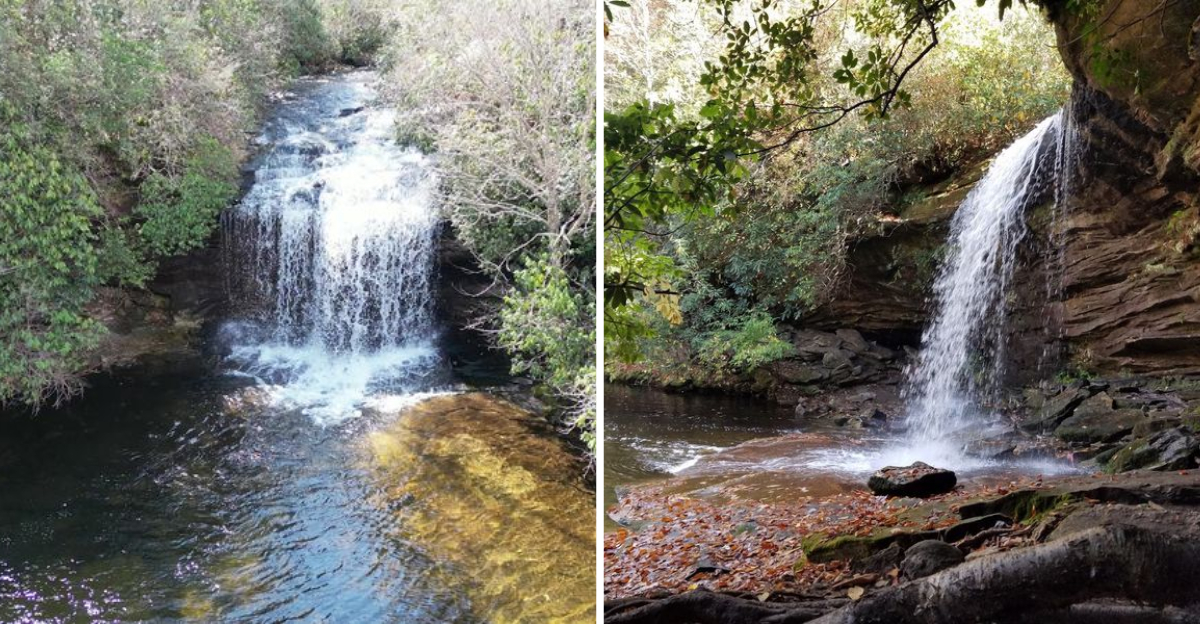
Water tumbles off a curved granite ledge in North Carolina, and I stood at the edge of that clear mountain pool watching it fall just a few feet in front of me.
That spot in Panthertown Valley earned every bit of its reputation as one of the most accessible and rewarding waterfall destinations in the Southern Appalachians.
The valley itself is sometimes called the Yosemite of the East, and once you see the open granite cliffs and lush forest floor, you completely understand why.
I found a flat rock to sit on, the cool mist settling on my skin, and watched the water move in a rhythm that felt older than anything I knew.
It is the kind of place where you can reach out and touch the falls, where the trail rewards you without demanding too much in return. My first visit left me speechless, not because I was expecting something ordinary, but because the reality was even better.
The Hike In, A Trail That Builds Anticipation
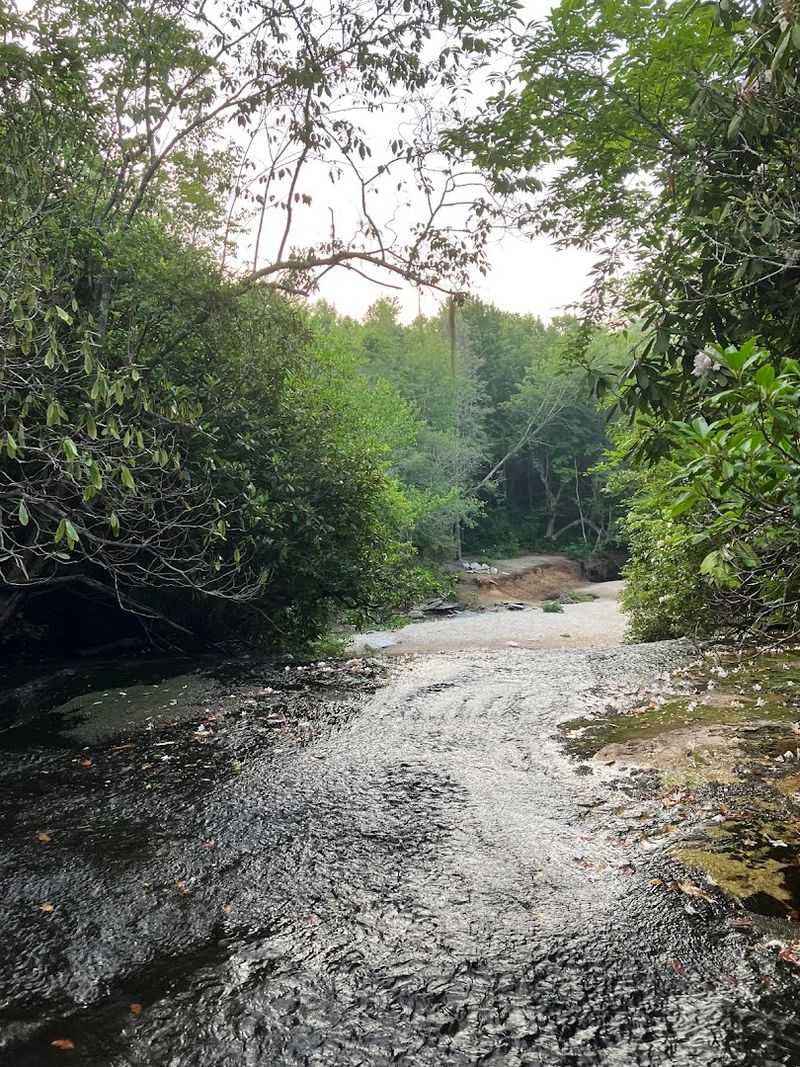
The moment you leave the Cold Mountain Gap trailhead parking area, the forest wraps around you like a curtain closing behind a stage. The air changes almost immediately, cooler and damp, carrying the scent of soil and moss.
Rhododendron tunnels arch overhead in stretches, and ferns carpet the ground on both sides of the trail.
The most direct route to Schoolhouse Falls is about 2.5 to 2.6 miles roundtrip. That is a manageable distance for most hikers, including kids and older adults who are reasonably comfortable on uneven terrain.
The descent on the way in is gradual and pleasant, which is great news going down and a fair workout heading back up.
Because Panthertown Valley has over 30 miles of interlocking trails, some of which are unmarked, carrying a current trail map or downloading the AllTrails app before you go is genuinely useful. A few visitors have wandered off course near trail junctions, and the dense forest makes it easy to second-guess yourself.
The signage is decent but not perfect.
Wildflowers appear along the path in spring, and mountain laurel blooms add bursts of pink in early summer. Even in the heat of July, the tree canopy keeps the trail shaded and surprisingly comfortable.
The hike itself feels like its own reward before you even hear the waterfall. When the sound of rushing water finally reaches you through the trees, the anticipation becomes almost electric.
Schoolhouse Falls Up Close, 18 Feet of Pure Mountain Magic
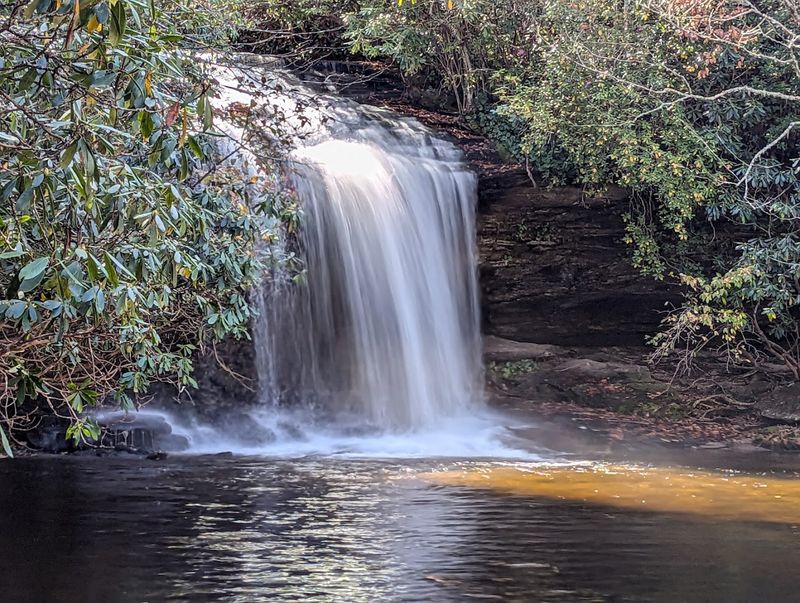
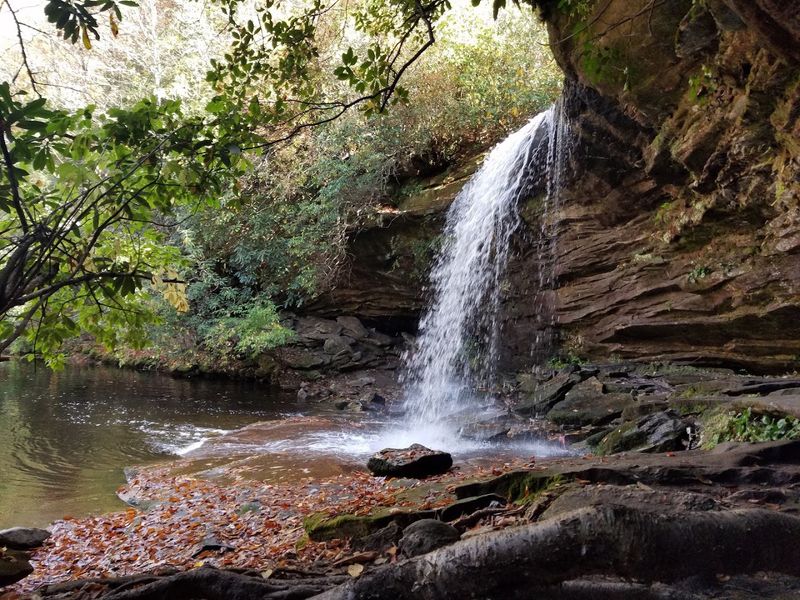
Nothing quite prepares you for your first look at Schoolhouse Falls. The waterfall drops roughly 18 to 20 feet over a broad, curved granite outcrop, spreading wide as it falls before meeting the pool below with a satisfying rush of sound.
It is not the tallest waterfall in North Carolina, but its shape and accessibility make it feel genuinely special.
The curved rock creates a natural amphitheater effect, and the mist that drifts off the cascade reaches you even from the sandy shoreline of the pool. On a warm day, that mist feels like a gift.
You do not have to wade in or scramble over rocks to feel connected to the waterfall. It comes to you.
The rock face the water glides over has been smoothed by centuries of flow, giving the falls an almost sculptural quality. Depending on recent rainfall, the volume of water can vary quite a bit.
After a rainy stretch, the cascade roars and spreads dramatically. During drier periods, it narrows and slows, but it never loses its charm.
What sets Schoolhouse Falls apart from many other waterfalls is how approachable the whole scene feels. There are no fences, no viewing platforms, and no roped-off barriers.
You are simply there, close enough to feel the air shift as the water hits the pool. That kind of direct, unfiltered experience is genuinely rare and worth appreciating.
The Swimming Hole, Cool, Clear, and Completely Worth It
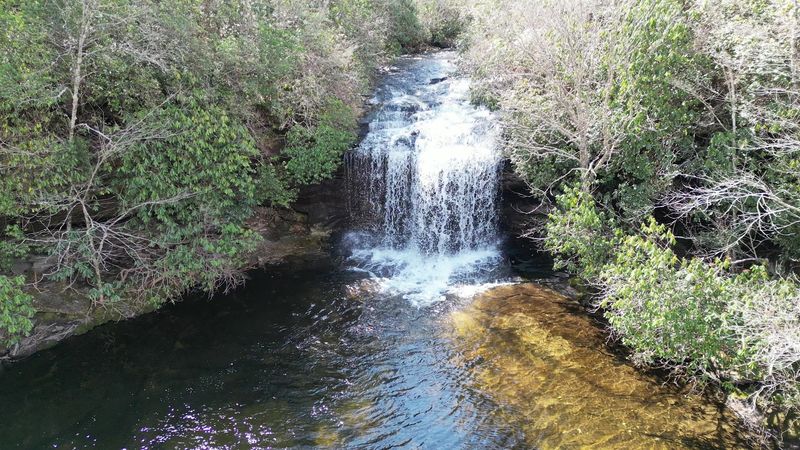
The pool at the base of Schoolhouse Falls is the kind of swimming hole that people describe with a big exhale and a slow smile. The water is cool and clear, though it carries a slight amber tint from natural tannins leached from leaves and organic matter upstream.
Think iced tea in color but completely clean and refreshing to swim in.
Flat granite rocks ring much of the pool, and there is often a small sandy beach area where you can set down your pack and peel off your hiking boots. Families spread out here, kids wade in from the shallows, and adults find a flat rock to lie on while the sun dries them off.
The whole scene feels unhurried and easy.
The water temperature stays cool even in summer, which is part of the appeal. After a sweaty hike through the woods, dropping into that pool is one of the better feelings imaginable.
It is not the kind of cold that takes your breath away in a bad way. It is the kind that wakes you up and makes you laugh.
The pool is spacious enough that it never feels overcrowded, even on busy weekend days. Wading near the base of the falls puts you close enough to feel the spray misting your face and arms.
That combination of cool water, warm rock, and falling water overhead is the kind of simple pleasure that sticks with you long after the drive home.
Behind the Falls, A Secret Spot With a Gentle Warning
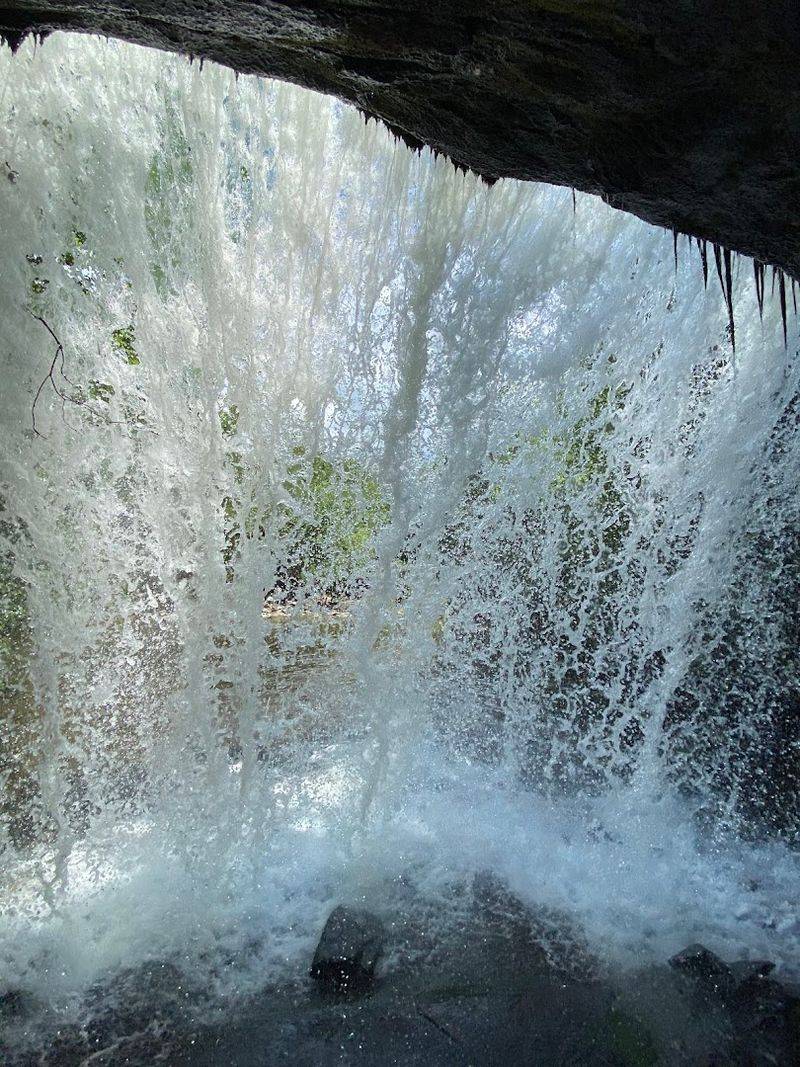
One of the most talked-about features of Schoolhouse Falls is the fact that you can actually walk behind the cascade. A narrow trail on the right side of the pool leads back into the space between the rock wall and the falling water, creating one of those genuinely memorable moments that photos struggle to capture.
Seeing sunlight filter through a sheet of falling water from behind is something else entirely.
That said, a few things are worth knowing before you scramble back there. The rocks in that zone are consistently wet and can be seriously slippery.
Take your time, watch your footing, and wear shoes with actual grip. Sandals or bare feet back there are a recipe for a bad afternoon.
There is also an ecological reason to tread carefully. The spray cliff behind the falls supports rare ferns, mosses, and liverworts that thrive specifically because of the constant moisture and mist.
These plants are fragile and slow to recover from foot traffic. The U.S.
Forest Service encourages visitors to view the falls from below rather than walking through the sensitive plant zones whenever possible.
Respecting that guidance is part of what keeps this place as beautiful as it is. The best approach is to peek into the space behind the falls without disturbing the vegetation clinging to the walls.
Even a brief look from the edge of that hidden alcove gives you a perspective on the waterfall that most people never get to experience.
Panthertown Valley, The Bigger Picture Around the Falls
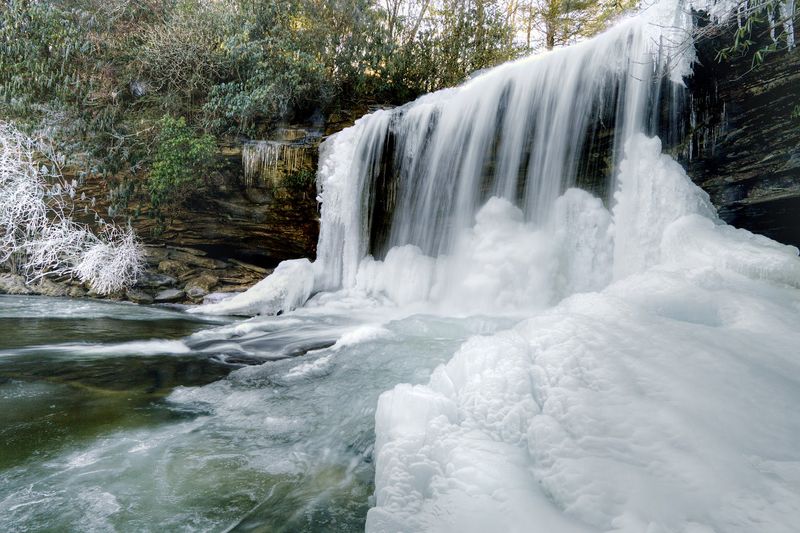
Schoolhouse Falls gets most of the attention, but Panthertown Valley itself is a destination worth exploring beyond a single waterfall. The valley stretches across a broad, open floor flanked by granite cliffs and forested ridges, which is exactly why people compare it to Yosemite.
It has that same sense of geological drama combined with a lush, green softness that feels distinctly Southern Appalachian.
More than 30 miles of maintained trails wind through the valley, open to hikers, mountain bikers, and horseback riders. Other waterfalls are scattered throughout, and some visitors make a full day of it by linking multiple trails together.
Greenland Creek Falls and several other cascades are within reach if you have the energy and a solid map.
The valley sits within the Nantahala National Forest, which means no entrance fees and a relatively undeveloped, natural atmosphere. There are no concession stands or visitor centers at the trailhead.
You bring what you need and pack out what you bring. That self-sufficient approach keeps the place feeling genuinely wild.
Camping is available in the backcountry, and spending a night in Panthertown Valley gives you access to the trails in the early morning before day hikers arrive. The light at sunrise across those granite cliffs is the kind of thing that makes you want to come back every year.
Even a single afternoon visit, though, is enough to understand why this valley has such a devoted following among North Carolina outdoor enthusiasts.
Planning Your Visit, What to Know Before You Go
Getting to Schoolhouse Falls requires a short drive along Cold Mountain Road to the East Entrance trailhead, also known as the Cold Mountain Gap trailhead. The road is paved for most of the way but can be narrow, so drive carefully and watch for oncoming traffic near the sharper curves.
Parking at the trailhead is a small gravel lot, and it fills up quickly on summer weekends.
Arriving early, especially from late May through August, is the single best thing you can do to secure parking and enjoy the swimming hole with fewer people around. Midmorning on a Saturday in July can get surprisingly busy.
Weekday visits are noticeably quieter and feel much more peaceful.
There are no restroom facilities at the trailhead, so plan accordingly before you leave town. Cashiers, the nearest small town, is just a short drive away and has restaurants, shops, and other conveniences if you want to grab food before or after the hike.
Packing your own snacks and plenty of water is always the smarter move for a day in the backcountry.
Wear layers in cooler months, because the valley can be significantly colder than the surrounding area due to its elevation and shaded terrain. Waterproof shoes or trail sneakers with decent grip are a good call year-round, since the trail has some wet sections even in dry weather.
A downloaded offline map gives you confidence at trail junctions where signage is limited. Come prepared and this place will absolutely deliver.
Address: 4955 Cold Mountain Road, Lake Toxaway, NC 28747
