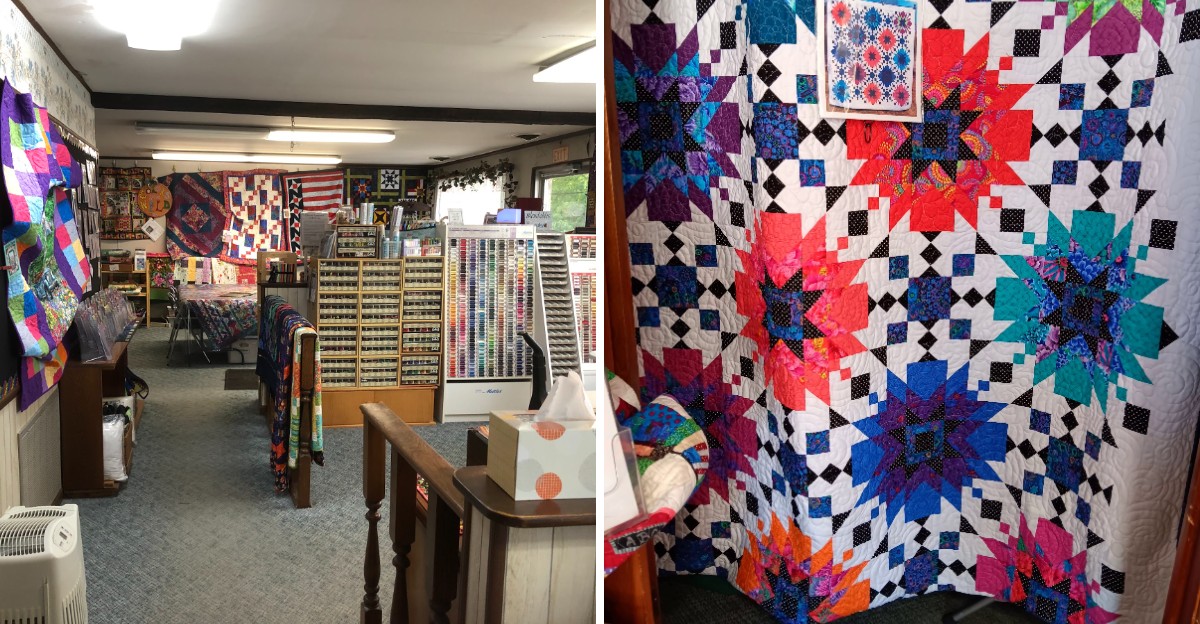
The color pink has apparently been taking its job very seriously. It is not one pink.
It is dozens. Then come the greens, yellows, blues, reds, and prints so cheerful they look like they are trying to escape the fabric store and start a parade.
This Indiana shop has more than 2,000 bolts of cotton arranged in long color runs, turning an ordinary room into something closer to a fabric library designed by a very enthusiastic artist. Bicycles appear on prints.
Bees appear on others. An entire corner belongs to Kaffe Fassett florals.
Quilters drive across state lines to browse it, which is impressive until seeing the selection makes that drive suddenly seem reasonable. Even difficult pattern questions can turn into conversations at the counter.
The hardest part may be remembering why only one project was supposed to happen.
Two Thousand Bolts and a Rainbow That Never Ends
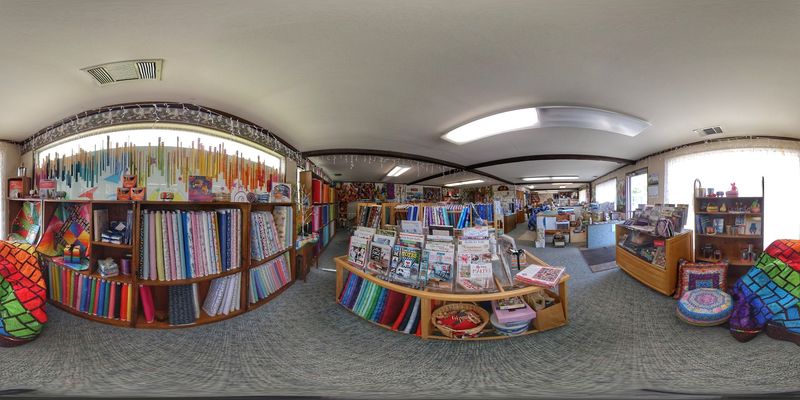
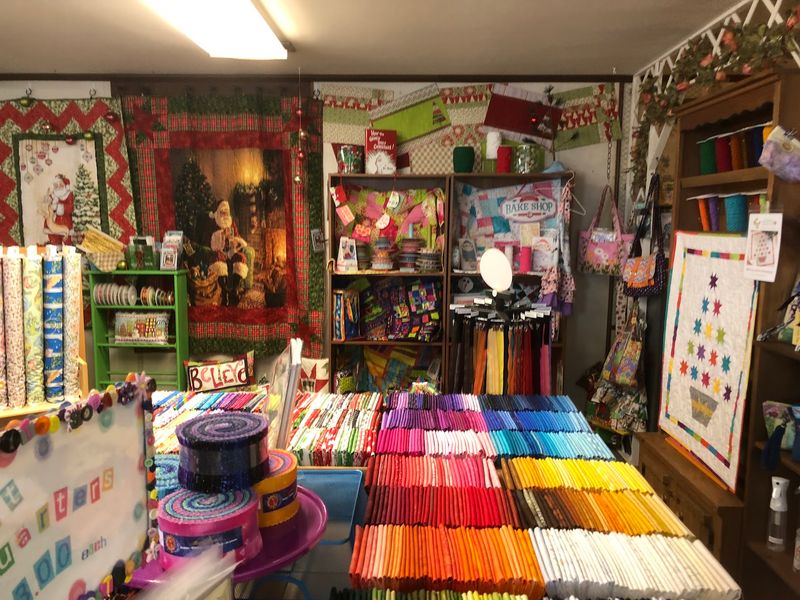
Color hits first. Shelves run in a full ROYGBIV sweep, starting with warm reds and oranges before sliding through greens, blues, and violets, so the whole wall reads like a paint chip display come to life.
More than 2,000 bolts of 100 percent cotton fill the space, which is a genuinely surprising number for a shop tucked into north central Indiana. Basics and blenders take up a big chunk of that inventory, and they are the quiet heroes of any quilt.
Novelty prints hide in the mix too. Look long enough and there are fabrics covered in garden vegetables, farm animals, coffee cups, and other small oddities that make a scrappy quilt feel personal.
Shoppers often show up with a single fabric scrap and leave with a full palette built around it. Matching is easier here because the color runs make comparison almost automatic.
Bring a photo of the project on a phone. Holding a screen up against a bolt saves a lot of second guessing later at the cutting table.
Give the visit real time. Rushing through a collection this size means missing the print hiding on the bottom shelf, and those bottom shelf finds tend to be the ones people talk about on the drive home.
The Kaffe Fassett Quilt Garden Everyone Talks About
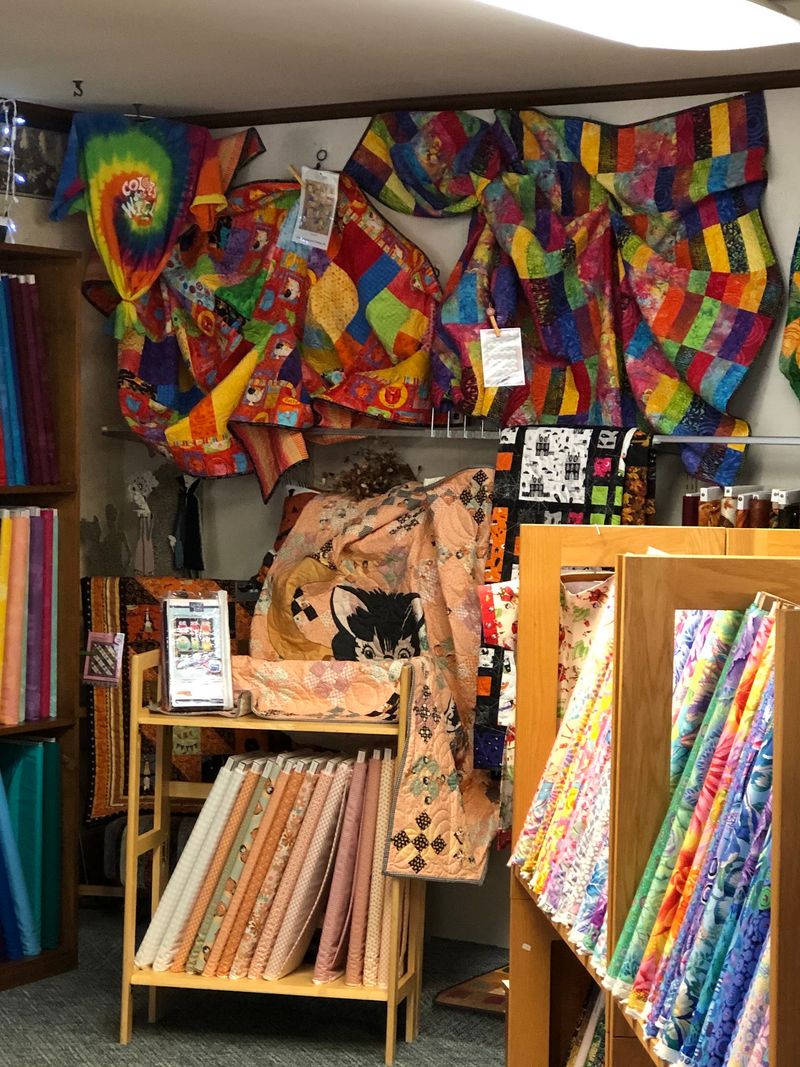
Kaffe Fassett Collective prints get their own corner here, nicknamed the quilt garden, and the name fits. Oversized dahlias, cabbage roses, and swirling leaf patterns in saturated pinks and purples crowd together until the display genuinely resembles a flower bed.
Quilters who chase these designs know they can be tricky to find in person. Plenty of shops carry a handful of bolts.
This one commits.
Alongside the Collective prints sit Kaffe Fassett Classics and other designer lines, so the range covers both the newest seasonal releases and the older staples that people hunt for when finishing an unfinished project.
Seeing these fabrics in person changes things. Screens flatten the depth of the dyes, and the layered shading in a Kaffe floral only really registers when the bolt is unrolled under shop lighting.
A practical tip for anyone building a Kaffe quilt: pull more contrast than feels comfortable. These prints thrive on bold neighbors rather than safe ones, and the staff can help sort out which combinations hold their own.
Photographers love this corner too. The stacked bolts make a striking backdrop, all clashing petals and jewel tones, and it is easily the most recognizable spot in the entire store.
Digging Through the Fat Quarter Pickin Patch
Some shops tuck their fat quarters into a forgotten basket near the register. Not here.
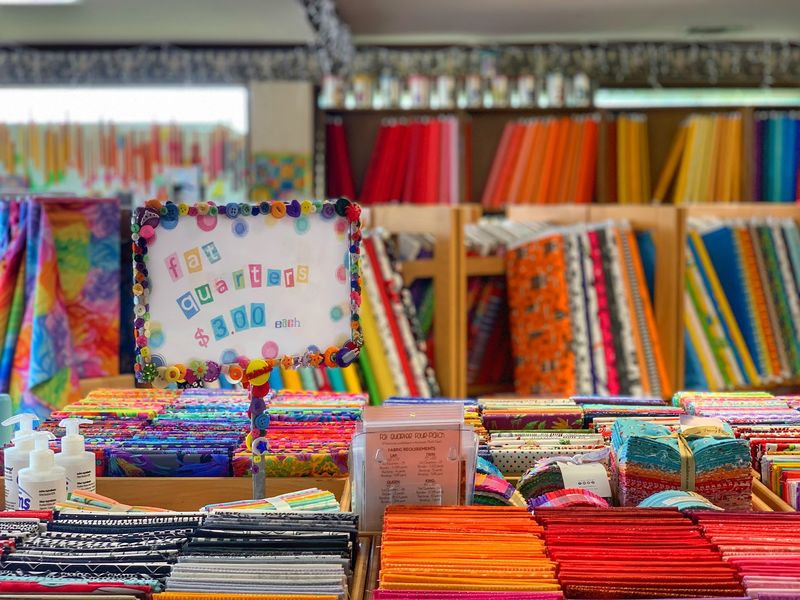
The Fat Quarter Pickin Patch is its own destination, built for browsing with both hands.
Folded squares sit sorted and stacked, ready to be lifted, compared, stacked again, and eventually narrowed down to a bundle that works. The whole thing encourages touching, which is half the fun of fabric shopping.
Fat quarters, for anyone newer to sewing, are roughly 18 by 22 inch cuts that give more usable shape than a long skinny strip. They are ideal for small projects, scrappy blocks, bag linings, and testing whether a print actually plays well with others.
Beginners benefit most from this setup. Buying a fat quarter costs far less than committing to yardage, so experimenting feels low risk.
Experienced quilters use the patch differently, building coordinated bundles on the spot rather than settling for a pre-cut set someone else chose. Control over the palette makes a noticeable difference in the finished top.
A small trick worth borrowing: lay the candidates out on a flat surface and step back a few feet. Squinting at the arrangement from a distance reveals which fabric is fighting the group and which one is quietly holding it all together.
Walls of Finished Quilts That Do the Brainstorming for You
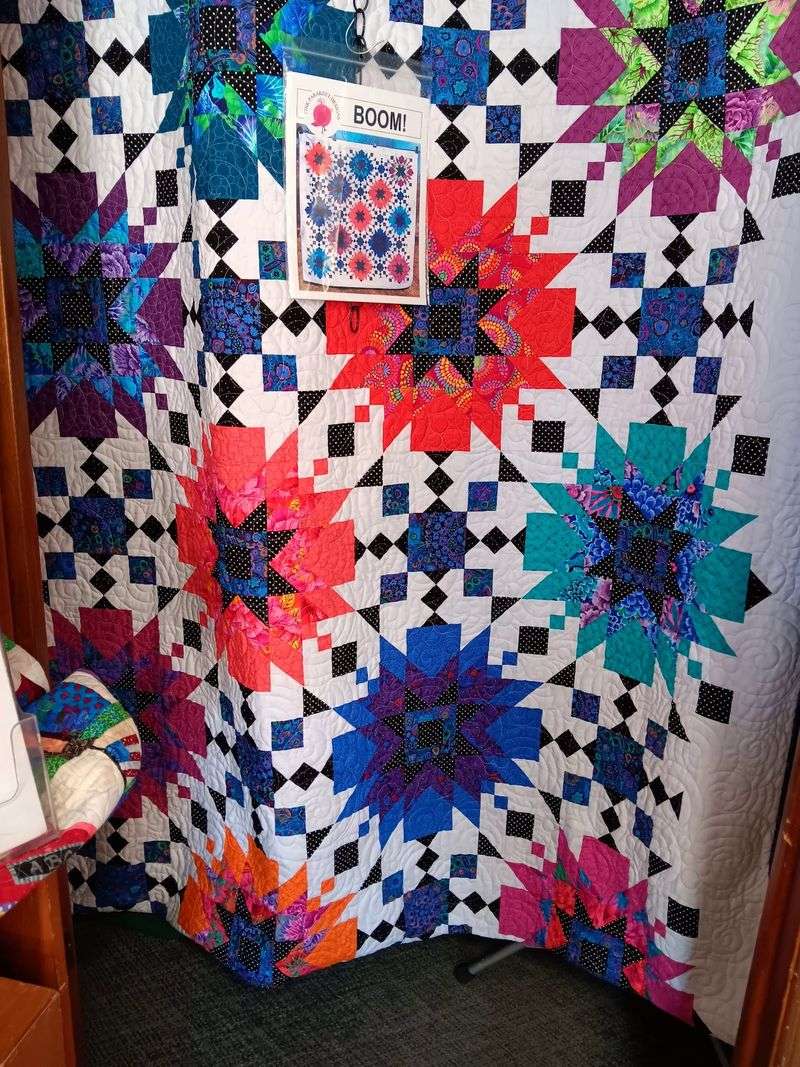
Blank-slate paralysis is real. Staring at 2,000 bolts with no plan is overwhelming, which is exactly why the walls here are covered with finished quilt samples.
Hanging models show how prints behave once they are cut, pieced, and set next to each other. A fabric that looks wild on the bolt often calms right down inside a block, and seeing that in person saves a lot of guesswork.
Villa Rosa postcard patterns are stocked as well, and they are wonderfully approachable. Each one fits on a card, uses straightforward construction, and suits anyone who wants a finished project rather than a months-long commitment.
Fabric packs for selected featured quilts take the decision-making down another notch. Grab the pack, grab the pattern, head home, and start cutting the same afternoon.
Reviewers have long mentioned the wall of quilt samples as a highlight, and it functions as a working gallery rather than decoration. Ideas get borrowed constantly.
Photograph the samples that catch the eye. Having a reference shot on hand makes it much easier to rebuild a color story later, especially when the memory of a particular teal has faded by the time the sewing machine comes out.
Help From People Who Actually Sew
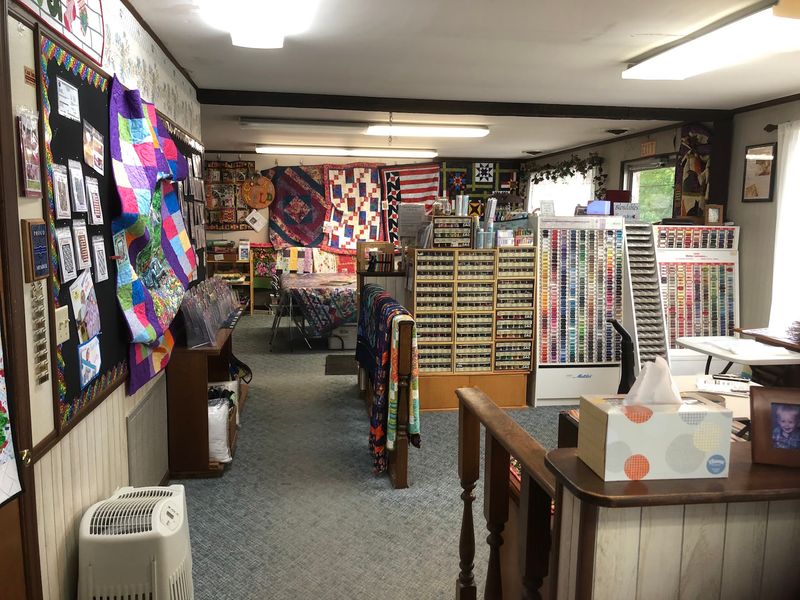
Ask a pattern question here and the answer comes with actual experience behind it. Customers have repeatedly pointed to the helpfulness of the staff, with friendly service mentioned more than almost anything else about the shop.
Guidance tends to be practical rather than salesy. Someone struggling to pick a background fabric gets suggestions, comparisons, and honest opinions about what will read well from across a room.
Newcomers to quilting find that support especially useful. Terms like yardage, binding, and backing get explained without any eye-rolling, and one visitor described the shop as a good place to learn the craft with all the necessary supplies on hand.
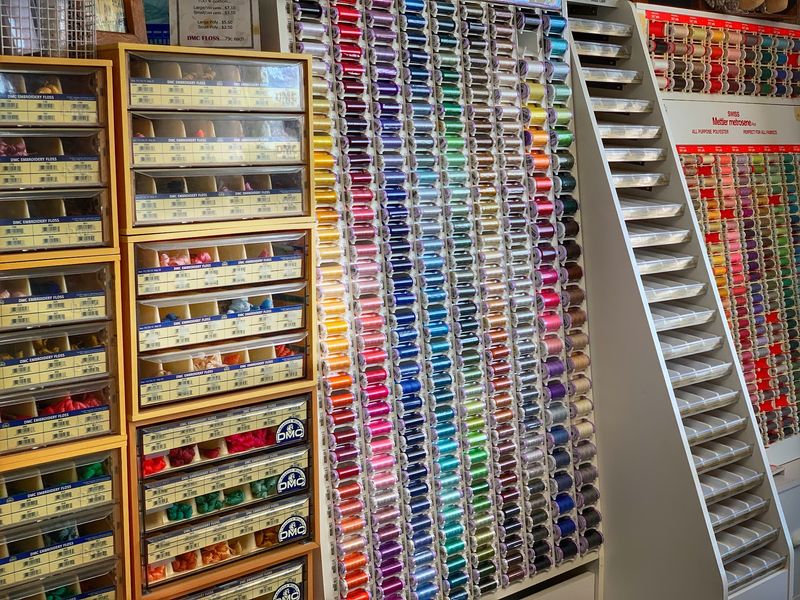
Notions fill out the offering too. Thread, tools, and the small accessories that always run out mid-project are stocked alongside the fabric.
Online orders have been handled with a personal touch as well, with one shopper noting a handwritten thank you tucked into the package. Small gestures like that are increasingly rare.
Arriving with questions written down helps. Between the color choices and the pattern math, it is easy to forget the one thing that actually needed answering, and the staff have time to work through a list when the shop is quiet mid-week.
Shop Hops, Quilt Camp, and the Community Side of Things
Quilting is a social hobby dressed up as a solitary one, and this shop leans into that. Participation in regional events like the All Indiana Shop Hop and the One Stop Quilt Shop Hop draws travelers who plan entire routes around visiting multiple stores.
Shop hop days change the atmosphere completely. The place fills with people comparing purchases, swapping pattern tips, and comparing notes on which stop had the best selection.
Quilt Camp events add another layer, giving makers a reason to gather rather than sew alone at a kitchen table. One long-time customer mentioned shopping here during December quilt camp, a routine that clearly stretched across years.
Planning a visit around an event pays off for anyone who enjoys the community aspect. Planning around a regular weekday works better for anyone who prefers unhurried browsing.
The broader point holds either way. Places like this keep local craft communities alive, connecting people who might never meet otherwise, and a small Indiana quilt shop turns out to be a surprisingly effective gathering point for that.
Make a Day of It in Historic Wabash
Getting there is easier than most people expect. Wabash sits about 90 minutes from Indianapolis and within a few hours of Chicago, Grand Rapids, and Cincinnati, which puts it comfortably within weekend range for a large chunk of the Midwest.
Nancy J’s Fabrics anchors the trip at 1604 S Wabash St, Wabash, IN 46992, but the city itself deserves a few extra hours. North central Indiana does small-town charm well, and Wabash has the historic architecture, arts venues, dining, and independent shops to back that up.
Hours run 10 AM to 4 PM Monday through Friday, with Saturdays closing an hour earlier at 3 PM. Sundays are closed entirely, so weekend planning needs a little care.
Arriving in the morning leaves room for a proper browse before lunch somewhere downtown. Afternoon works too if the drive starts early enough.
Pairing the fabric stop with a stroll through the historic district turns a single errand into an actual outing. Both halves of the day share the same appeal, honestly.
Wabash rewards visitors who slow down, and a shop this colorful is a fitting excuse to point the car north and see what a small Indiana city has been quietly building.
