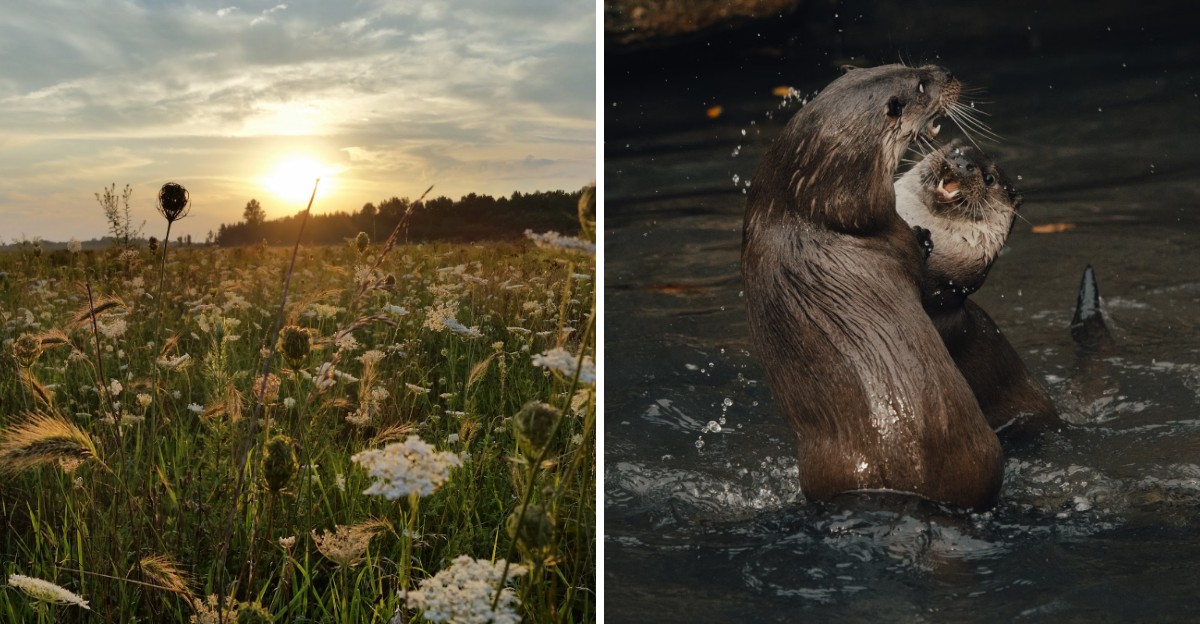
“Please stay on the trail” sounds normal. “Because there may be old munitions underground” sounds considerably less normal. That is the reality at this Indiana nature preserve.
Before entering, visitors watch a safety video and sign a form acknowledging the risks. The land was used for Army munitions testing for 55 years, and remnants of that era remain hidden in the soil.
Then comes the weird contrast. Birds everywhere.
Otters in the creeks. Grasslands stretching for miles.
Stone bridges still standing. Old farmhouse ruins slowly disappearing into the landscape.
More than 200 bird species have been recorded here, including huge numbers of Henslow’s sparrows. It is a remarkable place to explore.
It just happens to come with more safety instructions than the average nature trail.
The Safety Briefing That Turns Visitors Into Insiders
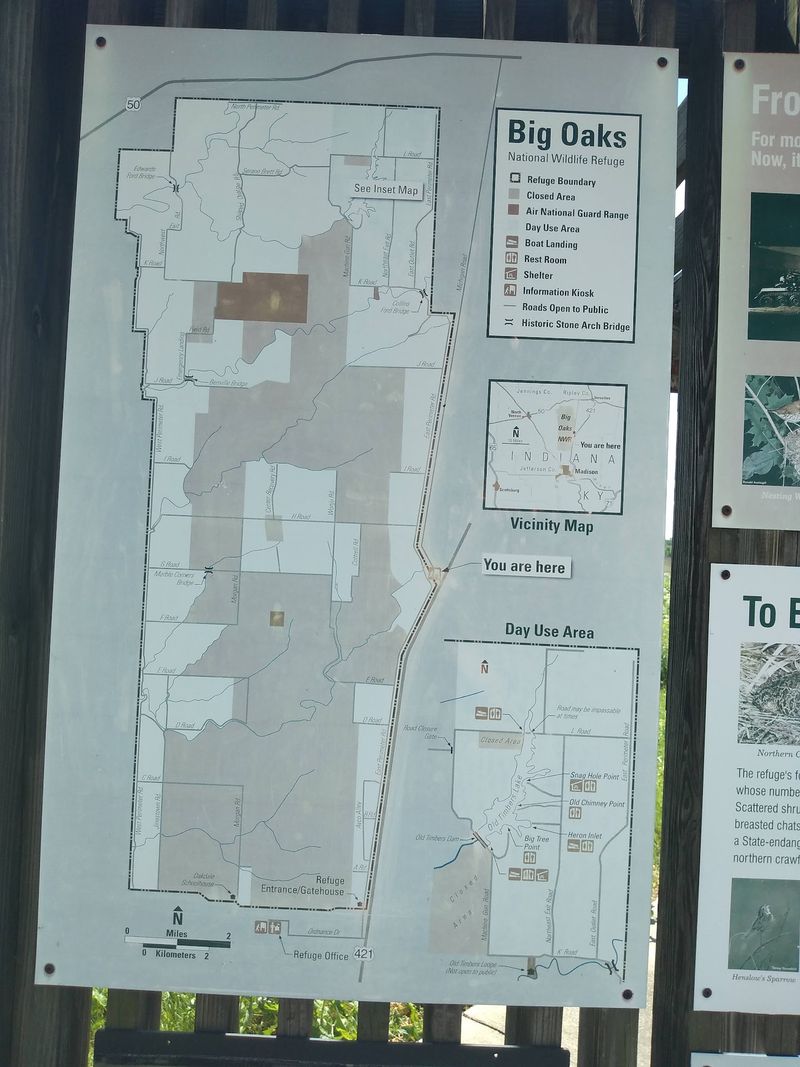
Most nature outings begin with a trailhead sign. Here, the beginning looks more like a briefing room.
Every person entering Big Oaks National Wildlife Refuge attends a mandatory safety orientation and signs an Acknowledgment of Danger form once per year.
The reason sits just below the surface of the property, where unexploded ordnance from decades of munitions testing still remains scattered across the acreage.
Staff explain where visitors may walk, which zones stay permanently closed, and why stepping outside designated public use areas is never worth the risk. The briefing lasts only a short while, yet it reshapes the whole visit.
Afterward, a public access permit is issued, with daily and annual options available. Certain federal pass holders and visitors aged fifteen and under receive fee waivers.
Check-in upon arrival and check-out before leaving are both required, which means refuge staff always know who is on the land. That system feels strict at first, then oddly reassuring.
The public use season runs from mid-April to mid-November, on Mondays, Fridays, and the second and fourth Saturdays of each month, generally 7:00 AM to 4:30 PM.
What begins as paperwork ends up feeling like an initiation. Visitors leave the office knowing more about the land than most Indiana residents ever will.
Grasslands Where Rare Sparrows Outnumber People
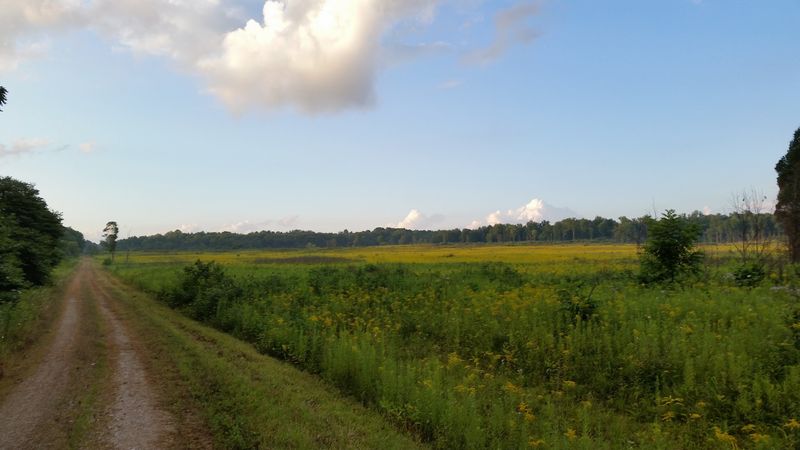
Bird lists rarely cause excitement outside of birding circles, but Big Oaks has one worth bragging about. The refuge carries the designation of Globally Important Bird Area, earned through its enormous value to migratory and breeding species.
More than 200 bird species use the property. The headline resident is the Henslow’s sparrow, a small, secretive grassland bird listed as state-endangered, and the refuge supports over 500 breeding pairs, among the largest known populations anywhere.
Those numbers exist because the grasslands here were never developed, never subdivided, never mowed into lawns. Military restriction accidentally created perfect sparrow habitat.
Cerulean warblers flash blue through the forest canopy, while golden eagles and bald eagles patrol the open sky. A breeding pair of bald eagles is regularly observed near Old Timbers Lake.
Kirtland’s warblers and Bachman’s sparrows, both carrying endangered status, have also been recorded. Great blue herons stalk the shallows, wood ducks tuck into flooded timber, northern harriers tilt low over the grass, and owls call after the quieter hours settle in.
Bring binoculars and patience, because grassland birds rarely cooperate on a schedule. Early morning offers the best chance at song and movement.
Refuge staff at the office keep notes on recent sightings, which makes a quick conversation before heading out genuinely useful.
Otters, Bobcats, And A Frog Worth Protecting
Forty-six mammal species share this property, which is a startling figure for a single Indiana site. Habitat variety explains it, since wetlands, grasslands, shrublands, and mature forest all sit within the same boundary.
White-tailed deer are the easiest sighting, drifting through brush at dawn and dusk with practiced calm. Bobcats are far harder to spot, though their population has climbed encouragingly in recent years.
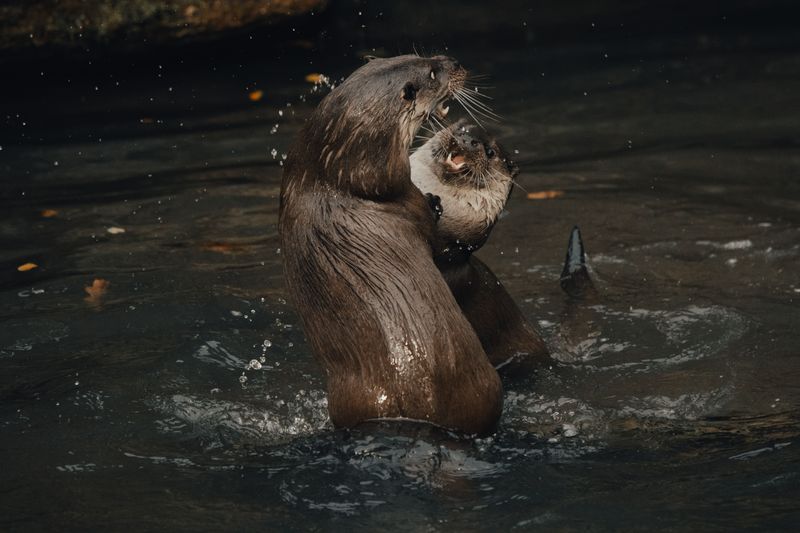
River otters deserve special mention. Reintroduced to the refuge in 1996, they now thrive in the creeks and along the lake edges, and watching one roll through the water is the kind of moment that stays with a visitor for years.
Coyotes, red foxes, gray foxes, minks, and striped skunks round out the predator and small mammal lineup, each holding a working role in the food web.
Down in the damp places, amphibian life gets interesting. Streamside, spotted, marbled, and cave salamanders all occur here, hidden under logs and leaf litter.
The state-endangered crawfish frog receives focused attention from refuge staff and volunteers, who monitor breeding sites and work to keep the population stable. Its unusual habit of living in crayfish burrows makes it one of the odder residents.
Move slowly, stay quiet, and scan edges where one habitat meets another. That is where wildlife tends to appear.
Easy Trails With A Wide Open Feeling
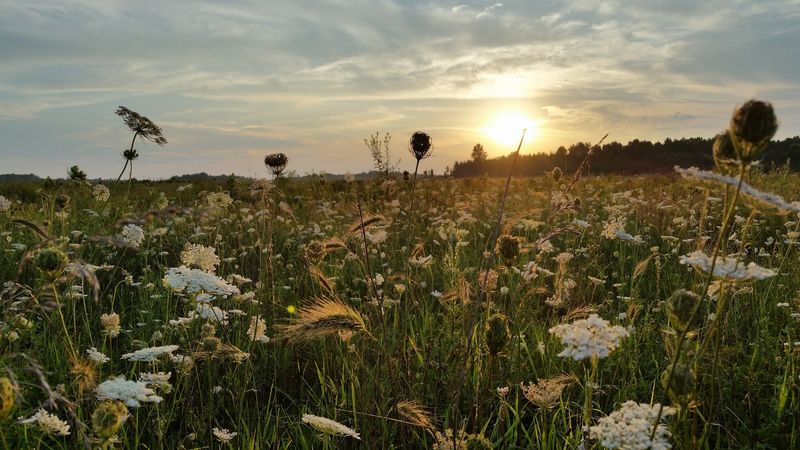
Nothing about the walking here feels technical or strenuous. The public use area, concentrated around Old Timbers Lake, holds several easy scenic trails, and dogs are welcome along for the walk.
Paths thread between woodland patches and open ground, which means the scenery shifts every few minutes. One stretch smells of damp leaves and shade, the next opens into grass tall enough to brush a knee.
Distances stay manageable for families and casual walkers, though the sense of space is anything but small. Fifty thousand acres surrounding a quiet footpath creates an unusual kind of stillness.
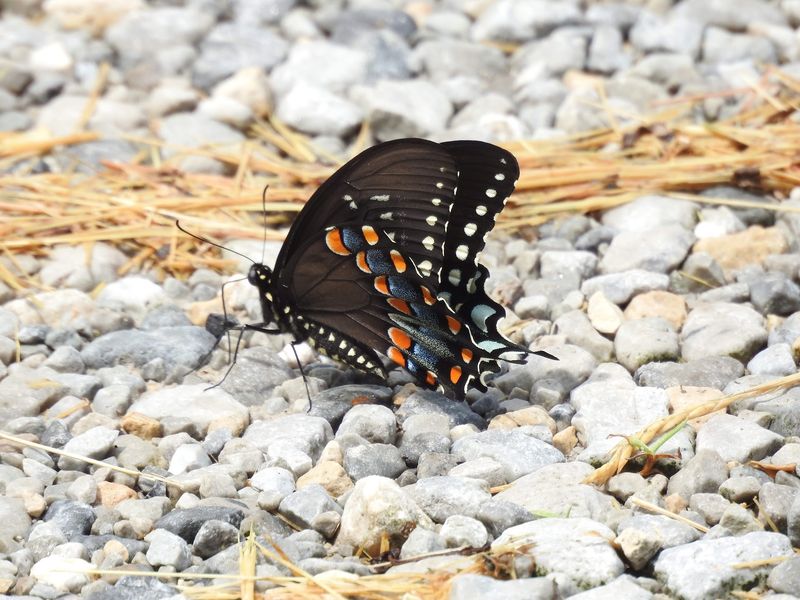
Wildflowers appear along trail edges through spring and summer, and butterflies work the blooms in warm weather. The Fourth of July butterfly count has become a recurring highlight, drawing observers who tally impressive species numbers.
A few practical notes matter more here than at most parks. No drinking water is available on site, so bring plenty, especially on humid Indiana afternoons.
Sturdy shoes, insect repellent, and long pants handle ticks and brush. Staying on marked trails is not a suggestion, given the property’s history.
Grab a refuge map at the office before setting out, since cell coverage cannot be relied upon. The reward is a trail system where solitude is almost guaranteed.
Old Timbers Lake And Its Lottery For Boaters
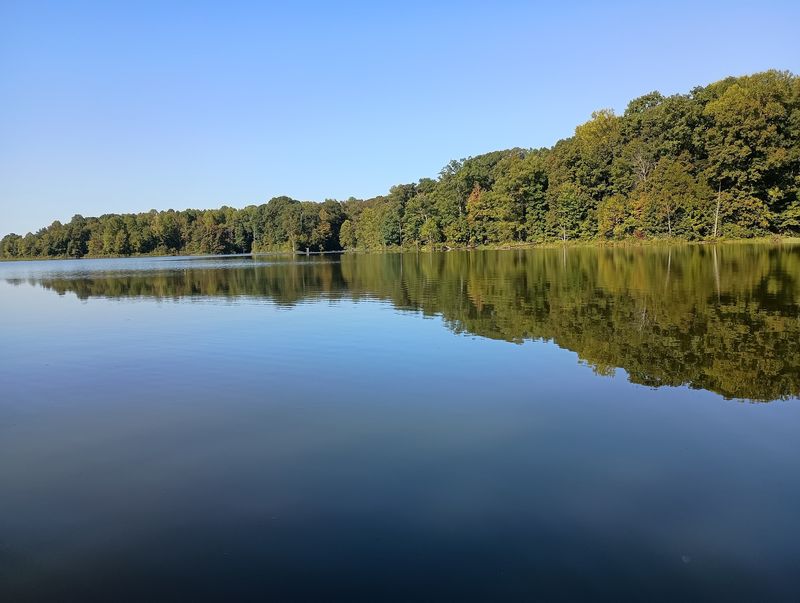
Water changes the mood of any refuge, and Old Timbers Lake anchors this one completely. Spanning roughly 165 acres, the lake spreads out beneath forested shoreline with very little to interrupt the view.
Fishing draws steady interest, with a variety of species supported in its waters. State regulations and refuge-specific rules both apply, so reading the current guidelines before casting is worth the minute it takes.
Boating is permitted in several forms, including motorized craft, non-motorized boats, and paddling. Access on public use days works through a lottery system, which keeps pressure on the lake reasonable and gives everyone a fair shot.
That system surprises first-timers, though it explains why the water rarely feels crowded. Planning ahead pays off considerably.
Wildlife treats the lake as headquarters. Beavers work the banks, otters hunt the shallows, wading birds pick through the margins, and wood ducks along with other waterfowl nest and feed across the shoreline.
A resident breeding pair of bald eagles lives near the lake, and seeing one lift off a snag over open water is reason enough for the trip.
Shoreline spots make excellent picnic ground, with quiet views and space to spread out a meal. Pack everything needed, including water, and carry all trash back out.
Stone Bridges, An Old Schoolhouse, And Farmsteads Left Behind
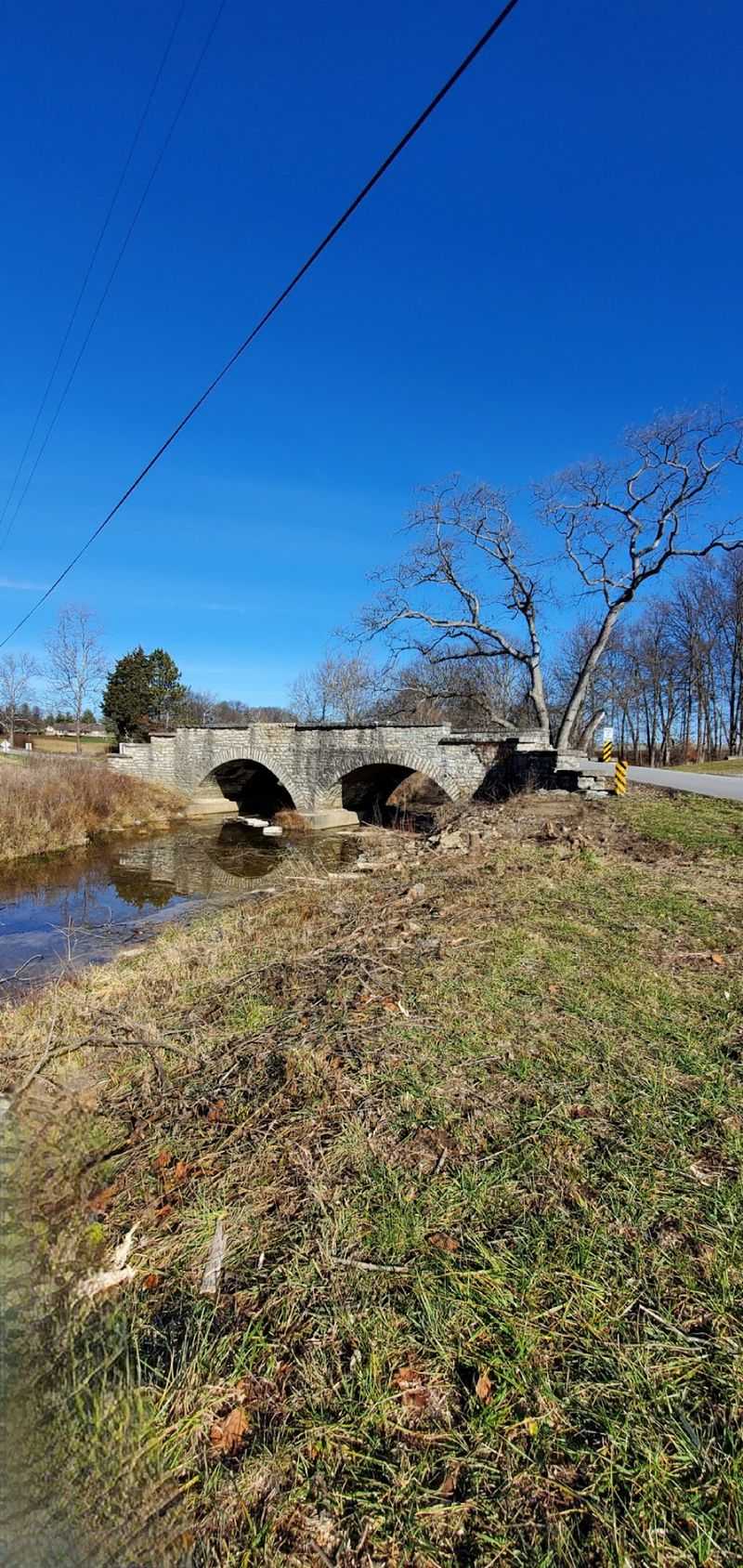
History sits in plain sight across this property, sometimes overgrown, always interesting. Before it became a refuge in 2000, the land served as Jefferson Proving Ground, an Army munitions testing facility operating from 1940 through 1995.
The Army still holds ownership while the U.S. Fish and Wildlife Service manages the refuge, and the arrangement has preserved structures that would have vanished anywhere else.
Old Timbers Lodge remains standing, as does Oakdale School, also identified as Building 401. Collin’s Ford Bridge and Marble Creek Bridge span creeks with stonework built for a much older era of travel.
Several of these sites appear on the National Register of Historic Places, which speaks to their significance beyond simple curiosity.
Scattered farther out are the ruins of homes, many with outdoor wells still visible. Families farmed this ground for generations before the proving ground was established in 1940, and those foundations mark communities that were displaced.
Standing near one of those wells, the layered story of the place lands with real weight. Tribal homelands, then farmland, then a military installation, and now a wildlife sanctuary.
Guided history-focused tours offered by the refuge provide context that self-guided visits cannot match. The refuge office is located at 1661 West JPG Niblo Road, Madison, IN 47250, five miles north of Madison off U.S.
Highway 421.
Mushroom Bags, Camera Lenses, And Junior Refuge Manager Badges
A mesh bag might be the most unexpected item on a packing list, yet it matters here. Foraging for wild edibles is permitted for personal use with the proper refuge permit, covering mushrooms, nuts, wild asparagus, and berries.
Mushrooms specifically must be collected in a mesh bag, a rule designed so spores can scatter as foragers walk. Small detail, genuine ecological purpose.
Photographers find no shortage of material either. Light filtering through mature forest, mirror-flat reflections on Old Timbers Lake, and wildflower color spilling across grassland all shift by the hour.
Subjects range from eagles riding thermals to butterflies working a single bloom. Patience produces far better results than expensive equipment.
For families, the Junior Refuge Manager Badge gives kids a reason to pay attention. Completing a booklet of word searches, scavenger hunts, and drawing activities teaches them about the plants, animals, history, and management of the refuge.
Van tours cover more ground comfortably, while specialized guided outings focus on birding, wildflower identification, or the property’s military and agricultural past.
The refuge office hands out maps and shares recent wildlife sightings, which turns a vague plan into a good one. Curiosity gets rewarded here, whether it arrives with a camera, an empty bag, or a kid full of questions.
