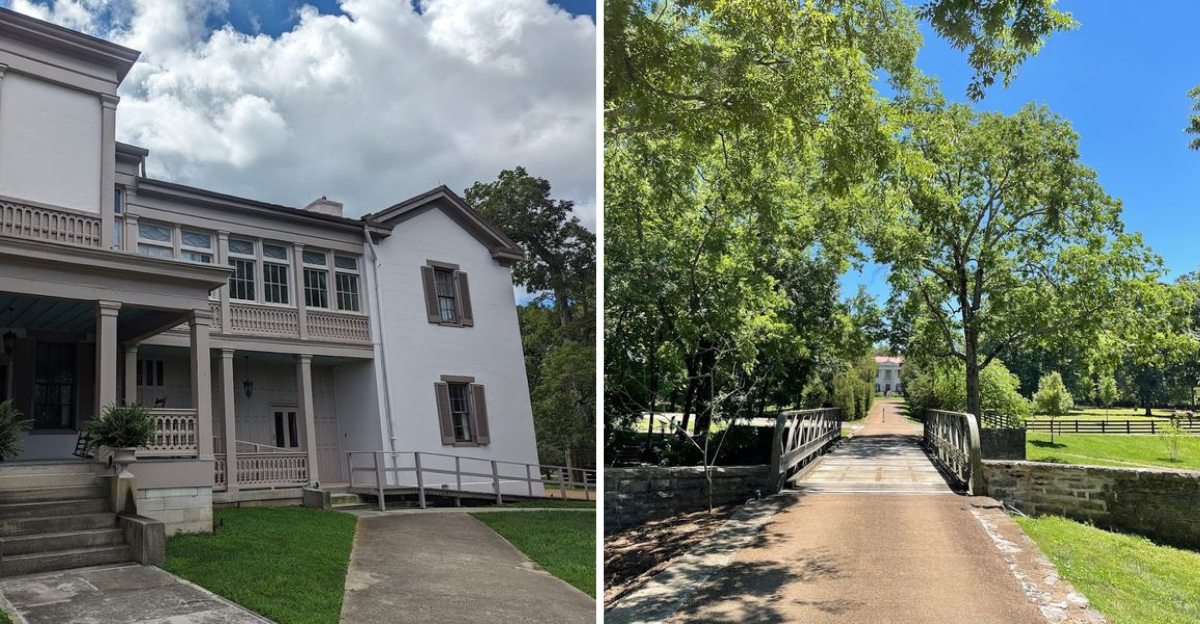
The tour was going exactly like you would expect. Old furniture.
History lessons. A guide in period clothing explaining who slept where.
Then someone pointed at a woman standing near the window, dressed in a long gown that matched the era. Everyone assumed she was part of the show. Another actress adding atmosphere.
Until she walked straight through the wall and disappeared. The room went silent.
Someone laughed nervously. A kid asked if they could leave early. That is how most people meet the lady of this Tennessee mansion.
Not with cold spots or strange noises. With a full apparition that looks so real you try to explain it away. Visitors have reported seeing her for decades.
The staff does not even act surprised anymore. They just nod when someone mentions her, like you are talking about a quirky neighbor.
Tennessee has plenty of historic homes, but this one comes with a resident who refuses to use the doors.
The Little Girl Who Vanishes in the Dining Room
Out of all the strange stories attached to Belle Meade, the one that rattles people the most is the little girl. Visitors have spotted her near the dining room so often that it has become the mansion’s most talked-about paranormal moment.
She appears completely solid, completely real, wearing a dress that belongs to another century entirely.
Tour groups have assumed she was a child actor placed there by staff to add color to the experience. More than one visitor has reportedly smiled at her or even started to speak before she simply dissolves into nothing.
That specific detail, the moment she looks back at you before vanishing, is what makes this particular story so unsettling.
Nobody knows for certain who she is. Some believe she is connected to the Harding family, who owned the estate across five generations.
Others think she could be tied to the many children who grew up, worked, and sometimes passed away on these grounds during the 1800s. Whatever her origin, she keeps showing up.
The dining room at Belle Meade still holds its original furnishings, and standing in that space, you can almost understand how the boundary between past and present feels thinner here than anywhere else in Nashville.
The Greek Revival Mansion That Has Stood Since 1853
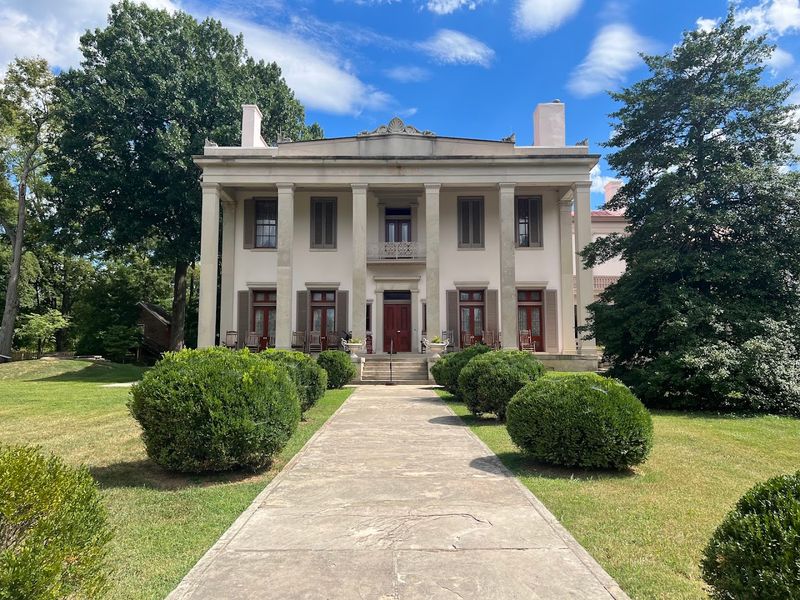
The columns hit you first. Four massive Greek Revival pillars frame the entrance to the Belle Meade mansion, and two of them still carry bullet holes from Civil War skirmishes that played out right here on this lawn.
That detail alone is enough to make the whole place feel like a living document rather than a museum piece.
Construction on the main house was completed in 1853, though it incorporated an earlier brick structure from 1819, meaning the bones of this building go back even further. The Association for the Preservation of Tennessee Antiquities has managed the site since 1953, and the level of care invested in restoring original furniture and artifacts is genuinely impressive.
Several pieces were tracked down and repurchased over decades after the estate was broken up and sold in the early 1900s.
Touring the interior feels nothing like walking through a replica. The rooms are intimate, detailed, and full of objects that belonged to real people who lived complicated, layered lives.
Each room tells a different chapter of the Harding-Jackson family story, and the guides here are skilled at making those chapters feel immediate and relevant rather than dusty and distant. It is one of Nashville’s most quietly powerful historic experiences.
Robert Green and the Spirit That Still Tends the Stables
Robert Green, known as Uncle Bob, was one of the most skilled horsemen on the Belle Meade plantation. He managed the famous thoroughbred stud farm that made Belle Meade a nationally recognized name in horse racing during the latter half of the 1800s.
His expertise was central to the estate’s success, and he is buried on the plantation grounds.
Reports of his spirit returning to the property have circulated for years. Staff and visitors have described an apparition near the stables that appears at different ages, sometimes as a young man moving with purpose, other times as an older figure pausing as if checking on the horses.
A few accounts include the sound of hooves on quiet nights when no animals are nearby.
What makes Robert Green’s story particularly meaningful is the effort Belle Meade has made to honor it honestly. The Journey to Jubilee tour specifically focuses on the lives of enslaved people at Belle Meade, drawing on oral histories and whatever records survived.
His story is not a footnote here. It is treated as central to understanding what this place actually was and how it functioned.
That commitment to full, truthful history sets Belle Meade apart from many comparable historic sites across the South.
General Harding’s Ghost and the Nursery Alarm
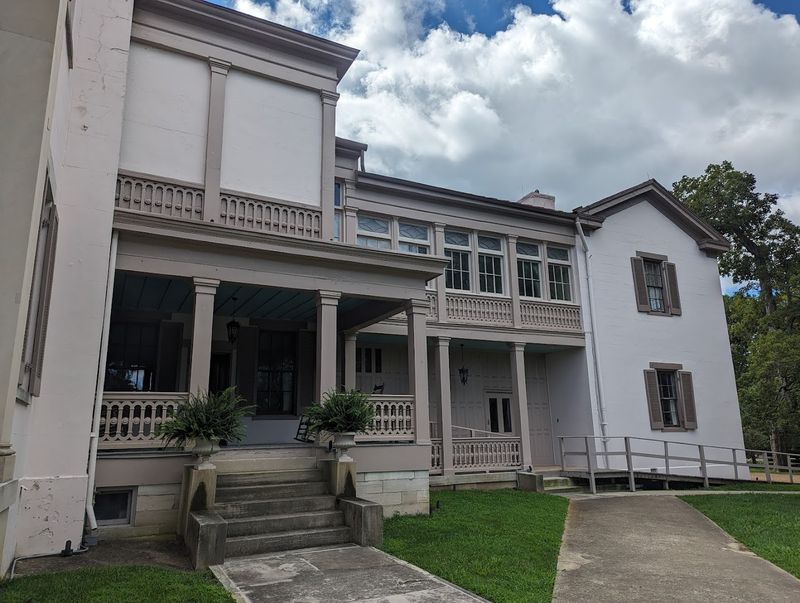
Between 3:40 and 3:47 in the morning, the alarm in the mansion’s nursery trips. It happens with enough regularity that staff have stopped treating it as a malfunction.
The prevailing theory, shared quietly among those who work at Belle Meade, is that General William Giles Harding is still checking on his daughter.
Susan Sarah Harding passed in that nursery in 1848, as an infant, years before the current mansion was even completed. General Harding was one of the estate’s most prominent figures, a man who built Belle Meade into a thoroughbred powerhouse and navigated the enormous upheaval of the Civil War without losing the property.
The idea that his grief might linger in that specific room, at that specific hour, is the kind of detail that makes paranormal stories feel less like fiction and more like unresolved history.
The nursery itself is one of the more affecting rooms on the mansion tour. Even without the ghost story attached to it, there is a stillness in there that is hard to shake.
Visitors frequently describe feeling watched, or sensing a presence near the window. Whether that is grief echoing across 175 years or simply the weight of a beautifully preserved space, something in that room clearly holds on.
The Woman in White Crossing the Lawn
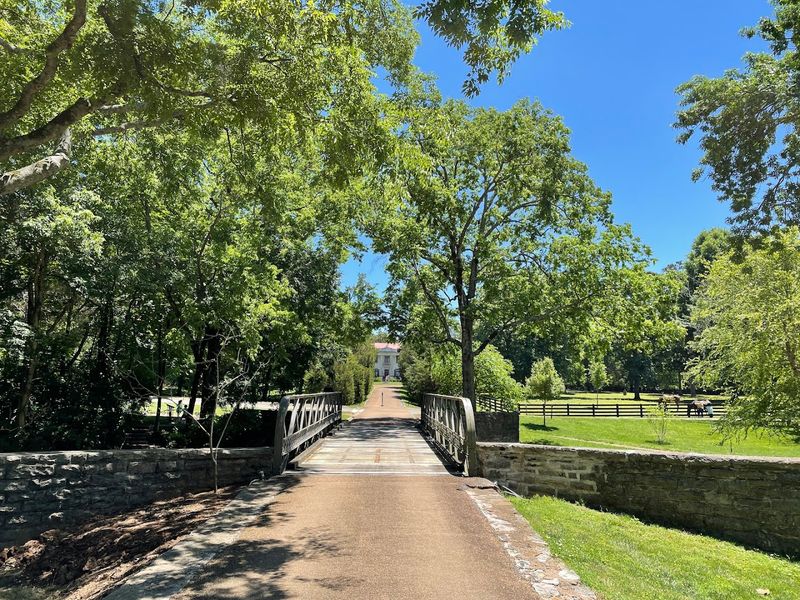
She moves across the lawn near the tree line, dressed in white, and then she is simply gone. The Woman in White at Belle Meade is one of those ghost stories that has taken on a life of its own, passed between visitors and staff over many years.
She is believed to be a former mistress of the house who disappeared on the eve of her wedding, though the full details of her story remain unclear.
People have reported hearing faint footsteps on the grounds after dark, catching the rustle of fabric where no one is standing, or noticing lights flickering in strange patterns during storms. A few accounts describe the sound of crying near the outer edges of the property.
None of it is loud or dramatic. It is the quieter kind of haunting, the kind that makes you pause and reconsider what you just saw.
The grounds at Belle Meade are genuinely beautiful in a way that makes you want to linger, especially in the late afternoon when the light turns golden through the magnolias. That same beauty makes the ghost stories feel more believable somehow, as if a place this layered in history could not possibly be home to only one kind of presence.
The Woman in White fits perfectly into the mood of this estate. Visitors who come for the wine tours and historic house sometimes leave with a story they did not expect to bring home.
And that is the thing about Belle Meade. Even the skeptics tend to walk a little faster past the tree line after sunset.
The Grounds, the Carriages, and the Magnolias You Will Not Forget
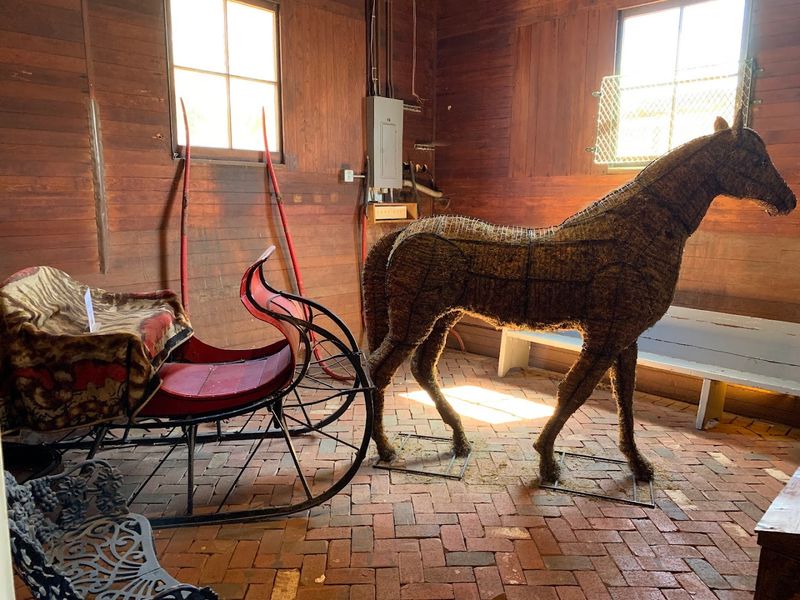
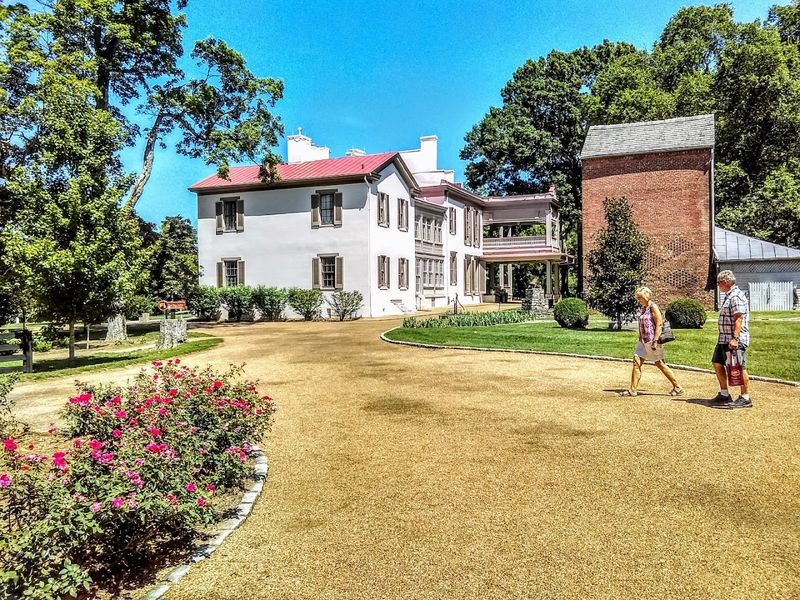
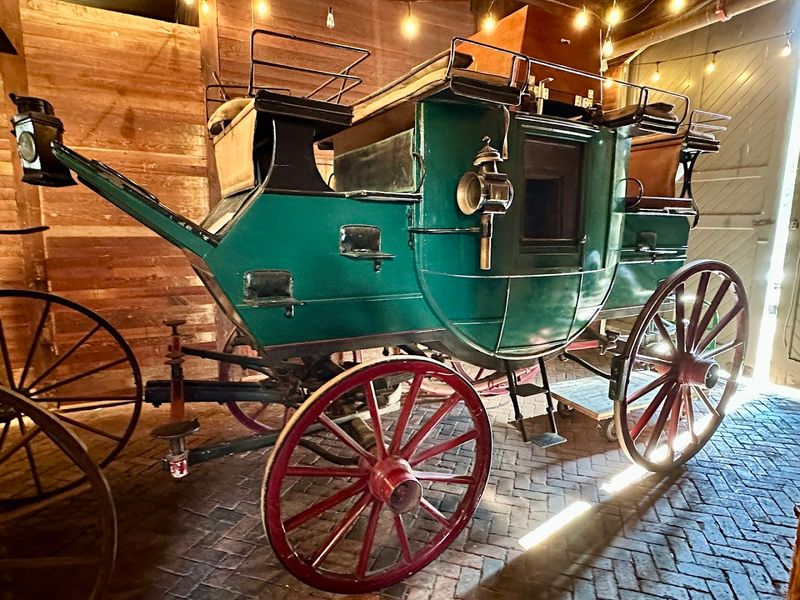
There is a carriage collection at Belle Meade that deserves more attention than it typically gets. Tucked into the outbuildings near the main house, the historic vehicles range from elegant formal carriages to working farm transport, each one a small window into how daily life moved on a 5,400-acre estate in the 1800s.
The detail on some of them is remarkable.
The magnolias are the other thing people keep mentioning. Several visitors have described them as the largest they have ever seen, and standing beneath them in the late afternoon, that description feels accurate.
There are spots on the grounds where the trees create a kind of canopy that feels completely removed from the surrounding city, which is easy to forget is right there beyond the fence line.
Horses still live on the property, and watching them move around in the paddocks adds a living connection to Belle Meade’s thoroughbred history that no exhibit could replicate. The grounds also include a coffee shop, a gift shop stocked with quality items, and backyard games for those who want to slow down after a tour.
For a historic site so close to downtown Nashville, the sense of space and quiet here is genuinely unexpected. It rewards taking your time rather than rushing through.
Address: 5025 Harding Pike, Nashville, Tennessee
