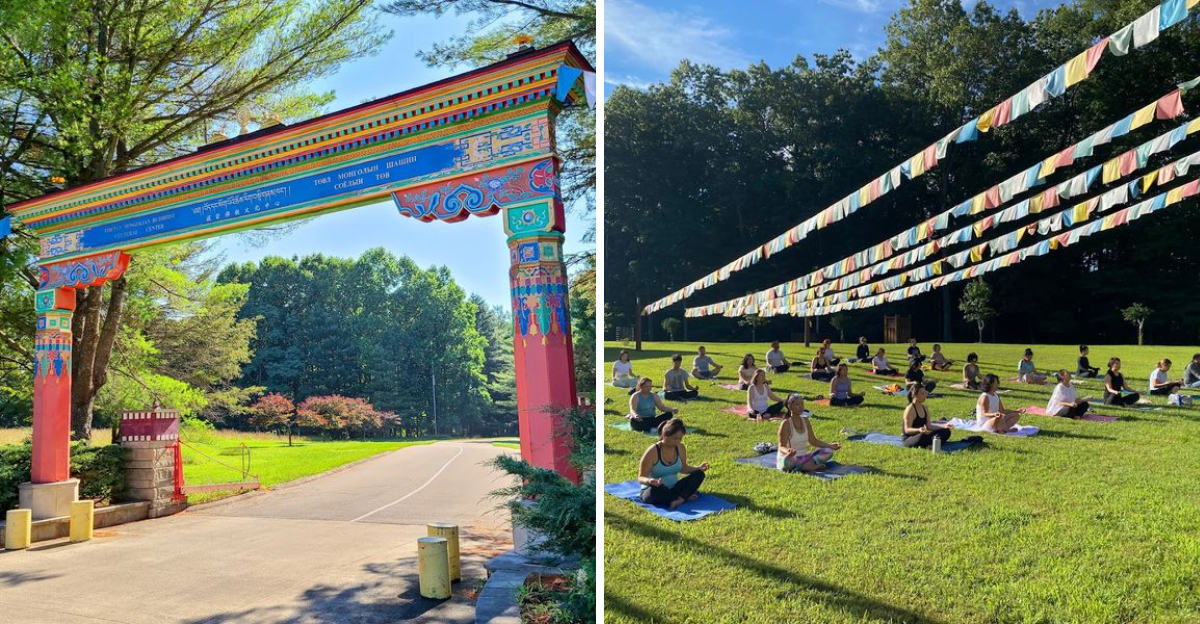
Most people think of Indiana and picture cornfields, college towns, and quiet Midwestern life. What they do not expect is a Tibetan cultural center surrounded by rolling wooded hills in Bloomington, Indiana.
That contrast is exactly what makes this place feel so memorable. It is unlike almost anything else in the region, offering a space focused on culture, reflection, and spiritual learning rather than fast-paced tourism or entertainment.
Founded by the elder brother of the 14th Dalai Lama, the center has grown into an important home for Tibetan and Mongolian traditions in the Midwest. Prayer flags, temples, meditation spaces, and peaceful walking areas create an atmosphere that feels calm and deeply intentional from the moment you arrive.
The Kumbum Chamtse Ling Temple Is Unlike Anything You Have Seen In The Midwest
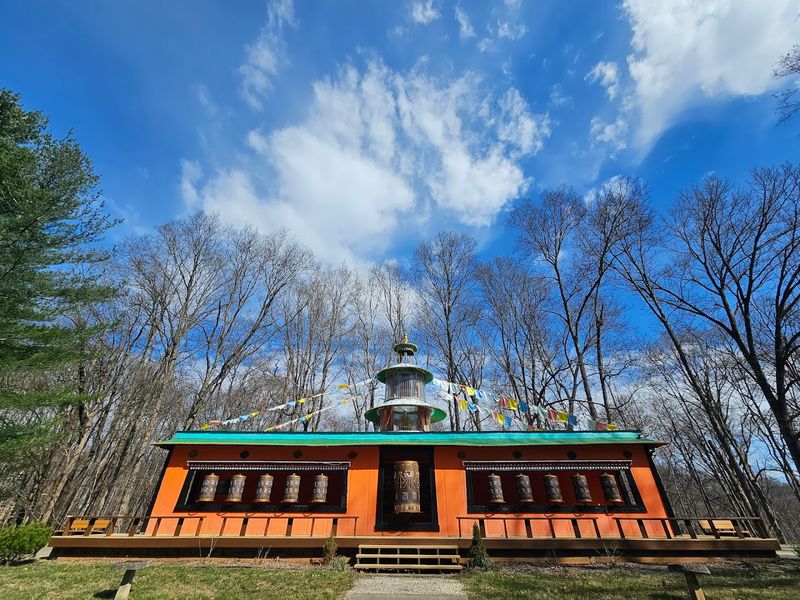
There is a moment when you first see the Kumbum Chamtse Ling Temple and your brain does a small double-take. The vivid colors, the layered rooflines, the intricate carvings and painted details, none of it looks like southern Indiana.
It looks like something transported directly from the Himalayas. That is very much the point.
The cornerstone of this temple was laid by His Holiness the 14th Dalai Lama himself in 1996, and he returned in 2003 to officially dedicate it. The name translates to “Field of Compassion,” and the structure is also known as Kumbum West, a spiritual counterpart to the original Kumbum Monastery in Tibet.
That connection is not ceremonial. It carries real cultural and religious weight for the Tibetan community worldwide.
Inside, the shrine room is rich with sacred imagery, butter lamps, and devotional objects that create an atmosphere of genuine reverence. A two-room suite within the temple is reserved for the Dalai Lama during his visits, which have happened at least six times.
Visitors are welcome to enter respectfully and take in the beauty of the space. The experience is quiet, grounding, and unlike any other you will find in the state of Indiana.
Plan to spend time here rather than rushing through.
Two Rare Tibetan Stupas Stand on the Grounds as Monuments to Peace and Remembrance
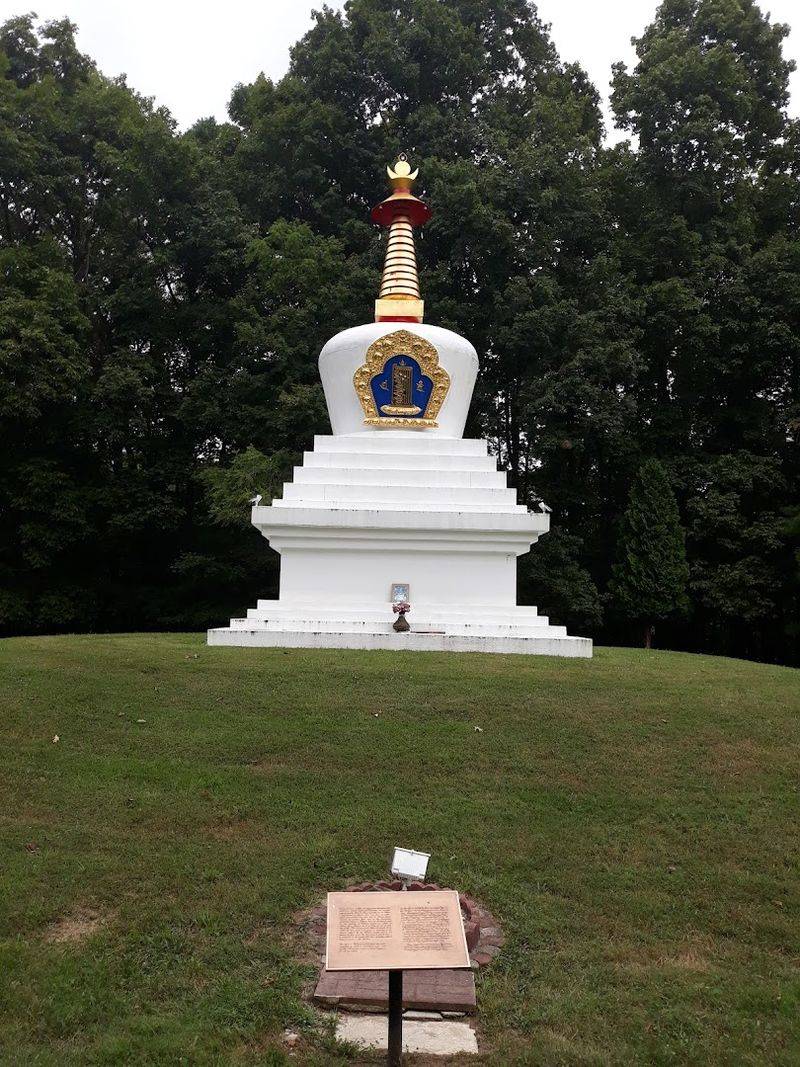
Not many places in the United States have even one Tibetan stupa. The TMBCC has two, and both carry deeply meaningful histories.
A stupa, known in Tibetan as a chorten, is a sacred monument used for prayer, meditation, and honoring significant events or people. Walking around one is considered an act of devotion in Tibetan Buddhist practice.
The first is the Changchub Chorten, erected in 1987 as a tribute to Tibetan refugees who lost their lives or their homeland. It is a monument to resilience and collective grief, and standing near it carries a quiet emotional weight that you feel even without knowing the full history.
The second is the Kalachakra Stupa, dedicated in 1999 for world peace and harmony. It was connected to a Kalachakra initiation given by the Dalai Lama, a ceremony that draws thousands of practitioners from around the globe.
Visitors regularly walk clockwise around both stupas as part of their personal practice or simply out of respectful curiosity. The grounds around the stupas are calm and well-maintained, making them ideal spots for quiet reflection.
If you visit on a weekday morning, you may find yourself nearly alone with these remarkable structures. Few places in the American Midwest offer this kind of direct connection to living Tibetan Buddhist tradition.
These stupas are genuinely rare and worth your time.
Spinning the Mani Korlo Prayer Wheels Is a Hands-On Experience You Will Not Forget
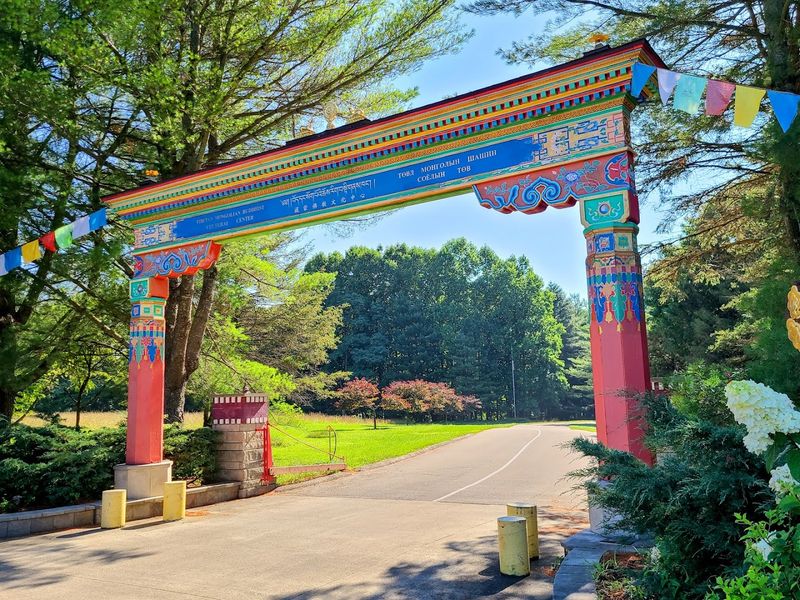
Most cultural sites ask you to look but not touch. The prayer wheel building at the TMBCC is a refreshing exception.
Here, you are genuinely invited to interact with the large bronze Mani Korlo, the traditional Tibetan prayer wheels that originated from the Kumbum Monastery in Tibet. Turning them is not a tourist gimmick.
It is a living spiritual practice.
Each wheel is packed with millions of printed mantras, and spinning it clockwise is believed to release those blessings into the world. The sound the wheels make as they turn, that low, smooth rumble of heavy bronze on its axis, adds something physical and present to the experience.
It is tactile in a way that most spiritual encounters are not. You leave feeling like you actually did something rather than just observed.
The building itself is purpose-built and well-maintained, and the wheels are large enough to command real attention. Visitors often mention this as one of the most memorable parts of the entire visit.
Even those who come with no particular spiritual interest tend to find the experience surprisingly moving. If you are visiting with children, this is also one of the most engaging stops on the property.
Kids respond well to being allowed to participate rather than just stand back and watch. It is a small moment that tends to stay with people long after they leave.
The Cultural Building Holds Art and Artifacts That Tell the Story of Tibet and Mongolia
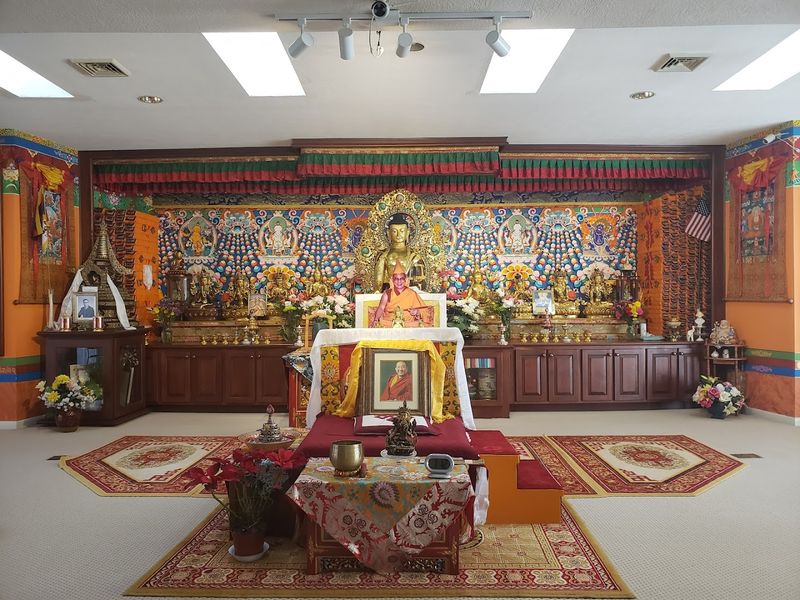
Walking into the Cultural Building at the TMBCC feels a bit like walking into a museum that nobody told you about. The collections here include intricate butter sculptures, paintings of Buddhas and Bodhisattvas, depictions of Tibetan historical figures, and a library filled with literature and art related to both Tibetan and Mongolian heritage.
It is a genuinely impressive accumulation of culture housed in a place that most visitors stumble upon by chance.
Butter sculpture is a traditional Tibetan art form that requires extraordinary patience and skill. The examples on display give you a real appreciation for the craftsmanship involved.
The paintings are vivid and detailed, rooted in a centuries-old artistic tradition that carries spiritual meaning in every brushstroke. The library section is particularly beloved by visitors who enjoy a slower, more contemplative kind of exploration.
The building also serves as an event and gathering space for workshops, seminars, and community programs throughout the year. So depending on when you visit, you might find a language class in session, a cultural presentation underway, or a retreat group using the space for quiet study.
The center hosts a Mongolian Language Camp annually, which speaks to how actively this institution works to keep living culture alive. For anyone interested in Central Asian or Himalayan art and history, this building alone is worth the drive to Bloomington, Indiana.
108 Acres of Wooded Grounds Offer a Rare Chance to Truly Slow Down
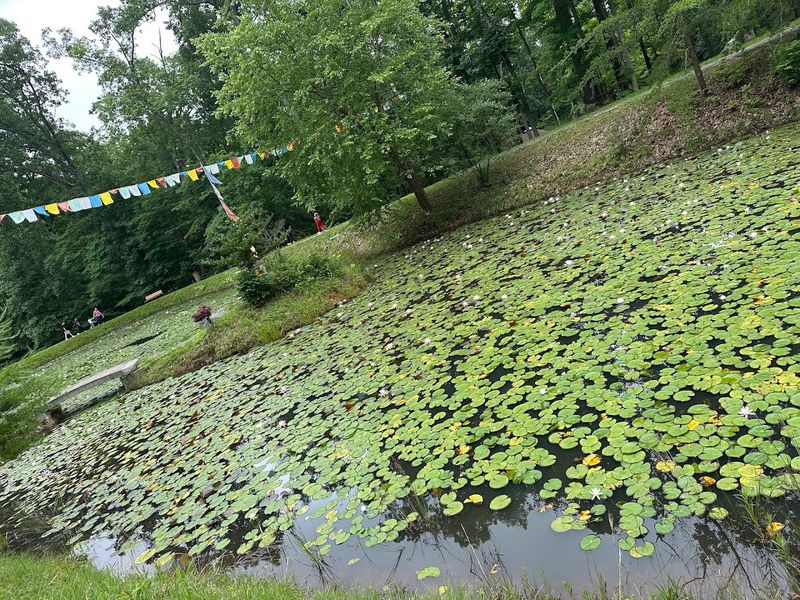
There is something almost physically noticeable about the quiet at the TMBCC. The 108 acres of rolling, wooded terrain surrounding the buildings create a natural buffer from the noise and pace of everyday life.
The number 108 is itself significant in Buddhist tradition, considered sacred across multiple schools of practice. Whether intentional or not, the acreage feels right.
Visitors can walk the grounds freely, taking in outdoor sculptures, the lily pond, and various sacred structures scattered across the landscape. The fresh air, the tree canopy, and the general absence of commercial noise make it one of the most genuinely restorative spots in the region.
Early morning visits are especially peaceful, when the light comes through the trees and the grounds are nearly empty.
For those who want a longer stay, the center offers retreat yurts and cabin rentals on the property, allowing guests to extend their visit into an overnight or multi-day experience. Reports suggest cabins run around one hundred dollars per night, though it is worth calling ahead to confirm current pricing at 812-336-6807.
The center is located at 3655 S Snoddy Rd, Bloomington, IN 47401, and is open daily from 9 AM to 5 PM. If you are in the area and need a mental reset, this is one of the most effective options Monroe County has to offer.
No agenda required.
Year-Round Programs and Meditation Sessions Make Every Visit Feel Different
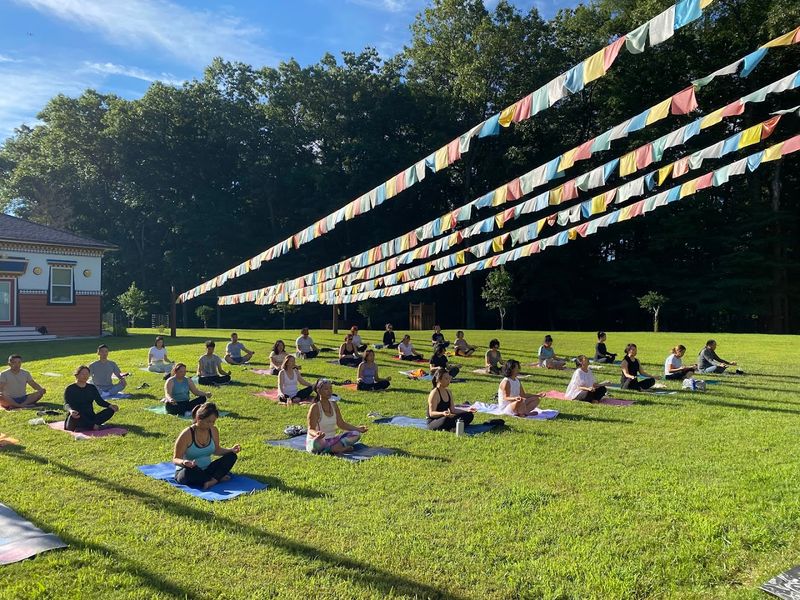
One of the things that sets the TMBCC apart from a typical historic site is that it is genuinely active. This is not a preserved relic.
It is a functioning cultural and spiritual institution with a full calendar of events, teachings, and community programs running throughout the year. That means repeat visits almost always offer something new.
Every Wednesday from 6 to 7 PM, the center holds a meditation session that is open to anyone who wants to attend, regardless of background or experience level. No prior knowledge of Buddhism is required, and no one is going to quiz you at the door.
It is simply an open invitation to come, sit, and be present. That kind of low-barrier accessibility is genuinely rare in a spiritual setting.
Beyond weekly meditation, the center offers Dharma teachings, yoga retreats, workshops, initiations, and interfaith programming throughout the year. The Mongolian Language Camp is an annual highlight that draws community members and language learners from across the region.
The center has also hosted Reiki trainings, couples retreats, and joy workshops in the Cultural Building, which speaks to how broadly it defines its mission. Nearby, you can round out a full day in Bloomington by visiting Switchyard Park at 1601 S Rogers St, Bloomington, IN 47403, or grabbing a meal at Lennie’s Restaurant at 1795 E 10th St, Bloomington, IN 47408.
The Dalai Lama’s Personal Connection to This Center Gives It a Singular Historical Weight
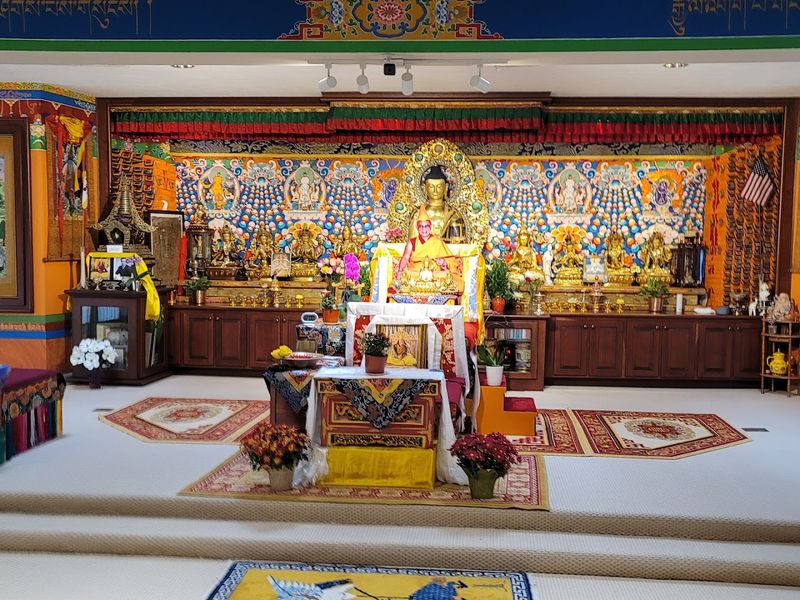
Few cultural institutions in the American Midwest can claim a direct, ongoing relationship with one of the most recognized spiritual leaders in the world. The TMBCC was founded by Thubten Jigme Norbu, the elder brother of the 14th Dalai Lama, in 1979.
That founding connection was never just symbolic. The Dalai Lama has visited the center at least six times over the decades.
He laid the cornerstone of the Kumbum Chamtse Ling Temple in 1996 and returned in 2003 to formally dedicate it. He has also played a role in expanding the center’s mission to include Mongolian culture alongside Tibetan traditions.
The temple even includes a dedicated two-room suite reserved for his use during visits. That level of personal investment from a global figure says a great deal about how seriously this institution takes its purpose.
For visitors, this history adds a layer of meaning that goes beyond aesthetics. You are not just looking at a beautiful building.
You are standing in a place that has been shaped by decades of real intention, cultural preservation, and spiritual leadership. The gift shop on the property offers meaningful items connected to Tibetan and Mongolian tradition, and a visit there is a natural way to close out your time on the grounds.
For more local context, the Monroe County History Center at 202 E 6th St, Bloomington, IN 47408 is worth a stop on your way back into town.
