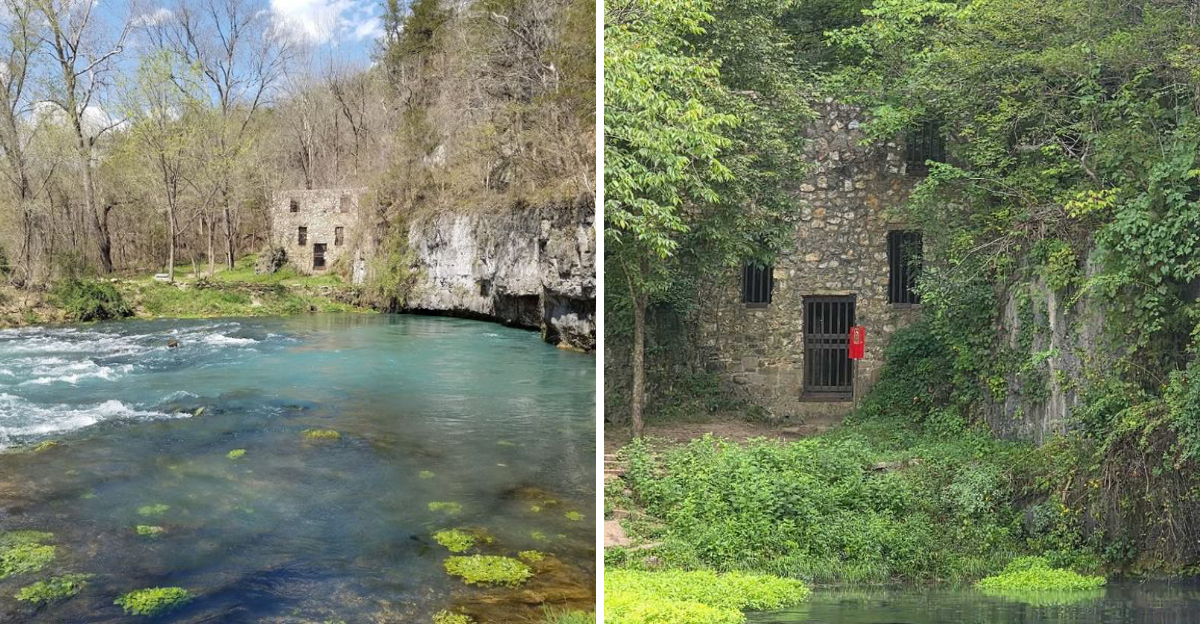
I recently trekked out to a spot in Missouri where the line between history and nature gets incredibly blurry. It is one of those locations that feels like it belongs in a gothic novel rather than a state park.
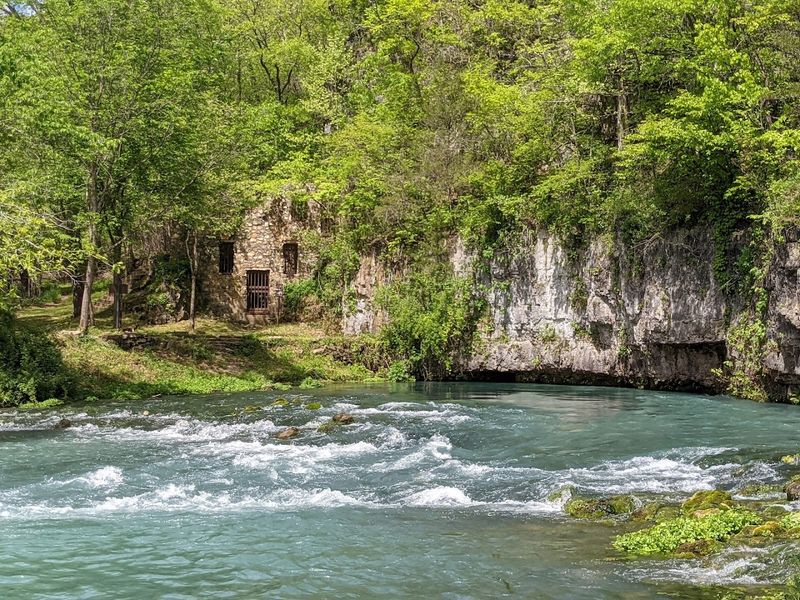
I followed a path deep into the woods until I came across the stone remains of an old hospital, standing like a silent ghost right next to a pool of water so blue it looks neon.
The Contrast between the crumbling, moss-covered walls and the rushing, crystal-clear spring is absolutely breathtaking.
It is a quiet, slightly eerie, and totally captivating place that makes you wonder about the stories trapped in those old stones.
The Story Behind the Stone Walls
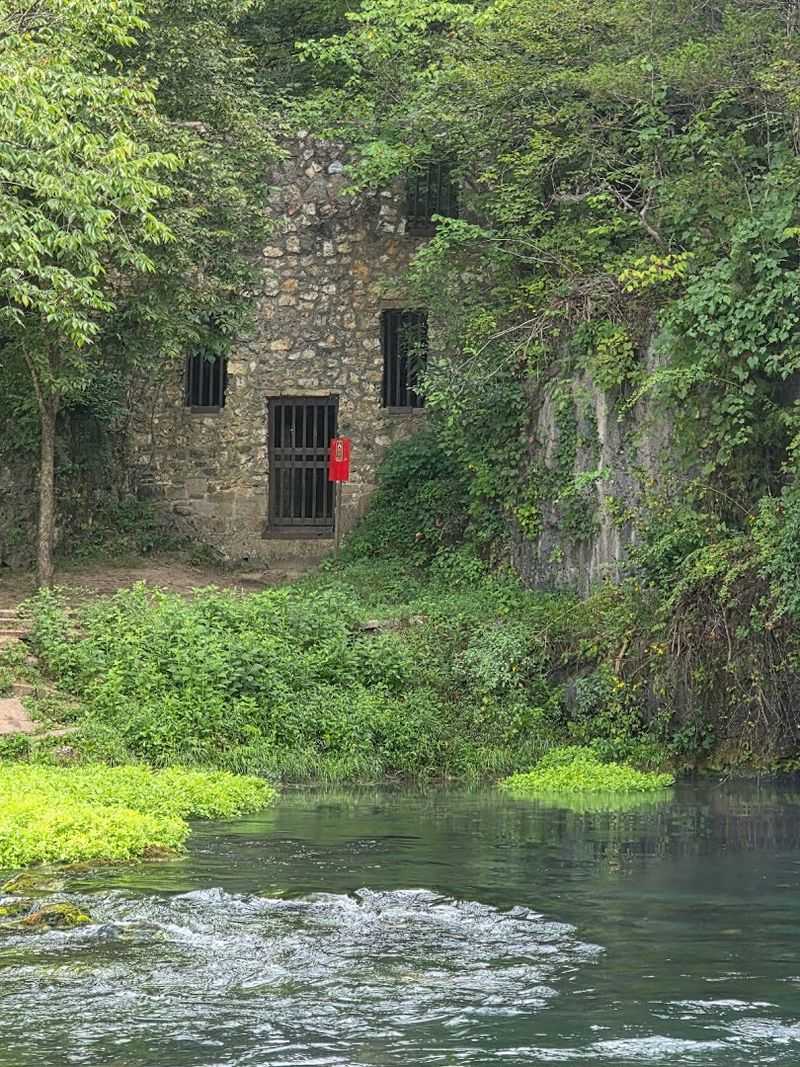
Long before this stretch of Missouri became a national scenic riverway, a man named Dr. C.H. Diehl had a bold idea.
Around the early 1900s, he began constructing a hospital directly over Welch Spring, believing the mineral-rich water had healing properties.
The plan was ambitious for such a remote corner of the Ozarks. Dr. Diehl envisioned a full sanatorium where people could come to restore their health using the spring water.
Construction began on a large stone building, and the walls went up with impressive craftsmanship given the isolation of the location.
The hospital was never completed, though. Funding dried up and the project stalled before it ever opened its doors to a single patient.
What remained was a partially built stone structure that time slowly began to reclaim.
Today the ruins stand as a fascinating piece of Missouri history, managed by the National Park Service as part of the Ozark National Scenic Riverways. The story of what could have been makes the place even more compelling.
Standing in front of those walls, you can almost feel the ambition and disappointment baked right into the stone.
A Spring So Clear It Seems Impossible
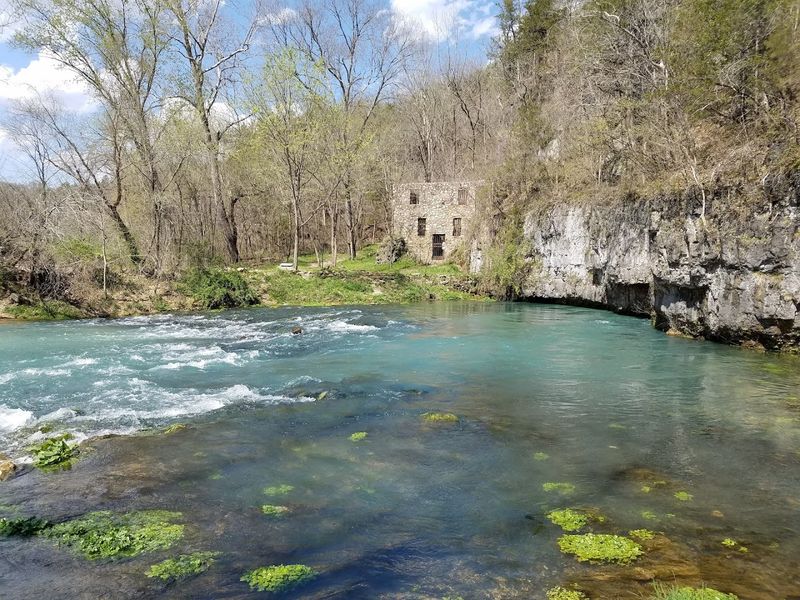
Standing at the edge of Welch Spring for the first time, my first thought was that someone had dropped a piece of the Caribbean into the Missouri woods. The water is that impossibly clear and that startlingly blue-green.
Welch Spring is a major spring, pumping millions of gallons of water into the Current River every day. The water stays cold year-round, hovering around 58 degrees Fahrenheit, which is part of why it looks so vivid and pristine even in the middle of summer.
The spring feeds directly into the Current River, and the transition from the glassy spring pool to the moving river is something you have to see in person. Sticking your hand into that water is a genuine shock to the system, even on a hot August afternoon in Missouri.
Otters have been spotted playing in the spring on calm mornings, which adds a completely unexpected layer of magic to the experience. The water itself is the main event here, and the ruins rising just across from it create a visual pairing that feels almost staged.
Nature and history decided to collaborate here, and the result is breathtaking.
Getting There Is Part of the Adventure
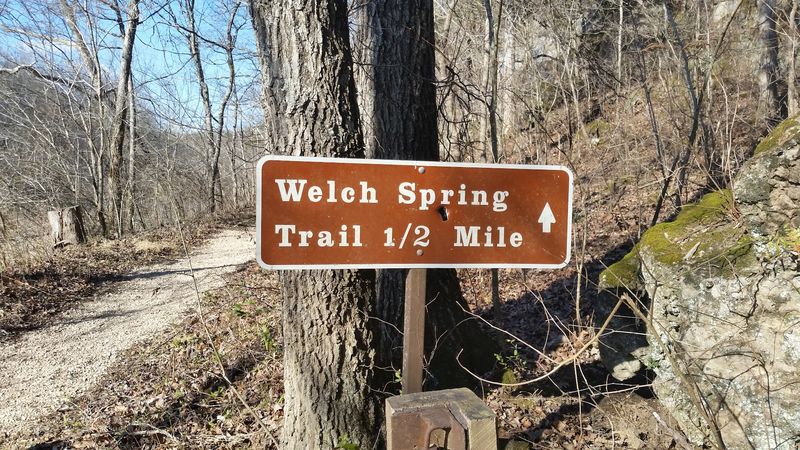
Let me be honest with you: the road to Welch Spring Hospital Ruins is not for the faint of heart or the low-clearance sedan. The dirt and gravel road leading down toward the trailhead is steep, rocky, and narrow in spots.
Taking it slow is not a suggestion here, it is a necessity. A vehicle with decent ground clearance will make the whole thing much less stressful.
Once you reach the parking area, the trail itself is a different story entirely, running roughly half a mile and staying mostly flat as it follows along near the Current River.
One important heads-up: Google Maps has been known to direct people to the wrong side of the river. Aim for the east bank of the Current River to reach the trailhead that leads you closest to the ruins.
The address puts you in Jadwin, Missouri, but the exact turnoff can be easy to miss.
Approaching by canoe or kayak is actually a fantastic alternative, and many people float down the Current River and pull up right at the spring. Either way you choose to arrive, the journey itself sets the mood perfectly for what waits at the end.
The Trail Walk Along the Current River
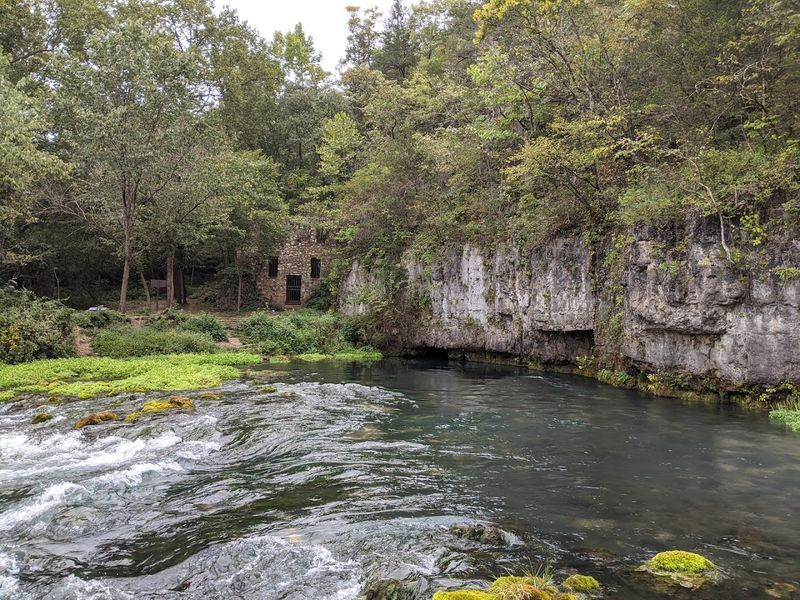
Once your feet hit the trail, the mood shifts immediately. The path runs close to the Current River, and the sound of moving water keeps you company the entire way to the spring.
It is one of those walks where you forget you are supposed to be getting somewhere.
The trail is relatively easy by Missouri Ozarks standards, mostly flat with a gravel surface for a good portion of the route. It winds through dense hardwood forest, and depending on the season, the canopy overhead can be so thick it feels like walking through a green tunnel.
Bugs can be a real issue here, especially in warmer months when standing water near the spring creates prime mosquito habitat. Packing bug spray is not optional if you are visiting between May and September.
Long sleeves are not a bad idea either.
The half-mile distance means even young kids and older adults can manage the walk without much trouble. The payoff at the end, when the trees open up and you get your first look at the spring and the ruins across the water, makes every step feel worthwhile.
Few trail endings in Missouri deliver quite this kind of visual punch.
Reaching the Ruins Requires a Little Grit
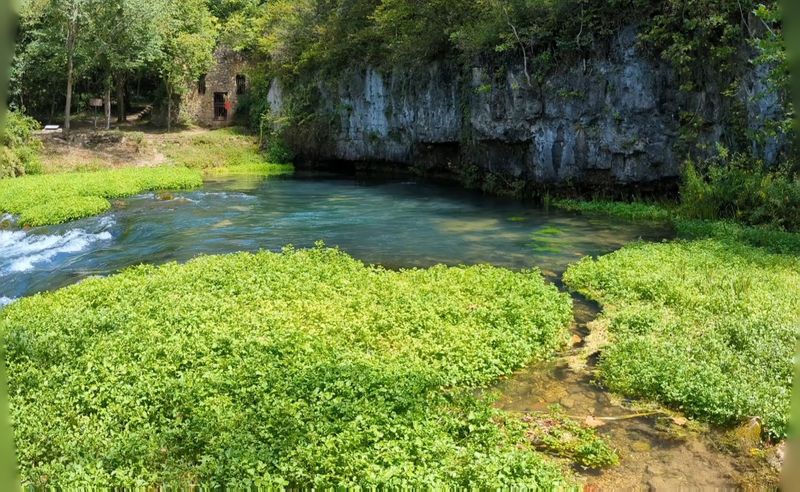
Here is the part that surprises most first-time visitors: you cannot simply walk straight up to the ruins from the main trail. The spring sits between you and the building, and crossing it requires either wading through cold water or scrambling up a rocky bluff to get around.
The rock scramble route goes up and to the right of the spring, climbing the face of a bluff before looping back down toward the ruins. It requires some confidence with heights and a reasonable level of physical fitness.
The footing can be slick, so sturdy shoes with grip are a must.
Wading across the spring is the other option, and while the water is only knee-deep in most spots, that 58-degree temperature will wake you up fast. Many people wade across in warm weather and simply accept the cold as part of the experience.
Once you reach the ruins, the building is locked and off-limits due to a bat colony that lives in the cave at the back of the structure.
Peeking through the iron bars gives you a glimpse of the dark interior, and the cave behind it adds an eerie, almost otherworldly quality that makes the whole effort feel completely worthwhile.
The Architecture Frozen in Time
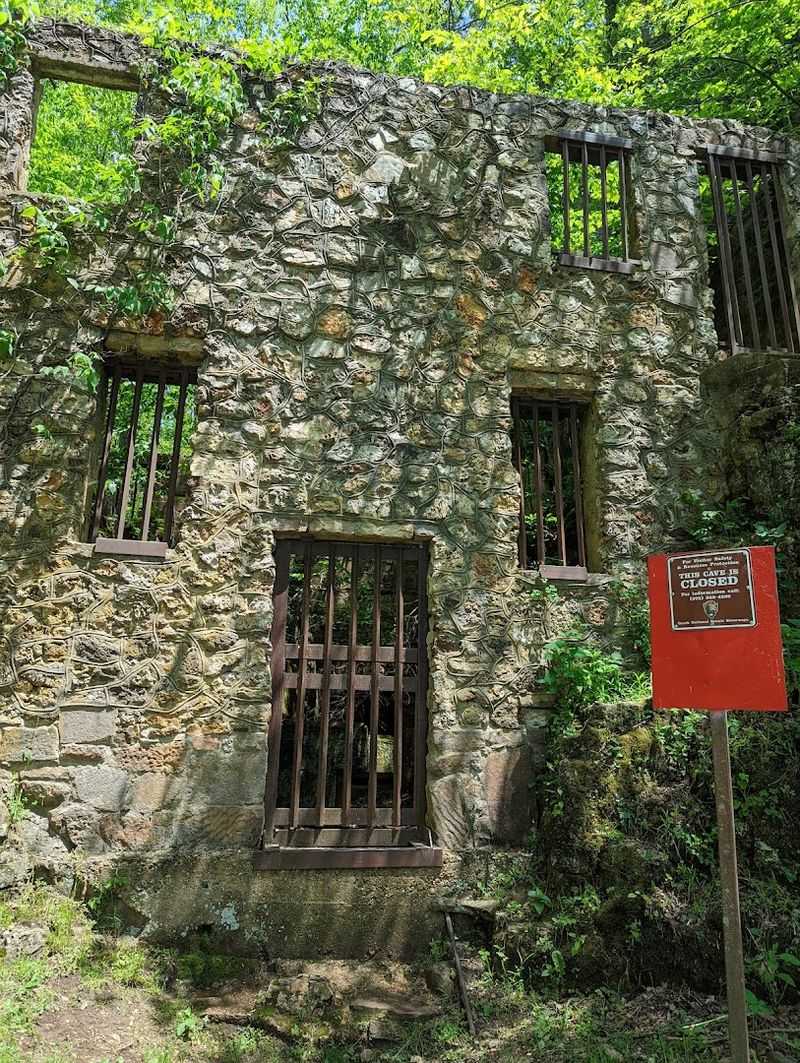
The craftsmanship in those old stone walls is remarkable when you get close enough to study them. Whoever built this structure in the early 1900s used locally quarried stone and did solid work, because the walls are still standing more than a century later despite never being fully finished.
The building was designed to sit directly over the spring, channeling the water through the structure itself. You can see where channels and openings were planned in the masonry, little architectural clues that hint at the grand medical vision the builder had in mind for this remote Missouri location.
A natural cave opens at the back of the ruins, and the spring actually flows out from this cave before pooling in front of the building. The combination of man-made stone and natural rock creates a layered visual effect that photographers absolutely love.
Iron bars now cover the openings to protect the bat colony inside, but they also frame the dark interior in a way that adds dramatic tension to any photograph.
Sticking a camera lens between the bars gives you a glimpse of a space frozen somewhere between construction and abandonment, and that ambiguity is exactly what makes this building so compelling to explore.
Floating the Current River to the Spring
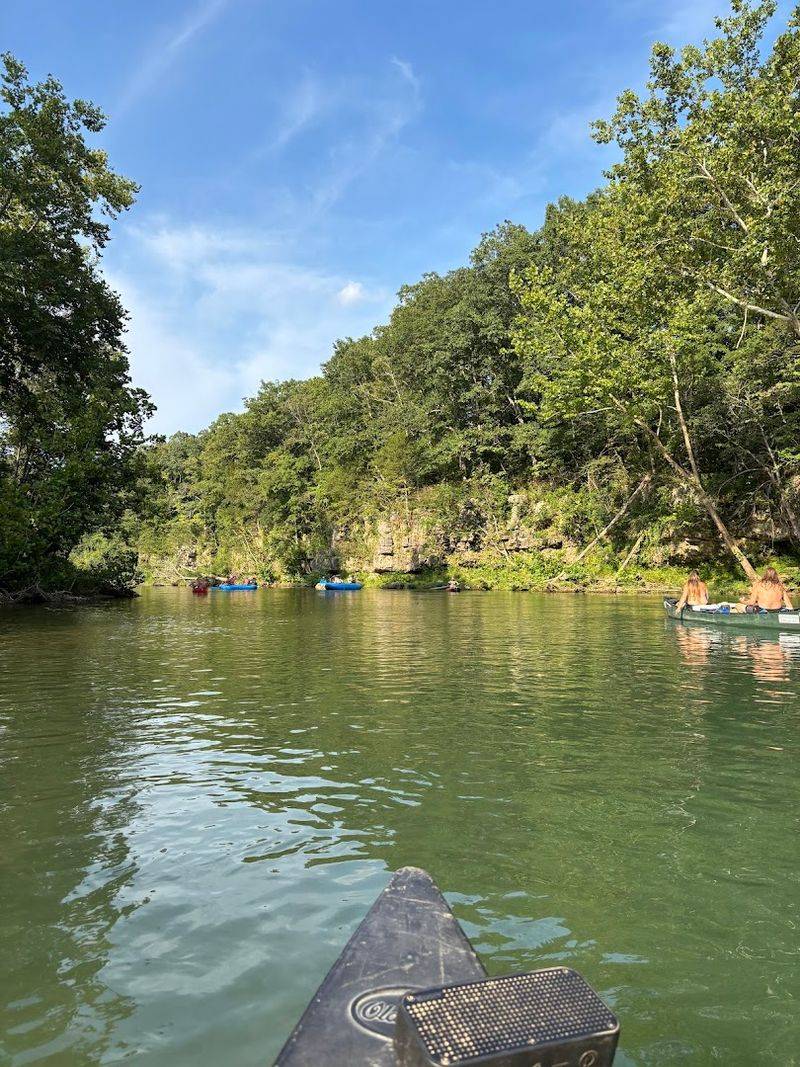
Arriving by water is hands-down the most cinematic way to experience this spot. Floating the Current River and rounding the bend to find the spring and ruins suddenly appearing on the bank is the kind of moment that makes people stop paddling and just stare.
The Current River is one of Missouri’s most beloved float streams, running clear and relatively gentle through the Ozark hills. Canoe and kayak outfitters operate in the region, making it easy to plan a float that passes right by Welch Spring.
The spring is hard to miss from the water because the color difference between the spring outflow and the river is visible even from a distance.
There are two landing spots near the spring for floaters, which is handy if you miss the first one while gaping at the scenery. Pulling up to the bank and stepping out into that cold, clear water while the ruins loom above you is a full sensory experience.
Floating also solves the access puzzle entirely, since approaching from the river puts you on the same side as the ruins without any bluff scrambling required. For anyone who loves paddling, building a float trip around a stop at Welch Spring is one of the best Missouri Ozarks itinerary decisions you can make.
Best Times to Visit and What to Bring
The site is open 24 hours a day, every day of the year, which means you have a lot of flexibility in planning your visit. Early spring and late fall are my personal favorites for this spot, when the bugs are minimal and the trees are either just leafing out or turning gold.
Visiting in early April before full leaf-out gives you cleaner sightlines through the forest and makes the ruins more visible from the trail. Summer visits are beautiful but come with serious mosquito pressure, so pack bug spray and wear light long sleeves if you plan a warm-weather trip to this part of Missouri.
Sturdy footwear is non-negotiable regardless of season. If you plan to wade across to the ruins, bring water shoes or sandals with straps that can handle a cold, rocky stream crossing.
A dry bag for your phone and camera is smart if you are crossing the spring.
Bring water and snacks since there are no facilities at the site. A camera with a wide-angle lens will serve you well here because the spring, ruins, and surrounding forest all want to be in the same frame at once.
Morning light hits the stone walls beautifully and makes the spring water glow like something from a painting.
