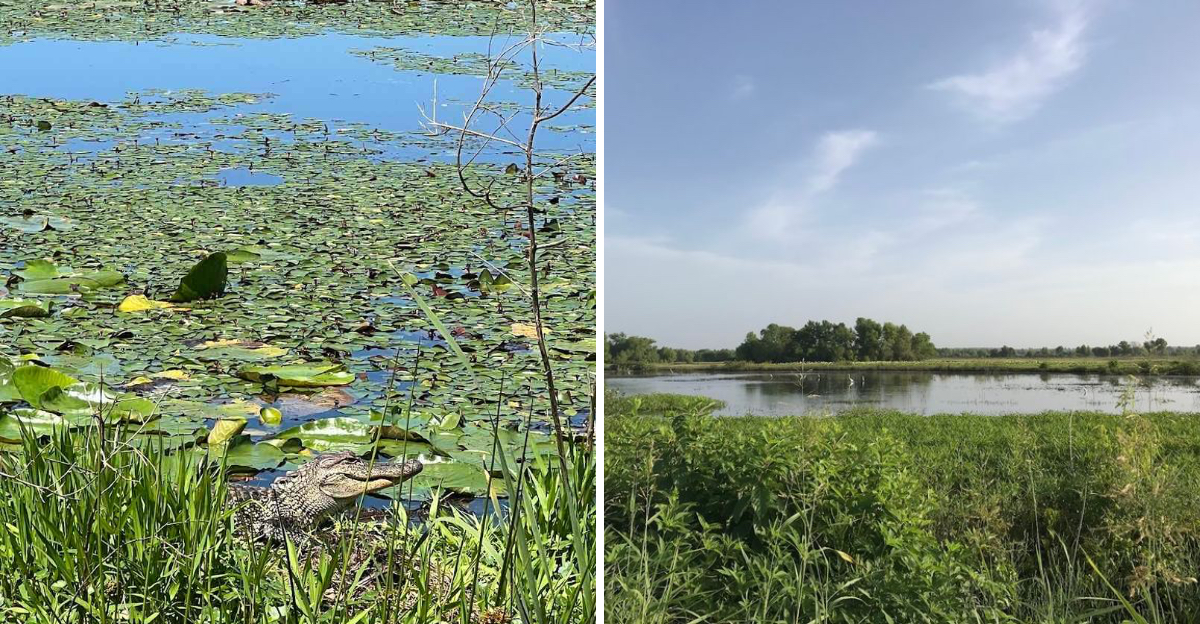
I had to check my phone map twice. Because there is no way I was still in Oklahoma.
Cypress trees dripping with moss. Dark slow water.
That heavy humid smell that usually means Louisiana or Mississippi. But nope.
I was right here. The place feels ancient and a little swampy in the best way.
Birds everywhere. Turtles stacked on logs like they are sunbathing.
I half expected to see an alligator slide off the bank. (Spoiler: I did not. But I was watching.) The boardwalks and gravel paths keep your feet dry while you stare into the murky water wondering what is looking back.
Oklahoma surprised me again. This place is wild.
The Entrance That Sets the Mood Immediately
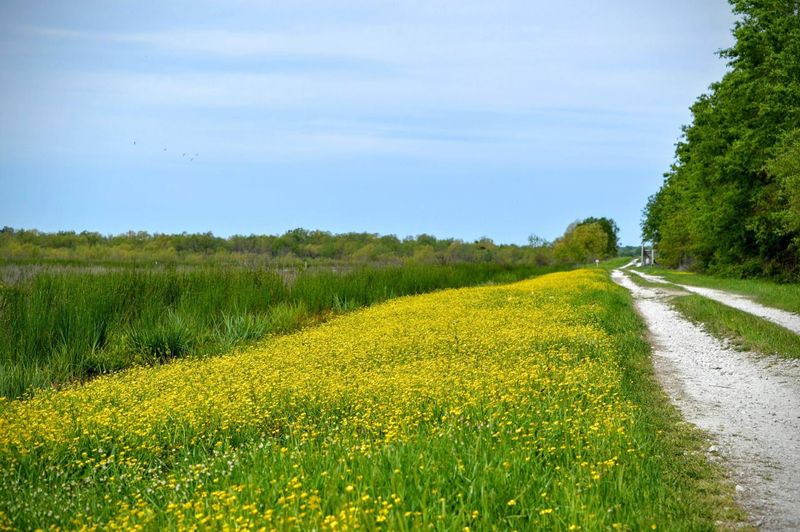
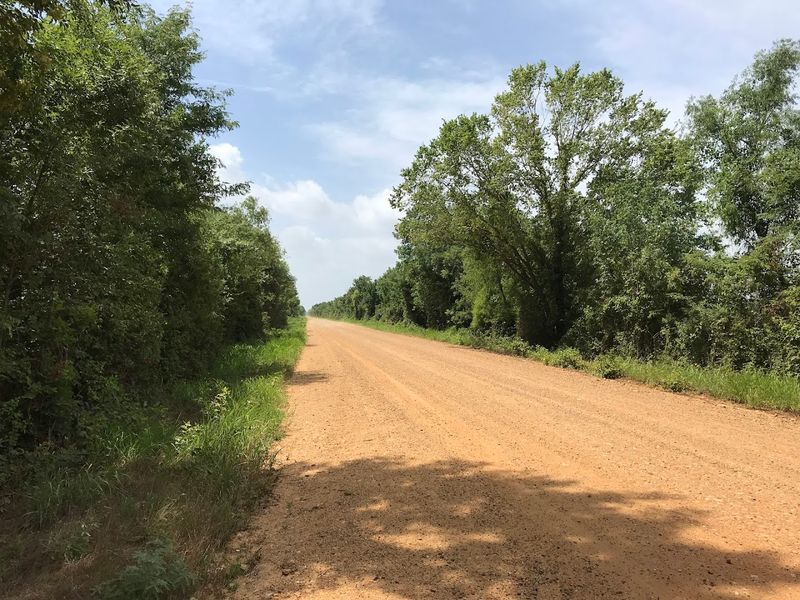
Before you even park the car, Red Slough is already making a statement. The entrance on Black Land Road in Haworth, Oklahoma does not look like much at first glance, but the moment you step out, the air changes completely.
It smells like water, moss, and something ancient. The sounds hit next, frogs, birds, and rustling reeds all layered on top of each other like a wild symphony warming up before the main act.
The entrance area is simple and unfussy, which actually adds to the charm. There are no flashy visitor centers or overcrowded parking lots here.
Just a quiet road that opens into one of Oklahoma’s most biodiverse corners.
It sets an honest tone for what lies ahead: raw, real, and completely unhurried. The gravel crunches underfoot, the cypress trees lean over the waterline, and the whole place feels like it exhales slowly.
First-time visitors often stop right at the entrance just to take it all in. That pause is worth it.
The atmosphere here does not build gradually. It greets you at the gate and does not let go.
A Wetland Ecosystem Unlike Anything Else in Oklahoma
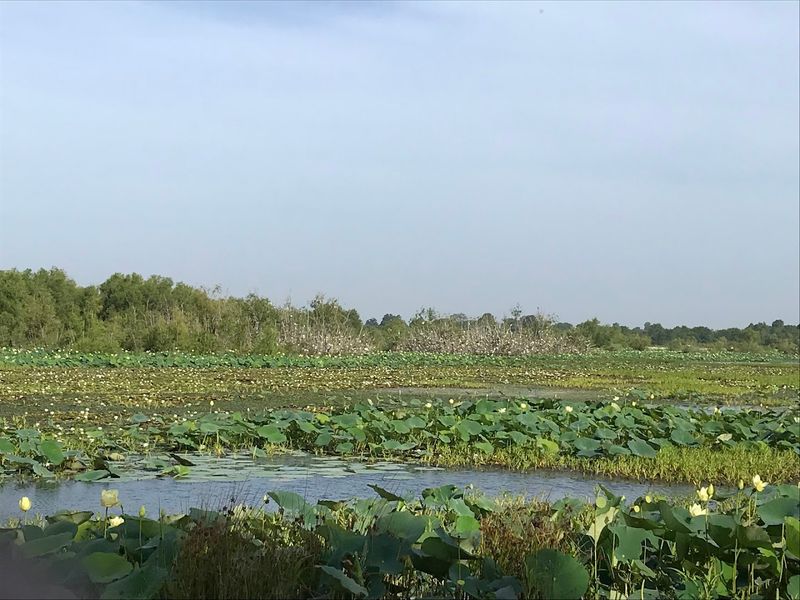
Most people think of Oklahoma as red dirt, rolling plains, and wide-open skies. Red Slough flips that image completely on its head.
This wetland in McCurtain County looks and feels like a Louisiana bayou, and it is genuinely one of a kind within the entire state.
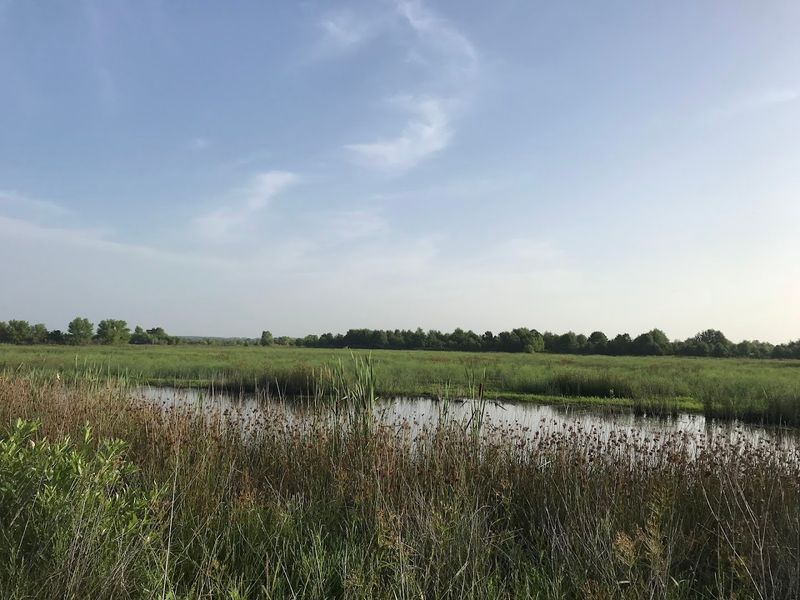
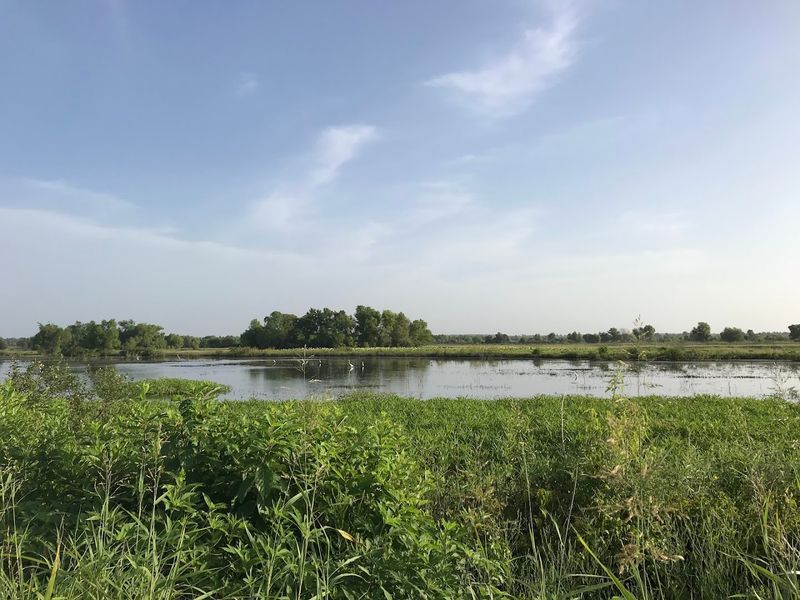
The area features a mix of shallow marshes, seasonally flooded agricultural fields, and bottomland hardwood forest. That combination creates a layered habitat that supports an extraordinary range of wildlife year-round.
Water is everywhere here, pooling in low fields, threading through cypress stands, and sitting still and dark in channels that reflect the sky like mirrors. The biodiversity packed into this landscape is staggering for a state not typically associated with wetland ecosystems.
Oklahoma does not have many places like this, which makes Red Slough feel almost geographically rebellious. It belongs to the Gulf Coastal Plain, a natural region that stretches south toward Texas and Louisiana.
Standing in the middle of it, you genuinely forget which state you are in. The plants, the sounds, and the wildlife all point south.
It is one of the most ecologically distinct corners of Oklahoma.
Birdwatching Heaven With a List That Keeps Growing
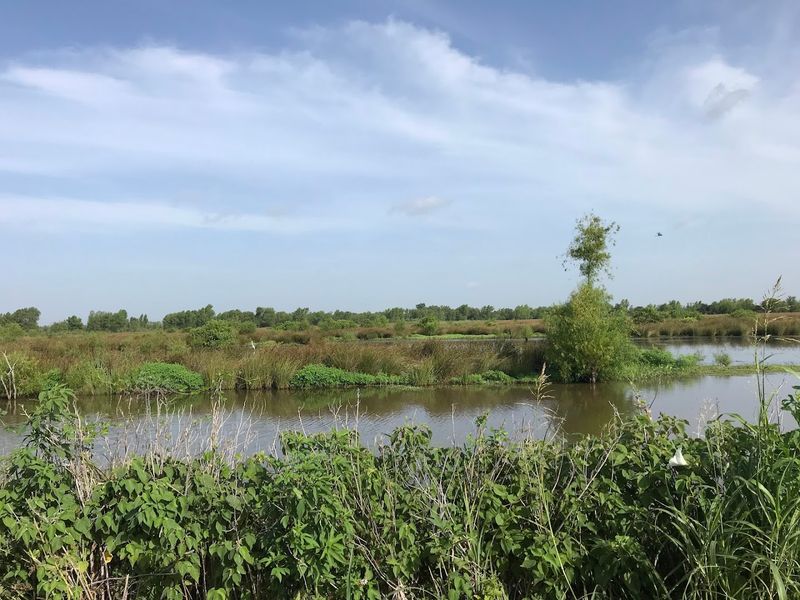
Red Slough is considered one of the top birdwatching destinations in Oklahoma, and once you spend a morning here, it is easy to understand why. The bird list for this area is genuinely remarkable, with over 300 species recorded across the seasons.
Wading birds are a particular highlight. Great blue herons, snowy egrets, and little blue herons work the shallows with focused patience.
Roseate spoonbills, which look almost too colorful to be real, have been spotted here too, adding a tropical splash to the Oklahoma scenery.
Shorebirds pass through during migration in impressive numbers, and the flooded fields are magnets for ducks, geese, and other waterfowl during the colder months. Neotropical songbirds move through in spring, turning the tree line into a blur of color and sound.
The viewing platforms scattered throughout the area give excellent sightlines across open water and marsh edges. Binoculars are essential, but even without them, the sheer volume of birdlife here is impossible to miss.
Early morning is the golden window. The light is soft, the birds are active, and the whole place hums with movement.
Serious birders travel from across the country just to add Red Slough to their life list.
Alligators in Oklahoma, and Yes, This Is the Place
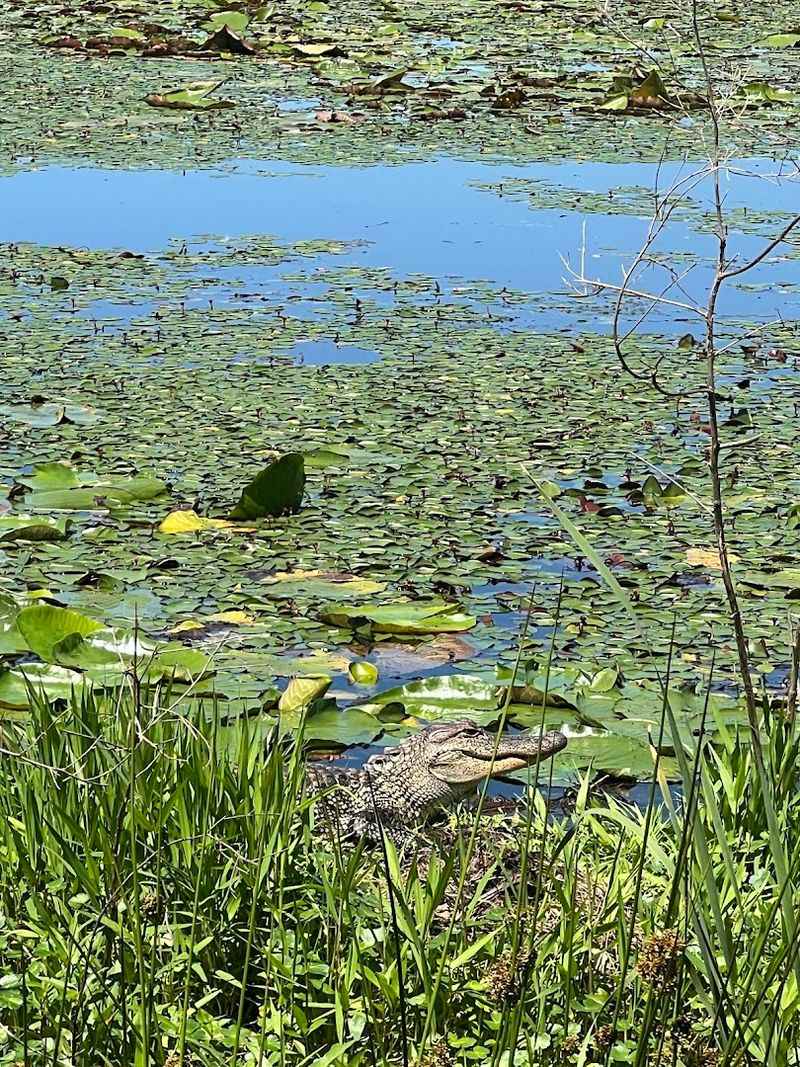
Here is a fact that surprises almost everyone: Oklahoma has alligators. Not many places, mind you, but Red Slough is one of the few spots in the entire state where American alligators have been documented living in the wild.
These are not transplants or zoo escapees. They are naturally occurring at the far southern edge of the species’ range, pushed into this corner of Oklahoma by the same Gulf Coastal Plain habitat that makes this area feel so distinctly southern.
Spotting one is not guaranteed on any given visit, but the possibility adds a genuine edge to every walk along the water. Scanning the banks and still channels becomes an active game rather than a casual stroll.
Alligators here tend to be shy and elusive. They are not lurking aggressively; they are simply part of the ecosystem, doing what alligators do.
Keeping a respectful distance is the obvious approach, and the viewing platforms help with that.
The fact that they exist here at all is a testament to how ecologically unique Red Slough is. Oklahoma and alligators are not two things most people connect, and yet here, in McCurtain County, the connection is very real.
The Viewing Platforms and Walking Trails Worth Exploring
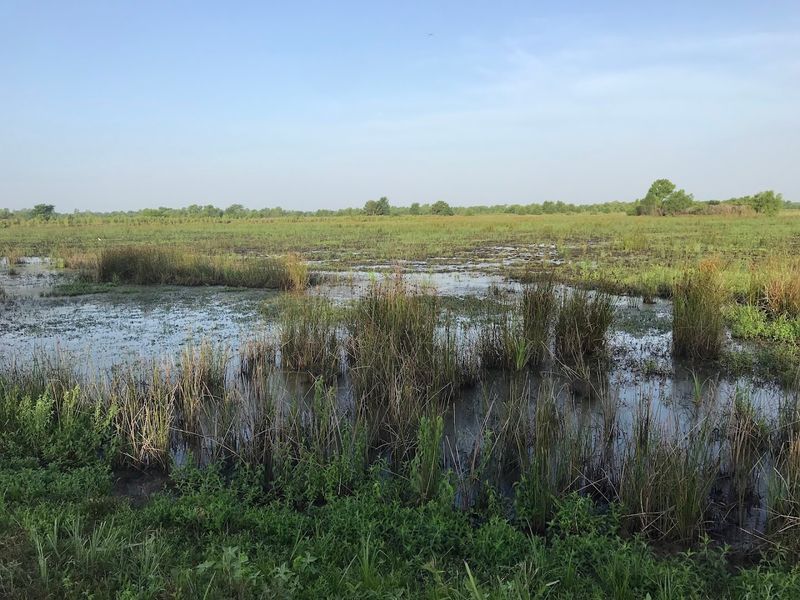
One of the most practical and rewarding features of Red Slough is its network of viewing platforms and walking trails spread throughout the management area. These platforms are positioned thoughtfully, placed where the views open up over water and marsh rather than being blocked by vegetation.
Standing on one of these platforms at sunrise is a genuinely moving experience. The water stretches out in front of you, birds cut across the sky, and the whole scene has a stillness to it that feels restorative.
The walking trails vary in length and terrain, making the area accessible for different fitness levels. Some paths run along levees between flooded fields, while others cut through wooded sections where the canopy closes overhead and the light goes green and cool.
Comfortable, waterproof footwear is strongly recommended. The ground near the water can be soft and muddy, especially after rain, and some trail sections cross low areas where water lingers.
A heads-up for first-time visitors: the map boxes at the entrance have sometimes been found empty, so downloading a trail map or screenshot before arriving is a smart move. The trails are worth every step, but knowing where you are going helps.
Bullfrogs, Reptiles, and the Sounds of the Swamp
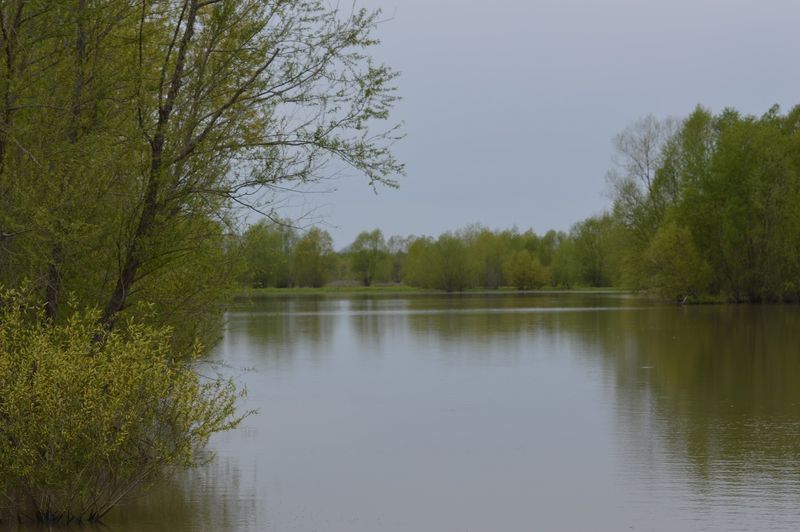
If birds are the headliners at Red Slough, the amphibians and reptiles are the unforgettable supporting cast. Bullfrogs are everywhere here, and their deep, resonant calls fill the evenings with a sound that is more bayou than anything else in Oklahoma.
These are big frogs, the kind that make you do a double take when you spot them on a log or bank. Their calls carry across the water at dusk like a slow drumbeat, rhythmic and oddly calming once you settle into it.
Reptile diversity here is impressive too. Various snake species, turtles basking on logs, and of course the occasional alligator all share this wet, warm habitat.
The water moccasin, also known as the cottonmouth, is present in this area, so staying on marked paths is genuinely good advice.
Salamanders and other amphibians thrive in the moist, layered habitat. Spring brings a peak in amphibian activity, with calling frogs creating a wall of sound after dark that has to be heard to be believed.
The ecosystem here functions as a whole, connected web. Every croak, splash, and rustle is part of something larger and older than any single visit can fully capture.
This place rewards patience above all else.
The Best Seasons to Visit and What Each One Offers
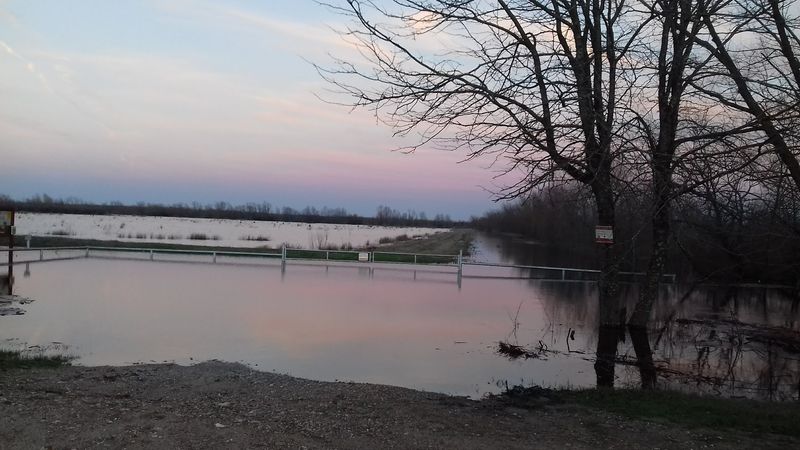
Red Slough shifts personality with the seasons, and each one brings something genuinely different to the experience. Spring is electric with migrating songbirds and wading birds returning to breed.
The vegetation explodes into green, the water levels are often high, and the whole area buzzes with biological energy.
Fall migration is equally spectacular. Shorebirds and waterfowl move through in large numbers, and the flooded agricultural fields become staging areas for impressive flocks.
The light in autumn here is warm and long, making photography a particular pleasure.
Winter brings its own rewards. Waterfowl numbers peak, and the bare trees open up sightlines that thick summer foliage blocks.
Cold mornings can produce dramatic fog over the water, creating an atmosphere that feels almost cinematic.
Summer is the quietest season for visitors, but it is peak time for reptiles and amphibians. The heat is serious in southeastern Oklahoma in July and August, so early morning visits are essential if you go during the warmer months.
The management area is open year-round, which means there is genuinely no bad time to visit. Each season simply asks you to adjust your expectations and your timing, and rewards you accordingly.
How Red Slough Fits Into the Bigger Conservation Picture
Red Slough did not become a thriving wildlife haven by accident. The area is actively managed by the Oklahoma Department of Wildlife Conservation, and the work that goes into maintaining and improving the habitat here is substantial.
Water control structures regulate water levels across the flooded fields, mimicking the natural flooding cycles that wetland species depend on. This kind of active management is what separates a functioning wildlife area from a neglected patch of swamp.
The area also sits within the larger context of the Gulf Coastal Plain ecosystem, connecting Oklahoma to a network of habitats that stretches south through Texas to the Gulf of Mexico. That connectivity matters enormously for migratory species.
Conservation efforts at Red Slough have helped restore wetland habitats that were historically drained for agriculture. Turning those fields back into productive wildlife habitat has had measurable positive effects on local and regional biodiversity.
Oklahoma is not always the first state that comes to mind when people think about wetland conservation, but Red Slough is a genuine success story. It shows what focused, science-based management can achieve when the goal is restoring something that was nearly lost.
Practical Tips for Making the Most of Your Visit
Getting the most out of Red Slough requires a little preparation, and the effort pays off enormously. The address to aim for is Black Land Road, Haworth, OK 74740, and cell service in this part of McCurtain County can be unreliable, so downloading offline maps before you leave is a practical move.
Arrive early. The wildlife is most active in the first two hours after sunrise, and the light is far better for photography than the harsh midday glare.
A packed breakfast and plenty of water are smart additions to any bag.
Insect repellent is non-negotiable from spring through fall. This is a wetland, and mosquitoes treat it as a home base.
Long sleeves and pants help too, especially if you plan to walk the trail sections near the water’s edge.
Binoculars are the single most valuable piece of gear to bring. Even an inexpensive pair transforms the birdwatching experience here from decent to extraordinary.
A field guide to birds of the central United States is a welcome companion.
The phone number for the management area is +1 580-320-3176 if you need to check conditions before visiting. Calling ahead during hunting season is particularly useful, as access rules can vary during those periods.
Why Red Slough Stays With You Long After You Leave
Some places are enjoyable in the moment and then fade quickly from memory. Red Slough is not one of those places.
It has a quality that lingers, a combination of strangeness, beauty, and biological abundance that does not feel ordinary no matter how many natural areas you have visited.
Part of it is the surprise factor. Oklahoma is not supposed to look like this.
Finding a genuine bayou-style wetland in the southeastern corner of the state, complete with alligators, spoonbills, and bullfrog choruses, rewires your assumptions about what this part of the country can offer.
Part of it is also the quiet. Red Slough does not attract massive crowds.
The solitude here feels earned rather than accidental, and it gives the whole experience a personal, almost private quality that busier nature areas rarely deliver.
The ecological richness of the place also builds on itself with each visit. Every season reveals something new, every early morning brings a different cast of characters to the marsh edges, and the area consistently rewards those who return.
Oklahoma has many beautiful and surprising corners, but Red Slough occupies a category of its own. It is the state’s bayou secret, sitting quietly in McCurtain County and waiting for the right kind of curious traveler to find it.
