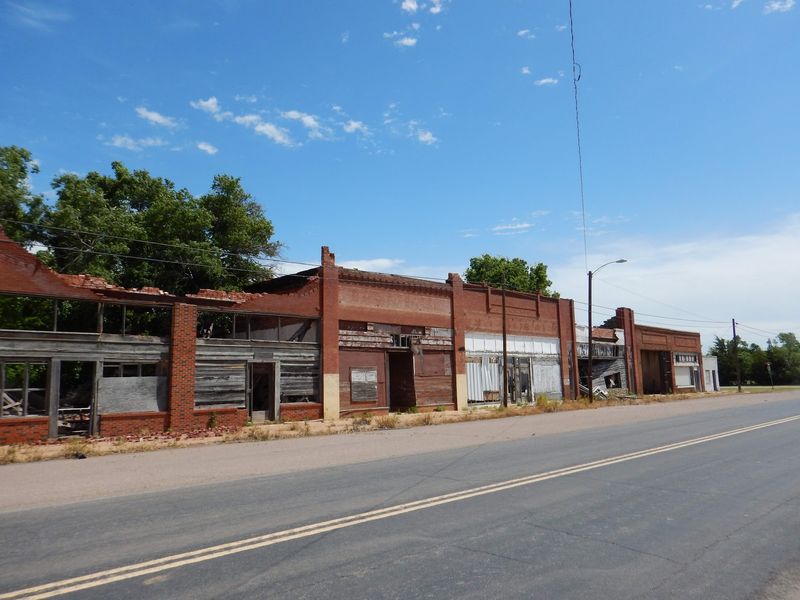
Some of my favorite Oklahoma afternoons have started with a wrong turn down a county road, the kind where the pavement gives up and a row of brick buildings appears out of nowhere. Nobody sells tickets, nobody hands you a brochure, and yet you end up standing on a cracked sidewalk trying to picture the barber shop, the bank, and the Saturday crowd that used to fill it.
These places cost nothing but gas and curiosity, and they stick with you longer than most paid attractions. Here are five old main streets across Oklahoma still holding their ground.
1. Ingalls
Nine miles east of Stillwater sits a crossroads where Oklahoma’s frontier era left one of its loudest marks. Ingalls sprang up after the 1889 land run, filled with wooden storefronts, a hotel, and a general store, and it drew a rough crowd that included the Doolin-Dalton gang.
On September 1, 1893, marshals and the gang clashed here in what became known as the Battle of Ingalls. A stone monument dedicated in 1938 still honors the lawmen who rode in that day.
What survives now is quieter than the legend. The weathered stone Ingalls Hotel, built in the 1920s for oil field workers, anchors the old thoroughfare, and replica structures mark where the Pierce O.K.
Hotel once stood.
Wide-open grass covers most of the original town lots, so bring your imagination along with your camera. Historic markers do a lot of the storytelling, and reading them takes maybe twenty minutes.
Free to visit, easy for kids who like Wild West stories, and roughly an hour and fifteen minutes from Oklahoma City. Gravel shoulders mean parking is informal, so pull off carefully and watch for uneven ground.
2. Shamrock
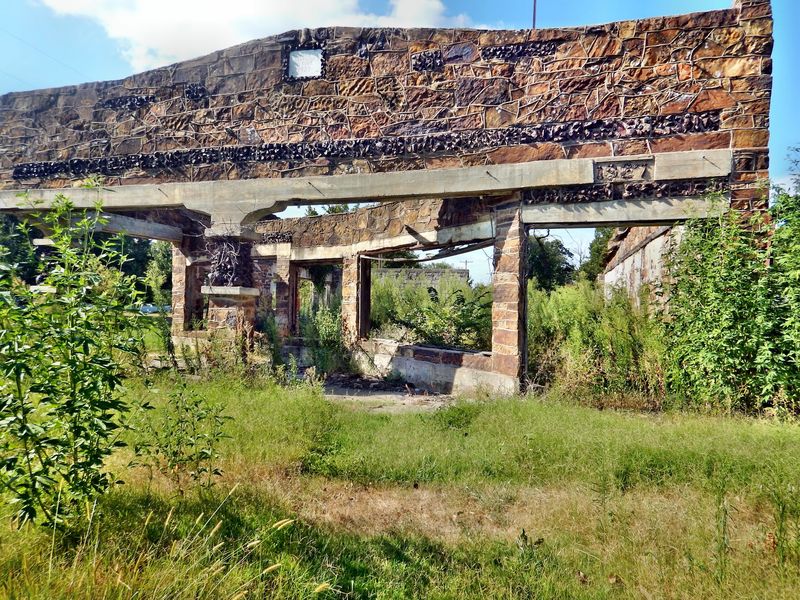
Oil made this Creek County town roar in the 1910s, and oil is what emptied it out. Thousands of people once crowded Shamrock during the boom, packing a commercial strip built fast and built solid, mostly in brick.
When the surrounding fields played out, the crowds moved on, and what stayed behind were the facades.
Walking the old downtown today feels like flipping through a photo album nobody finished. Rows of weathered brick fronts still line the street, some with window openings staring out at open space where neighboring buildings used to be.
Grass has taken back lots that once held busy businesses, and the silence out here is genuinely striking, especially on a weekday morning.
Photographers tend to love the early light on those brick walls, and the whole stop costs nothing more than the drive. Plan on thirty to forty-five minutes, less if the wind is howling, which happens often in this part of the state.
Shamrock sits within easy reach of Tulsa, making it an uncomplicated half-day outing. Respect private property lines, stay on the roadway, and admire the crumbling masonry from a safe distance.
3. Gotebo
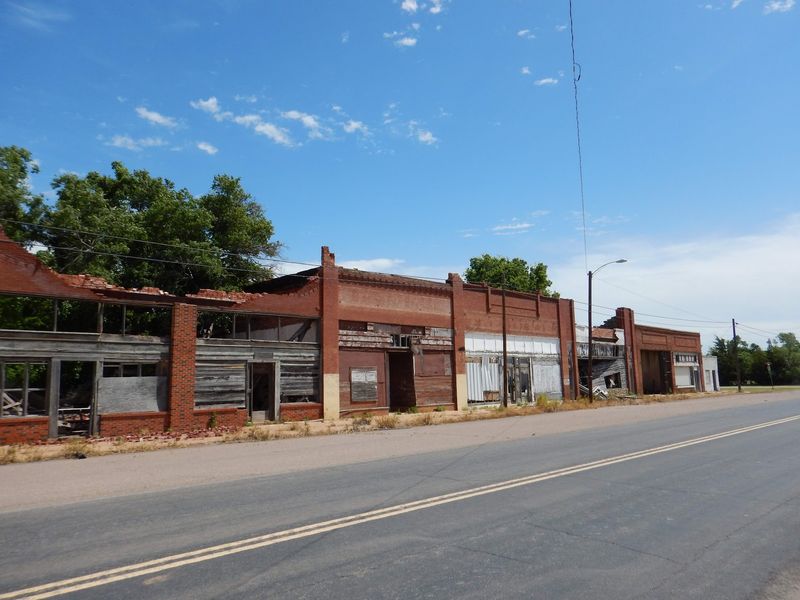
Wheat and railroad cars built Gotebo in the early 1900s, and a surprising amount of that era is still standing in Kiowa County. The main street runs straight and quiet, framed on both sides by original turn-of-the-century brick storefronts with their old cornices and tall upper windows intact.
Plenty of those spaces sit vacant now, but the street itself never lost its shape.
Southwestern Oklahoma has a habit of hiding towns like this in plain sight. Gotebo qualifies as a semi-ghost town rather than a true empty shell, since a small population still calls it home, which means you may pass a pickup or two while you walk.
That mix of lived-in and left-behind gives the place a gentler feel than most abandoned spots.
Free parking is wherever you stop, and the whole downtown can be covered on foot in under half an hour. Summer heat here gets serious, so morning or evening visits are far more comfortable.
Pair it with a drive toward the Wichita Mountains and you have a full day of southwestern Oklahoma scenery without spending much beyond fuel.
4. Bridgeport
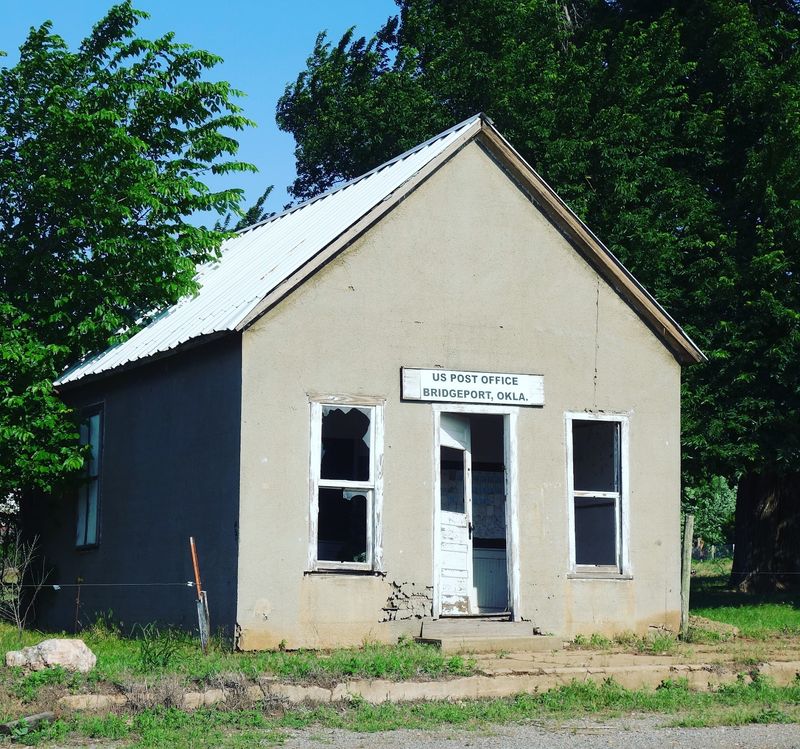
Route 66 gave Bridgeport its best years, and a highway realignment took them away. The town grew up around a river crossing near the South Canadian in Caddo County, back when getting across that sandy channel was a genuine event and travelers needed fuel, food, and a place to stretch.
Once the major routes shifted elsewhere, the traffic vanished almost overnight.
Today the central corridor holds surviving vintage brick storefront structures and the remnants of businesses that once counted on a steady stream of cars. Faded openings, low foundations, and half-standing walls trace out where the commercial heart used to beat.
It is a tiny municipal settlement now, rural and unhurried, with far more sky than buildings.
Route 66 fans usually fold this stop into a longer run between El Reno and Hydro, which makes it an easy add rather than a destination on its own. Figure twenty to thirty minutes on the ground.
There is no admission and no visitor center, so pack your own water and snacks. Roads can be rough after storms, so a dry day makes the drive smoother.
5. Boley
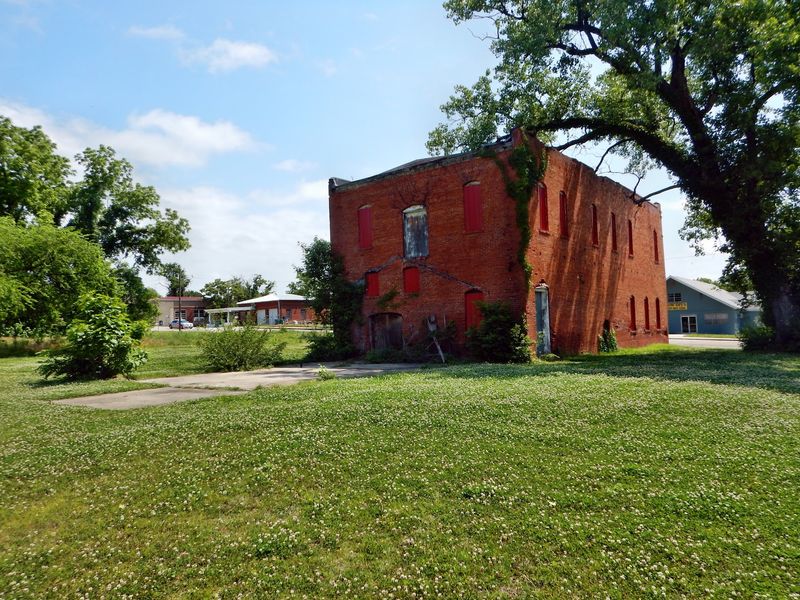
History runs deep on this main street, and the federal government agrees: Boley’s downtown is a designated National Historic Landmark district. Founded in the early 1900s in Okfuskee County, the town boomed as a self-sufficient community with its own banks, lodge halls, and general stores, all housed in substantial multi-story masonry buildings.
Those same storefronts still line the main thoroughfare, unusually tall and dignified for a town this size.
Agricultural decline and the fading of the railroads pulled the population down sharply, leaving behind a quiet town with architecture that outlasted the economy. Standing in front of the old commercial block, you get a clear sense of the ambition that went into building it.
The masonry details, the upper-story windows, the storefront rhythm all reward a slow walk.
East-central Oklahoma puts Boley within about an hour of both Tulsa and Oklahoma City, which makes it one of the more accessible stops on this list. Visiting costs nothing, street parking is simple, and the district is flat and walkable for all ages.
Keep in mind this is a living town, so be a courteous guest and photograph from public sidewalks.
