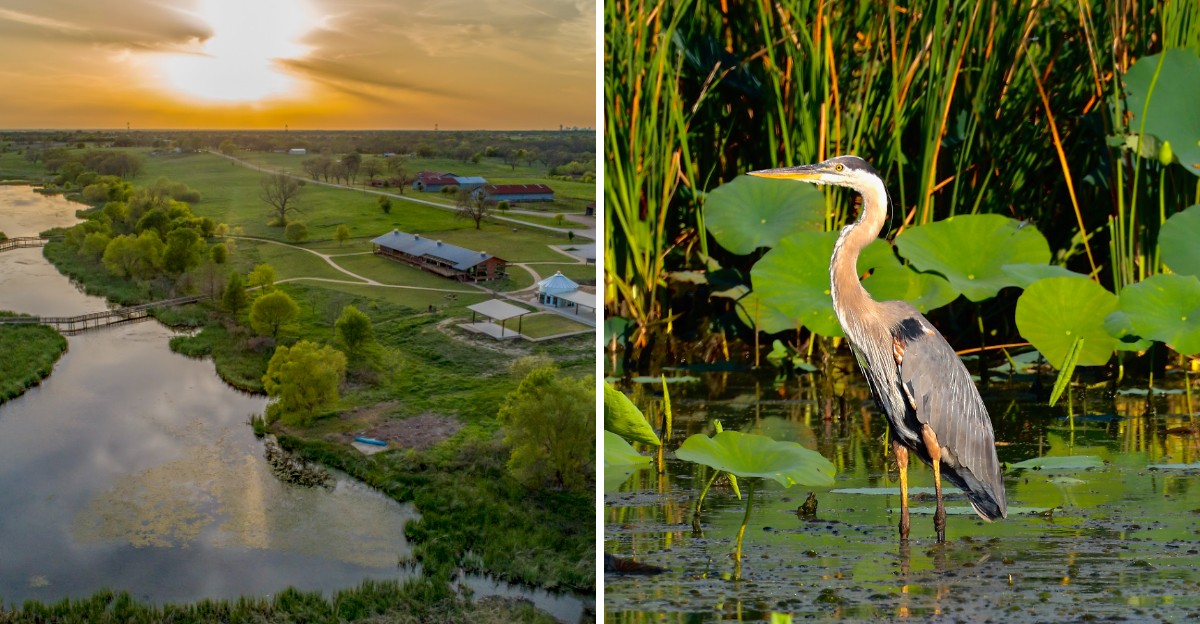
A boardwalk that carries you right through the marsh. That is the beauty of this Texas spot.
You do not have to get muddy or fight through tall grass. The path does the work, winding over the water and through the reeds, putting you face to face with the wildlife that calls this place home.
Herons stalk the shallows. Turtles sun themselves on logs.
Dragonflies zip past your shoulder. It is quiet, peaceful, and surprisingly immersive.
The boardwalk is easy to walk, making it accessible for all ages and abilities. It is the kind of place where you can spend an hour or an afternoon, depending on how patient you are.
Bring binoculars, a camera, and a willingness to slow down. Nature is putting on a show.
The best seat in the house is the one that floats over the water.
The Boardwalk That Puts You Inches From The Water
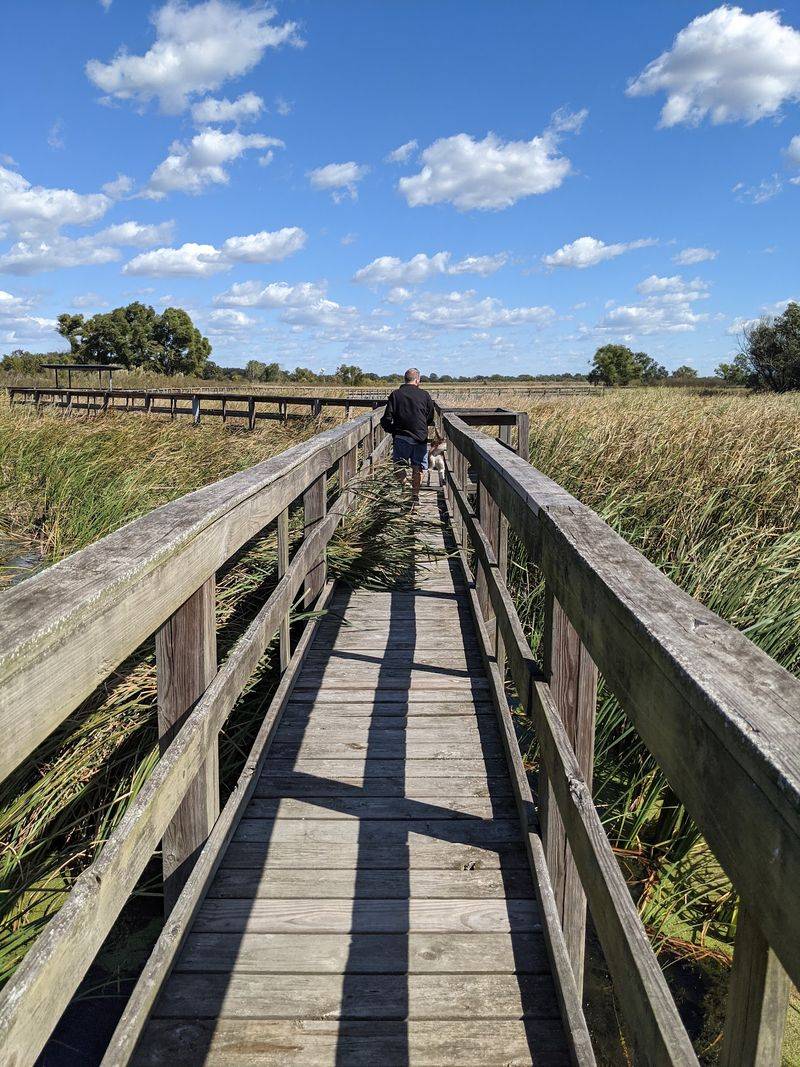
Most nature trails keep you at arm’s length from the good stuff. Not here.
The boardwalk sits so low over the marsh that ripples, lily pads, and the occasional startled frog happen right beneath your shoes.
Out and back, the route runs just under a mile, which sounds short until you realize how often people stop. The design helps with that.
Built in concentric rings with wide cutout sections, it gives visitors room to pause, lean on a railing, and stare without blocking anyone behind them.
Accessibility was clearly part of the plan. The surface is smooth and ADA compliant, so wheelchairs and strollers roll along without drama.
Shaded information stations appear at intervals, offering both explanation and a break from the Texas sun, which matters more than you might expect in July.
Sound is half the experience. Water trickles through the cells, insects hum, and bird calls bounce across the open marsh in a way that feels oddly layered.
A practical tip worth remembering: transitions from the boardwalk to the nearby levee roads involve small elevation changes, so anyone pushing a stroller should plan the route accordingly.
Go slow. Seriously.
The people who march through in fifteen minutes miss the water snakes gliding past and the turtles sunning themselves on half submerged branches.
Staff sometimes refer to one especially lively stretch as Frog Town, and in spring, that nickname earns itself every single afternoon.
Bald Eagles, Cranes, And Nearly 300 Bird Species
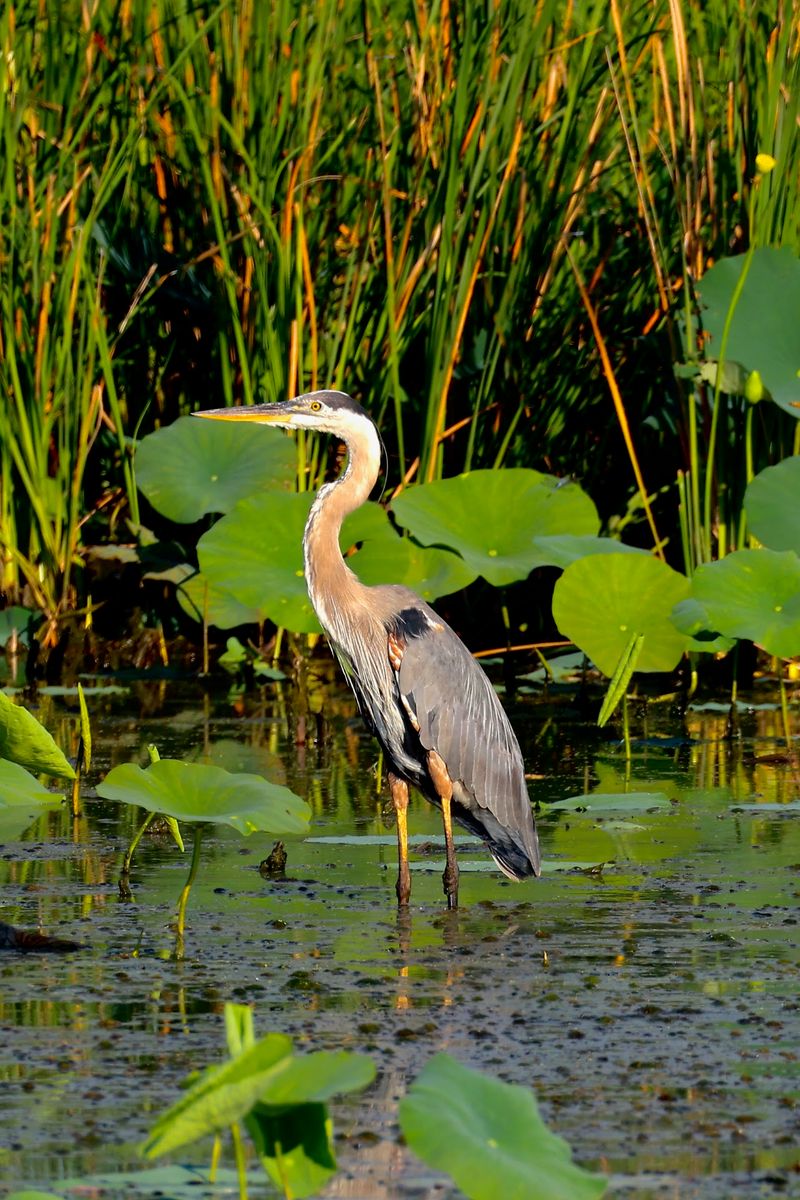
Birders talk about this place with a certain glint in their eye, and the numbers back it up. Close to 300 species have been documented across the property, a figure that puts it near the top of North Texas birding destinations.
Location explains a lot. The wetland sits along the Central Flyway, the migratory highway that funnels birds across the middle of the continent twice a year.
Then there are the eagles. A nesting pair returns each season, and from fall through early spring they are the headline act.
Winter offers the steadiest viewing, when adults haul prey back toward the nest while onlookers below quietly lose their minds.
Spring shifts the story toward fledgling eaglets testing their wings, which is its own kind of drama.
Beyond the raptors, the cast is enormous. Sandhill cranes pass through.
Buffleheads and mallard drakes paddle the cells. Egrets and herons stalk the shallows with that slow, deliberate stride, and shorebirds work the mudflats.
Red-tailed hawks, Cooper’s hawks, and northern harriers handle the aerial patrol.
The property sits where Blackland Prairie meets Post Oak Savannah, and that overlap is exactly why the species list keeps growing.
For anyone new to the hobby, guided Walk and Talk bird tours led by master birders cover identification basics and how to actually use binoculars properly. Bring your own pair if you have them.
The open water views reward magnification.
Turtles, Frogs, And The Creatures Below The Surface
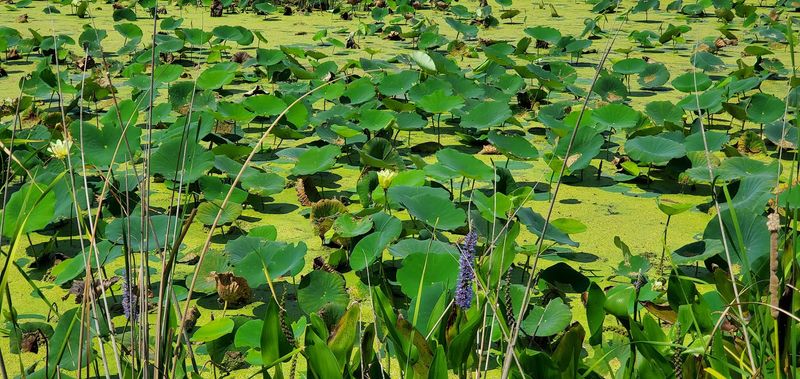
Turtles get top billing in the title for good reason. On warm days they line up along logs and floating mats like commuters on a bench, sliding off one by one when footsteps get too close.
Underwater, the cast is stranger. Carp cruise the shallows, perch dart through the vegetation, and alligator gar, those prehistoric looking fish with long armored snouts, occasionally roll near the surface.
Frogs deserve their own paragraph. Blanchard’s cricket frogs are tiny, barely bigger than a thumbnail, and they launch themselves off lily pads with a speed that seems physically impossible for something so small.
Snakes are part of the picture too. The diamondback water snake shows up regularly, usually minding its own business and far more interested in fish than in people.
Insects keep the whole system humming. Dragonflies patrol the boardwalk railings in flashes of color, including the vivid blue Comanche skimmer, while damselflies hover like floating stitches of light.
Spiders string webs between posts, and bees work whatever is blooming.
Mosquitoes exist. No point pretending otherwise.
Repellent belongs in the bag from late spring through fall, and long sleeves help on humid evenings.
School groups often study macroinvertebrates here, scooping water samples and discovering how much life hides in a single cup.
Watching kids react to that is honestly one of the better shows on the property, right up there with the eagles.
Three Miles Of Trails Past The Wooden Path
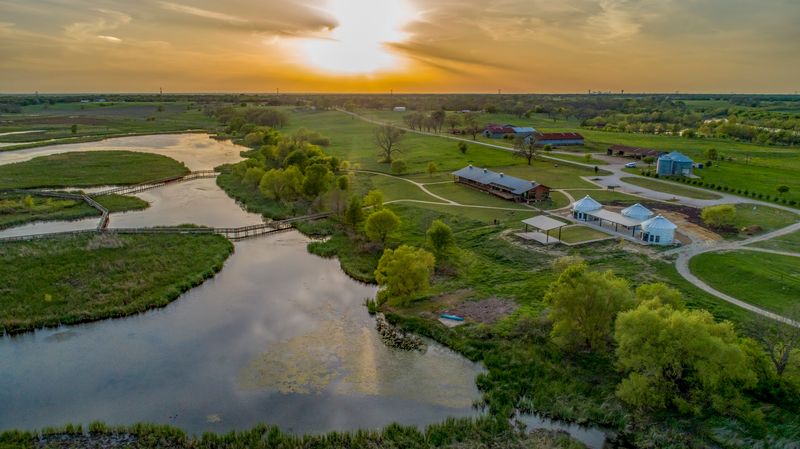
Once the boardwalk ends, a different kind of walking begins. Roughly three miles of natural surface trails branch out across gravel berms, and the mood changes completely.
Instead of being down among the cattails, you are up on the edges, looking out over huge open cells of water that stretch toward the horizon. The scale registers differently from up there.
Footing varies. Some stretches are packed and easy, others are uneven enough that regular strollers struggle, so jogging style strollers with bigger wheels are the smarter choice.
Shade is scarce on the berms. Hat, sunglasses, sunscreen, water bottle.
That short list saves a lot of regret.
Certain paths lead toward viewing points near the bald eagle nesting habitat, though always at a respectful distance. Federal regulations protect the nest, and posted signs mark exactly where the restricted zones begin.
Respecting those boundaries is not optional, and honestly, a spotting scope or decent zoom lens does the job better than getting closer ever would.
The vegetation shifts as you walk, reflecting that meeting point between Blackland Prairie and Post Oak Savannah. Grasses give way to scattered trees, then open back up again.
One visitor noted that hitting ten thousand steps here takes almost no effort, and that tracks.
Between the boardwalk loop and the berm trails, a couple of hours disappear quickly. Plan for more time than you think you need.
How A Marsh Cleans Water For 1.8 Million People
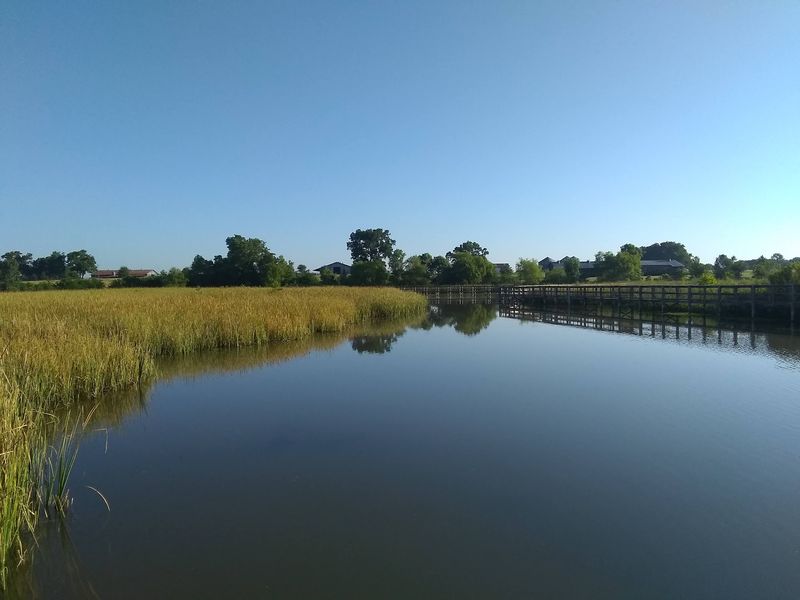
Here is the part that surprises almost everyone: this marsh has a job. A big one.
The East Fork Water Reuse Project covers roughly 2,000 acres and is made up of 28 separate wetland cells. Water pumped from the East Fork of the Trinity River moves slowly through those cells, where plants and natural processes filter and polish it before it continues on toward treatment.
Daily volume runs somewhere between 90 and 95 million gallons. That water eventually helps supply drinking water for more than 1.8 million North Texans.
Think about that while standing on the boardwalk. The lily pads and cattails are not decoration.
They are infrastructure.
The project launched in 2004 through a partnership between the North Texas Municipal Water District and The Rosewood Corporation, and the education center followed in 2010.
What makes it genuinely interesting is how the two goals reinforce each other. Water gets cleaned, and in the process an enormous habitat appears where migratory birds, fish, and mammals all move in without being asked.
Engineering and wildlife sharing the same address is rarer than it should be.
Staff inside the center explain the process well, using models and displays that break it down without turning it into a lecture.
Kids usually latch onto the idea fast. Water goes in dirty, plants do their thing, water comes out cleaner.
Simple concept, enormous consequences, and a very good reason to keep wetlands around.
The Conservationist Whose Idea Started It All
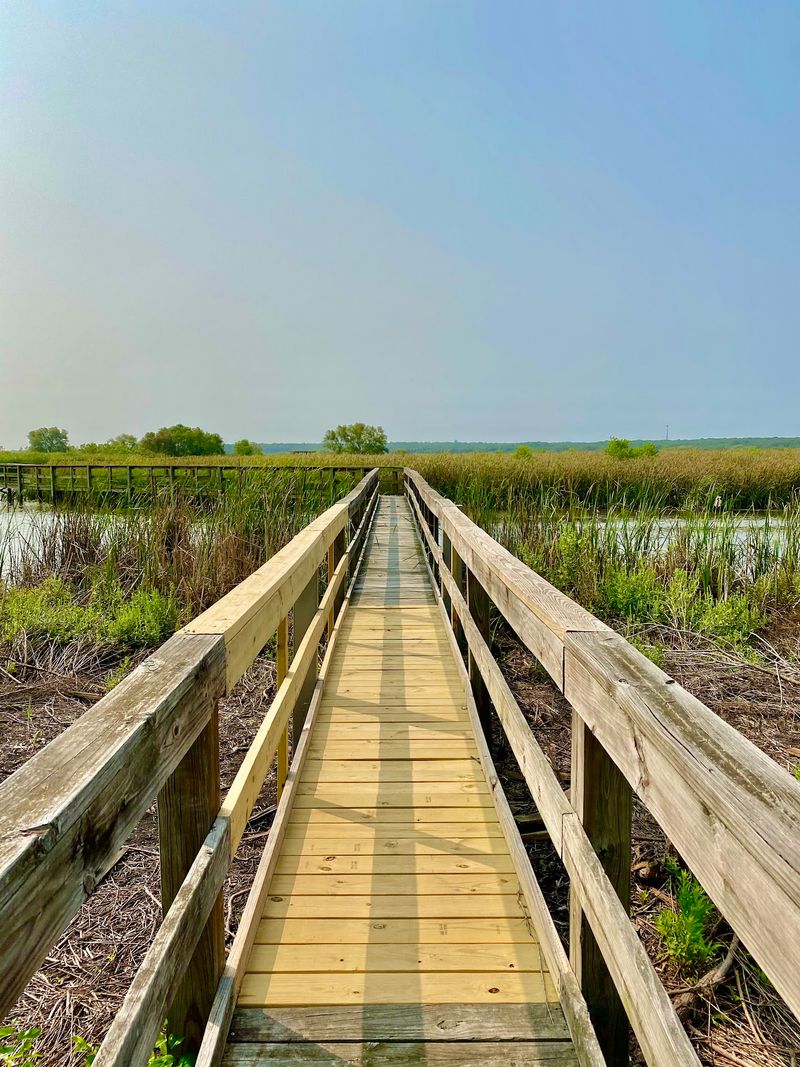
Names on buildings usually mean donations. In this case, the name belongs to the person who imagined the whole thing decades before it existed.
John Bunker Sands, who died in 2003, spent years managing his family’s ranches through The Rosewood Corporation. His approach was unusual for the time.
Rather than treating land, water, and wildlife as separate concerns, he handled them as one connected system.
Back in the 1980s, he began restoring natural wetlands and constructing new ones on the Seagoville property. The goal was ambitious and specific: convert half the ranch into wetland, giving migratory birds nesting and wintering ground while conserving water at the same time.
By the time he passed away, that effort had grown to roughly 2,100 acres of seasonal wetlands in the Trinity River basin.
What happened next expanded the idea beyond what he had mapped out. The 2,000 acre reuse project built in 2004 took his conservation vision and paired it with regional water supply needs.
The center opened in 2010 as the educational arm of that partnership, which feels like the right ending to the story.
Sands was recognized as a pioneer in North Texas wildlife and habitat conservation, and the results speak louder than any plaque could.
Standing over water that is both wildlife habitat and public infrastructure, the logic of his thinking becomes obvious. Work with the land instead of against it, and the land tends to return the favor.
Getting There, Hours, And What To Pack
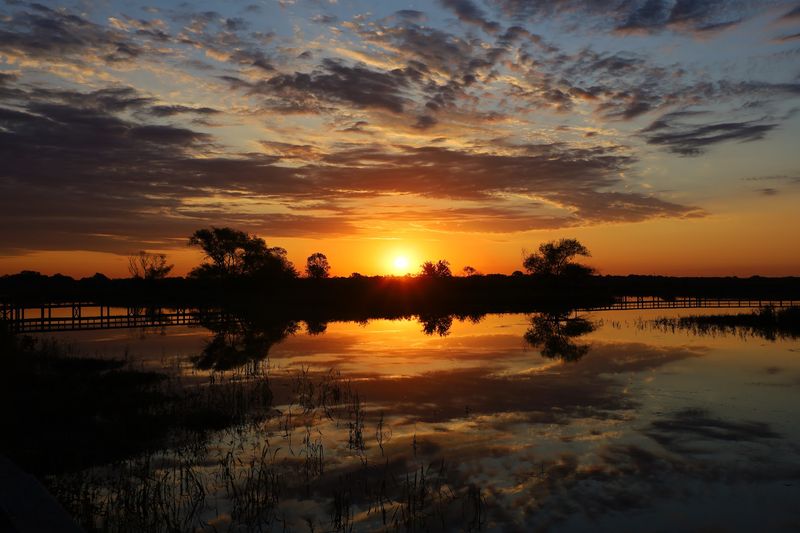
Cell service gets patchy out in this stretch of Kaufman County, so load the route before leaving town. Punch 655 Martin Ln, Combine, TX 75159 into the GPS while you still have bars.
Hours run Tuesday through Friday from 8 a.m. to 4 p.m., with Saturdays starting earlier at 7 a.m. Sunday and Monday are closed except for scheduled special events.
Last entry is 3:15 p.m. because the doors close firmly at four, so an afternoon arrival needs a little planning.
Most visitors spend somewhere between an hour and a half and three hours. Birders and photographers routinely blow past that, especially during migration or eagle season.
Check in at the front desk first. Staff there are genuinely enthusiastic about what lives outside and will often tell you what has been spotted that morning, which is better intel than any app provides.
Parking costs nothing and sits right by the building.
Pack binoculars, water, sun protection, and insect repellent. Closed toe shoes and long pants make sense if you plan to walk the berm trails.
Picnics are welcome, and the porch and lawn areas make a pleasant spot to eat between walks. Bringing lunch turns a short visit into a full outing.
Inside the center, live reptile residents and hands on exhibits give kids something to do when the heat gets serious. Morning visits generally beat afternoons for both wildlife activity and comfort.
Seasons, Guided Tours, And Programs Worth Catching
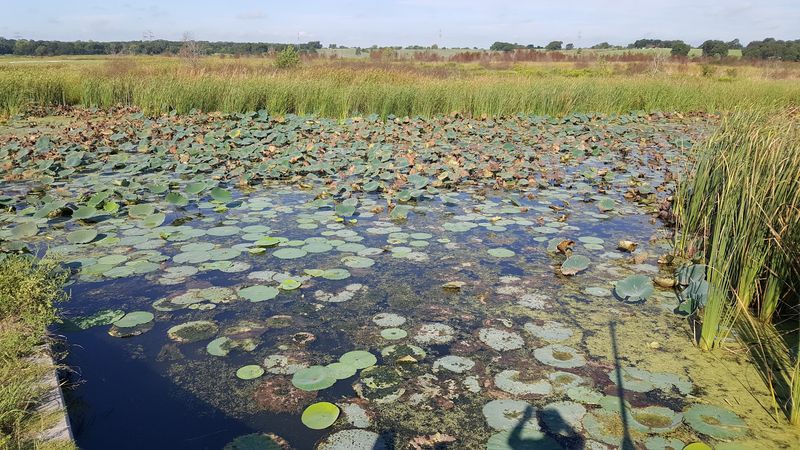
Every season rearranges the marsh, which is why repeat visitors keep coming back with the same grin.
Winter belongs to the eagles. Adults work the nest consistently through the coldest months, and the bare trees make spotting easier.
Spring flips the focus to fledglings, blooming plants, and frogs that suddenly find their voices all at once.
Fall migration brings waves of movement across the water as species funnel down the Central Flyway.
Guided boardwalk tours cover the ecosystem, the engineering behind the wetland cells, and how the whole system ties into the regional water supply. Even people who wander past a tour by accident tend to pick up a few good facts.
Bird focused Walk and Talk sessions run with master birders and are aimed squarely at beginners and intermediates. Expect some uneven ground, so dress accordingly with long pants and closed toe shoes.
Education programs serve public, private, and homeschool groups, and the macroinvertebrate lessons are a reliable hit with younger students. Scooping mystery creatures out of pond water has never lost its appeal.
The events calendar on the center’s website lists seasonal programming, and checking it before a trip can turn an ordinary walk into something more.
What sticks with most people is not any single sighting. It is the realization that a working piece of water infrastructure can also be a place worth visiting again and again.
