Tall arched windows glowed with a warm golden light, and I slowed down without meaning to. I had been driving through a South Carolina town on a whim, looking for somewhere to eat before sunset.
What stopped me was a brick corner building that seemed to hold its breath. It started life in 1876 as a general merchandise store, later became a beloved drug store, then sat quiet and mostly empty for years.
Today it serves dinner under pressed metal ceilings that have watched the town change for well over a century. The pressed metal ceilings still bear the patterns of another era.
Little details kept catching my eye, including the exposed brick and the way the dining room still feels connected to the building’s earlier life. Nothing about the history feels tucked away or forgotten.
I walked in curious about the architecture and left thinking about the short rib. The room hummed with conversation, and the old walls seemed to lean in.
Places like this stick with you, and this one did.
A Corner Building With 1876 Written All Over It
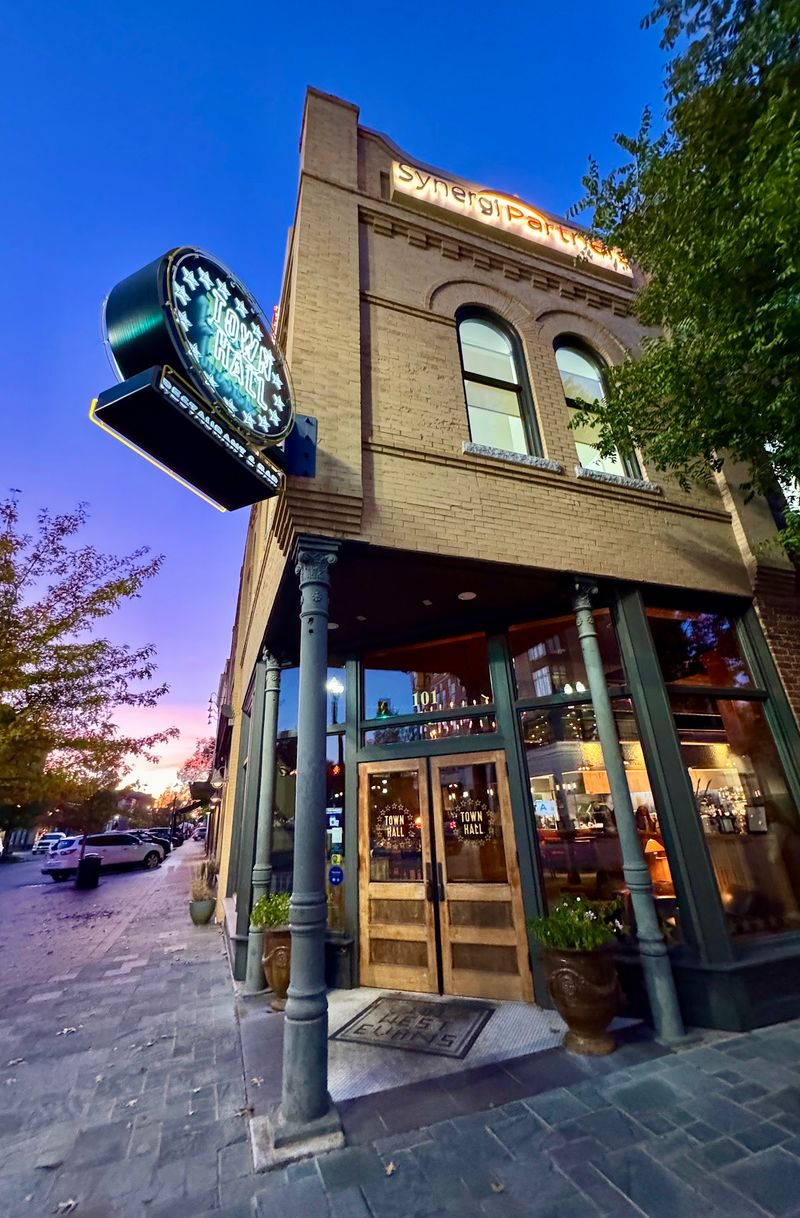
My first few minutes here were spent outside, not inside. The brick corner catches evening light in a way that makes you want to stand back and look up.
Records show the building went up in 1876 as a general merchandise store operated by James Allen, which means it has been part of Florence longer than almost anything around it. The second floor was once Allen’s Hall, the town’s go-to spot for meetings, weddings, and celebrations.
For a while it even housed a local newspaper office, so news literally came out of these walls.
Fires tore through Florence’s commercial district in 1893 and 1896, and this building took damage along with the rest. It was rebuilt a few years later, stubborn as ever.
Later decades brought a pink stucco facade and replaced windows, the kind of updates that hid what made it special. The restoration team put the arched openings back and preserved the original cast-iron columns at the corner entrance.
Knowing all that before you sit down changes the meal a little. You are not just eating in an old building, you are eating in one that refused to disappear.
From Zeigler’s Drug Store to Dinner Service
Ask anyone who grew up in Florence, South Carolina and the name Zeigler’s still means something. That drug store filled this space for more than five decades under pharmacist R.H.
Zeigler, and Saturdays here meant crowds gathering for Pete Thornell’s live radio broadcast.
Imagine a soda counter packed with neighbors listening to a show being recorded right there in the room.
Then came the shift so many American downtowns went through. Shopping malls pulled business to the suburbs in the second half of the twentieth century, and the corner slowly lost its purpose.
Tenants came and went. Eventually the landmark sat underused or completely empty for close to a decade, which is a long time for a building that once anchored an entire community.
What I appreciate is how much of that history stayed put during the rebuild. Original pressed metal ceiling panels, hardwood floors, historic doors, and old counters were all refurbished rather than tossed out.
Historic tax credits helped make the project work, turning the ground floor into a restaurant with office space above. Sitting at a table here feels a bit like being handed the next chapter.
Heritage-Chic Is the Best Way to Describe the Room
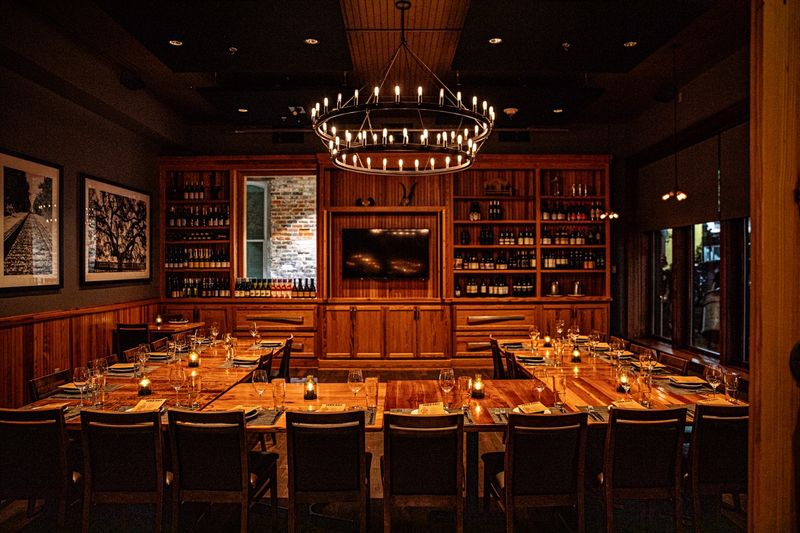
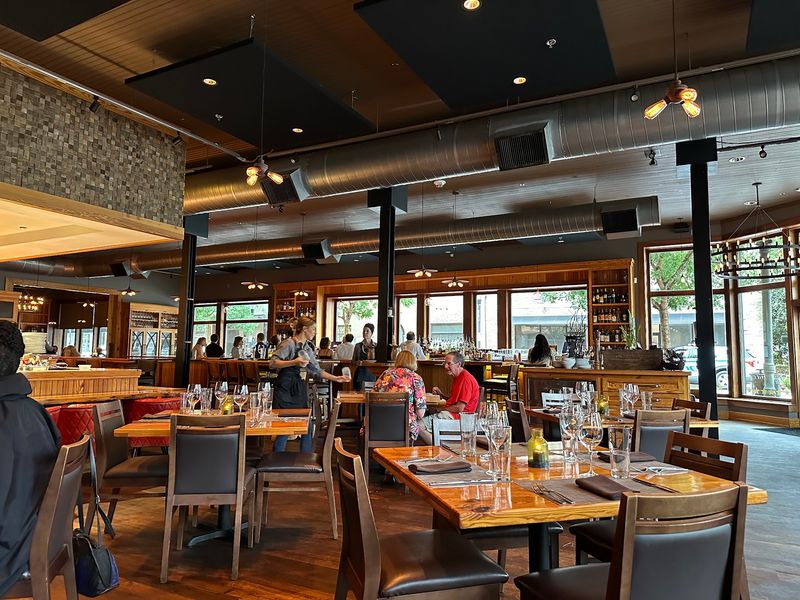
Dim lights, soft music, and a hostess stand right inside the door set the mood before anyone hands you a menu. Somebody once described the look as heritage-chic and honestly that nails it.
Nothing about the room feels fussy, even though the details are clearly thoughtful. Tables are set with real care, and the corner booths give you enough space to spread out without feeling separated from the energy of the room.
The pressed metal ceiling overhead is the original, refurbished panel by panel, and the hardwood floors carry that faint glow old wood gets after decades of foot traffic.
Brick, iron, and warm lamplight do most of the decorating work. It reads elegant without asking you to dress like you are attending something formal.
An open kitchen sits in view, which I always enjoy because you get to see plates come together while you wait. There is a pleasant hum to it, part restaurant and part workshop.
By seven o’clock the place fills up fast. Reservations are a smart move, especially on a Friday or Saturday.
The Rooftop Lounge Upstairs Is Worth Asking About
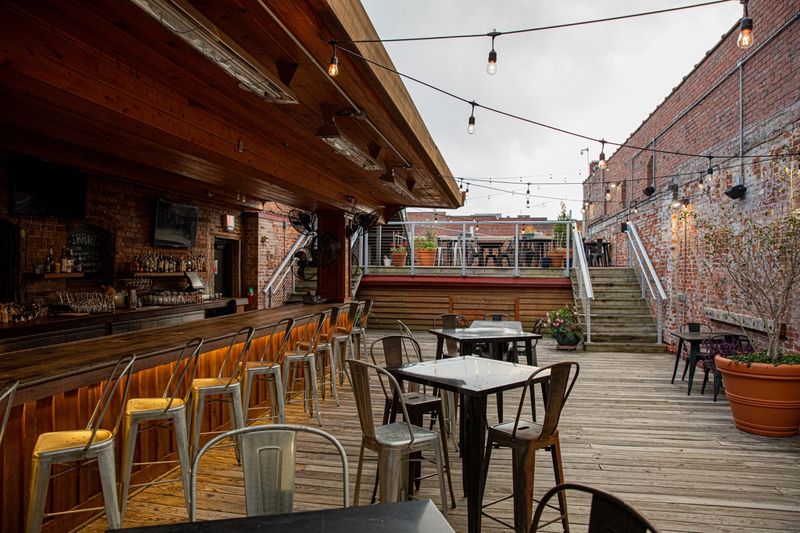
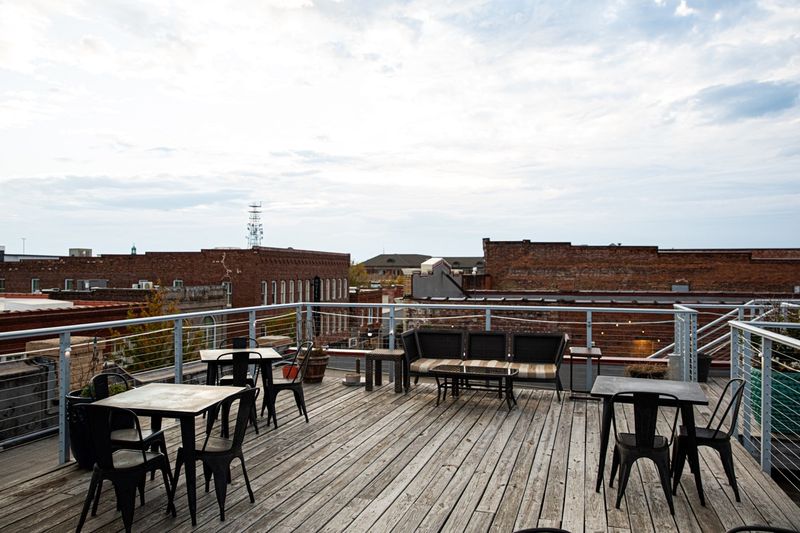
Nobody told me about the upstairs until a staff member mentioned it, and I am glad they did. Above the dining room sits a rooftop space that has been part of this building’s second act for years.
Guests are often walked up there personally, which is a small gesture that makes the whole visit feel more generous.
The view is not dramatic in a big-city way, and that is sort of the charm. You get treetops, rooflines, and a quiet look at downtown Florence settling into evening.
Longtime visitors say the trees outside now rise above the roofline, which tells you how much time has passed since the space first opened.
Remember, that upper floor once served as Allen’s Hall, where Florence gathered for community events in the 1800s. There is a nice symmetry in people still going upstairs to socialize.
If you are making an evening of it, I would eat first and then head up. Ask your server about access when you arrive, since the lounge and the dining room work as two halves of the same visit.
Farm-Driven Cooking Over an Open Wood Fire
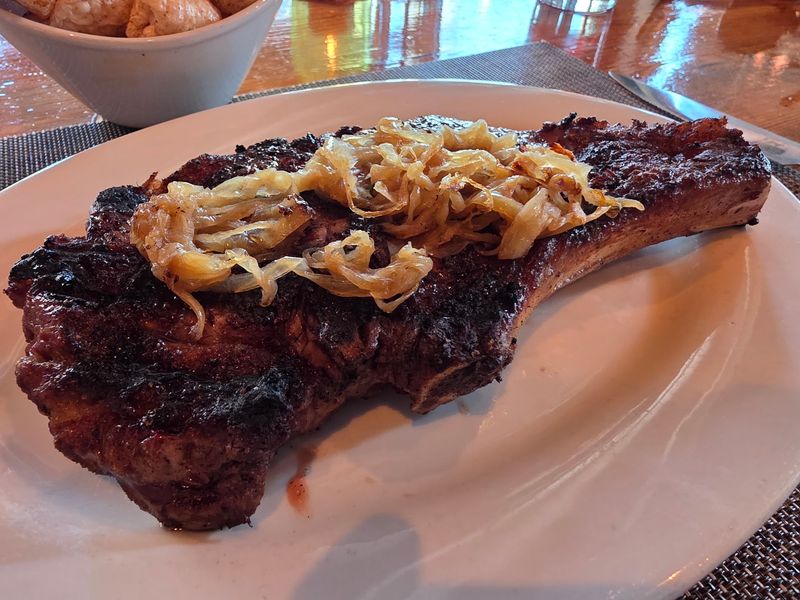
The smell hits you before the food does, that faint woodsmoke drifting out from the kitchen. An open wood-fire grill sits at the center of the operation, and it shapes almost everything that reaches the table.
Executive Chef Ryan Dalton runs the kitchen with a straightforward idea: cook what is fresh and cook it well.
A good portion of the produce comes from a nearby family farm, which means the menu shifts with the seasons instead of staying frozen year-round. Meats, pork, and seafood are sourced locally and responsibly where possible.
Fire does the rest. It adds that layer of smoky depth you cannot fake with a stovetop.
What the kitchen calls New Southern cooking lands somewhere between familiar and surprising. You recognize the ingredients your grandmother used, then taste them arranged in a way you have not had before.
Practical tip: ask what came off the farm that week. Servers here know the menu well and give real recommendations rather than rehearsed lines.
Cooking tied this closely to local land fits a building that has always belonged to this community.
Plates That Made Me Stop Talking Mid-Sentence
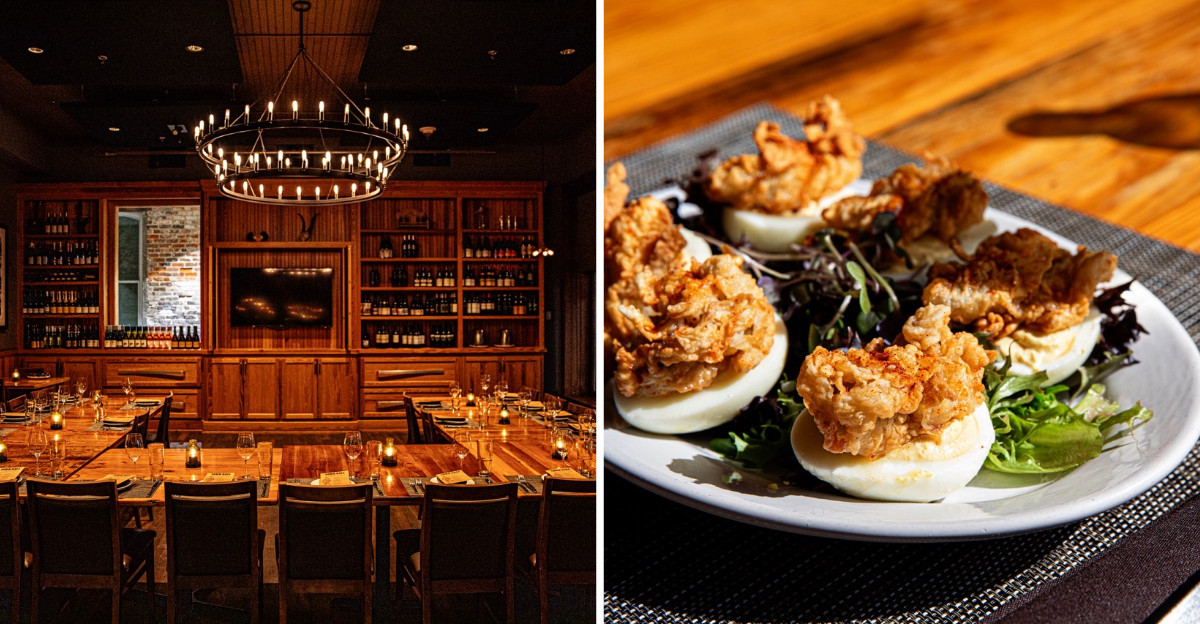
Certified Angus Beef short rib was the first thing I ordered, and it fell apart at the touch of a fork. Rich, deeply savory, the kind of dish you eat slowly on purpose.
Seared scallops arrived over corn puree with blistered shishito peppers, sweet and smoky at once.
Cornbread deserves its own mention. Nearly cake-like in texture and lightly sweet, it disappears from the table faster than anyone expects.
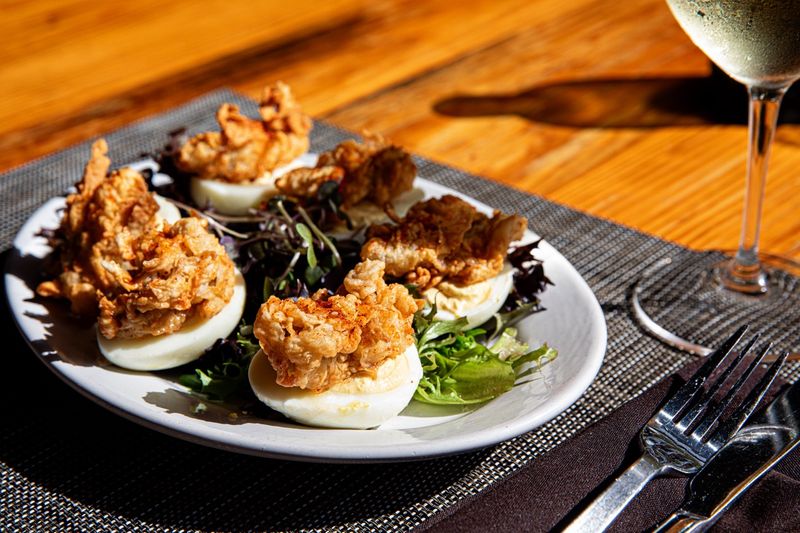
Deviled eggs show up on a lot of tables here, sometimes crowned with a fried oyster that adds crunch without burying the filling. Hanger steak and pork chops get frequent praise too, along with truffle fries and crisp pork skins.
Homemade campanelle pasta with beef and pork sugo was the sleeper favorite for me, comforting in a way that felt almost homemade.
For dessert, the flourless chocolate brownie with dulce de leche is rich enough to share, though the cheesecake and hummingbird cake have loyal fans.
Portions are generous without being overwhelming. Come hungry, order an appetizer to pass around, and leave a little room for the sweet ending.
Service That Turns Dinner Into an Occasion
Something about being greeted warmly the second you step inside sets the tone for everything after. The team here moves with an easy confidence, checking in at the right moments and disappearing at the right ones.
Managers make the rounds, and the chef sometimes stops by the table too.
Celebrations get real attention. Birthday tables might arrive with a sign, a hand-signed card from the staff, or a slice of cheesecake nobody ordered.
Anniversaries seem to be a specialty, with table settings arranged thoughtfully enough that guests remember them long after the plates are cleared. That level of care costs nothing extra and means everything.
Doors open at five most evenings, with the kitchen running until ten on weeknights and eleven on Fridays and Saturdays. Sunday wraps up a little earlier at nine.
Arriving right at opening is my trick for snagging a good booth before the room fills.
A building that once served as Florence’s gathering hall now brings people together over dinner instead of town meetings, and that feels exactly right.
Address: 101 W Evans St, Florence, South Carolina
