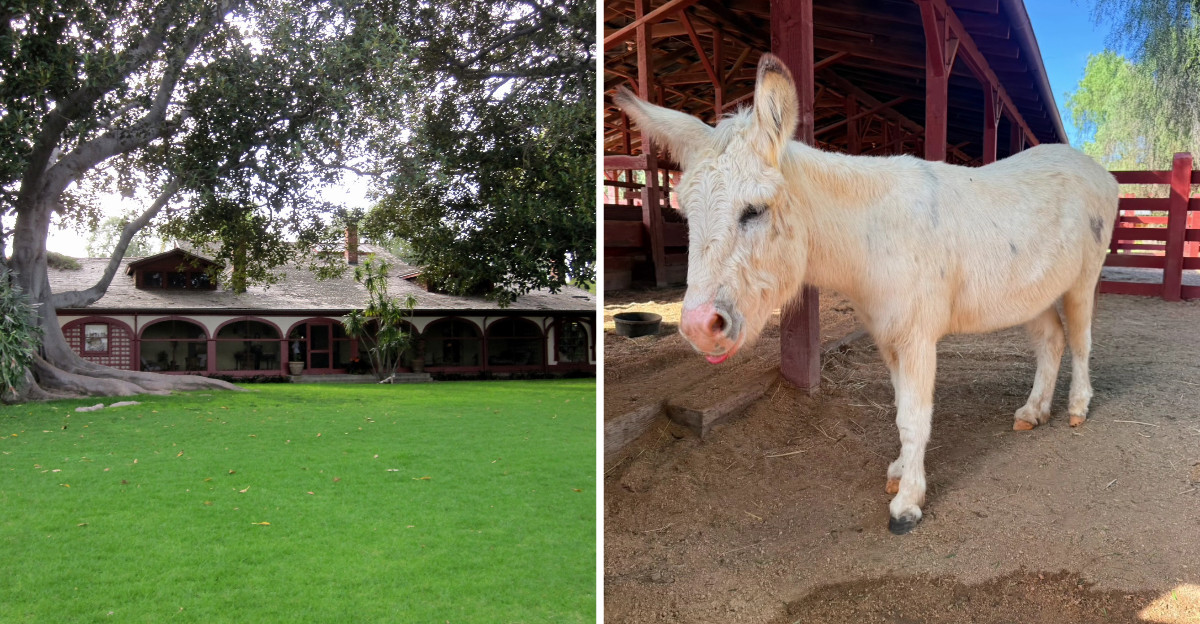
Fig trees and chickens make more noise than Long Beach humming just beyond the hill, and a parking pass from a quiet neighborhood gate led to a ranch I had somehow never heard of.
The land began as a humble adobe on a Spanish land grant in the 1790s, then grew into a 28,000-acre cattle empire that helped feed hungry gold miners.
Today only a few acres remain, but those acres hold gardens, barns, horses, and a rambling ranch house packed with family treasures. What surprised most was how calm it felt, as if the city had agreed to politely look the other way.
Eight layers of this place made me want to slow down and stay a while. Chickens gossip under the figs, and the past sits quietly behind the gate.
Povuun’nga, The Sacred Ground Beneath It All
Long before anyone branded a cow here, this hilltop had a name that still carries weight today. The Gabrielino-Tongva people called it Povuun’nga, and they consider it a sacred place of origin.
For thousands of years, the village was a busy center for trade and ceremonies across the Los Angeles Basin. People gathered, shared goods, and passed down stories on the same ground where visitors now stroll between flower beds.
I found myself looking at the gentle slope of the land differently once I knew that.
The rancho does a thoughtful job of weaving Tongva history into the visit instead of tucking it into a corner. Interpretive displays and the short film at the Rancho Center start the story with the first people, not with the Spanish Crown.
That choice matters, because it reminds you the ranch is just one chapter in a much longer book.
A freshwater spring once bubbled near the bottom of the hill, which helps explain why people were drawn here in the first place. Water in Southern California has always been worth its weight in gold, maybe more.
Keep that spring in mind, since it shows up again later in the ranch’s story.
My tip is simple. Give yourself a few extra minutes at the start, read the panels, and let the deeper past set the tone for everything else you see.
Counting 28,000 Acres of Cattle Country
Here is a number that made me blink twice: 28,000 acres. In 1834, after the Nieto lands were split among heirs, a chunk of roughly 28,000 to 28,500 acres officially became Rancho Los Alamitos.
To put that in simple terms, an American football field covers a little over one acre. So the rancho was about the size of 28,000 football fields laid side by side, all of it open country for cattle to roam.
Today that same area holds neighborhoods, freeways, schools, and shopping centers.
The name means the little cottonwoods, a nod to the trees that grew near water in the area. Cottonwoods love damp soil, so they worked like a natural sign pointing to the spring.
I like names that double as clues.
Ranching in Mexican California revolved around cattle raised mostly for hides and tallow, which traded almost like money along the coast. Vaqueros, the skilled horsemen of the era, rode long days across unfenced land to manage the herds.
Their roping and riding traditions later shaped the whole American cowboy culture.
Inside the Rancho Center, a large floor map shows how the old ranchos carved up the region. Stand in the middle and find where you live or where you parked.
It is a fun, slightly dizzying way to realize just how much ground this one ranch once covered.
Gold Rush Beef, a Brutal Drought, and a New Family
Every empire has a boom, and this one had a big one. In 1842, a New England businessman named Abel Stearns bought the rancho and turned it into a thriving cattle operation.
Then gold was discovered in Northern California, and thousands of miners suddenly needed to eat. Beef from Rancho Los Alamitos helped feed that rush, and for a time the property served as headquarters for what was described as the largest cattle ranch in the United States.
Stearns kept buying land through the 1850s and early 1860s, adding tens of thousands more acres.
Nature had other plans, though. A brutal drought in 1863 and 1864 wiped out much of his livestock, and piled-up debts finished the job.
The rancho was foreclosed on in 1865.
In 1878, the Bixby family stepped in, first leasing the ranch and later buying it. They raised cattle, sheep, pigs, and horses, and over the following decades the ranch kept adapting as the region changed around it.
Even a cattle kingdom could be humbled by a few dry years. That says a lot about how much California life has always depended on rain.
Keep an eye out for old ranch tools and equipment on the grounds. They tell the quieter side of this saga, the daily work that kept things running long after the headlines faded.
Inside the Big House, Cameras Tucked Away
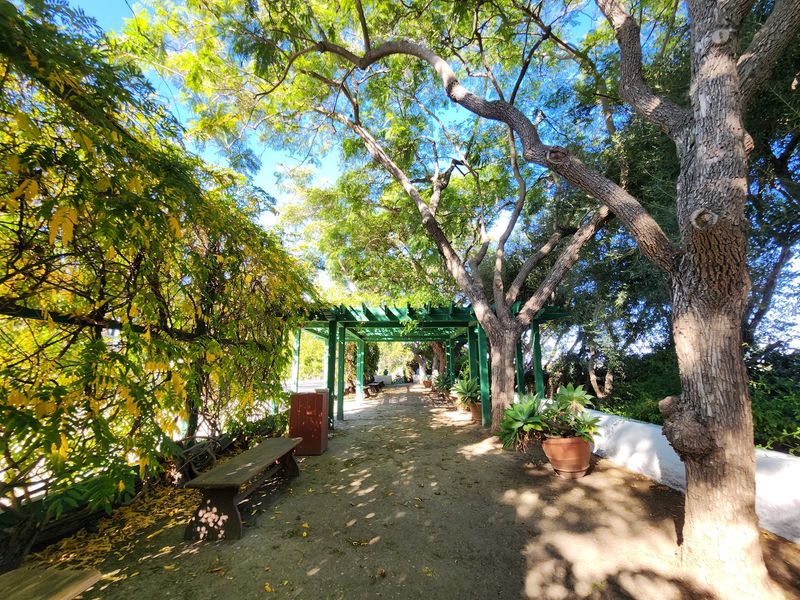
No phones out, no photos, just eyes and ears. The house tour asks you to put the camera away, and honestly, I think it made me pay closer attention.
Docent-led tours take you through the rooms on the ground floor, where the Bixby family’s belongings remain much as they left them. When the heirs donated the ranch in 1968, nearly 90 percent of the original furniture, artwork, and equipment stayed behind.
That is rare, and you can feel it in every room.
The house itself is a patchwork. Around the old adobe core, later generations added rooms and porches, slowly shaping a Spanish-Mexican building into something closer to an eastern-style family home that still fit the relaxed California way of living.
My favorite corner was the kitchen, with its sturdy old stove and a vintage refrigerator that looks built to outlast us all. There is also a dinner bell with a rope, and it is hard not to picture a ranch hand hearing it from across the fields.
Tours usually run about an hour, and reservations are a smart idea since groups stay small. Wear comfortable shoes, because you will be on your feet the whole time.
Ask questions freely. The guides clearly love this place, and their stories about daily life here turn quiet rooms into a home again.
Four Acres of Blooms, Spines, and Shade
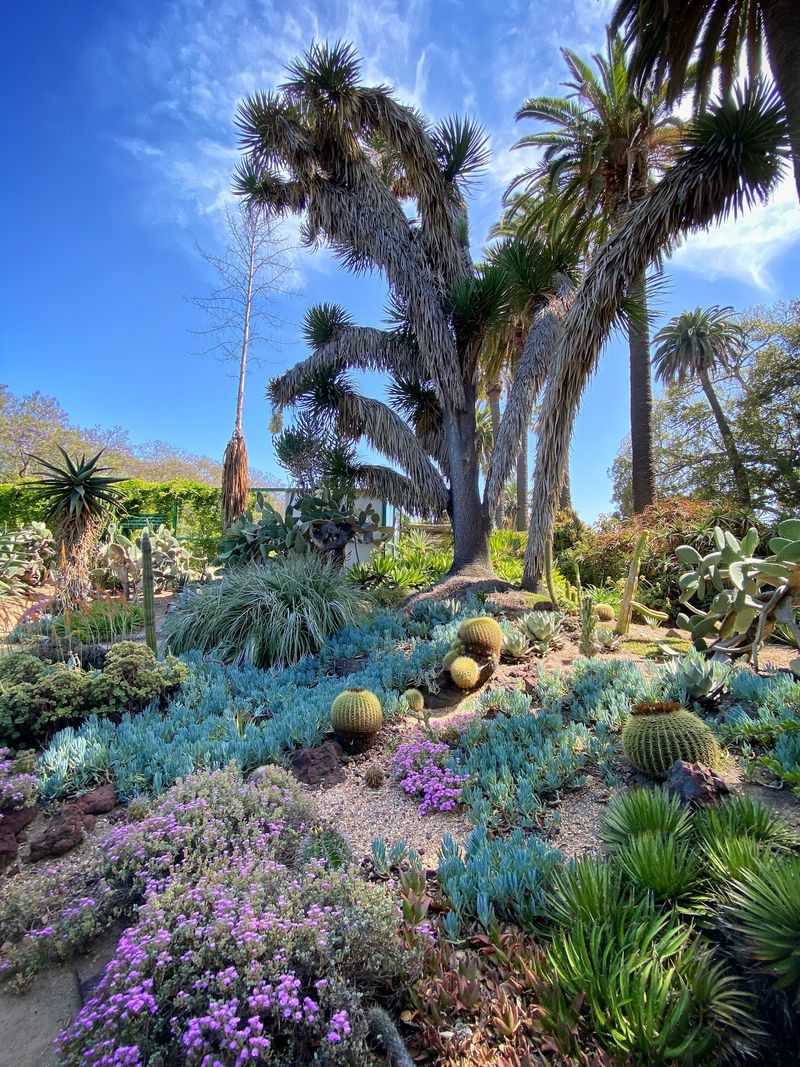
If you visit in late March or early April, follow your nose. The wisteria vines around the gardens bloom in a purple haze, and the scent drifts along the paths like a friendly invitation.
About four acres of historic gardens wrap around the ranch house, and they are considered nationally significant. Florence Bixby shaped much of what you see during the 1920s, working with leading landscape designers of her day, including the Olmsted Brothers firm.
Some plantings are more than a century old.
Each garden has its own personality. The Rose Garden is compact and cheerful, while the Cactus Garden feels like a slice of desert, with tall spiny shapes and chunky succulents that shrug off dry weather.
Then there are the long walks lined with geraniums, jacarandas, and oleanders.
There is even a Secret Garden, which is exactly as fun to find as it sounds. Tucked into shady corners, you will spot green-painted benches and quiet nooks perfect for sitting and doing absolutely nothing.
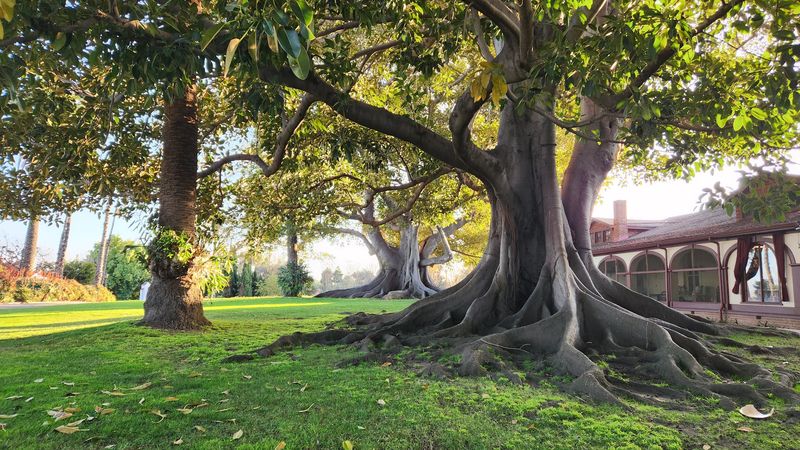
Two massive Moreton Bay fig trees also steal the show, with roots that sprawl across the ground like giant fingers. I spent an embarrassing amount of time just staring up at them.
Bring a water bottle and a hat on sunny days. Much of the garden has good shade, but the cactus area soaks up the sun.
Barnyard Neighbors With Big Personalities
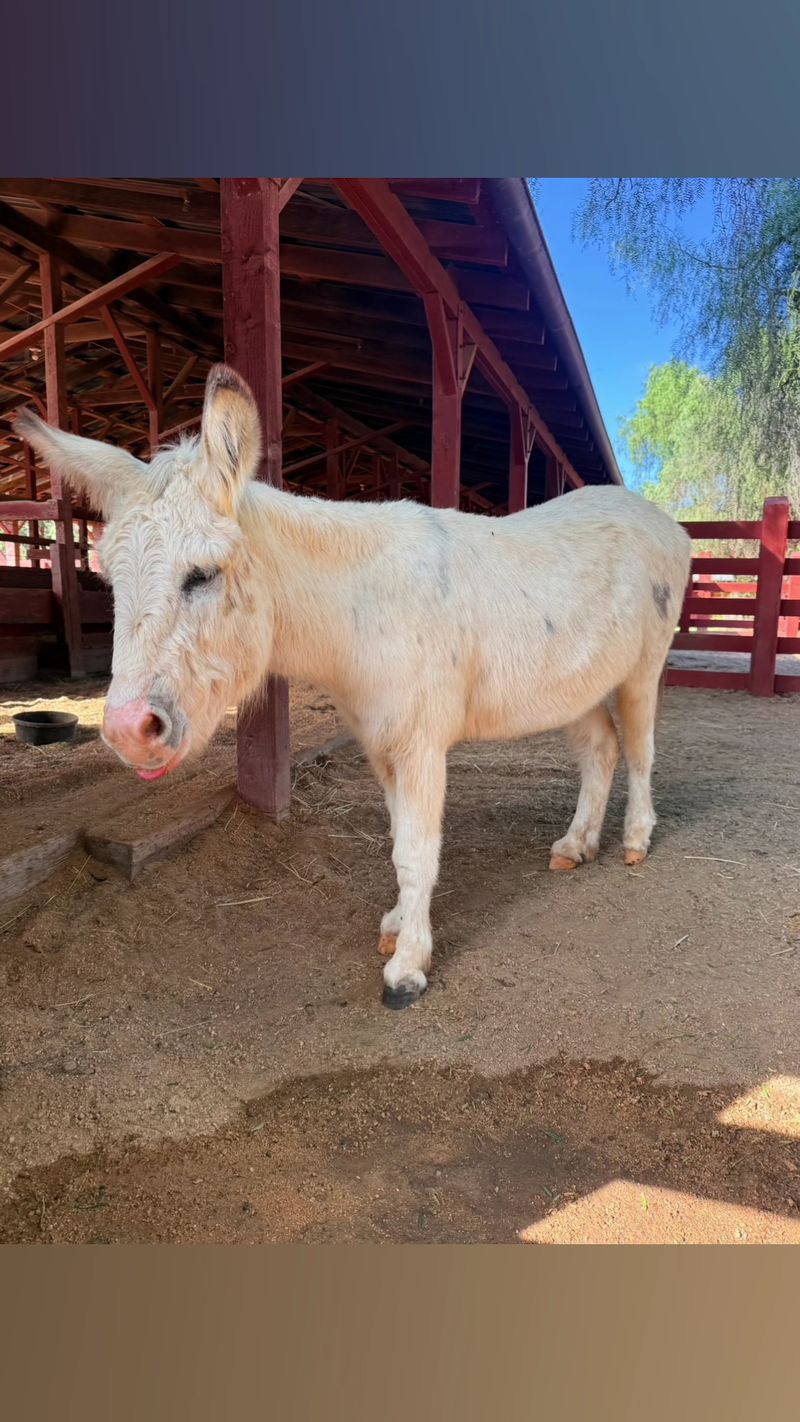
Somewhere near the barns, a donkey will probably announce your arrival before you even see him. That loud, joyful hee-haw set the mood for my favorite stretch of the visit.
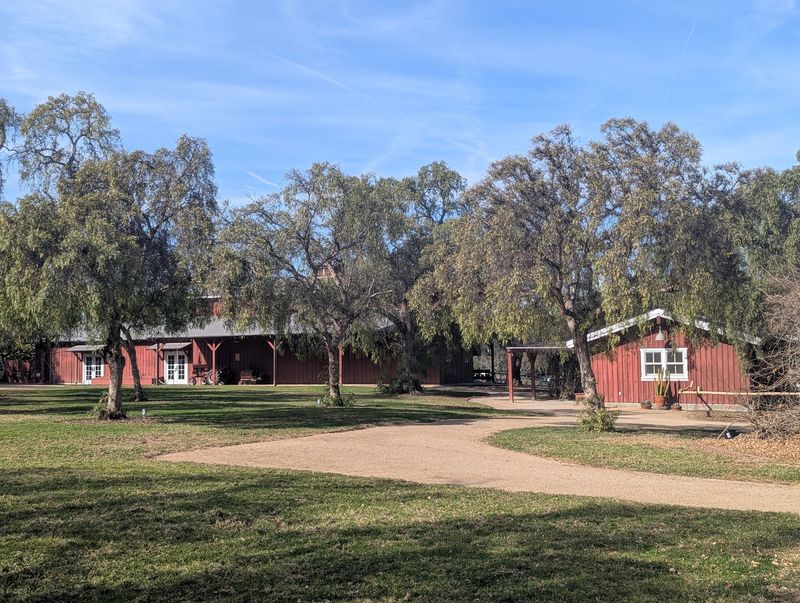
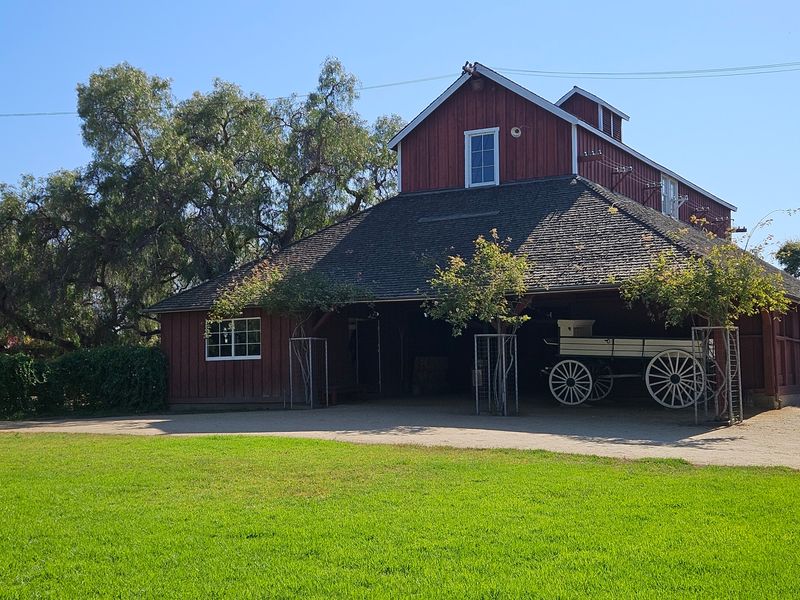
The restored barnyard gives a real sense of how a working ranch operated. You will find a blacksmith shop, a dairy barn, and a feed shed for the horses, plus old gas pumps that hint at the moment tractors and trucks started replacing hooves.
The animals are the stars, of course. A towering Shire horse, a breed known as one of the biggest in the world, makes most grown-ups look tiny.
Nearby, you might spot sheep, goats, ducks, rabbits, and a coop full of busy chickens scratching around.
You cannot pet the animals, so remind little ones ahead of time to keep hands to themselves. Watching them munch hay and wander their pens is still plenty entertaining, especially for city kids.
When the city took over the property, the barn layout got changed, but careful restoration has since brought much of it back. Displays inside some buildings explain the chores, tools, and crafts that kept the ranch fed and fixed.
Occasionally parts of the barn area close for repairs or maintenance. Checking the rancho’s website before you go saves disappointment, especially if the animals are the main reason your crew is excited.
An Island of Green the City Grew Around
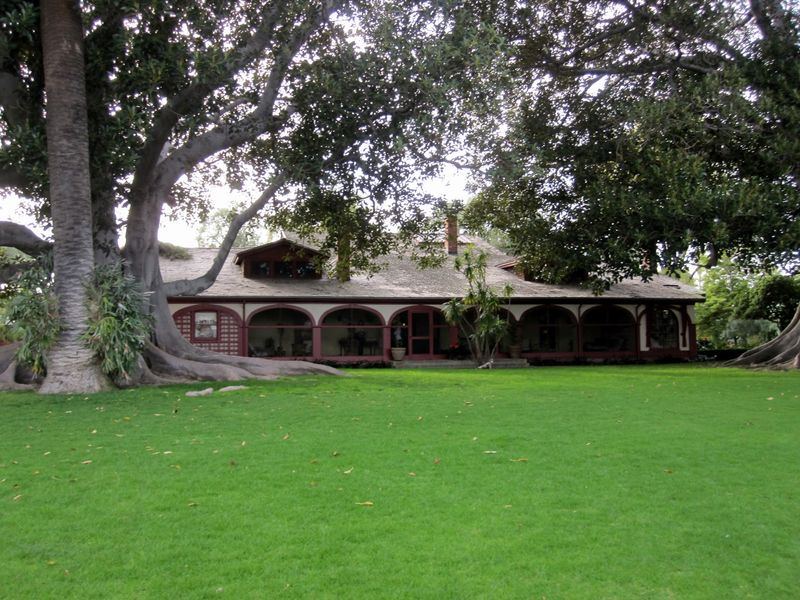
I had to laugh the first time I figured out the route. To reach this old cattle ranch, you drive through a gated neighborhood of tidy modern homes called Bixby Hill, right next to California State University, Long Beach.
After the Bixby heirs gave the ranch to the City of Long Beach in 1968, the remaining 7.5 acres became a protected island of green. Houses, campus buildings, and busy roads grew up on every side, yet the gardens and barns stayed put.
It feels a bit like finding a pressed flower tucked inside a giant phone book.
Getting in is easy once you know the routine. Head to the Bixby Hill security gate at East Anaheim Road and Palo Verde Avenue, tell the guard you are visiting the rancho, and you will get a parking pass.
The site opens in the afternoons on select weekdays, so check the official website for current hours and to make an online reservation. Parking inside is limited, which is another good reason to plan ahead.
Start at the Rancho Center, watch the short film, and pick up a map.
For a fuller day, pair your visit with the Earl Burns Miller Japanese Garden on the Cal State Long Beach campus next door. Two very different gardens in one afternoon makes for a surprisingly relaxing plan.
Address: 6400 E Bixby Hill Rd, Long Beach, CA 90815
