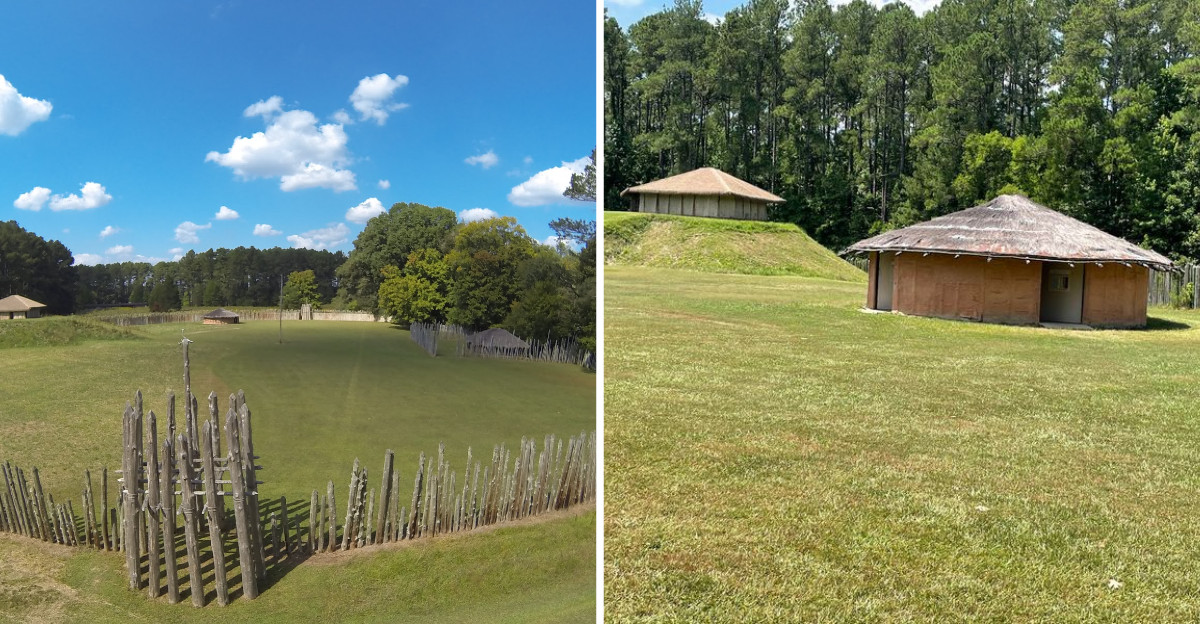
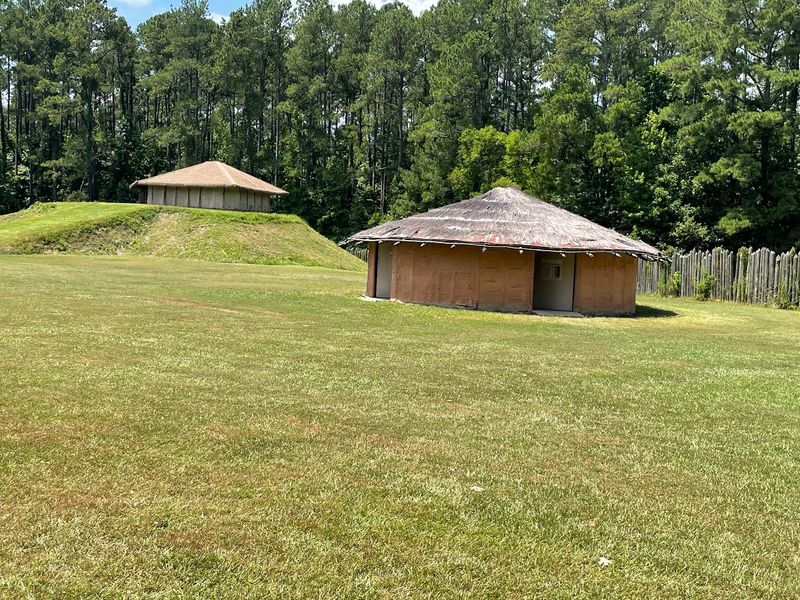
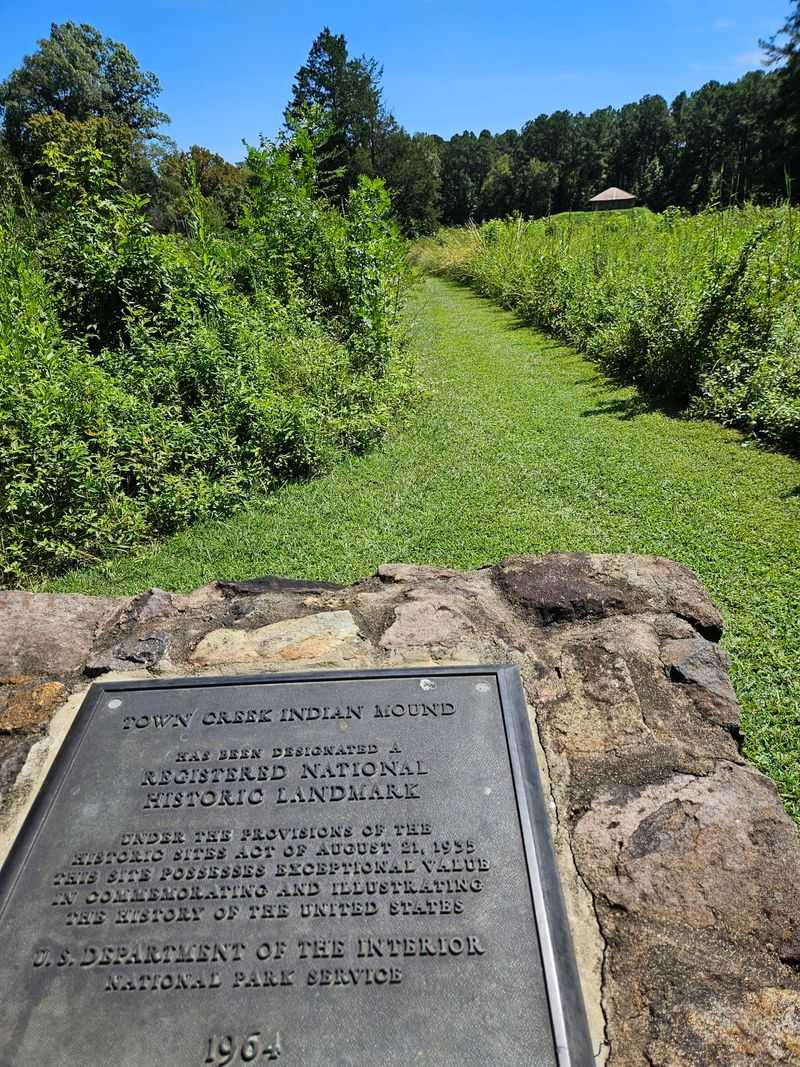
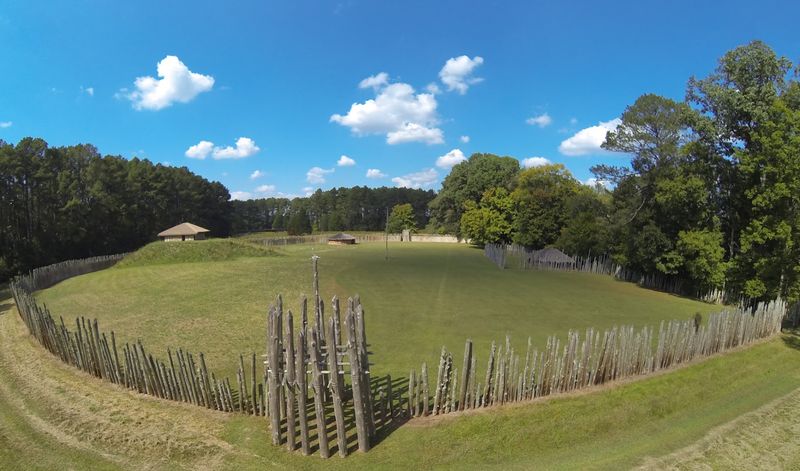
A reconstructed village waits in the grass where a historical marker and a bench were expected. The mound sits at the center, higher than pictured, with a temple on top and a ramp running down toward an open plaza.
Somewhere between the palisade wall and the burial house, checking the phone stopped entirely. What got me was how quiet it stays, just wind in the trees and the occasional bird over the river bottom.
The Pee Dee people built this ceremonial center around 1100 AD, used it for roughly three centuries, and then left for reasons nobody has figured out. Their village is gone, but the earth they piled up by hand is still standing.
Standing on that ground rearranged how I think about North Carolina. The mound is a reminder that this land was shaped long before anyone wrote it down.
Quiet places like this do not shout their history, they let you feel it.
The Mound Itself, Rising Right Out of the Plaza
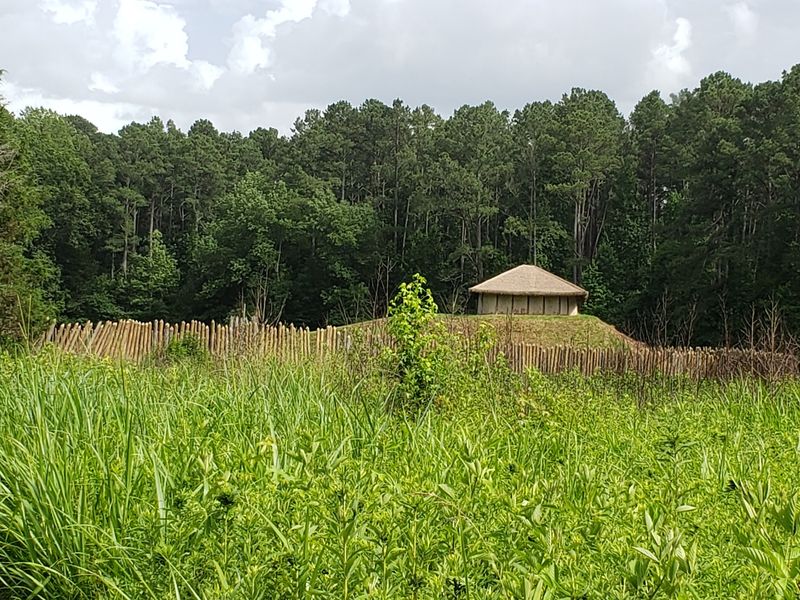
My first reaction was simple surprise at the scale. Photos flatten it out, but in person the platform climbs roughly 15 to 20 feet above the plaza, with a reconstructed temple crowning the top and an earthen ramp running down the east side.
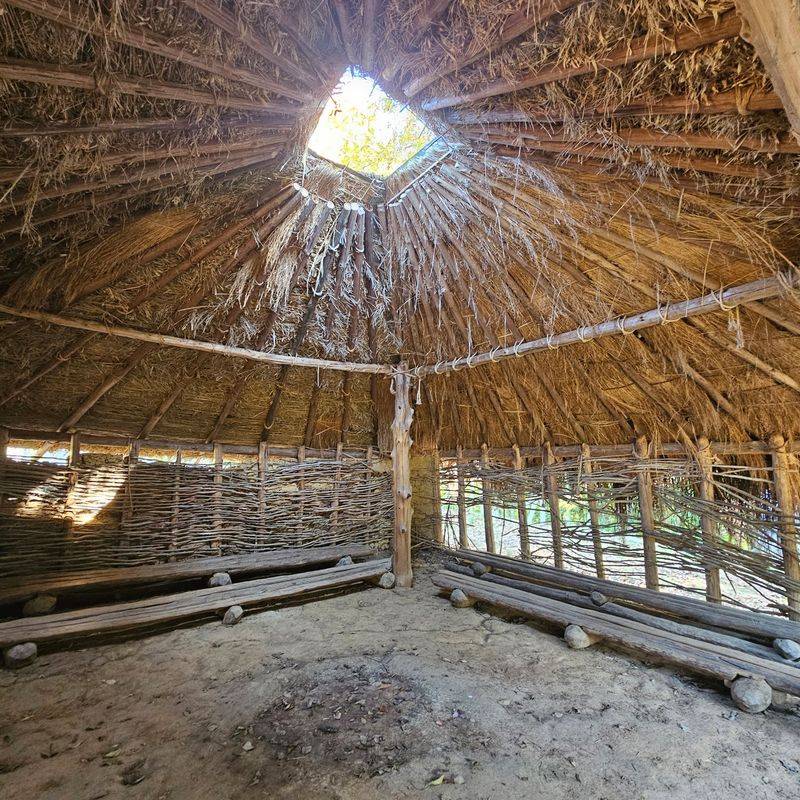
What makes it fascinating is how it grew. The Pee Dee built rectangular earth lodges by setting posts into the ground, then piling soil over the walls and roof.
When a lodge eventually collapsed, they covered the remains and built again on top.
Layer by layer, generation by generation, a low rise became a commanding platform. No wheelbarrows, no machines, just baskets of dirt and a shared sense of purpose.
Climbing the ramp, I kept thinking about how deliberate that east-facing orientation feels. Sunrise would have hit the temple doorway first, which fits a culture that tracked solar and lunar cycles closely.
Give yourself a few minutes up there before heading back down. The view across the plaza toward the palisade is the closest thing to time travel this site offers, and it costs nothing but patience.
Start With the Film Before You Step Outside
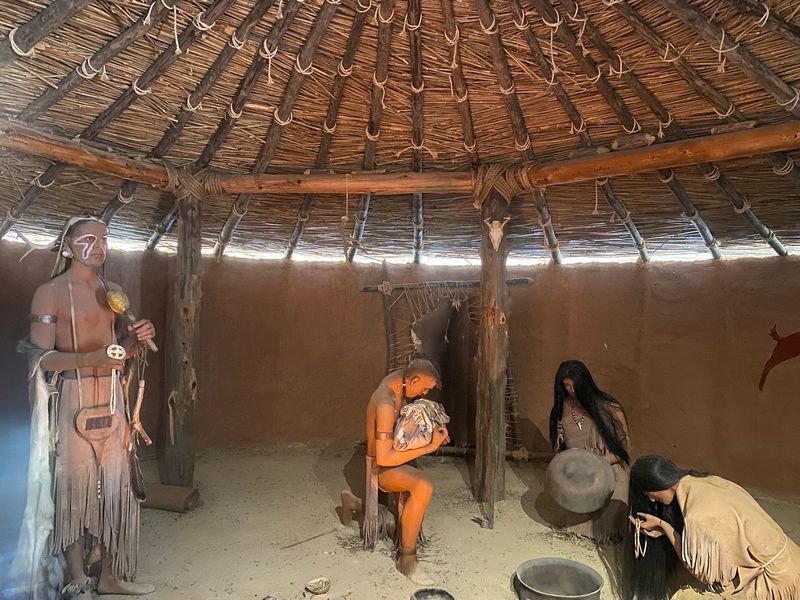
Staff offered to start the introductory film the moment I walked in, and I said yes without really thinking about it. Best decision of the visit.
Running about eighteen minutes, the film lays out how archaeologists pieced together the story of this place from postholes, pottery fragments, and burial patterns. It explains the reasoning, not just the conclusions.
Because of that, the reconstructed buildings outside stopped looking like guesses and started looking like careful arguments made in wood and clay.
The visitor center also holds display cases of material pulled from the ground here: pottery, stone tools, jewelry, shell and copper ornaments. Audiovisual programs fill in more context if you want to linger.
There is a small gift shop with books and Native-made products, plus clean restrooms located on the exterior right side of the building. Practical stuff, but worth knowing.
Staff here have a reputation for being genuinely knowledgeable, and mine answered questions well past what I expected. Ask about the excavation history if you get the chance.
Budget fifteen to twenty minutes inside, minimum.
The Palisade Wall and Why It Matters
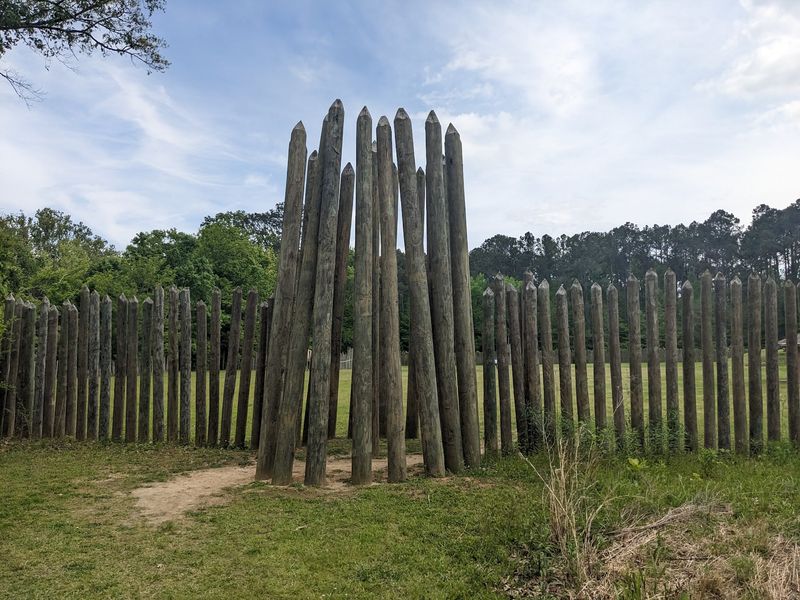
Sharpened posts standing shoulder to shoulder make an impression before you read a single sign. The palisade encircling the ceremonial grounds is one of the most striking reconstructions on site.
Originally, the posts were set tightly together and plastered with daub, a mixture of clay and straw that sealed the gaps. The result was a solid barrier rather than a fence you could see through.
Excavations turned up evidence of five separate protective walls built over the site’s history, which tells you the community rebuilt and expanded its defenses more than once.
I walked the inside perimeter slowly, noticing how the wall shapes the space. Enclosed ground feels different from open ground, and the plaza suddenly reads as a room rather than a field.
Its location also made sense once I got oriented. The village sat on a low bluff above the point where Town Creek meets the Little River, a spot that offered both natural protection and easy access to water and food.
Bring sunscreen. Inside the palisade there is very little shade on a bright day.
Fifty Years of Digging by One Determined Archaeologist
Excavation here began in 1937, led by Joffre Coe, then a student at the University of North Carolina at Chapel Hill. He would go on to direct work at this site for more than fifty years.
That kind of continuity is rare in archaeology, where projects usually hop from one location to the next. Decades of steady attention at a single place produced an unusually detailed picture of Pee Dee life.
Researchers learned about diet, trade, construction methods, and religious practice, largely from patterns in soil and the objects left behind.
Town Creek became a North Carolina State Historic Site in 1955. Through the 1950s and 1960s, crews reconstructed the mound, the temple structures, and the burial house based on what the digging revealed.
Knowing that timeline changed how I looked at the buildings. Every post placement reflects a posthole someone mapped, measured, and argued about.
Research has not stopped either, and interpretations continue to shift as new methods emerge. Ask the staff what has changed recently, because they tend to enjoy that conversation.
A Short Nature Trail Along the River Bottom
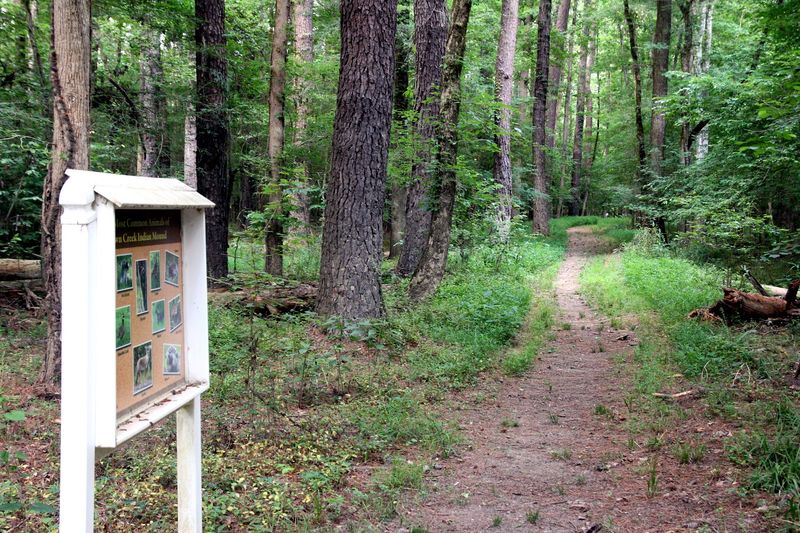
After the open plaza, the shade of the nature trail felt like a reward. The loop runs about a quarter mile through the river bottom below the ceremonial grounds.
Interpretive signs along the way identify native plants and animals, which quietly connects the village to its food supply and building materials. Ferns crowd the lower ground, and the tree variety is genuinely good for such a short walk.
Every plant listed suddenly felt useful rather than decorative. Someone here once knew which roots mattered and which bark made cordage.
A few practical notes. The path can turn muddy after rain, so shoes with grip beat sandals, and gnats can be persistent in warm months, so bug spray earns its place in your bag.
The trail has occasionally closed for storm damage and repairs, so a quick call ahead saves disappointment if it is your main reason for coming.
Little legs handle it fine. Families with young kids tend to find it manageable, and it loops back toward the visitor center without any backtracking.
Special Events, Hands-On Archaeology, and Stargazing
Turns out the site does more than sit there looking ancient. Throughout the year, staff host programs focused on American Indian lifestyles and experimental archaeology.
Experimental archaeology means people actually trying old techniques rather than just reading about them. Watching someone work with period tools and materials makes the reconstructed buildings feel far less abstract.
My favorite discovery was the astronomy programming. Visitors gather to view constellations from the same ground where the Pee Dee tracked solar and lunar alignments to mark the passage of time.
Same sky, same hill, several centuries apart. That thought is worth the drive on its own.
Because the schedule shifts seasonally, checking the site’s website or calling before you plan a trip around a specific event makes sense. Hours run Tuesday through Saturday, 9 am to 5 pm, with Sunday and Monday closed.
School groups come through regularly, and the programming clearly works well for field trips. If you visit on a weekday morning, you might share the plaza with a class, which honestly adds energy to the place.
Self-Guided or Guided, and How Long to Plan
Most people wander the grounds on their own, following interpretive signs at whatever pace suits them. That worked well for me, though guided tours are available for a deeper explanation.
Plan on roughly an hour for a relaxed visit. Add time if you watch the full film, read every panel, and take the nature trail without rushing.
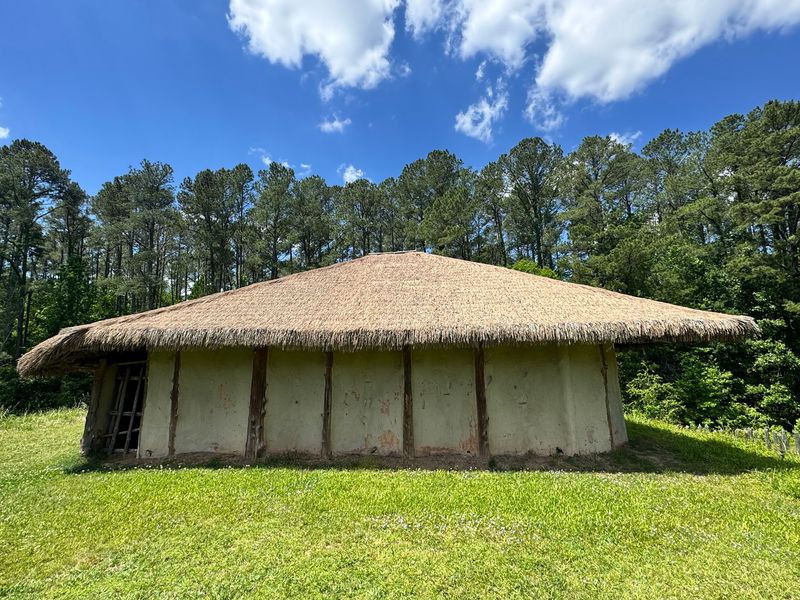
Three reconstructed structures stand on the grounds, and you can usually step inside two or three of them, depending on repair schedules.
Accessibility is reasonably well handled. The visitor center, the east lodge, and the mortuary are all accessible, which matters at a site built around grass paths and an earthen ramp.
Picnic tables sit near the parking area if you want to bring lunch and eat with a view of the tree line. The parking lot is generously sized, so arriving mid-morning rarely causes trouble.
One more tip from experience: go earlier in the day during summer. Shade is limited on the ceremonial grounds, and heat builds fast in that open plaza by early afternoon.
The Unsolved Question of Why They Left
Around 1400 AD, the Pee Dee walked away from Town Creek. No one has established exactly why.
That open question lingers as you walk the grounds. A place this organized, with trade links running hundreds of miles and ceremonies drawing people from surrounding villages, does not simply stop mattering overnight.
Yet the archaeological record thins out, and the ceremonial center falls silent.
I found the mystery weirdly comforting rather than frustrating. It is a reminder that history is not a finished book, and that plenty of pages stay blank no matter how carefully people dig.
What remains is the earth they shaped. Centuries of rain, roots, storms, and farming have not erased the mound, which still rises above the plaza exactly where they put it.
Late afternoon is the best time to sit with that thought. The light goes long and gold across the grass, shadows stretch off the palisade posts, and the whole site takes on a stillness that feels almost deliberate.
Visit with respect, take your time, and let the quiet do some of the work.
Making a Day of It Around Mount Gilead
Getting here means leaving the main highways behind, and that is half the appeal. Montgomery County roads roll through pine and farmland, and the site sits well back from anything busy.
Plenty of visitors admit they lived nearby for years without knowing it existed. I understand why, because nothing about the approach announces itself.
Once you finish exploring, the nearby Rankin Museum in Ellerbe makes a natural second stop for anyone still in a curious mood.
Mount Gilead itself has a handful of small local spots for lunch if you did not pack a picnic. Pairing the historic site with a bite in town turns a one-hour visit into a comfortable half day.
Admission is free, which makes it an easy add-on to a Uwharrie region road trip or a county-collecting project across North Carolina.
My honest advice is to come with a little patience rather than a checklist. The exhibits are modest, the grounds are quiet, and the payoff comes from slowing down enough to notice what is actually under your feet.
Address: 509 Town Creek Mound Rd, Mount Gilead, North Carolina
