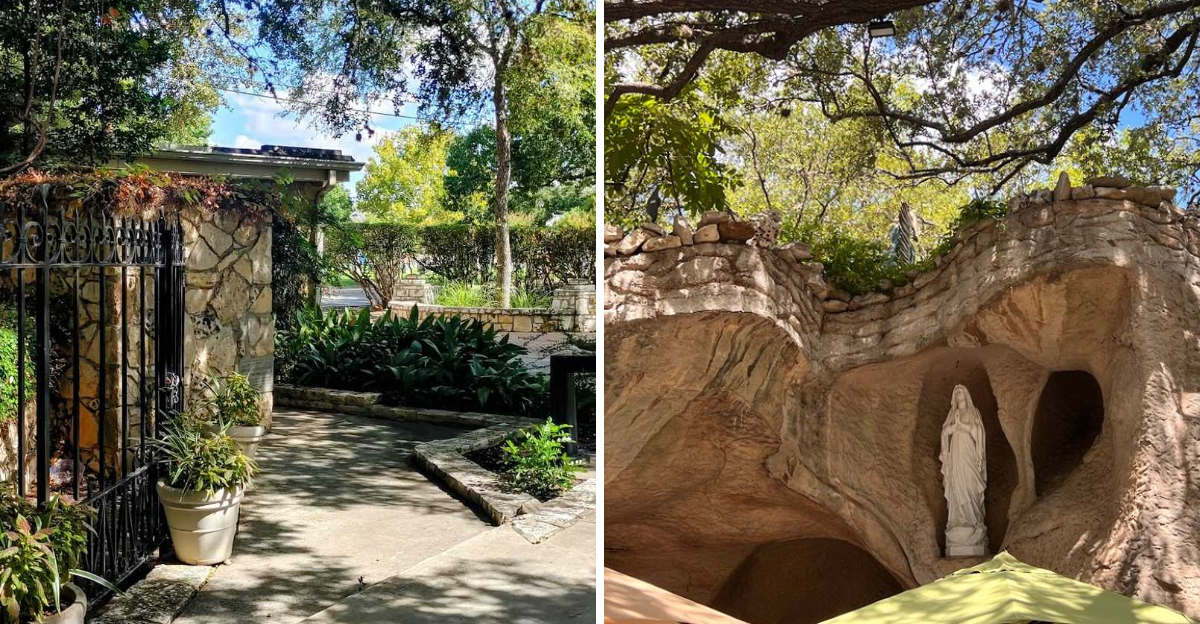
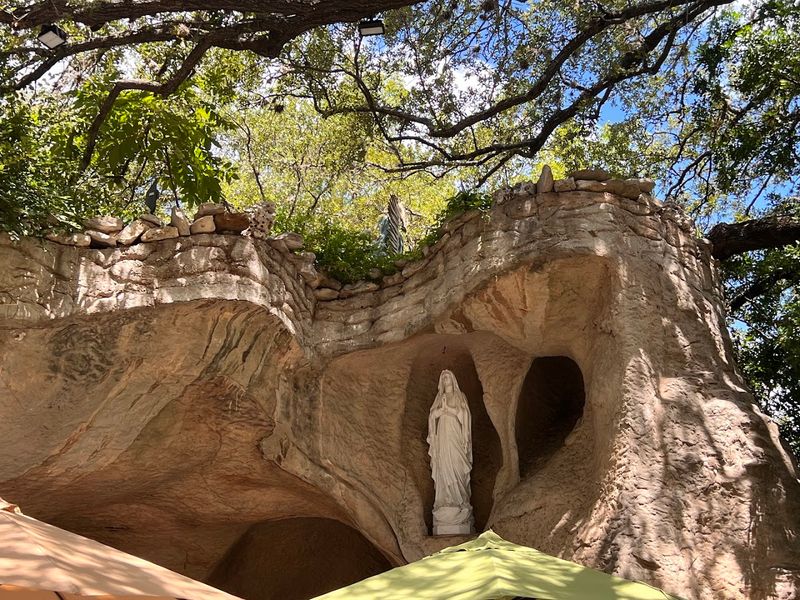
A slice of French peace exists right here in Texas, built by priests who wanted to bring a little European tranquility to the Lone Star State. This hidden sanctuary is an exact replica of the famous Grotto in Lourdes, France, complete with a cave, a statue of Mary, and a quiet fountain.
The priests dedicated it on December 7, 1941, a date that was supposed to be a celebration but quickly turned somber when the news of Pearl Harbor broke. A person can wander the grounds, sit under massive oak trees, and listen to the water trickle.
Unlike the original in France, this spot has a unique backside feature, a small Tepeyac Hill with bronze statues of Our Lady of Guadalupe and Juan Diego. Visitors come to light candles, say a prayer, or just enjoy the quiet.
Texas has plenty of churches and cathedrals, but a replica of a French miracle site hidden into a San Antonio neighborhood? That is a different kind of peaceful.
The Story Behind the Sanctuary
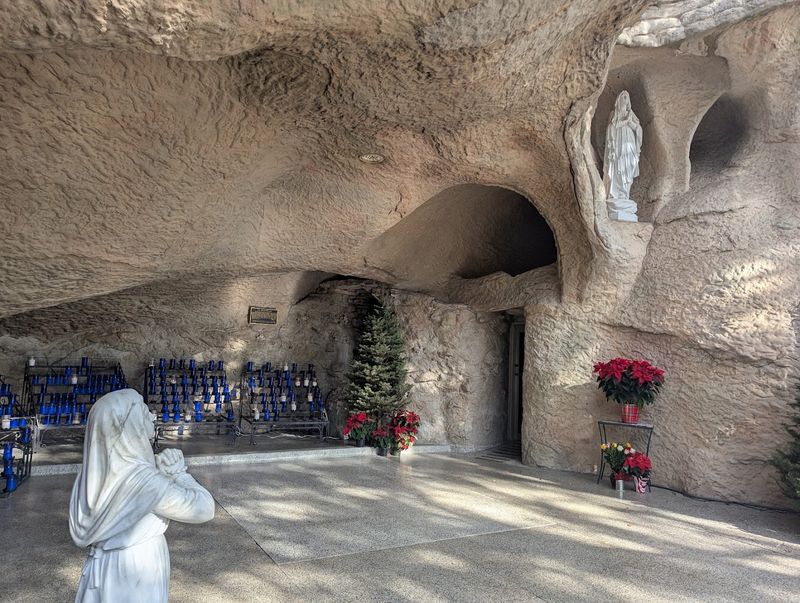
Few places carry this much layered history in such a quiet package. The Lourdes Grotto and Tepeyac de San Antonio was dedicated on December 7, 1941, a date most Americans remember for a very different reason.
That same morning the attack on Pearl Harbor changed the world, this sanctuary was being consecrated as a place of peace.
The site was established by the Missionary Oblates of Mary Immaculate, a congregation originally founded in France in 1816. Their deep French roots are part of why this San Antonio landmark carries such a strong connection to the original shrine in Lourdes.
It is a link that spans continents and centuries.
The Oblates chose to build this grotto as a way to bring the spiritual experience of Lourdes to those who could not make the journey across the Atlantic. That mission still holds today.
Pilgrims, tourists, and curious neighbors alike find their way here, drawn by the history, the silence, and the sense that something meaningful happened on this land and continues to happen every day.
A French Shrine Reborn in Texas
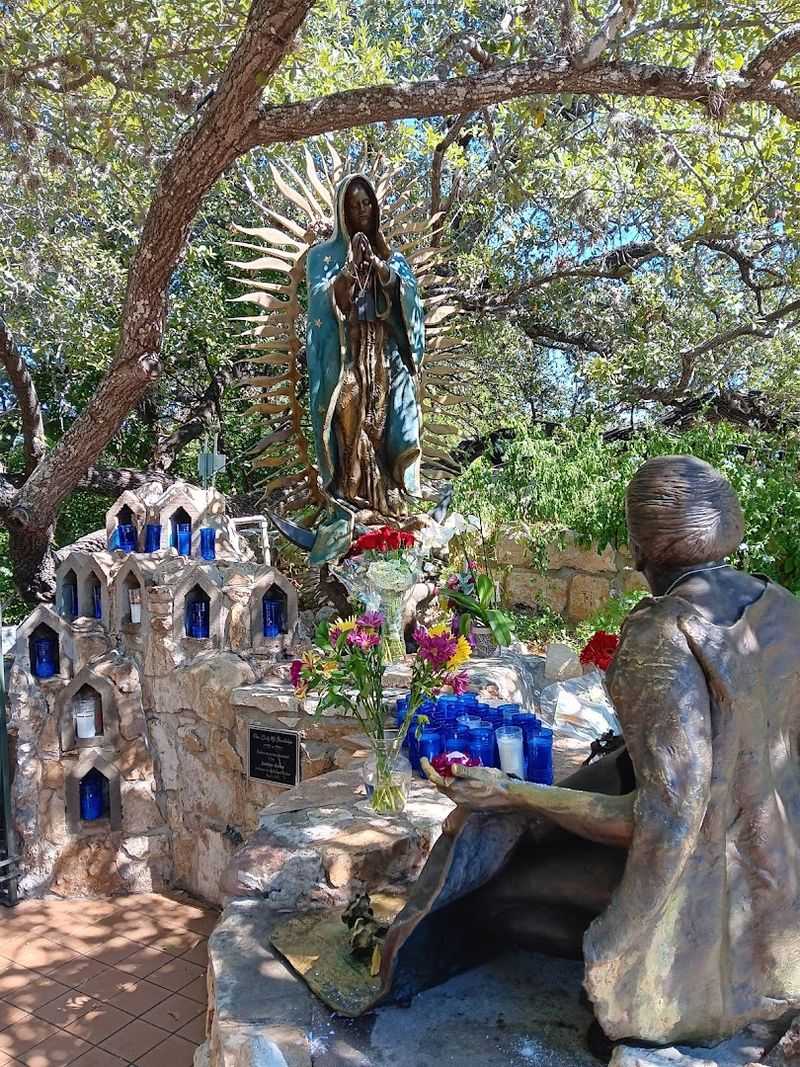
The grotto itself is the heart of the entire sanctuary, and the craftsmanship behind it is genuinely surprising. Built from reinforced concrete that was carefully shaped to imitate the natural cave formations found in Lourdes, France, the structure manages to feel organic and ancient rather than constructed.
Running your hand along the textured surface, you almost forget it was built by human hands.
Inside the grotto, a statue of Our Lady of Lourdes gazes downward toward a kneeling figure of St. Bernadette in prayer.
The composition captures the intimacy of that original 1858 apparition, where a fourteen-year-old girl from a poor French family reported seeing a vision of the Virgin Mary in a rocky hillside cave.
That moment changed the town of Lourdes forever.
Calling this the most perfect replica of the Lourdes shrine in America is a bold claim, but once you stand in front of it, the description starts to make sense. The scale, the detail, and the atmosphere all work together to create something that feels genuinely transported from another place and another time.
It is a remarkable piece of sacred architecture hiding in plain sight.
Five Acres of Unexpected Calm
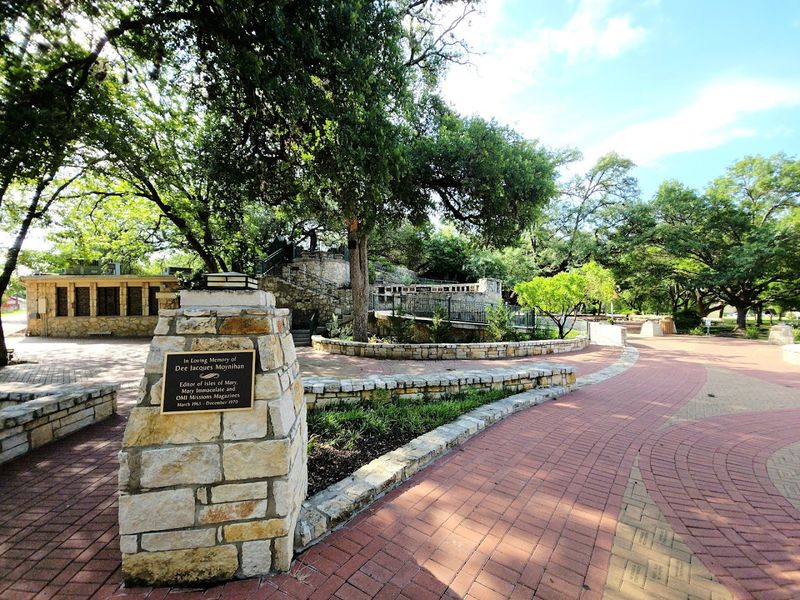
Most people do not expect a five-acre oasis when they turn off a busy San Antonio road, but that is exactly what greets you here.
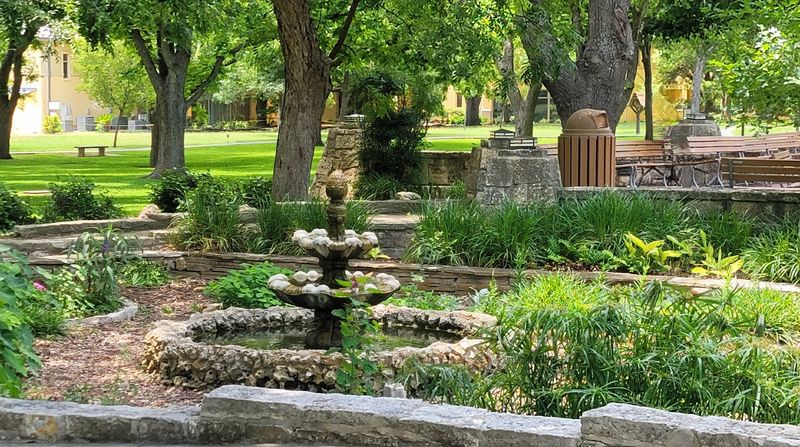
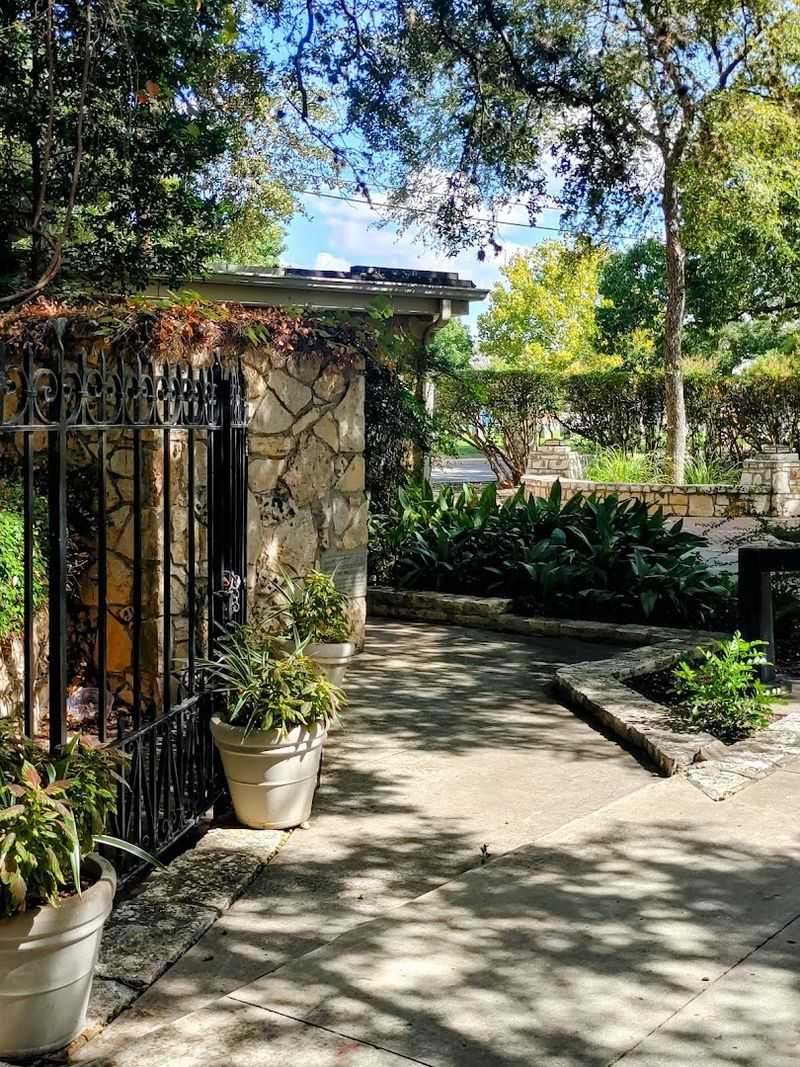
The grounds feel genuinely expansive once you are inside them, with shaded walking paths curving between old trees, stone benches placed at just the right spots, and an overall atmosphere that encourages you to slow down completely.
On the afternoon I visited, a few people sat quietly on benches near the grotto while others walked the paths alone, earbuds out, just moving through the space. There was no rush anywhere.
That absence of urgency is one of the sanctuary’s most underrated qualities.
The landscape is thoughtfully maintained without feeling manicured to the point of sterility. Shade trees keep the Texas heat at bay better than you would expect, and the arrangement of the grounds naturally guides you from one meaningful spot to the next without any signage pushing you along.
It feels like a place that respects your pace. Whether you spend twenty minutes or two hours here, the grounds seem to adjust themselves to whatever you need on that particular day.
Tepeyac de San Antonio, the Shrine Within a Shrine
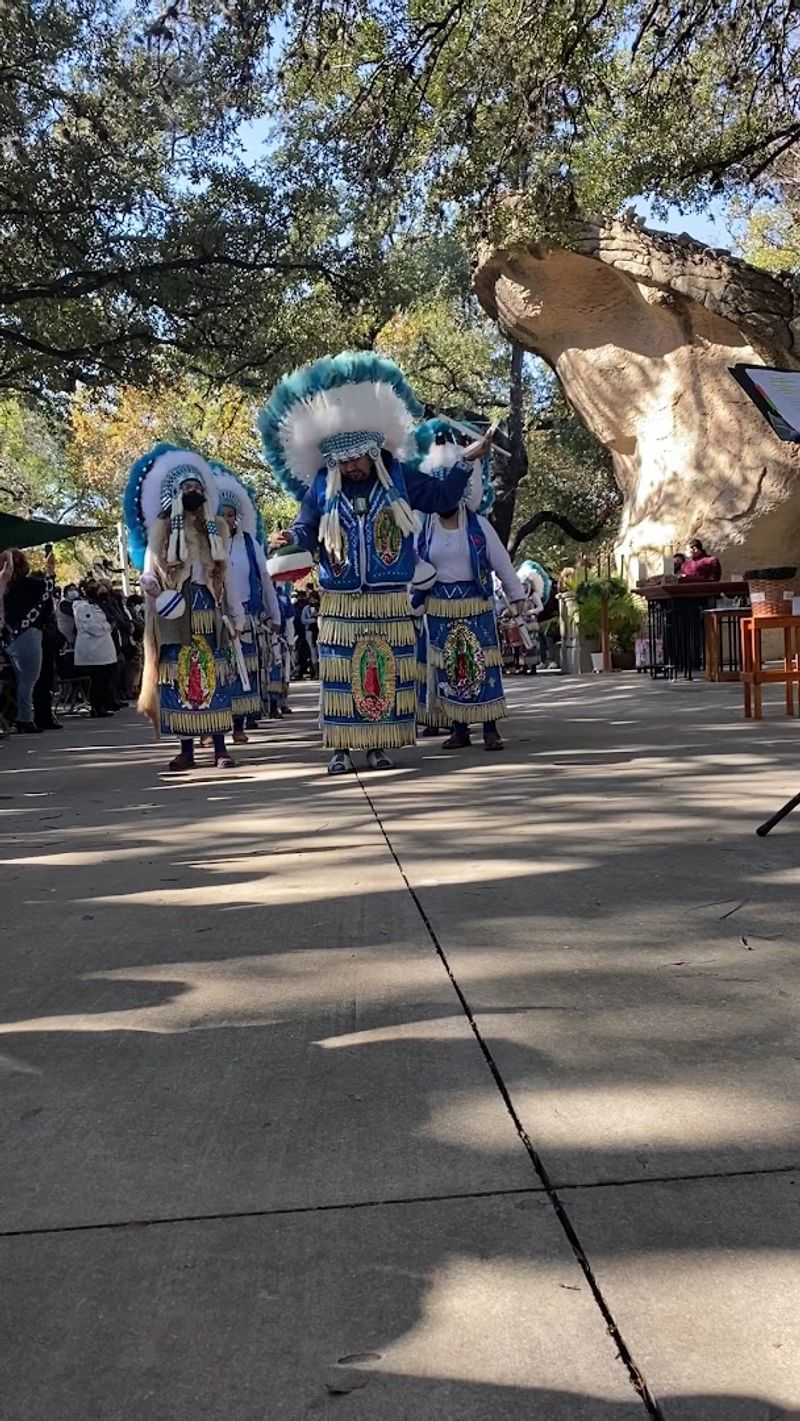
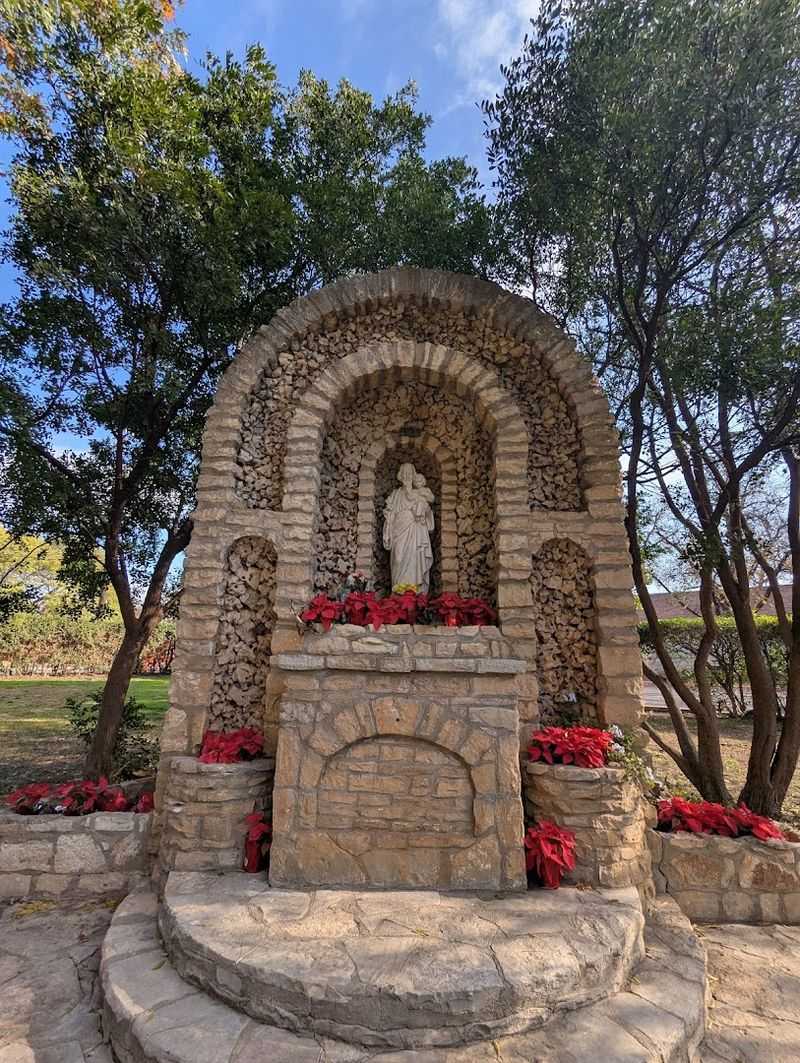
Perched above the main grotto sits a tribute that adds a whole new dimension to this already layered sanctuary. Tepeyac de San Antonio honors Our Lady of Guadalupe and the story of her apparitions to St. Juan Diego at Tepeyac Hill in Mexico City.
Placing this tribute atop the Lourdes Grotto creates a remarkable visual and spiritual conversation between two of the most beloved Marian apparition sites in the world.
The choice feels especially meaningful in San Antonio, a city where French Catholic heritage and deep Mexican Catholic tradition have coexisted for centuries. This sanctuary manages to hold both stories at once without either one overshadowing the other.
That kind of balance is harder to achieve than it looks.
Climbing up toward the Tepeyac section gives you a slightly elevated view of the surrounding grounds, which adds a new perspective on just how thoughtfully the whole space is arranged.
The colors and imagery associated with Our Lady of Guadalupe bring a warmth to this upper section that contrasts beautifully with the cool stone tones of the grotto below.
Together, they make the sanctuary feel like a meeting point of cultures, histories, and deep human longing for something sacred.
The Spiritual Significance of St. Bernadette
Bernadette Soubirous was just fourteen years old when she reported seeing a vision at the Massabielle cave near Lourdes, France, in 1858.
She was a sickly child from a struggling family, and her account of the apparitions was met with skepticism before eventually drawing millions of pilgrims to that small French town.
Her story is one of the most quietly powerful in modern religious history.
At the San Antonio grotto, her presence is captured in a kneeling statue positioned at the base of the shrine, eyes lifted toward the figure of Our Lady above.
The positioning feels true to the original, and spending a moment with it gives the whole structure a human quality that raw stone alone cannot provide.
Learning about Bernadette before visiting adds a noticeable depth to the experience. She was eventually canonized as a saint in 1933, decades after her death, and her life story resonates with anyone who has ever felt overlooked or doubted.
The fact that this replica was built to honor her experience and bring it to people who might never reach France makes the San Antonio grotto feel less like a copy and more like a continuation of something very much alive.
Holy Water, Daily Mass, and Living Tradition
One of the things that sets this sanctuary apart from a purely historical or tourist site is the fact that it functions as a fully active place of worship. Daily Mass is offered on the grounds, and confession services are available, making this a living parish destination rather than a preserved relic.
The rhythm of daily religious life gives the place an energy that static monuments simply do not have.
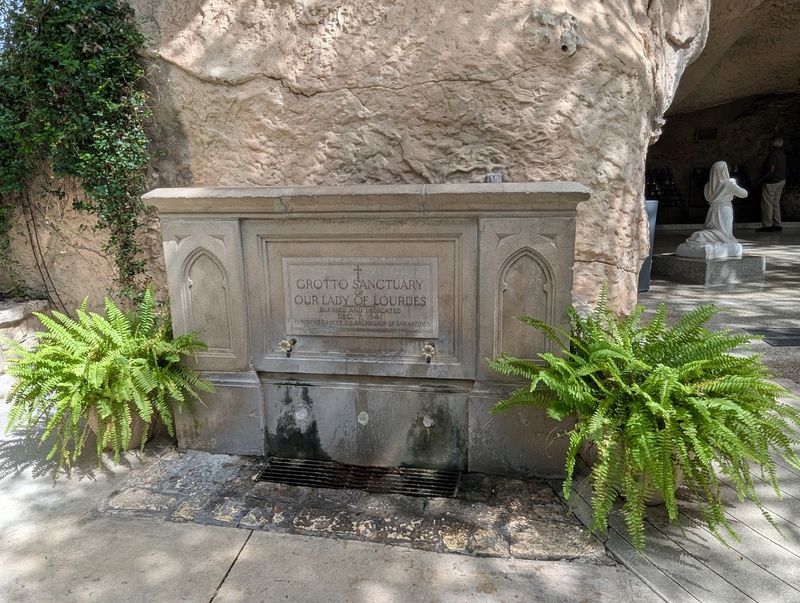
Holy water is available for pilgrims, which is a meaningful touch given the connection to the original Lourdes shrine where water from a natural spring has long been considered sacred by the faithful. People come with small bottles, rosaries, and quiet intentions.
The simplicity of those gestures is genuinely moving to witness.
A gift shop on the grounds offers religious items and keepsakes for those who want to bring something home. It is modest and unpretentious, which fits the overall spirit of the place perfectly.
Nothing about this sanctuary feels commercial or performative. The combination of active sacramental life, accessible holy water, and a welcoming gift shop creates a complete experience that serves both the deeply devout and the spiritually curious with equal grace and zero pressure.
Open Always, Free Always
There is something genuinely countercultural about a place that never closes and never charges admission. The sanctuary is open 24 hours a day, seven days a week, every single day of the year.
That kind of unconditional openness is rare, and it changes how the space feels when you are standing inside it.
Knowing you are welcome at 2 a.m. on a Tuesday in the middle of December is a different kind of invitation than most public spaces extend. People come here at all hours for all kinds of reasons.
Some arrive in crisis, some in gratitude, and some simply because they needed somewhere quiet and this was the place that came to mind.
Free admission removes any barrier that might keep someone from experiencing what the sanctuary has to offer. There is no ticket booth, no donation box positioned at the entrance to create social pressure, and no closing time announcement urging you to move along.
The grounds simply exist, open and patient, the same way they have since 1941. That consistency across more than eight decades of San Antonio history says something meaningful about the people who have cared for this place and continue to do so.
Miracles, Stories, and the Power of Belief
Over the decades, some visitors to the San Antonio grotto have reported experiences they describe as miraculous, attributing physical or emotional healings to time spent at the shrine.
These accounts are personal and unverified, but they are part of the living oral tradition of the sanctuary and add a layer of mystery that makes the place feel genuinely extraordinary.
The original Lourdes shrine in France has a long history of reported healings, and the Catholic Church has formally recognized a number of them after rigorous investigation. The San Antonio replica carries that spiritual legacy within its concrete walls, even if its own stories are quieter and less documented.
Whether or not you hold religious beliefs, there is something undeniably compelling about a place where people arrive carrying deep personal needs and leave feeling changed. The emotional weight of those visits accumulates over time, giving the grotto a gravity that goes beyond its physical construction.
You can feel it when the space is crowded and when it is completely empty. It is the kind of atmosphere that makes even skeptical visitors lower their voices and move a little more slowly, as if something in the air itself asks for that small act of respect.
Planning Your Visit to Blanco Road
Getting to the sanctuary is straightforward since it sits right along Blanco Road in a north-central part of San Antonio. Parking is available on site, and the location is accessible enough that it fits naturally into a broader day of exploring the city.
It does not require a special pilgrimage mindset to visit, just a willingness to step away from the usual pace for a little while.
Morning visits tend to offer the most stillness, especially on weekdays when the grounds are quieter and the light filters through the trees at a particularly soft angle. Evenings have their own appeal, especially if you want to see the grotto lit up against the darkening sky.
The 24-hour access means you genuinely have options.
Wearing comfortable walking shoes makes sense since the grounds include paths and an elevated section near the Tepeyac shrine. Bringing a bottle of water is smart given the Texas climate, particularly in summer.
The gift shop is a worthwhile stop before you leave, and if your timing allows, attending one of the daily Masses is a memorable way to experience the sanctuary as more than just a landmark.
Address: 5712 Blanco Rd, San Antonio, TX
