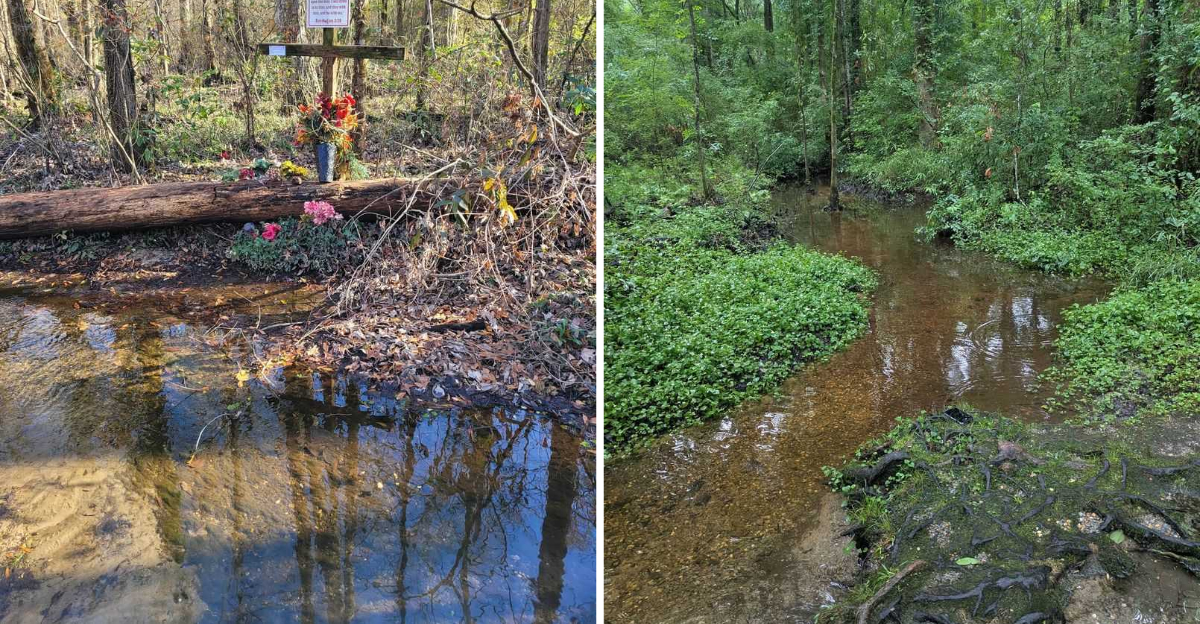
Cool, clear water flows from a spring in South Carolina where people pull off the road with jugs and fill up, a ritual that has been happening for longer than anyone can remember. The air smells like pine and earth, and the people around you are completely unhurried, like time works differently here.
Some folks drive hours just to collect a few gallons. Others come with something heavier on their minds, hoping the water delivers what its name promises.
I stood at the spring with a jug in my hand and watched a woman fill her containers without speaking, her movements slow and deliberate. The water runs through a pipe that has been there for decades, and the spring has never run dry, even through droughts that have parched the surrounding land.
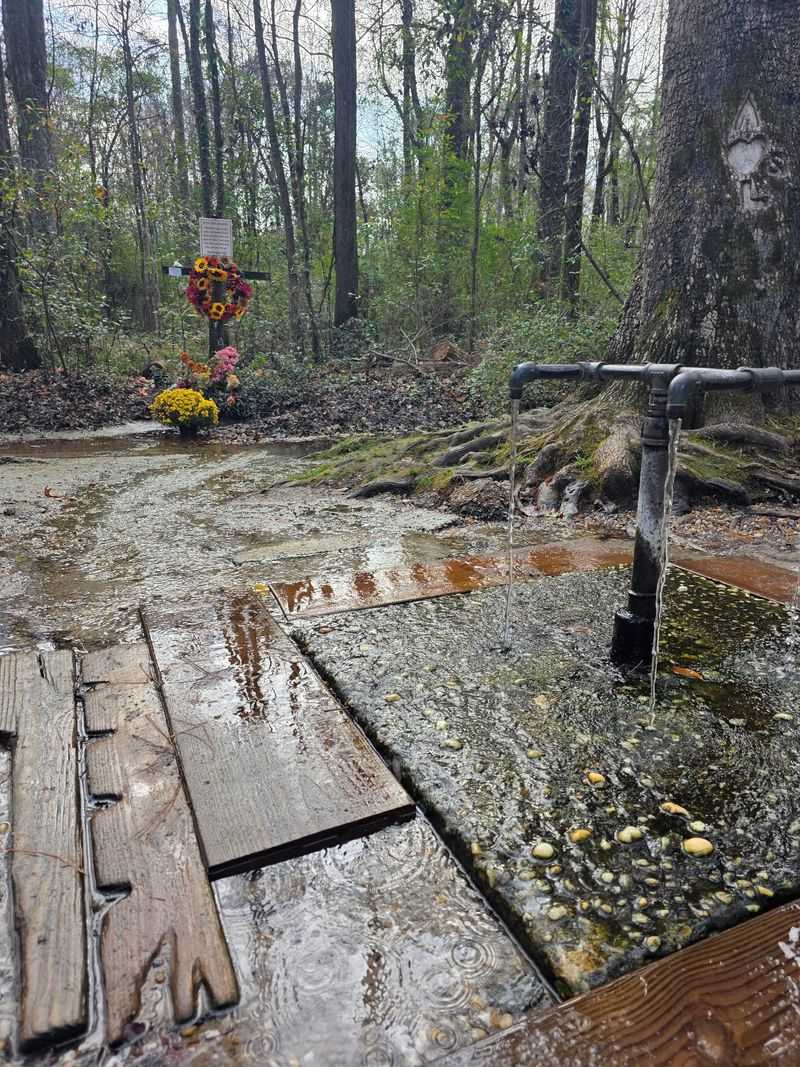
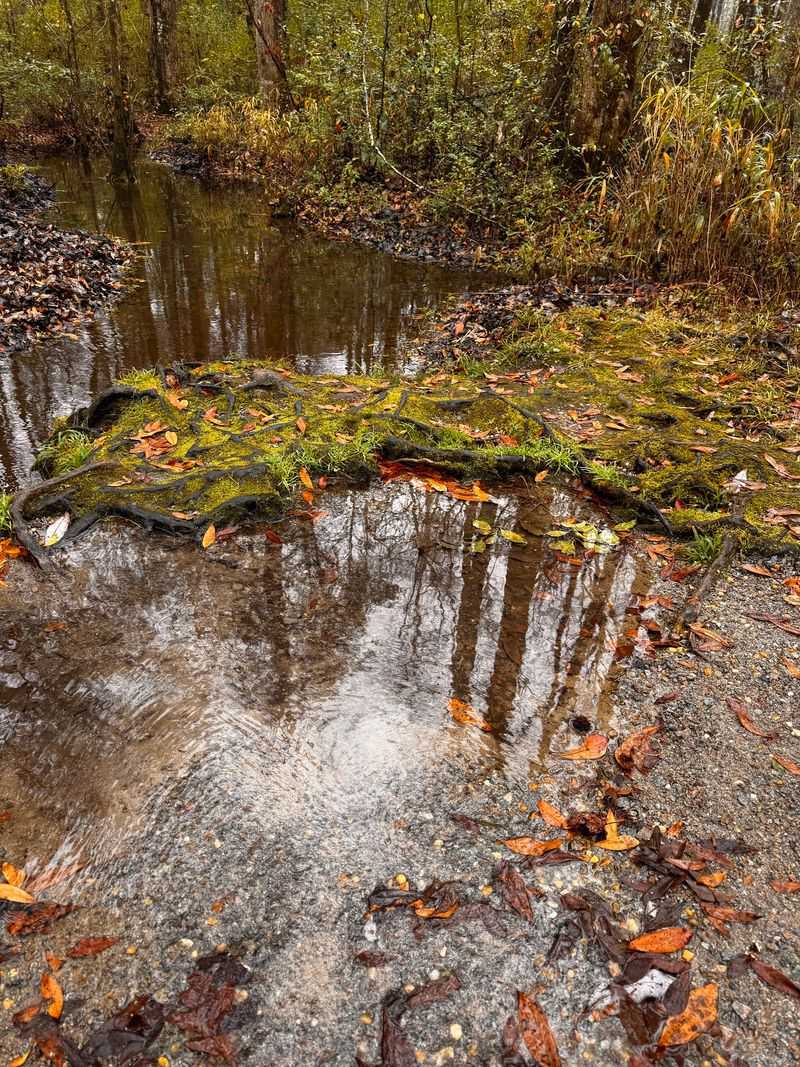
The spot sits under a canopy of trees, and the ground around it is worn smooth by the feet of generations who have made the same trip.
A Spring That Has Flowed for Centuries
Long before paved roads and filling stations existed, this spring was already drawing people in. The water that bubbles up at God’s Acre Healing Springs in Blackville, South Carolina comes from natural artesian wells deep underground, pushing up through layers of earth to reach the surface cool and clear.
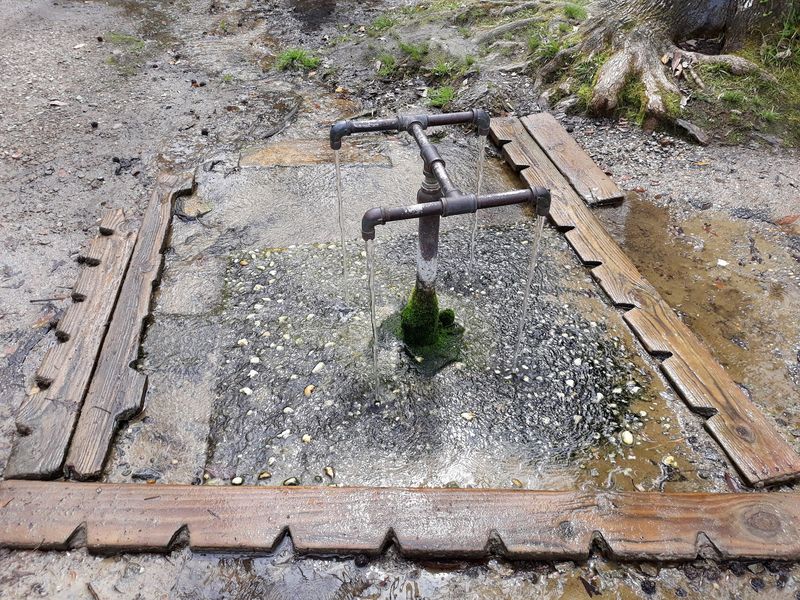
The setup today is surprisingly simple. Three filling stations, each with four free-flowing pipes, let visitors collect as much water as they like.
No machines, no filters, no complicated process.
The artesian source means the water is naturally pressurized and does not need to be pumped. It just flows, steady and unhurried, the same way it always has.
People bring gallons, jugs, even large barrels to take home. The water has been analyzed and described as exceptionally pure, with a mineral content that local government testing has confirmed over the years.
Visiting feels less like a tourist stop and more like a ritual, one that connects you to something much older than yourself. The spring does not care what century it is.
Sacred Waters and Native American History
Before European settlers arrived in this part of South Carolina, Native Americans already knew about these springs. They revered the water as sacred, believing it was a gift from the Great Spirit and that it carried genuine healing power.
This was not casual appreciation; it was deep spiritual belief tied to the land itself.
The springs were considered secret and protected. That sense of guardianship is part of why the water was shared with the wounded soldiers in the Revolutionary War legend, an act of generosity rooted in a long tradition of treating the springs as a gift meant for those in need.
Over time, the land changed hands. An Indian trader named Nathaniel Walker acquired the property from the original Native inhabitants, reportedly in exchange for corn.
The property then passed through several more owners before landing with L.P. Boylston in the twentieth century.
But the spiritual significance the Native Americans attached to this place never fully disappeared. Visitors today often describe a sense of calm and reverence when they arrive, almost as if the original intention for the space still lingers in the air around the water.
That feeling is hard to dismiss.
The Man Who Deeded Land to God
On July 21, 1944, a man named L.P. Boylston did something that most people would never even think to do.
He sat down and legally deeded approximately one acre of land, including the springs, to Almighty God. Not a church, not a nonprofit, not the government.
God.
His intention was clear: he wanted the springs to stay open to the public forever, free of charge, and completely off the table for any kind of commercial development. The deed has held up legally ever since, and the property is recognized as tax-exempt as a result.
Boylston’s full name was L.P. “Lute” Boylston, and his act of generosity has become as much a part of the springs’ story as the water itself. There is something quietly radical about what he did.
In a world where land is constantly bought, sold, and developed, he essentially removed this acre from that entire system. Nobody owns it in any conventional sense, which means nobody can fence it off or charge for access.
Lute Boylston probably could not have imagined how many people would come here decades later, but his decision made sure they always could.
Why Nobody Technically Owns the Land
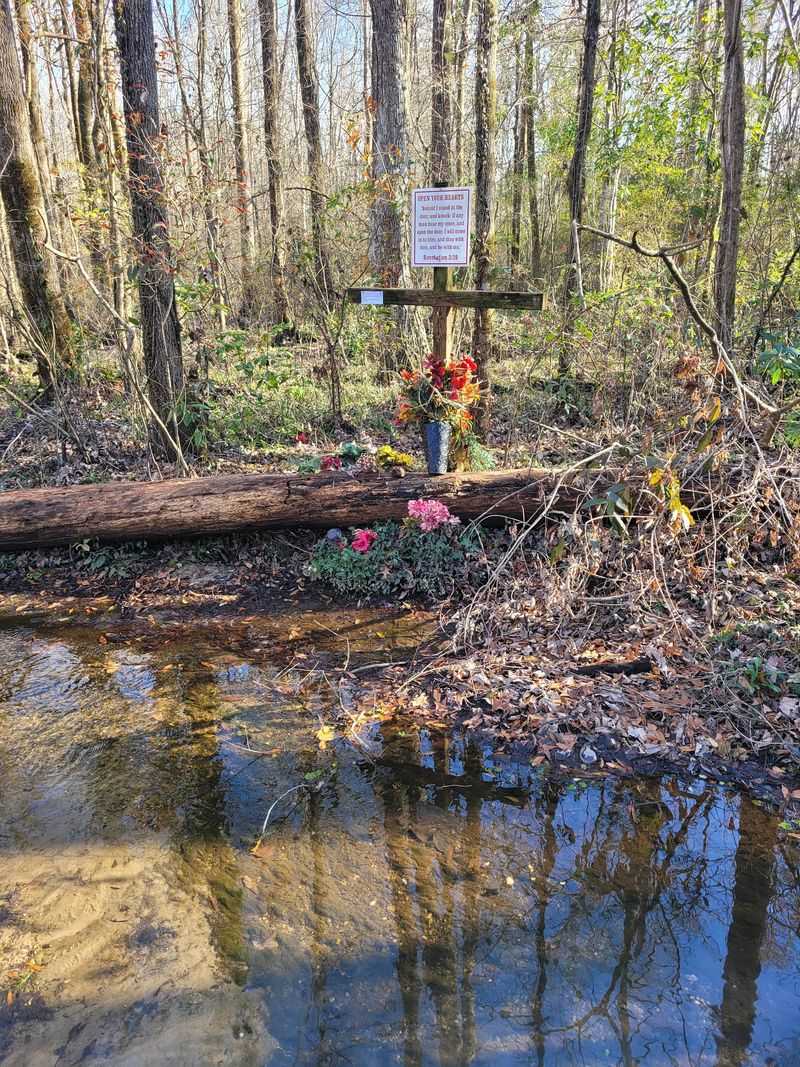
The legal situation at God’s Acre Healing Springs is genuinely one of a kind. Because the land was deeded to God in 1944, there is no human owner, no corporate title holder, and no government agency calling the shots.
The property exists in a category almost entirely its own.
This unusual ownership structure means the springs cannot be sold, developed, or closed off to the public. It also means the land is tax-exempt, since it is technically owned by a divine entity rather than a taxable person or organization.
Local community members and visitors have largely acted as informal stewards of the property over the decades, keeping it clean and respectful without any formal authority demanding it. There is something beautifully functional about that.
People take care of it because they want to, not because they have to. The absence of traditional ownership has not led to chaos or neglect; if anything, it seems to inspire a deeper sense of shared responsibility.
Visiting feels like stepping into a space that belongs to everyone equally, which is rare in a world where almost every inch of ground has a deed, a price tag, or a fence around it.
Faith and Healing: What Visitors Believe
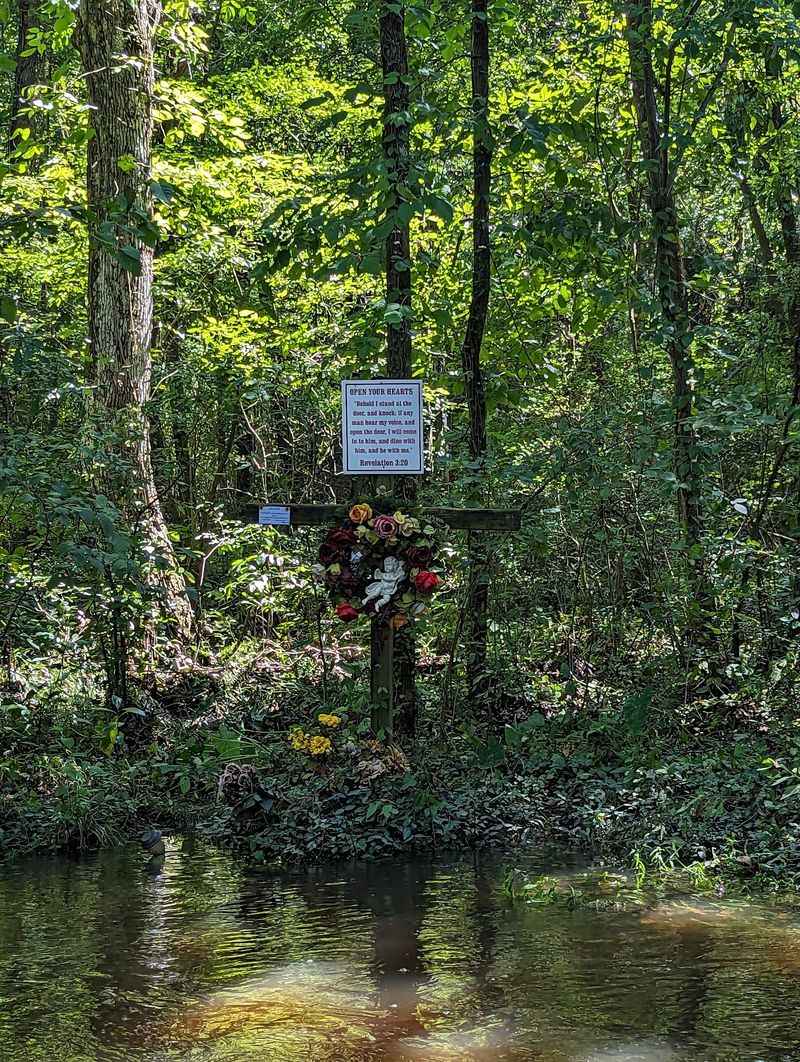
Ask the people filling their containers at God’s Acre Healing Springs why they make the trip, and you will get a wide range of answers. Some come purely for the mineral content and the water quality.
Others are more direct: they believe the water heals, and faith is a big part of that belief.
Many visitors describe a connection between their spiritual mindset and the benefit they feel from drinking the water. Whether that connection is physical, psychological, or something else entirely is a question nobody here seems particularly interested in debating.
What is striking is the consistency of the feeling people describe when they visit. There is a calm here that is hard to manufacture.
The trees are tall, the air is quiet, and everyone around you is doing the same unhurried thing. Nobody is rushing.
The act of collecting water from a spring that generations of people have trusted creates its own kind of comfort. Faith, in whatever form it takes, seems to make that experience more meaningful for the people who seek it out.
The springs have never made any official medical claims, but they have never needed to. The visitors carry their own stories, and those stories keep bringing more people back.
Accessibility and What to Expect On Site
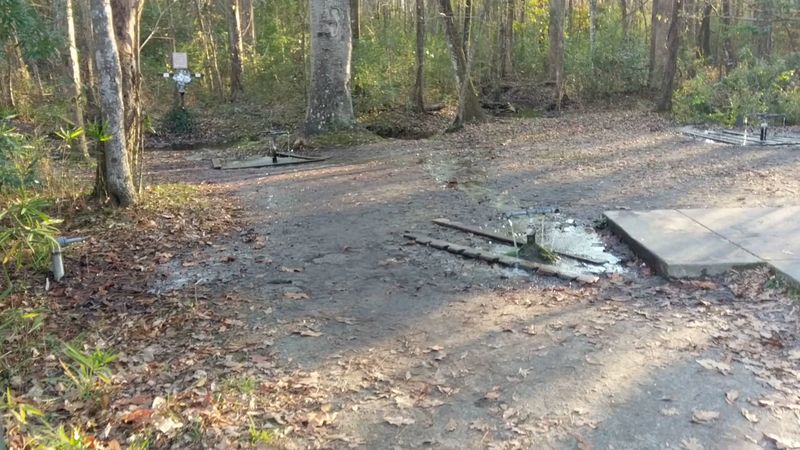
One thing that often surprises first-time visitors is how thoughtfully the site accommodates people with different physical needs. Paved, wheelchair-accessible paths lead directly to the water filling stations, which means the springs are genuinely reachable for people who might struggle with uneven terrain.
That kind of inclusivity feels right for a place that has always positioned itself as open to everyone. The water is for all people, and the physical setup reflects that value in a practical way.
What you will not find on site is a public restroom, so plan accordingly before you arrive. There are also no vending machines, benches, or picnic tables to speak of, so the experience is pretty stripped down.
Bring what you need: containers for water, comfortable shoes, and maybe a small cooler if you are transporting large amounts on a warm day. The filling stations feature three separate stations, each with four pipes, so even when there is a crowd, the wait is usually manageable.
First-time visitors sometimes underestimate how much water they want to take home. Bringing more containers than you think you need is a habit most regulars pick up after their very first visit to this remarkable little spring.
How the Land Changed Hands Over Centuries
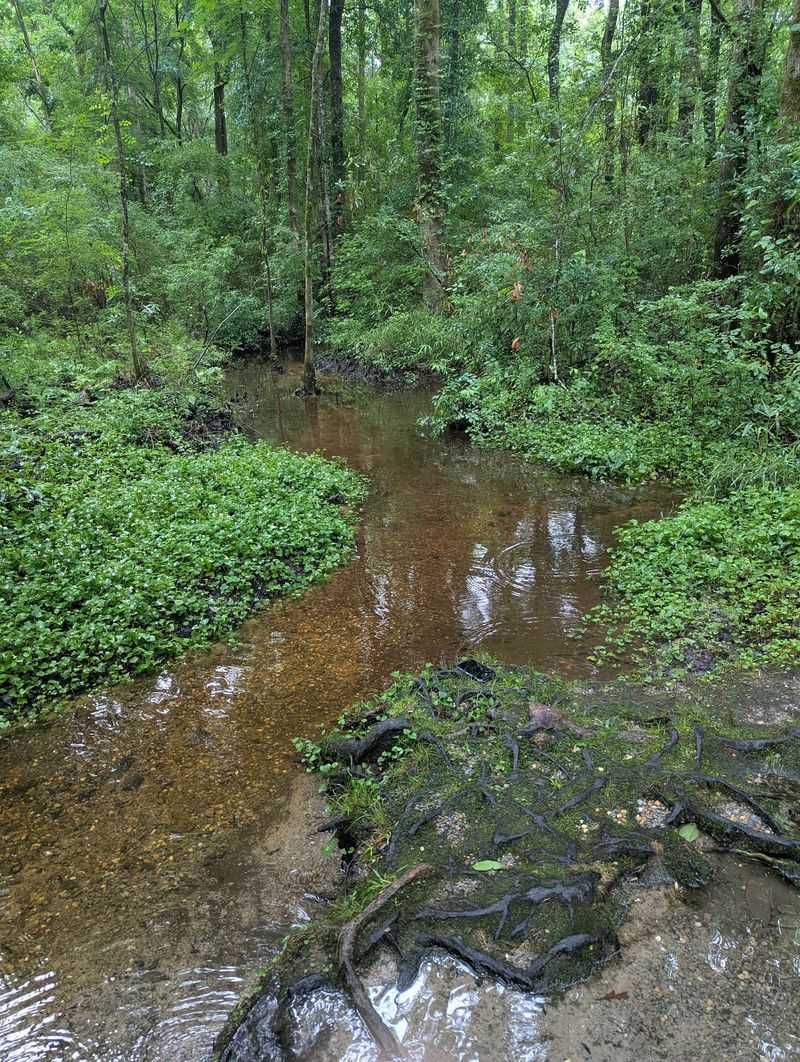
The ownership history of this one acre of South Carolina land reads like a compressed version of American history itself. Native Americans were the original stewards, treating the springs as sacred ground.
Then came Nathaniel Walker, an Indian trader who acquired the property from the original inhabitants in exchange for corn.
From Walker, the land moved through several different private owners over the following centuries. Each transfer was a conventional transaction, unremarkable in the context of its time.
Then Lute Boylston bought the property and changed the entire trajectory of its story.
His 1944 decision to deed the land to God effectively ended the cycle of human ownership. No future sale, development deal, or inheritance dispute could claim this acre.
It was removed from the ordinary flow of property law in one quiet, deliberate act. Understanding that history makes the springs feel even more layered.
The water has been here through all of it, flowing up from underground while the land above changed hands, changed purpose, and finally arrived at something that feels permanent. The spring outlasted every owner who ever held the deed, and now it belongs to no one and everyone at the same time.
Visiting Tips, What to Bring and When to Go
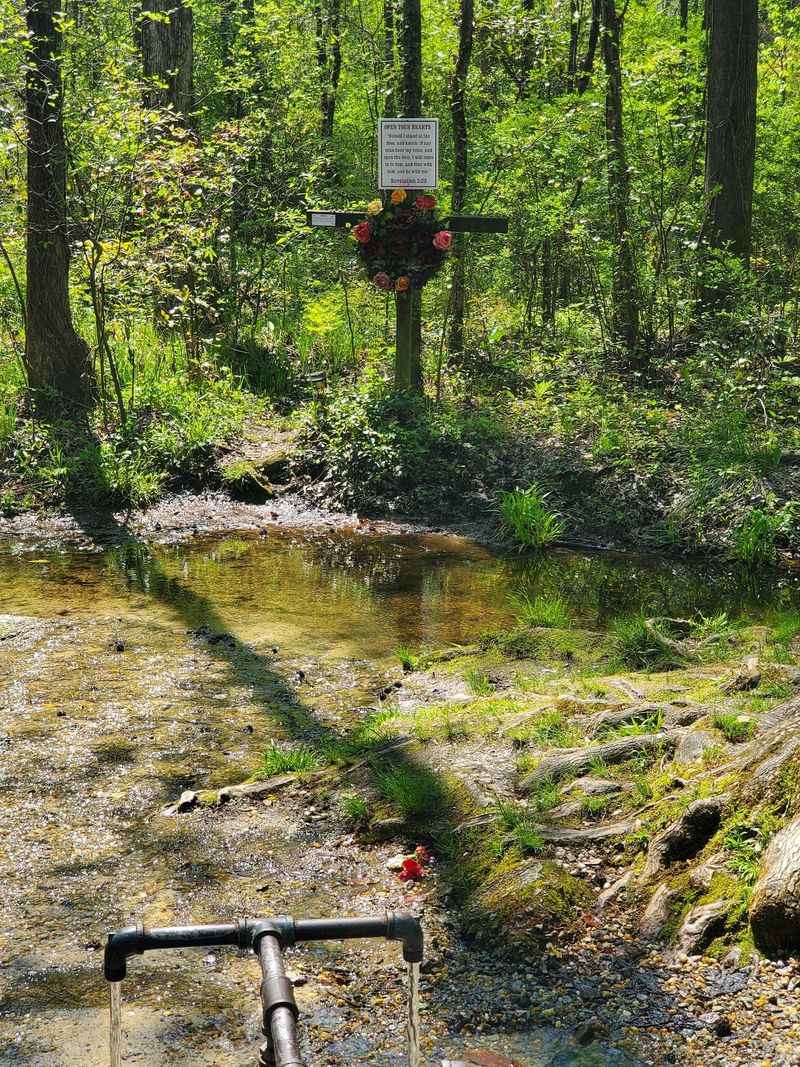
Preparation makes a real difference at God’s Acre Healing Springs because the site itself offers almost no amenities. The most important thing to bring is containers.
Gallon jugs are the most practical option, but many regulars bring large five-gallon water containers to maximize each trip.
Mornings on weekdays tend to be the quietest time to visit. Weekends, especially during warmer months, can draw steady crowds of people waiting at the spigots with impressive collections of containers in tow.
Wear comfortable shoes since you will be spending time outdoors on paved paths. If you are visiting during summer, the shade from the surrounding trees helps, but a hat and some water for the drive never hurts.
Since there are no restrooms on site, a quick stop at a gas station in town before arriving is a smart move. The springs are open during daylight hours every day of the week, with no fees for parking or water collection.
Give yourself more time than you think you need. People tend to linger here longer than planned, partly because the water is worth the wait and partly because the whole atmosphere makes rushing feel completely out of place.
Slow down and enjoy it.
Why This Place Still Matters Today
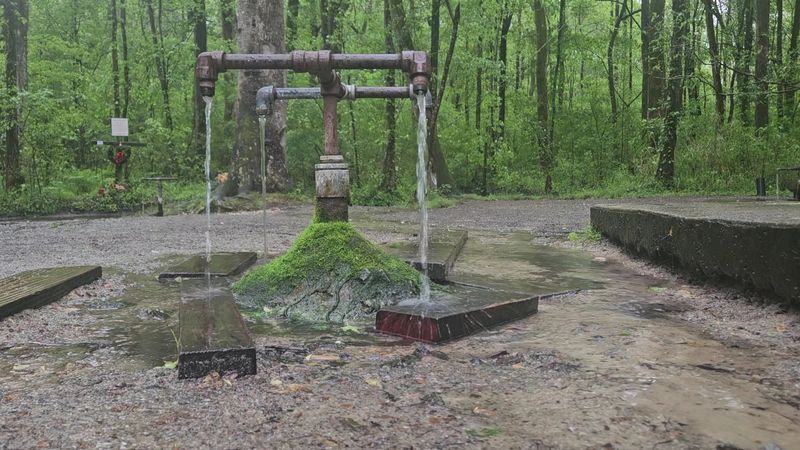
In an era when almost everything has a price tag, God’s Acre Healing Springs stands out simply by existing the way it does. Free, open, unowned, and unchanged in its essential purpose.
People have been coming here for generations, and they keep coming because the place delivers something that is genuinely hard to find elsewhere.
Part of what makes it matter is the continuity. Grandparents bring grandchildren.
Families make it an annual tradition. Newcomers arrive skeptical and leave with a trunk full of jugs and a story to tell.
The springs also represent something meaningful about community trust. Nobody officially manages this property, yet it remains clean, accessible, and welcoming.
That says something real about the people who visit and the respect they carry for the space. In a broader sense, God’s Acre is a reminder that some things do not need to be monetized or optimized to be valuable.
A spring that flows freely, a legend that endures, a deed written to no human being, and water that people call healing. Not every place needs to be explained or marketed to hold its power.
Some places just need to be visited, and this is absolutely one of them.
Address: Springs Court, Blackville, SC 29817
