The best souvenirs from a road trip are sometimes photographs of things that were never on the itinerary. An old courthouse.
A crooked-looking storefront. A covered bridge that seems wildly out of place in the modern world.
A tiny post office that is still open after generations of people have come and gone. Those are the kinds of discoveries waiting in these Alabama towns.
They are small enough that a visitor can wander without a plan, yet every street seems capable of producing another reason to stop. Beyond the historic buildings, some communities open toward waterfalls and wooded ridges, while others sit beside wide lakes and bays.
There is no giant attraction demanding attention. That is precisely the appeal.
1. Monroeville, Where Books Grew Roots
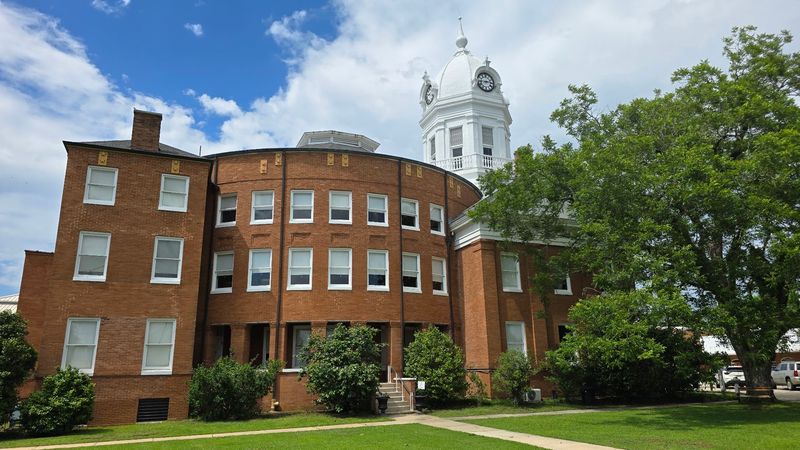
Few towns wear their literary fame as quietly as Monroeville does. The courthouse sits at the center of everything, and the whole place seems to hum with the memory of two writers who grew up within walking distance of each other.
The Old Courthouse Museum, at 31 North Alabama Avenue, Monroeville, AL 36460, has been restored to look the way it did in the 1930s.
Visitors can stand in the same courtroom that inspired the fictional Maycomb setting of Harper Lee’s most famous novel, the room where her father once practiced law.
Inside, permanent exhibits explore the lives and writing of Harper Lee and her childhood friend Truman Capote. The connection between a small Southern town and two enormous literary careers becomes surprisingly easy to feel here.
Every spring, a stage production of To Kill a Mockingbird takes place on the courthouse lawn and inside the historic courtroom itself. Tickets tend to move quickly, so planning ahead pays off.
Downtown holds more than 400 structures recognized on the National Register of Historic Places. A Literary Capital Sculpture Trail threads 14 bronze pieces through those blocks, honoring writers tied to the region.
The pace here is unhurried, almost deliberately so. Benches invite sitting, storefront windows invite peeking, and the whole visit tends to stretch longer than expected.
2. Guntersville, a Peninsula Town With Big Views
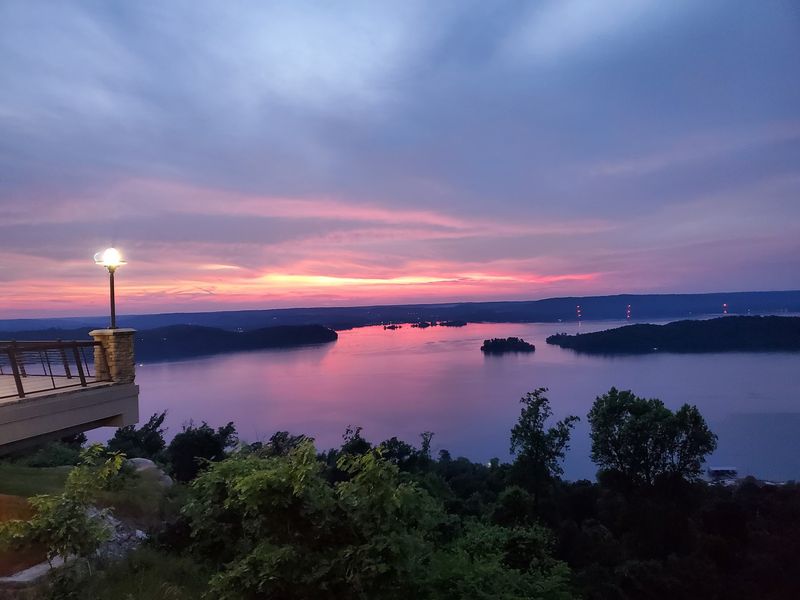
Water shows up everywhere in Guntersville, which makes sense for a town sitting on a peninsula. Lake Guntersville wraps around the edges, and Sand Mountain rises in the distance like a painted backdrop.
The Downtown Guntersville Historic District joined the National Register of Historic Places in 2012, and the commercial streetscape explains why. Gunter Avenue lines up row after row of brick buildings, most built between 1910 and 1935, giving the whole street a slightly cinematic quality.
Architecture fans have plenty to study. The Colonial Revival First National Bank at 400 Gunter Avenue dates to about 1926, while the sturdy red brick building at 452 Gunter goes all the way back to 1895.
A little farther along, a marble-clad post office from around 1940 adds another texture to the mix. Small boutiques and family-run cafes fill the spaces between, which makes browsing easy and unrushed.
Beyond the historic core, the lake takes over. Its wide waters and green shorelines draw anglers, paddlers, and anyone who simply wants a long look at the horizon.
Sunsets over the water are the sort of thing people stop mid-sentence for. Locals seem used to it, but visitors rarely are.
Guntersville works well as a base for exploring North Alabama, especially for travelers who like history and open water in equal measure.
3. Eufaula and Its Avenue of Mansions
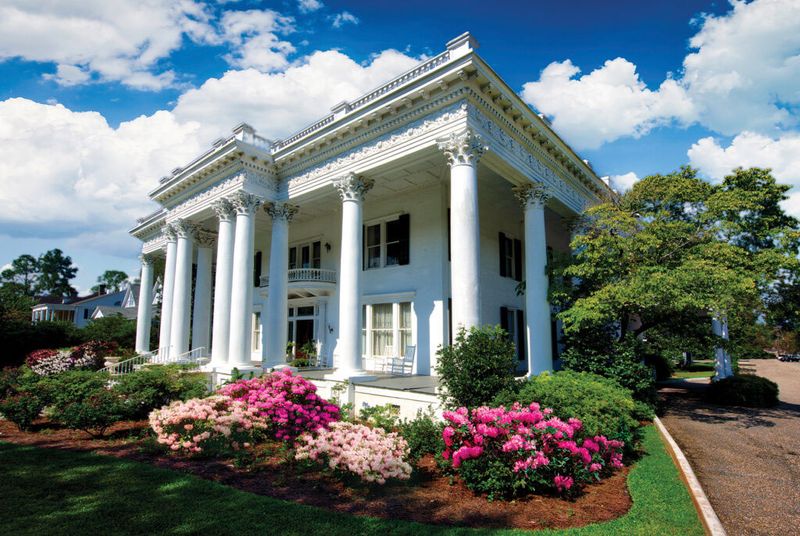
Driving up North Eufaula Avenue feels a bit like turning the pages of an illustrated book about the Old South. Oaks arch overhead, and mansion after mansion appears behind wide green lawns.
The Seth Lore and Irwinton Historic District ranks among Alabama’s largest, with more than 700 buildings listed on the National Register of Historic Places. Greek Revival, Italianate, Victorian, and Federal styles all share the same neighborhoods, which keeps the walk interesting block after block.
The Shorter Mansion at 340 N. Eufaula Avenue, Eufaula, AL, is the town’s signature landmark.
Built in 1884, the columned Greek Revival home now houses the Eufaula Historical Museum and offers a look at how wealthy families lived in the 19th and early 20th centuries.
Fendall Hall, at 917 W. Barbour Street, Eufaula, AL, tells a different story.
Constructed between 1856 and 1860, the Italianate residence still holds original hand-painted murals across the walls and ceilings of its first-floor rooms.
Downtown centers on a fountain that makes a pleasant place to pause. Lake Eufaula sits just beyond, known widely for fishing and quiet mornings on the water.
Each spring brings the Eufaula Pilgrimage, Alabama’s oldest tour of homes, when private residences open their doors. Azaleas and dogwoods usually bloom right on cue.
4. Cullman, Covered Bridges and a Miniature World
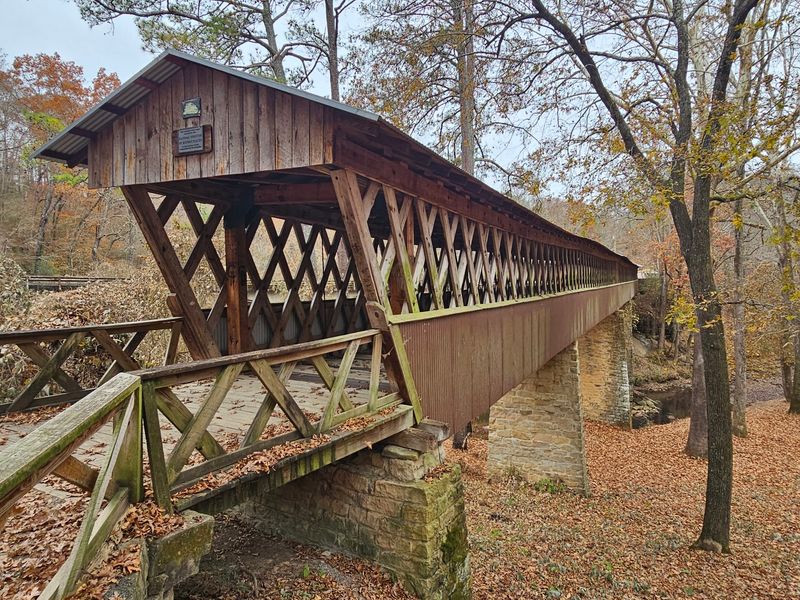
German settlers shaped Cullman, and traces of that heritage still turn up in street names, church steeples, and local recipes. The countryside around town holds two of the more unusual landmarks in North Alabama.
Clarkson Covered Bridge, at 1240 County Road 1043, Cullman, AL 35057, stretches 270 feet across Crooked Creek on a Town lattice truss frame first built in 1904. Wooden beams, dappled light, and moving water combine into a scene that photographers rarely rush through.
The surrounding park adds shaded picnic tables, walking paths, a preserved dogtrot log cabin, and an old grist mill. The site also saw Civil War skirmishing during the Battle of Day’s Gap in 1863, so the quiet carries some weight.
A few miles away, Ave Maria Grotto sits on the grounds of St. Bernard Abbey at 1600 St Bernard Dr SE, Cullman, AL 35055. Brother Joseph Zoettl, a Benedictine monk, spent decades building more than 125 miniature versions of famous religious buildings and shrines from around the world.
Nicknamed Jerusalem in Miniature, the four-acre park uses salvaged materials in wildly inventive ways. Broken tile, marbles, and cold cream jars all found new purpose.
Historic downtown Cullman rounds out the visit with restored homes and preserved storefronts, including the 1873 Weiss Cottage, the oldest house in town.
5. Mentone, a Mountaintop Hideaway
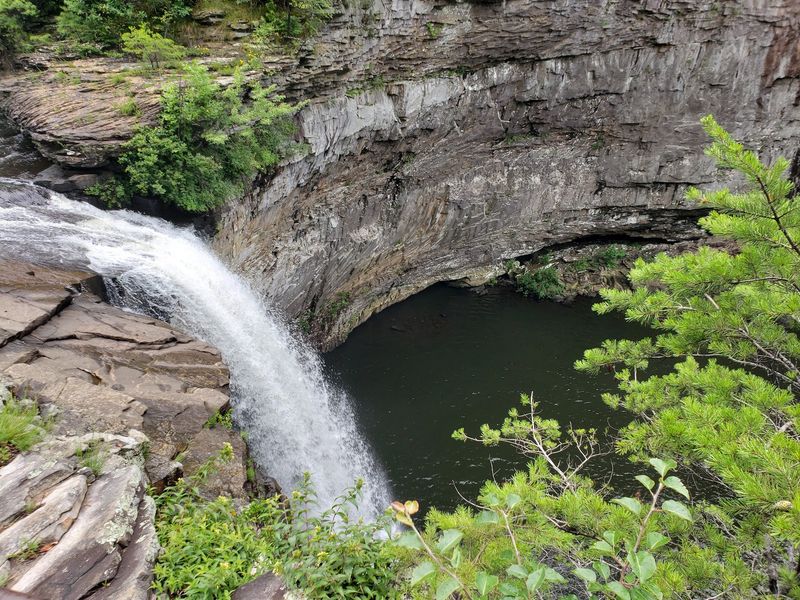
Cool air greets travelers who climb Lookout Mountain toward Mentone, and the temperature drop alone signals a change of pace. Cabins tuck into the trees.
Rocking chairs outnumber traffic lights by a wide margin.
Waterfalls are the headline attraction here. DeSoto Falls drops more than 100 feet into a wooded gorge, and the roar reaches the overlook long before the water comes into view.
Grace’s High Falls, the tallest waterfall in Alabama, sits nearby and puts on its best show after heavy rain. Timing a visit for spring or after a storm makes a noticeable difference.
The Old Union Crossing Covered Bridge adds a historic touch to a place already thick with atmosphere. Wooden planks, creek water, and mountain laurel do most of the storytelling.
Mentone itself stays small on purpose. A handful of shops, a few cafes, and stone buildings that look like they grew out of the ridge give the village its character.
Autumn brings some of the most vivid color in the state, and winter occasionally dusts the mountain with snow. Either season suits travelers who prefer quiet over crowds.
Hiking trails, overlooks, and shaded picnic spots fill the surrounding area. Cell service can be spotty, which somehow feels like part of the appeal rather than a drawback.
6. Fairhope, Flower Baskets and Castles
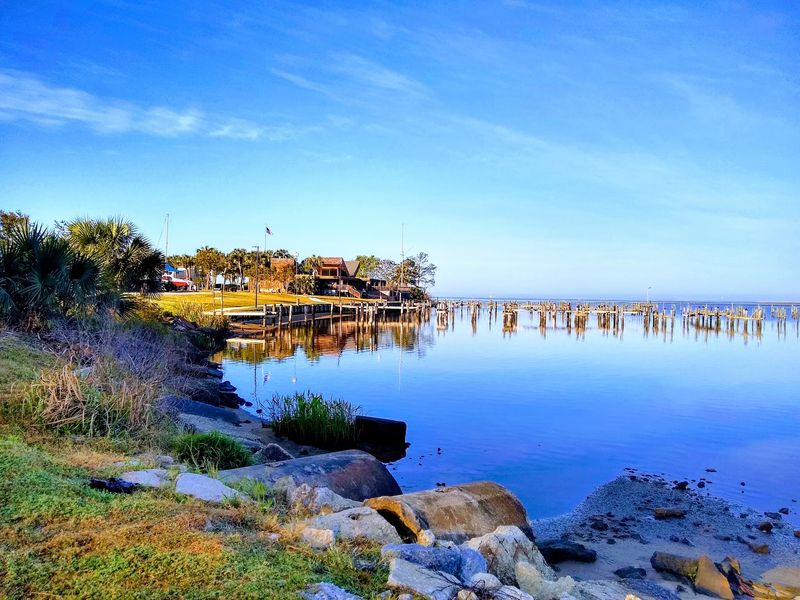
Hanging flower baskets swing from lampposts along nearly every downtown block in Fairhope, and the effect is hard to forget. The town sits on the eastern shore of Mobile Bay, where sunsets tend to steal the show.
What really tips Fairhope into storybook territory is its collection of privately owned castles. Mosher Castle comes complete with a moat and a dragon, which sounds like an exaggeration until it appears through the trees.
Sheldon Castle, begun in 1946, holds status as a registered Baldwin County Historic Home. Both properties remain private residences, so admiring them from the street is the respectful approach.
The rest of town rewards slow walking. Preserved storefronts, shaded sidewalks, and historic houses give the district a settled, lived-in feel rather than a staged one.
Down at the bay, a long pier and grassy park invite lingering. Breezes off the water keep summer afternoons manageable, and the light around dusk turns everything soft and pink.
Bookshops, galleries, and small cafes fill the downtown grid. Browsing here takes longer than planned, mostly because nobody seems in a hurry to move anyone along.
Fairhope pairs naturally with a broader Gulf Coast route, offering a gentler counterpoint to beach towns without giving up the water views.
7. Daphne, Bay Breezes and a Bronze Naiad
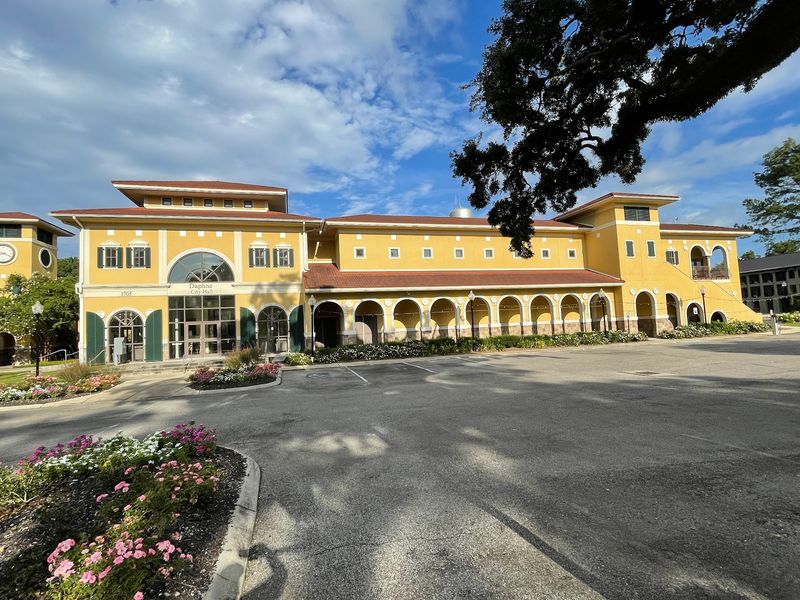
Just about twenty minutes from Mobile, Daphne spreads along the eastern shore of the bay with an easygoing rhythm that suits an unplanned afternoon. Sidewalks, shade trees, and water views make the town simple to explore on foot.
One detail catches most visitors off guard. A bronze naiad fountain stands outside city hall, giving a bit of mythology to an otherwise practical corner of town.
Waterfront parks open onto wide bay views where pelicans glide low over the surface. Breezes come off the water in the late afternoon and cut the humidity noticeably.
Daphne has grown over the years, yet the older residential streets keep their canopy of live oaks and their unhurried mood. Cyclists and dog walkers seem to have claimed them.
The town works especially well as a relaxed stop between larger destinations. Nothing feels rushed, and there is no pressure to check off a list of must-sees.
Local eateries lean toward seafood, unsurprising given the setting. Grabbing a meal near the water is about as classic a Gulf Coast experience as it gets.
For travelers heading along the eastern shore, Daphne offers a soft landing. Combine it with Fairhope for a full day of bayfront wandering, and the drive between the two takes only minutes.
8. Mooresville, All of It on the National Register
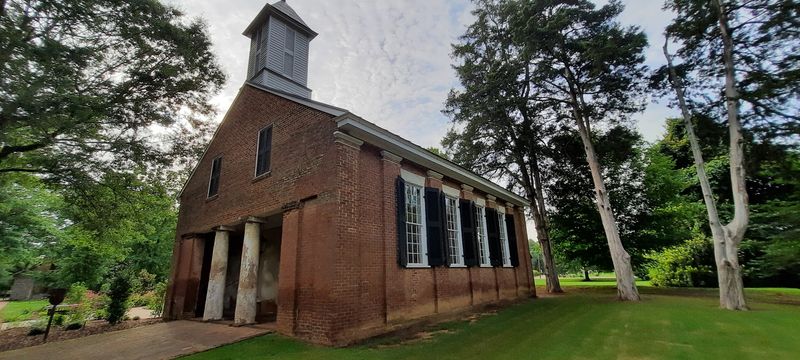
Fewer than 60 people live in Mooresville, and yet the entire village appears on the National Register of Historic Places. Incorporated in 1818, it ranks among the oldest towns in Alabama.
Dirt lanes and gravel edges give way to tree-lined streets lined with 19th-century homes, many built in the Greek Revival style. White fences, tin roofs, and old brick chimneys repeat down the block.
The heart of the place is the oldest working post office in Alabama, built around 1840 at the corner of Lauderdale and High Streets. Original mailboxes and furnishings remain inside, and some have served the same families across generations.
The Stagecoach Inn and Tavern on High Street dates to roughly 1821 and now serves as town hall and museum. Its low ceilings and worn floorboards say plenty without any signage.
Two historic churches stand nearby, and one is said to be a place where President James A. Garfield preached.
Details like that turn a short stroll into a genuine history lesson.
Lyla’s Little House, an artisanal candy and ice cream shop set inside a Downing Gothic-style cottage, adds something sweet to the walk. Kids tend to spot it first.
The whole village can be covered in under an hour, though most visitors end up circling back for a second look.
9. Tuscumbia and the Well Pump That Changed Everything
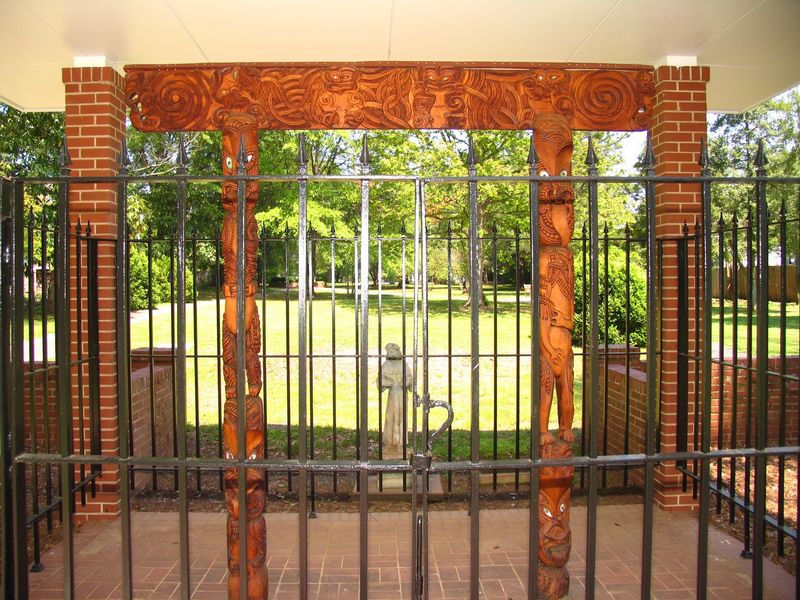
A simple iron water pump in a Tuscumbia yard carries more meaning than most monuments ever manage. That pump belongs to Ivy Green, at 300 W.
North Commons, Tuscumbia, Alabama, where Helen Keller was born and raised.
Her grandfather, David Keller, built the main house in 1820. The estate still includes the original home, the small birthplace cottage, and the grounds where a seven-year-old girl finally connected a word with the water running over her hand.
Anne Sullivan’s breakthrough with her student happened right there, and the site has operated as a museum since 1954. Original family furnishings fill the rooms, alongside hundreds of Helen Keller’s personal mementos, books, and souvenirs from her travels and lectures.
Gardens surround the buildings and invite slow wandering. Benches sit in the shade, and the quiet suits the subject.
Every June and July, the grounds become an outdoor stage for The Miracle Worker, the drama built around those early years. Watching it performed where the events happened hits differently than reading about it.
Tuscumbia counts among the oldest cities in North Alabama, and downtown holds more history worth noticing, including the William Winston House from around 1840.
Spring Park and the nearby Muscle Shoals music heritage sites make it easy to extend the visit into a full day.
