I do not really believe in ghosts. But I also do not like being proven wrong.
So I packed my car, queued up a creepy playlist, and went looking for trouble across Oklahoma. What I found was a lot of old buildings with weird vibes, hotel rooms that felt colder than they should, and at least one staircase that creaked when nobody was on it.
Coincidence? Maybe.
But after the third or fourth unexplained chill, I started sleeping with the lights on. This state has seen wars, outlaws, and tragic endings.
Whether you believe or not, the stories alone are worth the drive. Just bring a friend.
And maybe a flashlight.
Stone Lion Inn, Guthrie, Oklahoma

Guthrie was once the territorial capital of Oklahoma, and the Stone Lion Inn sits right in the middle of its storied past. Built in 1907, this grand Victorian mansion served as both a family home and, for a time, a funeral parlor.
Walking through its front door feels like stepping into a completely different era.
The inn is best known for its resident spirit, a young girl named Irene. According to local legend, Irene was a child who passed away under mysterious circumstances inside the home.
Guests have reported hearing soft, tap-tap-tapping footsteps down the hallways late at night.
I stayed in one of the upstairs rooms and, I will be honest, I kept the lamp on. The inn offers a Murder Mystery Dinner experience that pulls the history of the building right into the evening’s entertainment.
It is theatrical and genuinely unsettling in the best possible way.
Beyond the inn itself, Guthrie’s brick-paved streets are lined with other historically eerie spots. The whole downtown district has a preserved, frozen-in-time quality that makes wandering around after sunset feel quietly adventurous.
The Guthrie Ghost Walk tour is a smart addition to any visit here.
It covers the Victorian and Edwardian architecture while sharing the town’s most chilling tales. For anyone who loves history wrapped in a layer of mystery, Guthrie is the perfect first stop on an Oklahoma haunted road trip.
Dead Woman’s Crossing, Weatherford, Oklahoma

Few places in Oklahoma carry a name as chilling as Dead Woman’s Crossing, located near Weatherford in Custer County. The name alone is enough to make you slow the car down as you approach.
The real story behind it is even more unsettling than the title suggests.
In 1905, a young woman named Katie DeWitt James was traveling through the area with her infant daughter. She never reached her destination.
Her remains were later found near a creek crossing, and the case became one of Oklahoma’s earliest high-profile criminal investigations. Her daughter survived and was found safe nearby.
I pulled off the road just before sunset, and the area has a heavy, still quality to it. The trees crowd close to the water’s edge, and the light fades fast out here.
Locals and visitors alike have reported hearing what sounds like a baby crying near the creek after dark.
Some have also described seeing unexplained flashes of light hovering near the water’s surface. Whether those accounts are rooted in something real or simply in the power of suggestion, the atmosphere of the place makes them easy to believe.
Weatherford itself is a charming small city worth spending a few hours in before heading out to the crossing. Knowing the actual historical details of Katie’s story makes the visit feel less like a thrill-seeking detour and more like a genuine act of remembrance for a woman history almost forgot.
The crossing is in a remote area; ensure you have a full tank of gas and daylight, as GPS can be spotty in rural Custer County.
Cain’s Ballroom, Tulsa, Oklahoma
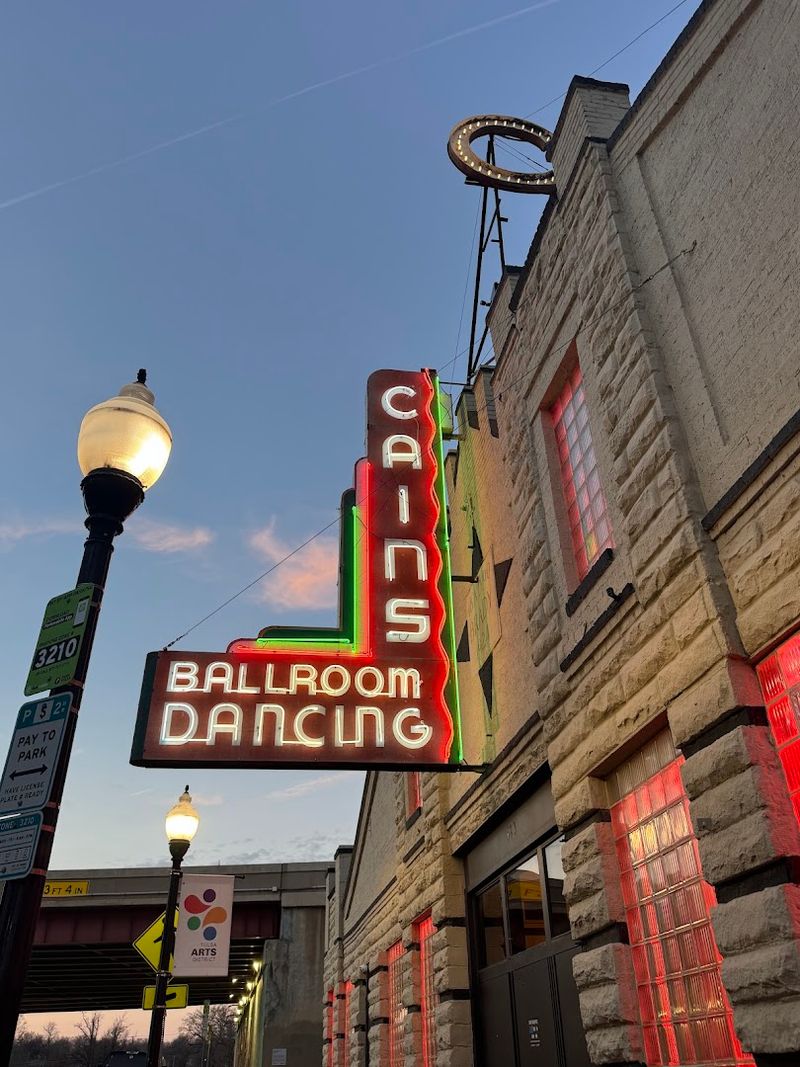
There is something about an old music hall that holds onto its energy long after the last note fades. Cain’s Ballroom in Tulsa, Oklahoma, has been doing exactly that since 1924.
Known worldwide as the Home of Bob Wills, this legendary venue has hosted everyone from Western swing pioneers to punk rock bands.
Bob Wills himself performed here so often that the ballroom became inseparable from his identity. According to local legend, his spirit never quite left the building.
Staff and performers have reported cold spots on the stage even when the rest of the hall is warm, and some have described an unexplained presence near the back of the room during quiet moments.
There is also the story of a Lady in Red, a figure said to appear during live performances and then vanish before anyone can get a closer look.
I visited on a weeknight when the hall was mostly empty, and the old wooden floor, the vintage photographs, and the low hum of the building’s age all added up to something genuinely atmospheric.
Tulsa itself is rich with history, and Cain’s Ballroom sits in the Brady Arts District, which makes it easy to pair with other cultural stops in the city. The building has been carefully preserved, and walking through it feels like touching something irreplaceable.
Even without the ghost stories, this place would deserve a spot on any Oklahoma road trip. The haunted layer just makes it unforgettable.
Picher, Oklahoma, Route 66 Ghost Town
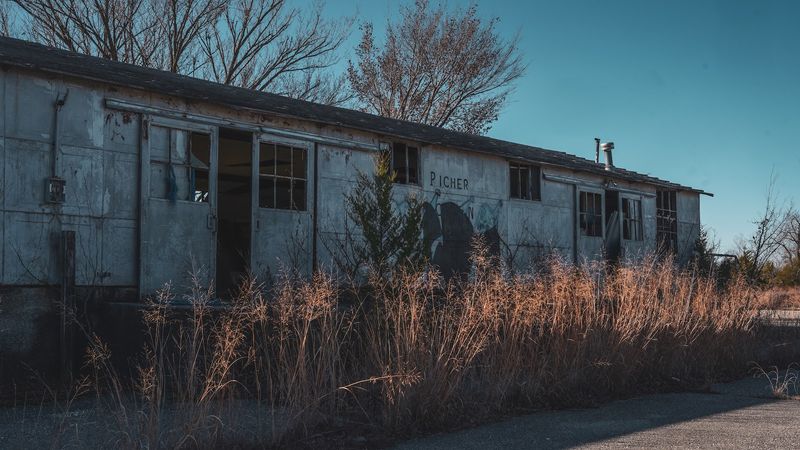
Driving into Picher, Oklahoma, feels like crossing into a place that time officially gave up on. This northeastern Oklahoma town sits just off the historic Route 66 corridor and was once a booming lead and zinc mining community.
Today, it stands almost completely abandoned, and the silence there is the kind that gets under your skin.
The town was evacuated in the early 2000s after decades of mining left the ground riddled with unstable tunnels and the soil contaminated. Massive grey piles of mine waste, called chat piles, still loom over the empty streets like strange monuments.
Nothing about the landscape looks natural anymore.
I drove slowly through what remains of downtown, past hollow storefronts and collapsed rooflines. A few structures still stand, but most are in various stages of returning to the earth.
The eerie quality of Picher is not supernatural in the traditional sense, but it is deeply haunting in a way that stays with you.
The history of the people who lived and worked here, and the events that forced them to leave, make every crumbling wall feel loaded with meaning. Route 66 travelers often pass through this area without stopping, which is a missed opportunity.
Picher represents a chapter of American industrial history that ended badly, and standing in the middle of it makes that chapter feel very real and very present. It is sobering, strange, and absolutely worth the detour from the main road.
Warning: Picher is a restricted federal Superfund site. Visitors should remain in their vehicles at all times.
Do not climb the chat piles or enter abandoned structures, as the soil is toxic and the ground is unstable due to underground mine shafts.
Devil’s Promenade, Near Quapaw, Oklahoma
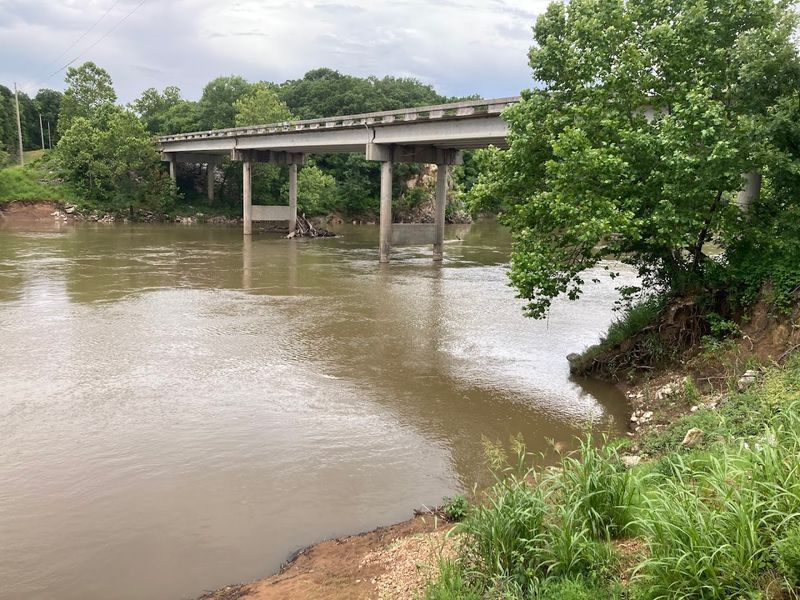
Just outside the small town of Quapaw in the far northeastern corner of Oklahoma, there is a stretch of road that has been puzzling people for well over a hundred years. Locals call it the Devil’s Promenade, but it is more widely known as the Spook Light.
Whatever you call it, what happens here is genuinely hard to explain.
A glowing orb, typically described as orange, yellow, or white, appears along the road at night and moves in unpredictable patterns. It floats, bobs, and sometimes splits into smaller lights before rejoining.
Scientists, military investigators, and curious travelers have all tried to find a rational explanation, and none has fully succeeded.
I parked on the gravel road after dark and waited. The light appeared about twenty minutes in, hovering in the distance like a lantern being carried by someone just out of sight.
It moved slowly at first, then dipped and rose in a way that no headlight or reflection could convincingly mimic.
The Spook Light has been documented since at least the mid-1800s, and the Quapaw Nation, whose land this area borders, has its own traditional stories connected to the phenomenon. That layered history makes the experience richer than a simple ghost hunt.
The road itself is easy to find and accessible, which makes this one of the more approachable stops on an Oklahoma paranormal road trip. Bring a jacket, bring patience, and keep your eyes on the horizon.
Something out there is waiting to be seen.
The Skirvin Hilton Hotel, Oklahoma City
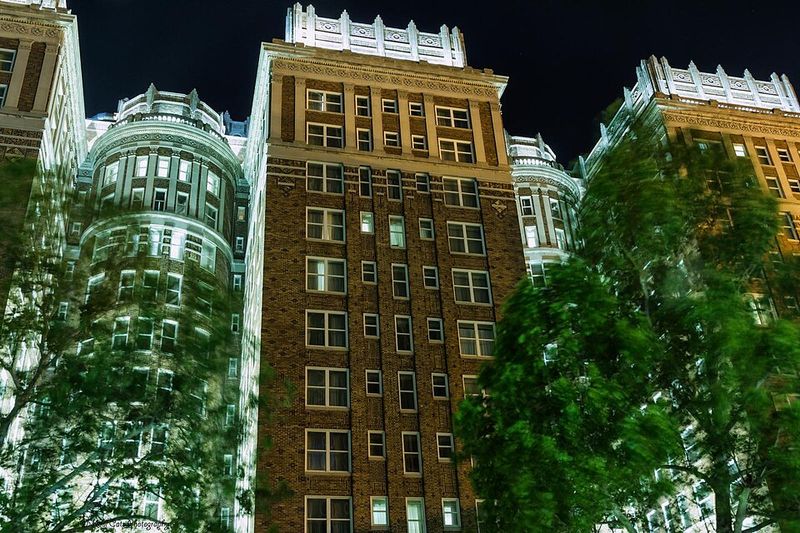
The Skirvin Hilton isn’t just Oklahoma City’s oldest hotel; it is arguably the state’s most famous “haunted” landmark. Since opening its doors in 1911, this grand downtown pillar has hosted presidents, oil tycoons, and celebrities, but its most persistent guest is a woman named “Effie.”
According to local lore, Effie was a hotel maid who was locked in a room on the tenth floor by the hotel’s original owner to hide a scandalous pregnancy. Driven to despair, she allegedly jumped from the window with her infant in her arms.
In the modern era, the Skirvin has gained international notoriety among NBA teams. For years, professional basketball players have reported terrifying encounters on the tenth floor, ranging from slamming doors and moving luggage to the distinct sound of a baby crying in empty hallways.
Some players have famously refused to stay in the building, opting for other hotels to avoid “Effie’s” pranks. Despite these spine-tingling accounts, the hotel remains a pinnacle of 2026 luxury.
The meticulously restored mahogany lobby, hand-carved details, and crystal chandeliers offer a masterpiece of architectural beauty.
However, for those who book a room on the tenth floor, the experience is rarely just about the amenities. The lingering chill and the weight of the hotel’s long history make it a destination where the line between high-end hospitality and the supernatural is thin.
Fort Washita Historic Site, Durant
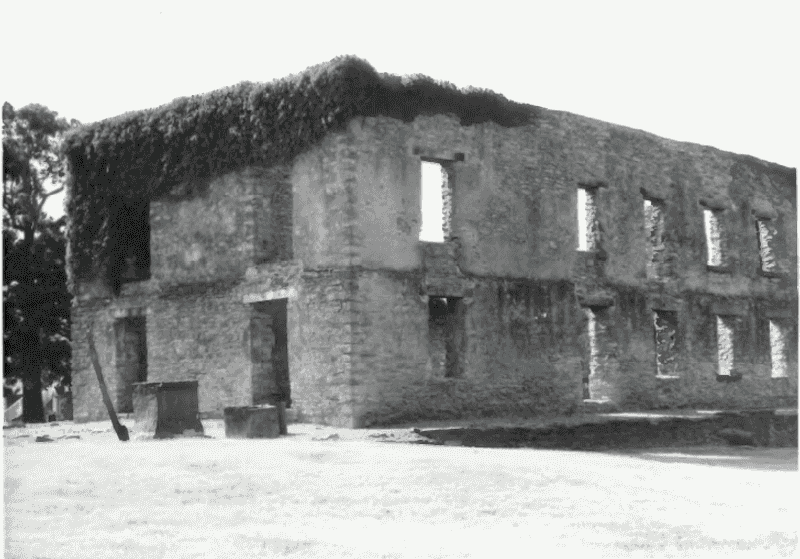
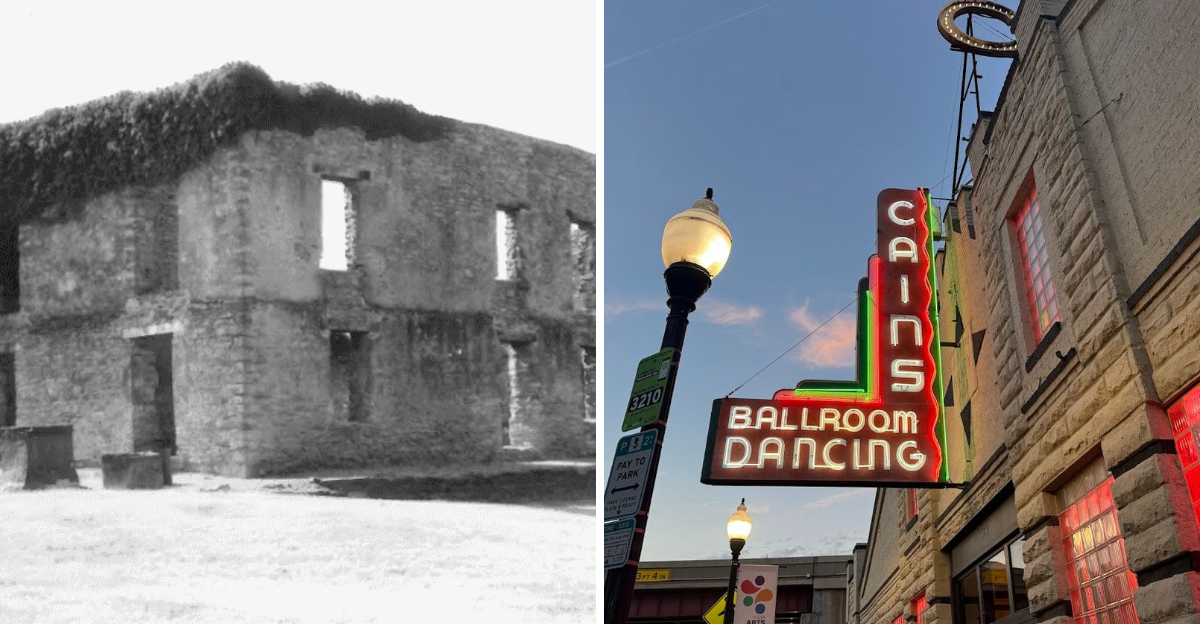
Standing among the crumbling limestone ruins of Fort Washita feels like walking through a physical wound in Oklahoma’s history. Established in 1842 to protect the Choctaw and Chickasaw nations, the fort was a vital frontier outpost before it was engulfed by the horrors of the Civil War.
It was eventually abandoned and burned, leaving behind a skeletal landscape of scorched stone and forgotten graves. The most chilling legend attached to the site is that of “Aunt Jane,” a woman reportedly murdered and beheaded by looters during the war.
Legend says she was killed for refusing to reveal the location of hidden gold, and her restless spirit has patrolled the grounds ever since.
Visitors and historical reenactors frequently report sightings of a headless figure wandering near the ruins of the old barracks or standing silently in the shadows of the cemetery.
The atmosphere at Fort Washita is notoriously heavy; even on bright, sunny days, hikers describe a sudden sense of being watched from the hollow window frames of the remaining structures. By day, the site serves as an educational historic park, offering a deep look into frontier life.
But as the sun dips below the horizon in the Red River valley, the park takes on an entirely different energy. It remains a premiere destination for paranormal investigators who claim the spirits of weary soldiers and lost settlers still keep a ghostly watch over this once-important military stronghold.
The Parallel Forest, Lawton
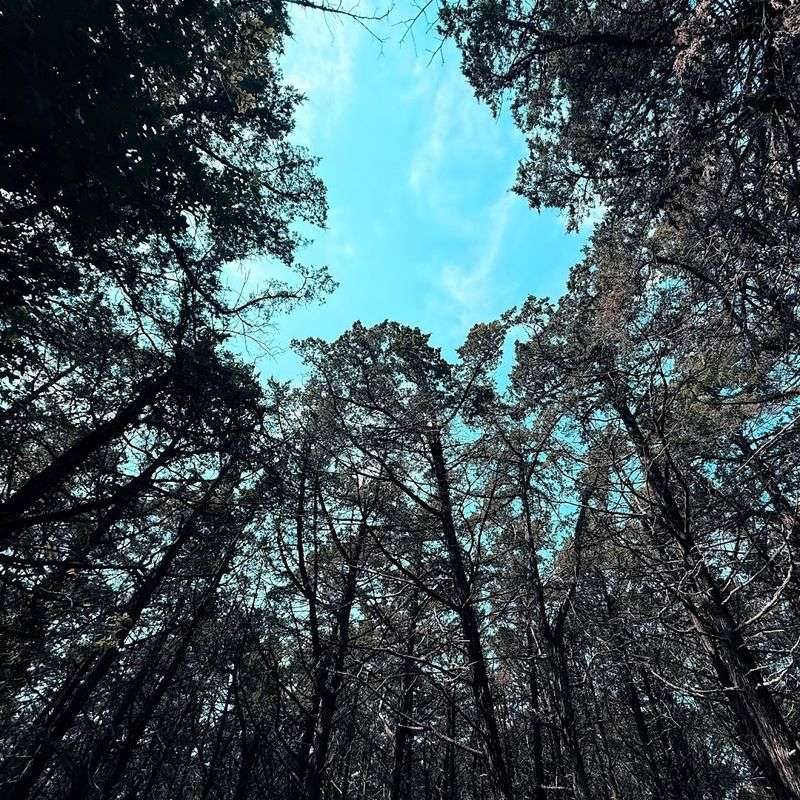
Tucked away inside the rugged beauty of the Wichita Mountains Wildlife Refuge, the Parallel Forest is a place where nature feels mathematically and eerily “wrong.”
This isn’t a natural woodland; it is the result of a 1930s government experiment where over 20,000 red cedars were planted in a perfect grid, exactly six feet apart in every direction.
The original goal was to create a windbreak to combat the Dust Bowl, but the result is a disorienting labyrinth that defies natural logic.
No matter which way you turn, the trees align in perfect, straight rows that stretch into a dark, repetitive infinity, effectively blocking out the sun and muffling the sounds of the outside world.
Local legends are whispered about a sacrificial altar hidden deep within the center of the grid and a haunted stone water tower that stands as a silent sentinel among the trees. However, the true terror of the Parallel Forest is the sensory deprivation it creates.
Inside the grid, the wind stops, and birds rarely sing, leaving a silence so heavy it feels like it’s pressing against your ears. It is incredibly easy to lose your sense of direction; without the sun to guide you, every direction looks identical.
For hikers in 2026, the forest remains one of Oklahoma’s most unsettling natural anomalies, a place where the rigid order of man has created a surreal, haunting environment that feels like a glitch in the natural world.
