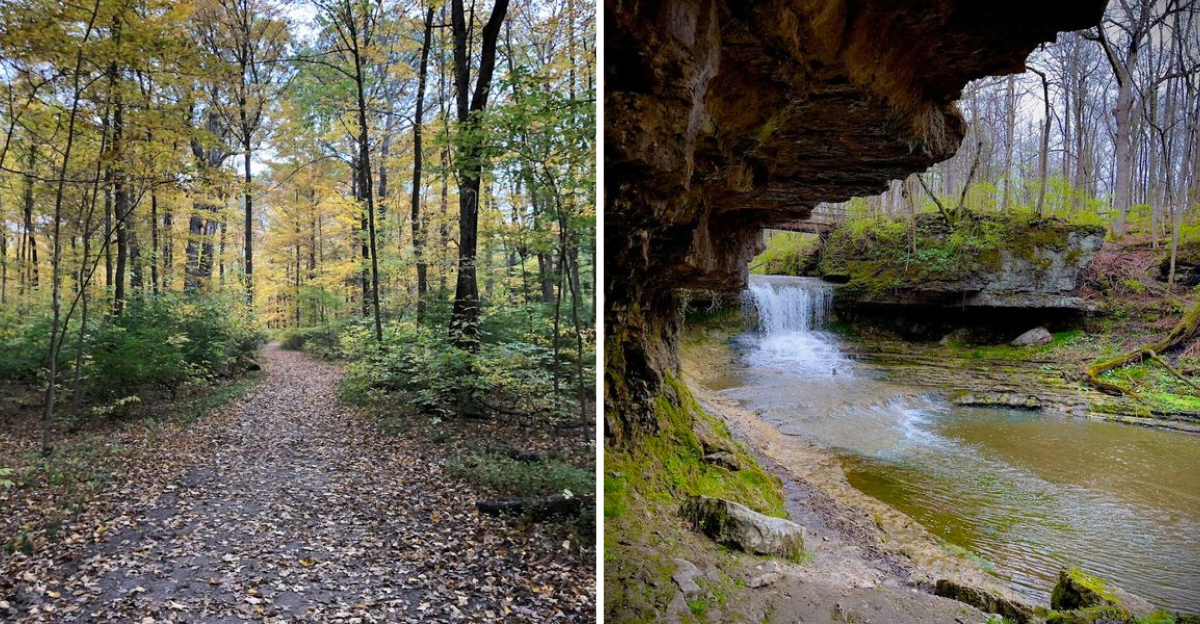
Southwestern Ohio has a place where the forest feels genuinely ancient, where springs bubble up from the earth year round, and where the trees are so tall and old they make you feel wonderfully small. Roughly a thousand acres of land that has been quietly doing its thing since long before most of us were born. I first visited on a cool October morning and left feeling like I had stumbled into a secret the rest of the world had somehow overlooked.
The preserve holds old growth trees estimated to be four hundred years old, more than twenty miles of trails, waterfalls, a famous iron rich spring, and even a center that rehabilitates birds of prey. You might be a casual hiker, a nature photographer, or just someone who needs a break from concrete and screens. Either way, this place has something real to offer.
The Yellow Spring: The Iron-Rich Wonder That Named a Town
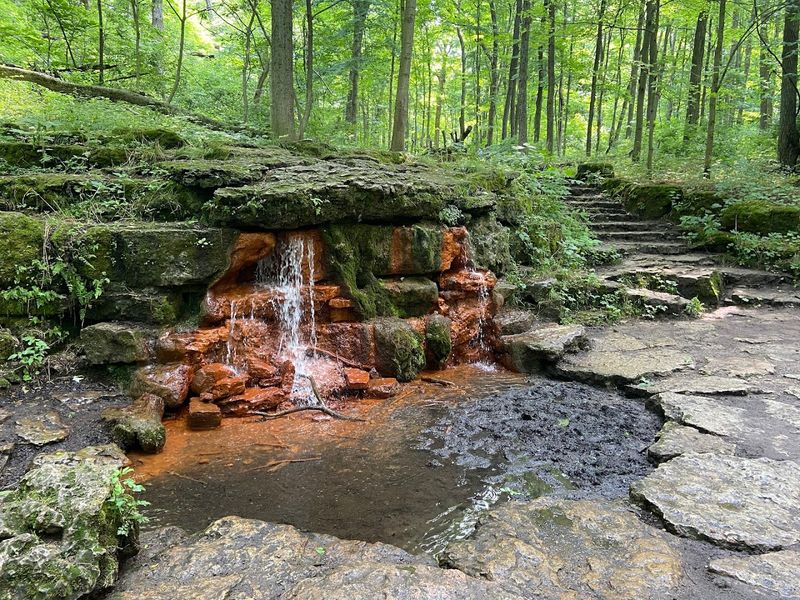
Not many natural features get to name an entire town, but the Yellow Spring earns that honor without any argument. The water that flows from this spring carries a high concentration of iron, and the moment it hits the air, oxidation turns it a vivid yellowish-orange color that stains the surrounding rocks in a way that looks almost painted.
The spring maintains a steady temperature of 52 degrees Fahrenheit throughout the entire year, which means it flows just as reliably in January as it does in July. That kind of consistency is genuinely rare, and it is part of what made this spot so significant to Indigenous peoples and early settlers alike.
There are actually at least two spots within the Glen where water emerges with this characteristic color. You can find the main spring fairly early on the trail loop, and it tends to stop most visitors cold the first time they see it.
Just keep in mind that despite its long history of being associated with health and healing, current advisors strongly recommend against drinking directly from it due to potential agricultural runoff from surrounding properties. Admire it, photograph it, and appreciate it for the geological curiosity it truly is.
Old-Growth Forest: Where 400-Year-Old Trees Still Stand
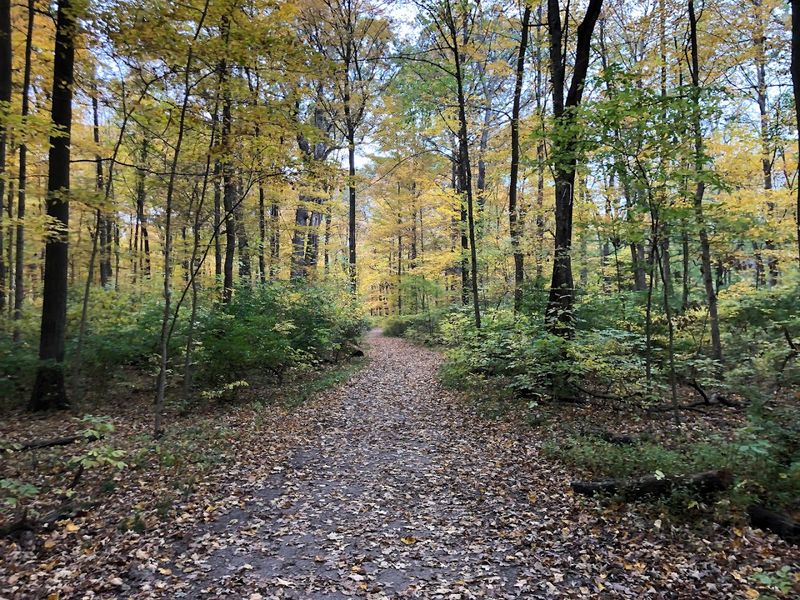
Some trees in Glen Helen were already mature when the Pilgrims were still figuring out how to survive their first winter in the New World. The old-growth stands here are considered regionally significant, and spending time among them feels noticeably different from hiking through younger, thinner woods.
The trunks are wide enough that you cannot wrap your arms around them. The canopy above creates a kind of natural cathedral effect, especially on sunny days when light filters down in long, broken columns through the leaves.
In fall, the whole scene shifts into something almost theatrical, with reds, oranges, and golds layered across every hillside.
Glen Helen actively manages the forest to remove invasive non-native species and replant native ones, which means the ecological integrity here is being carefully protected rather than left to chance. The preserve is not just a pretty walk in the woods.
It is a living restoration project, and you can feel the difference. The air carries a richness that is hard to describe but easy to notice.
Bring a trail map, wear good shoes, and give yourself enough time to actually slow down and take it all in rather than rushing through.
Glen Helen Falls and Grotto Falls: Two Waterfalls Worth Every Step
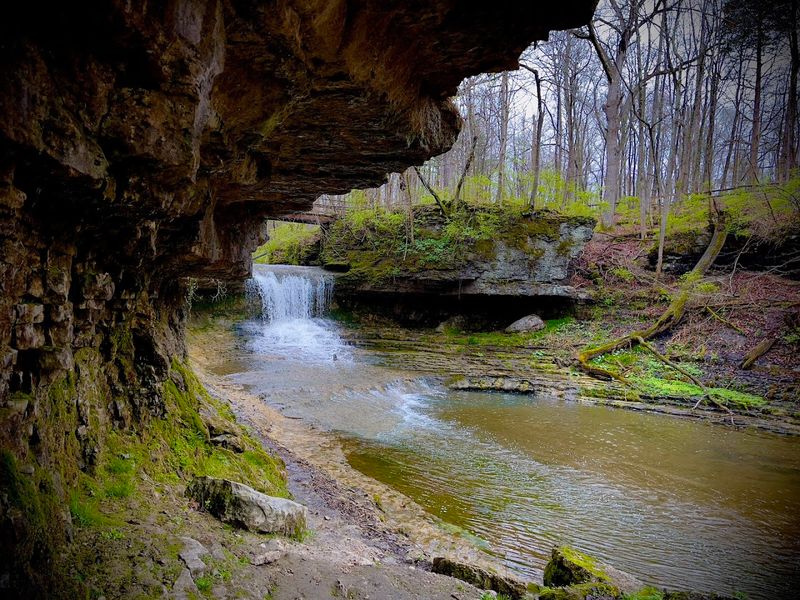
There is something about finding a waterfall deep in the woods that feels like a small reward for showing up. Glen Helen has not one but multiple waterfalls along its trails, including Glen Helen Falls, sometimes called The Cascades, and the quieter Grotto Falls tucked further into the preserve.
The Cascades tend to be the showstopper, especially after a good rain when the water volume picks up and the sound carries through the trees well before you can see the falls themselves. Grotto Falls has a different personality entirely.
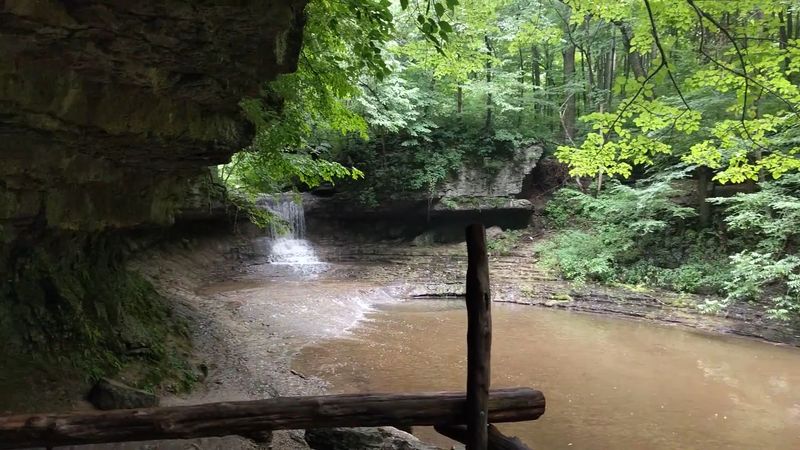
It is smaller and more intimate, tucked into a rocky alcove that feels genuinely sheltered from the rest of the world.
One visitor noted that a long day of rain transformed the entire preserve into a waterfall wonderland, with water appearing in unexpected places all along the trails. That tracks, because the underlying geology here, all that limestone and layered rock, channels water in fascinating ways.
The stone stairs leading down into the gorge area can be slippery when wet, so solid footwear is not just a suggestion. A few visitors have mentioned the 100-plus stone steps as a workout worth noting before you head down, since you will need to come back up.
More Than 20 Miles of Trails: Something for Every Kind of Hiker
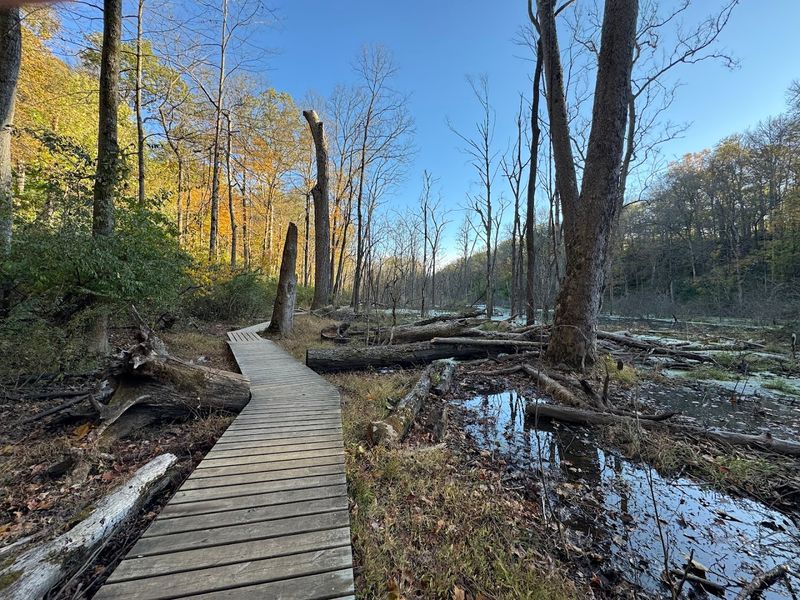
Over 20 miles of trails spread across 1,000-plus acres means you are unlikely to run out of new ground to cover in a single visit. The trail network ranges from easy, relatively flat loops to more rugged paths with rocky sections, creek crossings, and the kind of elevation change that reminds your legs they exist.
Most trails are well-maintained and largely shaded, which makes summer hiking far more comfortable here than on exposed paths elsewhere. That said, signage can be a bit sparse in certain areas, and multiple visitors have recommended downloading a trail map before you arrive rather than relying on in-the-moment navigation.
The numbered markers on the trails make more sense once you have the map in front of you.
Beyond the main loop, there are side trails that branch off toward hidden spots like the Hopewell Indian mound, the beaver dam area, and Travelers Spring along the Pine Forest Trail. The preserve also connects directly to John Bryan State Park and Clifton Gorge State Nature Preserve, opening up even more ground for those who want a longer adventure.
Family groups, solo hikers, and everyone in between seem to find their own comfortable pace here without any trouble at all.
The Raptor Center: Getting Eye-Level With Birds of Prey
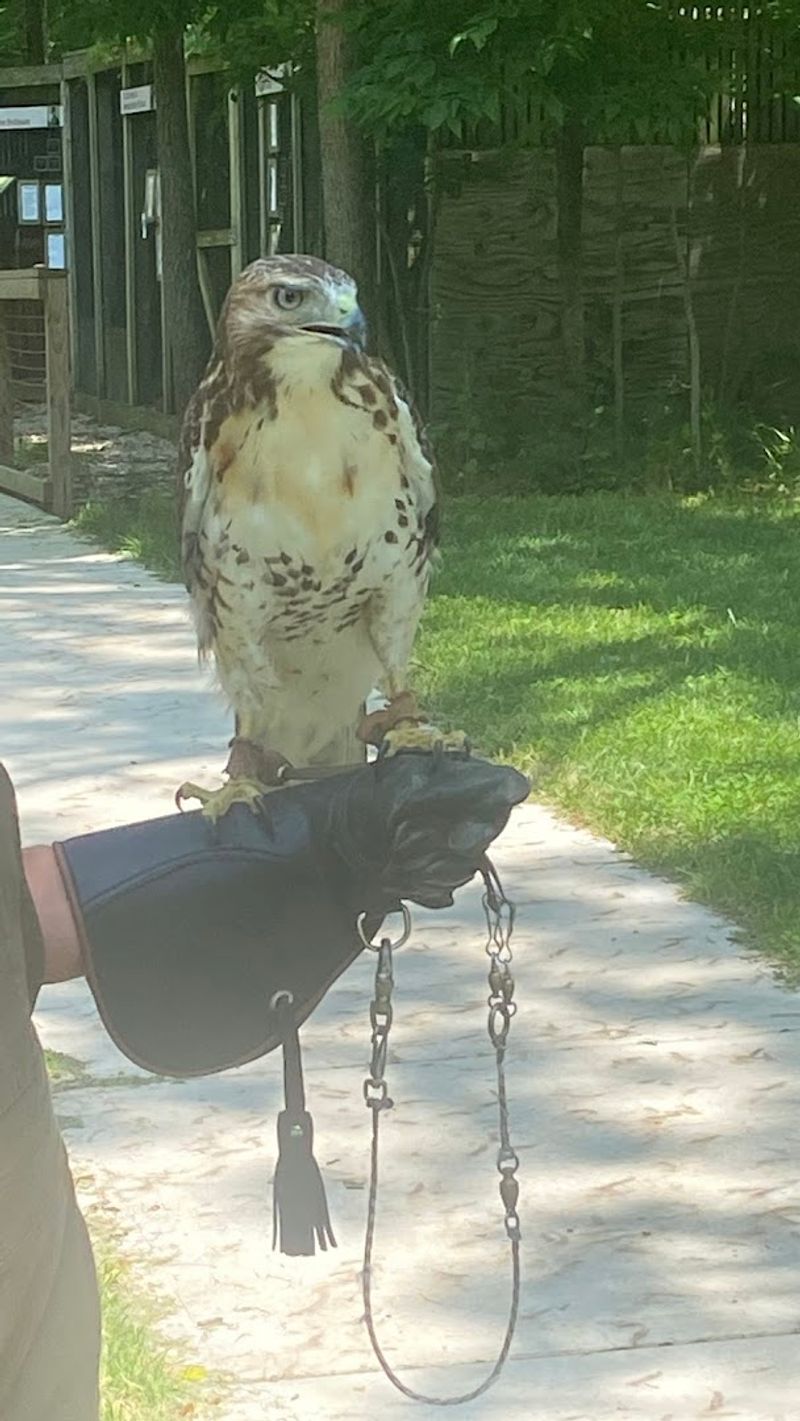
Right near the parking area sits one of the most unexpectedly wonderful parts of Glen Helen, the Raptor Center, which rehabilitates injured native birds of prey and gives visitors an up-close look at animals they would normally only glimpse as silhouettes in the sky. It is the kind of place that tends to surprise people who came just for the hiking.
The staff there are genuinely knowledgeable and enthusiastic about what they do. Multiple visitors have commented on how generous the employees and volunteers are with information, taking time to explain the birds, their injuries, and what the rehabilitation process involves.
There is also a bird-watching window inside the small museum building that offers a calm, quiet moment before or after hitting the trails.
Seeing a hawk or owl at close range changes how you look at the forest around you for the rest of the day. You start noticing the canopy differently, listening for wing beats, scanning branches with more intention.
The Raptor Center is included with your visit and does not require any separate arrangements. It is a genuinely educational stop that works well for kids and adults alike, and it adds a memorable layer to what is already a rich day outdoors.
Geological Wonders: Limestone Cliffs, Pompeii’s Pillar, and a Hopewell Mound
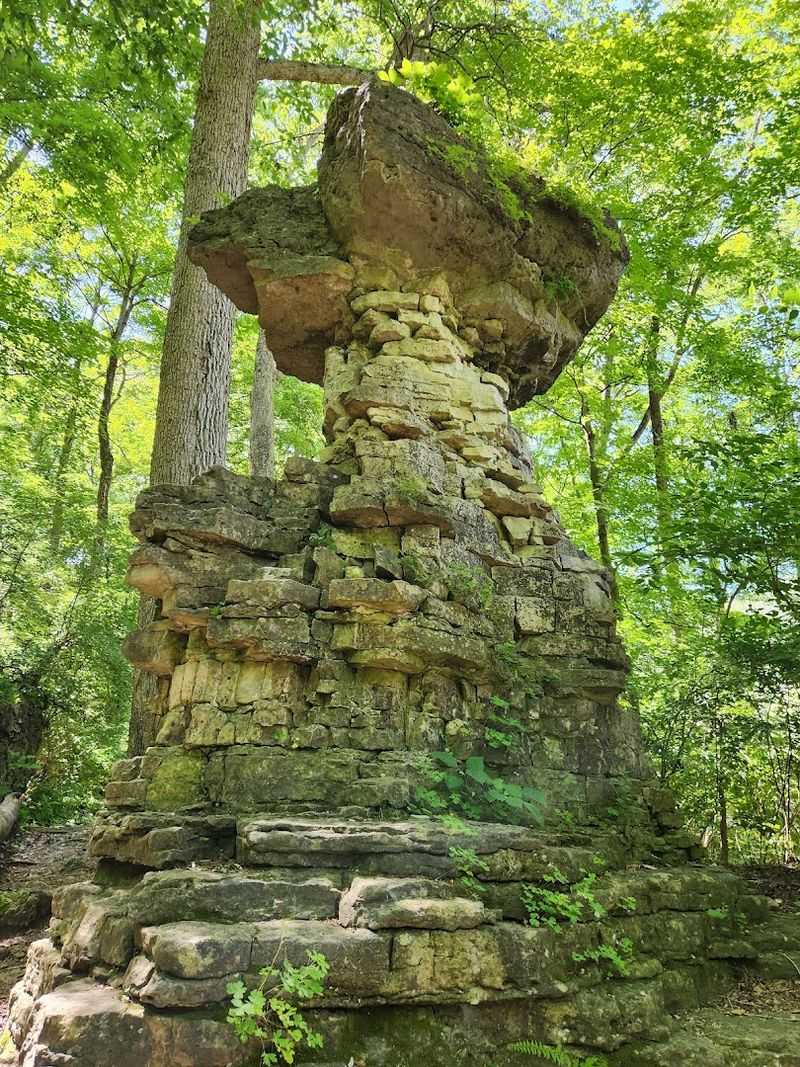
Beneath all the greenery and flowing water, Glen Helen is built on a geological foundation that is genuinely fascinating to explore. The preserve features limestone cliffs carved by centuries of water movement, dramatic gorge walls that tower over the trail, and a striking rock column called Pompeii’s Pillar that stands out like a natural landmark amid the surrounding forest.
Several visitors have mentioned being stopped in their tracks by the sheer size of some of the rock formations along the trails. Boulders the size of small rooms appear unexpectedly along certain paths, and the gorge walls create a sense of enclosed grandeur that feels unlike anything in a flat midwestern landscape.
It is one of those places where geology and ecology overlap in a way that is visible and tangible rather than just theoretical.
The preserve also contains a Hopewell Indian mound, a quiet reminder that humans have found meaning in this landscape for thousands of years. The Hopewell culture thrived in Ohio between roughly 100 BCE and 500 CE, and their earthworks are scattered across the state.
Finding one tucked inside a forest preserve adds a layer of historical weight to the experience. Glen Helen is not just a nature walk.
It is a deep read through time, geology, and culture all at once.
Yellow Springs Town: The Perfect Ending to a Day in the Glen
One of the best things about Glen Helen is that it sits just one road over from the historic downtown of Yellow Springs, a small, creative, and genuinely charming town that feels like a natural extension of the preserve’s character. After a morning on the trails, the town offers a great way to wind down without having to drive anywhere.
Yellow Springs has a reputation for its independent shops, local food spots, murals, and a community vibe that leans heavily toward the arts and the outdoors. It is the kind of place where you can browse a used bookshop, grab a meal at a locally owned restaurant, and still be back in the car by early afternoon.
Multiple visitors have specifically mentioned heading into town after hiking as part of what made the whole day feel complete.
The preserve itself is located at 405 Corry St, which puts it within easy walking distance of the town center. Parking at the preserve costs a fee, though some visitors have noted that free parking is available at a nearby community center with a connecting trail into the park via the Little Miami Trail.
Either way, combining the Glen with a stroll through Yellow Springs turns a hike into a full, satisfying day trip that is hard to beat in this part of Ohio.
Address: 405 Corry St, Yellow Springs, OH 45387
