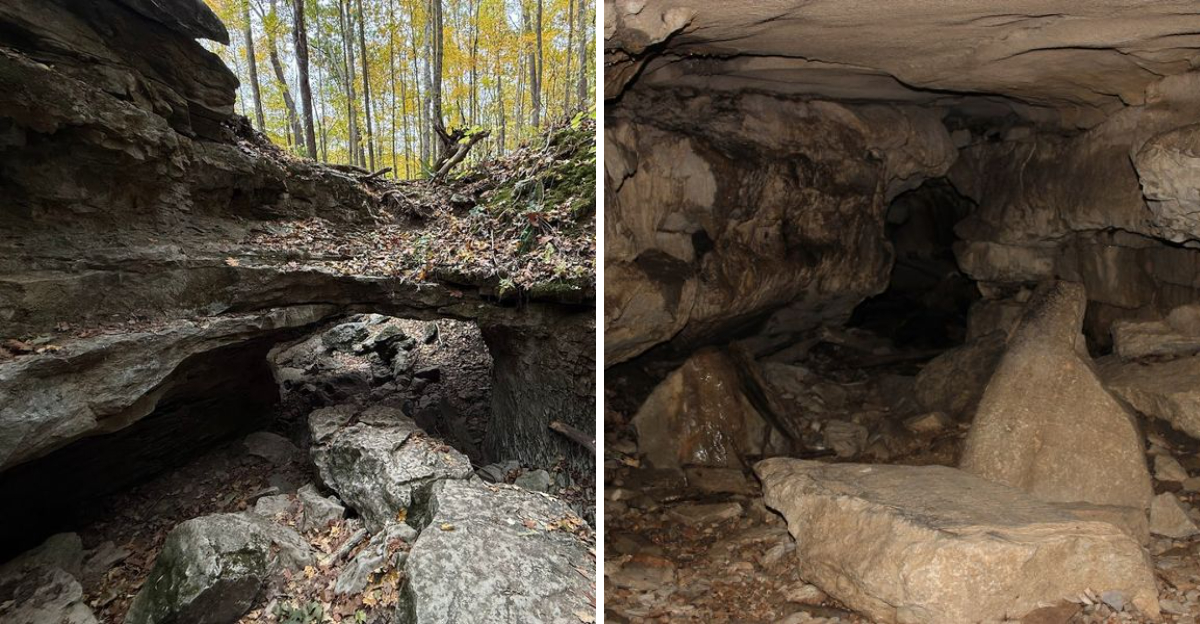
Indiana has no shortage of natural wonders, but this cave tucked inside a state park sits in a category of its own. It offers a quiet, gritty kind of adventure that feels both accessible and just challenging enough to be memorable.
Formed over thousands of years as underground water slowly carved through limestone bedrock, its narrow passageways create a raw, unpolished experience that feels far removed from typical tourist attractions. The sense of discovery is part of what makes it so compelling, especially for first-time visitors.
What really sets it apart is the tight final exit, which adds a physical and mental test that many hikers don’t expect going in. For anyone looking for a real, hands-on adventure without specialized gear or a guided tour, this hidden cave experience delivers something genuinely unforgettable.
The Famous 18-Inch Exit That Separates the Bold From the Hesitant
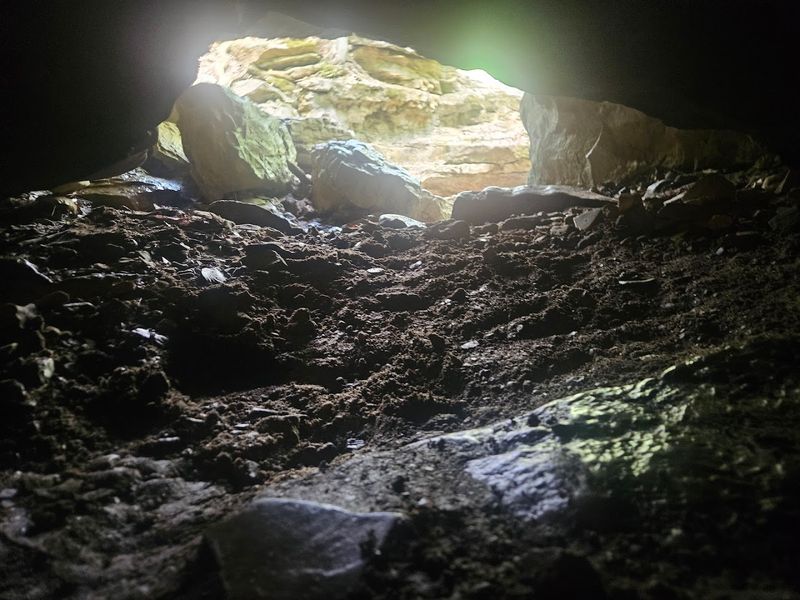
Not every adventure comes with a disclaimer, but Wolf Cave’s 18-inch exit is practically one in itself. This tight squeeze at the end of the cave is the moment most visitors talk about long after the hike is done.
It is only 18 inches tall and 18 inches wide, which means you will need to flatten yourself out and work your way through with patience and a little courage.
The good news is that McCormick’s Creek State Park’s Nature Center offers a test crawl before you ever step foot in the cave. That means you can check whether the space feels manageable before committing to the full experience.
It is a smart setup that takes the guesswork out of the adventure without removing any of the thrill.
Kids often have an easier time with this part than adults do. Watching a six-year-old pop through with a huge grin while a grown adult takes a deep breath and focuses is genuinely entertaining.
The exit does not require strength, just a willingness to trust the process and keep moving forward. For anyone who has ever wanted to test their composure in a tight spot, this is the moment Wolf Cave was made for.
It is uncomfortable in the best possible way.
A Geological Story Written in Limestone Over Thousands of Years
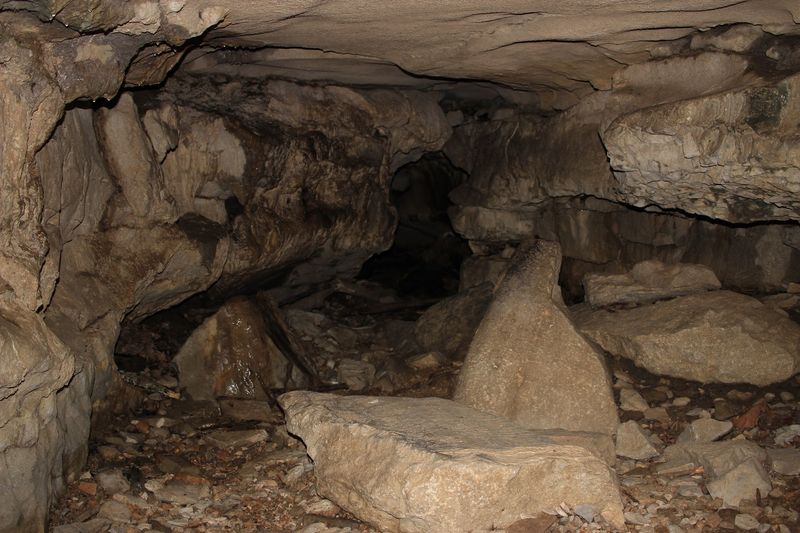
Long before anyone thought to name it Wolf Cave, water was already doing the hard work. Over thousands of years, underground streams slowly dissolved the limestone bedrock beneath what is now McCormick’s Creek State Park, carving out a network of narrow passageways and chambers.
The result is a cave that feels ancient and earned rather than manufactured for tourism.
What makes Wolf Cave geologically interesting is that it is now completely dry. The underground stream that originally formed the cave has since carved even lower passages, leaving behind the dry corridors visitors explore today.
That history is written right into the walls, and if you take a moment to look closely at the rock surface, you can see the curves and layers that water left behind over centuries.
The park itself sits on a landscape shaped by the same geological forces, including sinkholes, natural bridges, and a dramatic limestone canyon. Twin Bridges, located nearby, were once part of the Wolf Cave system before erosion separated them.
Knowing that connection makes the whole area feel like one continuous geological story rather than isolated features. For anyone who enjoys understanding how the earth works, exploring Wolf Cave is like reading a chapter that most people never bother to open.
The science behind it only adds to the wonder of being inside it.
Year-Round Access Makes It a Rare Cave Experience in Indiana
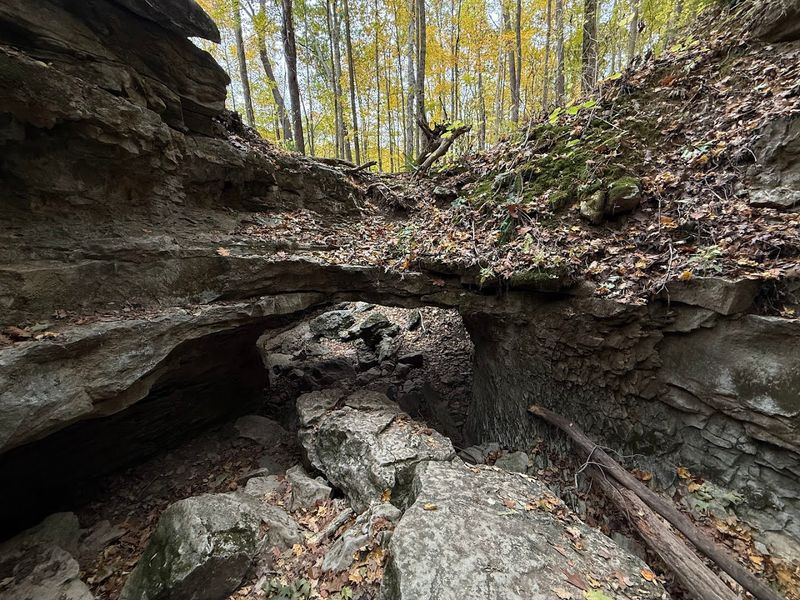
Most caves in Indiana close seasonally to protect hibernating bat populations, which means your window for exploration is limited. Wolf Cave operates differently.
Because it does not house hibernating bats, the cave remains open for exploration throughout the entire year. That one detail changes everything for people who want to plan a trip on their own schedule.
Visiting in the off-season has its own rewards. Fall brings rich color to the surrounding forest, and the cool air inside the cave feels refreshing rather than chilly.
Winter visits tend to be quieter, with fewer crowds on the trail and a stillness to the park that feels almost meditative. Spring is especially dramatic when the limestone canyon fills with the sound of rushing water after rainfall.
The access point is located right along Trail 5 in Spencer, IN 47460, inside McCormick’s Creek State Park. While this trail sustained massive damage from an EF-3 tornado in March 2023, park crews have successfully cleared and reopened Trail 5 and the cave path to the public.
However, because neighboring campgrounds are still undergoing long-term reconstruction, checking the park’s official website for current property maps before heading out is always a smart move.
Hidden Gem Status Means You Get the Cave Almost to Yourself
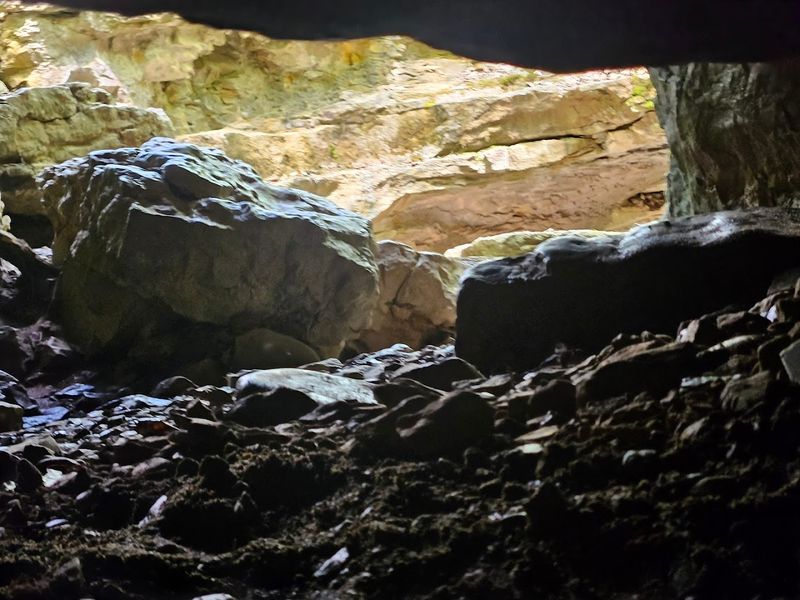
There is something special about discovering a place that most people have not heard of. Wolf Cave earns its reputation as one of Indiana’s best-kept secrets, and that status comes with a real benefit: you are unlikely to share the experience with a crowd.
Unlike more famous caves in the region that require timed tickets and guided tours, Wolf Cave lets you explore at your own pace in genuine solitude.
The cave is often described as little known and frequently overlooked even by locals who live close to the park. That might seem surprising given how remarkable the experience is, but it also means the cave has stayed remarkably free of graffiti and vandalism.
Walking through passageways that have been left intact and unmarked feels like a quiet act of respect between visitors and the natural world.
Part of what keeps Wolf Cave off the radar is its location within a state park that does not always make the top of tourist lists. McCormick’s Creek is Indiana’s first state park, which is a significant historical distinction, yet it often gets overshadowed by bigger attractions in other parts of the state.
That works in your favor. When you find a place this good with this little foot traffic, the smart move is to visit sooner rather than later before word spreads any further.
The Wolf Spider Encounter That Gives the Cave Its Creepy Edge
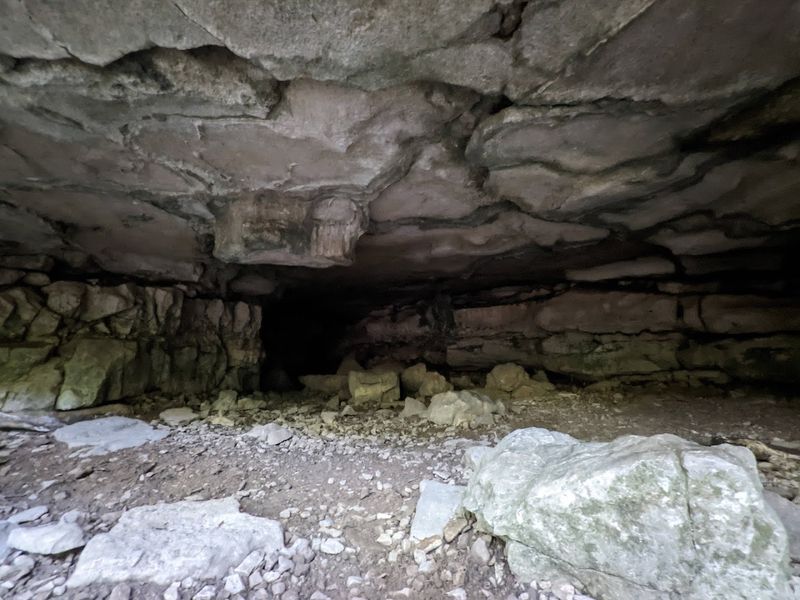
Here is a fun piece of local lore that most visitors do not expect. The cave may be named after the native Indiana wolves said to have once inhabited it, but there is another creature that has claimed the space more recently.
Wolf spiders have been spotted inside the cave in significant numbers, and for some visitors, that discovery turns an already thrilling experience into something genuinely spine-tingling.
Wolf spiders are not dangerous to humans, but they are large, fast-moving, and numerous enough to give even brave explorers a moment of pause. One frequent visitor reported spotting hundreds of them during a single trip through the cave.
That kind of encounter is not for everyone, and it is worth knowing about before you go, especially if you are bringing along someone with a serious fear of spiders.
For others, the spiders are simply part of what makes Wolf Cave feel authentic. This is not a sanitized, controlled environment with guardrails and lighting.
It is a real cave with real wildlife, and that includes creatures that have made their home in the dark corners of the passageways. Bringing a good flashlight is strongly recommended, both for navigating the tight corridors and for spotting anything that might be sharing the space with you.
The cave keeps its surprises close, and that is exactly what makes it memorable.
A Family-Friendly Adventure That Builds Real Confidence in Kids
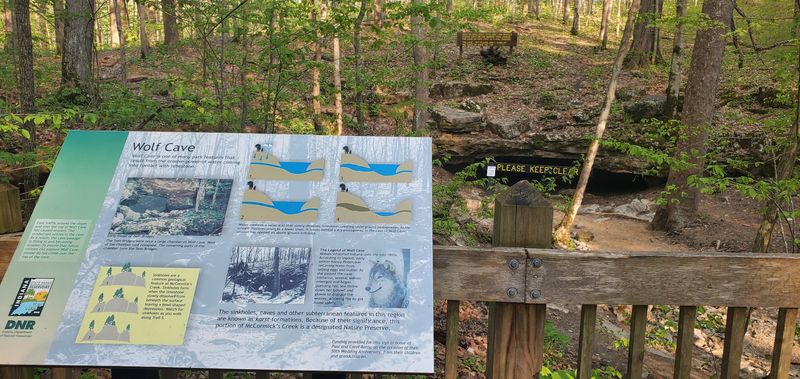
Wolf Cave has a way of turning nervous kids into proud adventurers. The cave is considered ultra-easy in terms of technical difficulty, which means no ropes, no climbing gear, and no special training required.
What it does require is a willingness to get a little dirty, stay calm in tight spaces, and keep moving even when the walls feel close.
Families with children as young as six have successfully made it through the cave, and many kids end up wanting to go through a second time immediately after finishing. That kind of enthusiasm is hard to manufacture.
The experience genuinely challenges young visitors in a way that builds real self-confidence rather than the kind that comes from a participation trophy.
Parents should bring knee pads or be prepared for dirty clothes, since some sections require crawling or scooting along the cave floor. A headlamp for each child makes the experience more immersive and keeps everyone feeling secure in the darker sections.
The test crawl at the Nature Center is especially useful for younger kids who might be unsure about tight spaces. It lets them make an informed decision rather than getting halfway through and panicking.
Watching a child work through nerves and come out the other side grinning is one of those parenting moments that does not come along every weekend.
McCormick’s Creek State Park Surrounds the Cave With Trails and Natural Beauty
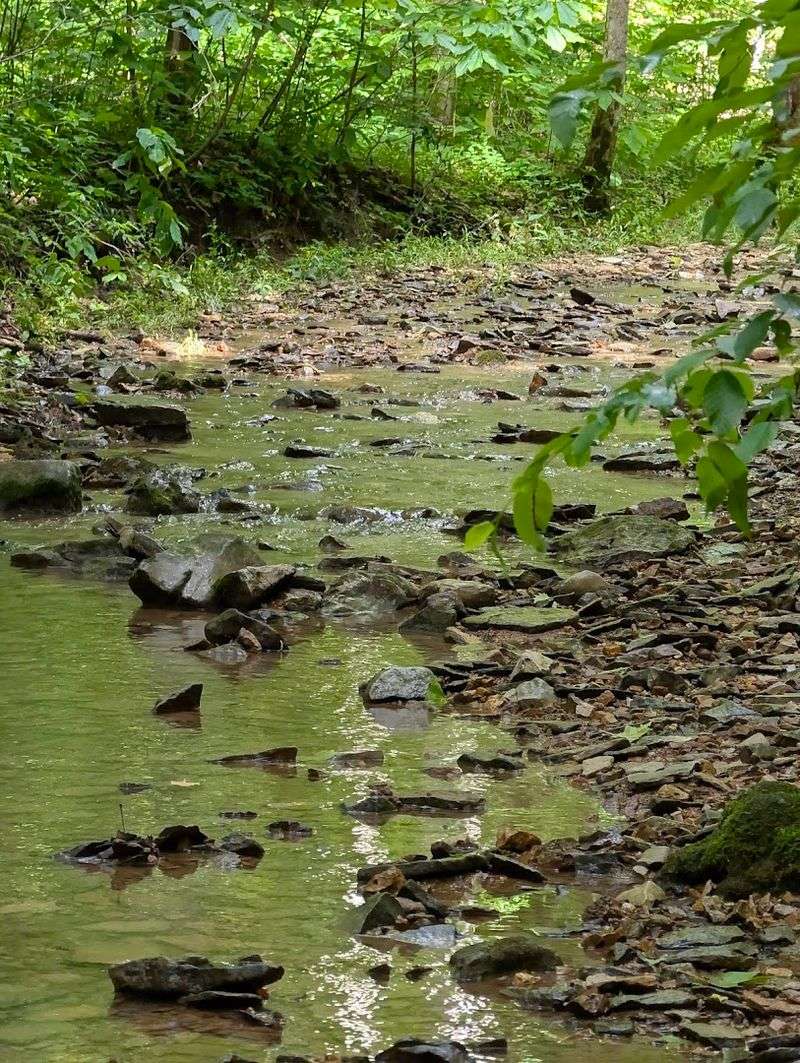
Wolf Cave does not exist in isolation. It sits inside McCormick’s Creek State Park, and the surrounding landscape is as rewarding as the cave itself.
The park is home to a dramatic limestone canyon, picturesque waterfalls, and a forest filled with wildflowers, ferns, and a wide variety of woody plant species. A visit to the cave naturally becomes a full day of outdoor exploration.
The park holds the distinction of being Indiana’s very first state park, established in 1916. That history gives the land a sense of permanence and purpose that newer parks sometimes lack.
The same geological forces that formed Wolf Cave also shaped the canyon, sinkholes, and natural bridges scattered throughout the park, including Twin Bridges, which were once connected to the Wolf Cave system before erosion separated them over time.
After your cave adventure, the trails leading through the canyon and past the waterfalls offer a completely different kind of beauty.
The forest canopy is thick enough in summer to keep things cool, and the sound of water echoing off limestone walls is genuinely soothing after the focused intensity of crawling through the cave.
Keep in mind that some trails, including Trail 5, were damaged by a tornado in March 2023, so checking current trail conditions with the park before your visit is essential. The park rewards careful planning with an experience that is hard to match anywhere else in Indiana.
