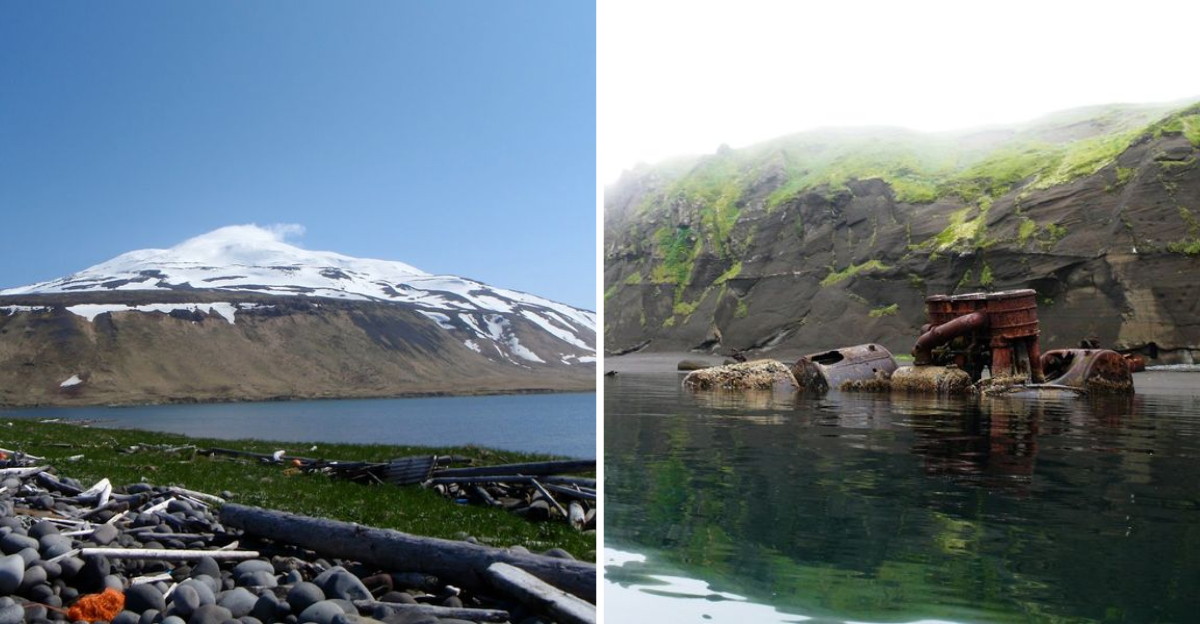
At the edge of Alaska, far beyond anything that feels familiar, there is a stretch of land where silence and weather do most of the talking. I ended up reading about a remote island where time seems to have stalled in the most unsettling way possible. Fog rolls in like it owns the horizon, and the ground still carries echoes of a past that never fully left.
What makes it even stranger is how untouched everything feels, as if the world simply stopped updating this corner and moved on. Nothing about it feels polished or preserved, just raw history sitting out in the open air. It is the kind of place that makes you rethink what forgotten really means.
The Japanese Occupation: When Enemy Forces Landed on American Soil
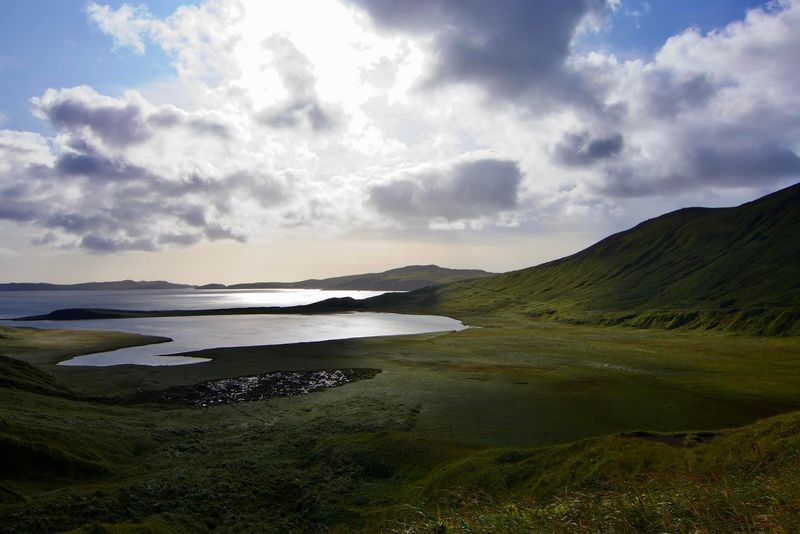
Most people do not realize that during World War II, enemy forces actually set foot on American soil and held it for over a year. On June 6, 1942, Japanese marines landed on Kiska Island and overwhelmed a tiny ten-man U.S.
Navy weather station in a matter of hours. It was a calculated move, designed to protect the northern flank of the Japanese Empire and keep American forces from using the North Pacific as an attack corridor.
At the height of the occupation, more than 6,800 troops were stationed on this remote volcanic island. They built a submarine base, a seaplane base, fortified hillside positions with coastal artillery, and constructed underground tunnels meant for long-term use.
The scale of what they built here is genuinely staggering when you see it in person.
The Aleutian Islands campaign is often called the Forgotten War within a forgotten war, partly because it overlapped with the massive Guadalcanal Campaign in the South Pacific. But what happened on Kiska was historically significant.
Enemy occupation of North American territory had not occurred since the War of 1812, making this island a truly unique chapter in American military history.
Operation Cottage: The Battle Where Nobody Was Home
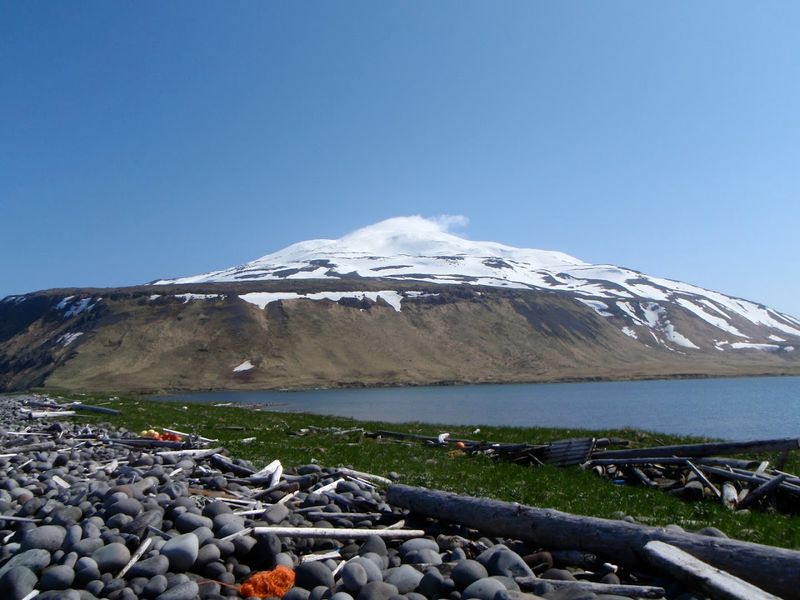
Few military operations in World War II history are quite as strange as Operation Cottage. In August 1943, a combined force of nearly 35,000 American and Canadian troops stormed the beaches of Kiska Island expecting fierce resistance from a well-armed Japanese garrison.
They found absolutely nothing. The Japanese had already vanished.
What made the evacuation so remarkable was how it was pulled off. Under cover of thick Aleutian fog, Japanese ships slipped into Kiska Harbor on July 28, 1943, and extracted over 5,000 soldiers in just 55 minutes, completely undetected.
By the time Allied forces arrived weeks later, the island was empty except for a few stray dogs left behind.
Despite zero Japanese presence, the Allied landing was not without tragedy. Friendly fire incidents and Japanese booby traps left behind claimed the lives of dozens of soldiers.
The fog was so dense that units fired on each other, mistaking movement for enemy troops. It remains one of the most unusual military operations ever conducted, and it speaks volumes about how unpredictable and disorienting the Aleutian environment truly is.
The story almost sounds like fiction, but it is entirely, uncomfortably real.
The Rusted Mini-Submarines Still Resting on the Shore
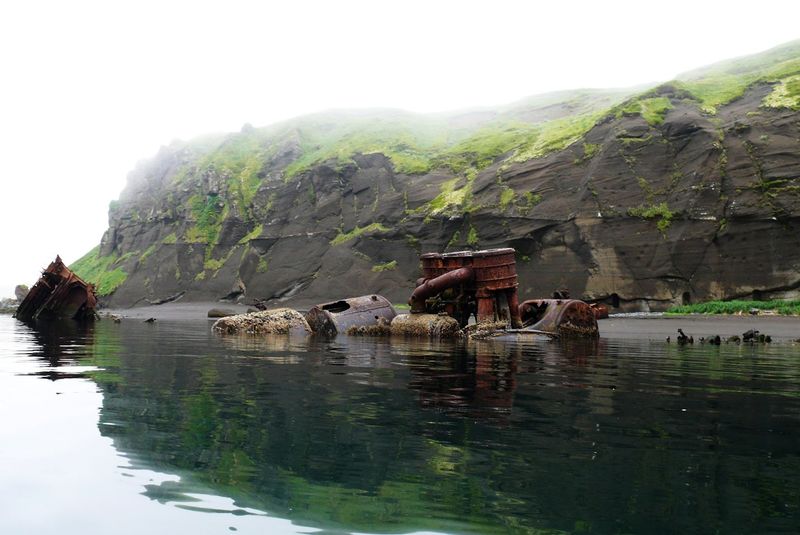
One of the most jaw-dropping things you can encounter on Kiska is the wreckage of a Japanese Type-A midget submarine, still sitting near the harbor where it was abandoned over eighty years ago. These 78-foot vessels were designed for close-range torpedo attacks, and the Japanese stationed several of them at Kiska as part of their submarine base operations.
Before evacuating, Japanese forces disabled the submarines to prevent them from falling into Allied hands. The hulls were left on the island and have been slowly weathering ever since, shaped by decades of Aleutian wind, rain, and salt air.
Parts of additional submarines are believed to rest beneath the surface of Kiska Harbor, never recovered.
Seeing submarine wreckage in this context hits differently than viewing a preserved warship in a museum. There are no plaques, no protective glass, no guided narration.
The metal is exposed, corroded, and raw. Tufts of Aleutian grass grow around the hull, and the fog rolls in without warning.
It feels less like a historical exhibit and more like stumbling onto something the world simply forgot to clean up. That rawness is exactly what makes Kiska so unforgettable as a place.
Artillery Guns That Still Point at an Empty Sky
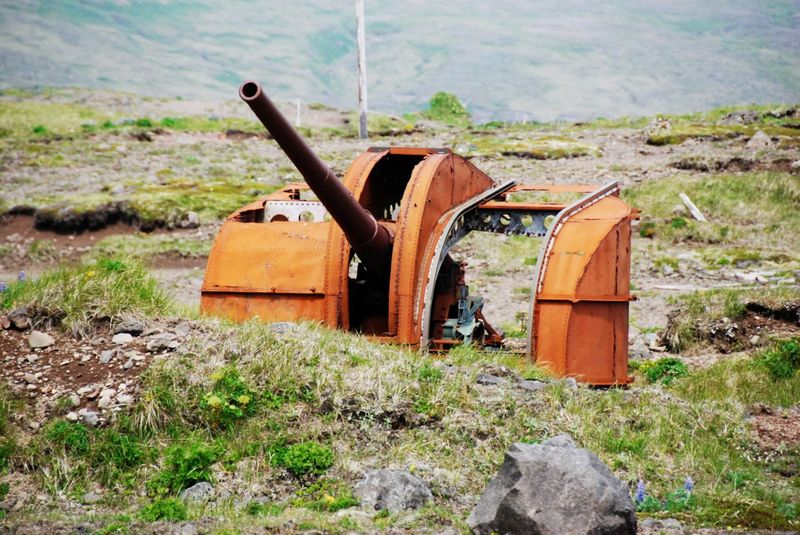
Scattered across Kiska’s hillsides and coastal ridges, rusting Japanese artillery pieces still sit in the exact positions where soldiers once manned them. Anti-aircraft guns and coastal defense cannons, including Japanese 75mm guns, remain pointed outward as if waiting for an attack that never came back.
Nobody moved them after the war. Nobody hauled them off for scrap.
The guns are a vivid reminder of how seriously the Japanese fortified this island. They were not just passing through.
Positioned strategically across high ground and along the harbor entrance, these weapons were part of a comprehensive defense network that took months to build. The sheer number of artillery positions across the island tells you the garrison expected to hold Kiska indefinitely.
Hiking up to one of these gun emplacements and looking out over Kiska Harbor is an experience that is hard to put into words. The view is dramatic, the wind is relentless, and the gun itself is enormous up close.
Rust has eaten through the barrel in places, and the mounting hardware is frozen solid with corrosion. Yet the whole structure still feels purposeful, still aimed, still ready.
Time has not softened the weight of what these weapons represent or the conflict that brought them here.
Wrecked Ships in Kiska Harbor: A Graveyard You Can See From Shore
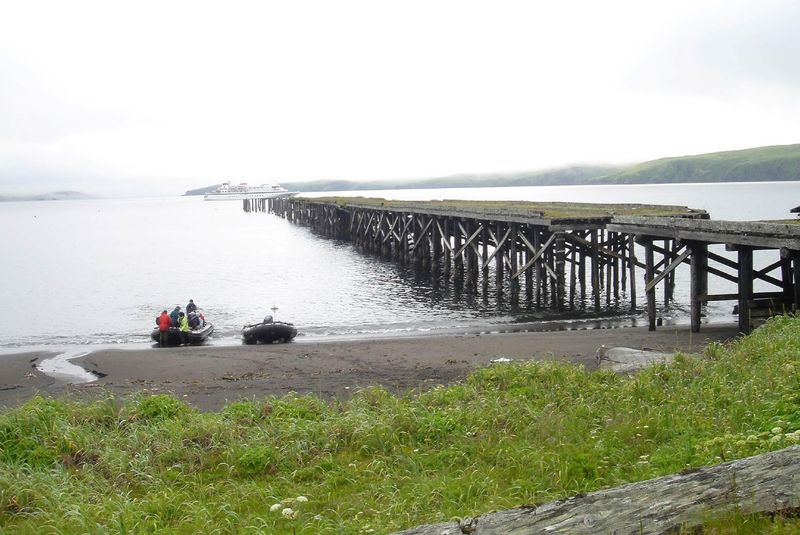
Kiska Harbor holds a collection of shipwrecks that most of the world has never heard of. Japanese freighters, including the Nozima Maru, were intentionally run aground or damaged beyond recovery during the occupation and its chaotic end.
Some hulks are visible above the waterline, draped in rust and half-swallowed by the harbor’s cold grey water.
Several of these vessels were deliberately beached so crews could salvage cargo before abandoning them. Others were caught by American air and naval attacks during the campaign and never moved again.
The harbor essentially became a graveyard for ships that had no way out, and the Aleutian climate has been preserving them in a state of beautiful, eerie decay ever since.
Looking out at the harbor from shore, the wrecks create a surreal silhouette against the fog. On calm days, the reflection on the water makes the scene look almost painted.
On stormy days, which are far more common out here, the whole thing feels appropriately dramatic and a little haunting. Kiska Harbor is not a place you visit for comfort.
It is a place you visit because history left something raw and honest behind, and it deserves to be witnessed firsthand rather than just read about.
Tunnels, Trenches, and the Underground World the Japanese Left Behind
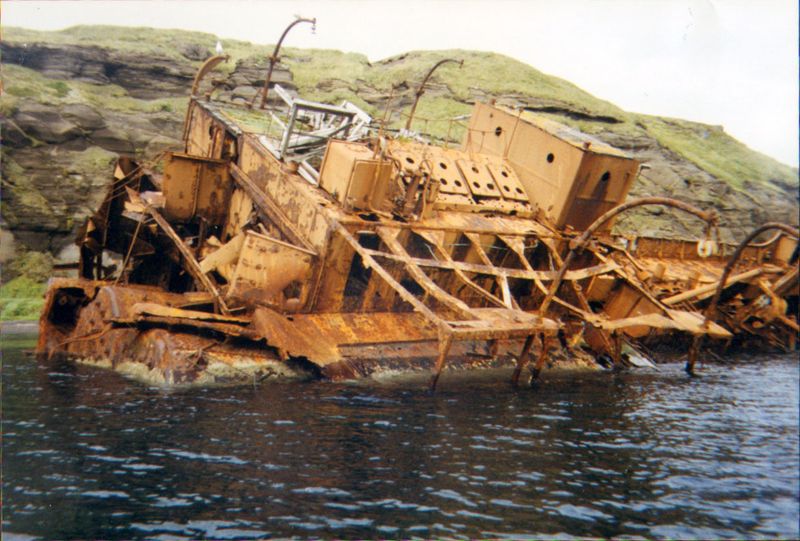
Below the surface of Kiska Island runs a network of tunnels and bunkers that the Japanese garrison carved out during their 13-month occupation. These underground passages were built for protection against Allied bombing raids and as storage for supplies, ammunition, and equipment.
They were not improvised foxholes. They were engineered structures meant to last.
Some of the tunnels are still accessible, though exploring them requires serious caution. Unexploded ordnance remains a genuine concern on Kiska, and the Alaska Maritime National Wildlife Refuge, which manages the island, restricts access for this reason among others.
The tunnels are dark, damp, and narrow, exactly as you might imagine an underground military installation carved into a subarctic volcanic island would be.
Scattered around the tunnel entrances and throughout the surrounding hillsides are remnants of everyday military life: gas masks, split-toe rubber boots known as tabi boots, barbed wire, fire hydrants, and fragments of barracks. These objects create a deeply personal connection to the people who once lived here, far from home, in one of the most inhospitable environments on earth.
The tunnels are not just military infrastructure. They are evidence of how much effort it takes to hold a piece of land that nature itself seems determined to reclaim.
Visiting Kiska Today: What It Takes to Reach the Island History Forgot
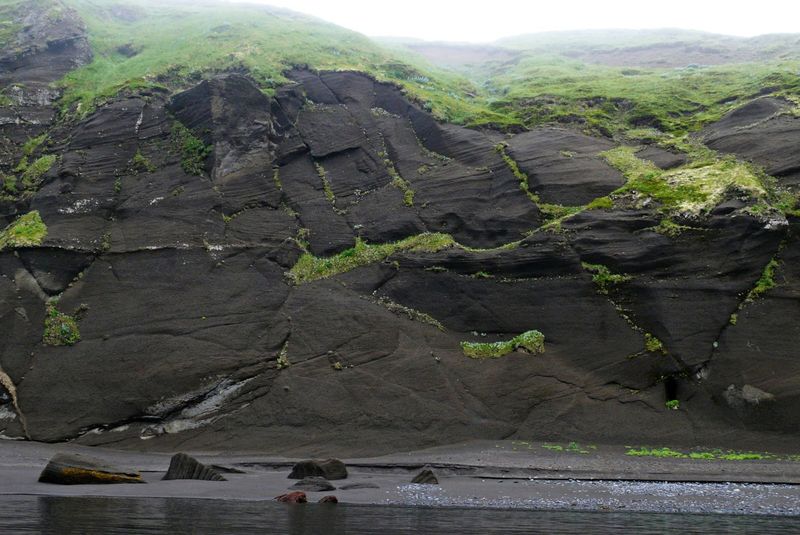
Getting to Kiska Island is not like booking a flight to a national park. The island is uninhabited, extremely remote, and access requires permits because it sits within the Alaska Maritime National Wildlife Refuge and the Aleutian Islands World War II National Monument.
Most visitors arrive by boat or floatplane, and neither option is a casual undertaking in the Aleutians.
The weather out here is genuinely wild. Dense fog, gale-force winds, and cold rain are the norm rather than the exception.
One reviewer who had visited the island multiple times noted that every trip revealed something new, even after years of exploration, because the harsh weather continuously exposes artifacts that had been buried or hidden. That combination of isolation and discovery is a big part of what draws history enthusiasts and adventurers here.
If Kiska is on your radar, connecting with a reputable expedition operator that specializes in Aleutian Islands travel is the best starting point. Permits, safety planning, and knowledge of unexploded ordnance zones are non-negotiable parts of any visit.
This is not a destination for casual tourism. It is a destination for people who take history seriously and are willing to work a little to stand somewhere that most of the world has simply forgotten exists.
