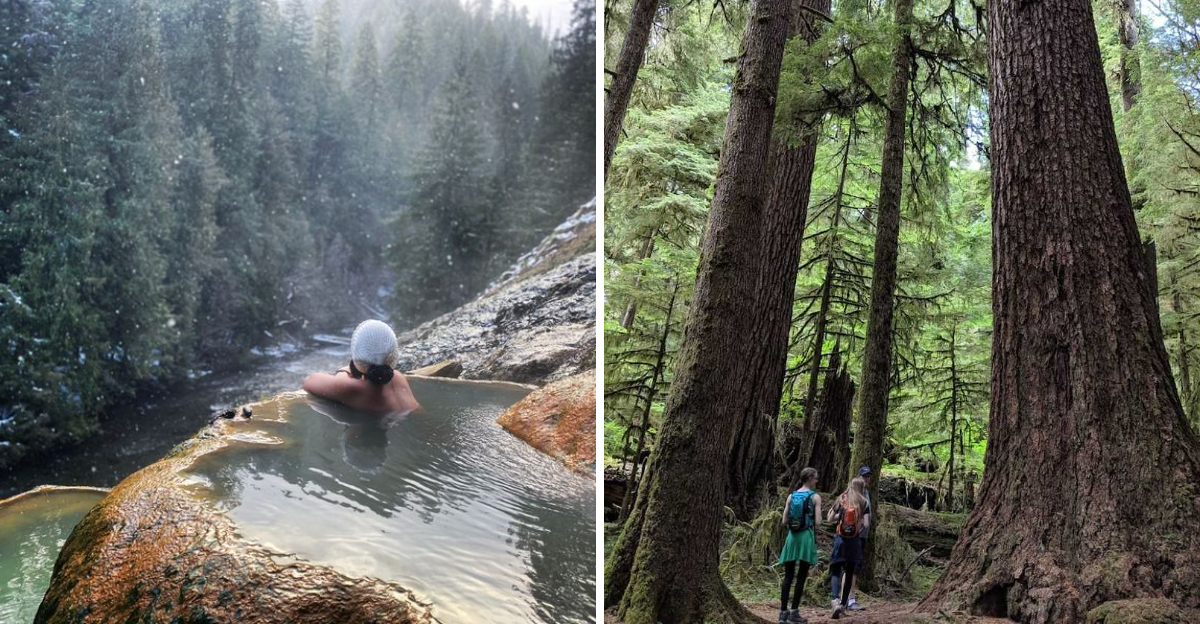
You can have a spectacular summer without spending a single dollar on admission, and Oregon proves that every single day. The state is packed with incredible places that welcome you with open arms and free entry all season long.
You can hike through lush forests and cool off in crystal clear swimming holes tucked away from the crowds. Stretch out on sandy beaches where the only price is the drive and the sunscreen you brought.
Explore historic lighthouses that offer breathtaking views and fascinating stories at no cost whatsoever. State parks with day use areas let you picnic, swim, and explore without any entrance fees involved.
Wander through vibrant farmers markets, where live music and people watching are entirely free of charge. Art galleries and cultural centers often have no admission, letting you soak in creativity without opening your wallet.
You can also stroll through beautiful botanical gardens that charge nothing for entry and pure enjoyment. Oregon believes that nature and culture should belong to everyone, and these spots prove it.
1. Haystack Rock, Cannon Beach, Oregon
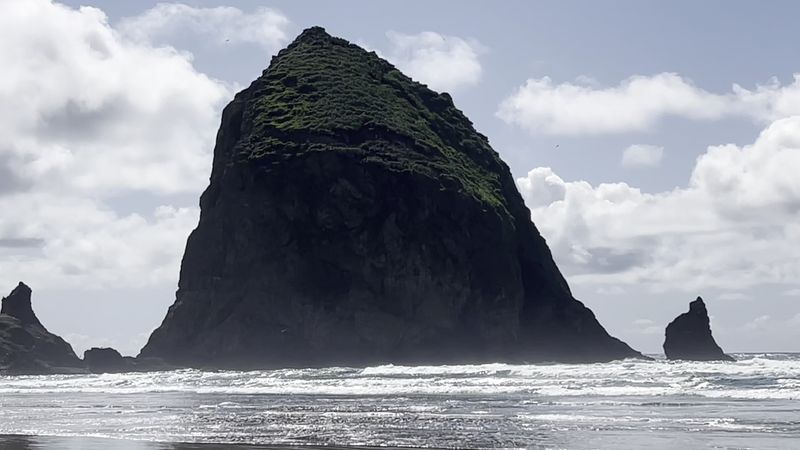
At low tide, the ocean floor around Haystack Rock becomes a living aquarium you can walk right up to. Located on the beach at Cannon Beach, Oregon, this 235-foot sea stack is one of the most photographed spots on the entire West Coast.
Starfish cling to wet rocks while sea anemones wave their arms in shallow pools. Crabs scuttle through crevices just inches from your sneakers.
Volunteer naturalists are often on site during summer mornings to answer questions and point out hidden creatures.
Puffins nest on the upper ledges of the rock each summer, which makes binoculars a smart addition to your beach bag. You cannot climb the rock itself, but the beach access is completely free.
The address is US-101, Cannon Beach, OR 97110, and parking is available nearby. Arrive at low tide for the best pool viewing.
Tide charts are easy to find online and will seriously upgrade your visit here.
2. Painted Hills, Mitchell, Oregon
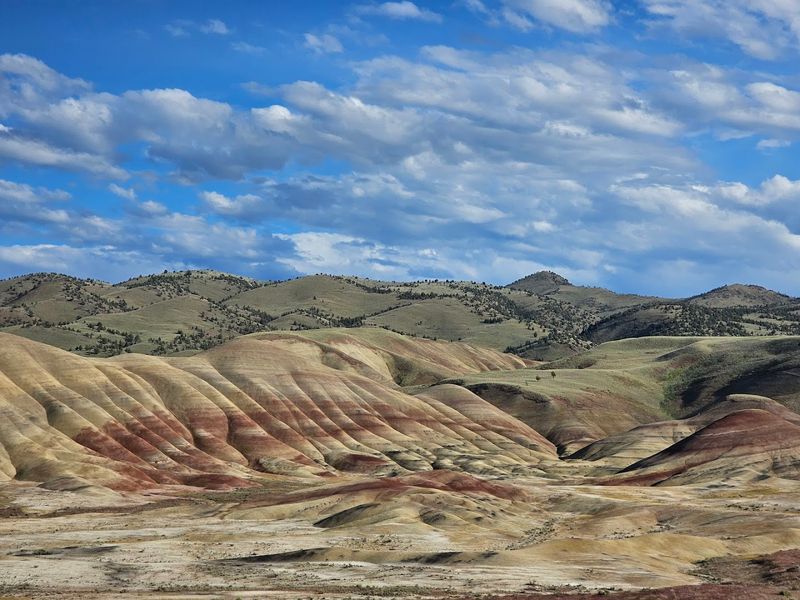
Few places in the United States look quite as otherworldly as the Painted Hills outside Mitchell, Oregon. The striped layers of red, gold, black, and tan roll across the landscape like a geology textbook brought to life in full color.
These hills are part of the John Day Fossil Beds National Monument, and they formed from ancient volcanic ash and clay deposits over millions of years. The colors actually shift and deepen depending on the time of day and moisture in the air, so morning and late afternoon light produce stunning results.
Short walking trails lead you right up to viewing areas without requiring any strenuous hiking. The address is 37375 Bear Creek Rd, Mitchell, OR 97750, and there is no admission fee to enter.
Summer heat in this high desert region can be intense, so bring plenty of water and a hat.
The drive through the John Day region is scenic on its own and makes the whole trip feel like a reward.
3. Forest Park, Portland, Oregon
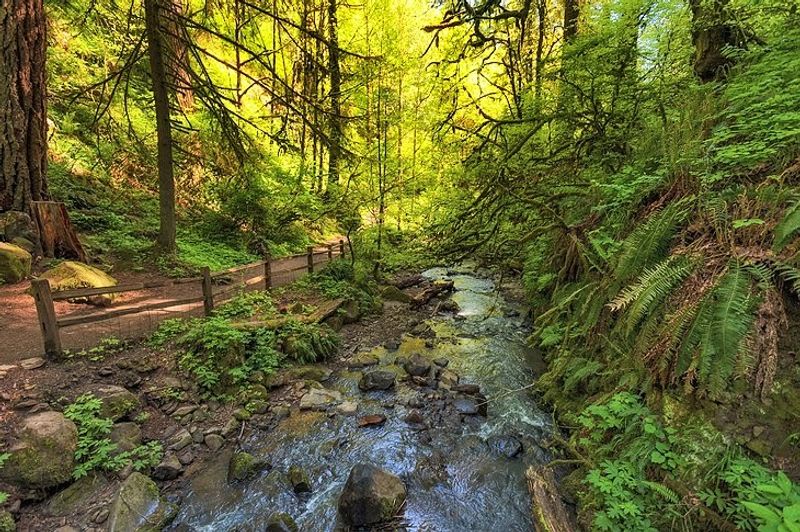
Right inside Portland city limits, Forest Park offers over 5,000 acres of genuine Pacific Northwest wilderness. It is one of the largest urban forests in the entire country, and it sits just minutes from downtown coffee shops and food carts.
The park has 80 miles of trails, and the famous Wildwood Trail runs through the heart of it all. Hikers, trail runners, and birdwatchers all share the paths through towering Douglas firs and bigleaf maples.
You might spot deer, owls, or even a black bear on a quiet morning walk.
The address is Portland, OR 97231, and there is no fee to enter or use the trails. Summer is the ideal season because the canopy is full, the creeks are running, and the light filtering through the trees creates a genuinely magical atmosphere.
Pack a lunch and spend a full day exploring because 80 miles of trail means you will never run out of new paths to try.
4. Umpqua Hot Springs, Idleyld Park, Oregon
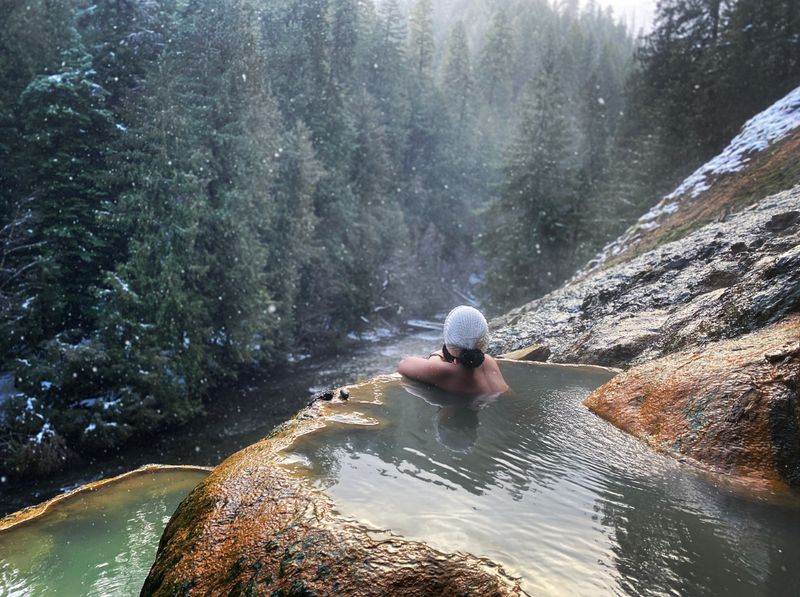
Perched on a travertine cliff above the rushing North Umpqua River, Umpqua Hot Springs is the kind of place that makes you want to leave your phone in the car. The pools are fed by natural geothermal water that gives them a striking turquoise color.
Located near Idleyld Park, Oregon, these springs sit deep in the Umpqua National Forest. A short trail through old-growth trees leads you to the pools, and the sound of the river below keeps the whole experience feeling wild and unhurried.
Multiple pools at different temperatures let you choose your preferred level of warmth.
The address is NF-3401, Idleyld Park, OR 97447. Soaking in the pools is free, though there may be a small parking fee.
Arrive early on summer weekends because the springs draw a crowd by midday. Bring water shoes for the rocky approach trail and a towel you do not mind getting damp.
The views down to the river from the cliff edge are genuinely breathtaking on a clear summer afternoon.
5. Cape Kiwanda State Natural Area, Pacific City, Oregon
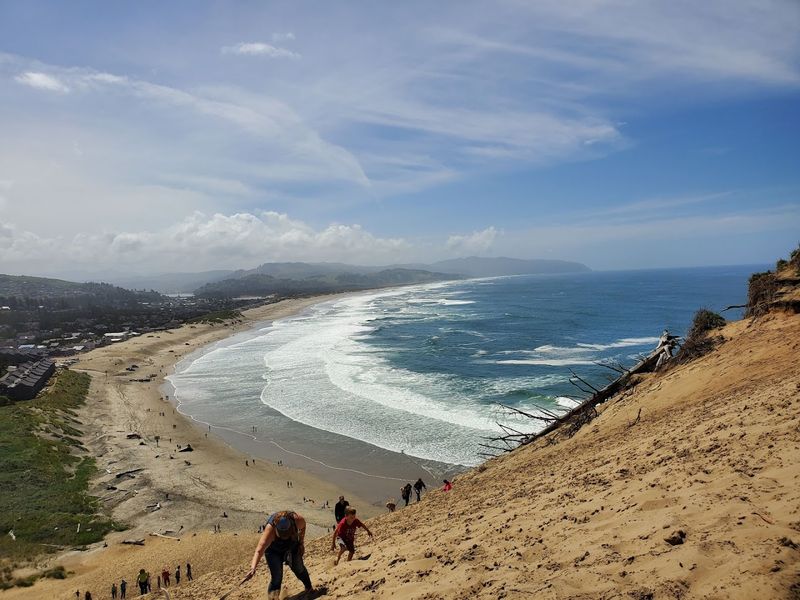
Cape Kiwanda is a sandstone headland that juts boldly into the Pacific Ocean just outside Pacific City, Oregon. The warm golden color of the rock glows beautifully on sunny afternoons, and the views from the top of the dune stretch for miles in every direction.
The main attraction for many visitors is the 240-foot sand dune that climbs up the face of the headland. Scrambling to the top is a workout, but the panoramic ocean view waiting at the summit makes every labored step worth it.
Tide pools at the base of the cliff are active and accessible at low tide.
The address is Hungry Harbor Rd, Pacific City, OR. Entry to the natural area is free, though a parking fee may apply.
The nearby beach is also a popular spot for watching dory boats launch directly into the surf, which is a uniquely Oregon experience.
Bring layers because ocean breezes can cool things off quickly even on the warmest summer days here.
6. Collier Logging Museum and Historic Cabin Village, Chiloquin, Oregon
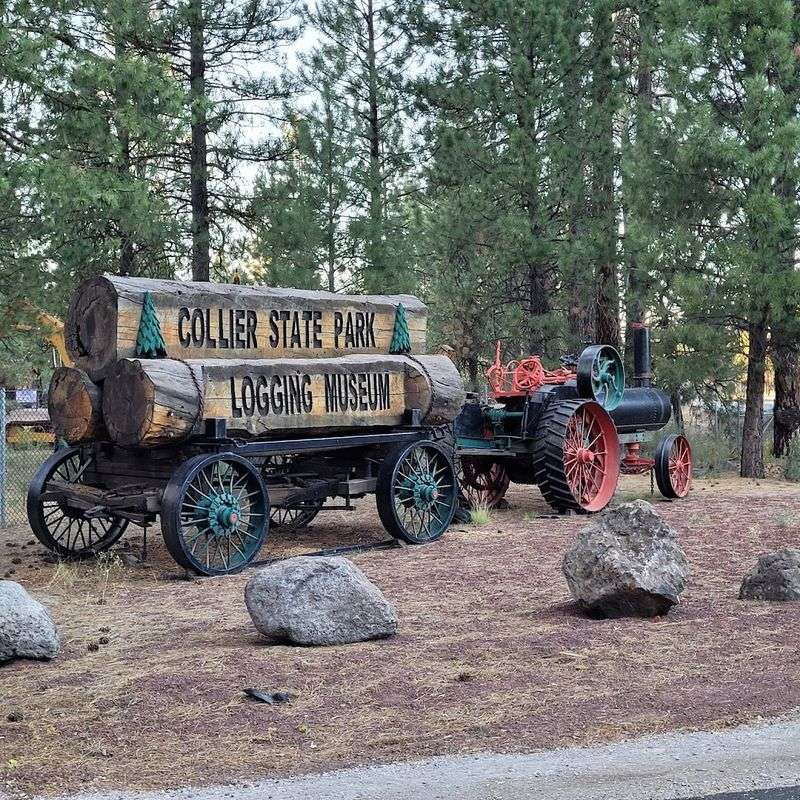
Oregon’s timber industry shaped the entire Pacific Northwest, and Collier Memorial State Park in Chiloquin preserves that history in a way that feels both personal and impressive. The outdoor museum is spread across shaded grounds filled with ponderosa pines.
Giant pieces of historic logging equipment sit on display throughout the park, including steam donkeys, log wagons, and saws that look like they belong in a different century. Hand-hewn log cabins are also part of the exhibit, giving visitors a clear picture of what pioneer life looked like in the Oregon backcountry.
The address is Collier Memorial State Park, Chiloquin, OR. Admission to the museum is free, making it an easy and educational stop on a southern Oregon road trip.
The park also offers camping and river access along the Williamson River. Summer weekends sometimes feature interpretive programs that add extra context to the exhibits.
Kids who love big machines and old tools tend to spend a surprisingly long time wandering through this open-air collection.
7. Alvord Desert, Southeastern Oregon
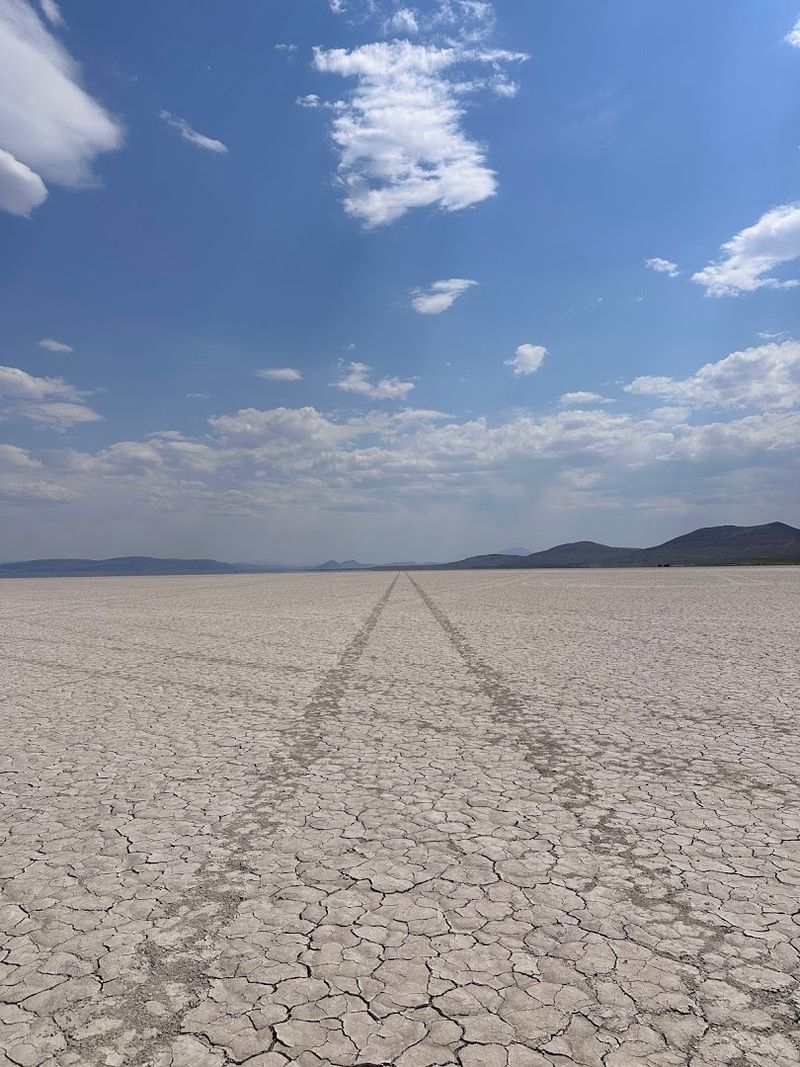
Southeastern Oregon contains some of the most remote and dramatic landscapes in the continental United States, and the Alvord Desert sits at the center of all of it. This flat, cracked lakebed stretches across a wide playa at the base of Steens Mountain.
The surface of the Alvord is made up of dried clay that forms intricate geometric cracking patterns, especially visible after the spring water evaporates. Walking out onto the playa feels genuinely surreal, like stepping onto a different planet with no fences, no crowds, and no noise.
The address is listed broadly as Southeastern Oregon due to the remote location. There is no admission fee, and the wide-open skies here offer some of the best stargazing in the entire state on clear summer nights.
Camping on the playa is a popular choice for astronomy enthusiasts. Bring all your supplies because services are very limited in this part of Oregon.
The silence and scale of the Alvord Desert tend to stay with visitors long after they have driven back to civilization.
8. Valley of the Giants, Falls City, Oregon
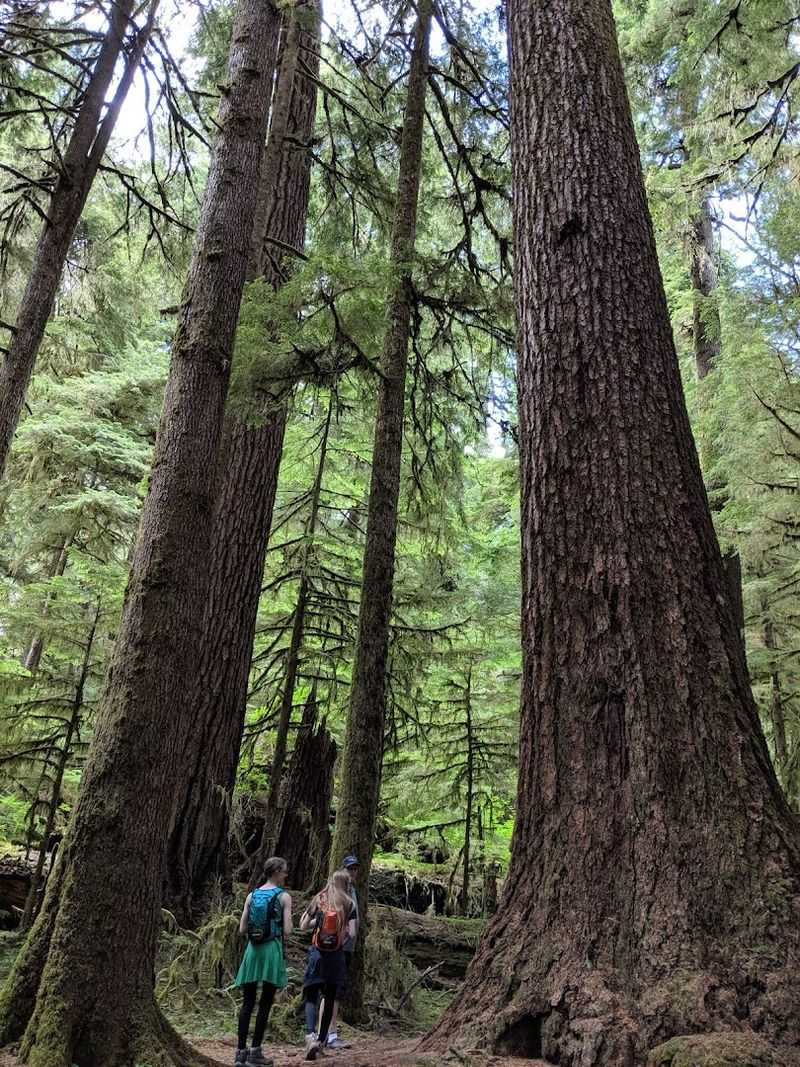
Some trees in this forest have been standing since before European explorers ever set foot on the Pacific Coast. The Valley of the Giants near Falls City, Oregon, is an old-growth preserve that puts the age and scale of nature into sharp perspective.
The trees here are over 500 years old and measure more than 10 feet across at their bases. A 1.3-mile boardwalk trail winds through the grove, keeping the ground undisturbed while giving visitors an up-close look at these ancient giants.
Ferns, mosses, and fallen nurse logs complete the lush forest floor scene.
The address is Falls City, OR 97344. Access and trail use are free.
The road to the trailhead is unpaved and can be rough, so a vehicle with decent clearance is helpful. Summer is the best season to visit because the trail is dry and the canopy is in full leaf.
Standing next to one of these massive trees and realizing it was alive during the 1500s is a quietly humbling moment that no photograph can fully capture.
9. Mount Hood Viewpoints, Oregon
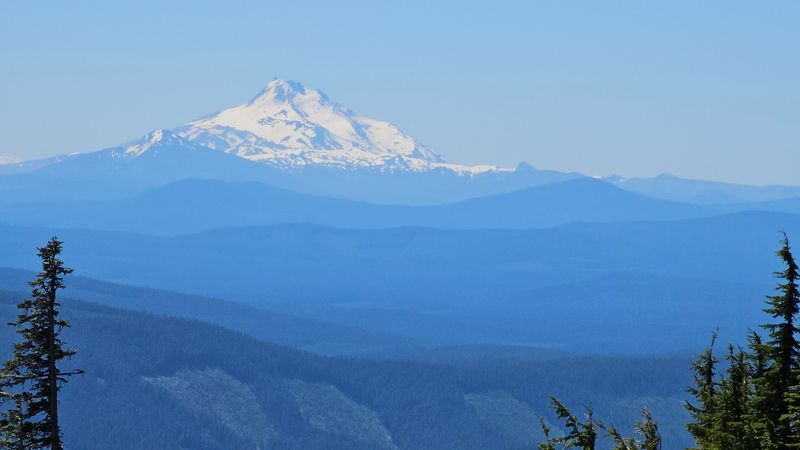
Oregon’s highest peak tops out at over 11,000 feet, and you do not need a summit permit or a climbing harness to enjoy it. Mount Hood offers stunning views from multiple free public viewpoints scattered across the surrounding national forest.
Trillium Lake is the most iconic of these spots, where the mountain reflects perfectly in the calm water on still mornings. The scene looks like a postcard but feels completely real when you are standing on the lakeshore with coffee in hand.
Scenic drives along Highway 26 offer additional viewpoints without any technical effort required.
Hiking trails of varying difficulty fan out across the mountain’s lower slopes and are free to use. Summer is prime season because the wildflowers bloom and the snow line retreats up the mountain.
Parking at some trailheads may require a Northwest Forest Pass, but the viewpoints themselves cost nothing.
Mount Hood is visible from Portland on clear days, but getting close enough to feel its presence is an entirely different and deeply satisfying experience.
10. Fall Creek State Recreation Site, Lane County, Oregon
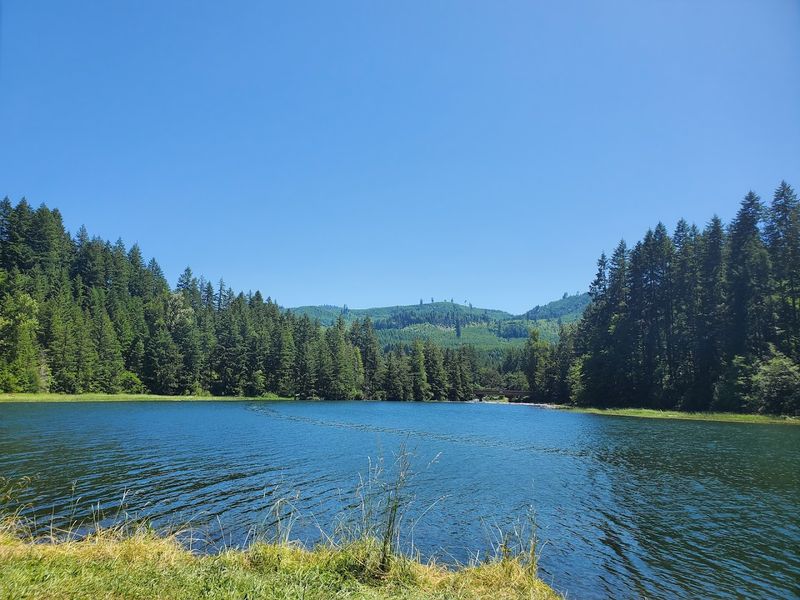
On a hot summer afternoon about 30 miles southeast of Eugene, Fall Creek Reservoir becomes one of the most refreshing destinations in all of western Oregon. The water is clear, the forest is towering, and the entry is completely free.
Fall Creek State Recreation Site sits along the reservoir and offers easy access to swimming and fishing in a setting surrounded by old-growth Douglas fir trees. The forest here is genuinely impressive, with massive trunks and a dense canopy that keeps the picnic areas cool even on warm days.
The address places this spot in Lane County, OR, with no day-use permit required for entry. Families tend to claim spots along the rocky shoreline early on weekends, so a morning arrival is a smart move.
Fishing for rainbow trout is popular, and the calm sections of the creek are ideal for younger swimmers.
The combination of reservoir swimming and old-growth forest access in one free location makes Fall Creek feel like a well-kept local secret that deserves far more visitors than it typically gets.
11. Movie Madness, Portland, Oregon

Only in Portland would a video rental store double as a legitimate film museum, and Movie Madness on SE Belmont Street does exactly that with tremendous charm. The store is a nonprofit, and the mini-museum inside is completely free to browse.
Display cases throughout the shop hold genuine props and costumes from famous Hollywood productions. Items from iconic films sit just a few feet away from shelves of DVDs, making the whole space feel like a treasure hunt for movie lovers.
The collection is curated with real care and includes pieces that serious film fans will immediately recognize.
The address is SE Belmont St, Portland, OR. No ticket is required to walk in and explore the museum section.
The store also rents a vast collection of films across nearly every genre and era imaginable. Rainy summer afternoons in Portland are practically designed for a trip here, where you can spend an hour looking at Hollywood history and leave with a film to watch that evening.
It is genuinely one of the most unique free experiences available anywhere in Oregon.
12. Oregon Rail Heritage Center, Portland, Oregon
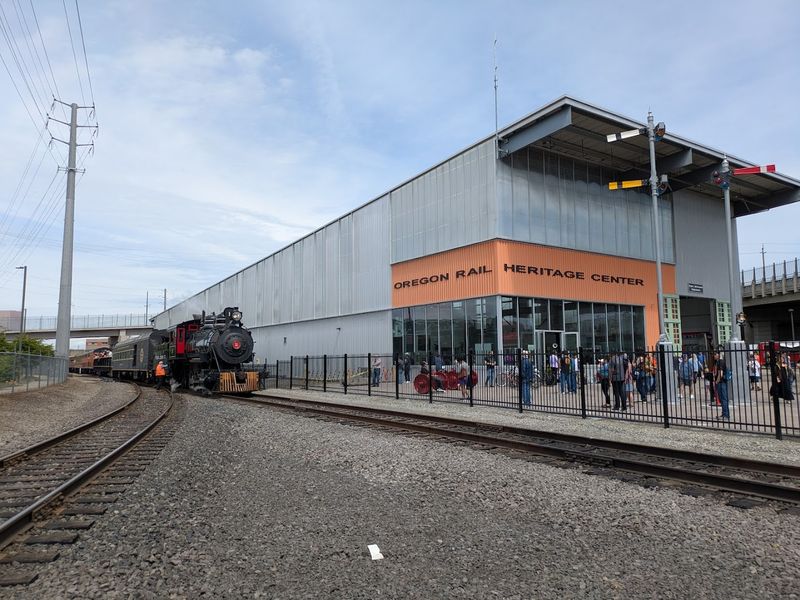
Steam locomotives have a presence that photographs simply cannot prepare you for. The Oregon Rail Heritage Center in southeast Portland gives visitors a free chance to stand next to these massive machines and feel the weight of railroad history up close.
The center houses a collection of restored steam locomotives alongside other historic rail equipment, all displayed in an open shed that lets you get genuinely close to the engines. Interpretive signage explains the history of each piece and its role in Oregon’s transportation past.
The scale of these machines is genuinely impressive in person.
The address is Southeast Portland, OR. Daily admission is free, though a small fee applies for Saturday train rides if you want to take an actual trip behind a steam engine.
Volunteer staff are usually on hand to answer questions and share stories about the restoration process. The center is a short drive from other Portland attractions, making it easy to combine with a full day of city exploring.
Rail enthusiasts of all ages tend to linger much longer here than they originally planned.
13. Cannon Beach History Center and Museum, Cannon Beach, Oregon
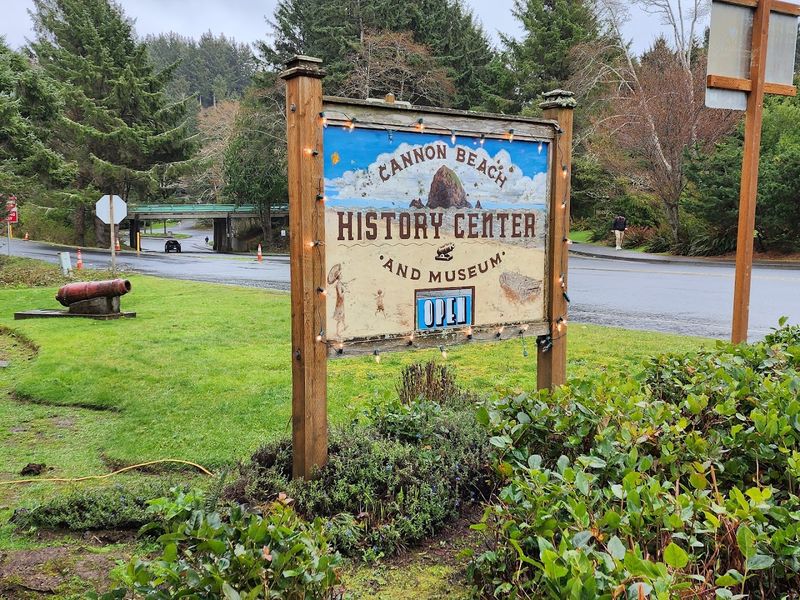
Cannon Beach is famous for its dramatic coastline, but the town itself has a rich and layered history that most visitors walk right past on their way to the beach. The Cannon Beach History Center and Museum on South Spruce Street changes that in a very satisfying way.
The museum preserves the story of how this small coastal community developed over generations, from its earliest origins through its connection to the surrounding natural environment. Exhibits include vintage photographs, local artifacts, and detailed accounts of the people and events that shaped the town’s character.
The displays are well-organized and genuinely engaging.
The address is 1387 South Spruce St, Cannon Beach, OR. Admission is completely free, making it an easy addition to any visit that already includes time at Haystack Rock.
The museum is small enough to explore thoroughly in about an hour, which makes it a perfect stop before or after a beach walk.
Local history museums like this one often reveal surprising details about a place that completely change how you see the landscape around you on the way out.
