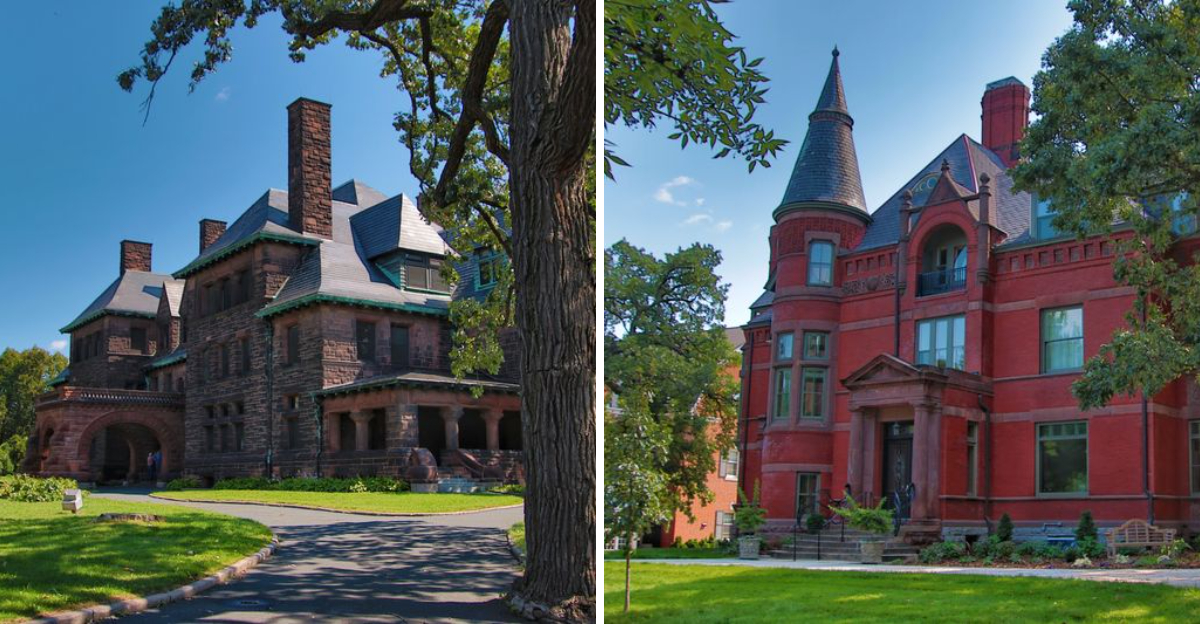
A street so grand that every single house looks like a millionaire’s dream from another century. One Victorian home after another stretches for miles without any boring buildings in between.
I walked along the sidewalk with my neck craned upward like a confused tourist bird. The details on these porches make modern houses look like boring cardboard boxes honestly.
Purple glass gleams in old windows and carved dragons hide under fancy rooflines everywhere. Some homes have towers that look perfect for a lonely princess or a very dramatic author.
The trees are old and huge and draped over the street like green umbrellas above. I stopped at least twenty times just to stare at one particular turret or another.
A plaque said this is the longest row of Victorian homes in the whole country. Minnesota hiding this architectural treasure feels like a secret someone forgot to put on a postcard.
The Sheer Scale of the Boulevard Will Stop You in Your Tracks
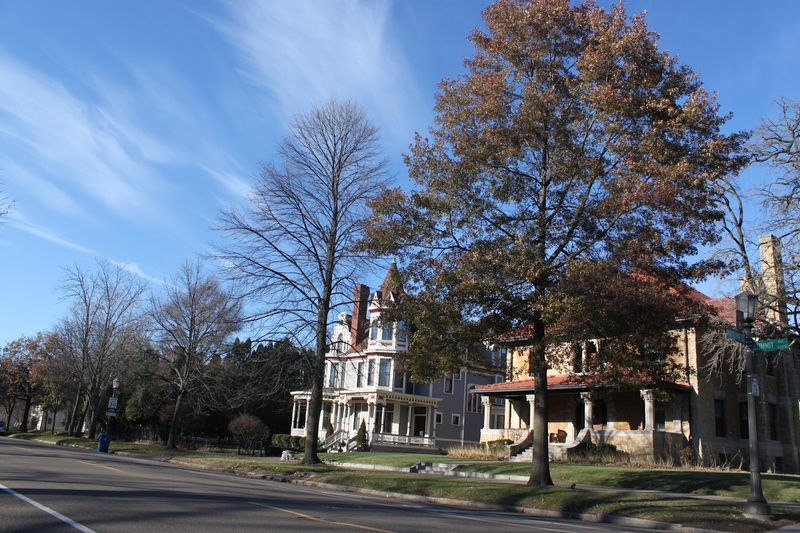
Most people do not realize just how long Summit Avenue actually is until they start walking it. Four miles of continuous Victorian architecture is genuinely hard to wrap your head around before you see it in person.
The boulevard runs from the Cathedral of Saint Paul all the way to the Mississippi River. That is not a short stroll.
It is a full commitment, and every single step rewards you.
Along the way, the homes shift slightly in style and era. Some lean into Romanesque Revival, others show off Queen Anne flourishes, and a few sit in quiet Italianate dignity.
The variety keeps your eyes busy and your feet moving.
What makes this stretch so rare is how intact it remains. Urban development swallowed similar corridors in other American cities decades ago.
Here, the scale and the preservation work together to create something that feels genuinely irreplaceable. Seeing it once is never quite enough.
Victorian Architecture Up Close Looks Even Better Than in Photos
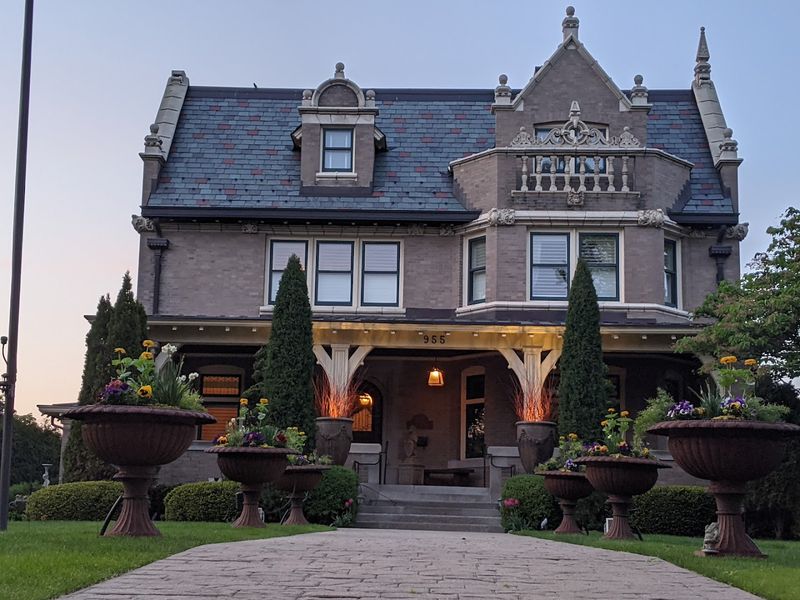
Photography does a decent job capturing Summit Avenue, but standing directly in front of one of these homes is a completely different experience. The stone carvings are intricate in ways a camera lens tends to flatten.
Run your eyes up a single facade and you will find layered cornices, decorative brackets, and window hoods carved with patterns that must have taken skilled hands weeks to complete. Each detail was placed there with clear intention.
The turrets are a particular highlight. Several homes feature rounded towers that rise above the roofline with a quiet authority.
They give the street a slightly storybook quality without ever feeling overdone.
What strikes me most is how well maintained these homes are. Fresh paint, intact ironwork, and clean stonework signal that the people living here genuinely care about what they have inherited.
The Governor’s Residence Anchors the Avenue with Real History
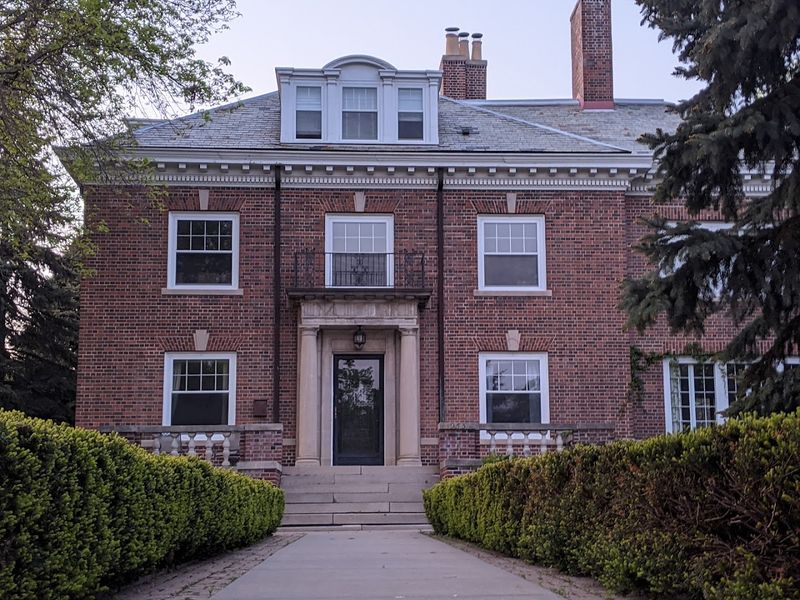
Partway down Summit Avenue sits a building that carries more than just architectural weight. The Minnesota Governor’s Residence at 1006 Summit Avenue is a Tudor Revival structure built in 1910, and it still serves as the official home of the state’s governor today.
The red brick exterior and steeply pitched roofline give it a stately look that fits perfectly within the boulevard’s visual rhythm. It does not try to outshine its neighbors.
It simply belongs.
Public tours are available on select days, and stepping inside offers a glimpse into how Minnesota’s political history and domestic life have intersected over more than a century. The rooms feel formal but not cold.
Standing outside the iron fence and looking up at the facade is a small but meaningful moment. This is not a roped-off historic site frozen in amber.
It is a working residence with real decisions being made inside.
The James J. Hill House Is the Crown Jewel of the Whole Street
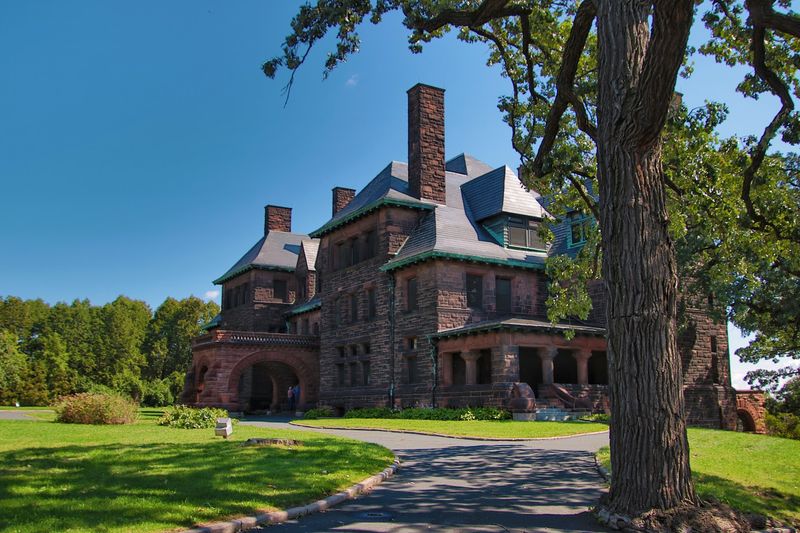
If Summit Avenue has a showstopper, it is the James J. Hill House at 240 Summit Avenue.
Built in 1891 for the railroad magnate who helped connect the American continent, this Romanesque Revival mansion is enormous in the best possible way.
The rusticated brownstone exterior commands attention from half a block away. Arched windows, a deeply recessed entrance, and a roofline that seems to go on forever all contribute to a presence that feels genuinely monumental.
Inside, the scale continues. The house contains over 36,000 square feet of space, including a reception hall with a massive stone fireplace that could warm a small gymnasium.
The art gallery James Hill added for his personal collection still impresses visitors today.
Minnesota Historical Society operates the site and offers guided tours that bring the story of Hill and his era to life with real depth. Walking through those rooms makes the Gilded Age feel much less abstract.
Walking the Avenue at Different Times of Day Reveals New Details
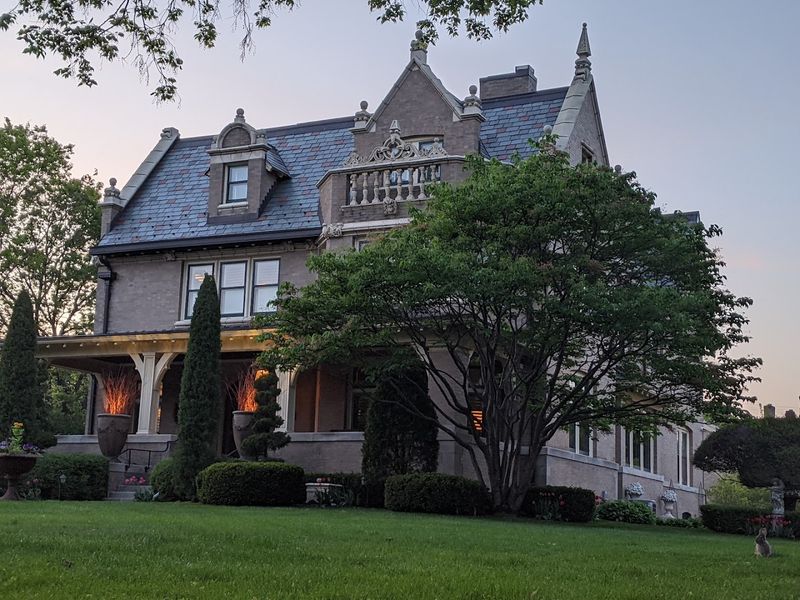
Morning on Summit Avenue has a particular quality that is hard to describe without sounding overly poetic. The light comes through the tree canopy at an angle that makes the stone facades glow in a warm amber tone.
By midday the avenue feels more active. Joggers pass, dog walkers nod, and cyclists glide along the parkway median.
The energy shifts from contemplative to communal in a way that feels completely natural.
Evening is its own reward. As the light fades, the architectural details shift into shadow and silhouette.
The turrets and gabled rooflines look genuinely dramatic against a darkening sky. One visitor described it as unreal and mysterious at night, and that feels accurate.
Returning at different times is not just a nice idea. It genuinely changes what you see.
Morning reveals texture. Afternoon reveals scale.
Evening reveals drama. Spending a full day moving slowly along the boulevard gives you a much richer understanding of why this street has earned its reputation.
The Cathedral of Saint Paul Marks the Eastern Gateway to the Avenue
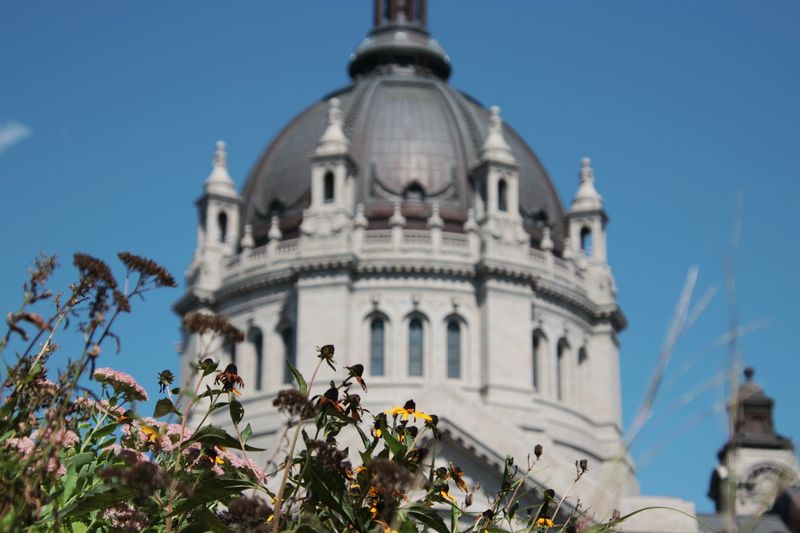
Standing at the eastern end of Summit Avenue, the Cathedral of Saint Paul rises with a confidence that sets the tone for everything that follows. The neoclassical dome is visible from multiple points along the boulevard, anchoring the view with a kind of gravitational pull.
Completed in 1915, the cathedral took decades to plan and build. The interior is vast and hushed in that particular way that large sacred spaces tend to be.
Even visitors who are not religious tend to pause inside and simply look upward.
From the steps of the cathedral, the full length of Summit Avenue stretches westward in a straight line that seems to go on forever. On a clear day you can see the tree canopy narrowing toward a distant vanishing point.
It is one of the better urban views in the entire state.
Starting a walk here and moving slowly toward the Mississippi River gives the whole experience a natural narrative arc. The cathedral is a genuinely powerful opening chapter to the story Summit Avenue tells.
Grand Avenue Runs Parallel and Adds a Lively Contrast
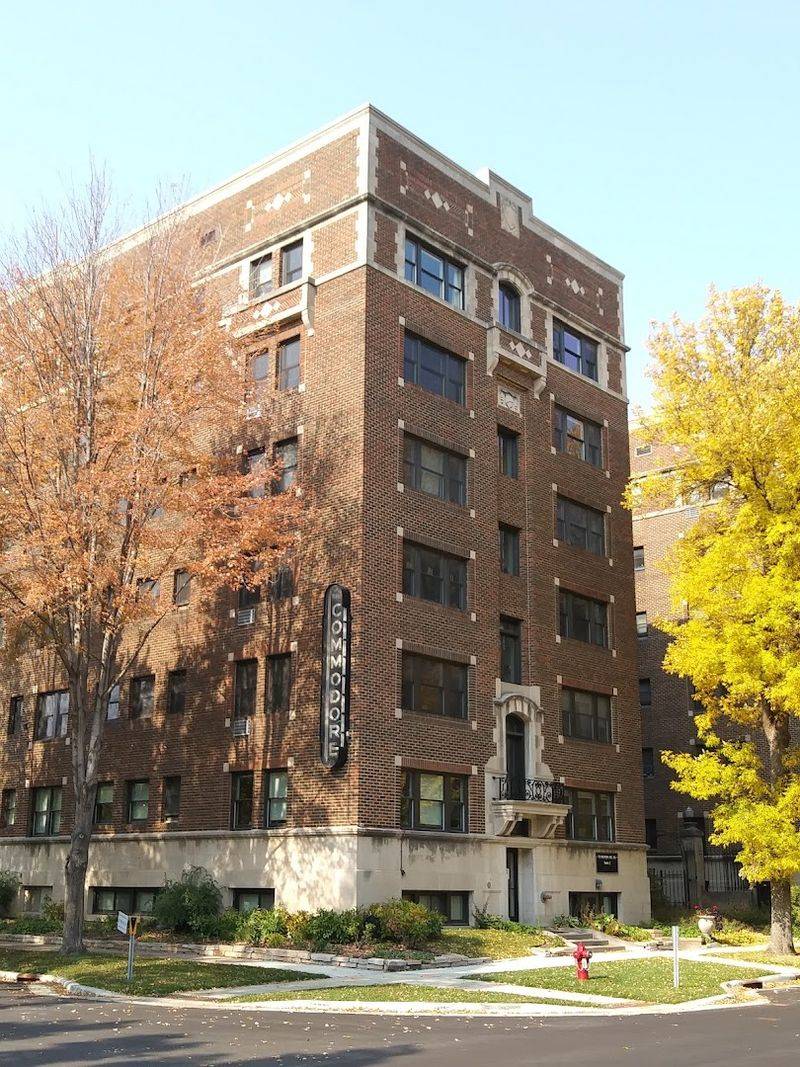
One block south of Summit Avenue runs Grand Avenue, and the contrast between the two streets is part of what makes this neighborhood so enjoyable to spend time in. Summit is stately and residential.
Grand is energetic and full of small businesses.
Local coffee shops, bookstores, and restaurants fill the ground floors of buildings that retain their historic character without feeling frozen in time. The street has a genuinely lived-in quality that complements the grandeur one block north.
After a long walk along the Victorian facades, stepping onto Grand Avenue for a cup of coffee and a seat on a cafe patio feels like the natural next move. The two streets work together in a way that seems almost choreographed.
Visitors who stick only to Summit Avenue miss half the experience. Grand Avenue shows you how a historic neighborhood continues to function and evolve without losing what made it worth preserving.
The energy there is relaxed, local, and refreshingly unpretentious. Spending time on both streets in a single afternoon is genuinely one of the better ways to understand St. Paul.
The Tree Canopy Transforms the Avenue Through Every Season
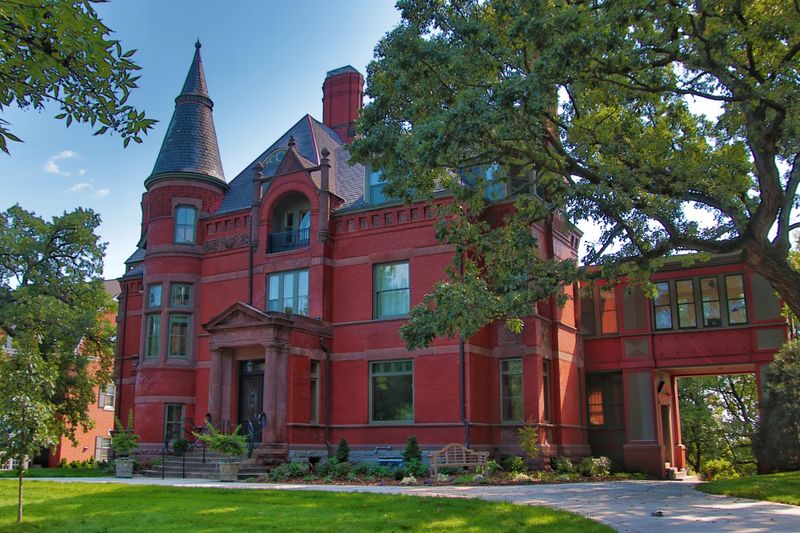
Few streets in America change as dramatically with the seasons as Summit Avenue does. The mature elms and oaks that line the boulevard create a living ceiling that shifts from bare and architectural in winter to explosively colorful in autumn.
Spring brings a soft green that filters the light into something almost dreamlike. The new leaves and the old stone facades create a combination that feels genuinely cinematic without any effort on your part.
Autumn is the season most visitors target, and for good reason. The canopy turns shades of amber, rust, and gold that frame the Victorian rooflines in a way that seems almost staged.
Walking through it feels like moving inside a painting.
Winter has its own austere appeal. With the leaves gone, the full architectural detail of the homes becomes visible in a new way.
The bare branches against a gray sky give the boulevard a quiet, contemplative mood. Each season offers a reason to return, which is a rare quality for any single destination to possess.
F. Scott Fitzgerald Once Called This Street Home
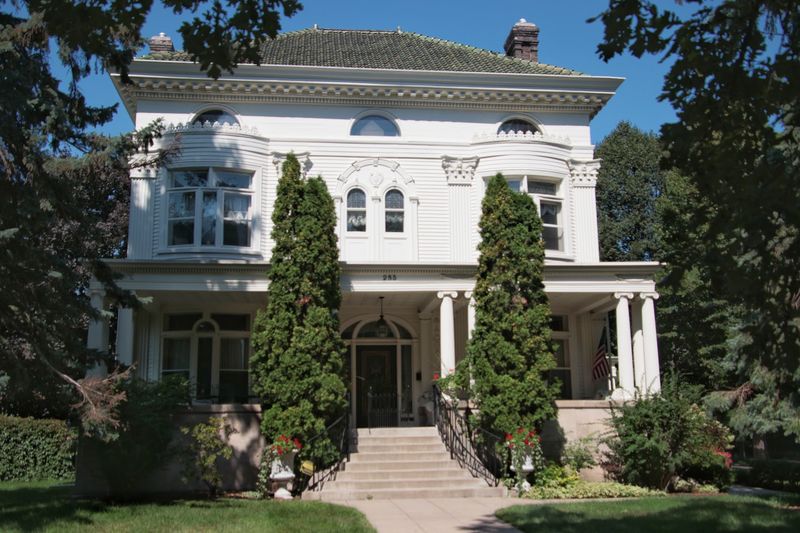
Summit Avenue carries literary history alongside its architectural legacy. F.
Scott Fitzgerald, author of The Great Gatsby, lived at 599 Summit Avenue during the early 1920s. He finished his debut novel This Side of Paradise while staying in the neighborhood.
The house itself is modest by Summit Avenue standards. It is a row house rather than a grand mansion, which makes it an interesting counterpoint to the more imposing homes nearby.
A historic marker identifies it for passersby.
Fitzgerald reportedly had complicated feelings about St. Paul and about Summit Avenue specifically. He found the wealth on display both fascinating and slightly suffocating, which perhaps explains some of the tension that runs through his best writing.
Stopping in front of the house and knowing that some of American literature’s most enduring prose was composed just a few feet away adds a layer to the walk that purely architectural appreciation cannot provide. Summit Avenue is not just about buildings.
It is about the lives that unfolded inside them, and Fitzgerald’s story is one of the most compelling on the whole street.
The Western End Meets the Mississippi and Completes the Journey
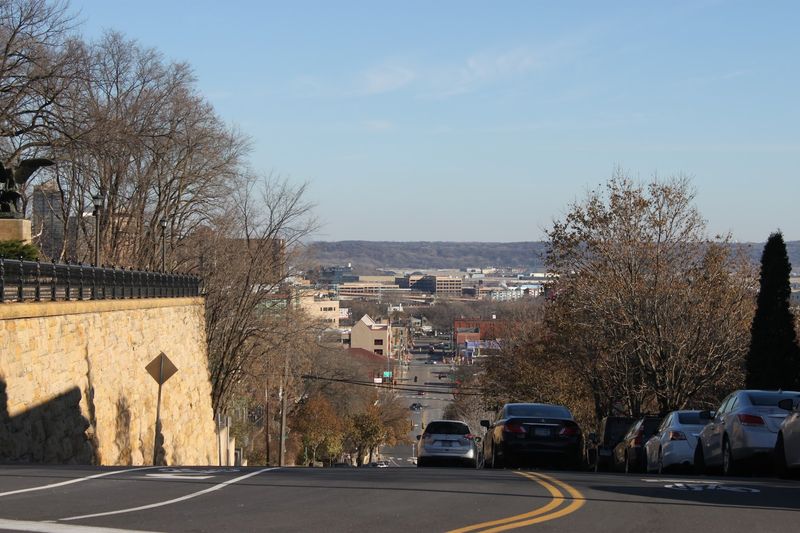
Reaching the western end of Summit Avenue feels like finishing a long and satisfying chapter. The boulevard terminates at the bluffs above the Mississippi River, and the view that opens up there is a genuine payoff for the miles behind you.
The river moves steadily below, wide and brown and unhurried. The bluffs drop away sharply, and on clear days you can see across to the opposite bank with surprising clarity.
It is a reminder that St. Paul grew up around this river and still belongs to it.
The transition from ornate Victorian facades to open sky and moving water is a dramatic shift in scale. One moment you are surrounded by carved stone and tall trees.
The next, the horizon opens up completely.
Standing at that western terminus and looking back down the avenue, the long corridor of trees and rooftops receding into the distance, gives the whole experience a sense of completion. Summit Avenue earns its reputation not just block by block but as a complete journey with a real beginning, middle, and end.
Address: Summit Ave, St Paul, MN.
