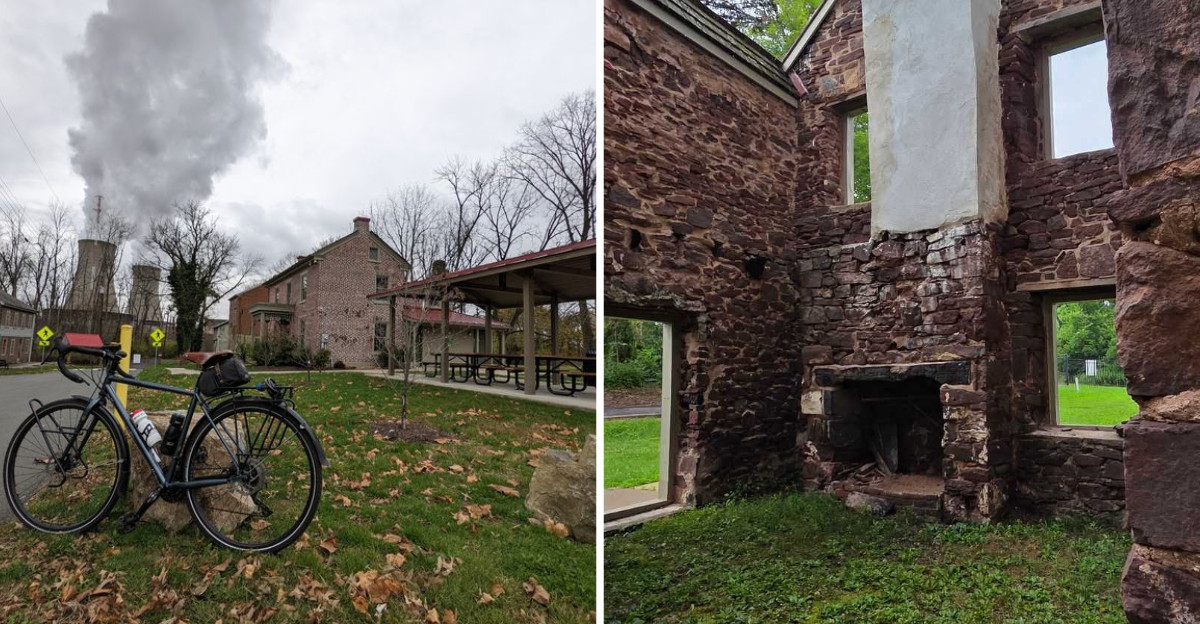
That cluster of stone and clapboard houses sat quietly off a country road in Pennsylvania, and I pulled into the parking lot expecting a quick stretch of the legs. I got a whole lost century instead.
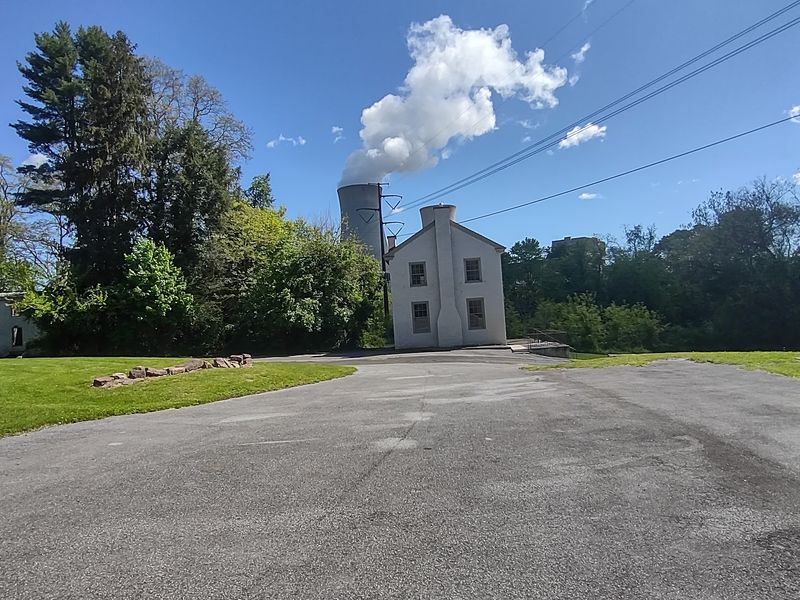
Two enormous cooling towers puff steam in the background, making the whole scene feel like two different eras got stacked on top of each other, the old village leaning toward a canal that has long since been filled in and grassed over.
What surprised me most was how ordinary it all looks up close, like the families just stepped out for groceries and never came back.
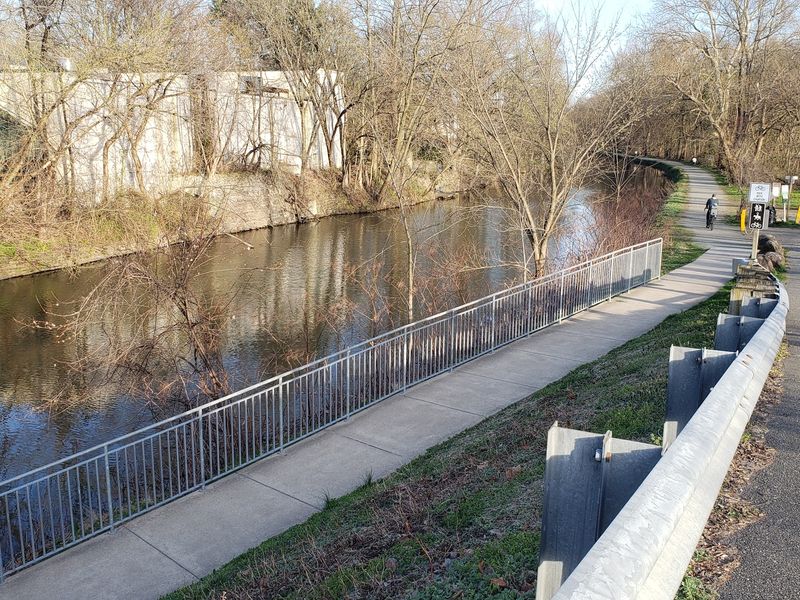
The canal that once made this place busy is gone now, but the village still holds the shape of what it was, with the houses still facing the path where the water used to run.
I have visited a lot of small towns in this state, and none of them stuck with me quite like this one, a place where the silence feels heavier than it should and the steam from the towers drifts across the rooftops like a reminder that time does not move in straight lines.
The Village That Grew Around Two Locks
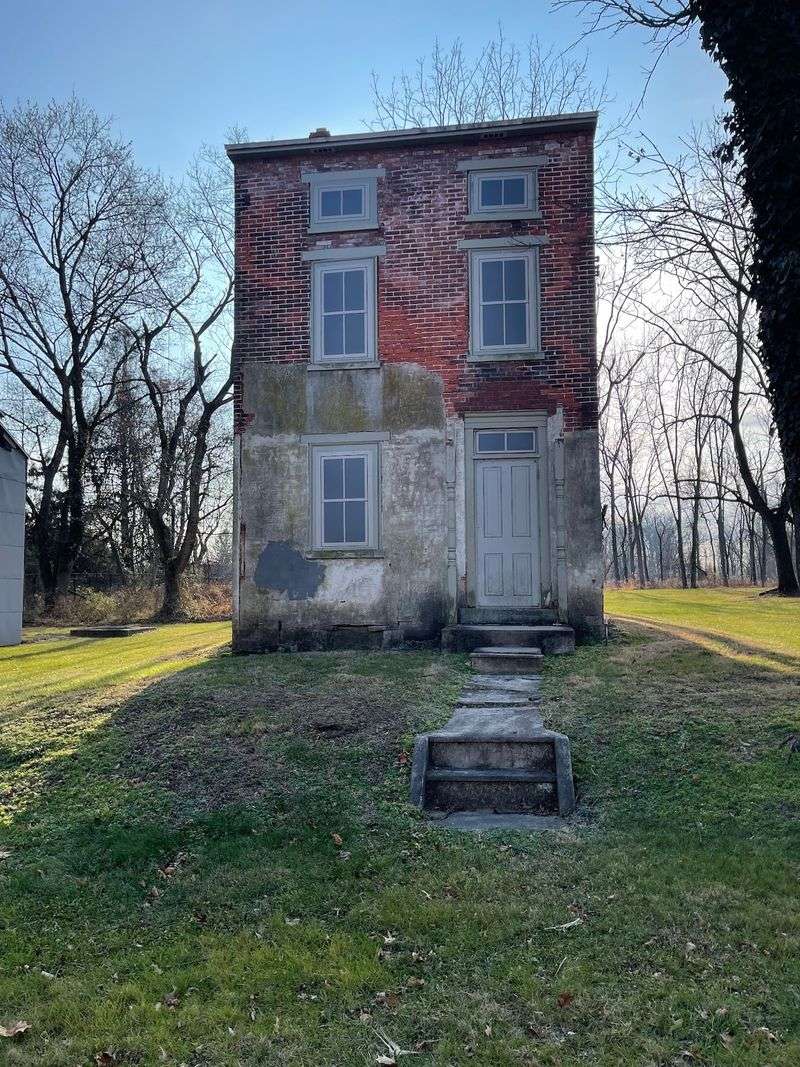
Before the canal arrived, this was farmland owned by the Frick family, plain and quiet along the Schuylkill River. Everything changed in the early 1820s when the Schuylkill Navigation Company bought land from John Frick and built Locks 54 and 55 right through the property.
The name stuck. Fricks Locks, plural, because two locks meant two chances for boats to stop, pay, rest, and spend money.
What I find fascinating is how quickly a farm turned into a functioning little town. Houses went up.
Businesses followed. A settlement formed around the simple fact that boats had to slow down here.
Some of the buildings actually predate the canal by decades, including a farmhouse from 1757 and a house built in 1752 that is considered the oldest in Chester County. Standing among them, you get layers of history rather than a single frozen moment.
The whole historic district covers about 18 acres, which sounds small until you walk it. It was added to the National Register of Historic Places in 2003, and that designation is a big part of why anything survives here at all.
Coal, Boats, and the Schuylkill Navigation System
Coal built this village, plain and simple. The Schuylkill Navigation System was finished around 1824 to move anthracite coal from the mining country down to Philadelphia, and it worked spectacularly well for a while.
By the 1850s, more than a million tons of coal were moving along that waterway every year. Think about that number next to the size of the boats back then.
It meant constant traffic, day and night, for most of the year.
One detail from the site’s history stuck with me. There was a convenience store here that stayed open around the clock so boatmen could grab supplies whenever they passed through, which feels remarkably modern for the 1800s.
Passengers rode packet boats too, and Fricks Locks offered them a place to stay overnight. It was a service town, built entirely around other people’s journeys.
A visitor review I read mentioned the canal ran roughly nine months a year, shutting down when ice made passage impossible. Winter must have been eerily silent here, the village holding its breath until spring.
When the Railroad Rolled In and the Name Changed
Nothing kills a canal faster than a train, and Fricks Locks learned that the hard way. Toward the end of the 1800s, the Pennsylvania Schuylkill Valley Railroad pushed through the area and built a station right here.
They called the station Frick’s Lock, singular. Over time the village’s own name followed suit, dropping the plural, which is why you will see it written both ways depending on the source.
Small detail, but I love it. A name shifting because of a sign on a railroad platform tells you exactly where the power had moved.
The village did not come to an end immediately. A post office operated here, and the station kept some life flowing through town even as boat traffic thinned out year after year.
Floods in late 1925 badly damaged the canal, and commercial operations ended in 1930. Crews began filling in the channel in 1942, erasing the very thing that had created the settlement.
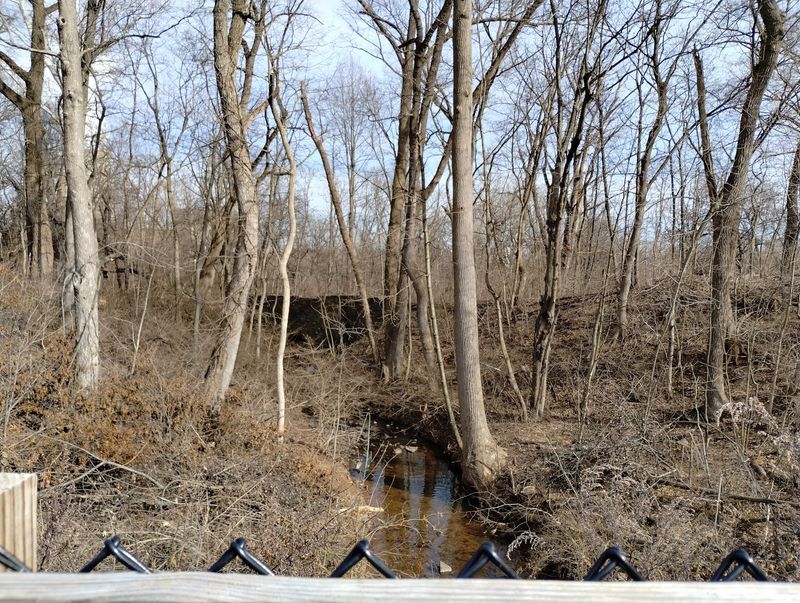
Walk the grounds now and the canal bed is mostly a memory. You have to be told where it ran to notice the subtle dip in the land.
Two Cooling Towers and the End of a Town
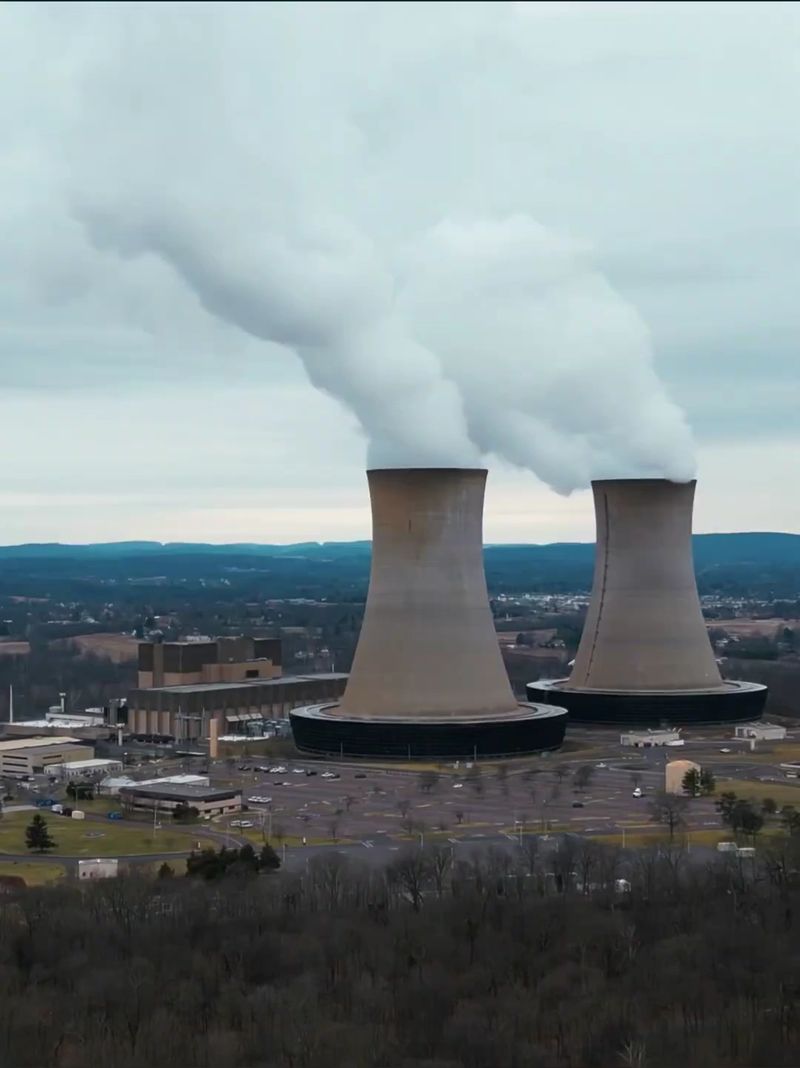
You cannot miss them. The cooling towers of the Limerick Nuclear Power Station rise directly across the Schuylkill River, and they are the reason nobody lives in this village anymore.
Philadelphia Electric Company started planning the station in the 1960s. Federal rules for nuclear facilities required a buffer zone, and homes were not permitted within 2,500 feet of the plant.
Fricks Lock sat squarely inside that line. Between 1969 and 1970, the company bought up all the land, houses included.
Residents stayed on for years afterward, but by 1986, when the station went online, everyone was gone and the buildings were boarded shut. Accounts of the departure differ, with some describing buyouts and relocations and others describing short notice to leave.
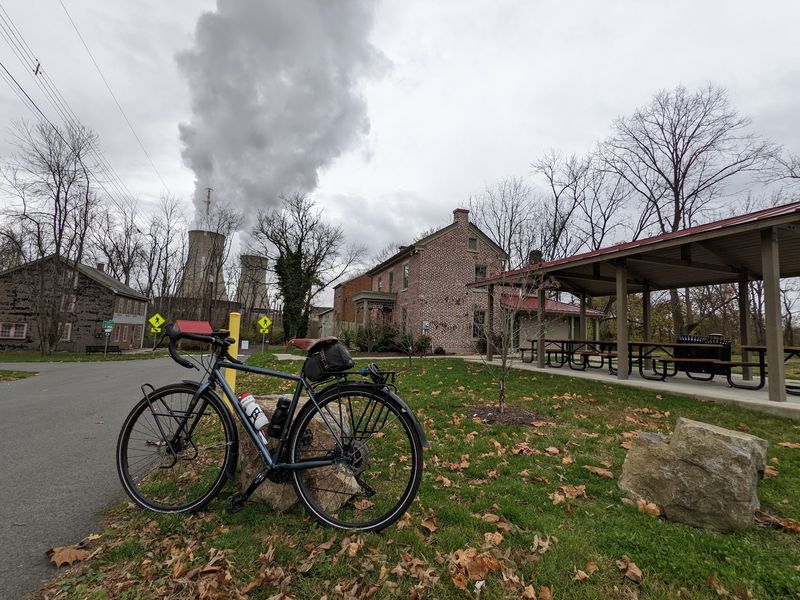
Seeing those steam plumes float above 250-year-old rooflines is genuinely strange, and I mean that in the best way. It is the clearest visual shortcut to the story that I can imagine.
Visitors often say the towers are half the appeal. I would agree.
The contrast makes you think about how quickly progress can reshape a place.
Decades of Decay, Then a Real Rescue
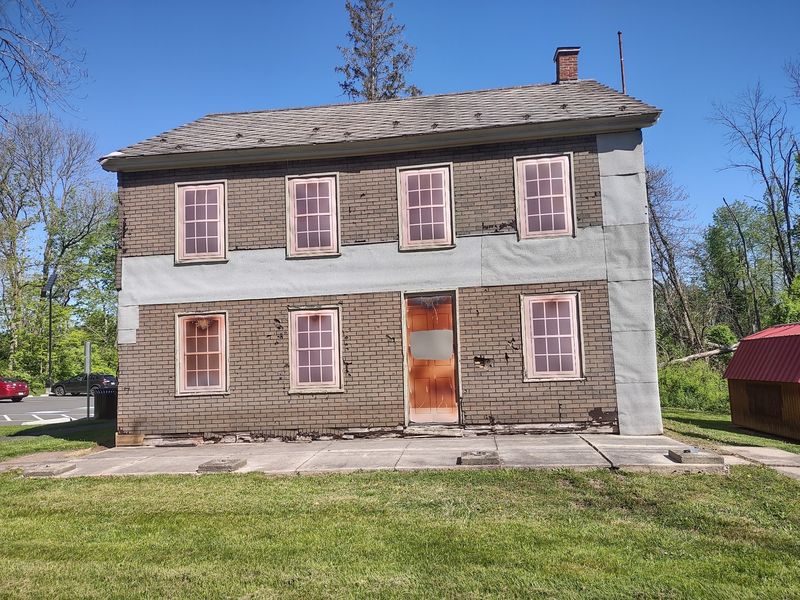
For a long stretch after abandonment, this place had a rough reputation. Urban explorers, thrill-seekers, and plenty of people with less respectful intentions found their way in, and the buildings suffered badly for it.
Vandalism took a toll. Then a fire in February 2008 destroyed the Lock Tender’s House, one of the structures most tied to the canal era.
That loss seems to have been a turning point. Exelon, which operates the power station, began cleaning up the property and securing what remained.
In 2011 the company donated the land and eleven historic structures to East Coventry Township, handing the village to the community rather than letting it crumble. Two years later, a restoration project worth roughly 2.3 million dollars began, mostly funded by Exelon.
Crews focused on the exteriors of nine buildings, stabilizing roofs, walls, and windows so the village would stop sliding toward collapse. The effort earned a Preservation Achievement Grand Jury Award in 2013.
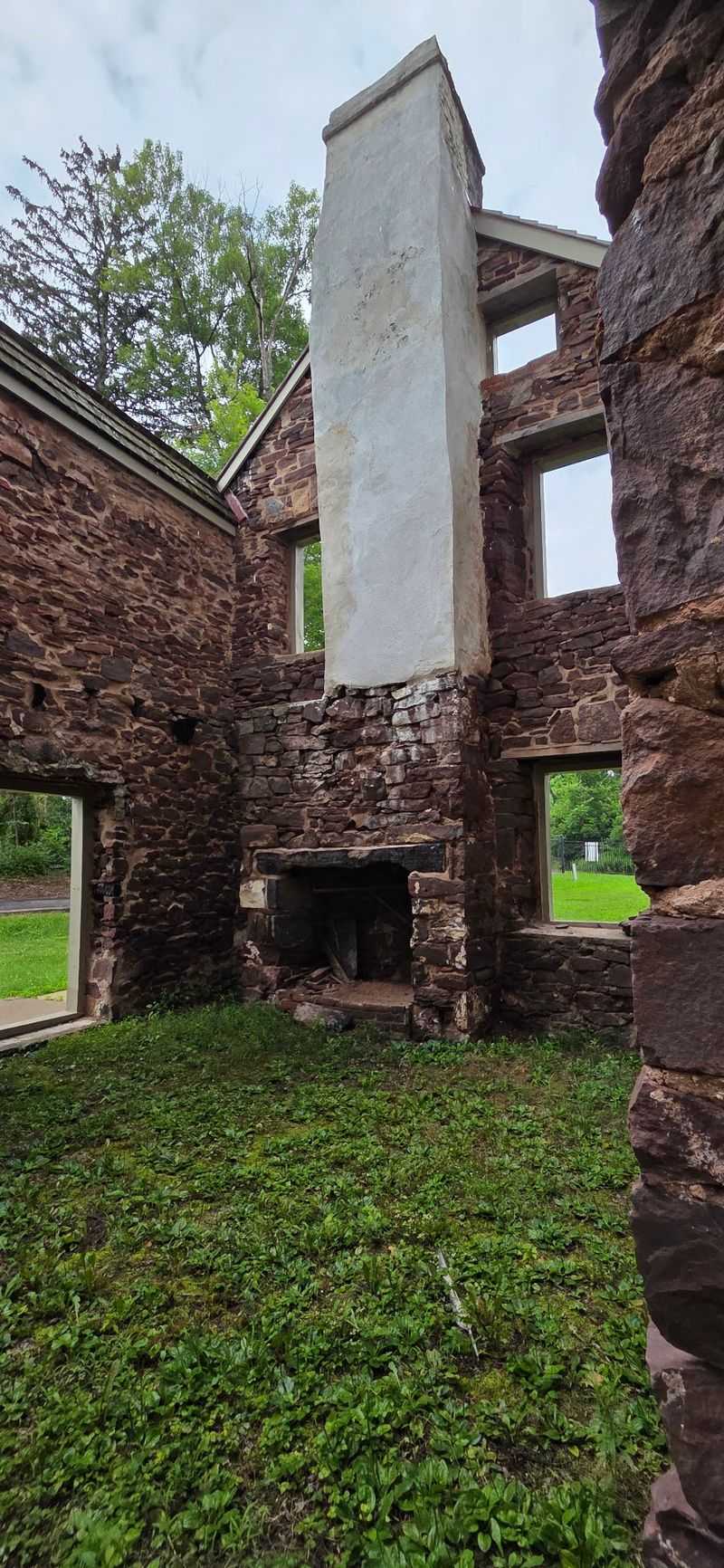
I appreciate that they did not try to make it look brand new. It still reads as abandoned, just no longer endangered.
How the Guided Tours Actually Work
Here is the practical part that trips people up. The village itself is private property behind a gate, and you cannot wander through it whenever you feel like it.
Free guided tours are offered on select Saturdays, generally running from spring through fall, with most visitors reporting roughly ten tour dates spread across the warmer months. The East Coventry Township Historical Commission runs the show.
Check the township website before you drive out. I cannot stress this enough, because more than one visitor has made a long trip only to find the gate closed and nobody around.
The tours are worth planning around. Guides walk you past buildings you otherwise only glimpse from the trailhead, and several guides have personal connections to the village itself.
People who have taken the tour describe them as informative and genuinely entertaining, not a dry recitation of dates. There is also a small gift shop that repeat visitors recommend.
Bring comfortable shoes and sun protection. Most of the walking happens outdoors on uneven ground with limited shade.
The Trailhead That Doubles as a Rest Stop
Cyclists stumble onto this place constantly, and I understand why. The Schuylkill River Trail runs right along the edge of the property, and the Fricks Lock trailhead is one of the better-equipped stops on that stretch.
There is a decent-sized paved parking lot, real flush restrooms in a permanent building, and a covered pavilion with picnic tables. Solar lighting keeps things visible in the early and late hours.
For a rural trailhead, that is a genuine luxury. Anyone who has ridden long paved sections without facilities will understand the relief.
The trail here is flat and smoothly paved, connecting toward Parker Ford in one direction and Pottstown in the other. It makes a comfortable ride for families and casual riders who want scenery without hills.
The parking lot is gated and open from dawn to dusk. Weekends get busy, though trail users generally share the space politely.
Even without a tour ticket, you can see a good portion of the village from outside the fence. Pack a lunch, claim a picnic table, and let the view do the storytelling.
Planning a Visit Without Disappointment
A little preparation goes a long way at a site like this. The village is private property with posted signs warning against trespassing, so respect the fence line and stick to the public trailhead area unless you are on a scheduled tour.
Tour dates are limited and typically fall on Saturdays between roughly June and October. Confirming dates ahead of time is the single most useful thing you can do.
Contact information helps too. The township can be reached at 610-495-5443, and their website posts the current schedule.
Trailhead parking operates dawn to dusk, so early mornings are peaceful and lightly used. That is when I would go for photos.
Bring water, since there is no food service on site, and plan a meal in nearby Pottstown afterward. Restrooms and picnic tables are available, which covers the basics nicely.
Kids tend to enjoy this stop more than parents expect, mostly because of the towers and the empty houses. Give yourself an hour without a tour, or closer to two with one.
Address: 500 Fricks Lock Road, Pottstown, Pennsylvania 19465
