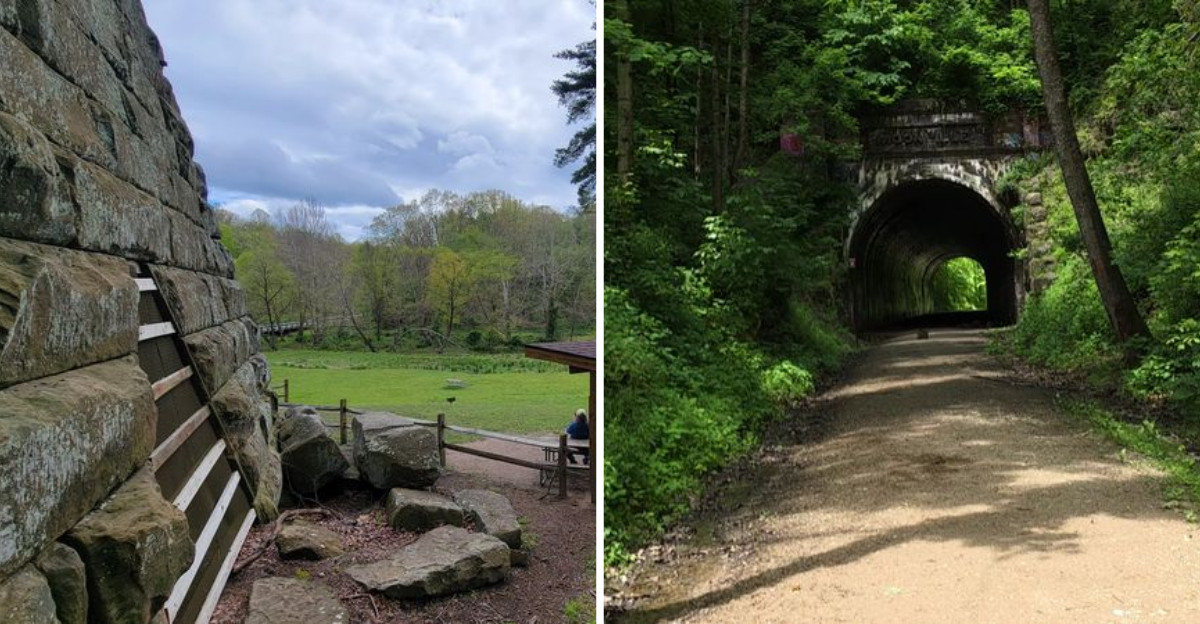
A huge sandstone tower sat just off a winding Ohio road, half swallowed by trees, and I almost missed it the first time I drove through the county. That tower is an iron furnace that roared day and night from 1854 until it went cold in 1874, and I pulled into the gravel lot expecting a quick photo stop.
I ended up wandering around for an hour, poking at bits of glassy slag on the ground, trying to imagine the heat that had once come out of that stone stack.
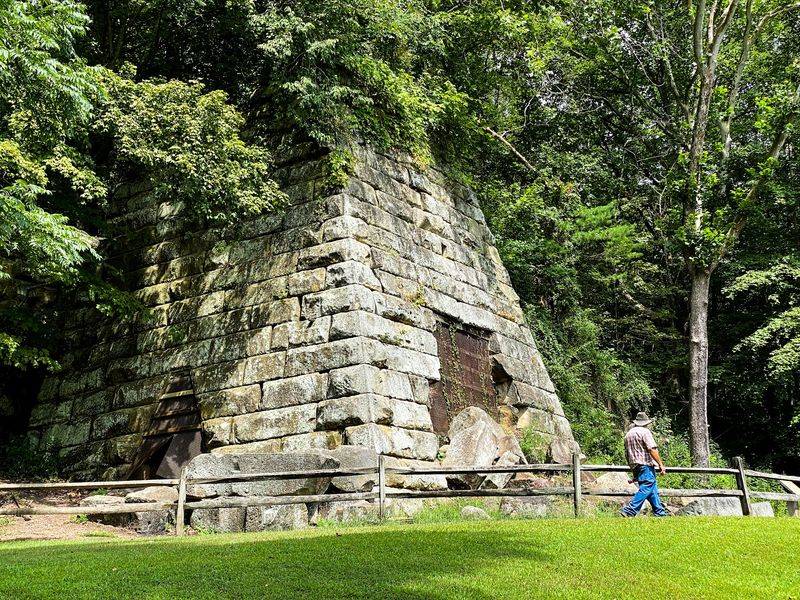
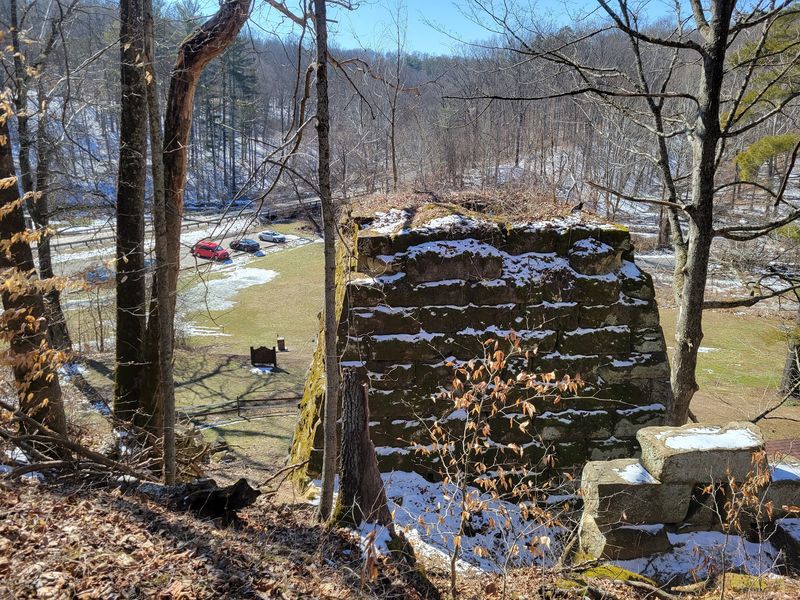
The furnace stands over thirty feet tall, and the stonework is still tight after more than a century of weather and neglect.
What surprised me most was how quiet it all felt now, when this same hillside once fed fires that never went out and workers who never stopped moving.
The trees have grown up around it, and the slag piles are half buried in grass, but the furnace still holds its shape, a reminder of the industry that built this part of the state.
History you can actually touch is worth the winding drive, and this Ohio spot delivers exactly that.
The Sandstone Tower That Refused to Fall
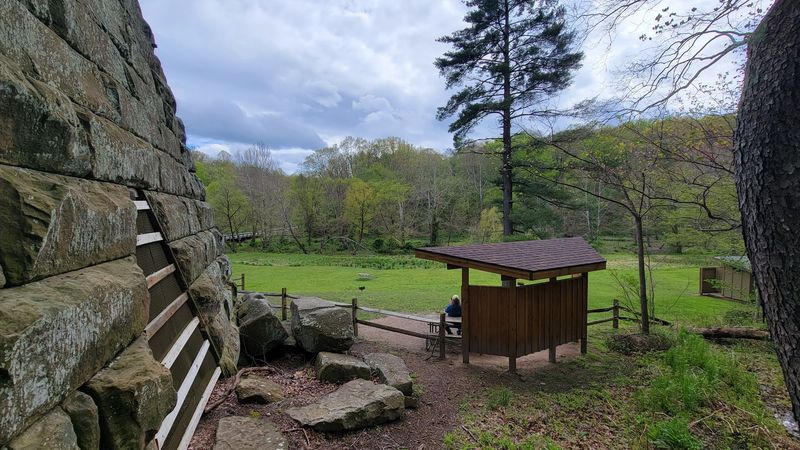
My first thought pulling up was that the thing looks less like a ruin and more like a fortress somebody abandoned mid-project. The furnace is built of thick Pennsylvanian-age sandstone blocks, stacked into a shape that narrows toward the top, sort of like a pyramid with its point sliced off.
The original lining and hearth used Clarion sandstone, chosen because it could take the punishment of constant heat. Inside, the cavity was pear-shaped, wide in the middle and pinched at both ends.
What still gets me is that this was assembled in 1853 and 1854, by hand, with oxen and muscle and very little else. More than 170 years later the walls are still square enough that you can trace every seam with your fingers.
The stone has gone gray and green in places, with moss creeping into the joints and small ferns rooted in cracks. Sunlight comes through the canopy in patches and moves across the face of it during the day.
Bring a wide lens if you shoot photos. Standing back far enough to fit the whole tower in frame is harder than it sounds.
Twenty Years of Fire, Then Silence in 1874
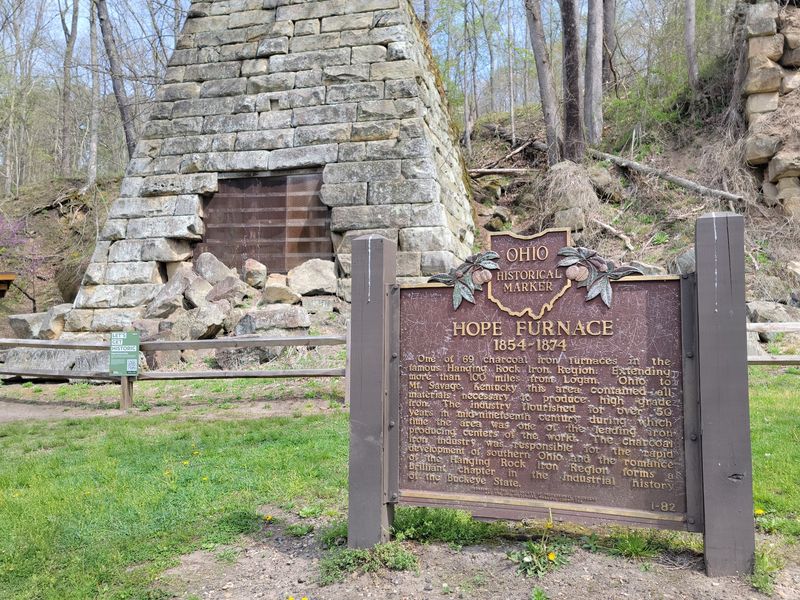
Two decades. That is the whole working life of Hope Furnace, from 1854 to 1874, and it is wild to think how much happened in that short window.
Iron bars made here traveled east and got turned into tools, cooking pots, railroad track, and weapons during the Civil War years. So the pig iron that left this hillside genuinely ended up shaping the country.
Then the shutdown came, and it was not because anything broke. Prospectors found richer iron ore deposits farther west, and Ohio simply could not compete on cost anymore.
The fires went out, the workers packed up, and the forest started reclaiming everything around the stack. It happened fast enough that within a generation most people driving past would not have known what they were looking at.
I find that part strangely moving. An industry that felt permanent to the people living here vanished in a handful of years.
Reading the dates on the marker while standing in total quiet does something to your sense of time. Twenty busy years, then a century and a half of birdsong and nothing else.
Hanging Rock Iron Region and Ohio’s Big Iron Years
Hope Furnace was never a lone operation, and understanding that changed how I saw the whole park. It belonged to the Hanging Rock Iron Region, a stretch of southern Ohio and northern Kentucky that ranked among the biggest iron-producing areas in the entire country.
The geology here was almost a package deal. Iron ore sat in the sandstone bedrock, limestone was available for flux, and endless hardwood forest supplied the charcoal.
By the time of the Civil War, Ohio had 69 blast furnaces running, together pushing out more than 100,000 tons of iron a year. That is a serious industrial footprint for a place most people now picture as farmland and hills.
Hope Furnace itself could turn out about 15 tons of iron on a good day. Multiply that across dozens of furnaces and the scale starts to click.
Once you know the region’s story, the surrounding ridges look different. Those forests are second growth, regrown over land that was stripped bare to feed the fires.
Nature won the long game here, and it did it quietly.
325 Acres of Trees, Cut Every Single Year
Here is the number that stopped me cold on the historical marker: roughly 325 acres of timber cut down annually, just to keep one furnace fed.
Charcoal was the fuel, and making charcoal means burning wood slowly under controlled conditions until only carbon remains. The furnace needed those fires tended around the clock, every hour of every day, without a break.
Woodcutters worked the hillsides constantly. Teamsters hauled ore with oxen.
Others worked the charging deck at the top, dumping in ore, limestone, and charcoal in careful layers.
Hundreds of people were involved, and the work never really stopped. There was no pause button on a blast furnace.
Walking the trails now, you are surrounded by mature woods that feel ancient. They are not.
Almost everything you see grew back after the furnace closed.
That gave me a real appreciation for how fast a forest can heal when people step away. It also made me a little more careful about where I put my boots.
The trees are the monument here as much as the stone is.
Hunting for Slag on the Forest Floor
Kick around the leaf litter near the furnace and you will start finding it: slag. The glassy leftover from smelting, and it is honestly the coolest souvenir you cannot take home.
Pieces range from dull gray lumps to shiny fragments with blue, green, or purple tints when the light hits right. Some are bubbly and light, others dense and heavy for their size.
My nephew found a chunk the size of a golf ball within two minutes of getting out of the car. That is the kind of instant payoff that turns a history stop into an actual adventure for kids.
Slag formed when impurities separated out from the molten iron and got poured off as waste. Everything you find was liquid rock over 150 years ago.
Leave what you find where it lies, since this is a protected historic site inside a state park. Photos are the right way to bring it home.
Poke, look, admire, put it back. Somebody else deserves that same little thrill next weekend.
A Town of 300 That Left No Trace
Something like 300 people lived around this furnace while it ran. Families, workers, kids.
A whole small community with houses and daily routines.
Not one building from it survives. When the furnace shut down in 1874 the residents scattered to find work, and the structures either collapsed on their own or were pulled down for materials.
I kept scanning the ground for a foundation line or an old chimney base and mostly found leaves. The forest did a thorough job.
That absence is the part that lingers for me. The stone stack got to stay because it was too big and too solid to bother removing, but everything softer just went away.
It makes you think about which parts of a place actually last. Not the homes, apparently, but the industrial machinery that made the homes necessary.
Standing near the furnace on a quiet weekday, with only wind moving in the canopy, the contrast between then and now is enormous.
Three hundred voices, then nothing but birds. Hard to shake once you notice it.
The Trailhead Nobody Tells You About
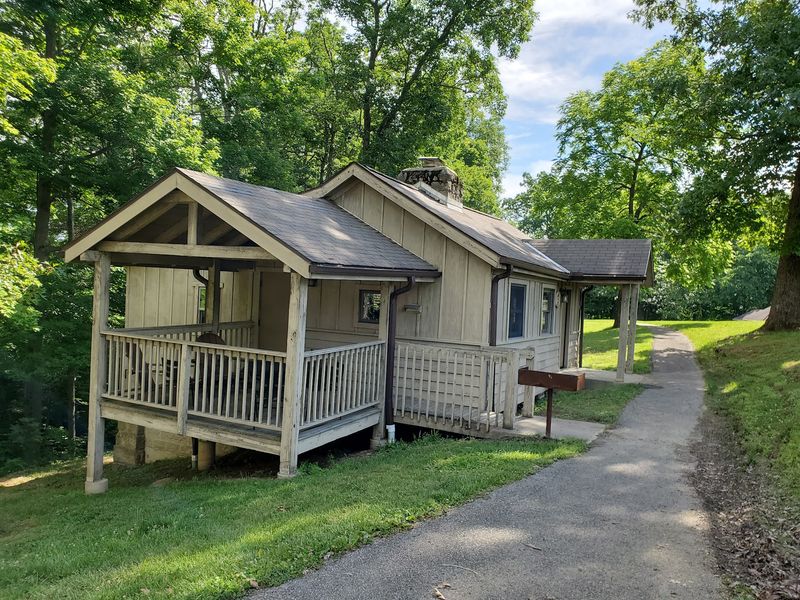
Bonus discovery: the furnace parking lot doubles as a trailhead. Several routes through Lake Hope State Park and the neighboring Zaleski State Forest launch from right here.
I ran into hikers coming off a loop who had circled part of the lake and finished near the furnace, which sounds like a perfect way to structure a day. History at the start or the finish, woods in between.
Lake Hope covers roughly 3,000 acres of forested park land, with the lake itself around 160 acres, so there is plenty of terrain to work with. Trails here lean moderate rather than brutal.
Backpackers use the Zaleski backpack trail system nearby, and day hikers get plenty of shorter options too.
My advice is simple. Grab a paper map at the park office or nature center, since your phone may not cooperate out here.
The nature center is small but genuinely charming, with hands-on displays that kids gravitate toward. Pair it with the furnace and you have a full, low-stress afternoon.
On the National Register Since 1973
Official recognition arrived in 1973, when Hope Furnace was added to the National Register of Historic Places. That listing matters more than it might sound.
Protection is why the stack is still upright and stable instead of crumbling into a pile of loose blocks. Ohio’s Department of Natural Resources keeps the site maintained, with the grounds cleared and the structure monitored.
Plenty of Hanging Rock furnaces did not get that treatment. Some sit on private land, buried in brush, unreachable and slowly falling apart.
Getting to walk right up to a preserved one, free of charge, inside a state park that is open around the clock, feels like a small gift.
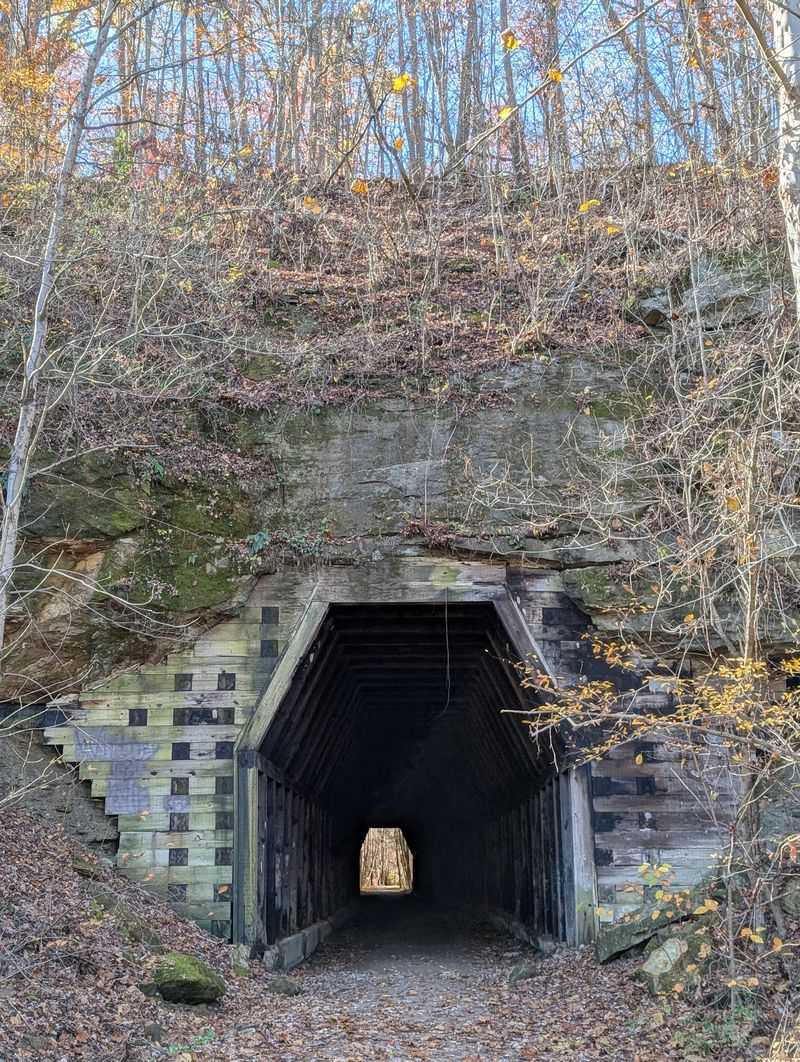
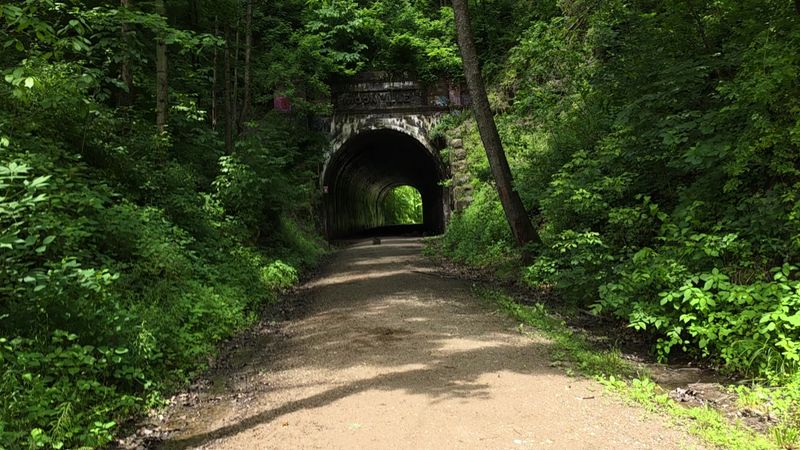
If you are chasing more of this history, Moonville Tunnel sits nearby and pairs well with a furnace visit. Both are pieces of the same vanished industrial world.
Autumn is my pick for timing, when the ridges turn and the gray stone stands out against orange leaves. Winter works too, since bare branches open up the sightlines.
Address: 27331 OH-278, McArthur, OH 45651
