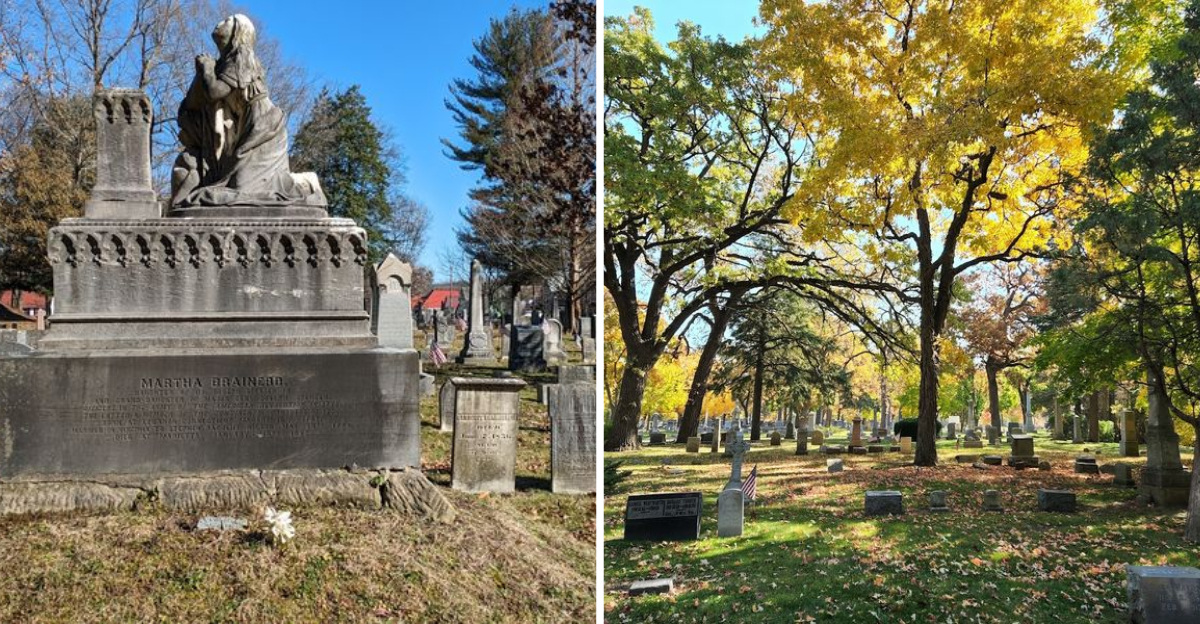
Thousand year old Native American burial mounds sitting just a few steps away from Victorian era headstones and grand family mausoleums. This Wisconsin cemetery holds so many layers of history. I spent an afternoon wandering its grounds, hearing cardinals call out from the tree canopy, watching a chipmunk dart across a mossy path, and feeling like time had folded in on itself in the most fascinating way.
This is not just a burial ground, it is a living archive of human history stretching back at least two thousand years. If you have never visited a place that genuinely makes you feel the weight of centuries, this is the one to put on your list.
The Ancient Effigy Mounds That Started It All
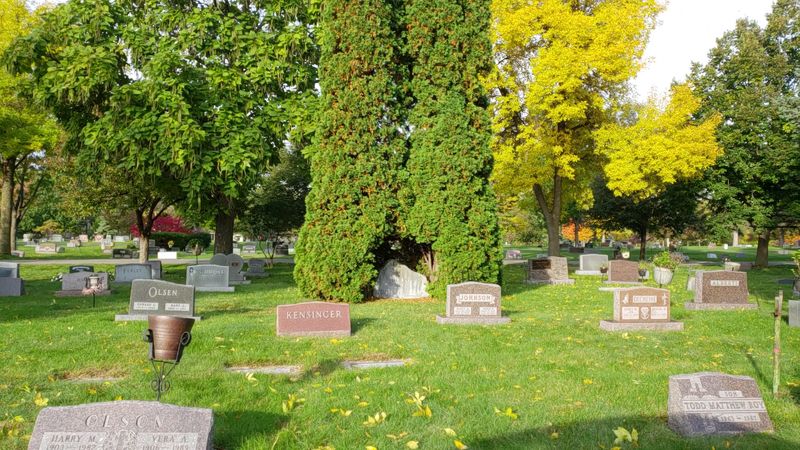
Before a single Victorian headstone was ever placed in this ground, the land that would become Mound Cemetery was already sacred. The Woodland Mound Builders, nomadic people who lived here roughly one to two thousand years ago, shaped the earth into effigy mounds that have quietly outlasted almost everything around them.
Originally, about 138 prehistoric effigy and burial mounds covered this landscape. Today, fourteen survive.
That number is both humbling and remarkable, given how much development has swallowed similar sites across the Midwest.
The surviving mounds are shaped like lizards, which is unusual and visually striking when you see them from an elevated angle. Circular burial mounds ring them like punctuation marks in the soil.
It is estimated that between one and three Native Americans rest inside each mound, placed there in a ritual context we can only partially understand today.
Early archaeological work by Dr. Philo R. Hoy uncovered skeletons seated in a facing-east posture, alongside pottery vases, inside one mound.
Dr. Hoy later used that knowledge to advocate strongly for preserving the mounds when the cemetery was being designed. His influence is the reason these ancient formations still exist at all.
Joseph Ouilmette and the Potawatomi Connection
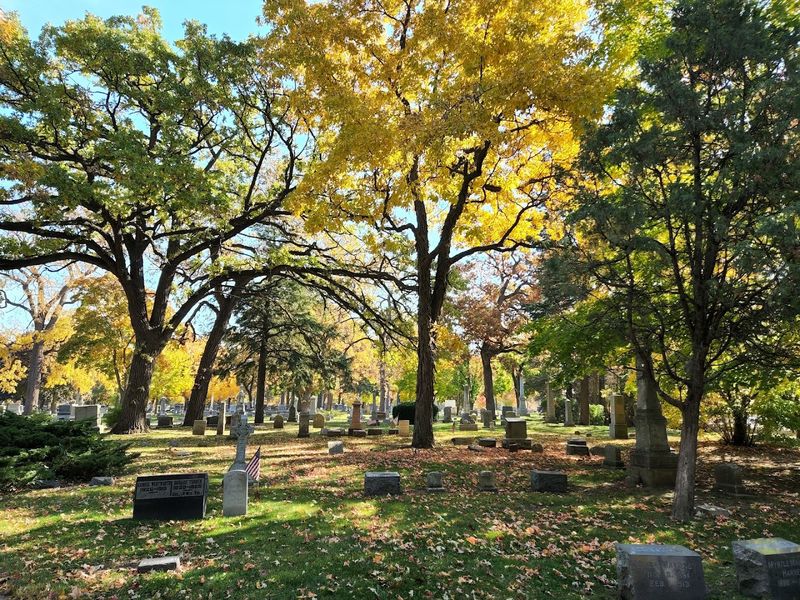
Long before Racine was a city, this land carried personal and cultural significance for people who called the region home. Joseph Antoine Ouilmette, a fur trader of French and Native American descent, purchased this land in 1834.
Historical records describe it as the burial place of his fathers, a phrase that connects the site directly to Potawatomi heritage.
That single detail reframes everything you see when you visit. The mounds were not anonymous earthworks to the people who came before.
They were family. They were memory shaped into the ground itself.
Ouilmette’s connection to the Potawatomi people adds a layer of cultural depth that most cemeteries simply do not have. The land changed hands, was platted, and eventually became a public cemetery in 1852, but the presence of those earlier generations never truly left.
Visiting with that knowledge makes even a quiet stroll feel more meaningful. You are not just walking past old graves.
You are moving through a landscape that was considered sacred long before European settlers arrived, and that sacredness has somehow survived two centuries of change. That kind of continuity is rare and genuinely worth pausing to appreciate.
The Official Founding and Victorian-Era Burials
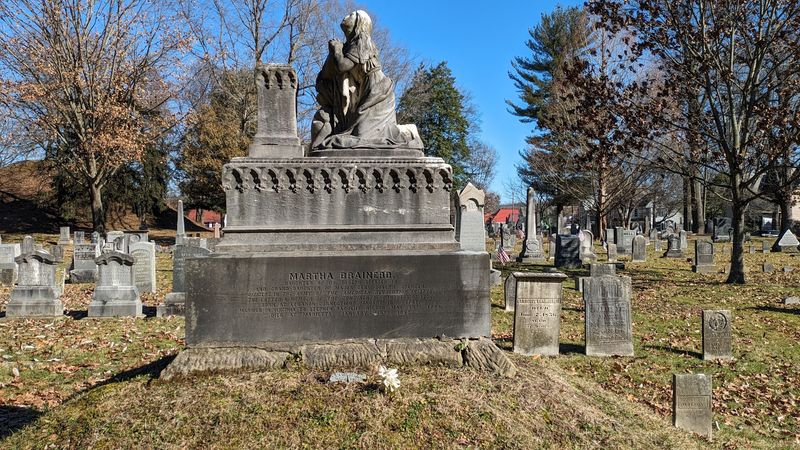
Mound Cemetery was officially dedicated on June 3, 1852, after the City of Racine purchased the land and committed to creating a proper public burial ground. What followed over the next several decades was a fascinating accumulation of history, grief, ambition, and civic pride all pressed into 55 acres.
One of the first major decisions was practical and a little sobering: all previous burials within Racine’s city limits were exhumed and reinterred here. That means the cemetery absorbed generations of the city’s dead in one sweeping act of consolidation.
Today, Mound Cemetery holds over 2,600 known burials and more than 5,000 unknown or unmarked graves. That second number is the one that lingers.
Thousands of people rest here without a name on a stone, their identities lost to time but their presence still felt in the quiet of the grounds.
Early infrastructure included a tool shed built in 1855 and a wooden chapel constructed in 1875. A stone chapel and office building replaced it in 1952.
Each addition layered more character onto a place that was already rich with it. The Victorian sensibility of honoring the dead with permanence and beauty is visible in every carved stone and shaded pathway.
Famous Faces Beneath the Grass
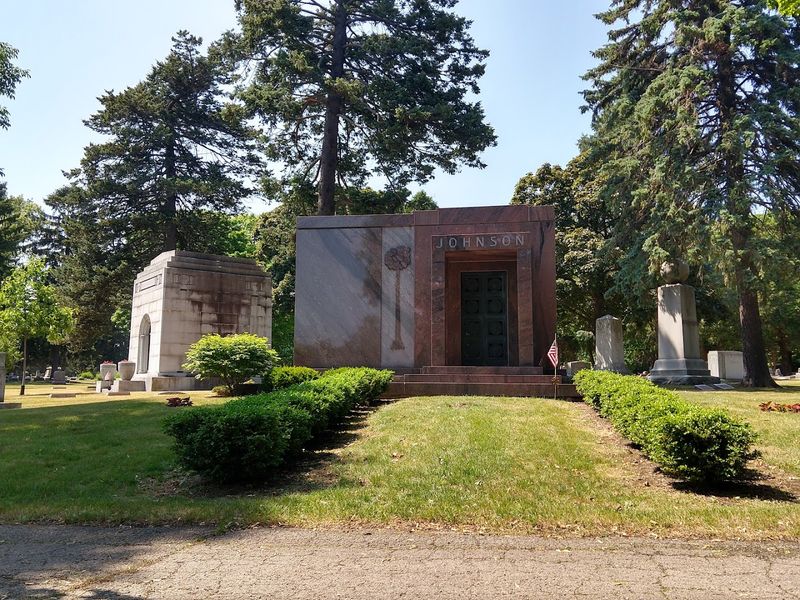
Not everyone buried at Mound Cemetery was ordinary, and the grounds reflect the ambitions of Racine’s most influential families in stone and marble. Jerome Case, founder of Case Corporation, one of the most significant agricultural machinery companies in American history, is interred here.
So is William Horlick, the man credited with creating malted milk.
Those two names alone represent industries that shaped daily life across the country for generations. Seeing their monuments in person gives the whole place a quietly epic feeling, like standing inside a chapter of American economic history.
The cemetery also holds Civil War heroes, former mayors, and various political figures who shaped Racine through the 19th and early 20th centuries. Revolutionary War veterans are here too, men who fought alongside George Washington, their service remembered on weathered stones.
The mausoleums of families like J.I. Case and S.C.
Johnson are architectural landmarks in their own right. Solid, imposing, and beautifully detailed, they speak to an era when permanence was a value worth investing in.
Picking up the walking tour booklet from the cemetery office is genuinely worth doing before you explore. It transforms a pleasant walk into something much more layered and absorbing.
The 1928 Concrete Arch Bridge and Reflecting Pool
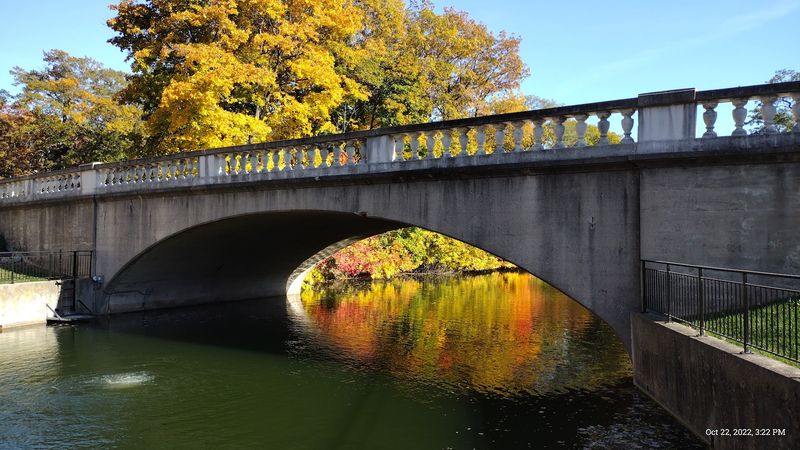
There is a moment on the cemetery grounds that genuinely surprises first-time visitors, and it involves a bridge. The concrete arch bridge, designed by engineer Charles Whitney, was built in 1928 over a reflecting pool, and it is one of those small architectural details that elevates a place far beyond what you expected.
The bridge was restored in 1990, and the care taken in that restoration shows. It fits seamlessly into the surrounding landscape, arching gracefully over still water in a way that feels almost painterly.
On a calm day, the reflection in the pool below doubles the effect.
Visitors mention the bridge specifically in their accounts of the cemetery, and it is easy to understand why. It is the kind of structure that makes you slow down.
You find yourself stopping mid-crossing just to look, to listen to the water, to notice how the light shifts through the canopy above.
Details like this are part of what makes Wisconsin’s Mound Cemetery feel intentionally designed rather than simply accumulated. Someone cared deeply about how this place would feel to the living who came to visit.
That thoughtfulness, layered over decades of careful maintenance, is very much still present today.
Wildlife, Birdsong, and the Living Landscape
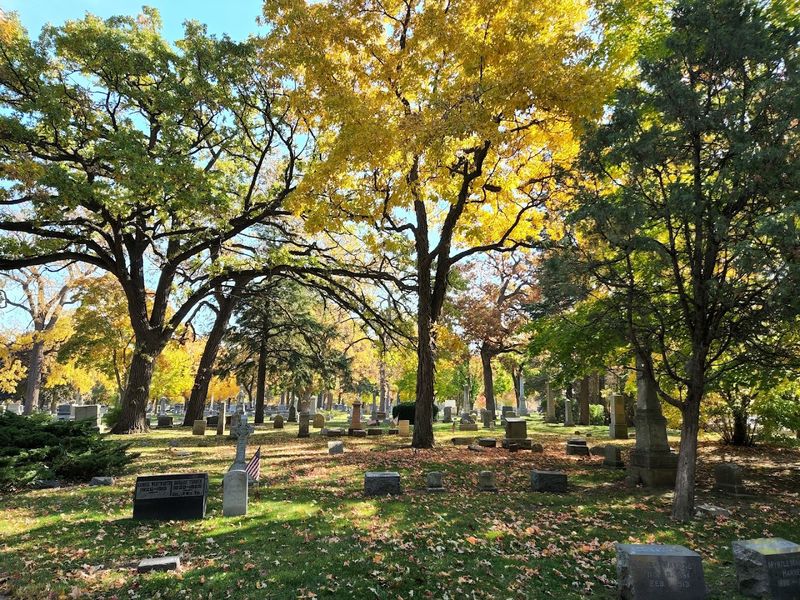
Mound Cemetery is not just a place for the dead. It is genuinely alive in ways that catch you off guard.
Deer move through the grounds at dawn. Hawks nest in the upper canopy.
Fox have been spotted threading between the older sections of the cemetery with casual confidence.
The bird life here is exceptional. Crows, blue jays, cardinals, nuthatches, and more fill the trees with sound, especially in the early morning and late afternoon.
Birding apps work wonderfully here, and the variety of species you can spot in a single visit is impressive for an urban setting.
Chipmunks are a constant presence along the pathways, and the overall atmosphere is one of layered natural sound rather than silence. It is peaceful, but it is a living kind of peace rather than an empty one.
The 55 acres of mature trees, maintained paths, and open green space create a habitat that benefits both wildlife and the humans who come to walk, read, or simply sit. People bring dogs, bring notebooks, and bring their lunch.
The cemetery welcomes all of it without losing its sense of dignity. It is one of those rare places that functions as both memorial and neighborhood sanctuary at the same time.
Planning Your Visit to Mound Cemetery
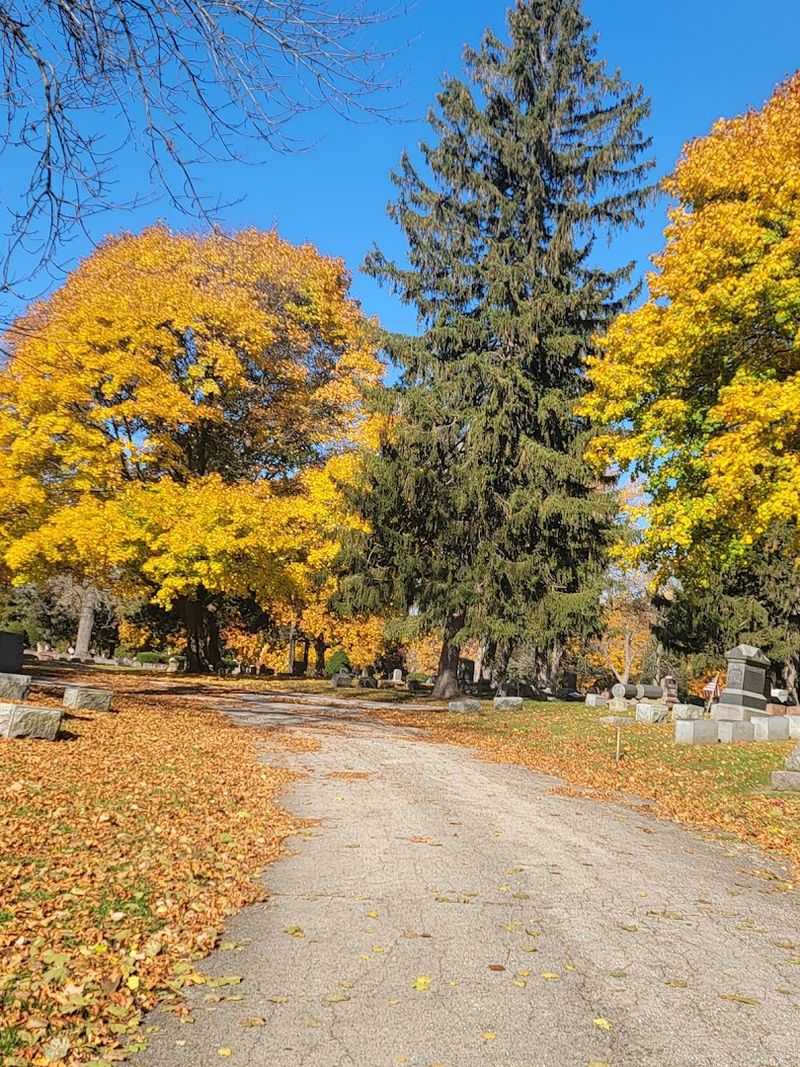
Getting the most out of Mound Cemetery takes a little preparation, but not much. The grounds are well-maintained and easy to navigate, with multiple pathways winding through different sections.
Comfortable shoes are recommended because some of the older parts of the cemetery have uneven terrain near the mounds.
Stopping at the cemetery office before your walk is a smart move. A walking tour booklet is available there, and it maps out the key historical points, notable graves, and the surviving effigy mounds.
That booklet turns a casual visit into something genuinely educational.
The best times to visit are early morning or late afternoon when the light is softer and the wildlife is most active. Fall is particularly beautiful here, with the tree canopy turning gold and amber above the historic stones.
Spring brings a different kind of beauty, with green returning to the grounds and birds singing at full volume.
Dogs are welcome on leash, and many locals use the cemetery as a regular walking route. The reflecting pool and arch bridge make for a natural midpoint rest spot.
Mound Cemetery sits at 1147 West Blvd, Racine, WI 53405, and is located in the heart of West Racine, making it easy to combine with a broader neighborhood visit.
Address: 1147 West Boulevard, Racine, Wisconsin
