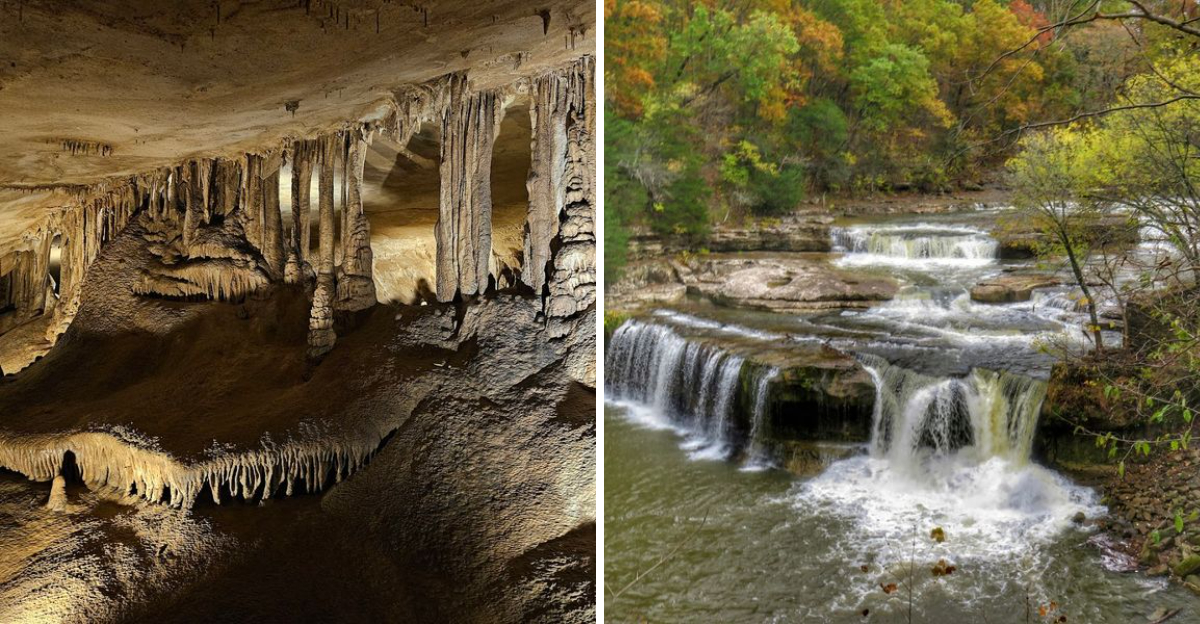
Most people picture Indiana as a flat stretch of cornfields and interstate highways, and honestly, I get why that reputation sticks. But the state hides some genuinely jaw-dropping natural formations that would surprise even longtime residents.
From underground rivers teeming with blind creatures to towering sandstone pillars rising out of nowhere, Indiana has a wild geological side that rarely makes the travel brochures.
What makes it even more surprising is how easily these places can be missed, often sitting just a short drive from everyday towns and familiar routes.
You can go from wide-open farmland to cave systems, forested ravines, and sculpted rock landscapes in what feels like no time at all. If you think you know what this state looks like, these eight nature wonders are about to change your mind completely.
1. Jug Rock
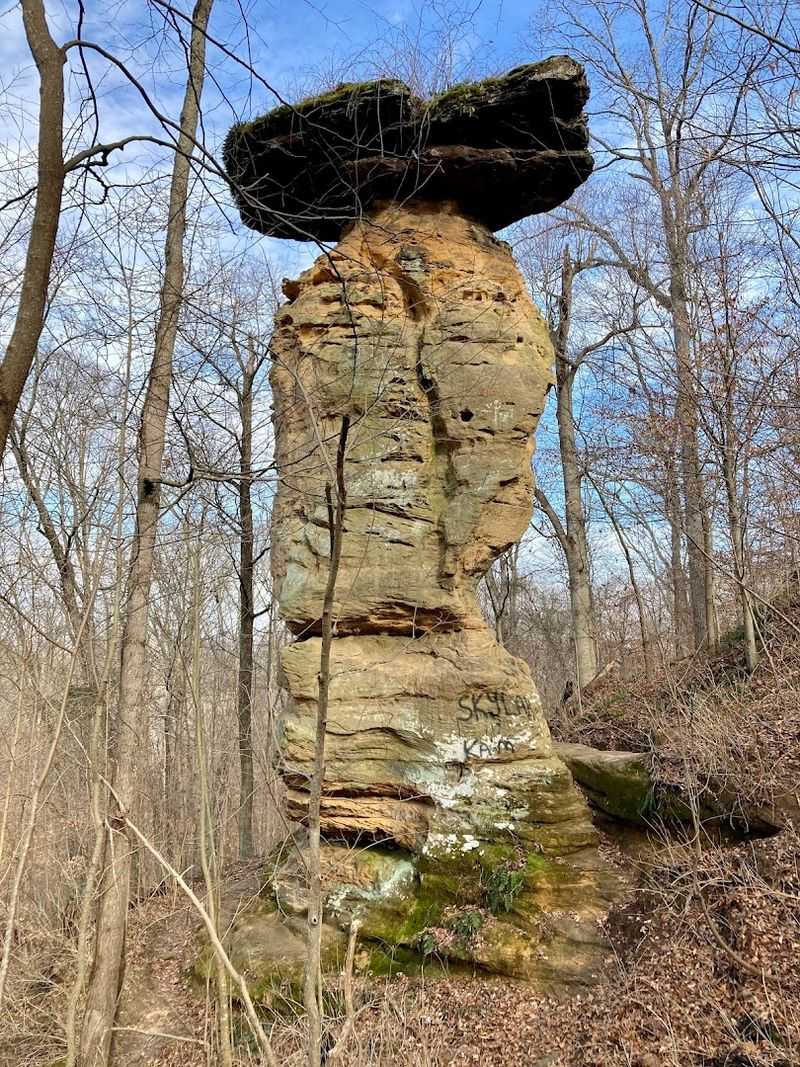
Rising from the earth like something out of a fantasy novel, Jug Rock is one of those formations you have to see in person before your brain fully accepts it.
Located near Shoals in Martin County, this sandstone tower holds the title of the largest free-standing table rock formation in the United States east of the Mississippi River.
That is a massive claim for a state most people associate with flat farmland. The rock earned its name from its uncanny resemblance to an old-fashioned jug, with a wide, bulging middle that tapers at the neck before being capped by a flat sandstone “stopper.”
Geologists believe it formed over millions of years as erosion along fracture lines isolated it from the nearby cliffs, leaving this stubborn Mansfield sandstone column behind.
The result is a formation that looks almost sculpted by hand rather than shaped by water and wind. Visiting Jug Rock is free and relatively easy.
The site sits right off State Road 50, and a short trail leads you to a clear viewing area at the Jug Rock Nature Preserve. The town of Shoals itself is small but welcoming, with local spots on Highway 50 for a quick bite before or after your hike.
Spring and fall tend to offer the best lighting and comfortable temperatures for the walk.
2. Bluespring Caverns
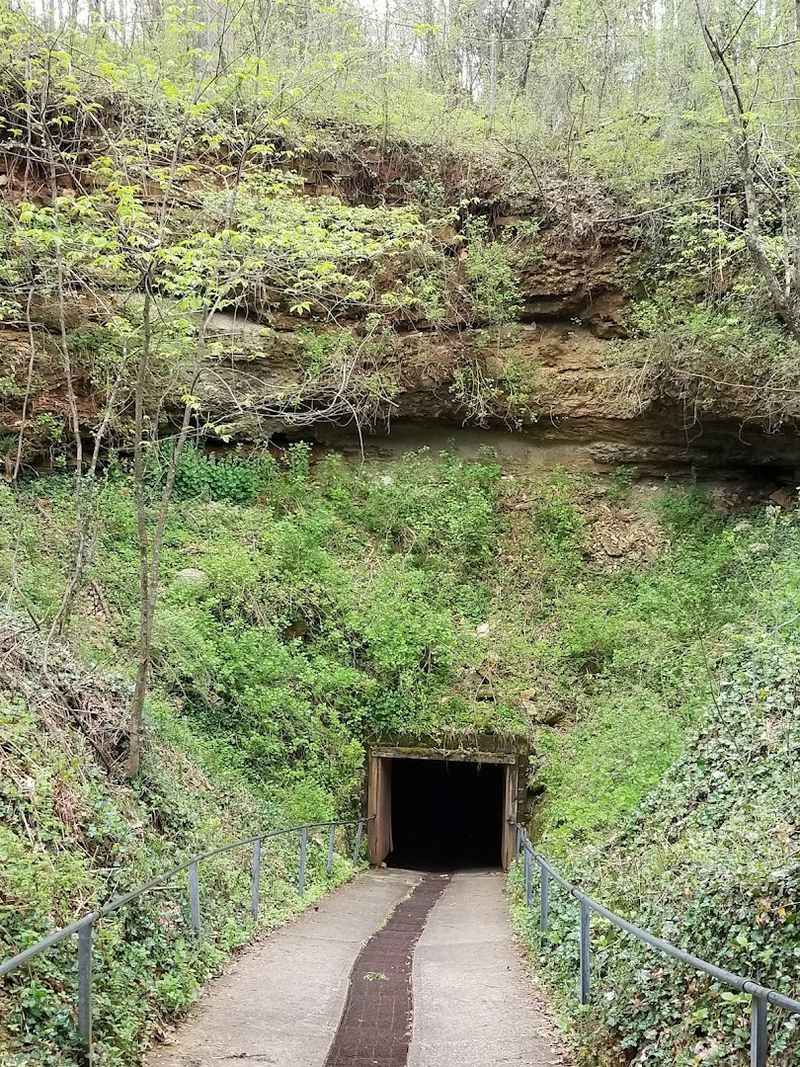
Somewhere beneath the quiet farmland of Lawrence County, an entire underground world carries on without a single ray of sunlight.
Located at 1459 Blue Spring Caverns Road, Bedford, Indiana 47421, Bluespring Caverns is home to the longest navigable underground river in the United States, a slow-moving waterway called the Myst’ry River.
Visitors board flat-bottomed boats and float through chambers of limestone while guides point out formations that took thousands of years to grow. What makes this cave genuinely strange is the wildlife.
Because sunlight never reaches the river, the creatures living there have evolved without the need for eyes or pigment. Blind cave fish, eyeless crayfish, and pale cave crayfish drift alongside your boat, completely unbothered by your presence.
Seeing an animal that has adapted so completely to darkness is one of those experiences that sticks with you long after you leave. Tours run seasonally and are guided, so no wandering off on your own.
The temperature inside hovers around 52 degrees Fahrenheit year-round, so bring a light jacket even in summer.
After your tour, the town of Bedford has several good dining options, including Smokin’ Jim’s BBQ and Steakhouse at 1414 Bundy Lane, Bedford, Indiana 47421, which serves hearty, authentic comfort food.
The cavern gift shop is also worth a quick browse for unique locally made souvenirs that you will not find anywhere else in the state.
3. Cataract Falls
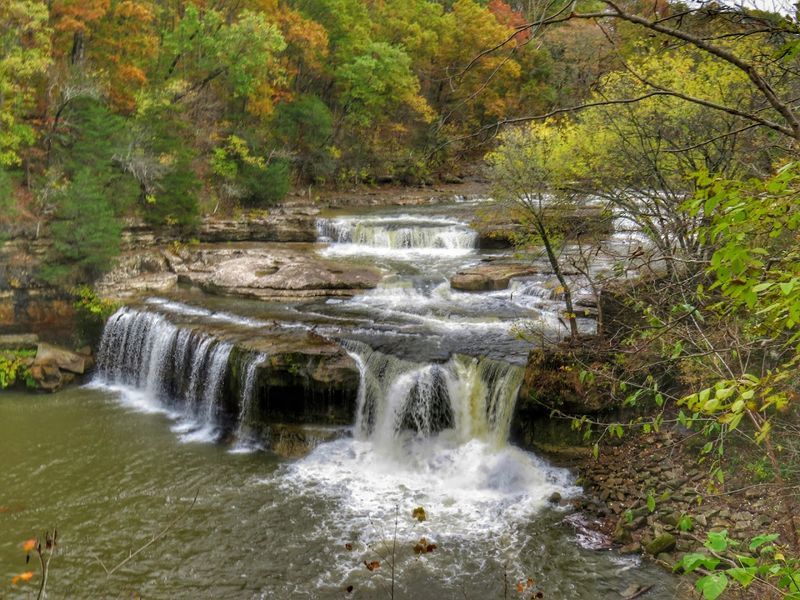
Cataract Falls does not whisper. The rush of water pouring over its two distinct cascades on Mill Creek is loud, powerful, and genuinely impressive for a state that rarely gets credit for dramatic scenery.
Located within Owen County just south of the Lieber State Recreation Area at 1317 West Lieber Road, Cloverdale, Indiana 46120, this is Indiana’s largest waterfall by volume, and it earns that title every single time the water is running strong.
The upper falls plunge over a series of limestone drops, while the lower falls cascade further downstream.
Together they create a layered waterfall experience that feels far more dramatic than most visitors expect. After heavy rainfall, the roar of the water can be heard from the parking area before you even reach the trail.
The surrounding recreation area offers camping, fishing, and picnic areas alongside the falls. The trails are well-maintained and accessible for most fitness levels, making this a solid family outing.
Fall is arguably the best season to visit, when the surrounding hardwood trees turn brilliant shades of orange and red, framing the falls in color. For food after your hike, you can head into the nearby town of Cloverdale to eat at Four Leaf on Main at 54 S Main Street, Cloverdale, Indiana 46120.
Getting out early on weekends is smart because this spot draws steady crowds during peak seasons, especially in autumn.
4. Indiana Dunes National Park
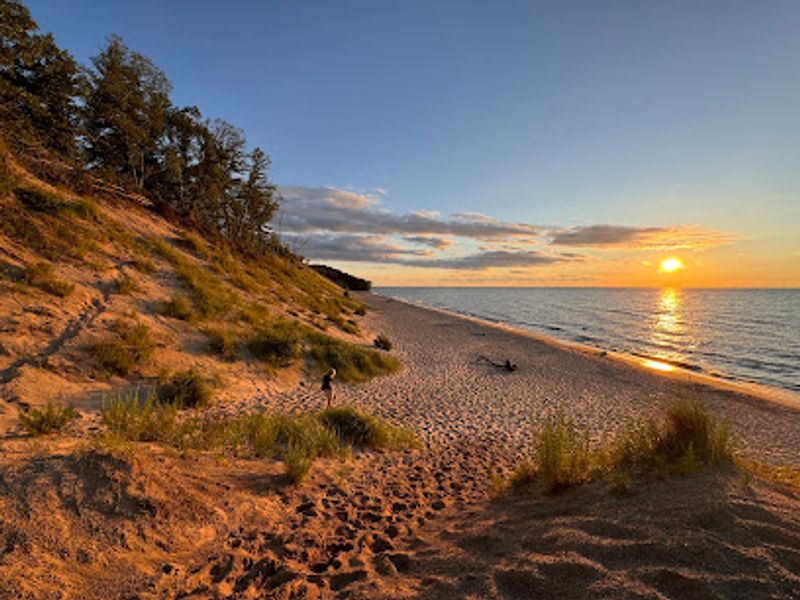
A desert sitting right next to one of the Great Lakes sounds like a geographical contradiction, but that is exactly what Indiana Dunes National Park delivers.
Stretching along Lake Michigan’s southern shore in Porter County, the park features massive sand dunes that climb over 100 feet in height, with some reaching even higher in the adjacent state park.
The contrast between the blue lake water and the rolling golden dunes is unlike anything else in the Midwest. The dunes were formed by glacial activity thousands of years ago and continue to shift slowly over time.
Mount Baldy, one of the park’s most recognized dunes, actually moves several feet each year as wind pushes sand inland. Climbing to the top of a major dune and looking back at Lake Michigan on one side and dense forest on the other is a perspective that very few people expect from Indiana.
The Indiana Dunes Visitor Center is located at 1215 N State Road 49, Porter, Indiana 46304. Trails range from easy beach walks to steep dune climbs that will genuinely work your legs.
The park draws visitors year-round, with winter offering a surreal frozen shoreline experience. For food nearby, Octave Grill at 105 S Calumet Road, Chesterton, Indiana 46304 serves incredible, highly reviewed craft burgers and American fare.
The visitor center has excellent exhibits on the ecology and geology of the dunes, making it a smart first stop before hitting the trails.
5. Hemlock Cliffs
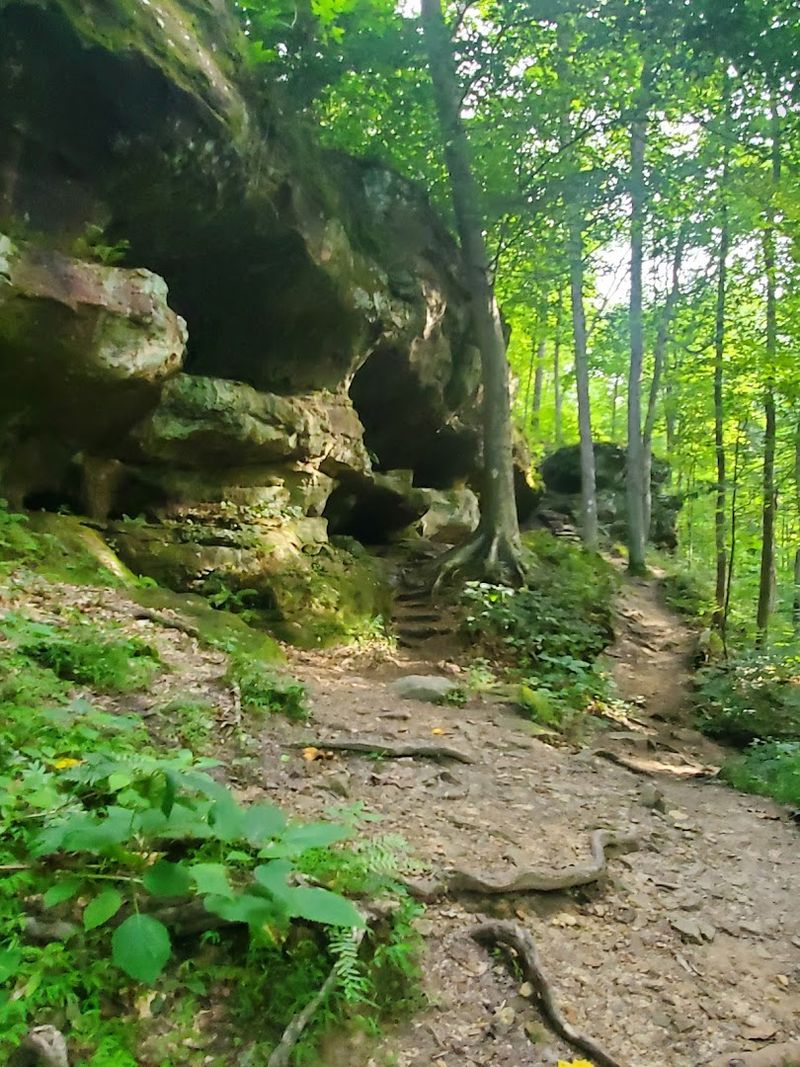
Hemlock Cliffs feels like a place that should not exist in Indiana. Carved into the sandstone of the Hoosier National Forest over countless millennia, this natural amphitheater is draped in moss, ferns, and the kind of deep green that makes you feel like you have wandered into a Pacific Northwest rainforest.
Water trickles down curved rock walls, and the overhanging cliffs create pockets of cool shadow even on warm summer days.
The formation was shaped by water slowly dissolving and eroding the sandstone over millions of years, leaving behind arching overhangs, narrow canyon passages, and small cave-like alcoves.
In winter, the seeping water freezes into dramatic ice formations along the rock walls, transforming the entire area into something that looks genuinely otherworldly. Seasonal waterfalls appear after rain, adding movement and sound to an already atmospheric setting.
Hemlock Cliffs is located within the Hoosier National Forest near English, Indiana, with the trailhead accessible from Forest Road 108. The loop trail is roughly 2.2 miles and rated moderate, with some rocky terrain near the cliffs themselves.
No entrance fee is required. The nearby town of English, Indiana, has limited dining options, but the Leavenworth Inn at 930 West State Road 62 in Leavenworth offers both lodging and meals with scenic Ohio River views.
Going on a weekday dramatically improves your chances of having the cliffs nearly to yourself, which is absolutely worth planning around.
6. Williamsport Falls
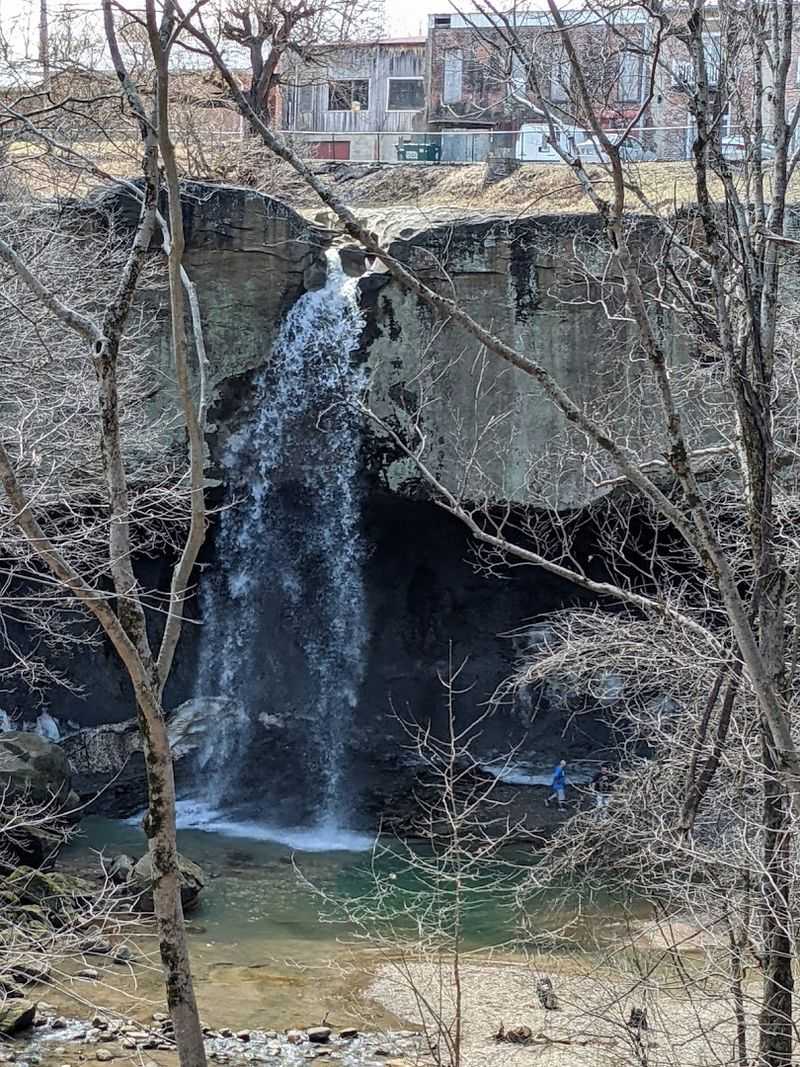
Most waterfalls are tucked away in remote parks or require a long hike to reach. Williamsport Falls takes a completely different approach by dropping 90 feet right in the middle of a small Indiana town.
Located in Williamsport, the county seat of Warren County, this is one of Indiana’s tallest waterfalls, and the fact that it sits within a residential area makes it one of the most unexpectedly charming natural landmarks in the state.
The falls plunge over a limestone ledge into a gorge carved by Fall Creek, and a public viewing area right in town lets you stand within yards of the full drop. The volume of water changes dramatically with rainfall, so visiting after a wet period gives you the most dramatic show.
During dry spells, the falls thin out considerably, though the cliff itself remains an impressive sight regardless of season.
The viewing area is located near the intersection of East Monroe and North Monroe Streets in Williamsport, Indiana 47993, and parking is available close by. Admission is free.
The town itself is small and quiet, with a genuine small-town character that feels refreshingly unhurried. For a meal nearby, the Attica Diner at 131 South Perry Street in Attica is about 10 miles east and serves classic diner food done well.
Early morning visits in spring offer the best combination of high water volume and soft light hitting the falls from the east.
7. Seven Pillars Nature Preserve
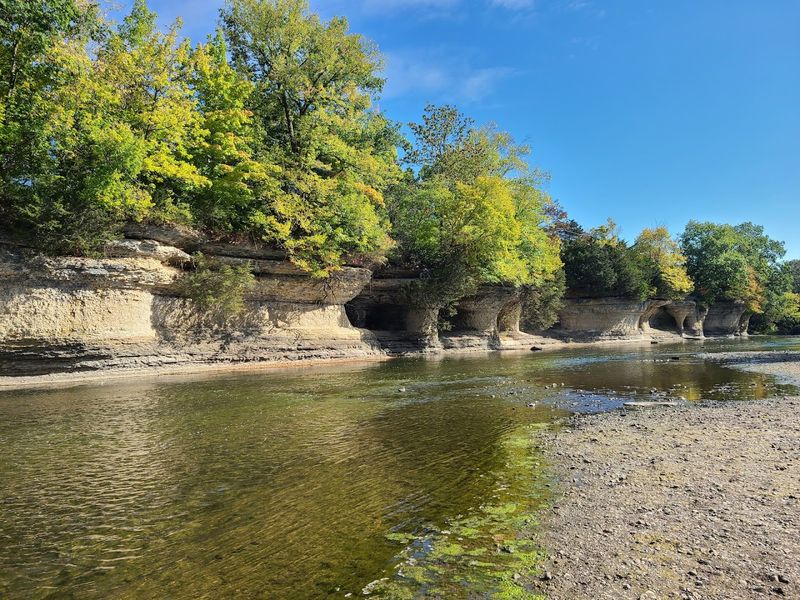
Along the quiet banks of the Mississinewa River near Peru, Indiana, a row of towering limestone pillars rises from the earth like columns from an ancient ruin.
Seven Pillars Nature Preserve gets its name from these dramatic rock formations, which were sculpted over hundreds of years by the combined forces of river erosion, wind, and water seeping through cracks in the limestone.
The result is a series of buttresses and pillars that feel almost architectural in their symmetry.
The formations are particularly striking because they emerge directly from the riverbank, with water flowing right alongside their bases. In warmer months, canoeists and kayakers paddle past the pillars from the river level, giving a completely different perspective than the land-based trail view.
The contrast between the rough, textured limestone and the smooth water surface creates a natural composition that photographers genuinely love.
Seven Pillars Nature Preserve is located off West 300 South near Peru, Indiana 46970, and the Miami County Parks system maintains the site. A short trail leads from the parking area to the main overlook, and the walk is easy enough for most ages.
The city of Peru itself has an interesting history as a former circus wintering town, and the International Circus Hall of Fame at 3076 East Circus Lane is worth a visit while you are in the area.
For food, Peru has several local diners along Broadway Street that serve straightforward Midwestern meals at reasonable prices.
8. Marengo Cave
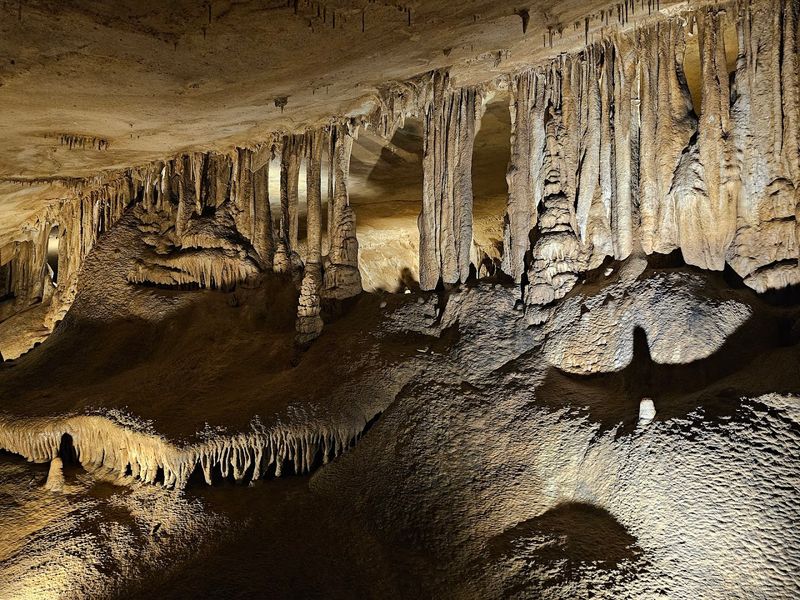
When two young siblings stumbled upon a cave entrance near Marengo, Indiana, in 1883, they had no idea they had found one of the most spectacular underground formations in the eastern United States. Marengo Cave is now a designated U.S.
National Landmark and one of Indiana’s most visited natural attractions, drawing visitors who want to see its remarkable collection of cave formations up close. The cave was commercially opened just days after its discovery, making it one of the longest-running cave tours in the country.
Inside, the formations are genuinely varied and visually stunning. Flowstone cascades that look like frozen waterfalls coat entire walls in smooth mineral layers.
Delicate soda straw stalactites hang from the ceiling in clusters, so thin they are nearly translucent. Towering columns formed where stalactites and stalagmites met over thousands of years anchor the largest chambers with an almost cathedral-like presence.
Marengo Cave is located at 400 East State Road 64, Marengo, Indiana 47140. Multiple tour options are available, ranging from a standard walking tour to a more adventurous crawl-through experience.
The temperature inside stays around 52 degrees Fahrenheit regardless of season, so a layer is always a good idea. The cave also has a gem mining sluice and picnic area on-site for families.
Nearby, the town of Leavenworth at the Ohio River offers scenic views and the Overlook Restaurant at 930 West State Road 62 for a satisfying meal after your underground adventure.
