You have to admire a museum dedicated to a creature that might not even exist.
No taxidermied specimen. No clear photograph.
Just decades of eyewitness accounts and believers who swear something with glowing red eyes haunted this small river town in the late 1960s.
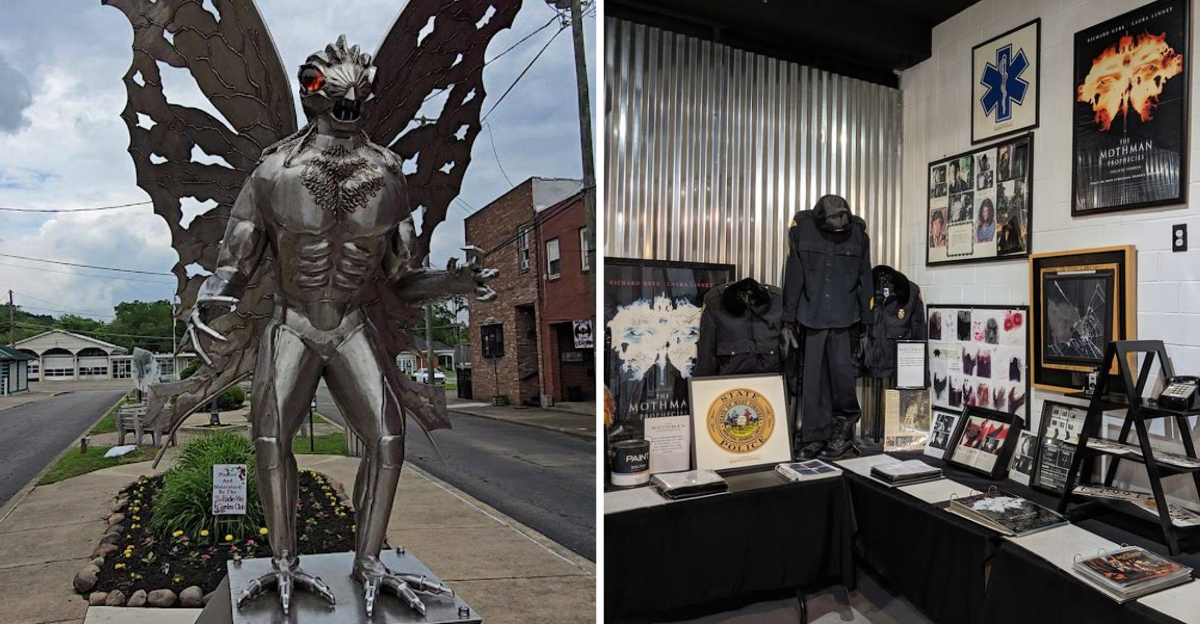
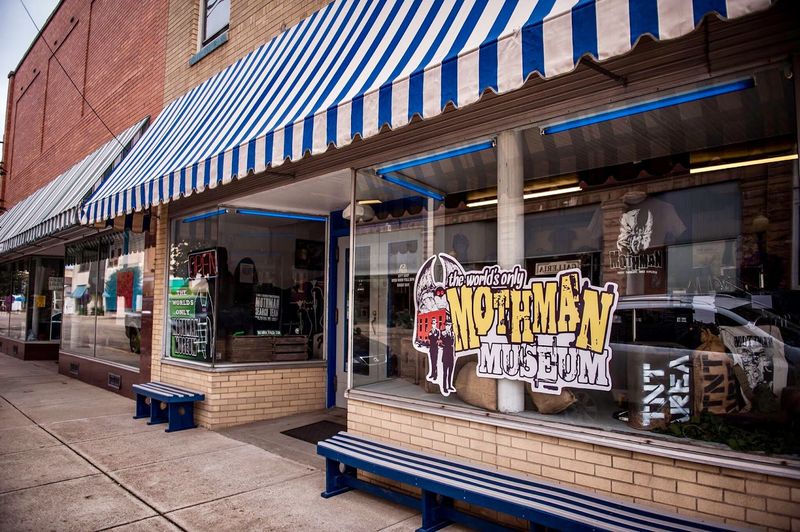
The museum fits inside a modest storefront across from a chrome statue of the winged legend.
Visitors can read handwritten statements from the four young couples who first reported the creature on a November night in 1966.
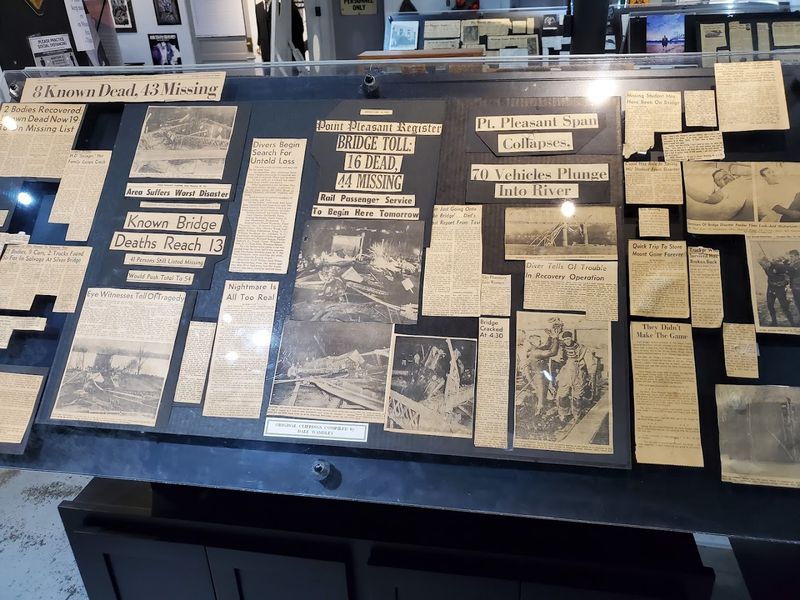
There are movie props, articles about the bridge collapse tangled with the legend, and a wall of theories for skeptics.
It is wonderfully weird and unapologetically niche, just like West Virginia itself.
The Legend That Started It All
Before stepping inside the museum, it helps to understand why this creature became such a big deal in the first place.
Back in November of 1966, two young couples were driving near an old World War II munitions plant outside Point Pleasant when they spotted something enormous, winged, and terrifying hovering above them.
Its eyes glowed red. It moved faster than anything they could explain.
Word spread quickly, and more sightings followed over the next thirteen months. The creature was dubbed “Mothman” almost immediately, partly because of its giant moth-like wings and partly because the name just stuck.
Point Pleasant became ground zero for one of America’s most enduring cryptid legends.
The museum captures this origin story beautifully, pulling together original newspaper clippings and eyewitness accounts that make the whole thing feel surprisingly real.
Reading those old reports in a quiet room surrounded by artifacts gives the story a weight that no documentary ever quite manages to replicate.
It is genuinely spine-tingling in the best possible way.
The Silver Bridge Connection
One of the most haunting parts of the Mothman story is not the creature itself but what happened next.
On December 15, 1967, the Silver Bridge connecting Point Pleasant to Ohio collapsed without warning, sending dozens of cars into the icy Ohio River.
Forty-six people lost their lives in one of the deadliest bridge disasters in American history.
The Mothman sightings stopped almost immediately after the collapse. That timing is what transformed a local curiosity into something much bigger.
People began wondering whether the creature had been a warning, a harbinger of disaster that no one knew how to read in time.
Inside the museum, the Silver Bridge exhibit is quietly devastating. Video footage from the aftermath plays on a screen, and newspaper front pages from that December are displayed with care.
The connection between the creature and the collapse is presented thoughtfully, without sensationalism, letting visitors draw their own conclusions.
It is one of those moments in the museum where the mood shifts from curious to genuinely reflective, and you feel the weight of what this town actually lived through.
What the Museum Actually Looks Like Inside
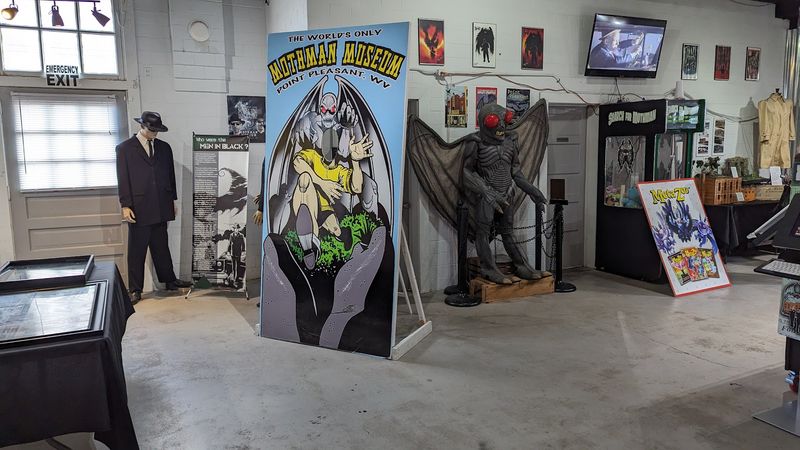
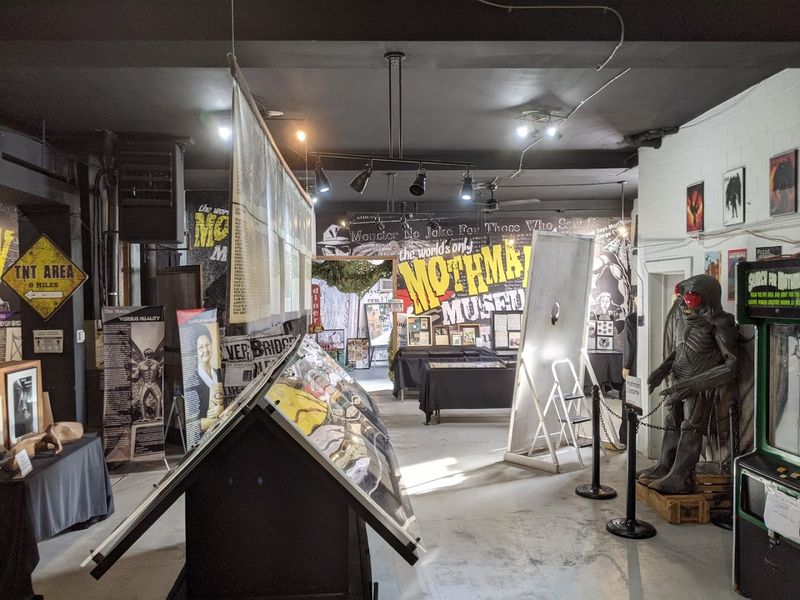
Walking through the front door, the first thing that hits you is how much has been packed into a relatively compact space. Every wall, shelf, and display case is working overtime.
Original police reports sit behind glass. Hand-drawn sketches from eyewitnesses hang near printed photographs.
There is a pressed penny machine near the entrance that somehow feels perfectly on brand.
The layout flows naturally from the early sightings through the Silver Bridge tragedy and into the pop culture explosion that followed. Nothing feels cluttered or chaotic.
Instead, the whole space has a focused energy, like someone spent years curating exactly the right items to tell this story in the right order.
Lighting is kept dim in the right places, which adds atmosphere without making it hard to actually read anything. Life-sized replicas of the creature are positioned throughout, ready for photos.
The museum earns its reputation not through flashy technology but through the sheer authenticity of what it displays. Real documents, real history, and a real community’s relationship with something they still cannot fully explain.
That honesty is what makes it memorable long after you leave.
The Mothman Prophecies Movie Memorabilia Collection
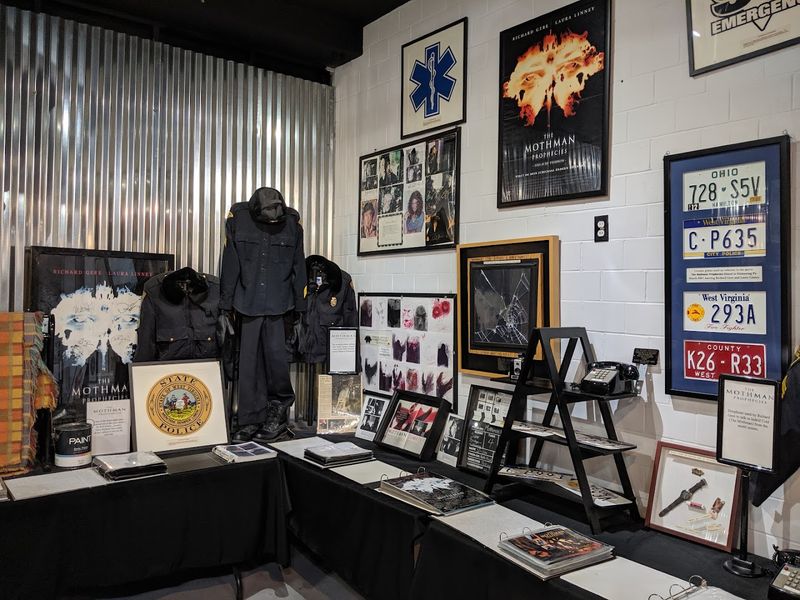
For anyone who grew up watching the 2002 film starring Richard Gere, this section of the museum hits differently.
The movie brought the Mothman legend to a global audience, and the museum honors that chapter of the story with a solid collection of props, posters, and behind-the-scenes memorabilia from the production.
Seeing physical objects from a film you remember watching on a rainy Saturday night is a surprisingly emotional experience. These are not cheap replicas or printouts.
These are actual pieces from the set, and they carry that specific weight that real artifacts always have over digital reproductions.
The exhibit also helps visitors understand how the legend evolved beyond Point Pleasant and took on a life of its own in popular culture.
The film is presented not as the definitive version of events but as one interpretation among many, which feels respectful to both the moviemakers and the people who actually lived through the original sightings.
It is a smart way to handle the material, and it gives the whole collection a layered quality that keeps you reading every label carefully instead of just walking past.
Original Eyewitness Accounts and Rare Police Reports
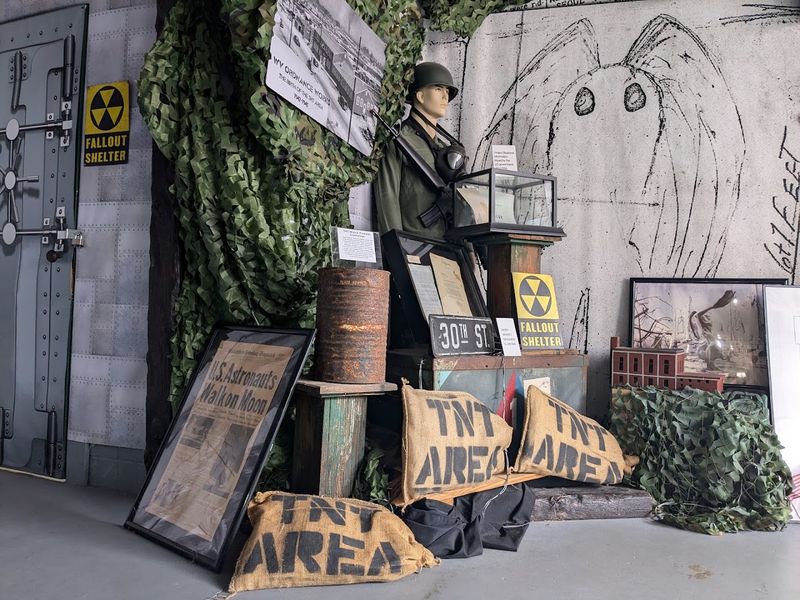
There is something about handwritten documents that no digital archive can replicate.
The museum holds a collection of original police reports filed by eyewitnesses during the 1966 and 1967 sightings, and standing in front of them feels like touching history directly.
The handwriting is careful and official, which somehow makes the descriptions of a giant winged creature even stranger to read.
Newspaper clippings from the period are displayed alongside these reports, giving context to how quickly the story spread and how different outlets covered it. Some headlines are dramatic.
Others are skeptical. Together they paint a picture of a community grappling with something it genuinely could not categorize.
What makes this section so compelling is that these are not reconstructions or dramatizations. These are the actual documents filed by actual people who believed they had seen something real.
Whether you believe in the Mothman or not, the sincerity in those old pages is undeniable. Reading through them slowly, you start to understand why this legend has lasted nearly sixty years without fading.
The people who reported it were not joking around, and the museum makes sure that comes through clearly.
The Iconic Mothman Statue Right Outside the Door
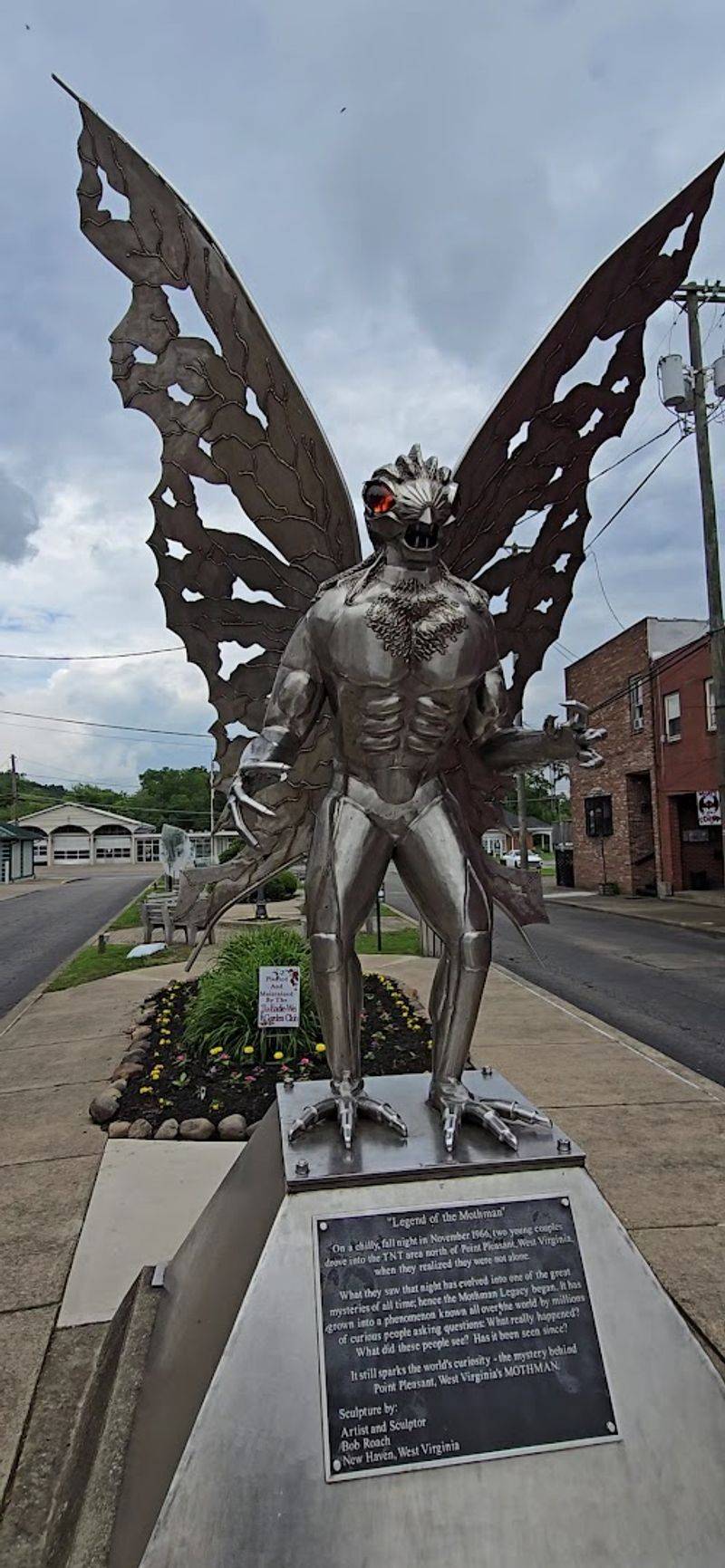
Before or after the museum, the statue outside demands your full attention. Positioned right on Main Street, the gleaming metal sculpture stands tall with wings spread wide and those unmistakable red eyes catching every angle of light.
It is dramatic, a little intimidating, and absolutely perfect for photos.
The statue has become a landmark in its own right, drawing visitors who might not even enter the museum but want the picture anyway.
On busy days, there is usually a small crowd gathered around it, everyone waiting for their moment to pose with Point Pleasant’s most famous resident.
What the statue does really well is set the tone before you even reach the museum door. The whole street around it leans into the Mothman theme, with themed shops and murals creating an atmosphere that feels genuinely festive rather than forced.
It is the kind of roadside landmark that earns its reputation not through marketing but through pure visual impact.
Standing next to something that tall and that strange, even in broad daylight, triggers something primal that you will be thinking about on the drive home.
The Mothman Festival
Once a year, Point Pleasant transforms into something even more extraordinary than its everyday self.
The annual Mothman Festival turns the entire town into a celebration of folklore, community, and enthusiastic weirdness that draws thousands of visitors from across the country and beyond.
The museum sits at the heart of the festival weekend, becoming the most visited spot on the street as fans of cryptids, history, and quirky Americana converge on this small West Virginia town.
Vendor booths, speakers, and live entertainment fill the surrounding area, making it an experience that goes well beyond a typical museum visit.
Planning a trip around the festival is absolutely worth considering if the timing works out.
The energy during festival weekend is completely different from a regular visit, with a collective enthusiasm that makes the whole legend feel alive and communal rather than just historical.
Even if the festival is not happening during your visit, the town retains that same spirit year-round. The shops stay themed, the statue stays shiny, and the museum stays packed with everything you need to understand why this particular legend refuses to be forgotten.
The Mothman ’66 Escape Room Experience
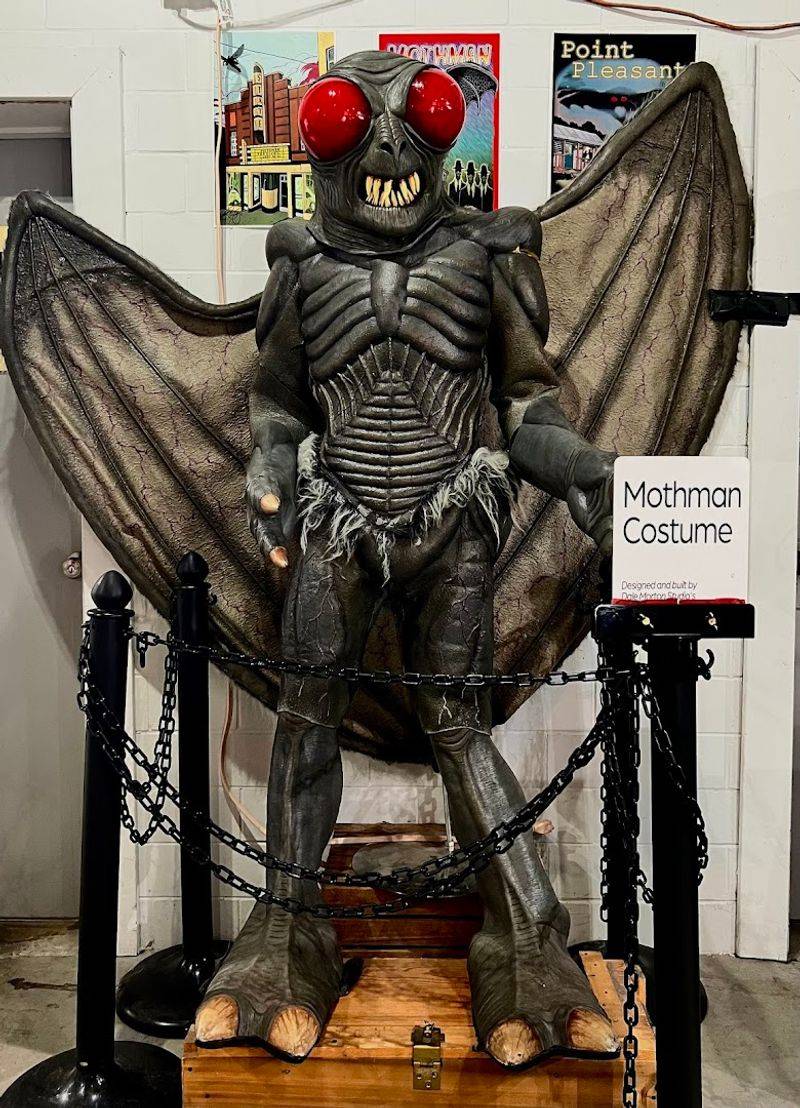
For visitors who want more than a walk-through experience, the museum offers something genuinely fun: the Mothman ’66 Escape Room.
Themed around the original 1966 sightings, the escape room drops participants into the heart of the mystery and challenges them to piece together clues before time runs out.
Escape rooms are everywhere these days, but this one carries a specific authenticity that generic pop-up versions simply cannot match.
The setting is rooted in real history, the clues connect to actual events, and the atmosphere is built around a legend that started just a few blocks away.
That combination makes it feel less like a game and more like an immersive chapter of the museum experience.
Families with older kids tend to love this addition, and it works equally well for groups of adults looking for something memorable to do together. Booking ahead is a smart move, especially during busy weekends or festival season when spots fill up fast.
It adds a completely different layer to the visit, turning passive observation into active participation in one of America’s most fascinating unsolved mysteries.
Hours, Tips, and What to Expect
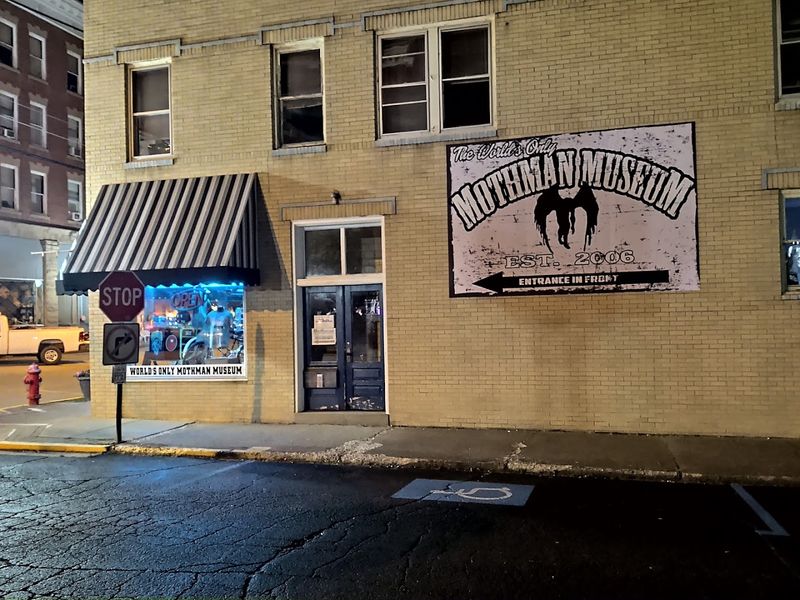
Getting to Point Pleasant requires a bit of intentional travel, which is part of what makes it feel like a real discovery rather than just another tourist stop.
The museum is open Monday through Thursday from 10 AM to 5 PM, Friday and Saturday from 10 AM to 6 PM, and Sunday from noon to 5 PM.
The museum is closed on Christmas Day, New Year’s Day, Easter, and Thanksgiving.
Admission is remarkably affordable, making it an easy yes for families or solo travelers watching their budget. The compact size means you can do a thorough visit in about an hour, though most people find themselves lingering longer than expected once they start reading the displays.
Arriving early on weekends helps avoid the busiest crowds inside the small space.
Parking is available nearby, and the walkable nature of Main Street means you can pair the museum with the statue, the themed shops, and the mini golf next door all in one visit. The whole afternoon works beautifully as a self-contained adventure.
Point Pleasant is the kind of town that rewards slow exploration, so resist the urge to rush and let the place tell its story at its own pace.
Address: 400 Main St, Point Pleasant, WV
