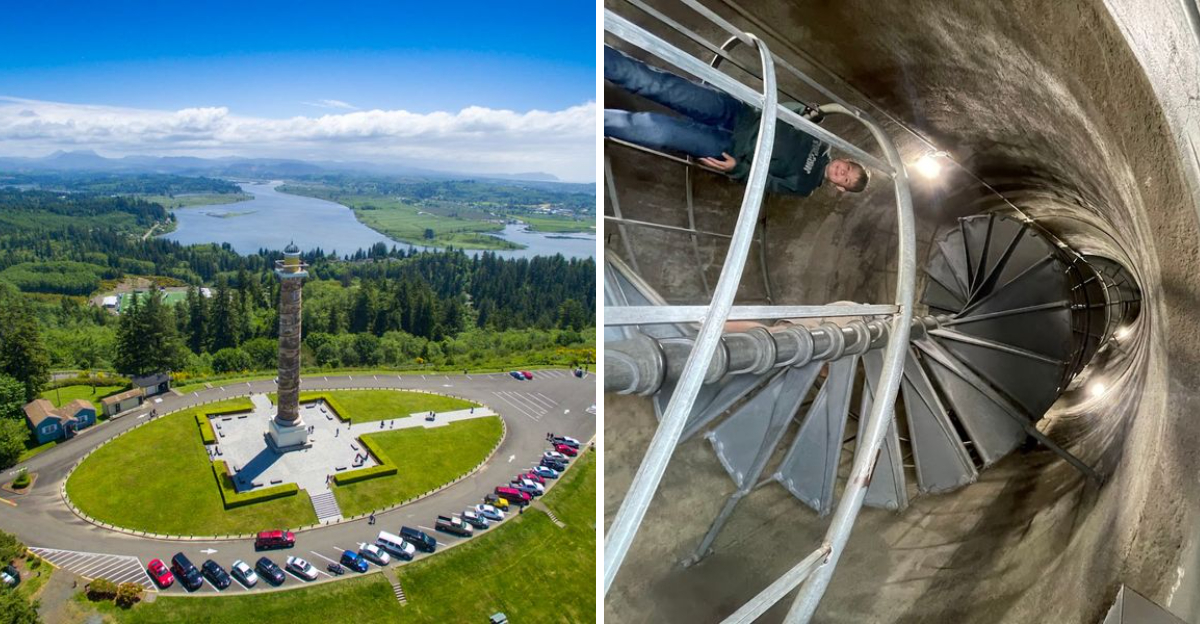
Your legs might burn a little, but the reward at the top makes every step completely worth it. This historic tower rises above the town, offering a perspective that simply cannot be beaten anywhere else.
You start climbing the spiral staircase, passing murals that tell stories of exploration and settlement along the coast. Each window along the way gives you a sneak peek of what is waiting above.
The stairs creak under your feet, adding to the charm of this century old structure. When you finally reach the top, the view opens up in every direction without any obstruction.
The river meets the ocean, the mountains stretch into the distance, and the town looks like a tiny model below. You can spot ships, bridges, and forests that seem to go on forever in every direction.
The wind hits your face, and you feel like you are standing on top of the world. Oregon has many viewpoints, but this one delivers something truly special and absolutely unforgettable.
Panoramic Views of the Columbia River from the Observation Deck
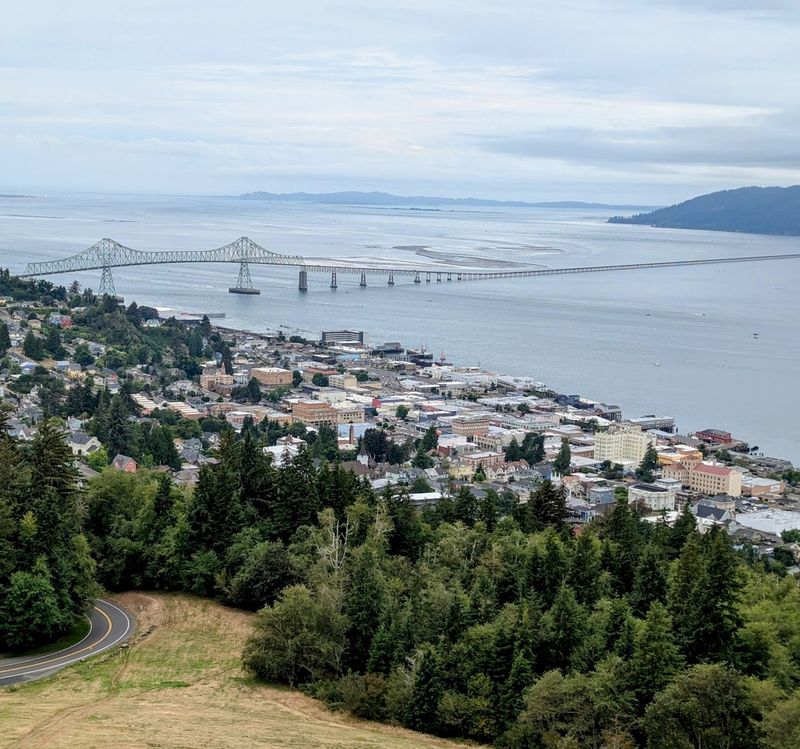
Stepping out onto the observation deck feels like the world suddenly opens up. The Columbia River dominates the view to the north, wide and glittering as it moves toward the Pacific Ocean.
On a clear day, the Astoria-Megler Bridge is clearly visible, stretching more than four miles across the water to Washington State.
The river looks completely different from this height. Cargo ships appear surprisingly small as they travel along the channel below.
The scale of the landscape becomes real in a way that no map or photograph can fully capture.
Wind is a constant companion up on the deck, and it adds to the sense of being genuinely high above everything. The railing runs around the full perimeter, giving visitors a complete 360-degree view of the surrounding region.
I kept rotating slowly, trying to take in the forests, the water, the town, and the distant ridgelines all at once. It is the kind of view that makes you stop talking and just look.
Spotting the Pacific Ocean and Coastal Mountains
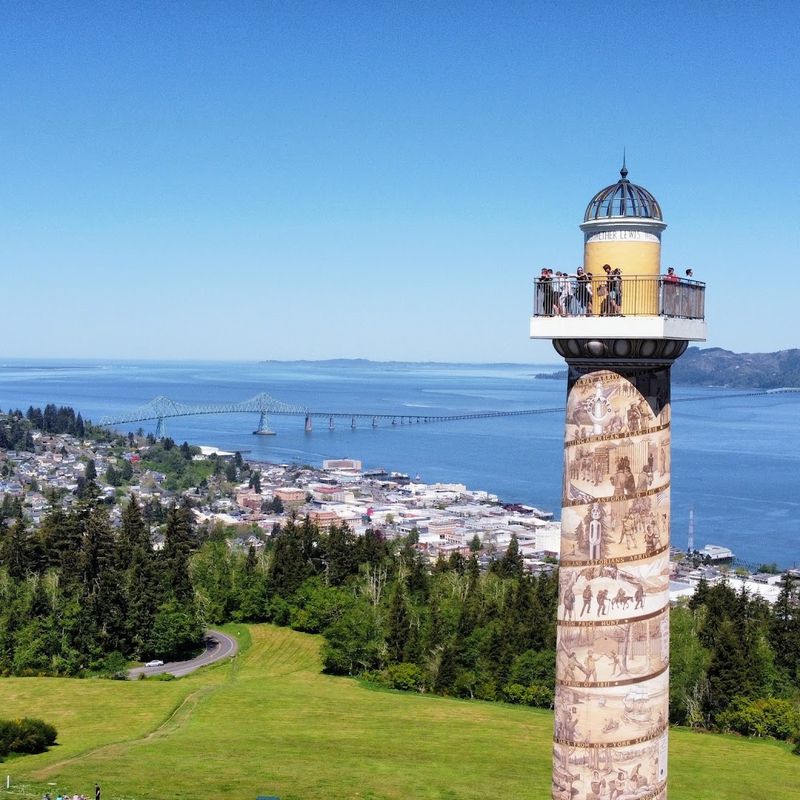
Looking west from the observation deck, the Pacific Ocean appears on clear days as a faint shimmer beyond the river mouth. The coast is close enough that you can make out the transition where the Columbia River meets the open ocean.
It is a rare and satisfying thing to see a river end and an ocean begin from a single viewpoint.
The Coast Range mountains fill the southern and eastern horizons with layers of dark green ridgelines. These forested peaks stretch in every direction, giving the landscape a wild, untouched feeling even from this urban hilltop.
The contrast between the town below and the wilderness beyond is striking.
On particularly clear mornings, Mount Rainier and Mount St. Helens are visible far to the north across the river. The visibility from the column shifts constantly with weather and season, making every visit slightly different.
Arriving early in the morning often rewards visitors with the sharpest, clearest views before coastal fog rolls back in from the ocean.
The Wooden Glider Tradition at the Astoria Column
One of the most charming and unexpected things about visiting the Astoria Column is the wooden glider tradition. Small balsa wood airplane models are sold at the gift shop for just one dollar each.
Visitors buy them, assemble them quickly, and then launch them from the top of the observation deck.
The wind up there catches the little planes immediately, and they soar in wide arcs over the hillside below. Some gliders travel impressive distances, riding the coastal breeze far out over the trees.
Watching them drift away is genuinely delightful, and it draws cheers from everyone nearby regardless of age.
Kids absolutely love this part of the visit, but adults get just as caught up in it. There is something freeing about launching a small wooden plane into a big open sky.
The gift shop also sells stamped Centennial Celebration versions of the glider this year, marking the column’s 100th anniversary in 2026. Picking one up before climbing is a solid plan.
The History Behind the Astoria Column
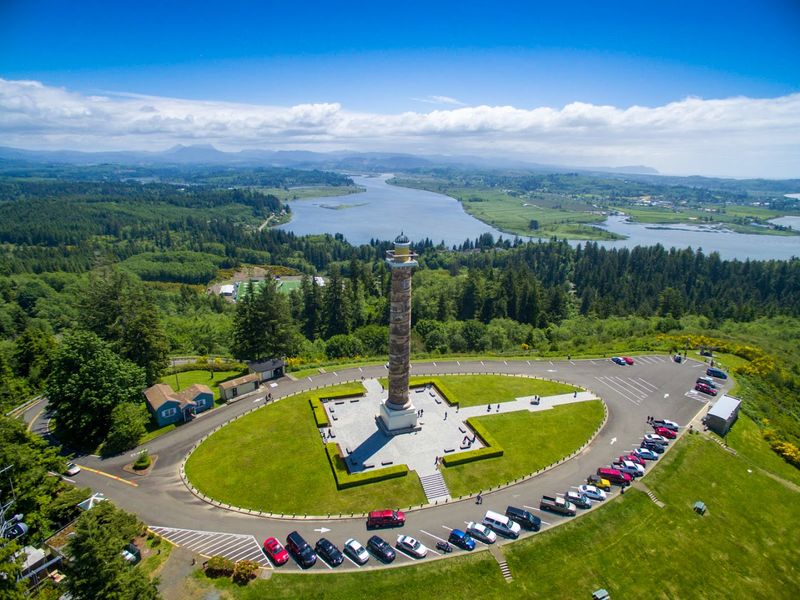
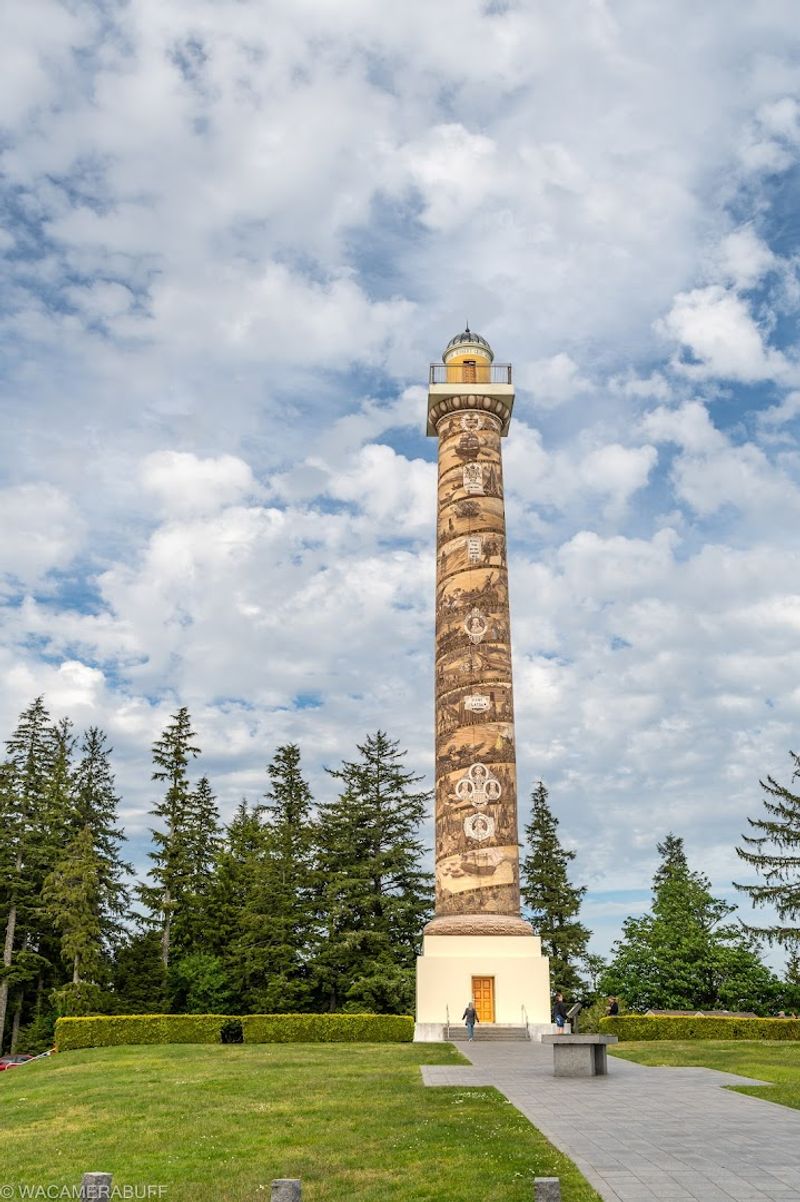
Built in 1926, the Astoria Column carries nearly a century of Pacific Northwest history on its walls. The exterior features a continuous spiral mural painted in sgraffito style, wrapping around the tower from base to top.
Each scene tells part of Oregon’s story, from Native American life to the Lewis and Clark Expedition.
The column stands 125 feet tall on top of Coxcomb Hill, already 600 feet above sea level. That combination gives visitors an extraordinary elevation advantage over the surrounding landscape.
The structure was built as a joint project between the Great Northern Railway and Vincent Astor, a descendant of the city’s namesake.
Reading the murals before climbing is a great way to connect with the place. A brass relief map near the base helps visitors understand the geography of the region.
The column was listed on the National Register of Historic Places, recognizing its cultural and architectural significance to Oregon and the broader American West.
The Grounds Around the Column, More Than Just a Tower
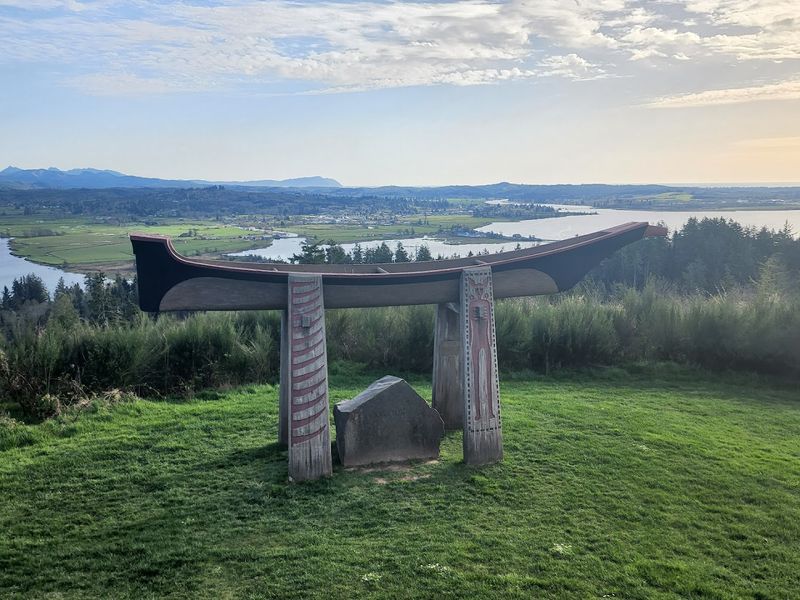
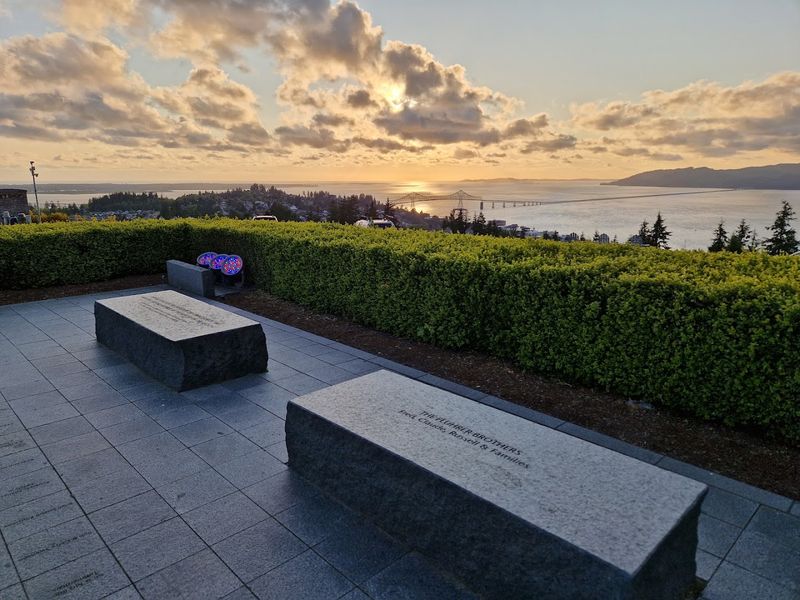
Not everyone who visits the Astoria Column climbs to the top, and that is perfectly fine. The park grounds on Coxcomb Hill offer sweeping views on their own, and the open grassy areas invite visitors to slow down and settle in.
Picnic tables are scattered across the hilltop, making it easy to bring food and spend a relaxed afternoon outdoors.
A brass relief map stands near the base of the column, showing the geography of the Columbia River estuary in detailed three-dimensional form. History plaques are positioned throughout the park, giving context to the region’s exploration and settlement.
There is even a replica of a Native American burial canoe displayed near one of the viewpoints.
The Cathedral Tree hiking trail also begins from the parking area at the base of the hill, connecting the column to one of Astoria’s most beloved old-growth forest walks. Families with young children who cannot manage the staircase inside the column still find plenty to enjoy across the surrounding grounds and viewpoints.
Best Times to Visit the Astoria Column
The column opens daily at 5 AM and stays open until 9 PM, which gives visitors a wide range of timing options. Early morning visits tend to offer the clearest visibility before coastal fog builds up.
The light during those first hours is also particularly beautiful, falling softly across the river and the surrounding hills.
Summer is the busiest season, and weekends can bring steady crowds to the observation deck. Arriving on a weekday morning usually means a quieter experience on the staircase and more room to linger at the top.
Spring and fall offer cooler temperatures but often surprisingly clear skies.
Winter visits have their own quiet appeal, with fewer visitors and dramatic cloud formations rolling in from the coast. The column sits at an elevation where weather changes fast, so bringing a light jacket is always a smart move regardless of the season.
The gift shop and restrooms are available on-site, and parking is located just below the column at the base of the hill.
Tips for Visiting with Kids or Older Adults
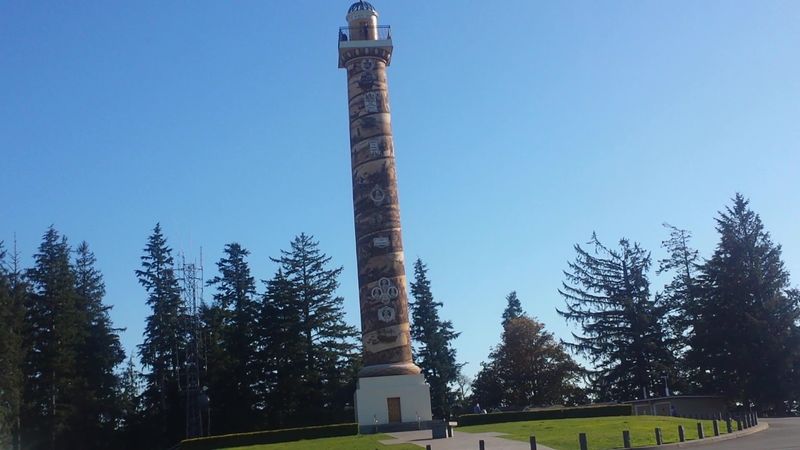
The Astoria Column is a genuinely family-friendly destination, but the staircase inside requires some honest planning. The 164 steps are steep and narrow, and the enclosed spiral can feel tight for anyone who is uncomfortable in small spaces.
Children under three years old are generally better off enjoying the views from the hilltop grounds rather than attempting the climb.
Older adults and anyone with knee or mobility concerns should know that there is no elevator inside the column. The descent is actually steeper-feeling than the climb, and tired legs on narrow metal steps require real caution.
Taking the stairs slowly and letting faster climbers pass is always the right call.
For families with mixed abilities, splitting up works well. One group can climb while others explore the park, read the history plaques, or set up a picnic on the grass.
The wooden gliders from the gift shop are a perfect activity for kids waiting at the bottom, and watching the planes soar from below is almost as fun as launching them from the top.
What the Climb Actually Feels Like
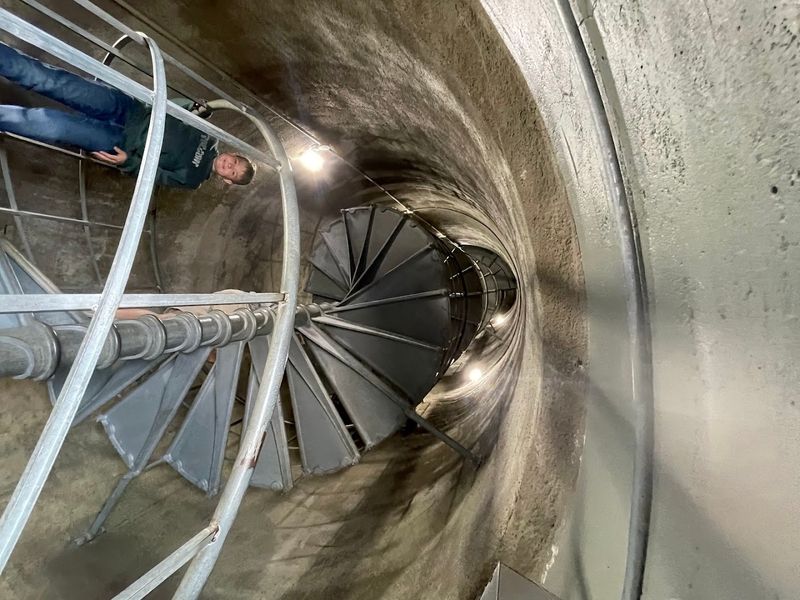
The moment you step inside the column, the staircase feels like something out of an old adventure story. The metal steps spiral tightly upward in a narrow column of space, and the echo of footsteps bounces off the curved walls around you.
It is a genuinely physical experience.
There are 164 steps to reach the observation deck at the top. The staircase is steep and only wide enough for two people to pass carefully.
If someone is heading down while you climb up, you both press close to the railing and move slowly.
My legs started to feel the burn somewhere around the halfway mark. The climb takes most people between five and ten minutes depending on pace and fitness level.
It is not extreme, but it is a real workout, especially on the descent when the steep angle becomes even more noticeable. Comfortable shoes with good grip make a real difference on those metal steps.
The Astoria Column Gift Shop and Visitor Experience
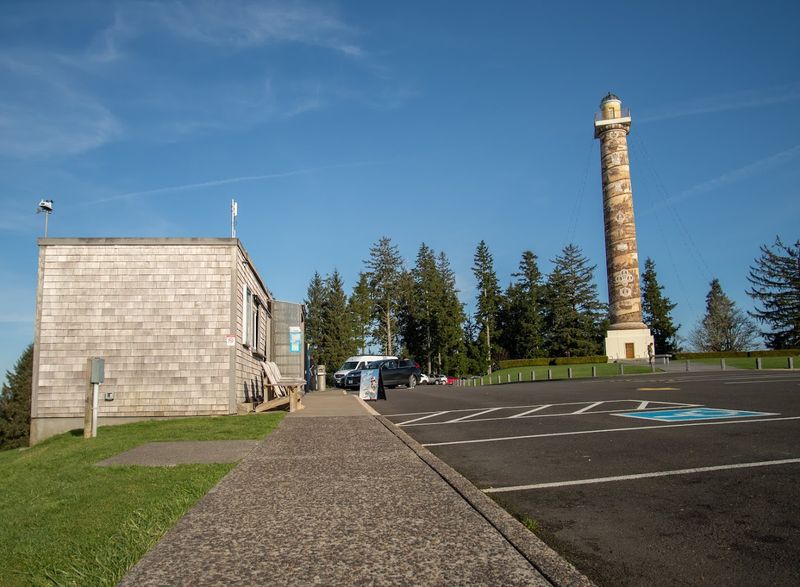
The gift shop near the base of the column is small but genuinely worth a stop before heading up. It carries a solid range of souvenirs including hats, postcards, magnets, and locally themed keepsakes.
The one-dollar wooden gliders are the clear star of the shop, and buying one before climbing is practically a rite of passage at this point.
Staff at the gift shop are knowledgeable and friendly, and they can answer questions about the column’s history and accessibility. The shop also carries books and educational materials about Oregon history and the Pacific Northwest region.
It is a good place to pick up something meaningful rather than mass-produced trinkets.
Public restrooms are available on the grounds, and the overall site is well-maintained and clean. Parking is located just below the column, and a small fee applies for the parking pass.
The pass is valid for the full year, which makes it a reasonable deal for anyone planning to return. The entire visit, including the climb, typically takes between one and two hours.
Why the Astoria Column Belongs on Every Oregon Road Trip
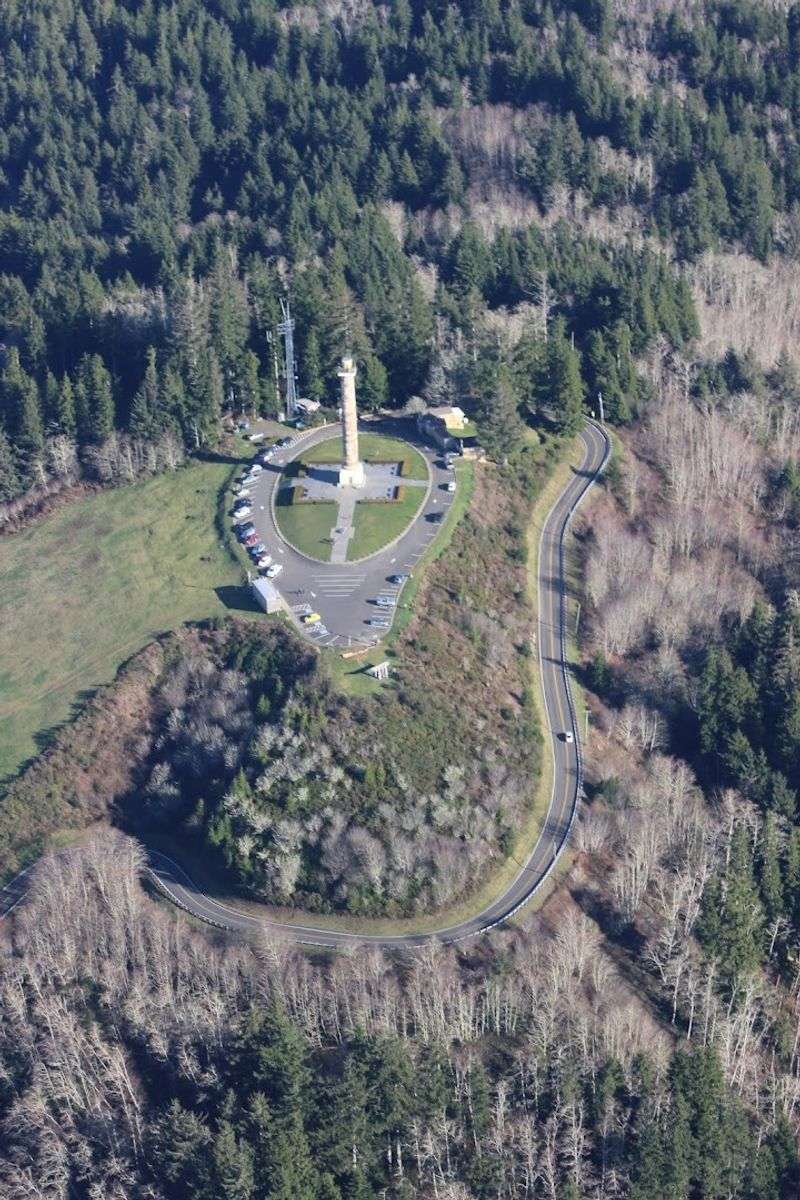
Astoria sits at the northwestern tip of Oregon, where the Columbia River meets the Pacific Ocean, and the column feels like the natural high point of any trip through this part of the coast. The town itself is charming, full of Victorian architecture, maritime history, and locally loved restaurants.
The column ties everything together by giving visitors a literal bird’s-eye view of the entire region.
The experience of climbing 164 steps and stepping out into open sky above the river is the kind of memory that actually sticks. It is physical, visual, and historically rich all at once.
Very few roadside landmarks deliver that combination so cleanly and accessibly.
The column celebrated its centennial in 2026, marking 100 years of welcoming visitors to this hilltop perch above the Oregon coast. That milestone makes this particular year an especially meaningful time to visit.
The drive up Coxcomb Hill alone is worth the detour, but the view from the top is what keeps people talking about this place long after they have driven away.
Address: The Astoria Column, 1 Coxcomb Dr, Astoria, OR 97103
