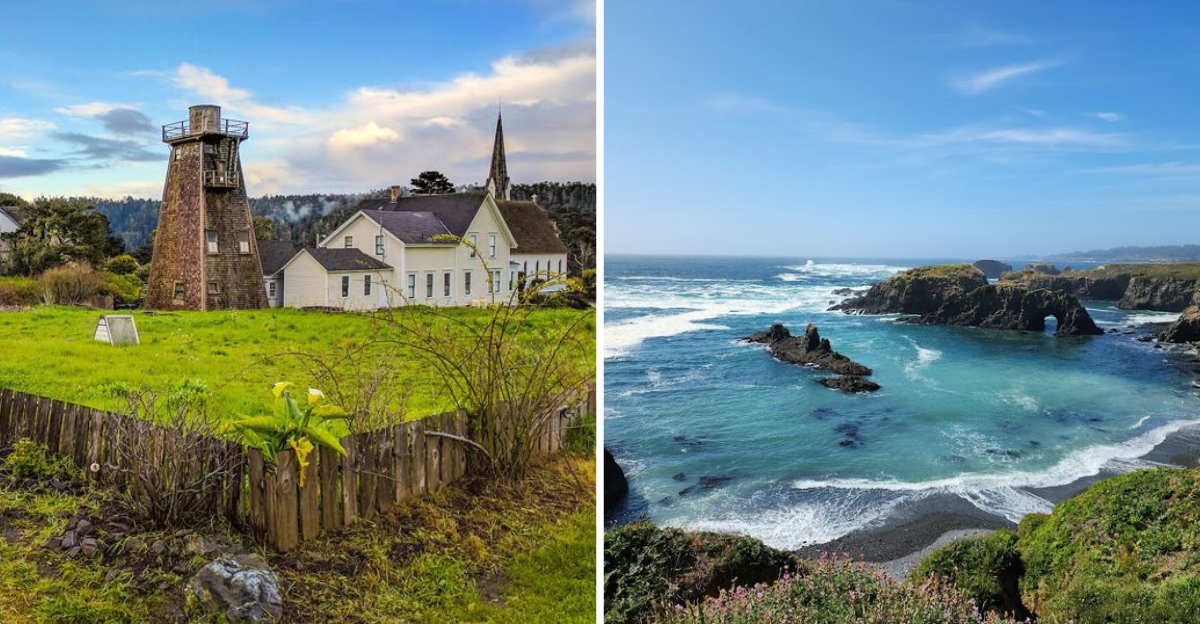
The Pacific sits heavy and gray beyond the headlands. The only sound is a distant buoy rocking somewhere out in the mist.
Then the fog arrives, curling over the cliffs like something alive, swallowing the rooftops one by one. I have been to a handful of coastal towns in California, and none of them feel quite like this one. It does not try to impress you, and that is exactly what makes it unforgettable.
You stand at the edge of the bluffs and the world feels bigger somehow, quieter, like the ocean is holding its breath just for you. The cypress trees lean away from the wind, and the light changes every few minutes, soft and gray and golden all at once. Some places you visit and forget.
This one stays with you.
The Fog That Arrives Like a Guest Who Knows the House
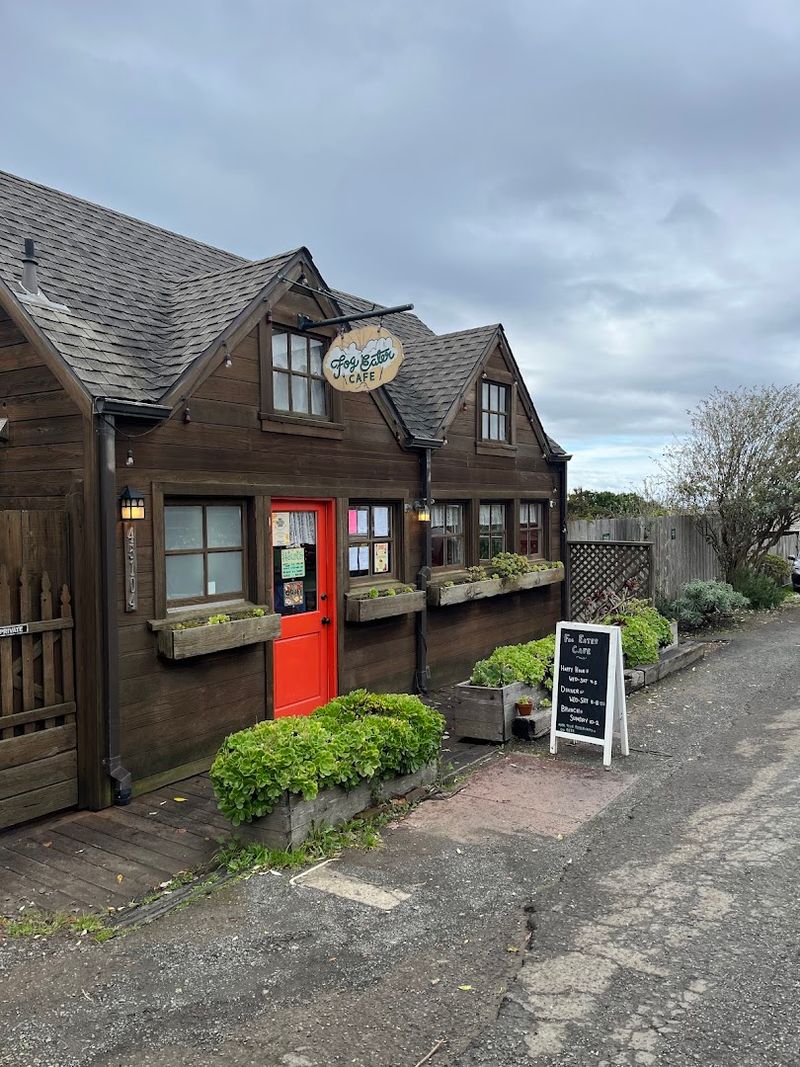
Fog is not just weather in Mendocino. It is a presence, something you feel before you fully understand what is happening around you.
On most mornings, the marine layer sweeps in from the Pacific with a kind of quiet authority, softening every hard edge it touches.
The Victorian houses along Main Street disappear first, their painted trim fading into white. Then the headland cliffs vanish, and suddenly the town feels like it exists somewhere between the real world and a dream.
It is genuinely one of the more unusual sensory experiences I have had in a coastal town.
What makes Mendocino different is that the fog here is not just a backdrop. It is part of the rhythm of daily life.
Locals plan their mornings around it. Visitors often wake up disoriented, then charmed.
By midday, the sun usually burns through, revealing a coastline so vivid and blue it almost seems like a reward for your patience. The fog keeps Mendocino honest, keeping the crowds thin and the atmosphere real.
Mendocino Headlands State Park and the Cliffs That Hold You Still
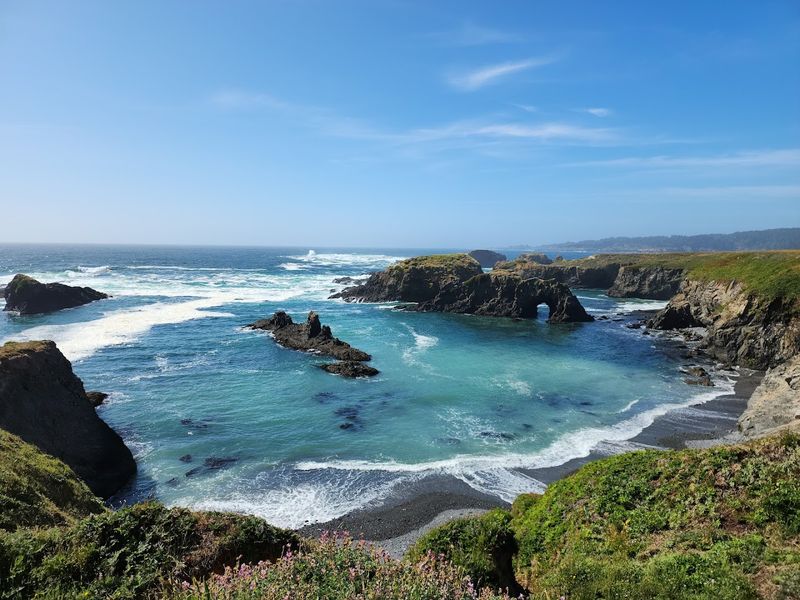
Some places earn their reputation, and Mendocino Headlands State Park absolutely earns every word written about it. The park wraps around the town like a natural frame, offering miles of cliffside trails where the ocean is always within earshot.
The trail closest to the bluff edge gives you unobstructed views of sea stacks, blowholes, and coves that seem too beautiful to be real. Spring brings wildflowers that edge right up to the cliff tops, mixing yellows and purples against the gray-green surf below.
I found myself stopping every few minutes not because I was tired, but because I kept needing to just look.
The Ford House Visitor Center sits inside a 19th-century building nearby, and it doubles as a small museum of local history. Rangers there are genuinely helpful, and the scale model of historic Mendocino inside is surprisingly detailed and worth a few minutes of your time.
The park does not charge an entry fee to walk the headlands trails, which makes it one of the most accessible and rewarding stops on the entire Mendocino coast. Address: 735 Main Street, Mendocino, California 95460.
Victorian Architecture That Arrived by Sea
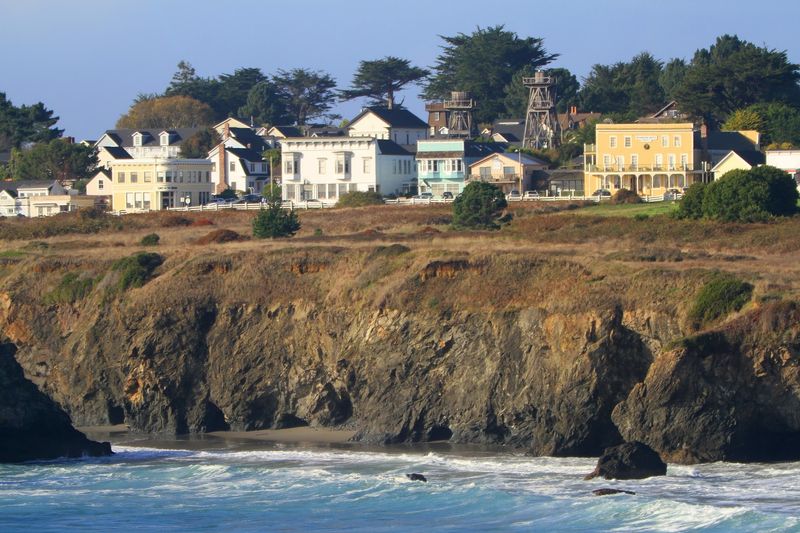
Most people expect a California coastal town to look like Santa Barbara or Carmel. Mendocino throws that expectation out completely.
The town’s architectural character is closer to coastal New England than anything else in the state, and there is a real historical reason for that.
During the 1850s lumber boom, settlers from Maine and other East Coast communities arrived to harvest the region’s massive redwood forests. They built what they knew, which meant wood-framed Victorians with pitched roofs, decorative trim, and a general sense of tidiness that still holds today.
Walking through the older residential blocks feels oddly familiar, like a memory of a place you have never actually visited.
The buildings are well-maintained without feeling staged. Some serve as private homes, others as inns or small shops, and a few as galleries.
The Mendocino Art Center, a working creative community since 1959, occupies a cluster of buildings near the center of town and hosts rotating exhibitions from local artists. The whole streetscape rewards slow movement.
You notice details at a stroll that you would completely miss at any other pace, and that slower pace is kind of the whole point of being here.
Russian Gulch State Park and the Quiet Drama of the North Coast
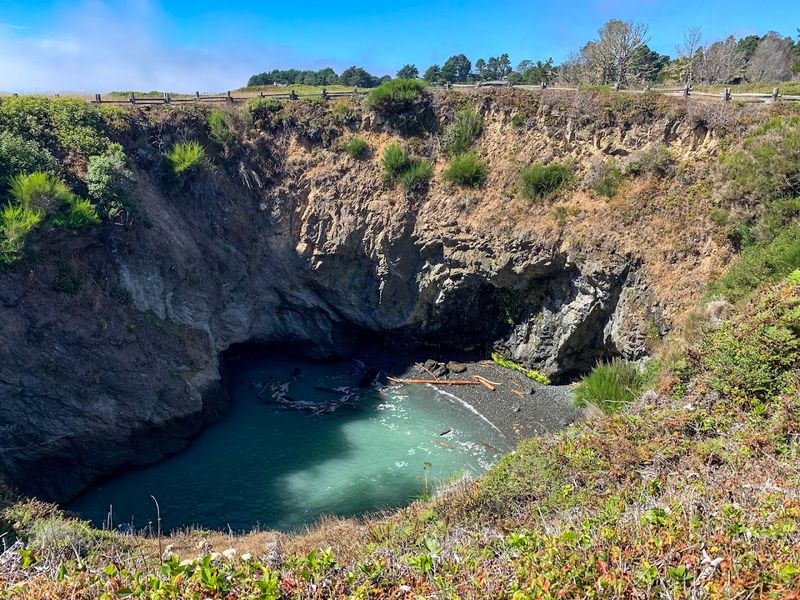
A few miles north of town, Russian Gulch State Park offers a completely different mood from the open headlands. Here the landscape pulls inward, trading wide ocean views for deep forest and the sound of a creek threading through a canyon of ferns and redwoods.
The park has a natural arch called Devil’s Punch Bowl, a collapsed sea cave near the shoreline that draws gasps from people who stumble upon it unexpectedly. The hole in the headland reveals churning water below, and depending on the tide, the sound rising from it is somewhere between a rumble and a roar.
It is one of those features that photographs can not fully prepare you for.
The inland trail along Russian Gulch Creek is shadowy and cool even on warm days, running past a small waterfall that most visitors overlook entirely because they stick close to the coast. That waterfall trail is one of the more peaceful walks in the whole county.
If you are someone who likes having a beautiful place almost entirely to yourself, Russian Gulch rewards the people willing to go just slightly off the obvious path. The address for the park entrance is 12301 North Highway 1, Mendocino, California 95460.
Point Cabrillo Light Station and the Stories the Coast Keeps
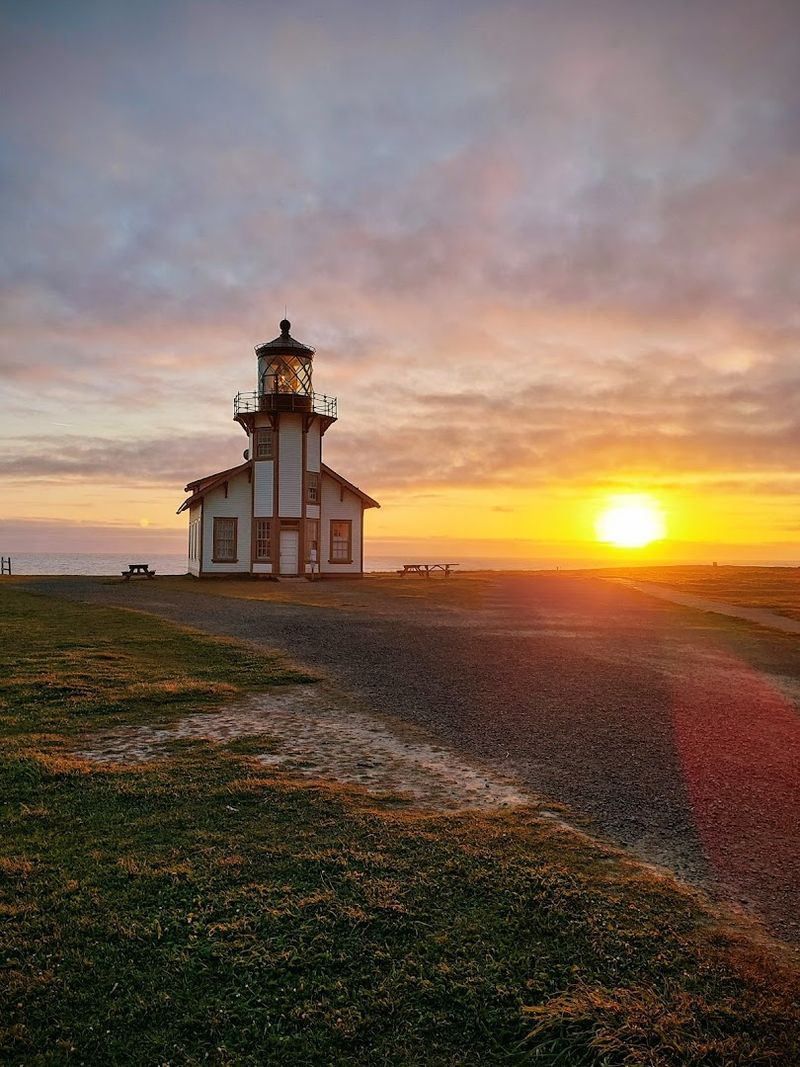
Built in 1909, Point Cabrillo Light Station is one of those places that makes history feel immediate rather than distant. The lighthouse sits on a coastal preserve about three miles north of Mendocino, and the walk out to it crosses open meadows full of native plants and coastal scrub.
The station itself is beautifully preserved. The lighthouse, fog signal building, and keeper’s cottages all remain intact, and the whole compound has a stillness that matches the landscape around it.
On foggy mornings especially, the setting has a cinematic quality that feels almost too composed to be accidental.
The light station played a real operational role for decades, guiding ships through one of the most notoriously dangerous stretches of the California coast. Fog and rocky headlands made this section of the Pacific genuinely hazardous, and the foghorn here was not decorative.
It was a lifeline. Today the preserve hosts docent-led tours during warmer months, and the keeper’s cottages are available as vacation rentals, which is about as close as you can get to sleeping inside a piece of living coastal history.
The address is 45300 Lighthouse Road, Mendocino, California 95460.
The Food Scene That Punches Above Its Size
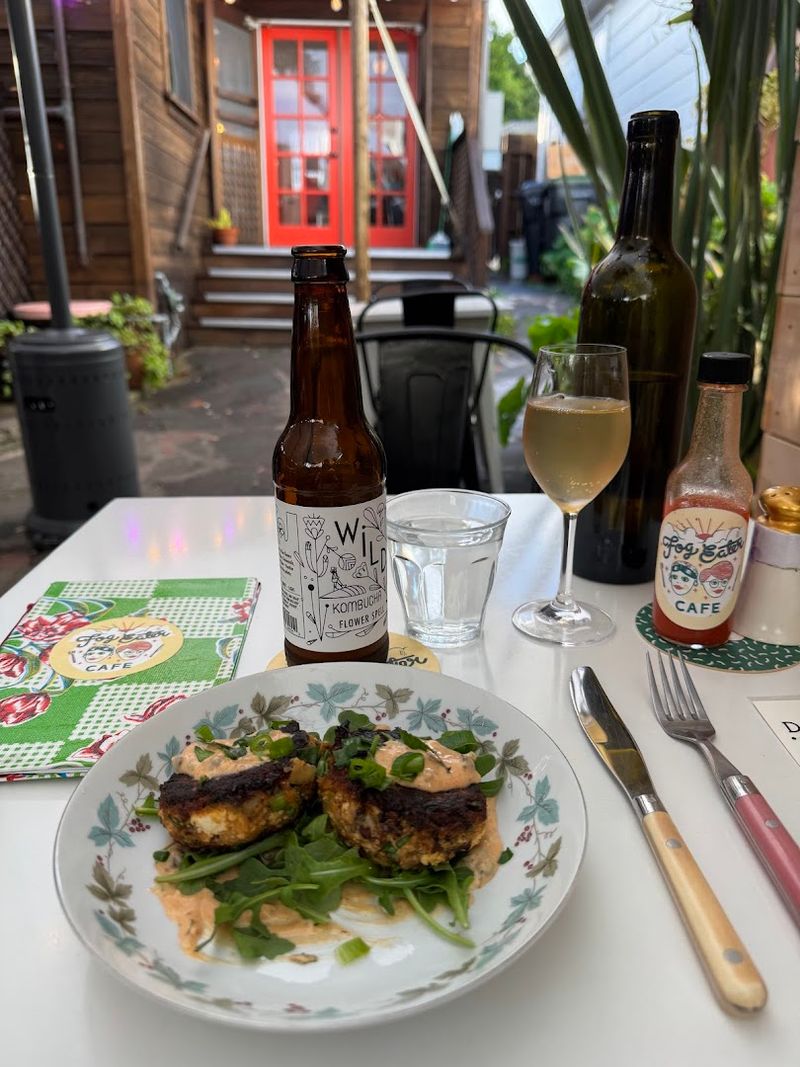
For a town this small, Mendocino has a food scene that would make larger cities a little envious. The restaurants here tend to be owner-operated, locally focused, and genuinely good rather than just convenient.
Reservations on weekends are not a bad idea.
Patterson’s Pub on Ukiah Street is a casual spot that locals and visitors both seem to claim as their own, known for hearty plates and an unpretentious atmosphere. The Mendocino Cafe on Lansing Street offers a menu that leans on local produce and coastal ingredients, with a patio that catches afternoon sun on clear days.
Both spots have that lived-in quality that chains can never replicate.
The farmers market held in the warmer months draws growers from across Mendocino County, and the produce quality reflects the region’s fertile inland valleys. Eating here feels connected to the place in a way that is easy to take for granted until you leave and realize how rare it actually is.
Even the smaller cafes and bakeries around town seem to care about what they are serving. That collective attention to quality is one of the quieter things that makes Mendocino worth returning to again and again.
How to Slow Down in a Town That Already Knows How
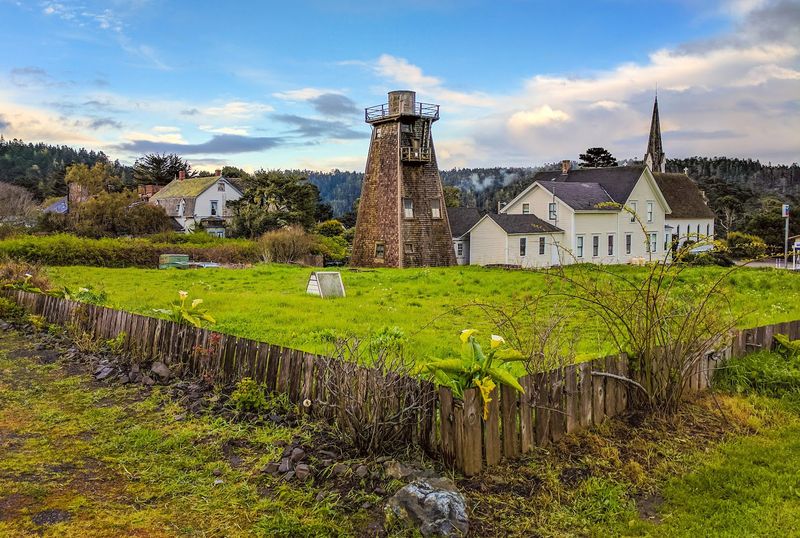
Mendocino is not a place that needs to be rushed, and it will gently resist any attempt to treat it like a checklist destination. The town has around 900 residents and no traffic lights, which tells you something important about the pace of life here.
Gallery-hopping is one of the more satisfying ways to spend an afternoon. The Mendocino Art Center at 45200 Little Lake Street has anchored the local creative community since the late 1950s, and the surrounding blocks are dotted with independent galleries showing work that ranges from photography to ceramics to oil painting.
Browsing here feels unhurried in the best possible way.
The Kelley House Museum on Albion Street documents the town’s history with rotating exhibits that touch on the lumber era, the early settlers, and the coastal environment itself. It is a small museum but a thoughtful one.
What I kept noticing throughout the town was how easy it was to simply stop moving, to sit on a bench near the headlands or a step outside a gallery, and just listen. The fog, the surf, the wind through the cypress trees.
Mendocino gives you permission to do absolutely nothing, and somehow that feels like everything. Address: California 95460.
