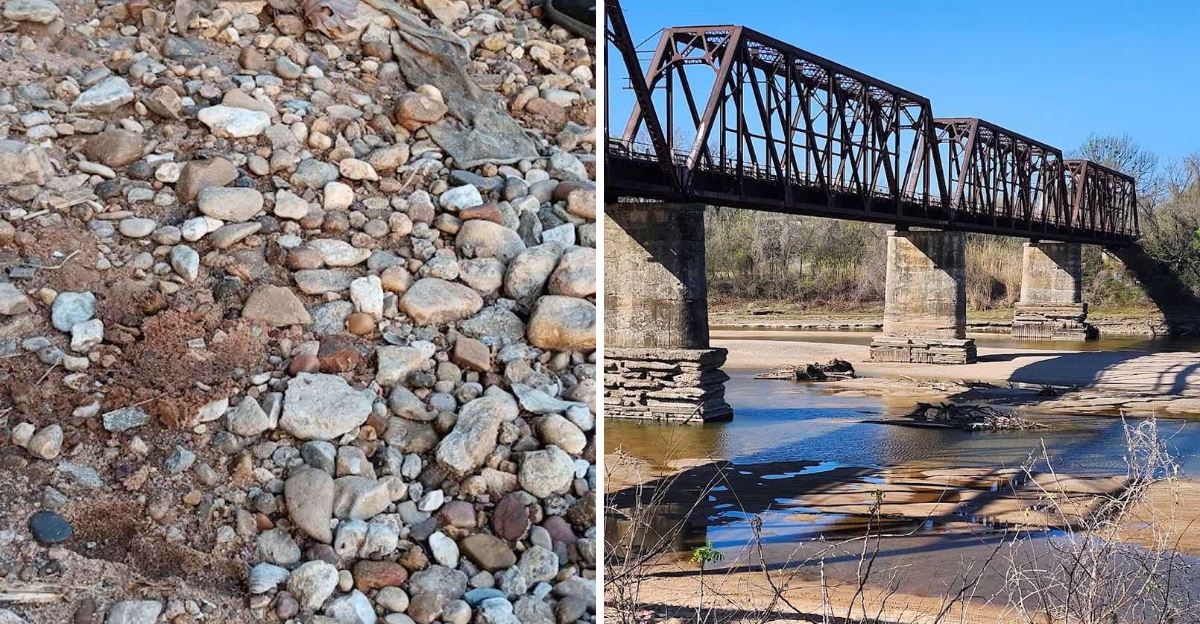
It has been standing for over a century, a skeleton of rusted steel and riveted beams that has watched the river roll beneath it since before most of the trees along the bank were born. The bridge is narrow enough that oncoming traffic requires a negotiation, a game of who backs up first.
Wooden planks groan under your tires, and the trusses on either side form a geometric tunnel that makes you feel like you are driving straight into a black-and-white postcard from your grandparents’ youth.
Stop in the middle. Roll down your window.
Listen to the water move below with the same rhythm it has kept for thousands of years. There are no interpretive signs explaining its significance, no gift shop, no admission booth.
Just the wind, the river, and a century of travelers who have crossed this same span and probably felt the same quiet awe.
The Bridge and Its Place in Oklahoma History
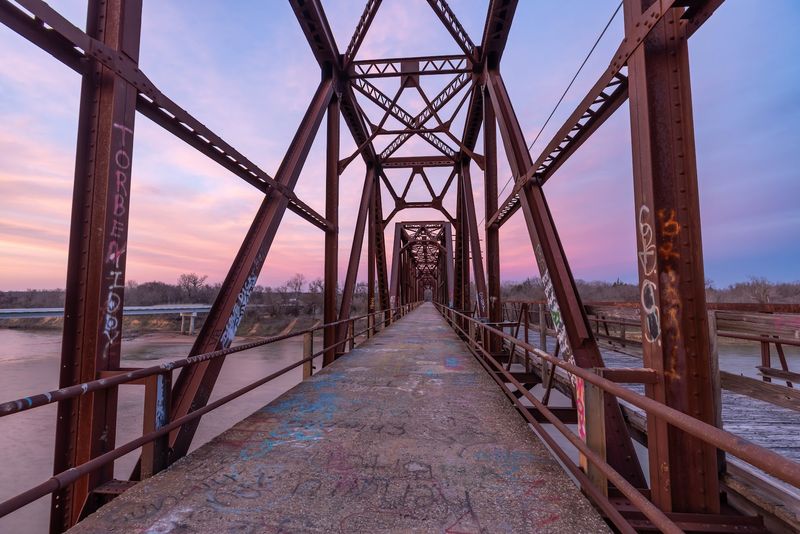
Standing on the Oklahoma side of the Red River, the Old Carpenters Bluff Iron Bridge is one of the last surviving historic iron truss bridges in the region.
It sits near Cartwright, Oklahoma, right along the Texas-Oklahoma state line, connecting two very different landscapes with one very old stretch of iron and wood.
The bridge was originally built in the early twentieth century and served as a vital crossing point for the area. Back then, roads were rough and river crossings were rare, so a bridge like this was a genuine lifeline for local communities on both sides of the state line.
Oklahoma has a rich history of frontier infrastructure, and this bridge is one of its most tangible remnants. It has been repaired and reinforced over the decades, but its original iron truss design remains largely intact.
Seeing it in person gives you a real sense of how ambitious early engineers were when they set out to tame the Red River and connect two states with nothing more than steel, wood, and determination.
The Red River Setting Beneath Your Feet
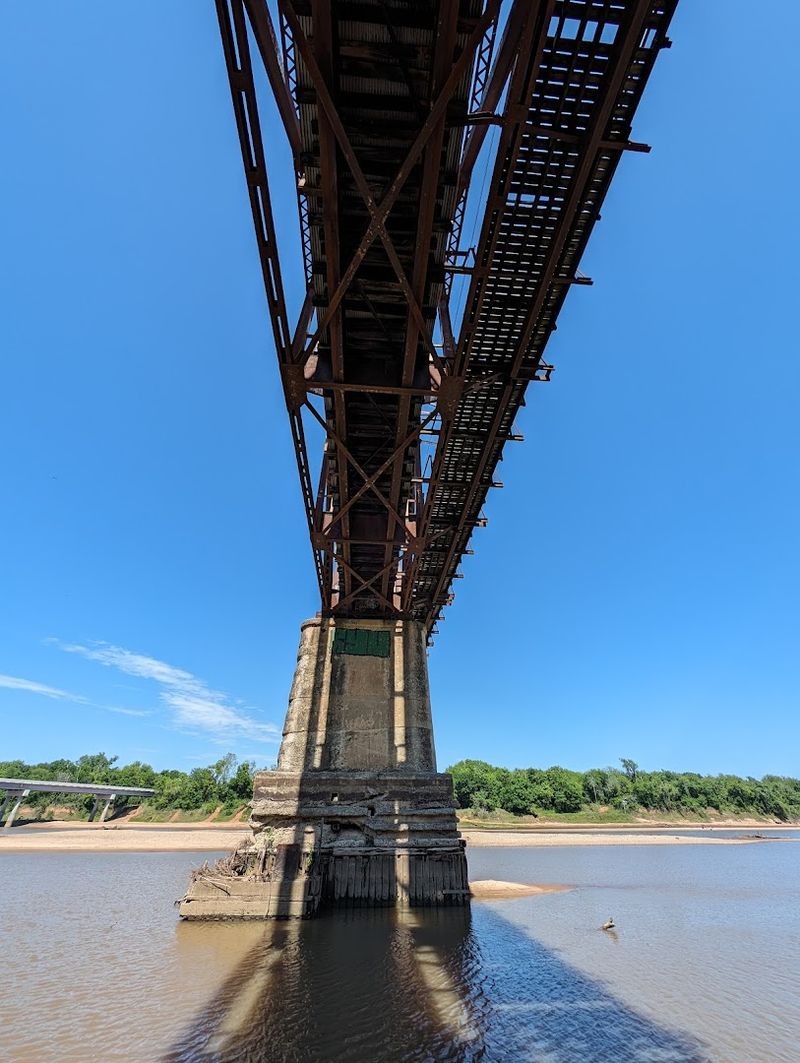
The Red River is not just a backdrop here. It is the whole show.
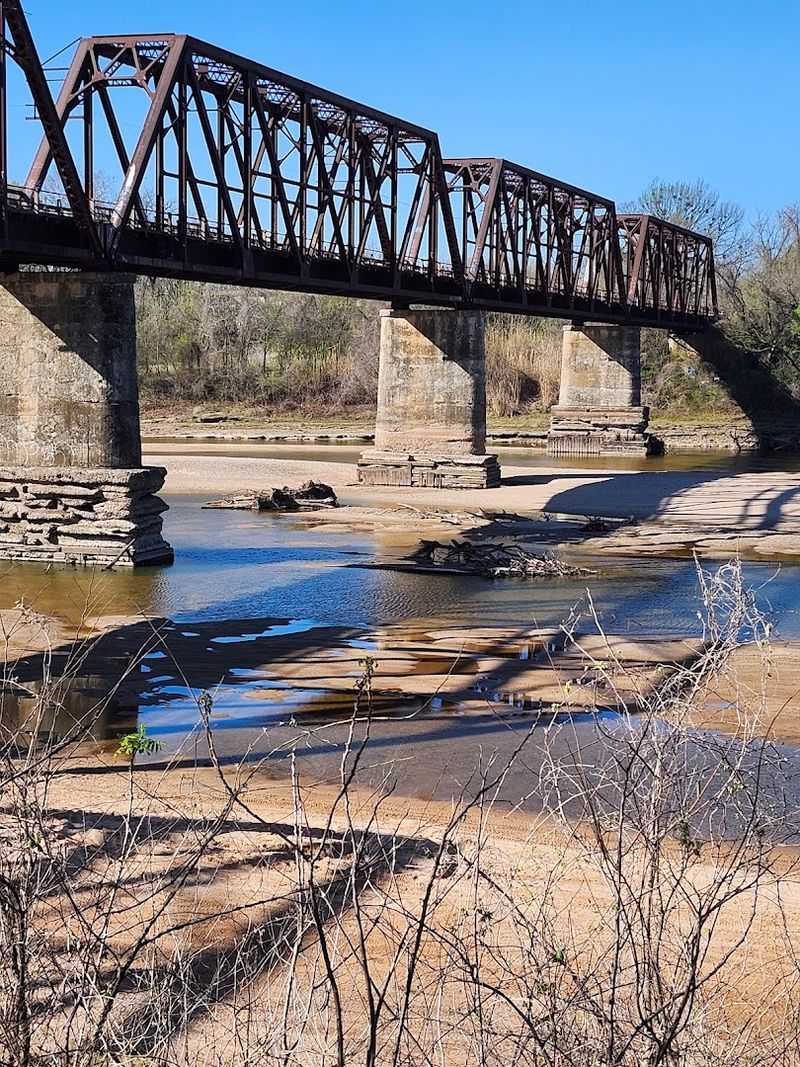
Looking down from the bridge, you can see the river’s famously reddish-brown water moving steadily beneath you, carrying silt and sediment the way it has for thousands of years.
The river gets its color from the red clay and iron-rich soil it picks up along its journey through Texas and Oklahoma. On a clear day, the contrast between the rust-colored water and the green riverbanks is genuinely striking.
It is the kind of natural scene that makes you want to stand still for a while.
The banks below the bridge are accessible from the Oklahoma side, where a rough dirt road leads down toward the water. The gravel along the riverbank is worth inspecting closely, as the area is known for oyster fossils, bivalve shells, jasper, and agates embedded in the stones.
Finding a small fossil along the Red River while standing under a hundred-year-old iron bridge is the kind of moment that makes a road trip feel completely worth it.
Walking Across a Bridge Built for a Different Era
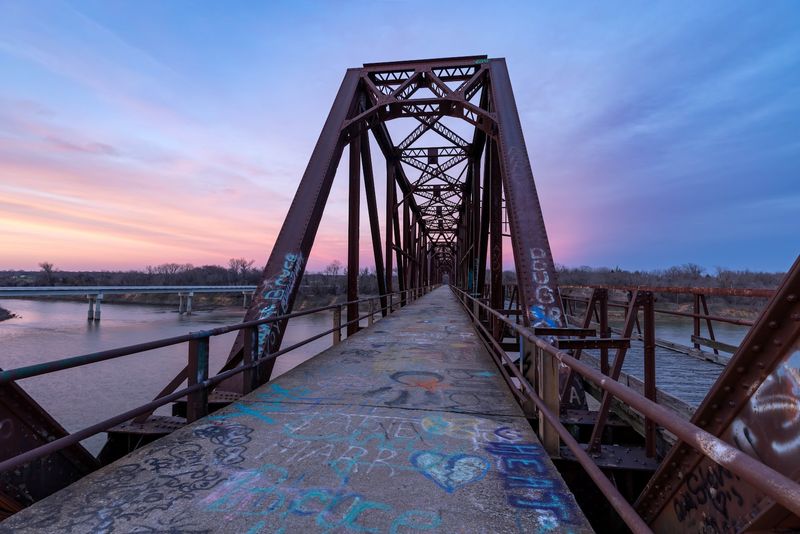
Crossing the Old Carpenters Bluff Iron Bridge on foot is a genuinely different kind of experience. The bridge is narrow, built for a time when vehicles were smaller and traffic was light.
As a pedestrian walkway today, it forces you to slow down and actually pay attention to where you are standing.
The wooden planks underfoot creak just enough to remind you that this structure has been here for a very long time. Looking through the gaps in the flooring, you can see the river flowing far below.
If you have a mild fear of heights, this bridge will definitely get your attention.
The iron trusses rise up on both sides as you walk, creating a kind of tunnel effect that frames the river views perfectly. Midway across, you are essentially standing between Oklahoma and Texas, with water below and open sky above.
The half-mile length of the bridge means the walk takes a few minutes each way, giving you plenty of time to absorb the atmosphere and appreciate the sheer scale of what early twentieth-century builders accomplished here in rural Oklahoma.
Sunrise and Sunset Views Worth Planning Around
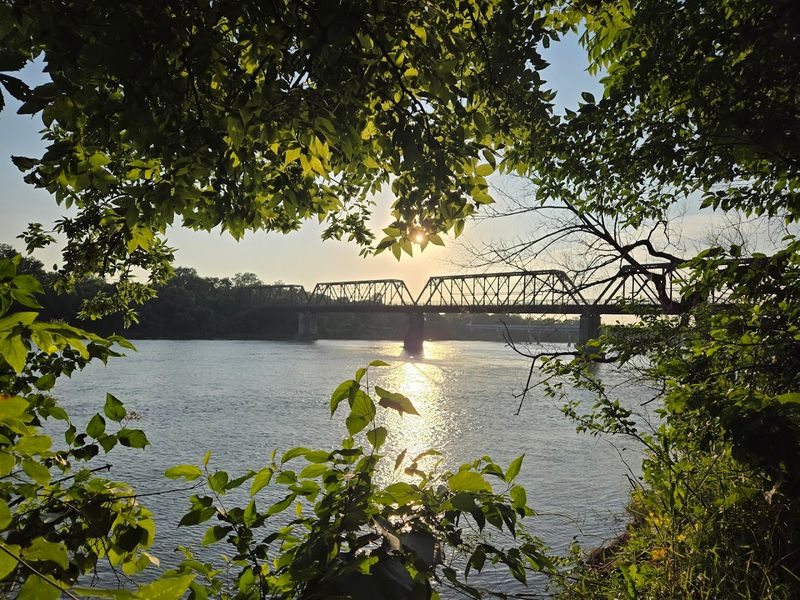
The bridge is open around the clock, and the best decision you can make is to time your visit for either sunrise or sunset. The light at those hours transforms the Red River into something almost painterly, with warm gold and orange tones reflecting off the water’s surface.
In the morning, a soft mist sometimes rises off the river, drifting between the iron trusses and giving the whole scene a quiet, almost dreamlike quality. The sounds of birds and flowing water fill the air before the day’s activity picks up.
It is one of those rare moments where a free roadside stop genuinely feels like a premium travel experience.
At sunset, the sky over the Texas-Oklahoma border puts on a serious show. The wide, flat landscape means there is nothing blocking the horizon, so the colors spread out dramatically in every direction.
Photographers will want to arrive about thirty minutes before golden hour to scout the best angles along the bridge and the riverbank below. Oklahoma sunsets along the Red River have a particular intensity that is hard to describe until you have actually stood there and watched one unfold.
Photography Opportunities Around Every Corner
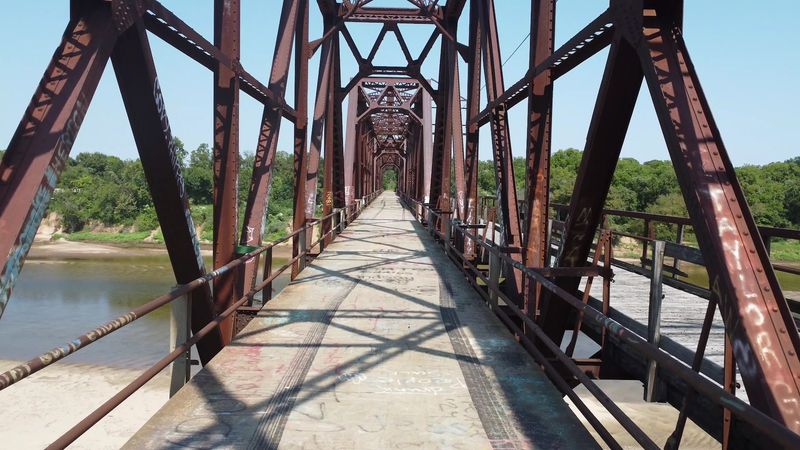
For anyone who loves photography, this bridge is practically a gift. The geometric patterns of the iron trusses create natural frames for river shots, and the scale of the structure gives every photo a strong sense of depth and drama.
The Oklahoma side of the bridge offers a longer approach down a dirt road, which means you get some great wide-angle shots of the bridge set against the surrounding landscape before you even reach it.
The trees along the riverbank add texture and color to the scene, especially in autumn when the foliage turns warm shades of red and gold.
From the bridge itself, shooting straight down the center creates a satisfying vanishing-point perspective that works beautifully in both color and black-and-white. The weathered iron and aged wood give the structure a natural texture that photographs exceptionally well in soft, diffused light.
Early morning cloud cover is actually ideal for this kind of structural photography, as it eliminates harsh shadows. Bring a wide-angle lens if you have one, because the full width of the bridge and the river below deserves to be captured in a single sweeping frame.
The Approach from the Oklahoma Side
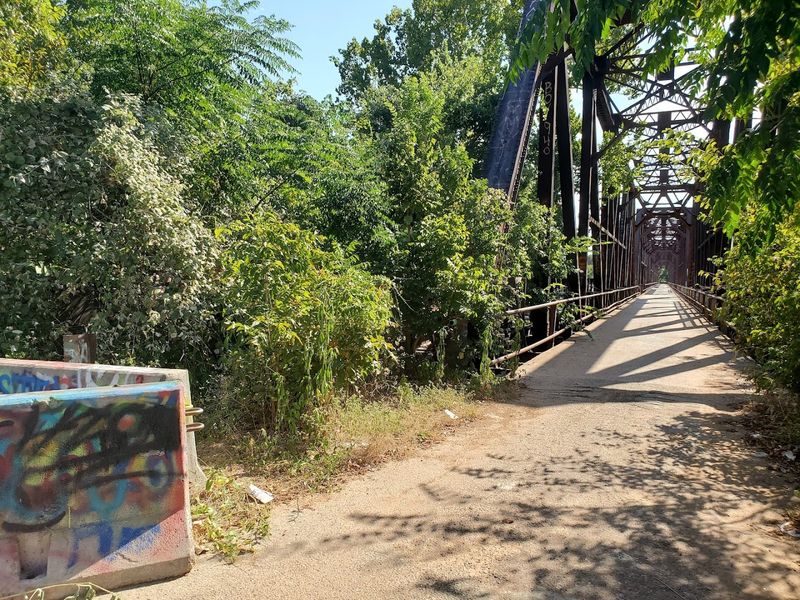
Getting to the bridge from the Oklahoma side is part of the adventure. After turning off the main road, you follow a dirt track for roughly a quarter to half a mile through a stretch of trees and open land before the bridge comes into view.
It is a slow, bumpy approach that builds anticipation nicely.
The road is manageable for most vehicles in dry conditions, but after rain it can get muddy and slippery. A vehicle with decent ground clearance is always a good idea when visiting rural Oklahoma sites like this one.
The surrounding area feels genuinely remote, even though it is not far from the main highway.
Once you reach the bridge entrance on the Oklahoma side, there is an open area where you can park and take in the full view of the structure before stepping onto it. The scale of the bridge is more impressive up close than it appears in photos.
Standing at the entrance and looking across to Texas, you get a real sense of the distance this bridge spans and the engineering challenge it represented when it was first constructed over the Red River more than a century ago.
Fossil Hunting Along the Riverbank
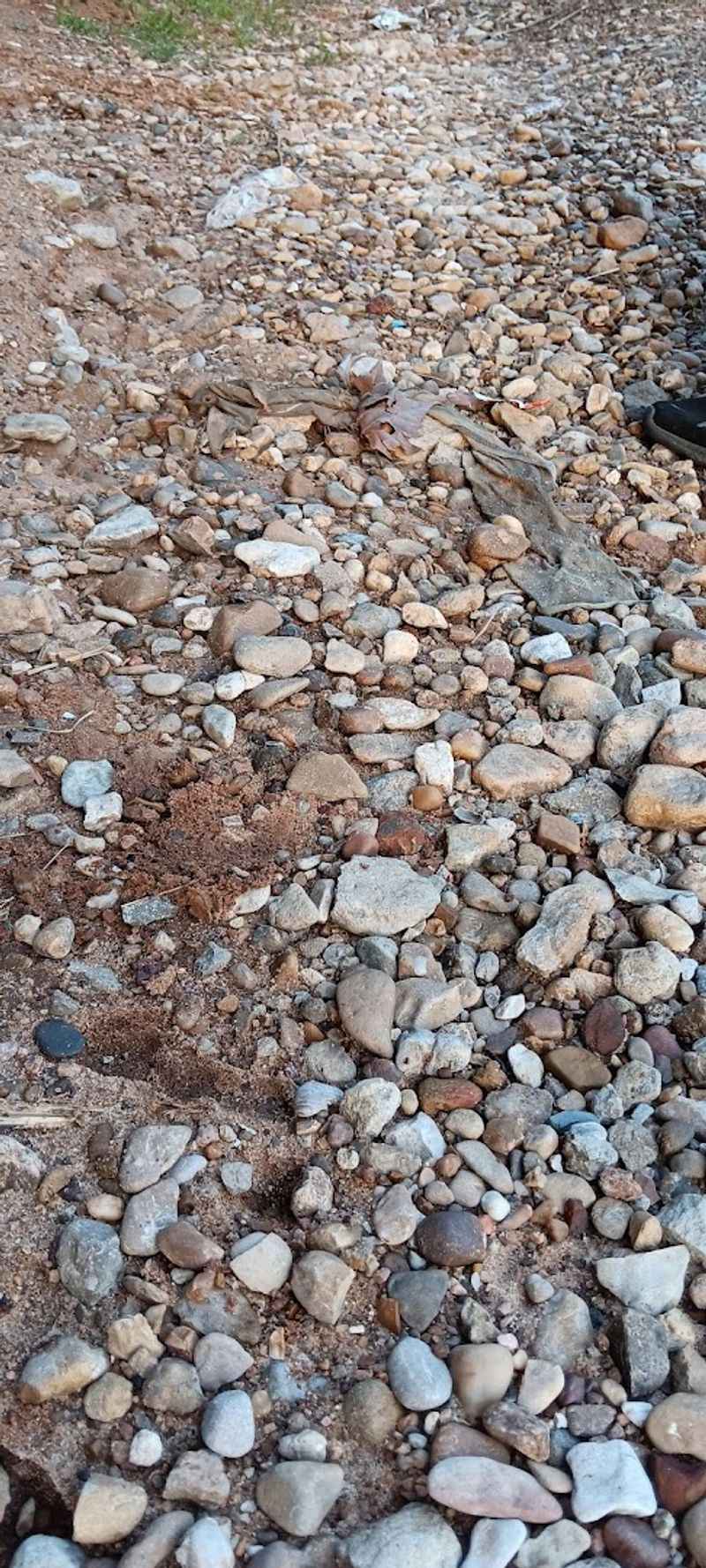
One of the most unexpected surprises at this site is the fossil hunting opportunity along the riverbank beneath the bridge. The gravel beds of the Red River are known to contain oyster fossils, bivalve shells, pieces of jasper, and smooth agates that have been carried downstream over thousands of years.
Reaching the riverbank from the Oklahoma side is straightforward. A rough track leads down from the parking area to the water’s edge, and the walk is easy enough for most people.
Once you are down at the river level, the scale of the bridge above you becomes even more impressive, with the iron structure towering overhead against the sky.
Spend some time crouching in the gravel and you will almost certainly find something interesting. Oyster fossils in landlocked Oklahoma are a reminder that this entire region was once covered by a shallow inland sea millions of years ago.
Finding a small fossil embedded in river gravel, with a century-old iron bridge looming above and the Red River rolling past, is one of those small but genuinely memorable travel moments that costs nothing and sticks with you for a long time.
The Bridge as a Texas-Oklahoma Border Landmark
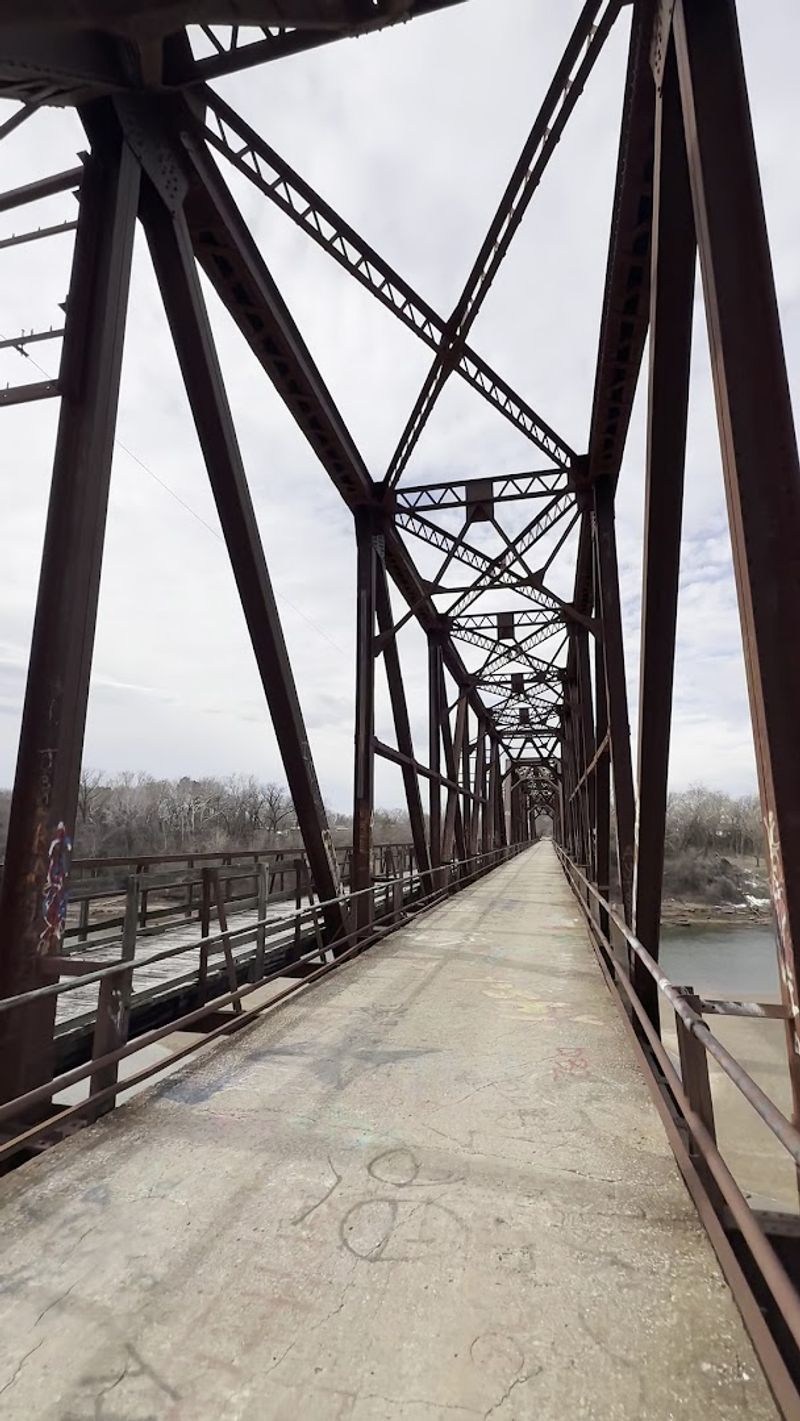
There is something quietly exciting about standing on a bridge that connects two states. The Old Carpenters Bluff Iron Bridge spans the Red River, which forms the natural border between Texas and Oklahoma, meaning that a single walk across puts you in two states without ever getting in a car.
The Texas side of the bridge can only be accessed on foot, while the Oklahoma side allows vehicle access via the dirt road.
This difference in access gives the Oklahoma approach a slightly more adventurous feel, while the Texas side has a more immediate and dramatic entry point right at the bridge’s edge.
The border location also means the surrounding landscape shifts subtly as you cross. The wide, flat terrain of North Texas meets the slightly different topography of southern Oklahoma, and the Red River itself marks that transition with its distinctive coloring and steady flow.
For road trippers who love collecting state lines, this bridge is a particularly satisfying stop because it lets you experience the Texas-Oklahoma border in a way that no highway crossing ever really allows. It is geography made personal, one iron step at a time.
Visiting Responsibly and Staying Safe
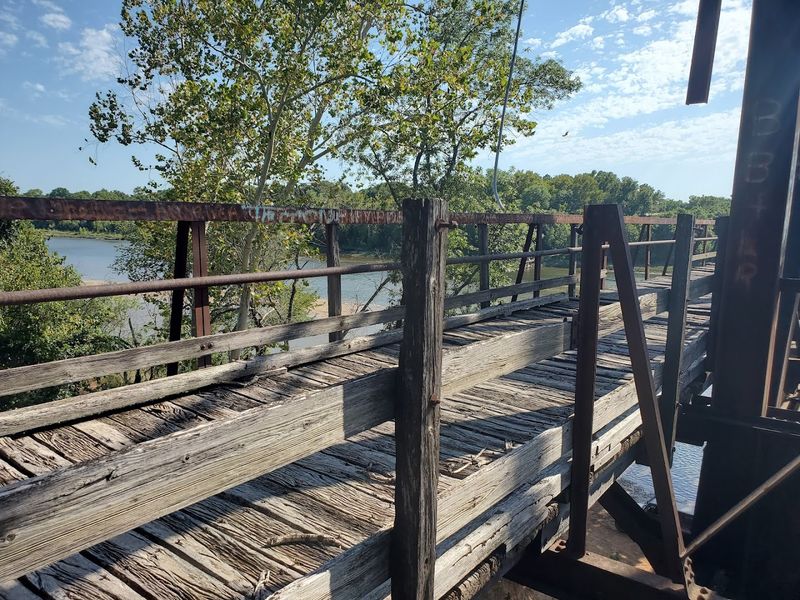
The Old Carpenters Bluff Iron Bridge is a historic structure, and visiting it responsibly matters. The bridge has been reinforced and maintained over the years, but it is still an old iron truss crossing, so staying on the designated walkway and avoiding any damaged or unstable sections is essential.
The wooden planks on the pedestrian side of the bridge deserve careful attention. Some sections are older than others, and stepping carefully is always the right approach.
Wearing sturdy, closed-toe shoes is strongly recommended, especially if you plan to walk down to the riverbank afterward, where the gravel and uneven terrain require solid footing.
The site is open around the clock, but visiting during daylight hours is the smartest choice for a first visit. The dirt road on the Oklahoma side can be difficult to navigate in the dark, and the riverbank below the bridge is much easier to explore safely when you can see clearly.
Bringing water is also a good idea, especially in Oklahoma’s warm months, when temperatures along the Red River can climb quickly. The site has no facilities, so packing everything you need before you arrive makes for a much smoother and more enjoyable experience.
The Iron Truss Design and Engineering Legacy
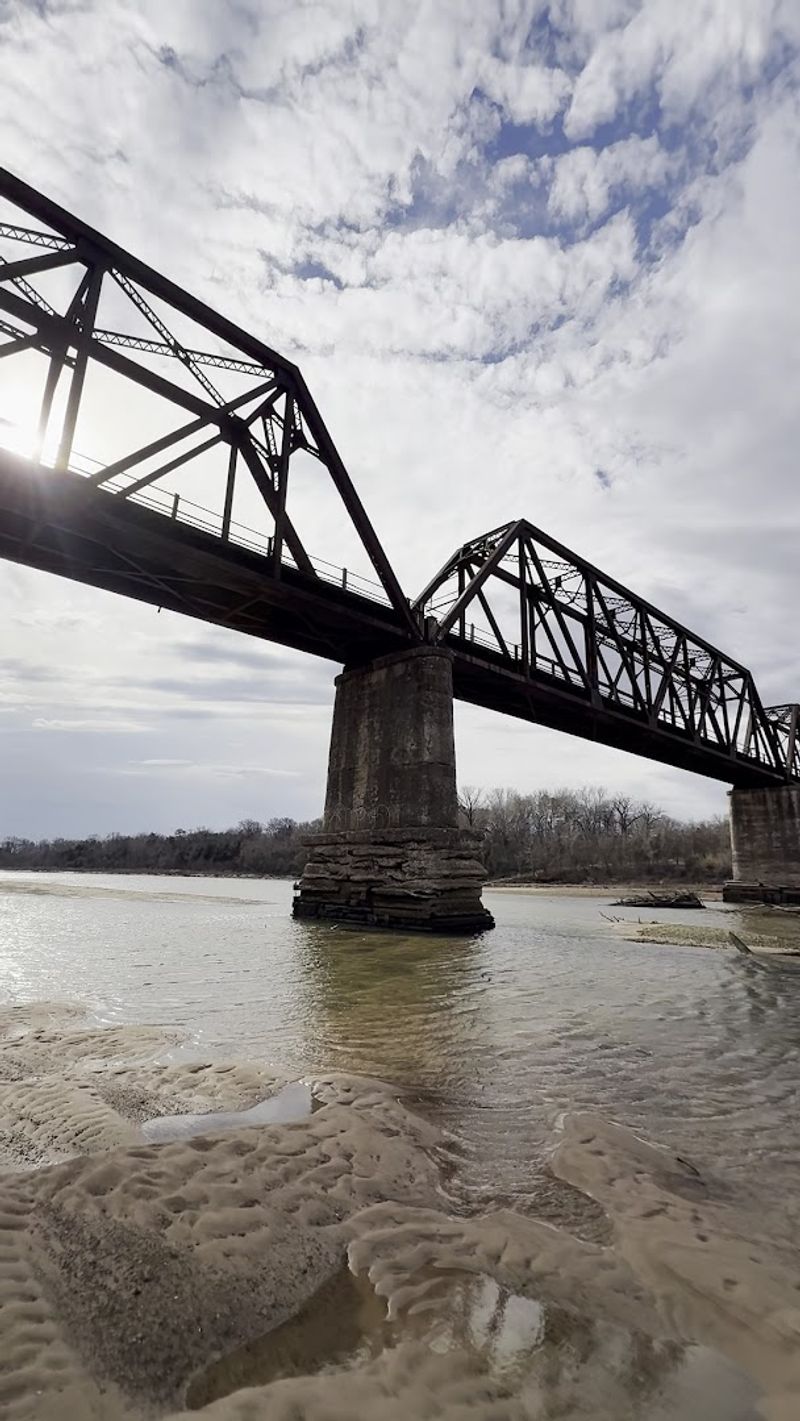
The engineering behind the Old Carpenters Bluff Iron Bridge is genuinely worth appreciating. The Pratt truss design, commonly used in American bridge construction during the late nineteenth and early twentieth centuries, relies on diagonal iron members to distribute weight efficiently across the span.
Looking up at the trusses from the walkway, you can see the riveted connections that hold the entire structure together. These rivets were driven by hand by ironworkers who assembled the bridge piece by piece over the river.
The precision required for that kind of work, without modern machinery or computer modeling, is remarkable to think about.
Oklahoma has lost many of its historic iron bridges over the decades as newer concrete and steel structures replaced them.
The Carpenters Bluff Bridge is one of the rare survivors, and its preservation gives future generations a chance to see what early twentieth-century bridge engineering actually looked like in practice.
The aged patina on the iron, the worn wooden planking, and the massive scale of the structure all tell a story about a time when building a bridge across a major river was one of the most ambitious engineering projects a community could undertake.
Wildlife and Nature Along the Red River
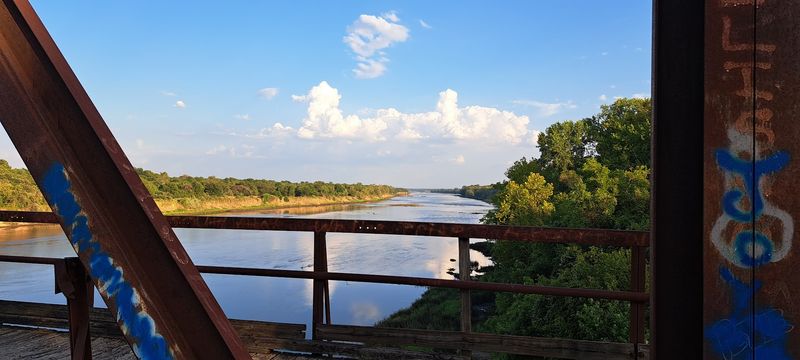
The area around the Old Carpenters Bluff Iron Bridge is surprisingly rich in wildlife. The Red River corridor serves as a natural habitat for a wide variety of birds, and early morning visits often reward you with sightings of herons, egrets, and various songbirds moving through the riverside vegetation.
The trees and shrubs along the Oklahoma bank provide cover for deer, raccoons, and other mammals that come down to the river to drink. Fishing is also popular in this stretch of the Red River, and the calm sections near the bridge are known to hold catfish and other species common to Oklahoma waterways.
Standing quietly on the bridge at dawn, with the river flowing below and birds calling from the trees, the whole scene feels genuinely removed from the noise of everyday life. The natural setting amplifies the historic atmosphere of the bridge rather than competing with it.
Oklahoma’s river corridors are some of the most biodiverse areas in the state, and Carpenters Bluff gives you direct access to that environment without requiring any special gear or permits. Just show up, slow down, and let the river do the rest of the work for you.
Why This Free Oklahoma Stop Deserves a Spot on Your Road Trip
Road trips are all about finding the places that surprise you, and the Old Carpenters Bluff Iron Bridge near Cartwright, Oklahoma does exactly that.
It is completely free to visit, open every day of the year, and delivers a combination of history, scenery, and genuine adventure that most paid attractions struggle to match.
The address is along N 3715 near Hendrix, Oklahoma, and it is reachable from Highway 70 with a short detour onto local roads.
The drive itself is pleasant, passing through the rural landscape of southeastern Oklahoma before the bridge suddenly appears at the end of a dirt track like something out of a history book.
For anyone driving between Oklahoma and Texas, or exploring the back roads of the Red River Valley, this bridge is a stop that rewards curiosity and patience. It is not a polished tourist attraction with gift shops and entry fees.
It is a real, living piece of Oklahoma history sitting out in the open, free for anyone willing to make the turn off the highway and follow the dirt road to its end. Few places offer that kind of unfiltered connection to the past, and even fewer do it completely free of charge.
