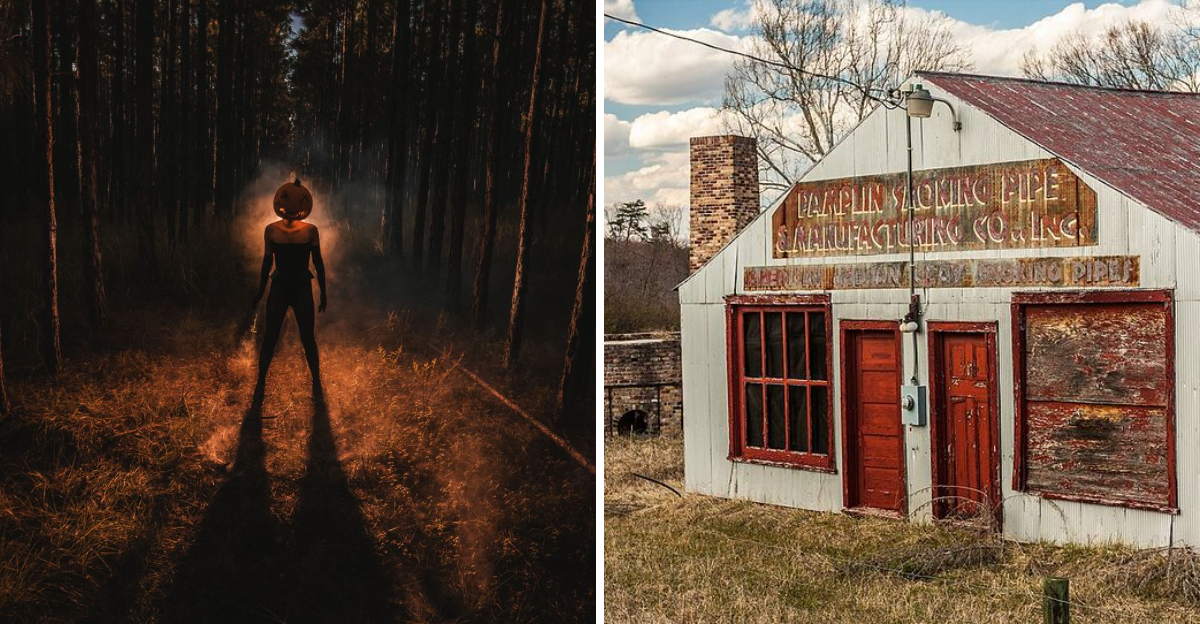
The buildings are empty. The streets are silent.
And the stories are chilling. These desperately forgotten Virginia ghost towns have backstories that will haunt you.
I have visited each one, standing among the ruins and wondering what happened to the people who lived there. Some were mining towns that boomed and busted.
Others were railroad stops that vanished when the tracks were moved. All of them have a story, and most of them are tragic.
Virginia has plenty of historic sites, but these ghost towns are for people who like their history with a side of haunting.
1. Wash Woods (Virginia Beach)
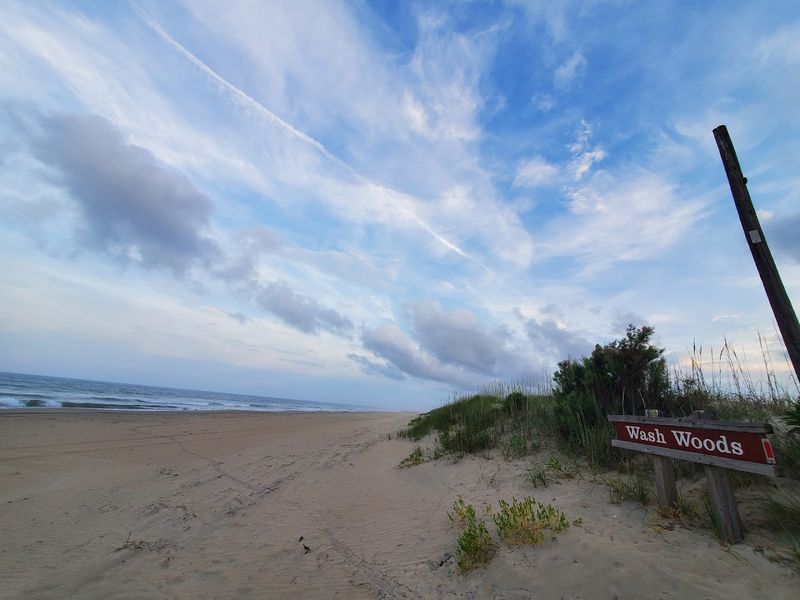
Somewhere between the crashing Atlantic waves and Virginia’s wild marshlands, a forgotten fishing village quietly waits to be rediscovered. Wash Woods sits hidden inside False Cape State Park, and getting there is no casual Sunday stroll.
You must hike or bike several miles through raw, untamed maritime wilderness with no roads cutting through, just sand, scrub, and silence.
The legend behind this place is genuinely spine-tingling. Local lore says the town was born from a shipwreck, with storm survivors dragging themselves ashore and deciding to simply stay.
They built homes, started families, and carved out an isolated life between the marshes and the sea. At its peak, roughly 300 souls called Wash Woods home, fishing, hunting, and living completely cut off from the outside world.
What eventually defeated this community wasn’t a dramatic disaster but geography itself. The sheer isolation made everyday life unsustainable as the modern world moved faster and faster around them.
Families packed up and left, one by one, until nobody remained.
Today, the most haunting remnants are the gravestones still standing among the trees. Names of families who were born, lived, and died here are carved into those stones, and standing among them feels profoundly personal.
The forest has swallowed most of the structures, but the cemetery endures as a quiet, emotional monument to a community that geography ultimately conquered.
False Cape State Park is located in Virginia Beach, Virginia. Plan ahead because reaching Wash Woods requires serious preparation and a love for rugged adventure.
2. Elko Tract (Henrico County)
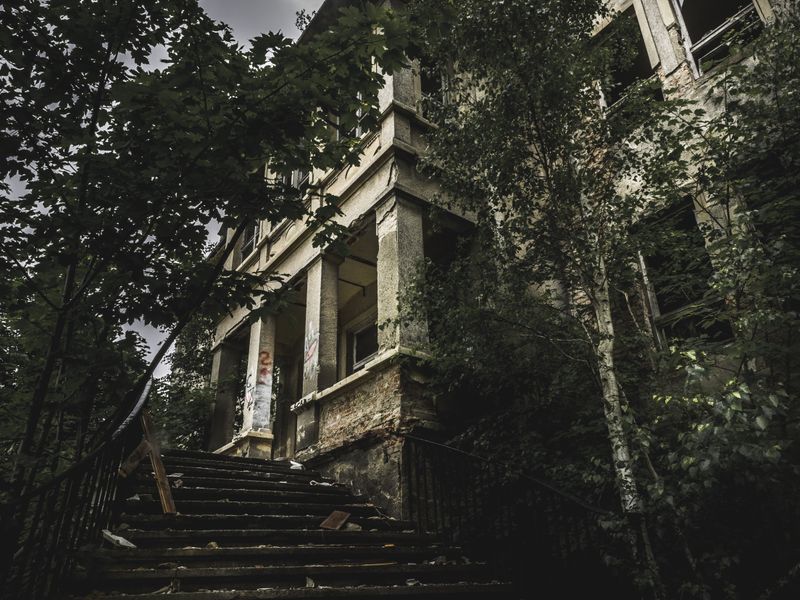
Not every forgotten place announces itself with crumbling church spires or dramatic ruins. Elko Tract in Henrico County is the quieter, more subtle kind of ghost town, one where the land itself seems to hum with the memory of the people who once worked it.
This area was home to modest farming families who lived simply and close to the land. Over time, shifting economic pressures, changing land use policies, and the relentless march of suburban development chipped away at the community’s identity.
What once functioned as a recognizable rural settlement gradually dissolved into the surrounding landscape.
Walking through the Elko Tract today, you get the feeling that something is missing but can’t quite name it. Old tree lines mark where fields once ended, subtle depressions in the earth hint at foundations long since consumed by roots and soil, and the silence feels loaded rather than peaceful.
It’s the kind of place where history doesn’t shout at you but whispers persistently.
Henrico County has grown dramatically in recent decades as the Richmond metropolitan area expanded outward. The Elko Tract got caught in that tide, neither fully preserved nor fully developed, existing in a strange in-between state that makes it feel genuinely ghostly.
For those who appreciate the quieter side of historical exploration, this area rewards patience and a sharp eye. Elko Tract is located in Henrico County, Virginia, just outside the Richmond metro sprawl, and it’s a compelling reminder that erasure doesn’t always require a dramatic event.
3. Matildaville (Fairfax County)
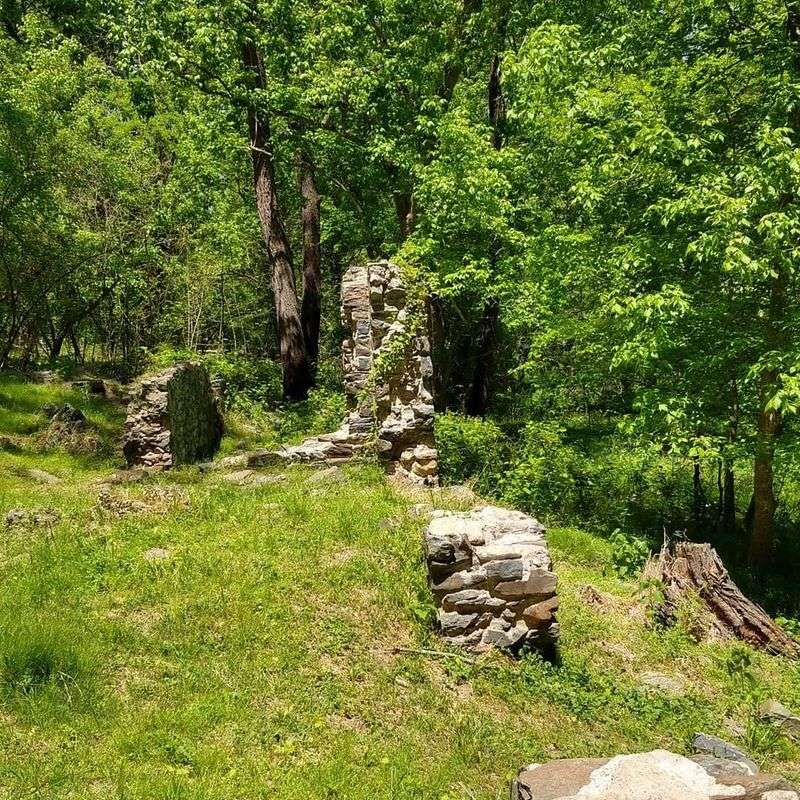
Great Falls Park is famous for its thundering waterfalls and scenic overlooks, but most people walk right past one of its most dramatic secrets. Tucked among the trees are the roofless stone wall ruins of Matildaville, a town that had enormous ambitions and a spectacular fall from grace.
Henry “Light Horse Harry” Lee founded Matildaville in the late 18th century as a support hub for workers constructing George Washington’s Patowmack Canal. The dream was grand: a major trade route linking the Potomac River to the interior of the country, with Matildaville serving as its beating heart.
At its height, the town had substantial homes, inns, and blacksmith shops buzzing with activity.
Washington’s canal vision never delivered on its enormous promise. Newer, more efficient transportation methods overtook the canal before it could truly establish itself, and without the economic engine of canal traffic, Matildaville had no reason to exist.
Residents drifted away to find work elsewhere, and the forest slowly absorbed everything they left behind.
Standing among the ruins today is a quietly eerie experience. The stone walls are still impressively solid, which somehow makes the emptiness inside them feel more dramatic.
You can almost picture the stonemasons who built these walls, never imagining their work would outlast the entire community by centuries.
Great Falls Park is located at 9200 Old Dominion Drive, McLean, Virginia. The Matildaville ruins are accessible via park trails, and they make for an unexpectedly moving detour from the waterfall overlooks everyone else is crowding around.
4. Lignite (Botetourt County)

Jefferson National Forest is breathtaking, vast, and green, but it holds a secret that most hikers never notice. Somewhere beneath the canopy in Botetourt County, the ghost of Lignite lies buried under decades of forest regrowth, its former streets and company houses reduced to scattered stone foundations and lonely chimneys.
Lignite existed for one reason: coal. Specifically, it was built to extract lignite, a low-grade form of coal that burns less efficiently than the harder varieties but was still worth mining when demand was high.
The company that operated here built everything a working community needed, housing, stores, infrastructure, and the kind of industrial machinery that made the surrounding hills roar with activity.
When the mines became economically unviable, the entire rationale for Lignite’s existence evaporated overnight. Workers and families scattered, taking what they could carry and leaving the rest to the forest.
The Jefferson National Forest then moved in like a slow, patient landlord reclaiming unpaid rent.
What makes Lignite particularly eerie is how completely it vanished. You could walk through the area without realizing an entire community once stood there.
Only careful observation reveals the stone remnants that poke through the leaf litter, hinting at kitchens, living rooms, and front porches where children once played.
Lignite is located within Jefferson National Forest in Botetourt County, Virginia. It’s the kind of place that rewards those willing to look past the obvious beauty of the forest and ask what the trees might be hiding underneath all that green.
5. Union Level (Mecklenburg County)
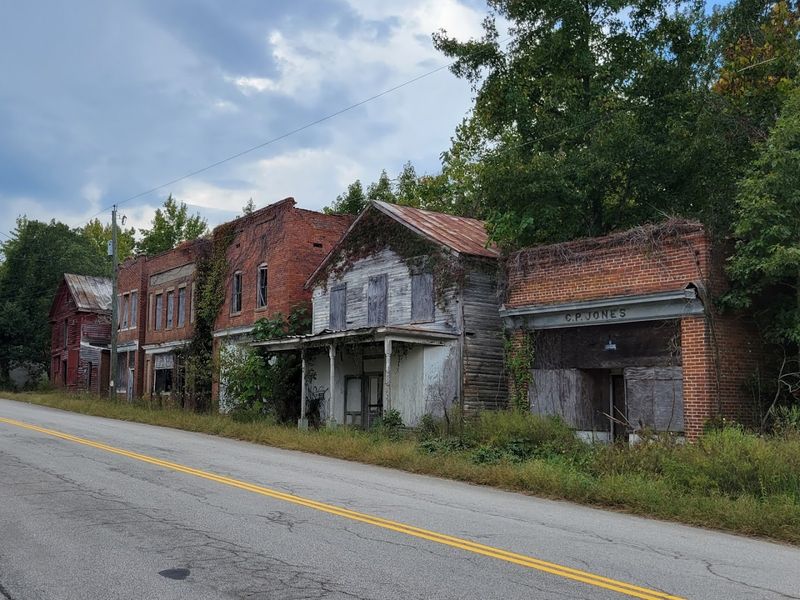
Pull off the main road in southern Virginia’s Mecklenburg County and you might stumble across something that feels like a movie set for a story nobody finished telling. Union Level is one of those places where time didn’t just slow down; it stopped cold and walked away.
Established in the 1830s, Union Level grew into a respectable stop along the horse and carriage routes of early Virginia. Tobacco agriculture fueled its economy, and when the railroad arrived, it looked like the town had secured its future.
Storefronts, businesses, and a church anchored a community that had every reason to believe it would keep growing.
The railroad’s eventual abandonment and the crushing weight of the Great Depression dismantled Union Level piece by piece. Businesses shuttered, families relocated, and the energy that once made this a genuine hub of commerce simply drained away.
What remained were the physical structures themselves, standing along the country road like witnesses to their own abandonment.
Today, you can still see remnants of storefronts, old buildings, and the church lining the road, which gives Union Level an almost theatrical quality. It looks inhabited enough to feel creepy but empty enough to feel deeply sad.
Worth noting for curious explorers: the remaining buildings sit on private property, and local law enforcement actively monitors the area because residents don’t appreciate uninvited curiosity seekers.
Union Level is located in Mecklenburg County, Virginia. Respect the boundaries, admire from the road, and let the atmosphere do its work without trespassing on someone else’s history.
6. Henricu (Chesterfield County)
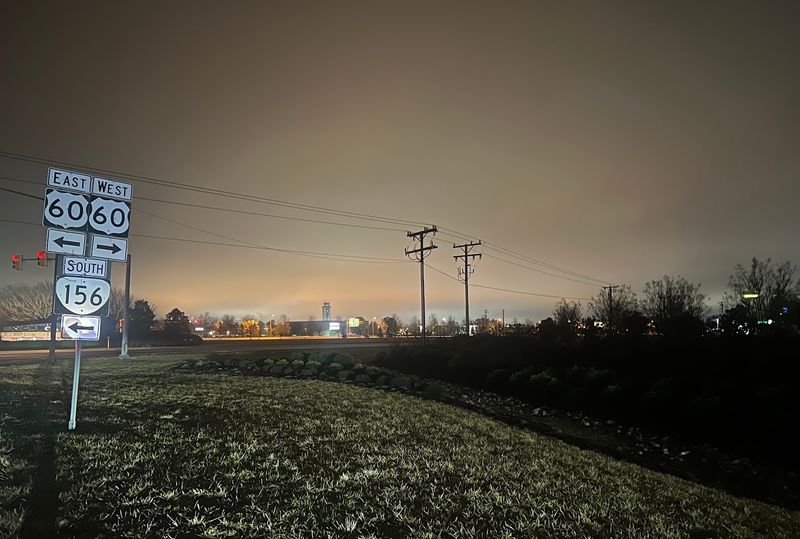
Imagine a town so promising that it was being groomed to outshine Jamestown as Virginia’s most important settlement. That was Henricus in 1611, a place of genuine ambition planted on the banks of the James River, bristling with firsts: the first hospital, the first church, the earliest seeds of English colonial education in America.
Founded by Sir Thomas Dale, Henricus was built with military precision and enormous expectations. The Powhatan Confederacy had different plans.
In 1622, a massive coordinated attack killed nearly all of Henricus’s inhabitants in a single devastating blow. The settlement never recovered.
Within years, the town that was supposed to define colonial Virginia had effectively ceased to exist.
What’s particularly haunting about Henricus is the speed of its erasure. This wasn’t a slow economic decline or a gradual population drift.
It was a community wiped out almost completely in one catastrophic moment, leaving behind only faint traces of defensive trenches in the earth.
Today, Henricus Historical Park preserves the site and offers reconstructed colonial structures that help visitors visualize what was lost. The park does a thoughtful job of presenting the full complexity of this history, including the perspectives of the Powhatan people whose land this was long before any colonists arrived.
Henricus Historical Park is located at 251 Henricus Park Road, Chester, Virginia, in Chesterfield County. Walking those grounds knowing what happened there carries a weight that no guidebook can fully prepare you for, and that’s precisely what makes it unforgettable.
7. Ca Ira (Cumberland County)
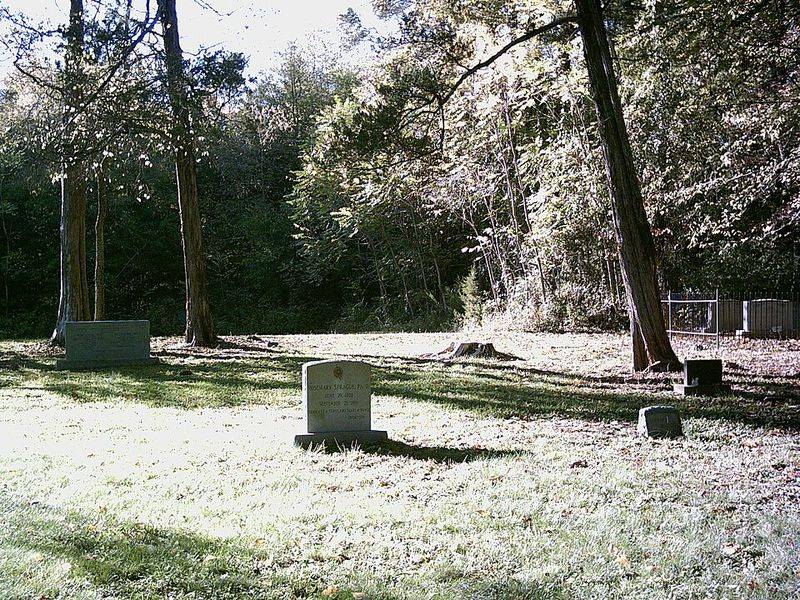
Named with a phrase borrowed from the French Revolution meaning “it will work out,” Ca Ira is one of Virginia’s most poetically named ghost towns. Unfortunately, things did not ultimately work out for this once-lively Cumberland County village, and the contrast between that hopeful name and its silent present is quietly heartbreaking.
Founded in 1796, Ca Ira started as a modest agricultural community. Everything changed when the Willis River Canal opened in 1825, connecting the town to the tobacco trade and transforming it into a genuinely bustling village.
At its most vibrant, Ca Ira had roughly 40 homes, a Masonic Hall, a mill, stores, taverns, and tobacco warehouses all operating at once. Grace Episcopal Church, which opened its doors in 1843, served as the community’s spiritual and social anchor.
The Civil War shattered the economic foundation that Ca Ira was built on. The end of the plantation system disrupted tobacco production so completely that the town’s commercial logic collapsed.
By the late 19th century, most residents had left, and Ca Ira faded from a thriving village into an overgrown memory.
Grace Episcopal Church still stands today, remarkably preserved compared to the rest of the vanished town. It functions as a kind of solitary monument to everything Ca Ira once was, surrounded by land that gives almost no indication of the community that used to surround it.
Ca Ira is located in Cumberland County, Virginia. The church and surrounding area reward those who appreciate finding profound historical weight in quiet, unassuming places far from tourist crowds.
8. Carvins Cove (Roanoke and Botetourt Counties)
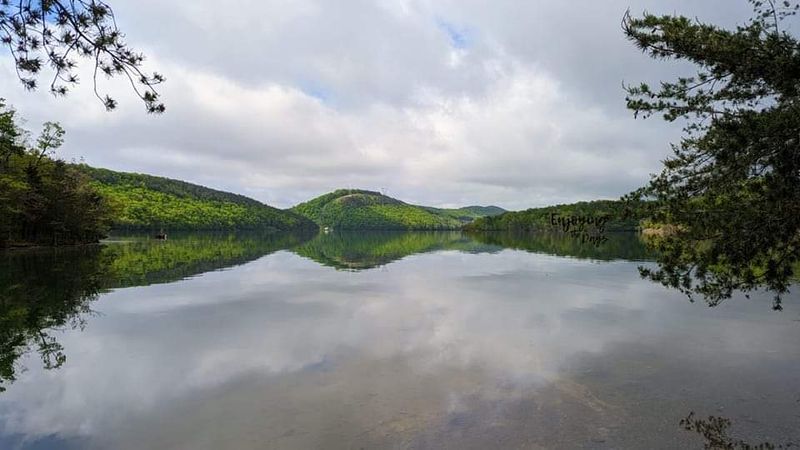
Most people know Carvins Cove as one of the most popular outdoor recreation areas in western Virginia, a gorgeous reservoir ringed by forested ridgelines where mountain bikers and hikers come to breathe deeply and forget their worries. What most of those people don’t realize is that they’re playing on top of a drowned community.
Before the reservoir was created, families lived and farmed in the valley that now lies beneath that glittering water. The decision to flood the area to create a water supply reservoir displaced those residents, erasing their homes, fields, and daily routines beneath a permanent lake.
It’s the kind of erasure that’s invisible by design, because the evidence sinks rather than crumbles.
During periods of drought when water levels drop significantly, remnants of the old community have been known to emerge from the shallows, ghostly hints of foundations and landscape features that remind observers the reservoir has a history beneath its recreational surface. Those moments of exposure feel genuinely eerie, like the past briefly surfacing to insist it hasn’t been completely forgotten.
The recreation area itself is spectacular, with miles of trails winding through dense forest and along the reservoir’s edge. The juxtaposition of that natural beauty with the knowledge of what lies beneath gives Carvins Cove a layered, complex atmosphere that most outdoor destinations simply don’t have.
Carvins Cove Natural Reserve is located near Roanoke, Virginia, straddling Roanoke and Botetourt Counties. It’s a place where recreation and remembrance coexist in unexpectedly moving ways.
9. Pamplin (Appomattox County)
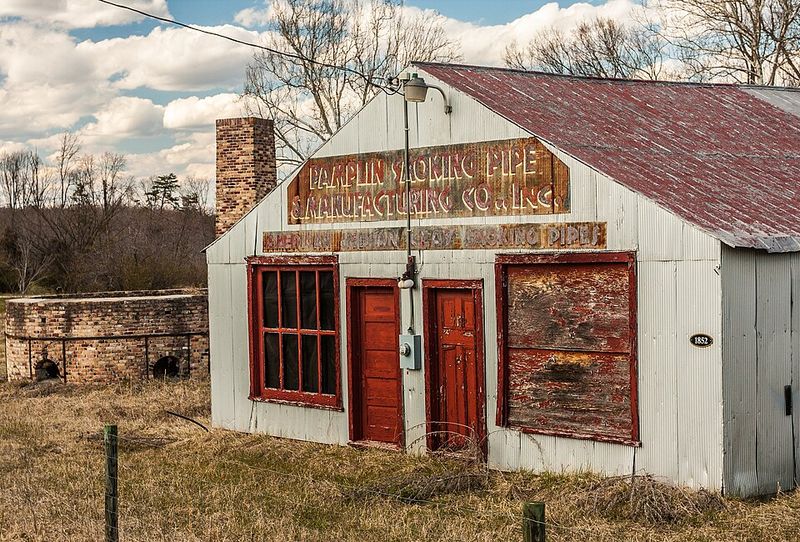
Pamplin sits in Appomattox County like a photograph that someone forgot to update. The buildings are still there, the street grid still makes sense, and yet the energy that should animate a town this size simply isn’t present.
It’s one of Virginia’s most visually complete ghost towns, which somehow makes it feel lonelier than the ones that have fully crumbled.
The town built its identity around the pipe manufacturing industry, and for a significant stretch of time, that industry gave Pamplin genuine economic vitality. Workers had steady employment, businesses had customers, and the town had reason to grow.
When the manufacturing operations declined and eventually ceased, Pamplin’s economic engine went with them, and the ripple effects were devastating.
What makes Pamplin particularly fascinating from a historical standpoint is its proximity to Appomattox Court House, where the Civil War effectively ended. The entire region carries an enormous weight of American history, and Pamplin exists within that atmosphere while telling its own separate story of industrial rise and quiet collapse.
Walking the main street today, you encounter faded storefronts, brick buildings with darkened windows, and lots that have surrendered to weeds and time. It doesn’t feel dangerous or dramatic; it feels melancholy in the most human way possible.
A town that worked hard, built something real, and then watched it slip away.
Pamplin is located in Appomattox County, Virginia. It’s the kind of place that makes you want to sit quietly for a moment and acknowledge that every abandoned building was once somebody’s entire world.
