Amsterdam is an eco-friendly city by necessity — and invention. It was founded in 1275 behind a dam on the Amstel River and grew on land reclaimed from the water. Home to the Dutch East India Company (VOC), Amsterdam later became one of the world’s most successful trading ports by taming the surrounding rivers with canals.
Respect for nature is ingrained in the Dutch lifestyle. Winter cold is managed with well-insulated interiors and fireplaces. Watersports and boating make hot summers tolerable. Amsterdam’s bike culture is world famous — as much for its eco-friendliness as for intimidating pedestrians. There’s also a variety of green public transport, from trams to subways to electric canal boats. Access it easily with the top-value iAmsterdam Card valid for museums and transport. Parks and gardens abound, refreshing the air and cooling the streets.
Why is Amsterdam so eco-friendly?
Amsterdam has been a progressive city since its founding 750 years ago. Immigrants from diverse backgrounds and cultures contributed to the city’s constant growth. They conserved resources, building wealth through ingenuity and commerce.
This conservation ethos, paired with constant environmental monitoring, keeps Amsterdam sustainable today. The remarkable Delta Works — five storm surge barriers, two sluice complexes, and six dams built in the 1960s — protects the Netherlands from storm surges. No wonder the city is a model for sustainable travel today.
The magical canals of Amsterdam
During the Dutch Golden Age, Amsterdam planned to expand with a canal district.
In sequence, the Herengracht, Prinsengracht, and Keizergracht (gracht means canal) were carved in concentric arcs within the Singelgracht, the city’s medieval moat. As the city quadrupled in size, commerce flourished. The canals added circulating water that improved sanitation and living conditions. In 2010, UNESCO designated the comprehensive 17th-century city plan — the first of its kind — a World Heritage site.
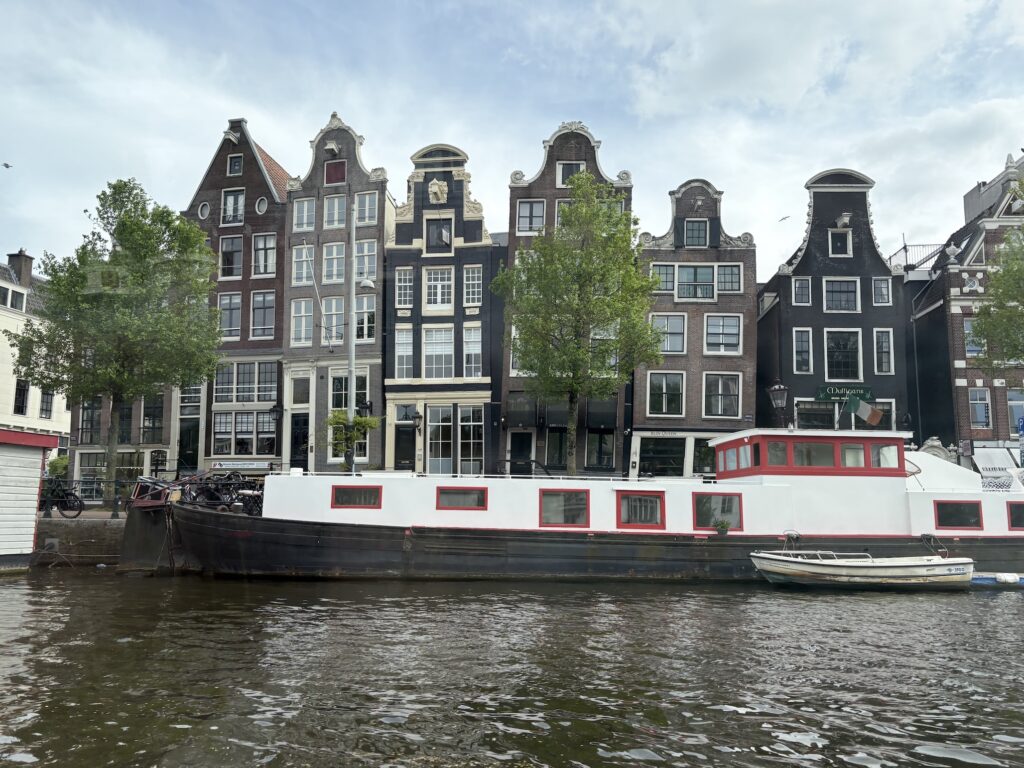
The quarter of the city’s canals that survived landfill are still essential for managing flooding. Locks are closed to flush them with water from the IJsselmeer. Cleaning boats keep them plastic-free for swimmers and paddleboarders, and fish and birdlife have returned to the city center. Houseboats once used by itinerant traders now house the wealthy.
Learn more at the Canal House Museum, on a canal boat tour, or by stopping at the famous “Dancing Houses,” which tilt and sink on soggy foundations. Canal wall repair — the city’s current green infrastructure project — aims to prevent that from happening in the future.
Amsterdam’s bicycle culture makes it green
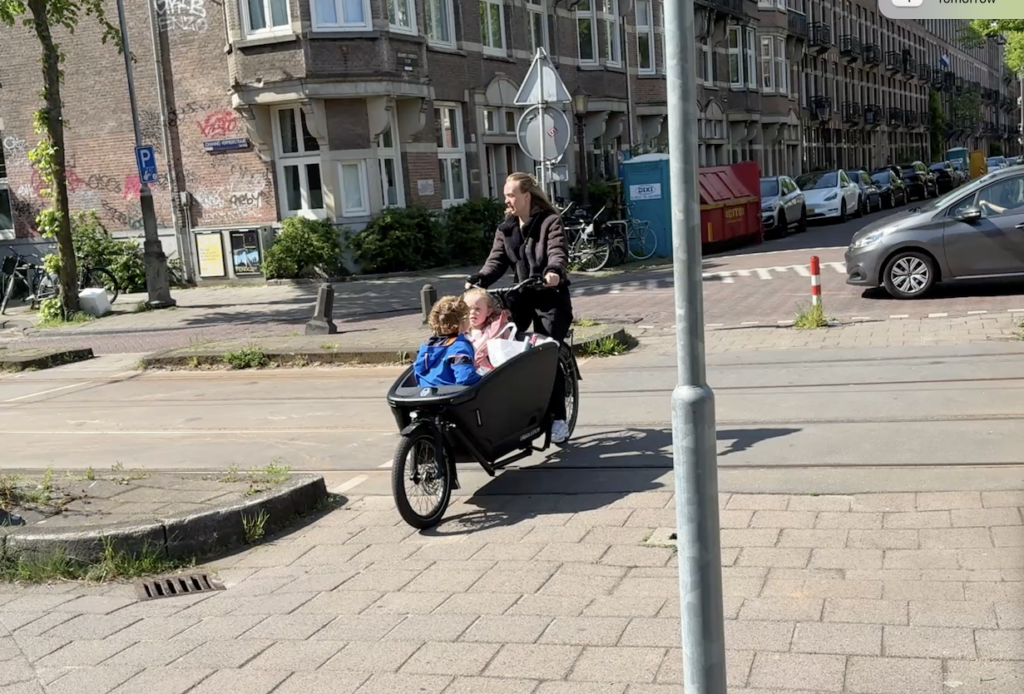
Start your sustainable travels with OV-fiets public bikes to understand how much locals have reduced their reliance on cars. It wasn’t always this way.
Bicycles became popular on Amsterdam’s flat city streets in the 1920s, when mass production made bikes affordable. By the 1950s, however, prosperity meant owning an automobile, and car traffic clogged Amsterdam’s narrow cobblestone lanes.
After a series of traffic casualties involving children in the 1970s, the government reversed course. Urban sustainability demanded wide, well-marked bike lanes — and the city has never looked back.
Amsterdam experiments in the circular economy
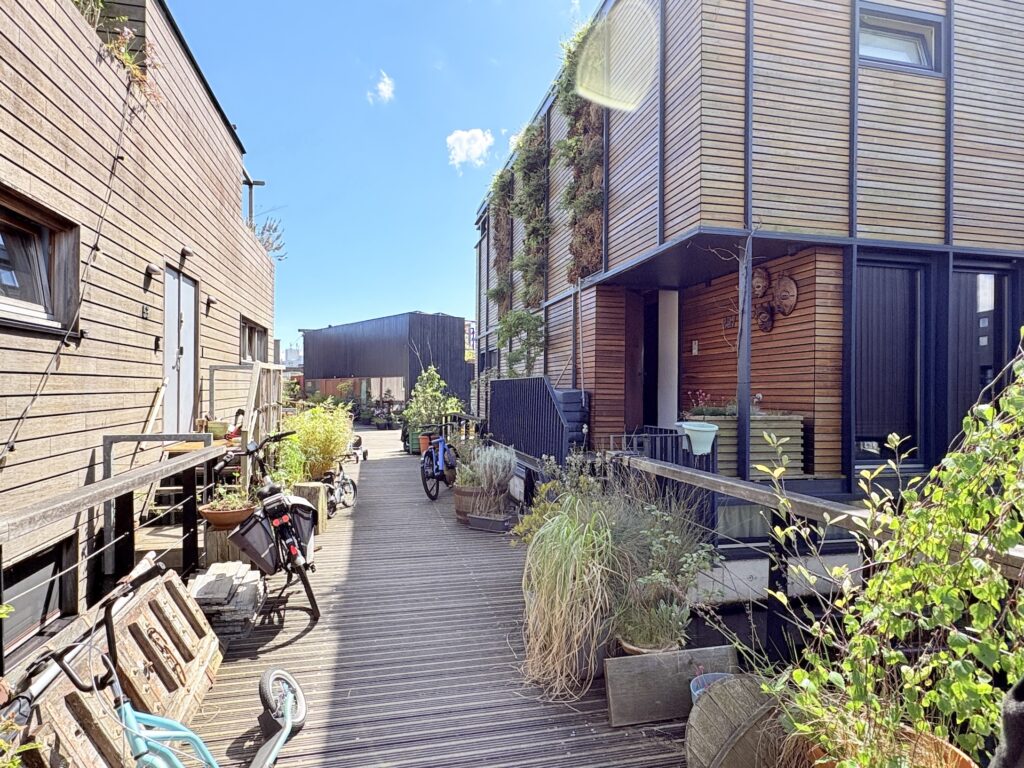
As Amsterdam grew more expensive in the 21st century, young people turned to cheaper outlying neighborhoods to settle down. Buiksloterham, an industrial area in Amsterdam-Noord across the River IJ from the historic district, is one of them. This innovative community is accessible by public bus from Centraal Station, or by ferry and bike.
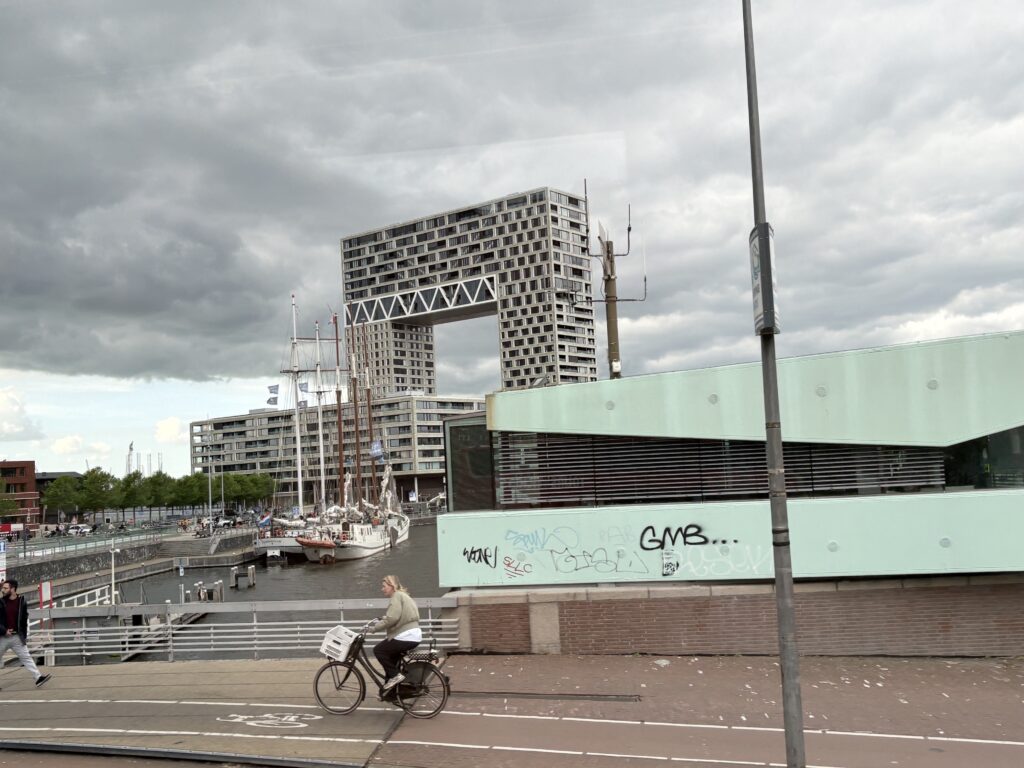
You’ll recognize it by the nearby thrift shops, graffitied auto mechanic shops, small offices, and ongoing construction. A visually striking mix of affordable and luxury apartments rises on all sides. Warehouses, former shipyards, and factories on low-lying polder (land reclaimed by artificial drainage) have been converted into dining and entertainment venues that complement the residences.
Although several progressive environmental projects have launched since 2012, designers aim to have the neighborhood “complete” by 2034. When finished, an estimated 6,500 people will live there, in a surprising variety of spaces that will also accommodate 8,000 commuters.
We toured Schoonschip and De Ceuvel (watch the video here), two pioneering communities that use conservation to achieve self-sustainability. By carefully managing resources in a use-and-reuse circular economy, they strive to exist off the Amsterdam grid.
Families keep a clean ship at Schoonschip
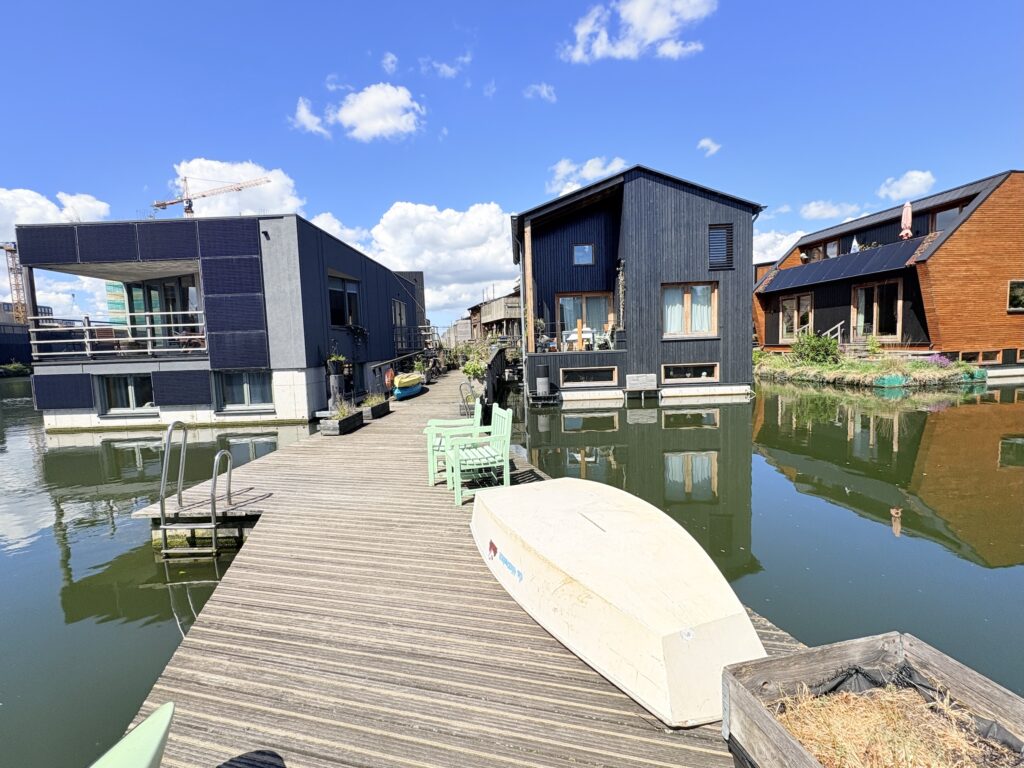
At Schoonschip, 46 households live on 30 custom arks (houseboats) along the Johan van Hasseltkanaal. Their collective vision was a waterfront community that used electricity efficiently.
A smart grid now augments solar energy stored in underwater batteries with power from the national grid. Instead of gas, aquathermal heat pumps draw heat from the canal water and combine it with passive solar energy to heat hot water. Families share electric vehicles, cargo bikes, and e-bikes. Green roofs collect rainwater; arks collect greywater from showers and sinks for reuse. In the future, Schoonschip residents hope to collect and process blackwater as well.
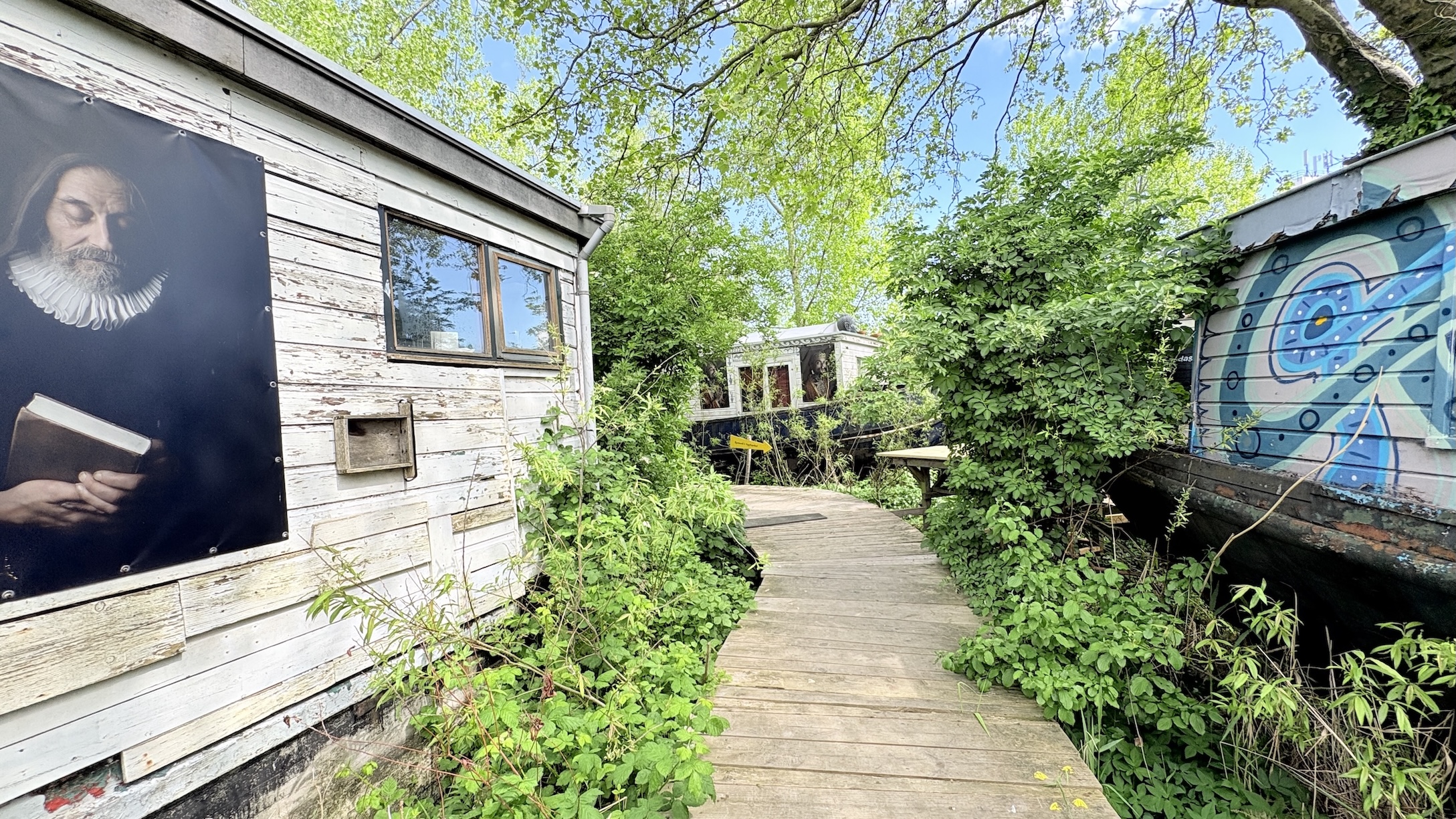
Stroll the boardwalk to see the variety of single- and two-family houseboats, their orientation toward one another, and the communal walking and garden spaces. Children’s wagons, preening cats, pots of scented flowers, and welcoming benches invite guests to relax and take in the unusually clean, quiet environment where lives are intertwined. This is the future.
Dine at De Ceuvel for vegan fare and sustainability lessons
De Ceuvel is another Noord compound established by utopian environmentalists. Several of the same architects and builders worked on it, including space&matter and Metabolic.
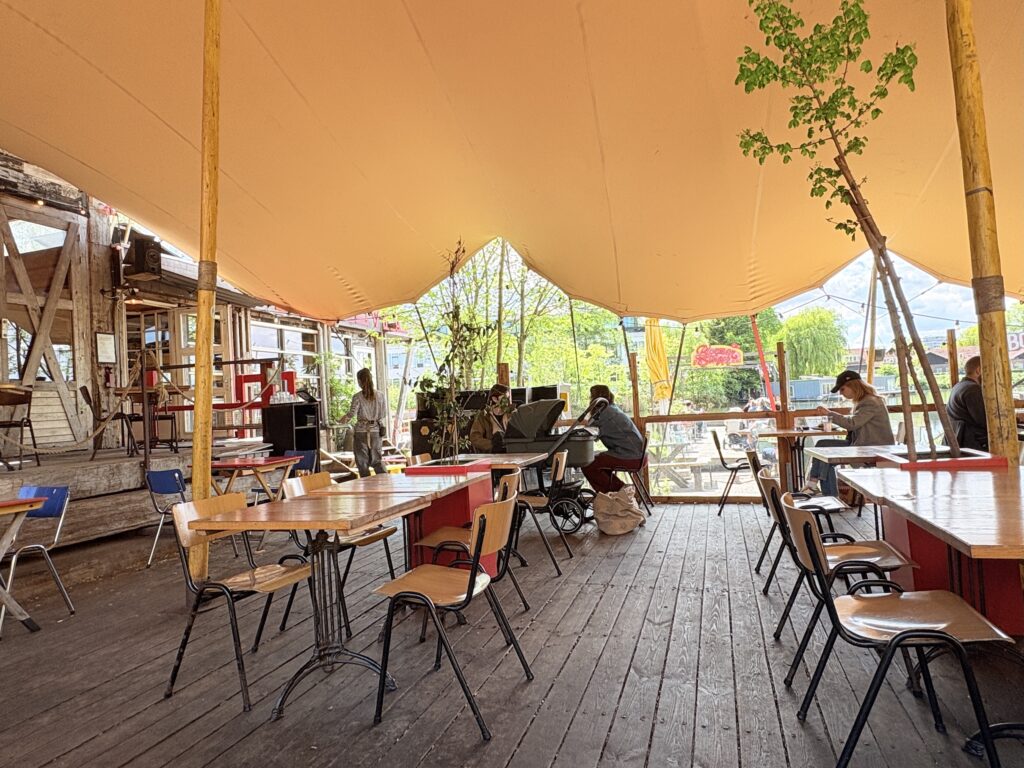
De Ceuvel describes itself as “a circular hub for creative and social entrepreneurs on a former shipyard,” without mentioning that its founders began with polluted land, ruined houseboats, and a dream. The soil was cleaned through phytoremediation (using rotating plantings to draw out contaminants), and the houseboats were rebuilt with recycled materials into flexible spaces. The village now consists of a cafe, co-working spaces, offices, a floating hotel, and more, all connected by a winding boardwalk with signposts describing the venture.
Several working houseboats make up a floating heritage hotel, Asile Flottant, named for a boat that housed the poor, designed by French architect Le Corbusier in the 1920s. His description of the original — an epicurean shelter for the modern-day traveler in search of an extraordinary journey — still inspires the community to continuously improve their purposeful haven.
Places to dine sustainably from local, organic gardens
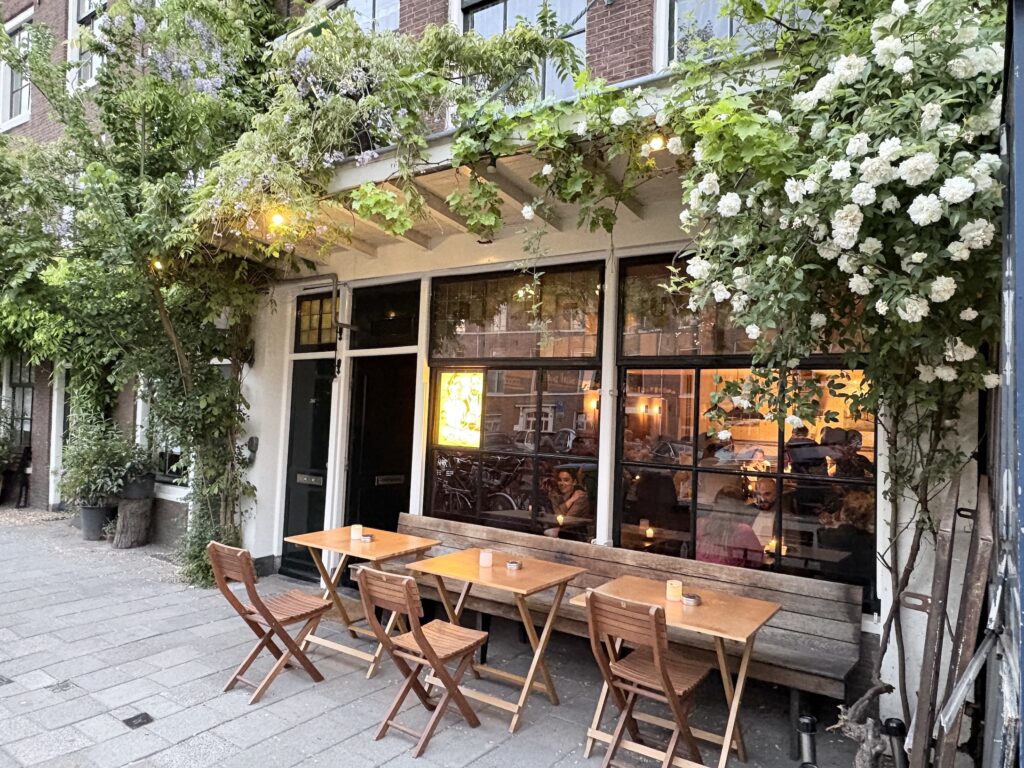
Dining green in Amsterdam is easier than in many cities. The Netherlands devotes more than half the land to horticulture (think tulips) and agriculture. That’s why locally sourced, organic products are widely available and well priced.
Most cafes and restaurants are owner or chef-operated, with strong neighborhood roots. The tourism office even has a section devoted to “Sustainable and Low Waste Dining” for visitors. Whether ethnic restaurants committed to traditional food or innovative chef-driven concepts appeal, expect a fine meal. Even fast-casual spots serve locally sourced proteins and produce. Throughout the Netherlands, to-go items are typically packaged in compostable cardboard with bamboo utensils.
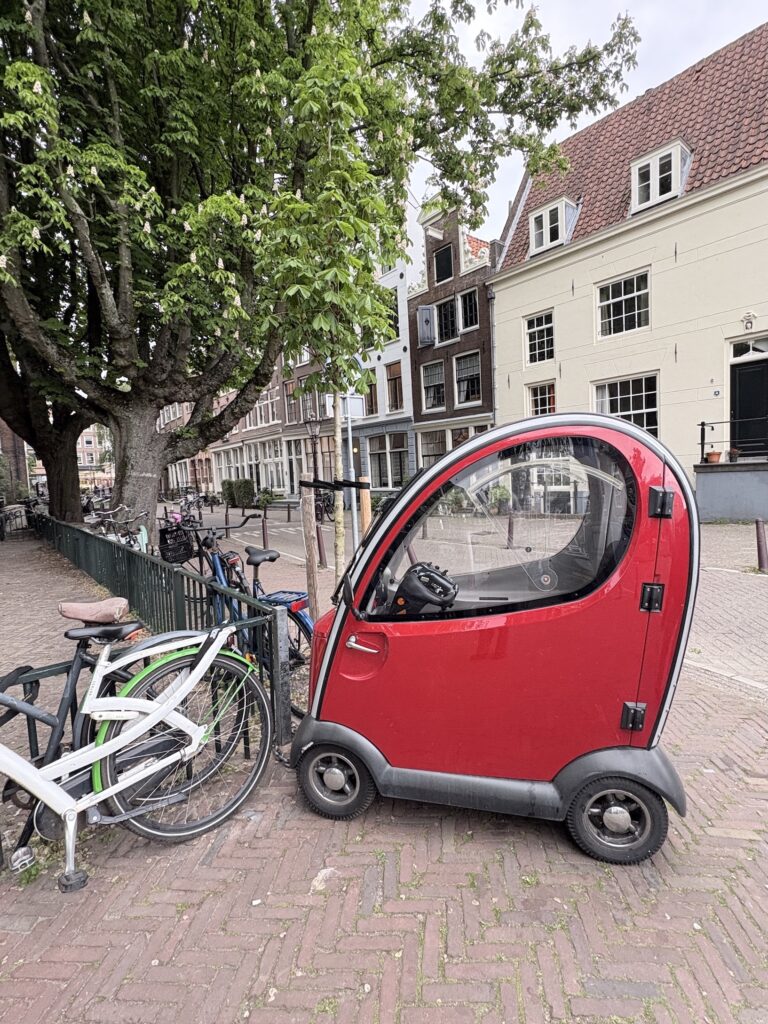
A few favorites serving eco-tourism with your meal
Cafe De Ceuvel is one of many organic spots in the city. The menu, all vegan, is sustainably prepared (no gas is used in cooking. Toilets are dry compost. The cafe also prioritizes affordability, serving healthy meals that everyone can afford.
Pllek was built from recycled materials on a stunning waterfront location nearby. Go for the weekend DJ events, movie screenings, sustainably sourced food, and laid-back ambiance.
Kamer, in the Jordaan, is a small, intimate restaurant set in a historic dining room featuring old wood and painted tiles. Sample unfiltered wines, creative cocktails, and a limited menu of shared plates from a team built to sustain and thrive.
Or take a brewery tour and sample traditionally brewed and innovative beer flavors at one of Amsterdam’s first brewpubs. The De Gooyer Windmill, built in 1725 to mill flour, makes the small wooden Brouwerij ‘t IJ (IJ Brewery) next door stand out from other canalside venues.
Support small farmers at Amsterdam’s greenmarkets, and shop for upcycled clothes and goods at the popular De Pijp and Waterlooplein flea markets.
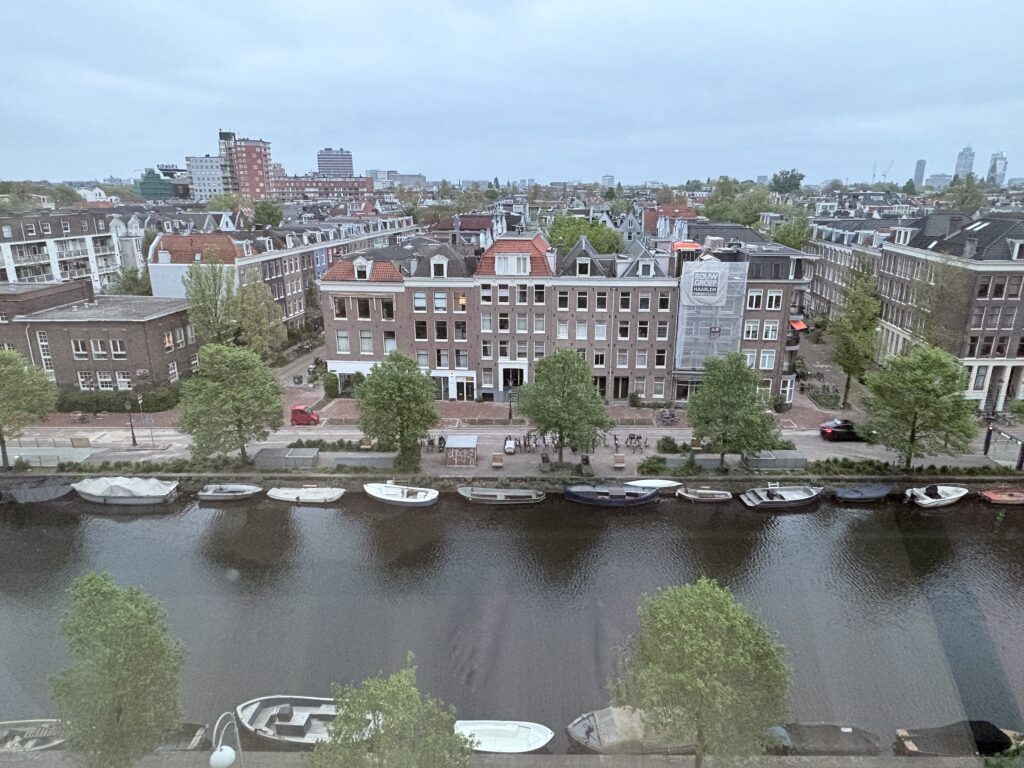
A hotel for sustainable travelers in Amsterdam
I recently stayed at the contemporary Avani Museum Quarter Amsterdam, which received a Green Key certification for its energy conservation (100% renewables), waste management, and social responsibility practices. The building was originally an apartment complex, making guestrooms among the largest in the city. (Three-person and family rooms are also available; watch our video here). Neighboring residences share the beautiful internal courtyard garden.
To maintain a sense of place, the Avani’s décor takes inspiration from abstract painter Piet Mondrian, whose work is on view at the nearby Stedelijk Museum Amsterdam. Forward-thinking, environmentally friendly public spaces include canal view lounges, a foosball game and social seating. General Manager Jens Lambrecht explained that the color palette used in the 2024 renovation came directly from the pastel facades of gabled Dutch houses across the canal.
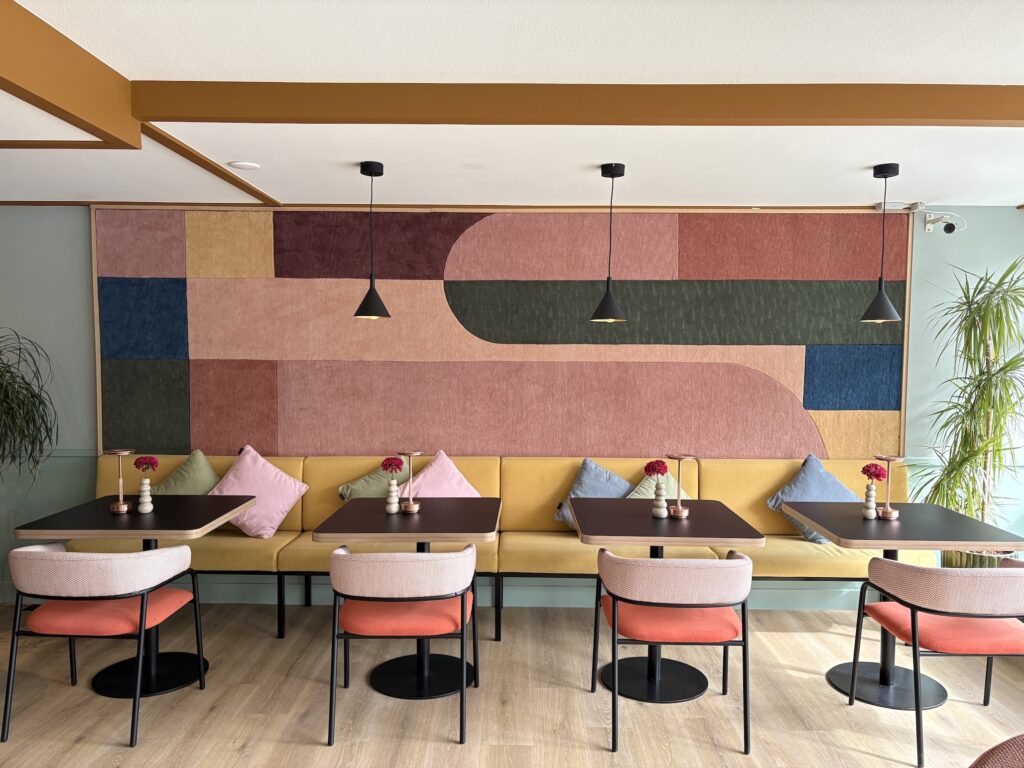
Efficiency and mindfulness in hotel design
The vibe is Dutch in spirit: hard-working, progressive, traditional — all qualities embodied by the Avani’s thoughtful staff, who meticulously run the front desk and hip bar. Yoga mats in each room encourage personal wellness and keep the 24/7 fitness room from getting crowded. Luxury Malin + Goetz toiletries are provided in large, refillable glass bottles. The lavish breakfast buffet includes eggs and all the sides, fruits, charcuterie, and Dutch classics like chocolate and fruit-flavored sprinkles for buttered toast. To avoid food waste, guests can also order freshly prepared, healthy choices. Favorites range from avocado toast to smoothies, omelets, and poffertjes (tiny Dutch pancakes).
The housekeeping team honors requests to reuse linens and towels. And while the seemingly eco-friendly wooden key cards look the part, they can’t actually be recycled, since they contain a microchip, copper wire, and a protective outer coating. Instead, the Avani cleans and reprograms them for the next guest.
Avani Experiences showcase Dutch culture seasonally. A Stroopwafel Workshop teaches kids ages 6 and up to make waffles so they can bake alongside their parents. The hotel also rents SUP boards for the canal and coordinates a Street Art Tour through the Jordaan neighborhood. Avani’s scavenger hunt encourages families to pay closer attention to what’s around them.

The horticulture industry supports the Dutch love of nature
Tulips are among the Netherlands’ top industries, generating over two billion dollars in exports. No showcase is better known than Keukenhof, the annual garden exhibition held for about 12 weeks each spring. More than seven million tulips and other bulbs are planted three layers deep to sustain blooms throughout the season. Gardeners remove spent bulbs as new flowers appear.
It’s interesting to learn that the region’s sandy soil retains enough moisture to make irrigation unnecessary. However, the flower industry is a monoculture that lacks the biodiversity needed for natural pest control and fertilizer. Chemicals used in production can harm the environment.
In contrast to Keukenhof, which is a seasonal showcase for breeders, the Amsterdam Botanical Gardens (Hortus Botanicus) focuses on plant conservation, biodiversity, and education.
Eco-minded travelers, however, shouldn’t skip the 6,000 acres of immaculate gardens at Keukenhof. The historical tour, informative pavilions, restaurants, maze, windmill, and playgrounds make the day trip well worthwhile.
And as eco-friendly as Amsterdammers are, they cherish their tulips.
