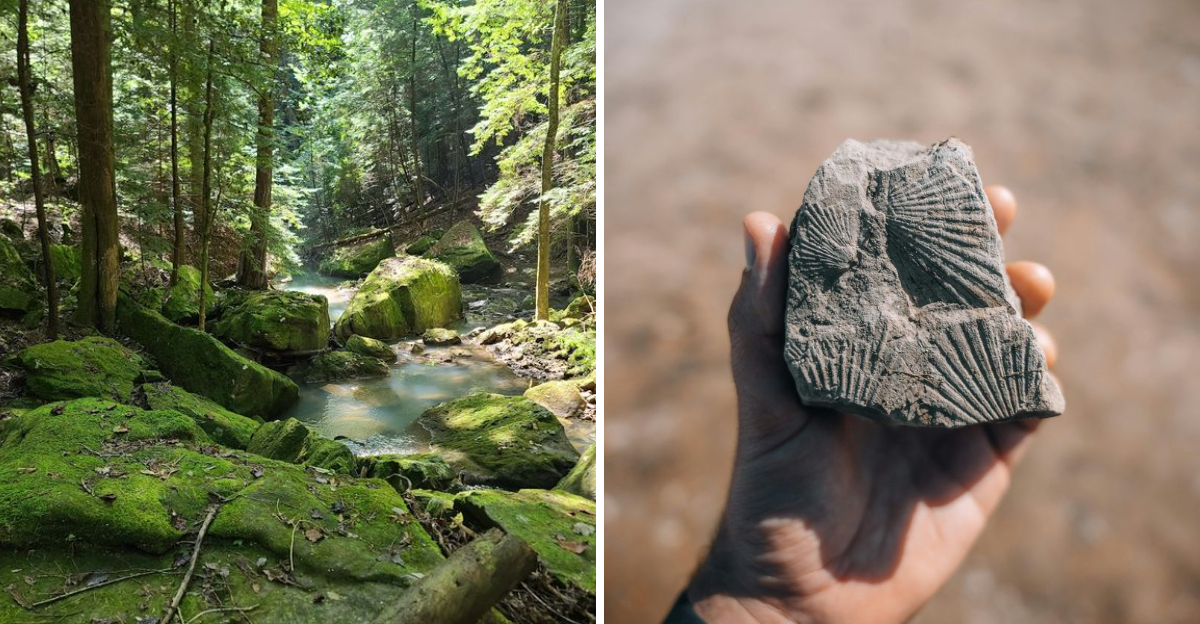
Most people think of Alabama as a place for Southern cooking and college football, but the state holds something far older and far more surprising. Deep in the hills of northwestern Alabama, a national forest sits on land that tells a story stretching back hundreds of millions of years.
The forest floor here is quietly rich with fossils from ancient swamp forests, long-vanished seas, and prehistoric life that once covered this entire region. In certain areas, visitors can still find imprints and remnants embedded in stone, offering a rare, tangible connection to Earth’s deep past.
If you have ever wanted to experience a landscape where geology and history feel almost alive underfoot, this is one of the few places in the country where that ancient world is still within reach.
The Forest Floor Is Literally Covered in 320-Million-Year-Old Fossils
Most fossil hunters expect to dig for hours before finding anything. At William B.
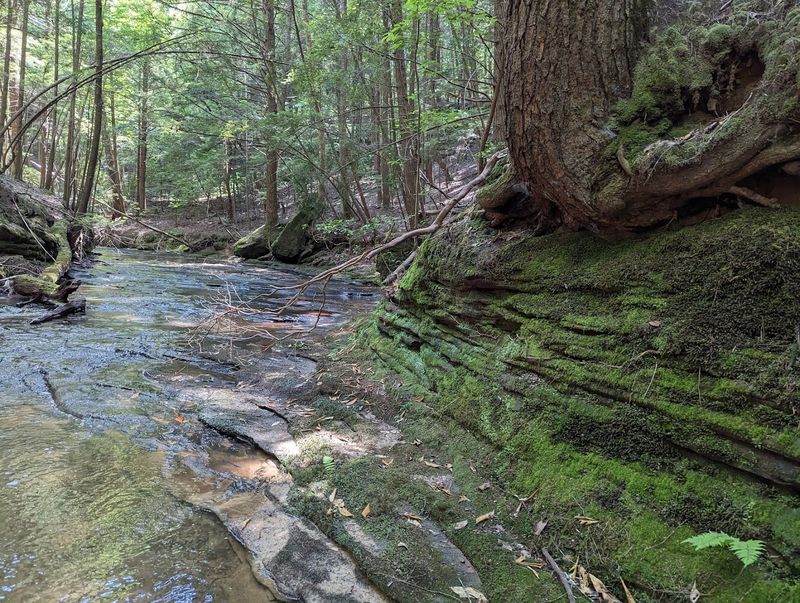
Bankhead National Forest, that is not how it works. Hikers regularly describe the ground as being littered with fossils, especially along creek beds and exposed limestone slabs.
The fossils here date back to the Pennsylvanian and Carboniferous Periods, roughly 298 to 323 million years ago. That means the rocks beneath your feet are older than the dinosaurs by a wide margin.
Ancient swamp forests once covered this part of Alabama, and the remains of those ecosystems are still pressed into the stone.
What makes this place feel like a scavenger hunt is how accessible the finds are. You do not need special equipment or a geology degree.
A sharp eye and a slow walk along a rocky streambed are often all it takes. Families with kids find this especially rewarding because discoveries happen fast.
Scale tree impressions, fern patterns, and plant stem casts show up in ordinary rocks that look plain at first glance. Once you start recognizing the shapes, it becomes hard to stop looking.
The forest at 1070 AL-33, Double Springs, AL 35553 is the starting point for exploring this remarkable geological treasure.
Marine Fossils From an Ancient Sea Hide in the Limestone Bluffs
Here is something that surprises most first-time visitors. Parts of northern Alabama were once covered by a shallow inland sea during the Mississippian Period, roughly 325 to 355 million years ago.
The limestone bluffs scattered throughout Bankhead National Forest preserve the remains of that ancient ocean floor.
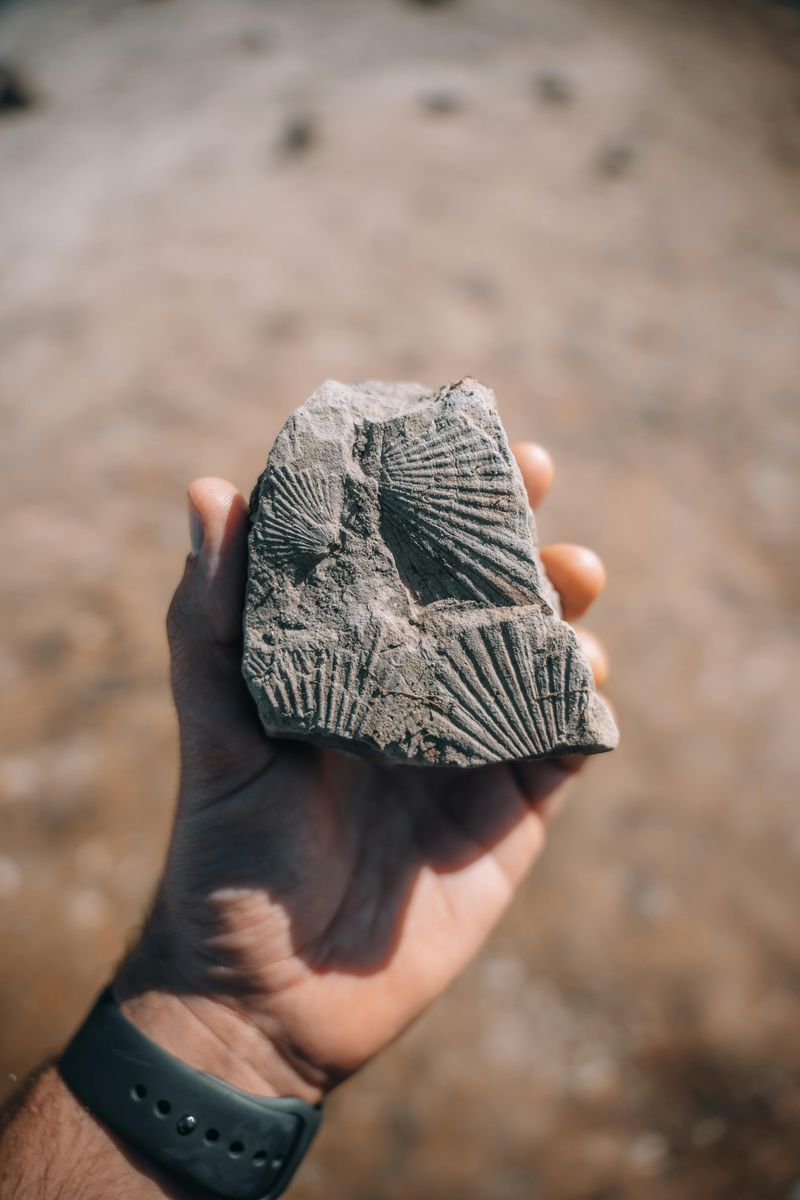
Brachiopods, bryozoans, crinoids, and blastoids are all documented in these formations. One especially interesting find is Archimedes, a corkscrew-shaped bryozoan that looks almost man-made when you first spot it.
Early shark teeth and trace fossils have also been found in the older Mississippian limestone layers throughout the region.
Finding marine fossils in a landlocked Alabama forest feels genuinely surreal. Holding a crinoid stem or a brachiopod shell while standing under a canopy of oak trees is the kind of experience that makes you rethink everything you thought you knew about the land beneath your feet.
The limestone bluffs themselves are dramatic and photogenic. Some rise sharply above creek beds, and the layered rock faces reveal millions of years of geological history stacked one on top of another.
Exploring these formations slowly and carefully is the best approach. Bring a field guide to marine invertebrate fossils if you want to identify what you find, because the variety here can be genuinely overwhelming for newcomers.
Ancient Plant Fossils Tell the Story of a Vanished Swamp World
Long before Alabama looked anything like it does today, the region was covered by a vast tropical swamp. Tree ferns grew up to 50 feet tall.
Giant scale trees called Lepidodendron towered over the landscape. The fossils left behind from that world are some of the most beautiful natural prints you will ever see.
Visitors to Bankhead commonly find Stigmaria, which are the fossilized root structures of ancient scale trees. Calamites, the segmented stems of giant horsetail plants, also appear frequently.
These impressions look almost like alien engravings pressed into flat stone, and they are genuinely stunning up close.
What is remarkable is how sharp the detail can be. Some specimens preserve individual leaf scars and bark textures with almost photographic clarity.
Running your finger along those ridges connects you to a world that existed before the first dinosaur ever walked the Earth.
Plant fossils from the Pennsylvanian Period are especially common near Thompson Creek Trail, where exposed sandstone and shale layers offer some of the best surfaces for finding specimens. The variety alone keeps explorers busy for hours.
You might find a fern frond in one rock and a scale tree root in the next. Each piece is a small window into a living forest that has not existed for hundreds of millions of years.
The Sipsey Fork Wilderness Adds Wild Beauty to Every Fossil Hunt
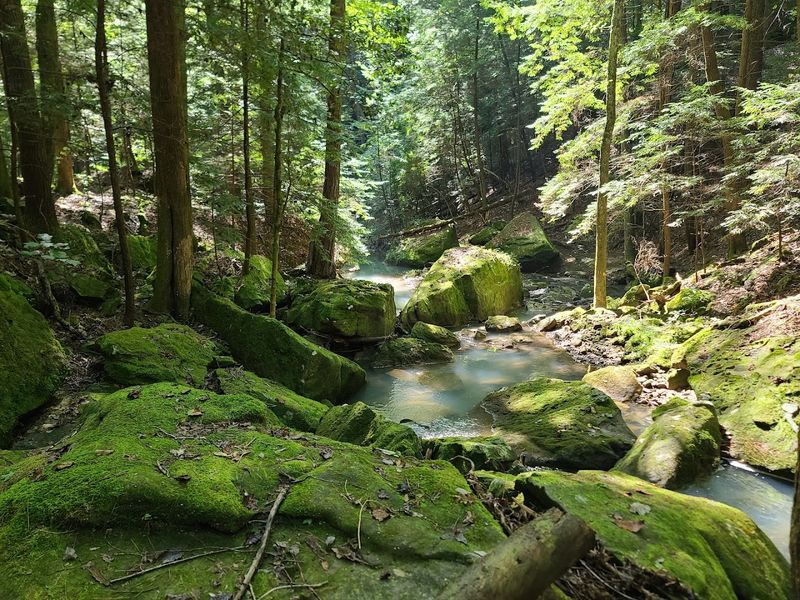
Fossil hunting in Bankhead is never just about the rocks. The landscape surrounding every trail and creek is genuinely breathtaking.
The Sipsey Fork, Alabama’s only designated National Wild and Scenic River, winds through the heart of the forest and sets the tone for the entire experience.
The river runs clear and shallow over rocky beds in many sections, making it easy to wade through and examine the streambed stones up close. Fossil hunters often find their best specimens right in or near the water, where erosion has exposed fresh rock surfaces.
The sound of moving water and the cool shade of the forest canopy make the whole experience feel unhurried and peaceful.
Sipsey Fork also marks the boundary of the Sipsey Wilderness, one of the most biologically diverse areas in the southeastern United States. Old-growth trees, rare wildflowers, and abundant wildlife share the space with those ancient fossils.
It is the kind of place where you might spot a great blue heron standing in the shallows while a 320-million-year-old plant fossil sits just inches from your boot.
Trails along the Sipsey Fork range from easy riverside walks to more challenging routes that require some navigation. Downloading a trail map before you arrive is strongly recommended, since cell service is limited once you get a few miles in.
The reward for being prepared is a wilderness experience that genuinely feels untouched.
Waterfalls and Geological Wonders Make Every Trail an Adventure
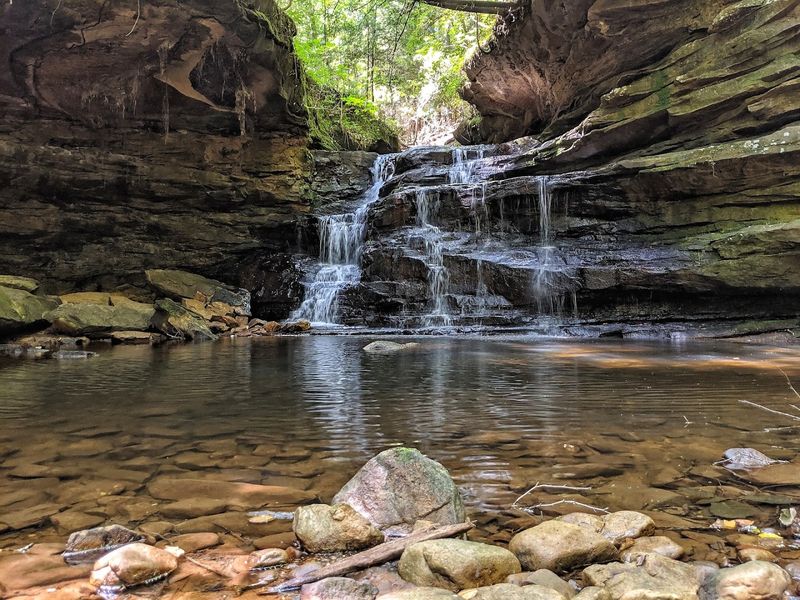
Bankhead National Forest earned the nickname “Land of a Thousand Waterfalls” for good reason. Dozens of cascades, some well-known and many still undiscovered by most visitors, are scattered throughout the 181,000-acre forest.
Each one sits within a geological landscape shaped by the same ancient forces that created the fossil record.
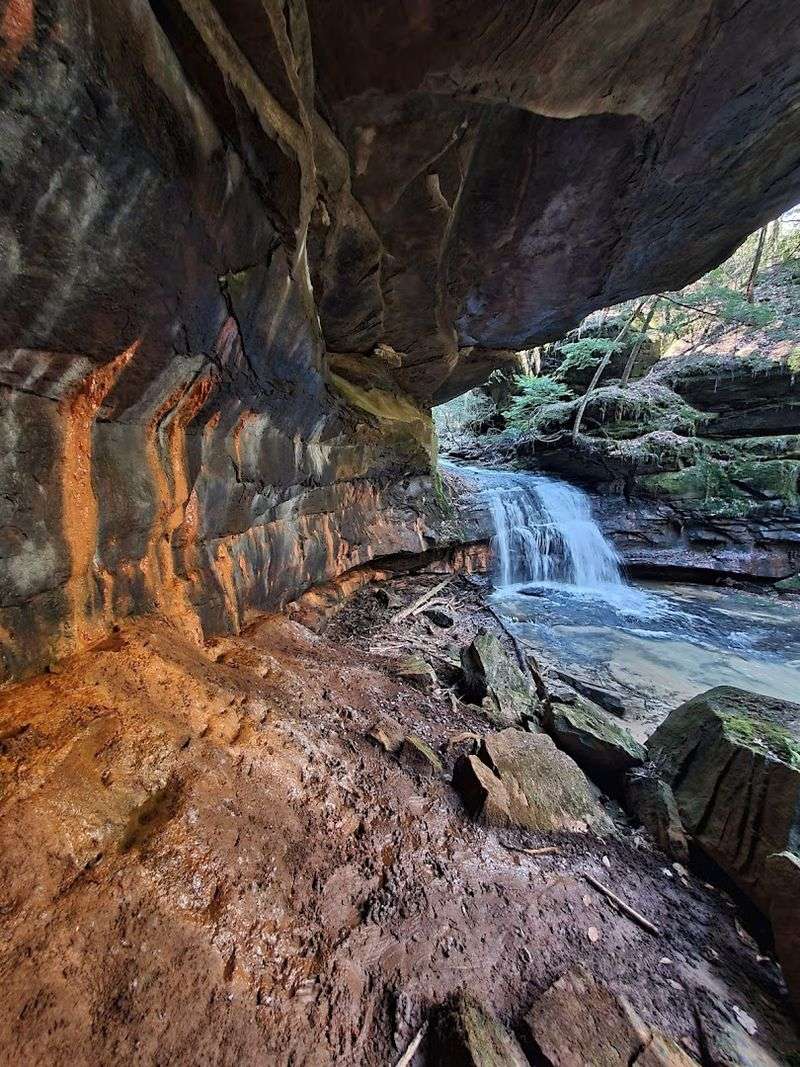
The waterfalls here tumble over limestone and sandstone formations that date back hundreds of millions of years. Looking at the rock face behind a waterfall is like reading a geology textbook written in stone.
The layers are visible, the colors shift from grey to tan to rust, and the textures change as you move from one geological period to the next.
Sougahoagdee Falls is one of the more accessible destinations, reachable via a scenic, four-mile round-trip hike along Brushy Creek. The trail winds through shaded forest and crosses several small streams before opening up to the falls.
It is manageable for most fitness levels and genuinely rewarding.
For those willing to push deeper into the wilderness, the more remote waterfalls offer solitude and scenery that feel almost otherworldly. Mossy rock overhangs, deep plunge pools, and ancient stone formations line the paths.
Combining a waterfall hike with a fossil scavenger hunt along the way turns a single outing into a full day of discovery. Few places in Alabama pack this much natural variety into one experience.
Thompson Creek Trail Is Ground Zero for Scale Tree Fossil Finds
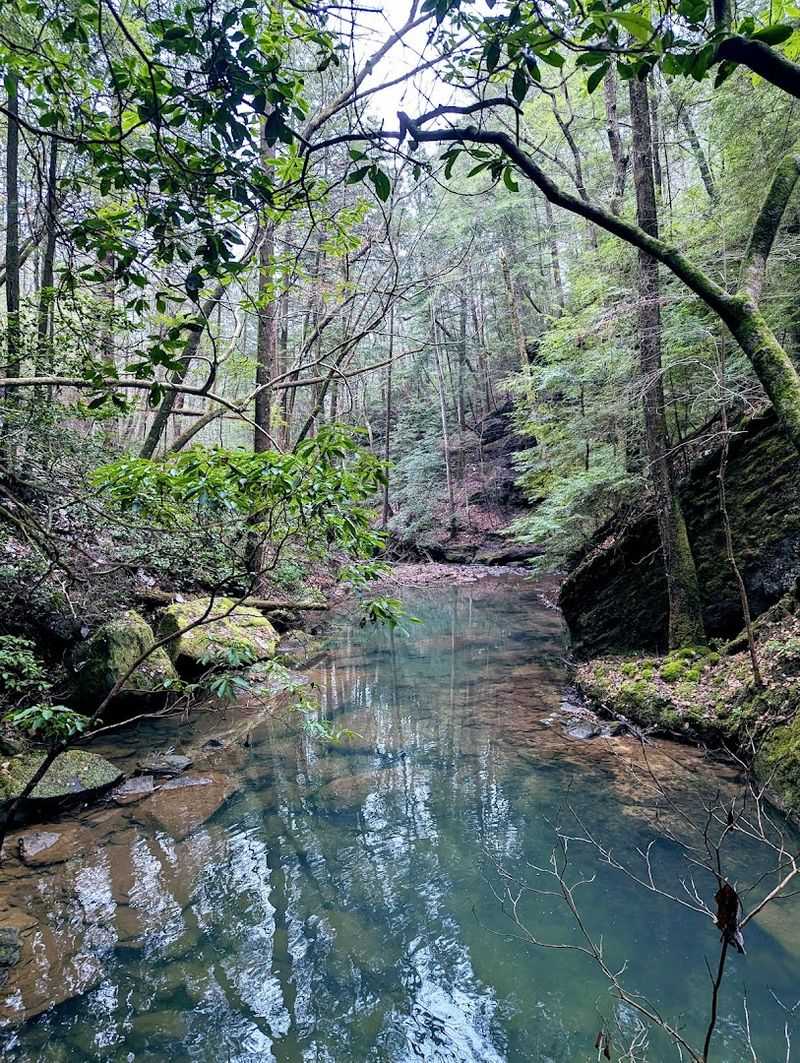
Among the many trails in Bankhead, Thompson Creek Trail stands out specifically for fossil hunters. The trail follows Thompson Creek through a landscape of exposed sandstone and shale, and scale tree fossils appear with remarkable frequency along the route.
This is one of those rare places where the geology and the trail system seem almost designed for discovery.
Lepidodendron fossils, the diamond-patterned bark impressions of ancient scale trees, are the headline find here. These trees grew up to 100 feet tall during the Pennsylvanian Period and dominated the swamp forests of ancient Alabama.
Finding their bark patterns pressed into a streamside rock is one of the most visually striking fossil experiences available anywhere in the state.
The trail itself is primitive and requires some navigation skill. Hikers who have explored it recommend downloading an offline map before setting out.
Cell service disappears quickly, and some trail junctions are not clearly marked. Going prepared makes the difference between a frustrating afternoon and an unforgettable one.
Bring water, sturdy shoes, and a small notebook for sketching or recording what you find. A hand lens or magnifying glass is also useful for examining fine fossil details up close.
The creek crossings along the route add a little adventure to the hike, especially after rain. Families with older children find the combination of trail exploration and fossil hunting genuinely engaging from start to finish.
The Forest Offers Camping, Fishing, and Full Family Adventures Beyond the Fossil Hunt
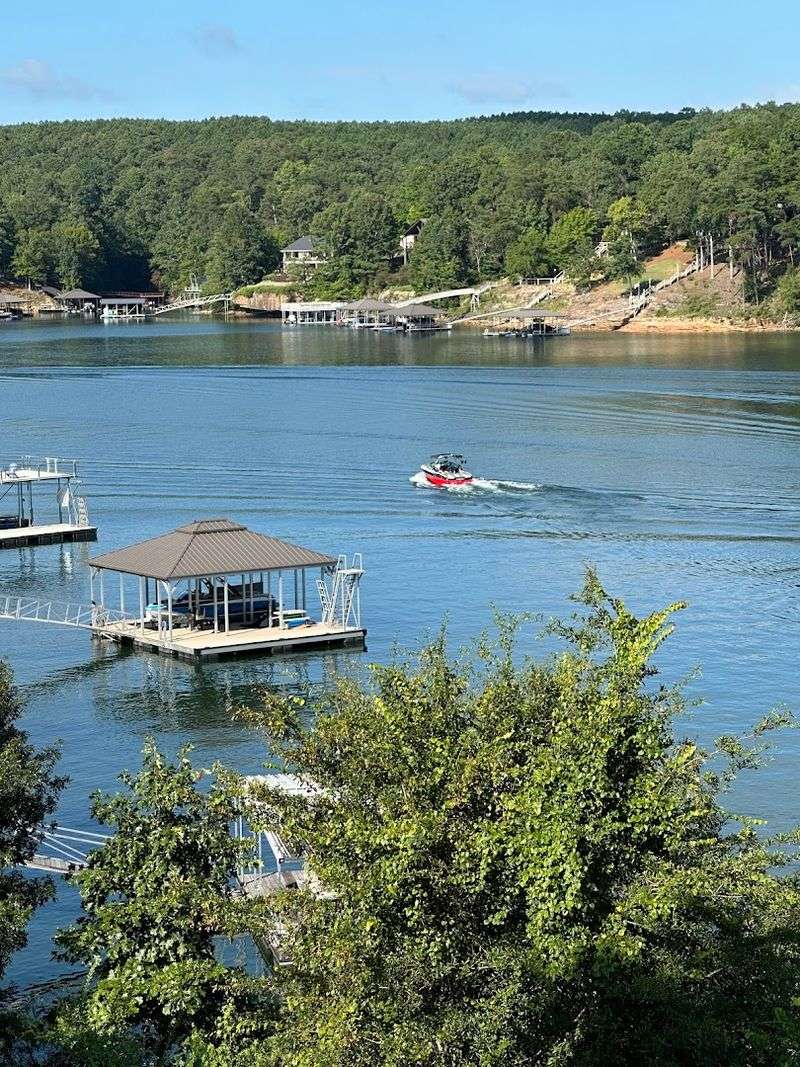
A fossil scavenger hunt is just one reason to spend a full weekend at Bankhead. The forest offers a range of outdoor activities that make it easy to plan a multi-day trip without ever running out of things to do.
Clear Creek Recreation Area is a standout destination within the forest, offering camping, swimming, boating, and fishing in one well-maintained location.
The campgrounds at Clear Creek include both primitive sites and RV-friendly spots with clean restroom facilities. Picnic areas, pavilions available for group rental, and a playground make it a genuinely family-oriented destination.
Even dogs are welcome, provided they stay on a leash and out of the designated swimming areas.
Fishing along the Sipsey Fork and the forest’s many creeks draws anglers throughout the season. The calm lake at Clear Creek is popular for kayaking and canoeing as well.
Spending a morning on the water and an afternoon hunting fossils along a nearby trail is a combination that is hard to beat.
Fall is a particularly beautiful time to visit. The forest puts on a vivid foliage display each October, and the cooler temperatures make hiking more comfortable.
Spring brings wildflowers and higher water levels in the creeks, which can reveal fresh fossil surfaces. No matter the season, Bankhead rewards visitors who come prepared and take their time exploring everything the forest has to offer.
