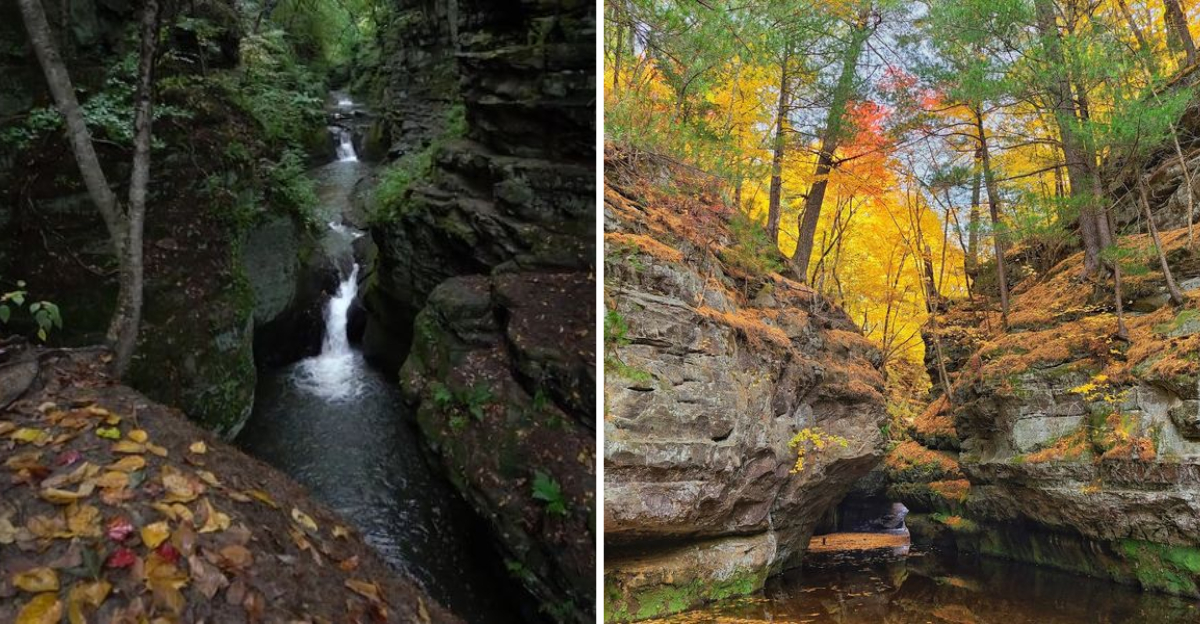
The trail is short, barely a walk at all. Then you turn a corner and the ground drops away.
A narrow gorge carved into sandstone, with waterfalls spilling into pools so green they look fake. Moss hangs from every wall. The air gets cold fast.
You stand there at the edge, staring down, and realize Wisconsin has been hiding something special. I went on a hot June afternoon and left shivering. The water is too cold to swim, but you will want to try anyway.
Worth every second.
The Gorge That Glaciers Built
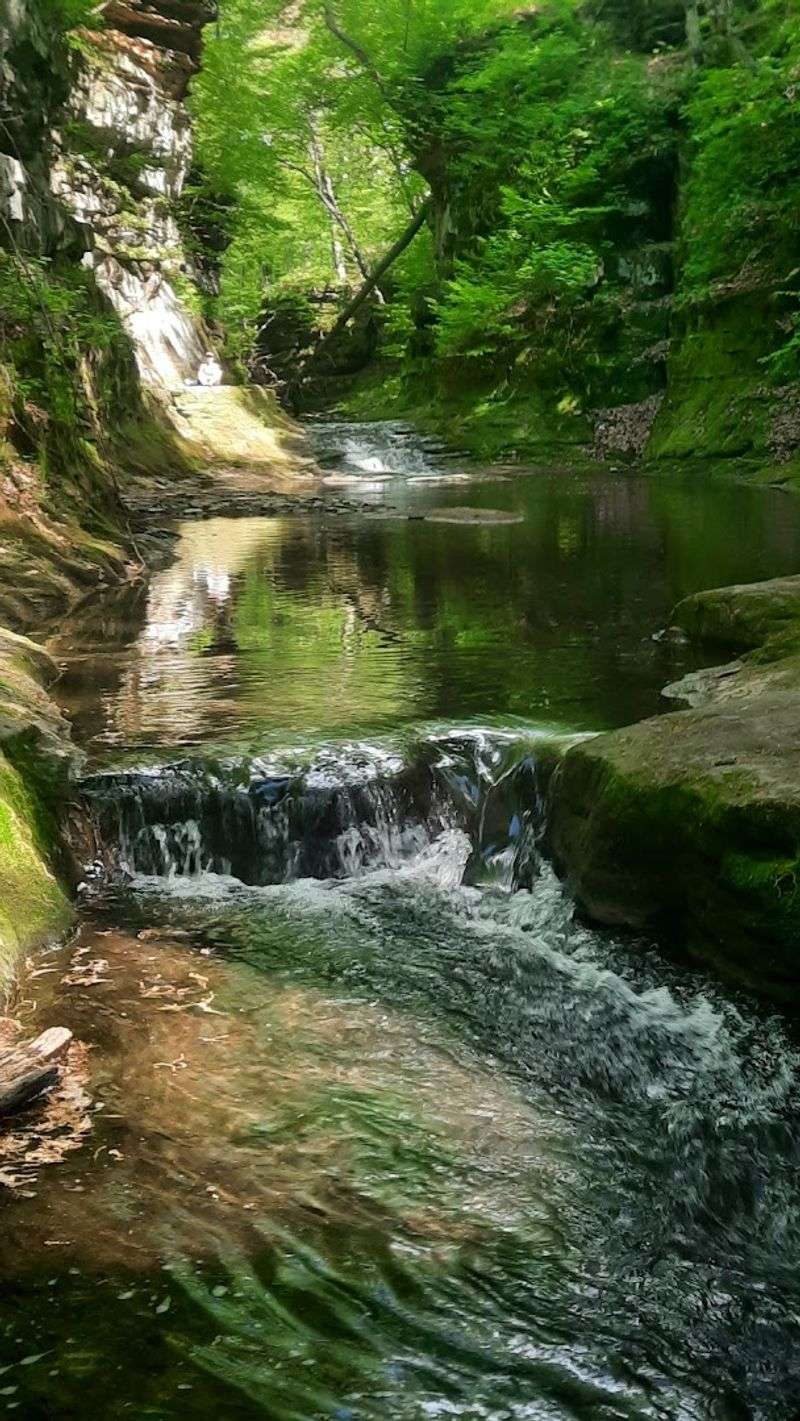
Long before anyone set foot in Sauk County, glacial forces were quietly sculpting one of Wisconsin’s most dramatic natural features. Pewit’s Nest was formed when Glacial Lake Baraboo drained, sending massive volumes of water rushing through the landscape.
That ancient flood carved a narrow sandstone gorge stretching 30 to 40 feet deep, leaving behind a series of potholes, curved walls, and low waterfalls that still flow today.
Skillet Creek is the current tenant of this gorge, threading its way through the canyon in a series of gentle drops and quiet pools. The walls are layered with time, each band of sandstone a chapter from a geological story that spans thousands of years.
What makes this gorge feel so special is how intimate it is. You are not looking at it from a distance.
You are inside it, surrounded by walls that curve and lean overhead, draped in moss and fern. The scale is not overwhelming, but it is deeply personal.
It feels like the earth pulled back a curtain just for you, revealing something ancient and unhurried that most people drive right past on County Road W.
Skillet Creek and the Water You Cannot Resist
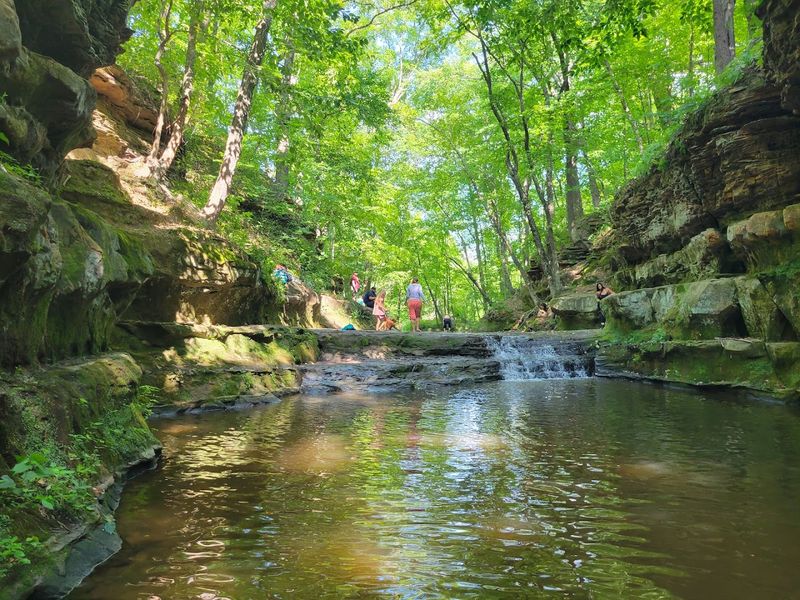
Skillet Creek does not look like much from the trailhead. It is narrow, quiet, and partially hidden by overhanging trees.
But once you follow the path down toward the gorge, the creek reveals itself as the main character of this entire natural area.
The water runs crystal clear over smooth rock, and on a hot summer day it catches the light in a way that is almost unfair. It looks exactly like the kind of swimming hole you dreamed about as a kid.
Cool, clean, and framed by dramatic stone walls, it practically begs you to wade in.
Many visitors do wade in, carefully picking their way over the creek bed with water shoes or sandals. The shallow sections near the entrance are manageable, though the water gets noticeably colder the further you move into the gorge.
A few steps past the main opening, it drops quickly in depth, and the temperature drops with it. The waterfall at the far end is technically reachable by swimming, but the cold water makes most people pause and reconsider.
Even standing at the edge, you can hear the falls and feel the chill rising off the surface like a quiet warning.
Why Swimming Is Off the Table Now
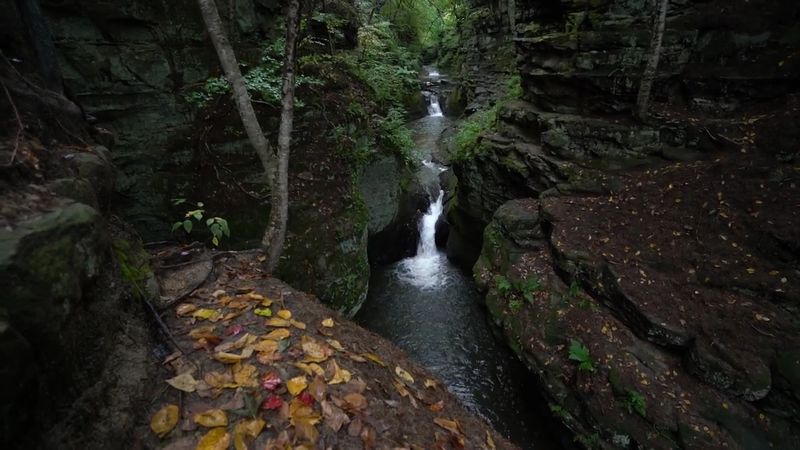
Not long ago, Pewit’s Nest had a reputation as a cliff jumping spot. Locals and visitors would scramble up the gorge walls and leap into the pools below.
It looked thrilling in photos, and for a while it became a kind of unofficial rite of passage for younger visitors to the area.
That era ended in 2017 when the Wisconsin DNR stepped in with serious restrictions. Fencing went up along the gorge edges, closed zones were marked off, and signage made it very clear that cliff jumping and entering the water from above were no longer allowed.
Violations carry a $175 citation, and rangers do enforce it.
The restrictions were put in place for two reasons: visitor safety and ecosystem protection. The gorge walls are fragile, and repeated foot traffic was causing erosion and damaging vegetation that took centuries to establish.
Injuries from cliff jumping had also become a real concern. The result is a place that looks wilder and more untouched than it has in years.
The fences are a little jarring at first, but once you understand why they exist, the whole area feels more precious. Some things are worth protecting even if it means stepping back and simply looking.
The Trail That Packs a Punch in Under a Mile
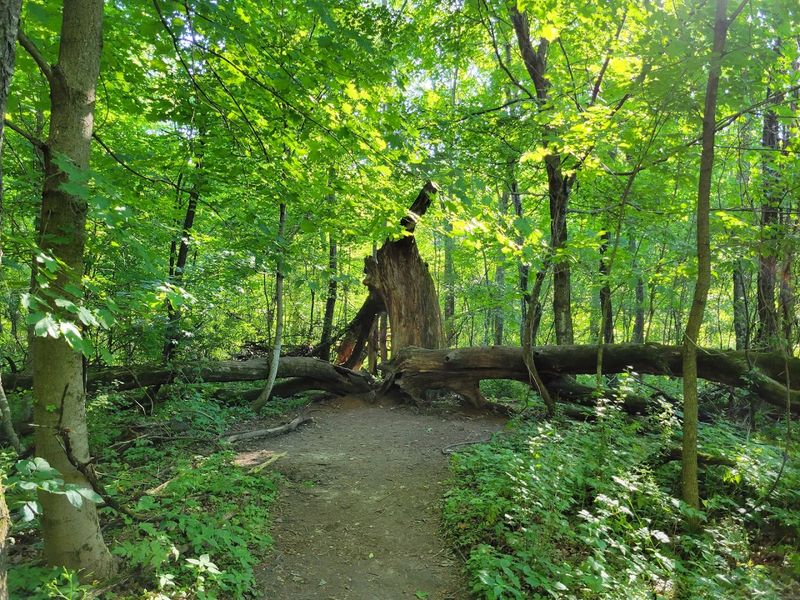
The hike at Pewit’s Nest is short, but do not let the distance fool you. The trail clocks in at under a mile out and back, yet it manages to deliver steep elevation, rooted paths, and enough scenery to fill a full afternoon of photos.
From the small gravel parking lot, a dirt path winds through the trees and drops down toward the creek. The descent is noticeable, and the air temperature shifts as you get lower.
By the time the gorge comes into view, the forest canopy is thick overhead and the sounds of the outside world have mostly disappeared.
A fork in the trail appears early on. Veering right leads toward the main waterfall and the best views of the gorge interior.
The upper trail exists but offers less dramatic scenery, especially once the summer vegetation fills in. Wear shoes with grip because the path gets muddy near the water, and some of the creek-side sections require a bit of careful footwork.
The whole walk from parking lot to waterfall takes about five to ten minutes at a relaxed pace. Spending an hour here feels easy once you arrive, and most people end up staying longer than they planned.
What the Walls Are Made Of: Moss, Cedar, and Quiet
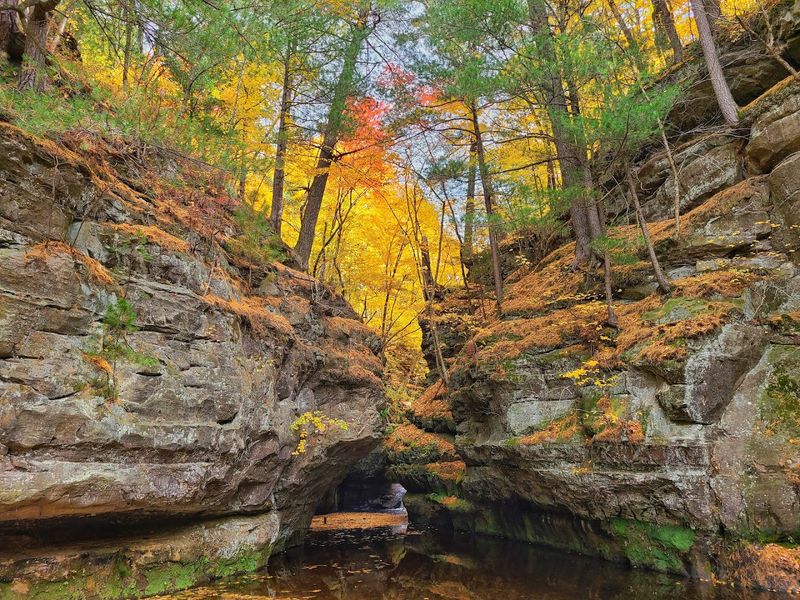
One of the things that hits you immediately inside the gorge is the texture of everything around you. The sandstone walls are not bare and dry.
They are layered with thick green moss, clinging ferns, and patches of lichen that have been growing undisturbed for a very long time.
Red cedar, white pine, hemlock, and yellow birch grow from the rock ledges and canyon edges in ways that seem to defy logic. Their roots grip the stone and their canopies lean inward, creating a tunnel of green above the creek.
The light that filters down is soft and cool, even on the brightest summer days.
The combination of stone, water, and dense vegetation creates a microclimate inside the gorge that feels noticeably different from the surrounding forest. Temperatures can drop by 10 to 15 degrees compared to the open trail above.
That coolness is part of what makes the place feel so dramatic and a little otherworldly. Fall is especially stunning here, when the birch and other deciduous trees flame up in orange and gold against the grey stone.
Visitors who time their trip for mid-October often describe the colors as some of the best they have seen anywhere in Wisconsin.
Planning Your Visit Without the Headaches
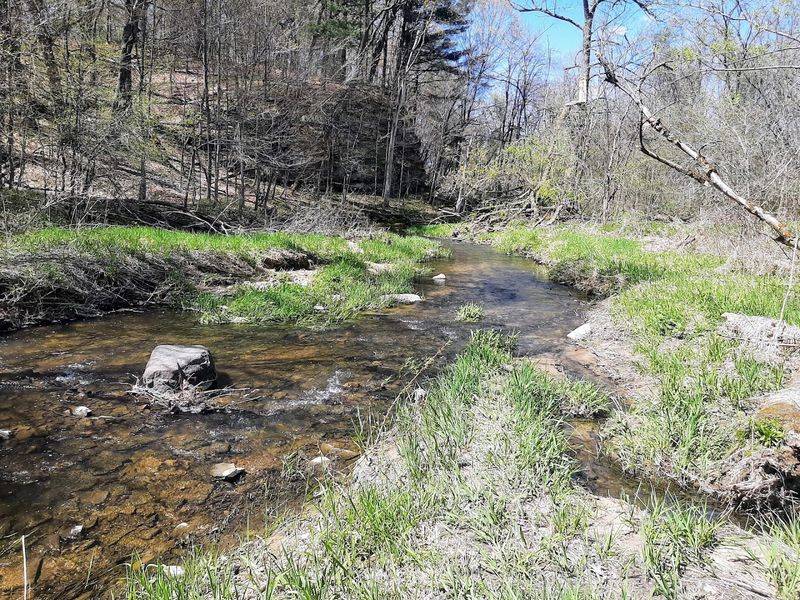
Pewit’s Nest is managed by the Wisconsin DNR and is open daily from 6 a.m. to 8 p.m. year-round. Entry requires a valid Wisconsin State Park sticker or a day pass, which can be purchased online before you arrive.
There are no restrooms on-site and no picnic areas, so plan accordingly.
The parking lot is small, fitting roughly 15 to 20 vehicles. On summer weekends and warm holiday afternoons, it fills up fast.
Arriving early in the morning is the best strategy if you want a spot and a quieter experience. Parking along County Road W is not allowed and can result in a fine or towing.
Water shoes or sandals with grip are strongly recommended if you plan to wade into the creek. The rocky creek bed is uneven and slippery in places.
Bug spray is worth throwing in your bag, especially from late spring through early fall. The site is close to Devil’s Lake State Park, so many visitors pair both in the same day using the same State Park pass.
That combination makes for a full and very rewarding day of exploring Sauk County’s natural landscape without needing to drive far between the two locations.
Why This Place Deserves More Respect Than It Gets
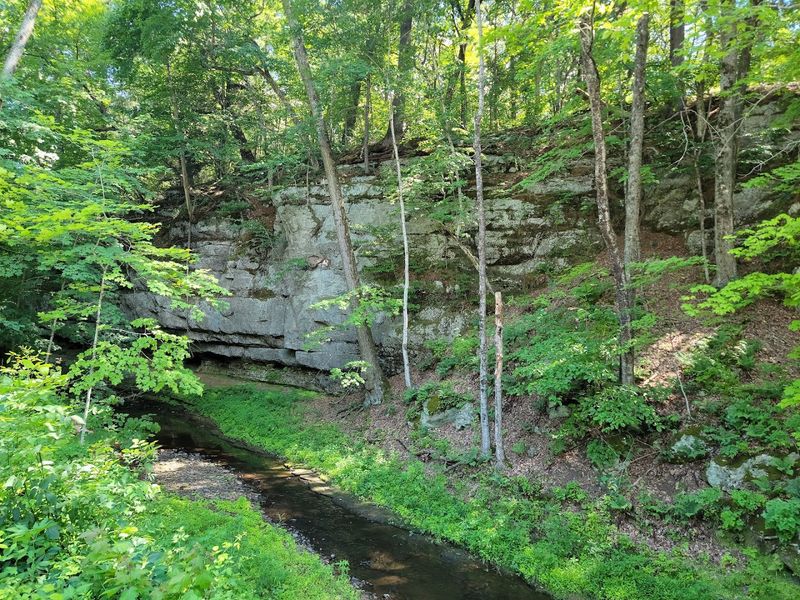
Pewit’s Nest is genuinely beautiful, and that beauty is exactly what puts it at risk. Some visitors treat it like a beach, bringing in chairs and coolers, leaving trash behind, and moving rocks to build cairns or dams in the creek.
Each of those small actions adds up to real damage over time.
The moss on the gorge walls took decades to grow. The vegetation along the creek banks is fragile and slow to recover once disturbed.
Sticking to marked trails is not just a rule posted on a sign. It is the reason the place still looks as wild and intact as it does.
The Wisconsin DNR works to maintain this area on limited resources, and what keeps it functioning well is visitors who actually care. Packing out everything you bring in, staying behind the fences, and keeping noise levels down all contribute to an experience that feels worth repeating.
The irony of a place this stunning is that the more people love it carelessly, the faster it disappears. The best way to enjoy Pewit’s Nest is to leave it exactly as you found it, maybe even a little better.
Address: County Rd W, Baraboo, WI 53913.
