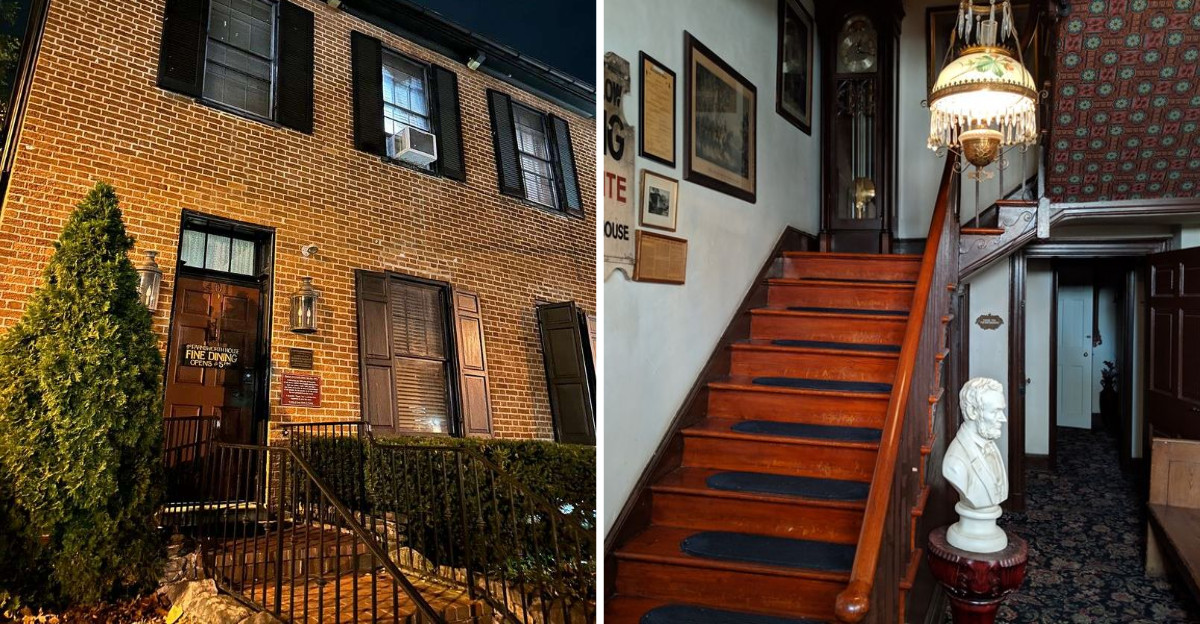
Dozens of little pockmarks scattered across old brick on a Pennsylvania street caught my attention before anything else, and it took me a second to understand that I was looking at real damage from July 1863, still sitting there in plain sight while cars rolled past.
Inside the inn, the air smells faintly of woodsmoke and old floors, and the servers move around in period clothing like it is completely normal.
I came for the history and stayed for the stories, which is pretty much what everyone does here. The building has been standing since the late 1700s, and its walls have held everything from soldiers to surgeons to the kind of quiet that settles over a town after a battle.
Some guests swear they heard footsteps in the attic, others slept straight through the night and left slightly disappointed, but everyone leaves with something to talk about.
Either way, I left thinking about it for weeks, and that is a rare thing for any place I visit.
A room full of stories and a building that refuses to let its past fade is exactly what this Pennsylvania stop delivers.
More Than 100 Bullet Holes Still Scar the South Wall
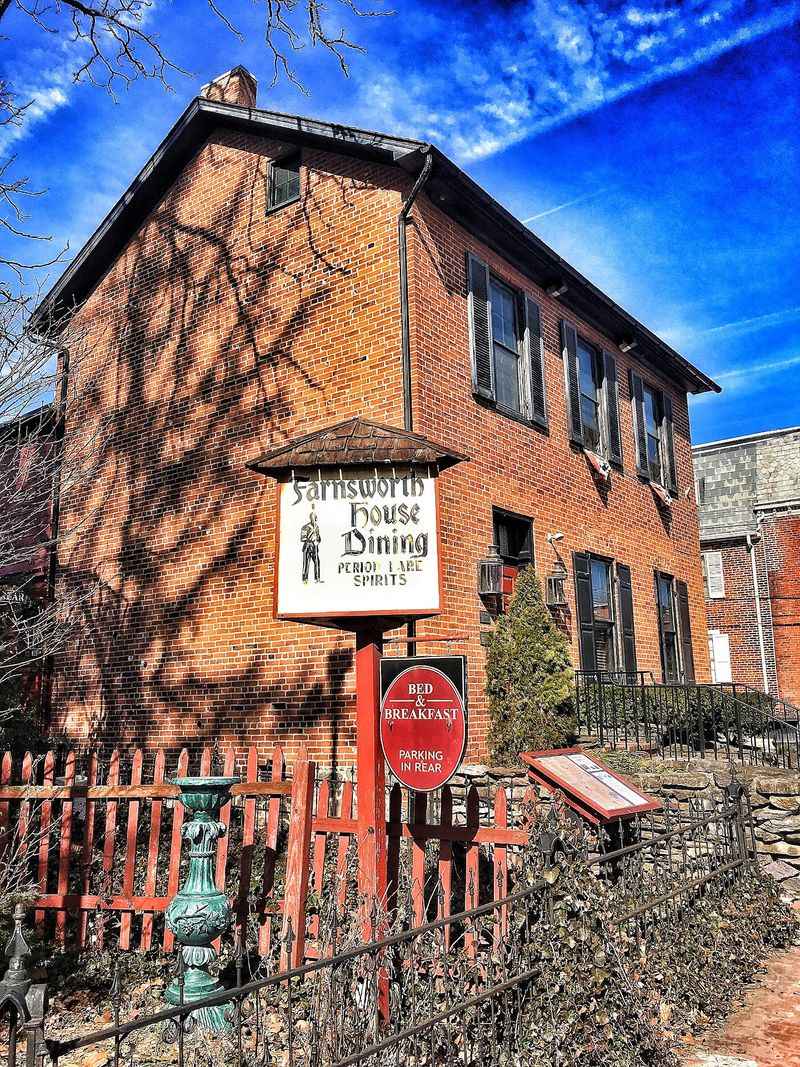
My first stop was not the front desk. It was the alley along the south side of the building, where the brick is peppered with more than a hundred bullet holes.
Some are shallow chips. Others are deep, round punctures that look like someone pressed a thumb into wet clay and it hardened forever.
The heaviest cluster sits near the attic window, which makes sense once you know Confederate sharpshooters worked from that space during the battle. They fired toward Union troops holding Cemetery Hill just up the road.
Here is the part I did not expect. Those marks were not always on display like this.
A restoration in the 1970s uncovered and highlighted them, turning a plain wall into one of the most honest artifacts in town.
If you visit, go in the late afternoon when the sun hits at an angle. The shadows inside each hole make them pop in photographs, and you can actually count them if you are patient.
Bring a friend and take turns pointing. I stood there far longer than planned, mostly because it is hard to walk away from something that direct.
An 1810 Stone House That Grew Into a Battlefield Landmark
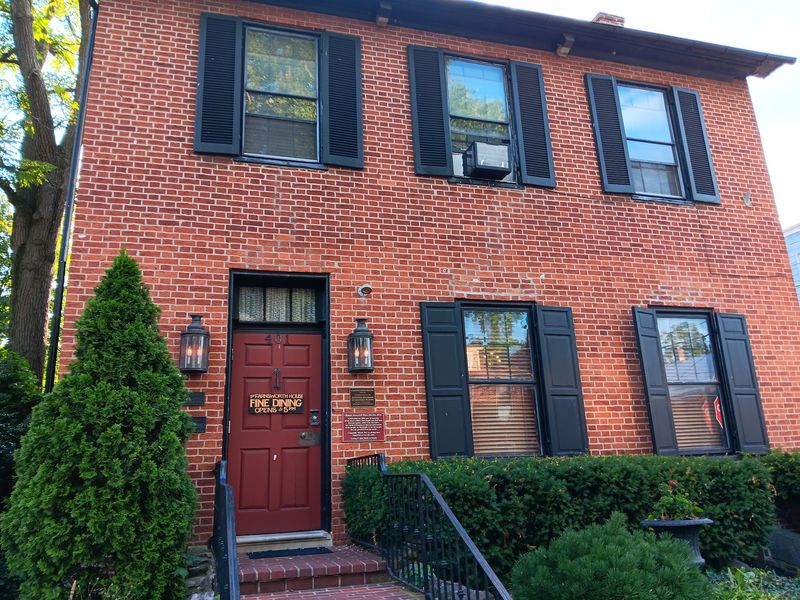
Two buildings, really. John McFarlane put up the original stone structure in 1810, and a brick addition arrived in 1833 to give the place the shape you see today.
Stand across the street and you can spot the seam between the older stone and the newer brick if you look carefully at the corners.
During the Civil War the property belonged to the Sweney family, and their name still lives on inside as one of the guest rooms and the tavern downstairs.
The Farnsworth name came much later, in 1972, when Loring Shultz renamed the inn for Brigadier General Elon J. Farnsworth, a Union cavalry officer killed during the battle.
Worth knowing: the general had no documented connection to the house itself, so the name honors him rather than records anything that happened here.
The Shultz family has run the property for more than fifty years now, which explains why the place feels lived in instead of staged.
Small detail I liked. The floorboards creak in specific spots, and after a day you start to recognize which ones.
The Attic Where Sharpshooters Once Waited
Low beams, bare wood, and a single small window looking toward Cemetery Hill. The attic is easily the most charged room in the building, and you can reach it on a tour.
Confederate sharpshooters used exactly this vantage point during the three days of fighting in July 1863. From here they had a clear line on Union positions.
Now the space doubles as a small museum of wartime relics, so there is real material to look at while your guide talks.
Reported activity in the attic is heavy on sound. Pacing footsteps come up most often, and there is a long-standing story about a soldier’s spirit playing a Jew’s harp, that little mouth instrument soldiers actually carried.
People who study the place describe the soldiers as stuck in a loop, still going through the motions of duty.
Practical tip from my visit: the ceiling is genuinely low, so tall visitors should watch their heads on the crossbeams.
Wear shoes you can climb narrow stairs in comfortably. And take a minute at that window before heading down.
Jeremy, the Playful Boy Spirit of the Sara Black Room
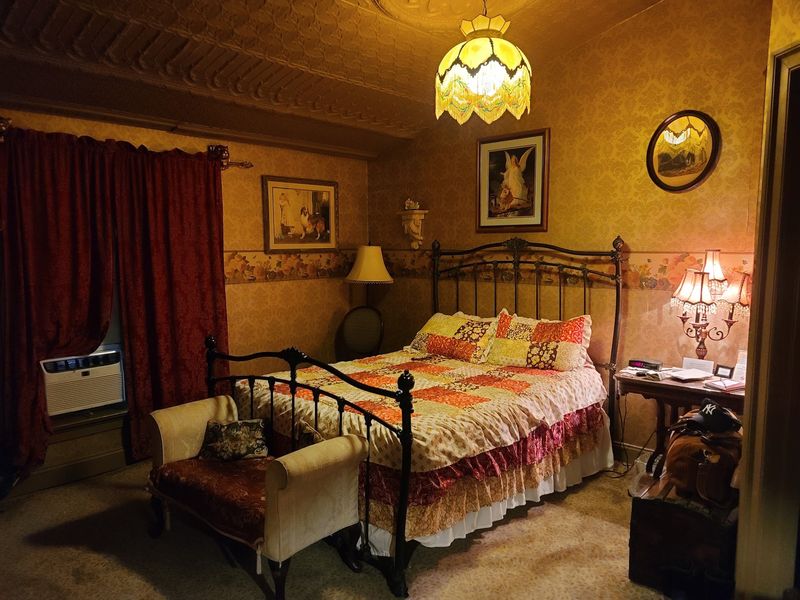
Of all the spirits people talk about here, Jeremy gets the most affection. He is described as an eight-year-old boy who, according to local legend, paseed after being struck by a wagon outside the house.
Guests connect him to giggling, the sound of someone playing on the stairs, and small tugs on clothing.
One visitor reportedly filmed a marble rolling back and forth on its own, which is the kind of detail that sticks with you longer than a shadow in a hallway.
Jeremy is most associated with the Sara Black Room, though there is also a room that carries his name.
Something I found charming about the whole thing is how guests respond. Plenty of people leave small toys or marbles behind for him.
Not every stay produces a story, and that is worth setting expectations around. I read a review from someone who spent a night in the Jeremy room and reported absolutely nothing unusual, yet still loved the visit.
Either outcome makes for a good morning conversation over breakfast downstairs.
Ghost Tours, Cellar Walks, and the Confederate Hospital Route
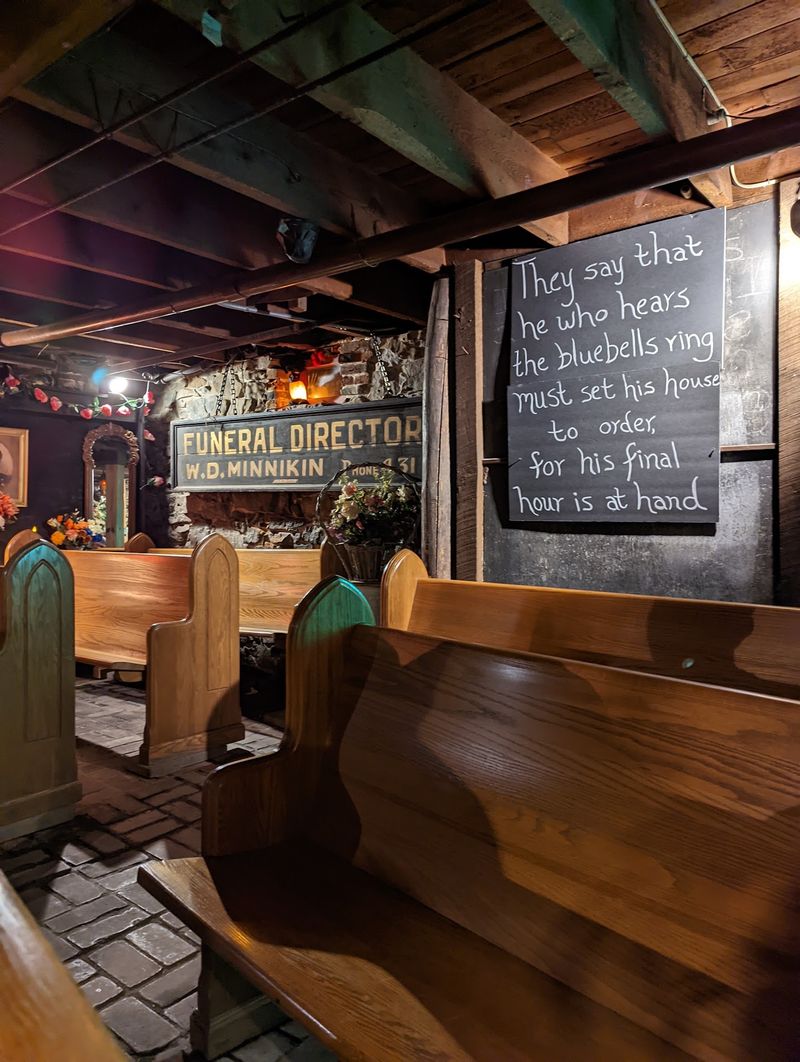
Tours are how most people get past the guest rooms and into the parts of the building with real weight. The inn runs several, and they are not all the same experience.
There is a historic house tour focused on the building and the battle. There are ghost walks that include the attic.
The Confederate Hospital Walk starts down in the cellar, a low stone space that feels several degrees cooler than the rest of the house.
Paranormal investigations are offered too, for people who want equipment and time rather than a guided story.
Guides here tend to be long-serving and genuinely deep in the material, which makes a real difference when you are asking follow-up questions.
My suggestion is to do a daytime history tour first and an evening tour second. The history gives the evening stories somewhere to land.
Book ahead in summer and through October, because groups fill quickly around battle anniversaries and Halloween. Tours cost extra beyond a room stay, so plan that into your schedule rather than deciding last minute.
Dinner by Candlelight and Those Famous Pumpkin Fritters
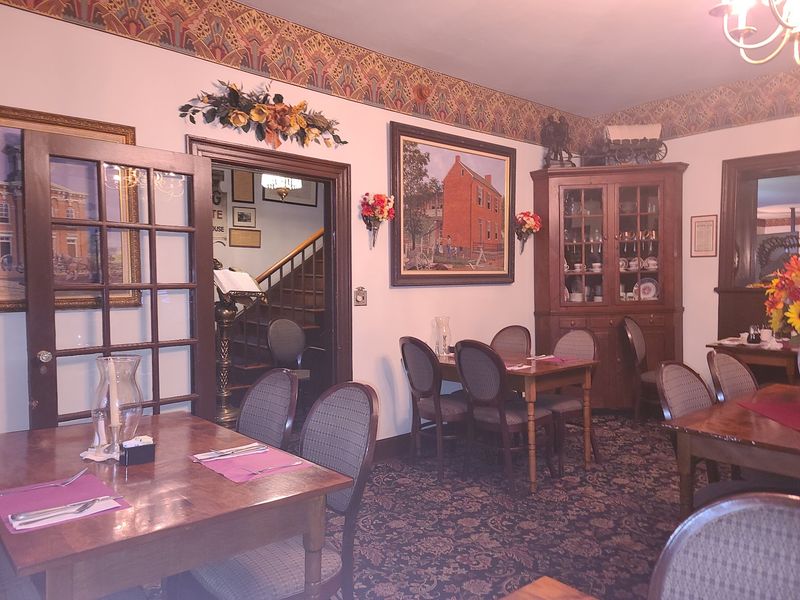
The dining room surprised me more than the attic did. Servers wear period clothing, era-appropriate music plays low, and candles do most of the lighting work.
Game pie is the dish people talk about, made with pheasant, duck, and turkey. Chicken pot pie and prime rib show up on plates all around the room too.
Then there are the pumpkin fritters, which have their own small fan club among returning guests. Sweet potato pudding and spoonbread round out the older-style menu.
Reservations matter here. The restaurant is small, it opens in the late afternoon, and walk-ins during busy weekends may not get a table at all.
Downstairs, Sweney’s Tavern runs a more relaxed menu with burgers and comfort food, plus live music some evenings and Gettysburg film memorabilia on the walls.
There is also a beer garden out back and a replica Civil War camp on the property, which is a strange and pleasant combination.
Breakfast is included for overnight guests and served in the same dining room. The dining space is also where shadow figures get reported most often.
A Front Walk Lincoln’s Procession Once Passed
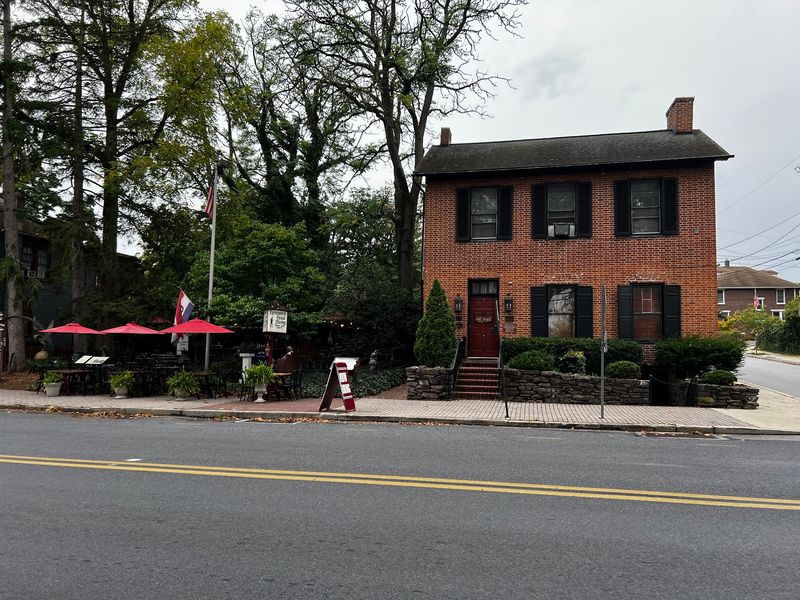
On November 19, 1863, the procession carrying President Lincoln to the National Cemetery moved right past this house. He was on his way to deliver the Gettysburg Address.
Baltimore Street looks different now, obviously, but the route is the route. You can stand on the sidewalk out front and follow it with your eyes.
That kind of overlap is what makes this corner of town so dense with history. In a single spot you have sharpshooter fire, a field hospital, and a presidential procession.
The inn sits one block from the Shriver House Museum and about a mile from Gettysburg National Military Park, so walking is easy from here.
I ended up doing exactly that. Coffee in hand, following the general direction of the procession toward the cemetery, reading markers along the way.
If you have half a morning free, that short walk gives you far more context than any single building can.
Comfortable shoes and a water bottle are all you need. The sidewalks are uneven in places, so watch your footing near the older curbs.
Why This Inn Keeps Showing Up on Television
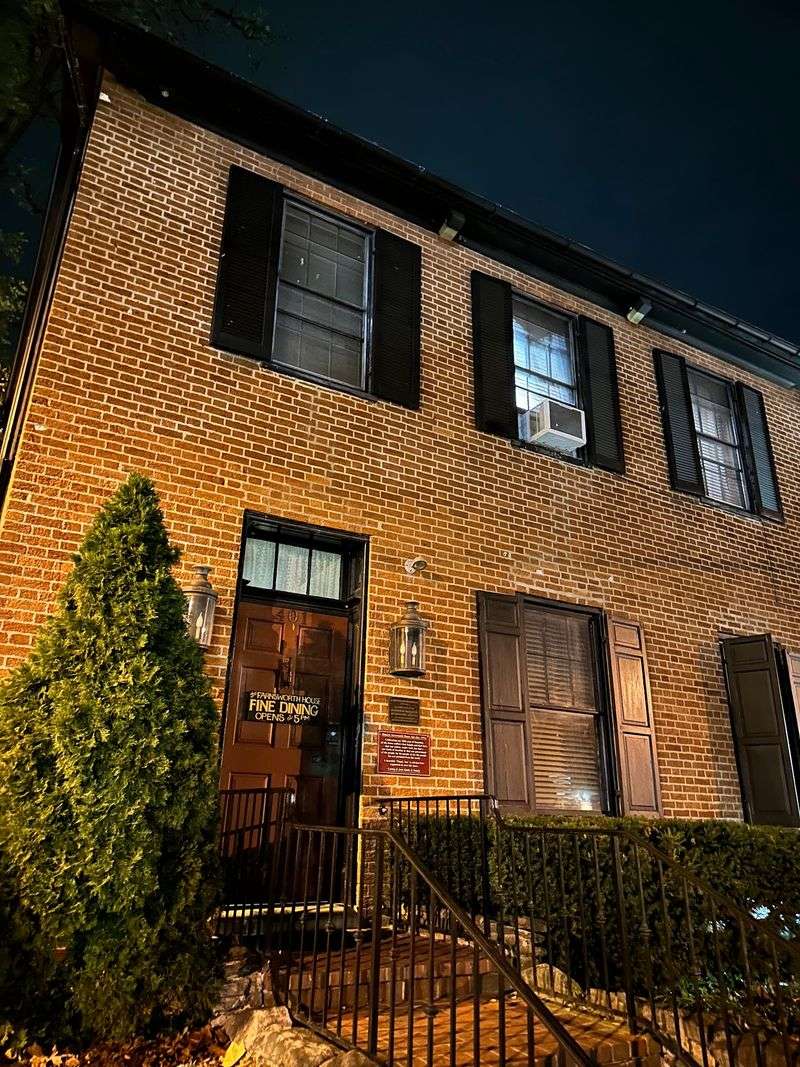
Camera crews have been coming here for years. The Pennsylvania inn has been featured on A&E, BBC, Discovery, History, Sci-Fi, and the Travel Channel, which is a longer list than most so-called haunted properties can claim.
Reported phenomena cover a wide range. Disembodied voices, flickering lights, doors that swing open, objects that shift position, footsteps in empty halls.
Staff members have described the feeling of being followed and turning to find nothing behind them. One waitress reported her apron strings being pulled hard by something she could not see.
There is a figure some guests call the Smiling Man, said to appear in the shadows of the Sara Black Room, grinning silently before vanishing.
An odd story involves a radio crew broadcasting on Halloween in blue uniforms who called their boss Captain, after which activity reportedly picked up sharply.
What I appreciated most is that the staff do not oversell any of it. They tell you what has been reported and let you decide.
Come curious, stay a night, and see what your own ears make of it.
Address: 401 Baltimore Street, Gettysburg, Pennsylvania
