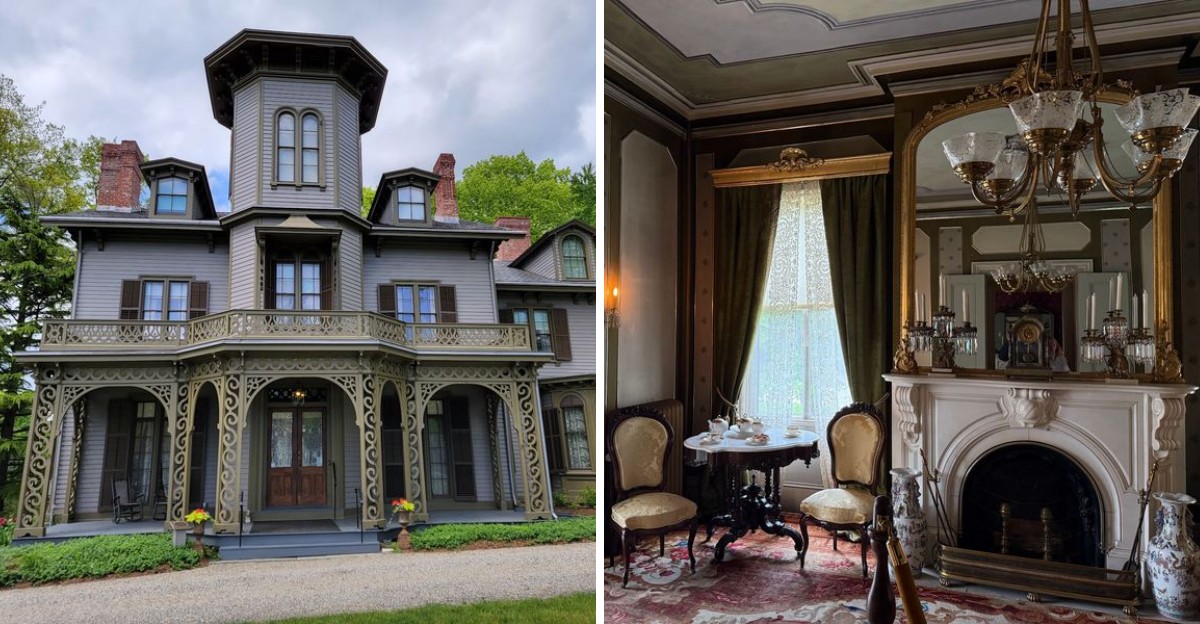
Some houses age gracefully. This one seems to have made a private agreement with the 1800s and never looked back.
Behind the traffic and everyday rush sits a remarkably preserved New Jersey mansion where original details still do most of the talking.
Built in 1853 and expanded soon afterward into the Italianate home seen today, the house retains much of its mid-19th-century character.
Restored rooms, period furnishings, decorative details, and family belongings make the place feel less staged than expected.
Even the grounds are being returned to their historic appearance.
The fun part is how quickly the outside world disappears once you step inside.
One minute there is traffic.
The next, you are mentally judging Victorian wallpaper like it is a completely normal Tuesday.
An Italianate Villa That Started Out Plain
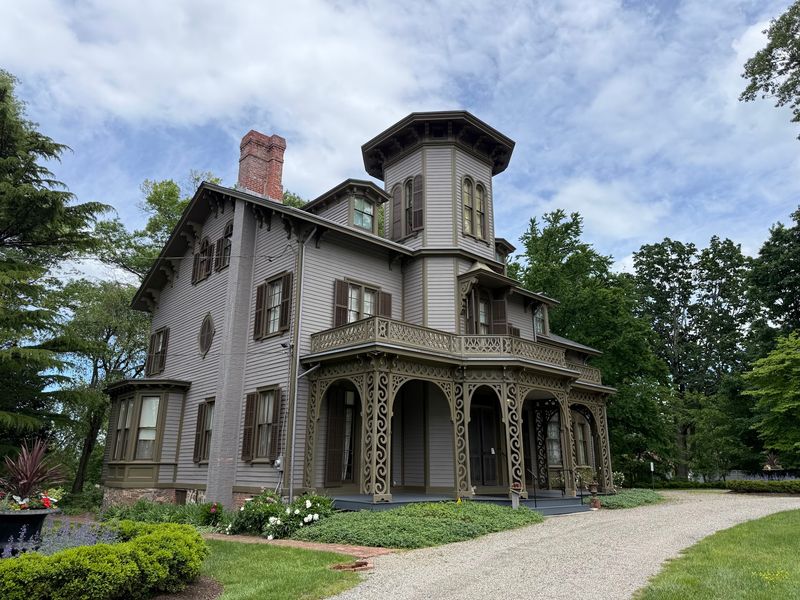
Here is something surprising about the Acorn Hall mansion. It did not begin as a showpiece at all.
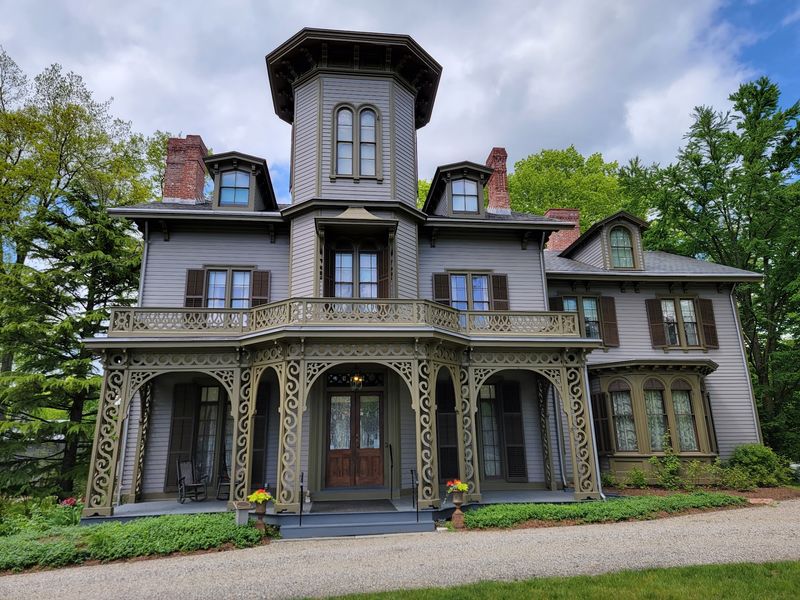
The house went up in 1853 as a modest Foursquare home, boxy and practical, the sort of place that blends in rather than turns heads. Then came 1860, and a remodel that changed everything, reshaping it into the fashionable Italianate villa standing there today.
Look up and the cupola gives it away immediately. Decorative brackets run beneath the roof cornices, and even the porch posts got attention, with chamfered corners that catch shadow in the late afternoon.
What I find fun is how much the exterior tells you before you ever step inside. Victorian homeowners wanted their houses to announce taste and status, and every bracket was part of that message.
A quick tip for visitors: give yourself a few minutes outside before heading in. Walk the front, look up at the tower, and notice how the proportions work together.
The interior makes more sense once you have read the outside first.
Rooms Where the Wallpaper Never Changed
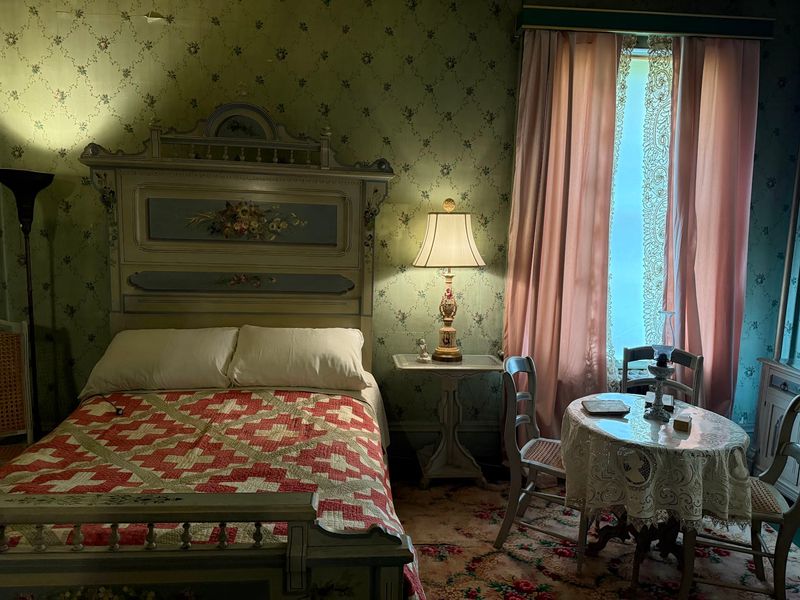
Most historic house museums are careful re-creations, assembled from donations and educated guesses. Acorn Hall is a different animal entirely.
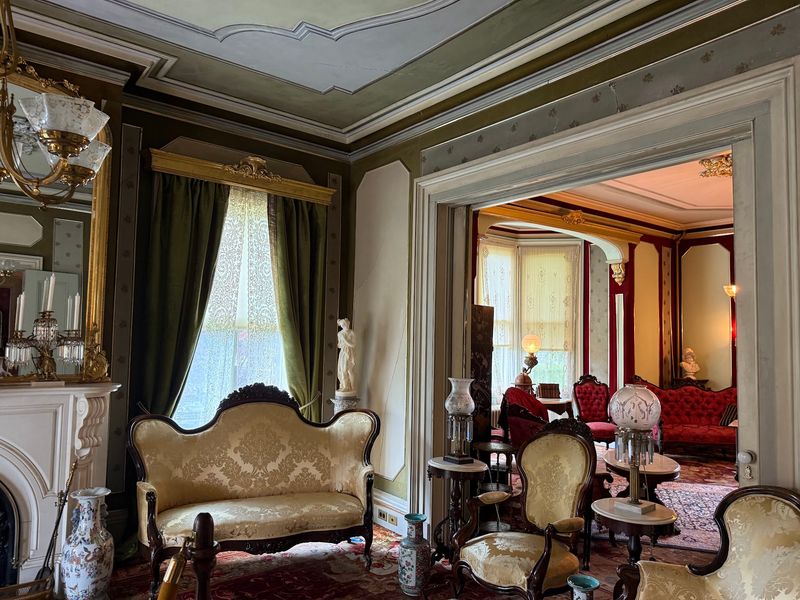
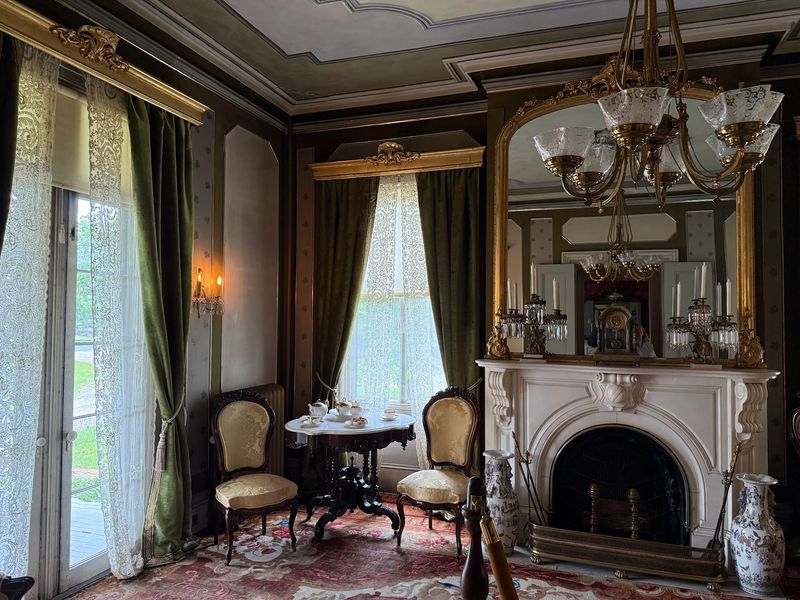
The interiors here remain largely unaltered, which is genuinely rare. Original furnishings sit where families placed them, alongside period fabrics and decorative arts that survived generation after generation.
Wall coverings and carpeting stayed put too, giving the rooms a color palette that feels nothing like a modern reproduction. Deeper, warmer, a little more crowded than we would decorate now.
These spaces reflect how Morristown’s upper middle class actually lived during the mid-Victorian years, not how we imagine they lived. There is a difference, and you can feel it in the details.
Guided tours are the way to see it, and the guides know the rooms nook by nook. Ask questions freely, because the small details tend to be the best part.
One practical note: tours generally run under an hour, so it fits neatly into a morning or afternoon without eating your whole day.
Four Generations Under One Roof
Houses this old usually pass through many unrelated hands. Not this one.
Construction began for Dr. John P. and Louise Schermerhorn, but the family sold the property to Augustus and Mary Elizabeth Crane in 1857 following a family tragedy. The Cranes took on the 1860 remodeling that produced the Italianate villa visitors see now.
From there, four generations of the Crane-Hone family lived in these rooms. That continuity explains why so much survived intact, since nobody arrived wanting to gut the place and start fresh.
Mary Crane Hone was the last private resident, and she understood exactly what she had. In 1971 she donated the house to the Morris County Historical Society, asking that it operate as a museum.
Because of that single decision, the furniture, the fabrics, and the family story all stayed together.
Tours lean heavily on these family threads, which makes the house feel personal rather than academic. You leave knowing who lived where, and why certain rooms were used the way they were.
Formal Gardens and a Path to the Wider County
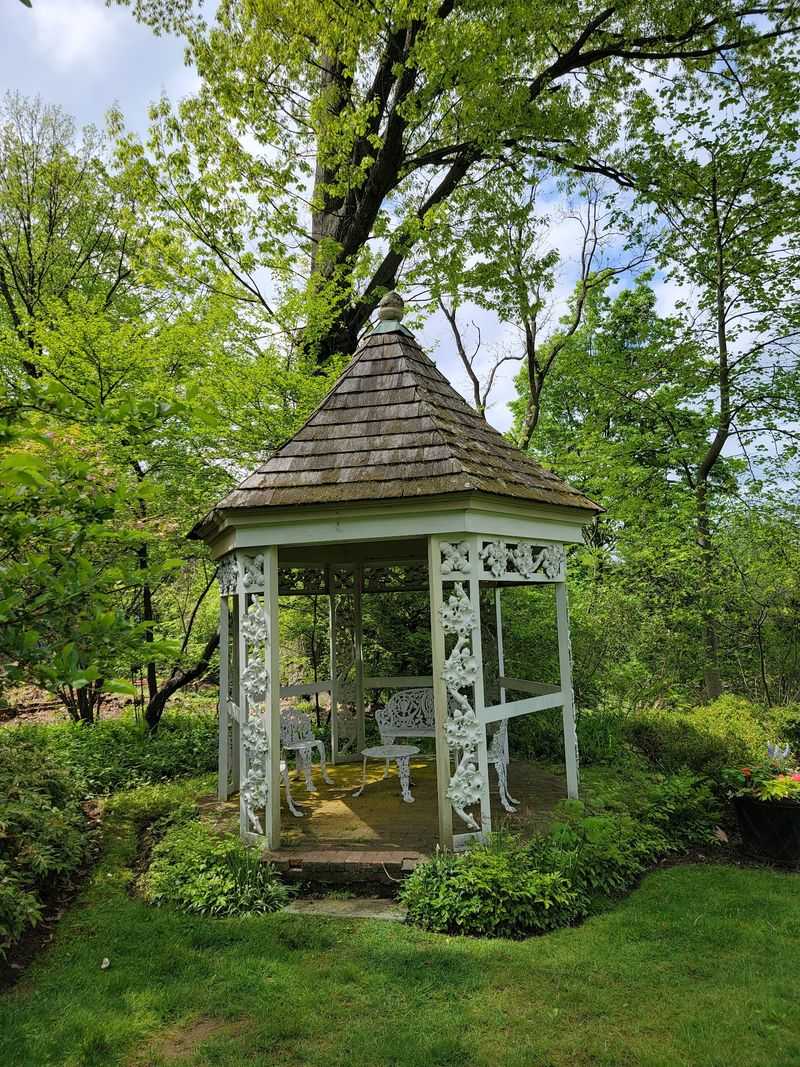
Skip the garden and you miss half the visit. That would be a shame.
Behind and beside the mansion sit formal gardens laced with winding walkways, quiet enough that the road out front seems to disappear. Benches and shaded corners make it easy to slow down for a while.
The landscaping nods to the country aesthetic that once surrounded a 19th century estate, when a house like this sat in open ground rather than beside commuter traffic.
There is also a nice bonus for walkers. The grounds connect to the Morris County Park Commission’s Patriots Path trail system, linking this private history to the broader landscape around it.
Change did come, of course. The front yard was altered in the mid-1960s when Morris Avenue was widened, yet the rest of the property still holds its calm.
Wear comfortable shoes and plan an extra twenty minutes outdoors. Spring and early fall are especially pleasant, and photographers will find the mansion framed nicely from several angles along the paths.
Recognition on the National Register
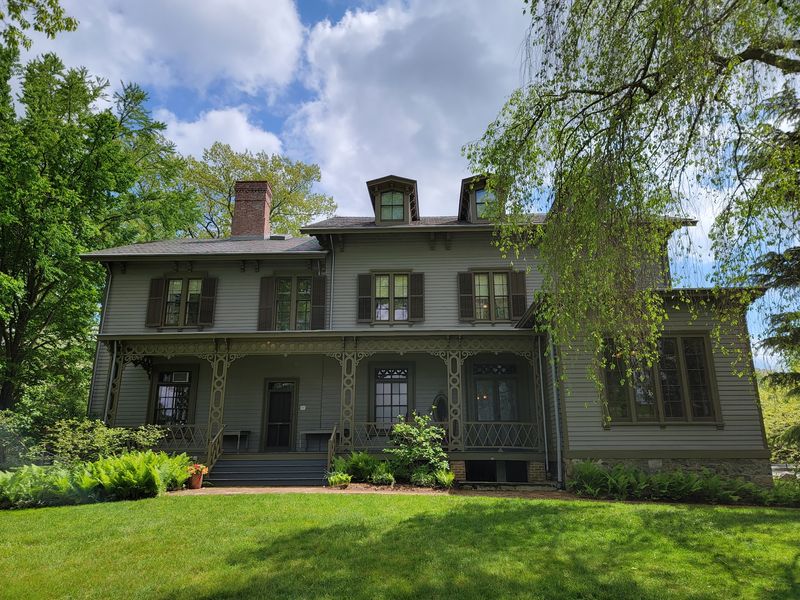
Plenty of old houses look important. Fewer have the paperwork to prove it.
Acorn Hall joined both the National and New Jersey State Registers of Historic Places in 1973, recognized for architectural significance rather than just age. That designation reflects its standing as one of the state’s best preserved examples of mid to late 19th century cultural history.
The nominations were updated and expanded in 2016, widening protection to include the associated outbuildings and the full six-acre property.
There is another layer worth knowing. The site belongs to the New Jersey Women’s Heritage Trail, honoring the Crane and Hone women for preserving this place and for their involvement in the women’s suffrage movement.
That connection turns a pretty house into something with real civic weight.
For travelers building a history-focused itinerary, this makes an excellent anchor stop. Morristown has other historic sites nearby, and starting here gives useful context on how ordinary families, not just famous figures, shaped the county’s story over many decades.
Restoration Work Happening in Real Time
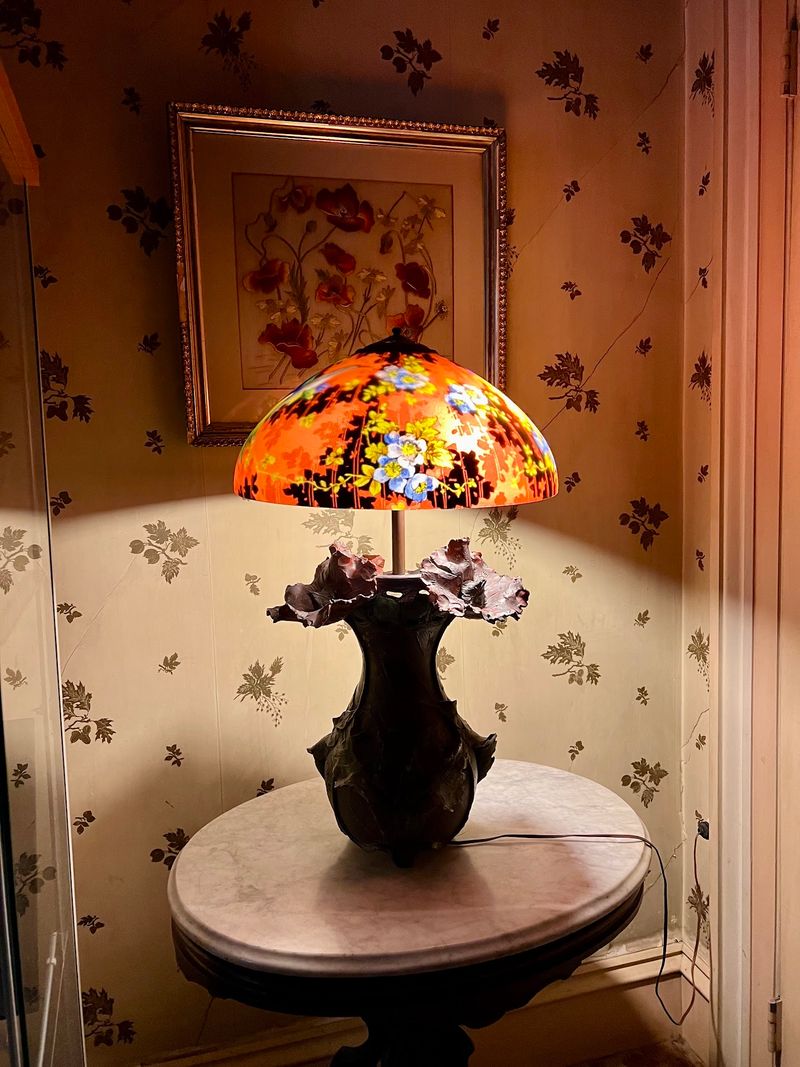
Preservation is not a one-and-done project. Around here it is closer to a permanent commitment.
The Morris County Historical Society has been headquartered at Acorn Hall since 1971, and its restoration record shows real follow-through. A comprehensive exterior restoration wrapped up in 2018, returning the building to an accurate 1860 to 1880 appearance.
The carriage house came next, with that restoration finished in 2022.
Attention has now shifted indoors. Planning is underway to conserve and restore the interiors, with major work scheduled to begin in early 2027.
That effort covers conserving original wallpaper, repairing plaster cracks, bringing back historic paint colors, and installing modern climate control to protect the house and its original features from humidity swings.
Visiting during an active preservation period has its own appeal, honestly. You get to see the seams, the choices, and the sheer patience involved.
Guides can often explain what is being worked on and why, which is a treat if you enjoy the mechanics behind saving old buildings rather than just admiring the finished result.
A Working Hub for Local History
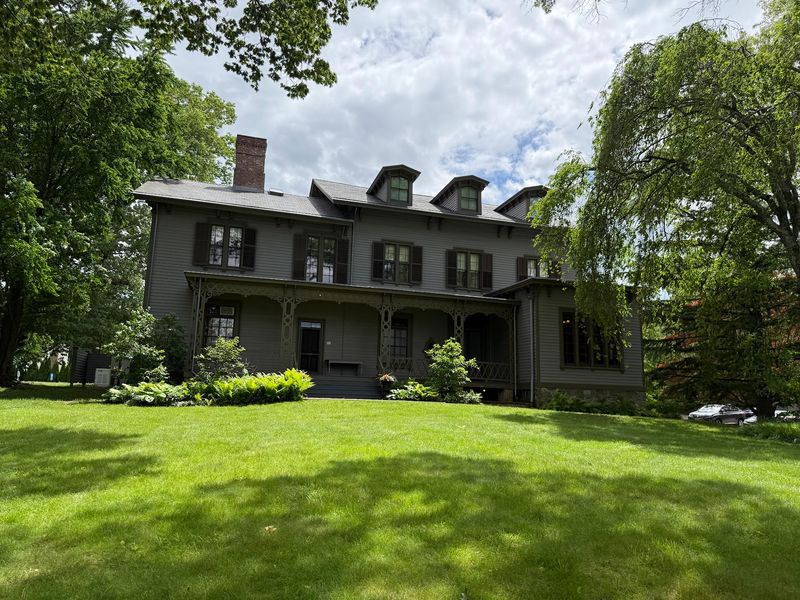
Calling it a pretty old house undersells the operation considerably.
Acorn Hall functions as an active center for Morris County history, stewarded by the Morris County Historical Society, and it has welcomed the public as a house museum since 1973. The Society’s mission centers on discovering, preserving, promoting, and interpreting the county’s past.
Beyond the period rooms, changing exhibits explore different corners of local history and Victorian culture, so return visits rarely feel repetitive.
The collections run deep. Nearly 15,000 objects are held in the public trust, including one of the richest and most diverse historic costume collections outside New York City.
Textile lovers, take note. Fashion holdings like these are unusual for a museum of this size.
The archive also supports family history research, and staff assist people tracing Morris County ancestors. If genealogy brought you here, reach out ahead of time so your visit can be productive.
Between the exhibits, the archive, and the house itself, there is far more substance than the quiet exterior suggests.
The St. Cecilia Window Found in a Basement Crate
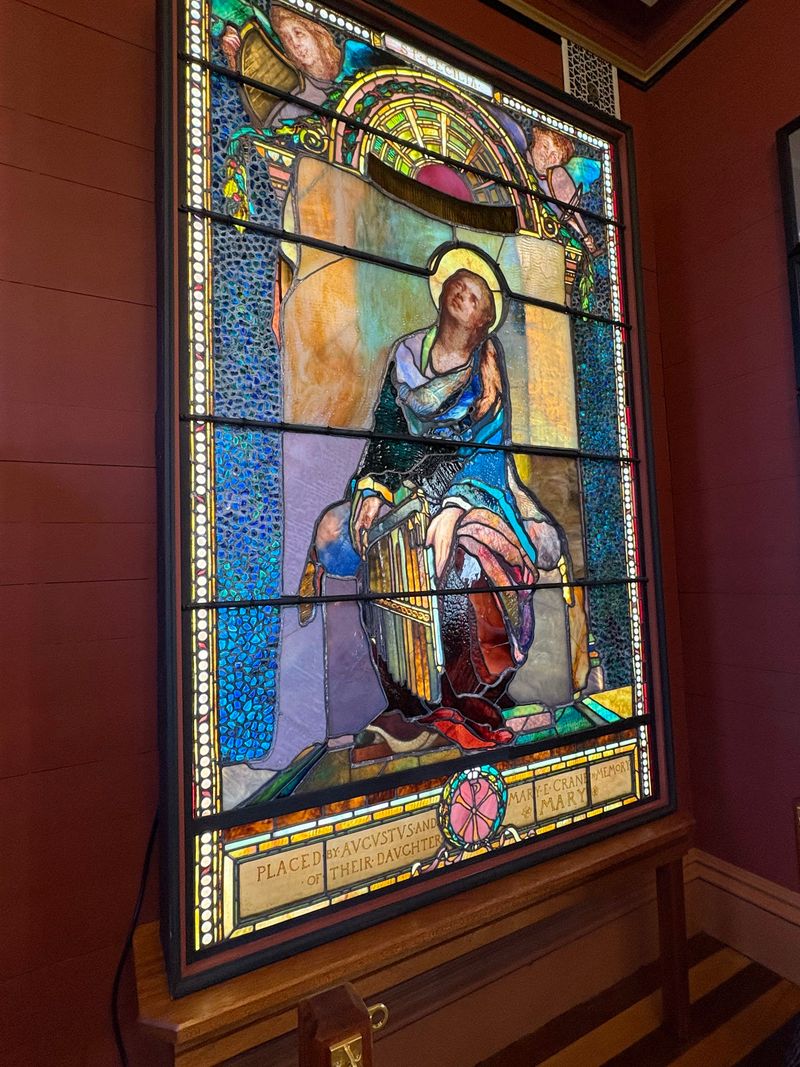
Some discoveries sit in plain sight. Others wait in a crate in the basement for decades.
That is where the St. Cecilia stained glass window spent years before being unwrapped in the summer of 2020. Crafted by a New York studio that once rivaled the work of Louis Comfort Tiffany, the piece was carefully restored and unveiled in October 2021.
Nearly a century old, it depicts St. Cecilia, the Christian patron saint of music.
The window served as a memorial to a musical young woman of the Crane family who grew up in this house and died young. Knowing that changes how you look at it.
Light passing through the glass does something no photograph really captures, so give it a proper minute in person.
Stories like this one are why guided tours matter here. A guide can point out details in the glasswork and explain the window’s journey from forgotten storage to display, which is not information you would ever piece together on your own.
Saving Pieces of Buildings That No Longer Exist
Not every historic building gets a happy ending. Some come down, and their best details vanish with them.
The Morris County Historical Society took an unusual step to address that. Its architectural study collection, launched in 2020, gathers significant features from historic structures across the county that might otherwise be lost to demolition or heavy alteration.
Think brackets, mouldings, hardware, and other pieces that carry a building’s character.
Preserving fragments means researchers and curious visitors can still study how local buildings were made, long after the originals are gone. It is a clever workaround for an unavoidable problem.
Plans call for the collection to be permanently displayed on the second floor of the restored carriage house, giving architecture enthusiasts a dedicated space to explore.
For anyone who has ever watched an old building disappear from their own hometown, the idea lands hard.
It also shows how the Society thinks past its own front door, treating the whole county’s built history as something worth protecting rather than focusing only on Acorn Hall.
Planning a Visit Worth the Detour
A few practical notes make this stop much smoother.
Doors open Tuesday through Thursday from 11 AM to 4 PM, plus Sunday afternoons from 1 to 4 PM, with the house closed Friday, Saturday, and Monday. Guided tours are the standard way to see the rooms, and they typically run around 45 minutes to an hour.
Parking sits alongside the house, which is a relief given the busy road out front.
The entrance can be easy to miss, so slow down as you approach and watch for the driveway rather than trusting your navigation blindly.
Pair the tour with time in the gardens and a walk on the connecting trail, and you have a genuinely satisfying half day of New Jersey history.
What stays with you is the quiet. Traffic hums somewhere beyond the trees while these rooms hold their 19th century calm.
You will find the mansion known as Acorn Hall, home of the Morris County Historical Society, at 68 Morris Ave, Morristown, NJ 07960.
