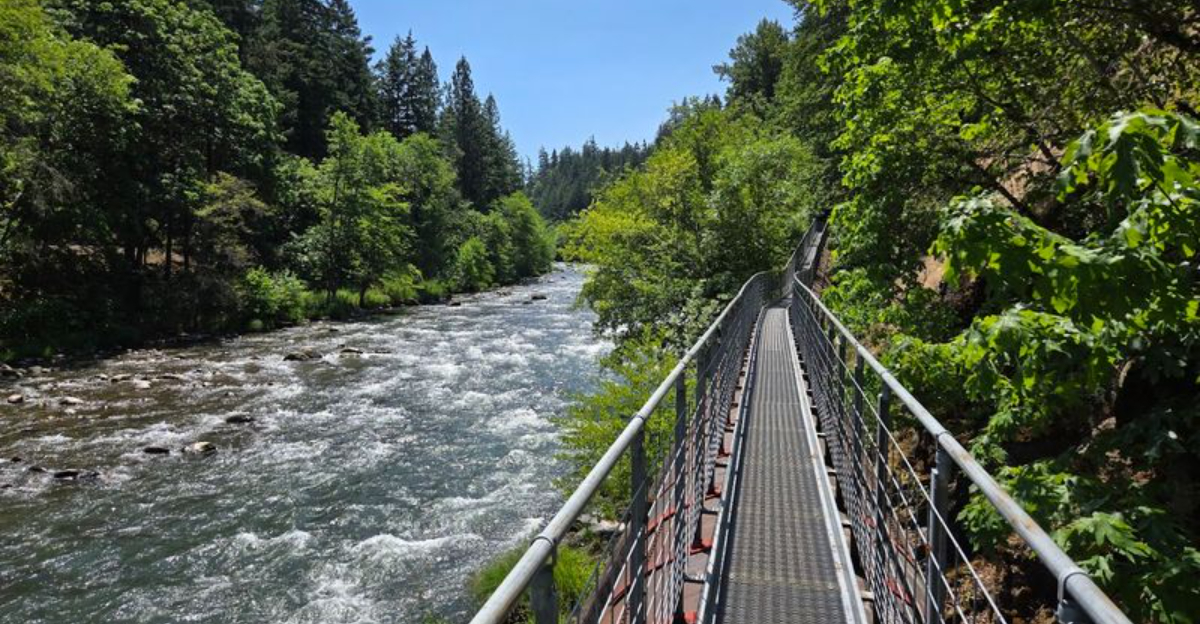
This hike doesn’t look like most trails in Oregon. You are not just walking through the woods, you are walking through a piece of history itself.
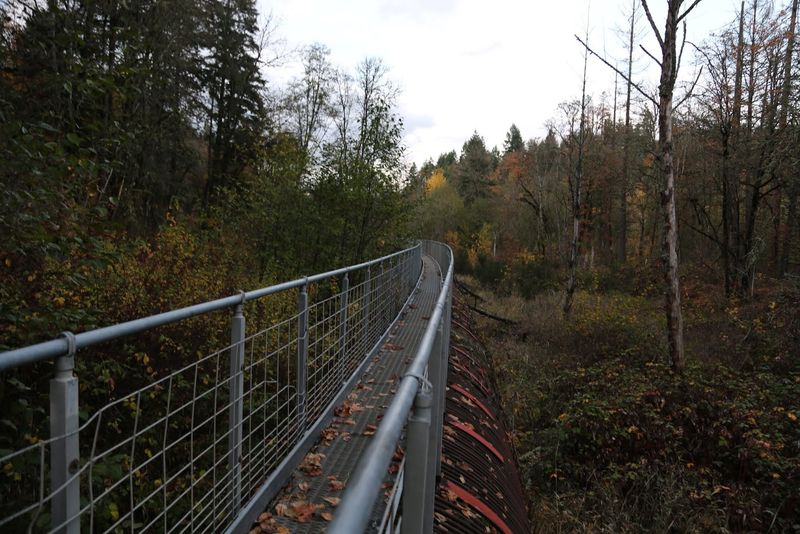
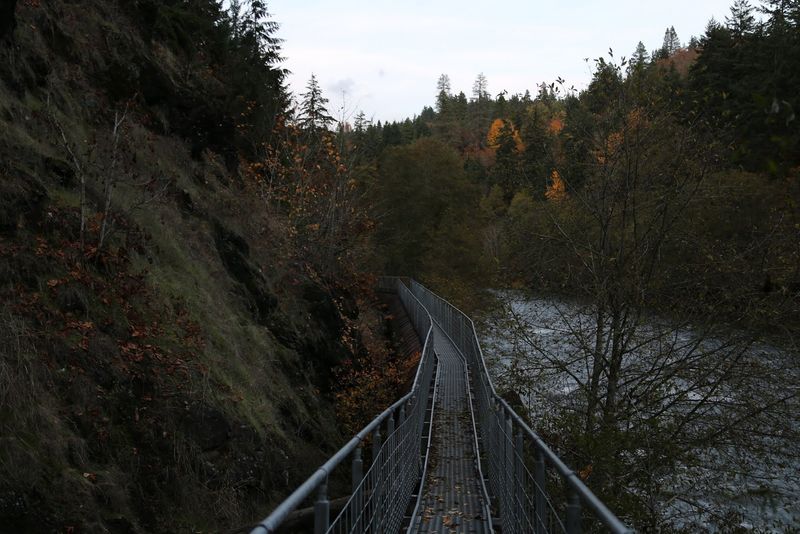
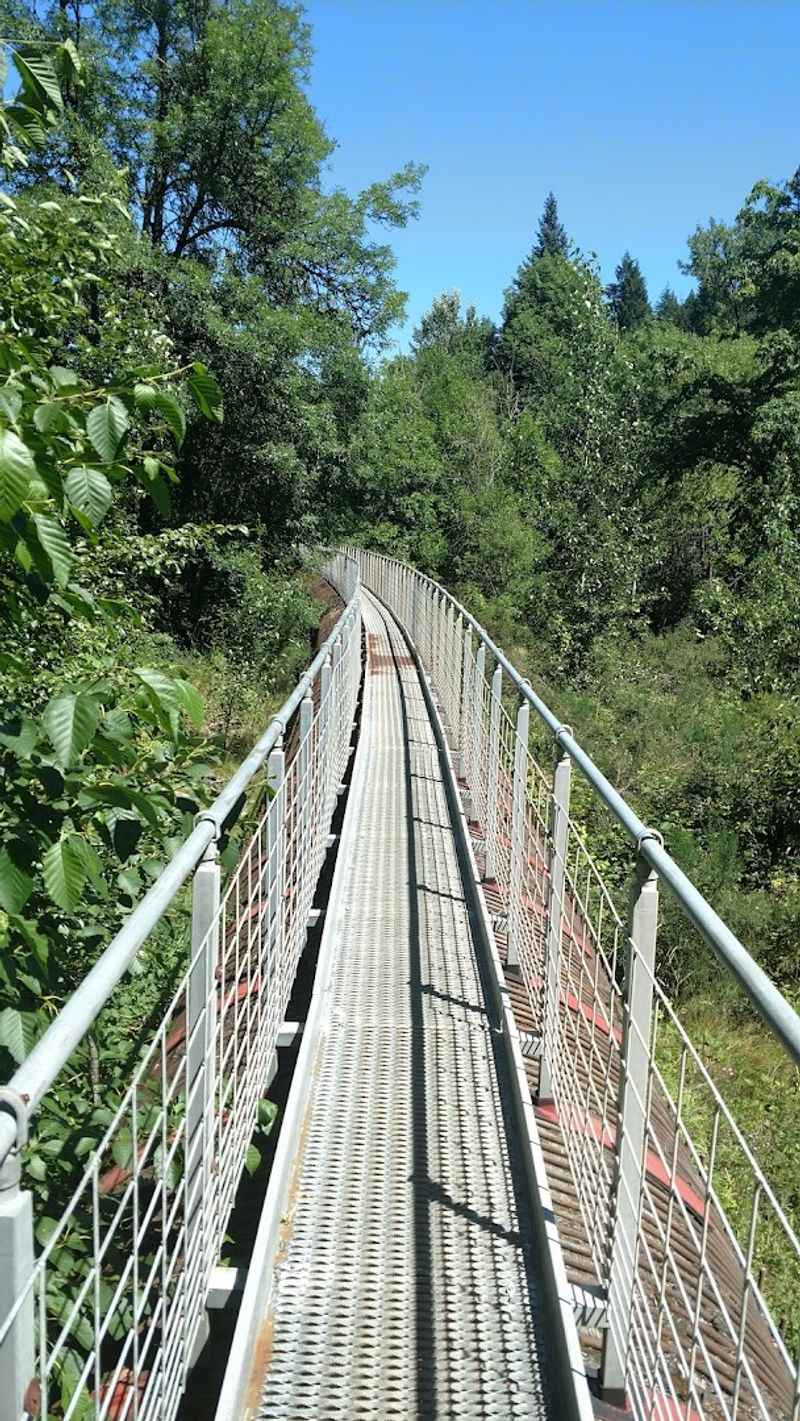
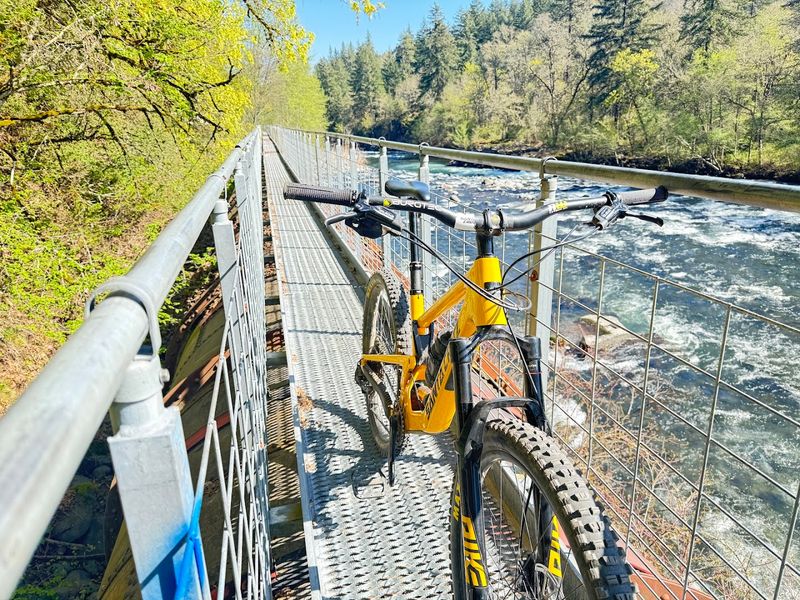
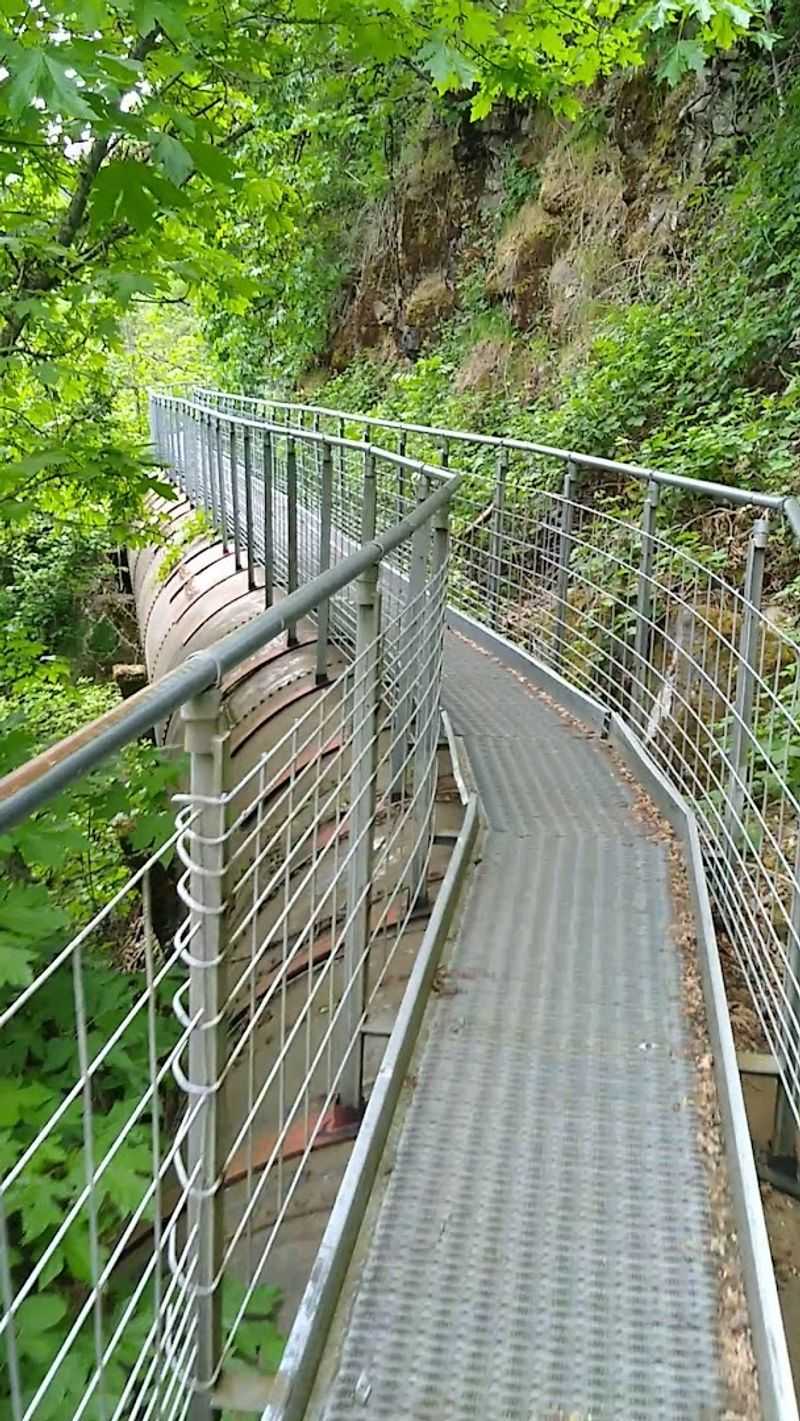
Following the route of an old wooden pipeline, the trail is an incredible mix of industrial relics and lush, reclaimed forest. The highlight comes around the one-mile mark, where you step onto a metal catwalk built right on top of the remaining pipe.
It is a truly unique experience, walking on a narrow, grated path as the river roars beneath your feet. As you continue, you will pass by rusted pipe sections, old concrete supports, and moss-covered ruins.
This trail gives you a glimpse into the area’s early 1900s hydroelectric past, a time when this pipeline powered the growing communities of the Gorge. The short 2.8-mile out-and-back route is manageable for most hikers, making it a perfect adventure for anyone looking for something out of the ordinary.
Oregon hides these fascinating secret trails, and you might just drive right past this one without knowing what you are missing. It is the perfect blend of eerie beauty, nature, and a bygone industrial era.
What Is the Penstock Flume Pipeline Trail?
Most hikers scroll past this trail without a second glance. The Penstock Flume Pipeline Trail sits quietly in Hood River County, Oregon, waiting for curious explorers.
It follows a historic water conveyance system built to carry water downhill toward power generation facilities.
The trail runs for 2.7 miles and gains only modest elevation along the way. That makes it accessible to a wide range of hikers, including families and casual walkers.
You do not need technical gear or mountaineering experience to enjoy it.
The real draw is the sheer novelty of hiking alongside giant pipelines through dense Pacific Northwest forest. The pipes themselves are part of a working hydroelectric infrastructure that has served the region for decades.
Seeing industrial engineering woven into natural scenery creates a genuinely fascinating contrast.
The trail is located near Hood River, Oregon, and the zip code for the area is 97031. Knowing the context of the trail before you arrive makes the experience feel richer and more connected to local history.
The History Behind the Pipes on the Trail
There is something deeply satisfying about hiking a trail that doubles as a living history lesson. The pipelines you walk alongside on this trail are called penstocks, which are enclosed tubes used to direct water under pressure.
They were originally constructed to funnel water from higher elevations down toward turbines that generate electricity.
Hood River County has long relied on hydroelectric power from the Columbia River watershed. These pipelines played a key role in that energy system for many years.
Walking beside them feels like stepping into an era when infrastructure was built to last generations.
The pipes show their age beautifully. Rust patterns, moss coatings, and weathered metal surfaces tell a quiet story of decades of service.
You can almost feel the weight of that history as you run a hand along the cold, textured surface.
Understanding this background adds a layer of appreciation that transforms a simple hike into something more meaningful. The trail becomes a conversation between nature and human ingenuity that rewards the curious visitor.
Trail Difficulty and What to Expect Underfoot
The trail earns its reputation as one of the more approachable hikes in the Hood River area. The path is mostly flat with only gentle undulations along its 2.7-mile length.
There are no steep cliff edges or technically demanding scrambles to navigate.
That said, the trail surface does have its quirks. Tree roots cross the path in several spots, so watching your footing is always a good idea.
Some sections can get muddy after rain, especially in the spring and fall months.
Sturdy hiking shoes or trail runners are the smart choice for this route. Flip-flops or casual sneakers may leave you slipping on wet roots or muddy patches.
A little preparation goes a long way toward keeping the hike enjoyable.
The trail is well-marked enough that getting lost is unlikely, but carrying a downloaded offline map is never a bad habit. First-time visitors especially benefit from knowing the rough layout before setting off.
The overall experience feels manageable and rewarding for most fitness levels.
The Forest Atmosphere That Makes This Trail Special
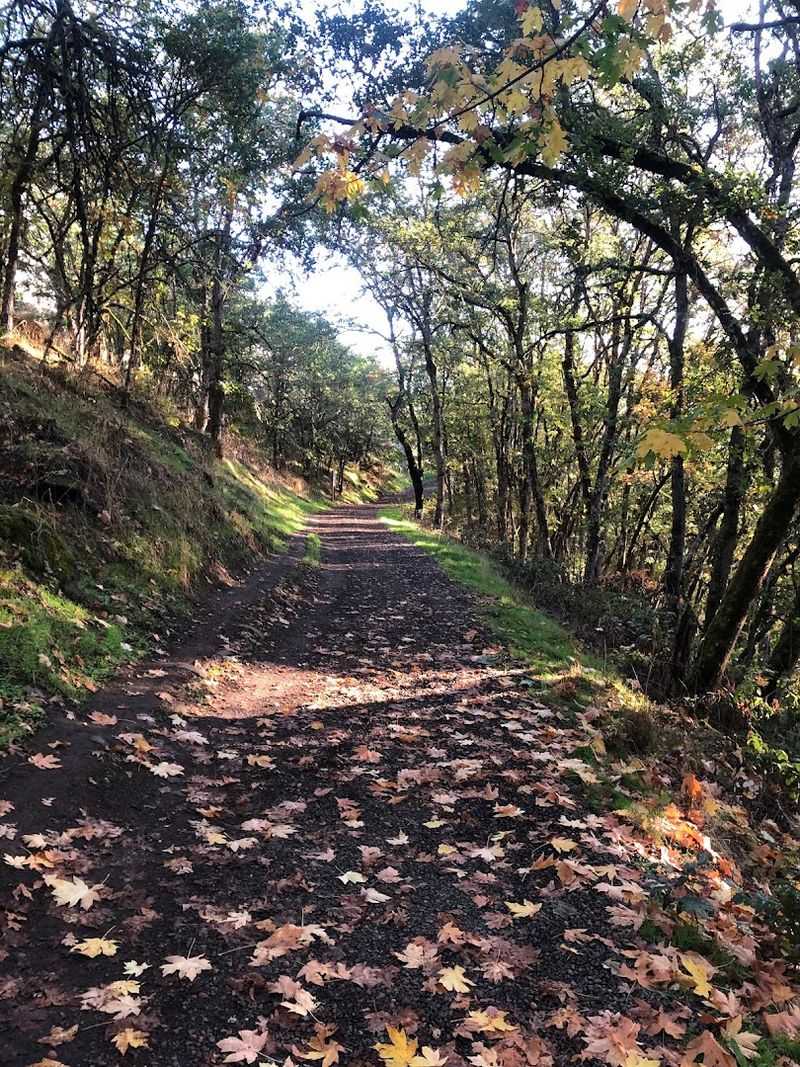
Walking into the forest here feels like the volume of the world gets turned way down. The canopy closes overhead almost immediately, and the air shifts to something cooler and greener.
Douglas firs dominate the scene, their trunks rising like columns in a cathedral nobody officially built.
Ferns carpet the forest floor in vivid shades of green that seem almost too bright to be real. Moss clings to rocks, logs, and even the old pipelines themselves, softening every hard edge.
The whole environment feels ancient and undisturbed, even though people have been hiking here for years.
Birdcalls echo through the trees at a frequency that feels tuned specifically for quiet mornings. Woodpeckers, songbirds, and the occasional rustle of a squirrel keep the trail feeling alive.
It never feels lonely, even when you are completely alone out there.
The contrast between the rusting industrial pipes and the lush, living forest creates a visual tension that stays with you long after the hike ends.
Best Time of Year to Hike the Penstock Trail
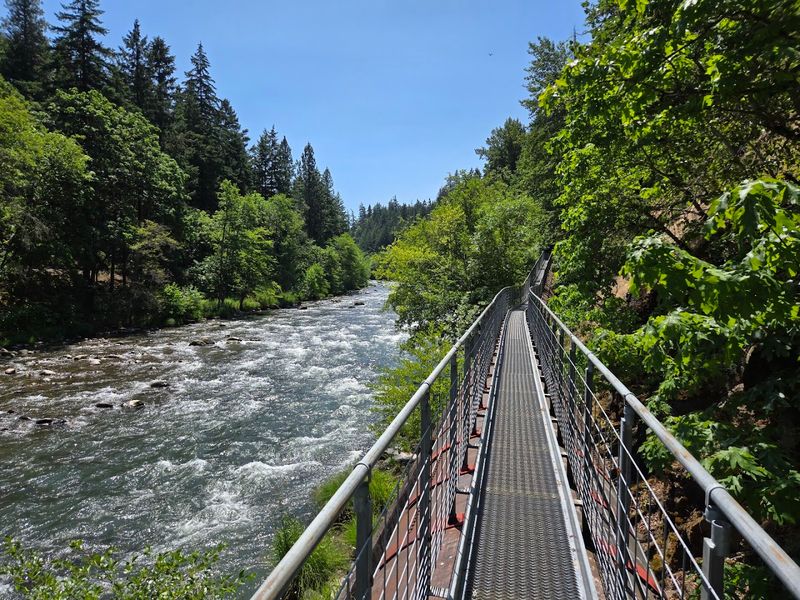
Timing a visit to this trail can genuinely change the whole experience. Late spring through early fall offers the most reliable conditions for a comfortable and scenic hike.
Wildflowers appear in May and June, adding unexpected bursts of color along the path edges.
Summer mornings are particularly magical here. The forest stays cool even when temperatures climb outside the tree cover.
Starting the hike before 10 a.m. during summer gives you the best light and the fewest other visitors on the trail.
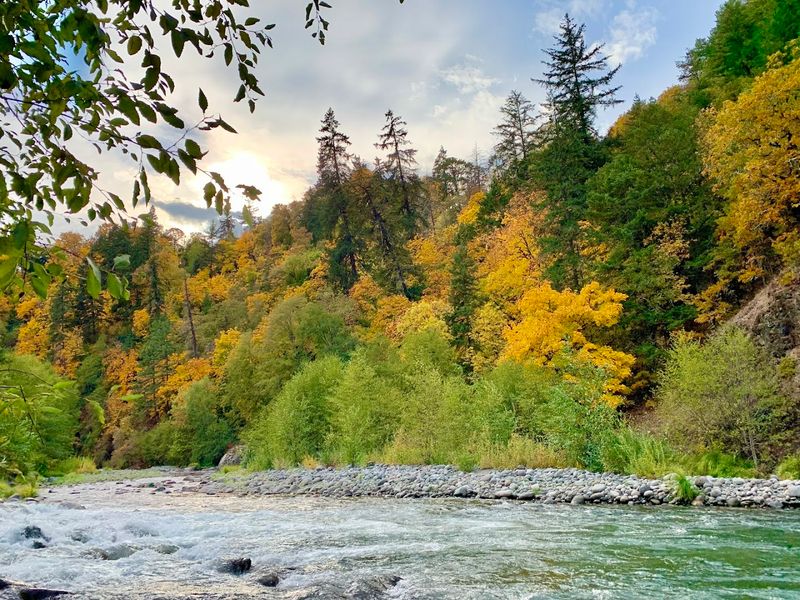
Autumn brings a different kind of beauty to the Penstock Flume area. Golden and amber leaves drift down through the firs, collecting on the pipeline surfaces in small, colorful piles.
The contrast of warm leaf color against cold gray metal is genuinely stunning in October and November.
Winter hiking is possible but requires more preparation. Snow and ice can make the root-covered sections of trail slippery and unpredictable.
Wildlife You Might Spot Along the Way
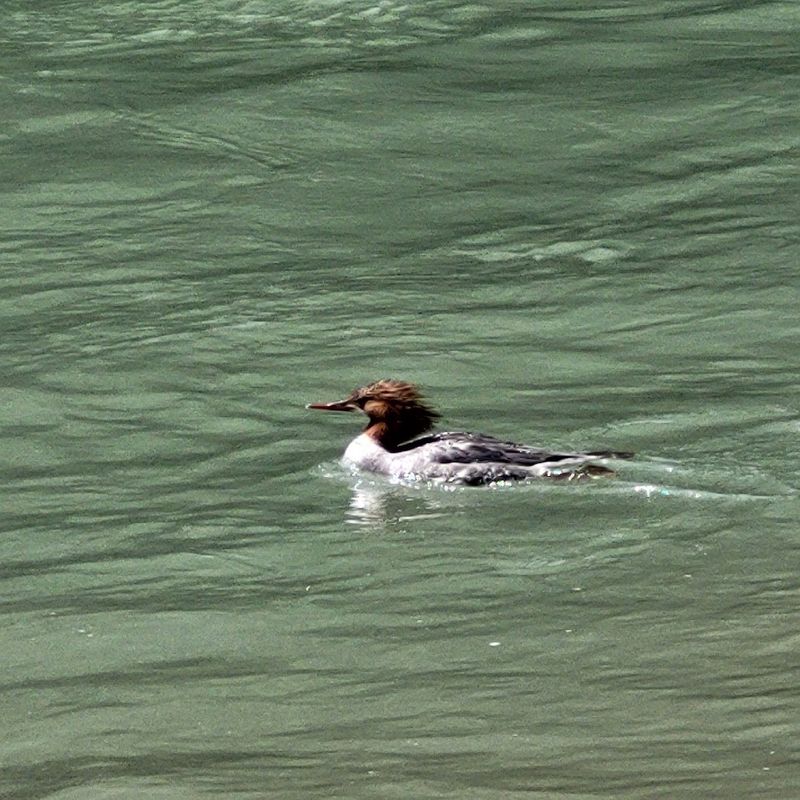
The forest along this trail holds more life than it first appears. Deer are common sightings here, especially in the early morning hours when they graze near the trail edges.
Spotting one standing still among the ferns is one of those small trail moments that sticks with you.
Birdwatchers will find plenty to keep their binoculars busy along this route. Steller’s jays, varied thrushes, and northern flickers are among the species that frequent the Hood River forest zone.
Listening carefully reveals a layered soundscape that changes with every quarter mile.
Smaller creatures also populate the understory in surprising numbers. Salamanders hide beneath mossy logs, and tree frogs occasionally call from the wetter sections near the pipeline drainage areas.
These small details reward hikers who slow down and pay attention to what surrounds them.
Black bears do live in the broader Hood River region, so making noise on the trail is always a sensible habit.
Photography Tips for Capturing the Pipeline Trail
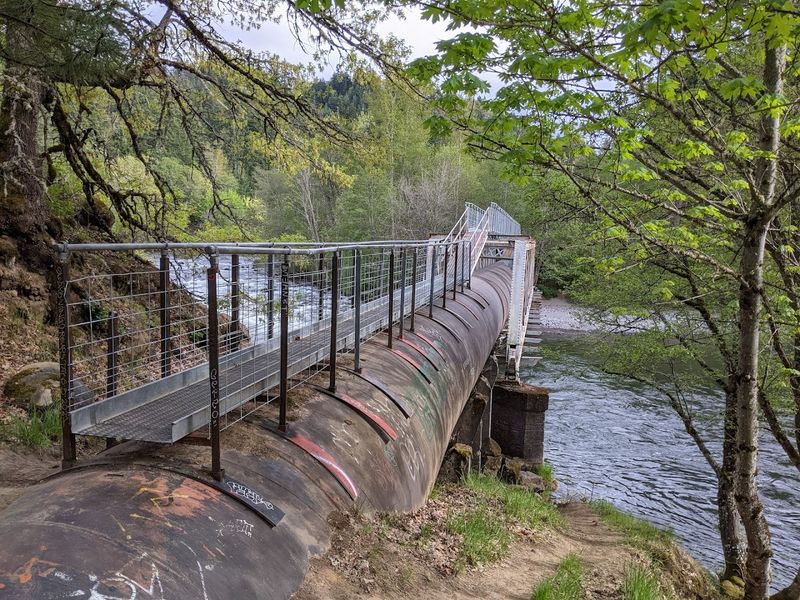
This trail is a genuine gift for photographers who appreciate unusual subjects. The combination of industrial pipes and organic forest creates compositions that feel both striking and surreal.
Few trails in Oregon offer this specific visual tension in such an accessible setting.
Morning light is the strongest ally for shooting here. When early sun filters through the fir canopy, it creates dramatic rays that fall across the mossy pipes in ways that feel almost cinematic.
Arriving at the trailhead by 8 a.m. on a clear day puts you in position for those moments.
Wide-angle lenses work beautifully for capturing the full scale of the pipeline running into the forest distance. Getting low to the ground and shooting along the length of the pipes creates a powerful sense of depth and scale.
Macro lenses reveal incredible texture in the moss and rust patterns up close.
Overcast days are actually excellent for shooting here because the soft, even light eliminates harsh shadows. Rainy conditions bring out the richest greens in the ferns and moss, making the forest look almost luminous.
What to Pack for a Comfortable Hike
Packing well for this trail does not require an elaborate gear list. The 2.7-mile distance is short enough that you can complete it in under two hours without pushing hard.
Still, a few key items make a noticeable difference in how comfortable the experience feels.
Water is non-negotiable, even on a short trail like this. Carrying at least 16 to 24 ounces per person keeps energy levels steady throughout the hike.
A light snack like trail mix or a granola bar rounds out a simple but effective fuel strategy.
Layering is smart in Hood River’s forest environment, where temperatures can shift noticeably between open sections and shaded canopy. A lightweight fleece or windbreaker stuffed into a small daypack adds minimal weight but significant comfort.
Sunscreen matters too, especially during summer when patches of direct sun hit the trail.
Bug repellent becomes useful in late spring and early summer when mosquitoes are active near the wetter pipeline drainage zones.
Getting to the Penstock Flume Pipeline Trailhead
Finding the trailhead requires a little navigation confidence, but the reward is absolutely worth the effort. The trail is located in Hood River County, Oregon, with the general area falling under the 97031 zip code.
Using a GPS app with offline maps downloaded ahead of time is strongly recommended for this one.
The drive from downtown Hood River takes roughly 20 to 30 minutes depending on your starting point. Roads leading toward the trailhead pass through scenic orchards and forested hillsides that set a beautiful tone for the hike ahead.
Keep an eye on your speed, as some sections of the access road are narrow and winding.
Parking at the trailhead is limited, so arriving early on weekends prevents the frustration of finding the small lot full. Weekday visits almost always offer easy parking with no waiting.
The lot is unpaved but generally accessible to standard passenger vehicles in dry conditions.
No entrance fee is required to access the trail as of the latest available information.
Why This Trail Deserves a Spot on Your Oregon Hiking List
There are hundreds of trails in Oregon, and yet this one manages to feel genuinely one-of-a-kind. The Penstock Flume Pipeline Trail offers something most hikes simply cannot: a direct, tangible connection to the working history of a landscape.
The pipes are not a relic behind glass but a living part of the scenery you walk through.
The trail suits hikers who want something beyond a standard forest loop. It rewards curiosity, patience, and an appreciation for unexpected beauty.
The industrial and natural elements blend in a way that feels organic rather than jarring, which is a rare achievement in any trail design.
Families with older kids find it engaging because the pipelines spark natural questions about how things work. Solo hikers appreciate the quiet, unhurried pace the trail encourages.
Small groups can explore it comfortably without the trail ever feeling crowded.
Oregon has no shortage of stunning natural scenery, but this trail adds something different to the mix.
Address: Hood River Penstock Flume Pipeline Trail, Oregon 97031
